Section Modulus calculation and optimization
Section Modulus Calculation and Optimization of Hood
The section modulus of cross-sectional shape is of significant importance in designing beam. It is direct measure of strength of the beam. A beam that has a larger section modulus than another will be stronger and capable of supporting greater load. It includes the idea that most of the work in bending is being done extreme fiber of beam, i.e. the top and bottom fiber of the section. The distance of the fibers from top to bottom is therefor built into the calculation.
Therefore section modulus is the predominant factor which evidences the strength of an object and is defined as the ratio of the moment of inertia of the object about its centroidal axis to the distance of the extreme fiber of the object from the neutral axis.
S=I/y
Where,
S= Section Modulus
I= Moment of Inertia
Y= Distance of the outermost fiber of the object from the neutral axis.
Significance of Section Modulus :-
- Section modulus is the important factor for design of beam and flexural member.
- Higher the value of section modulus, higher will be the resistance of member to bending.
- It is used to calculate strength of the steel structure.
- More the section modulus, it can withstand more load and it is also considered to be more tougher.
Let’s calculate the section modulus of Hood Panel :-
Hood Cross-section :-
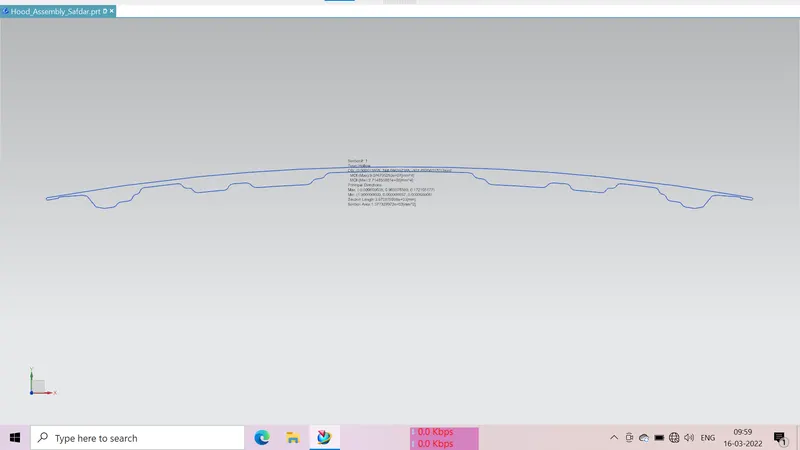
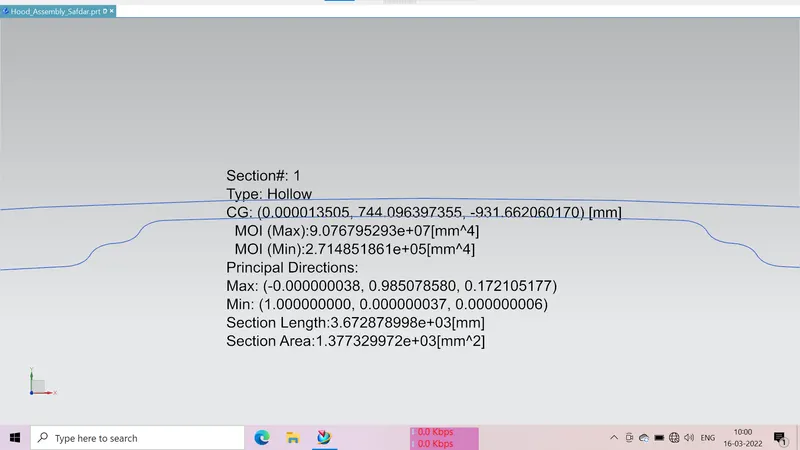
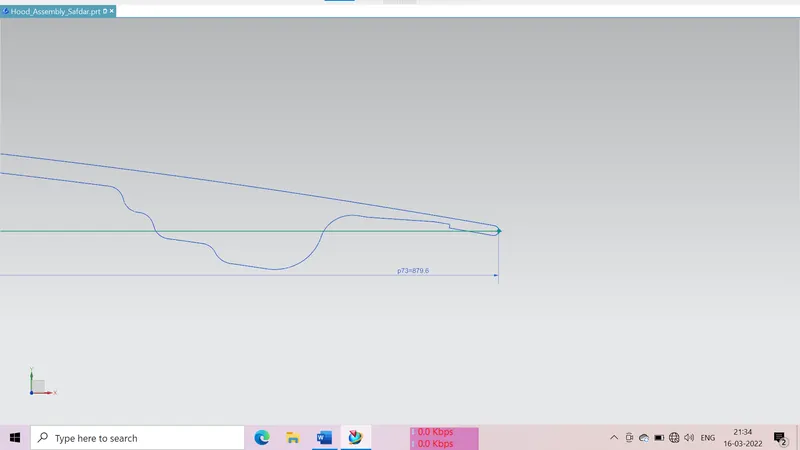
When you see the picture, it will show the hood moment of inertia using NX CAD platform.
MOI (max)= 9.076×10^7 mm^
MOI (min)= 2.714×10^5 mm^4
Total length of Hood= 879.6 mm
So, half of length (y)= 879.6/2 mm= 439.8 mm
Section Modulus S=I/y=2.714×10^5 mm^4/439.8 mm =617.098 mm^3
So, the section modulus of Hood is 617.098 mm^3.
Modified Hood :-
Offsetting the hood inner panel 0.5 mm outer side and creating the embosses on the on the hood inner panel.
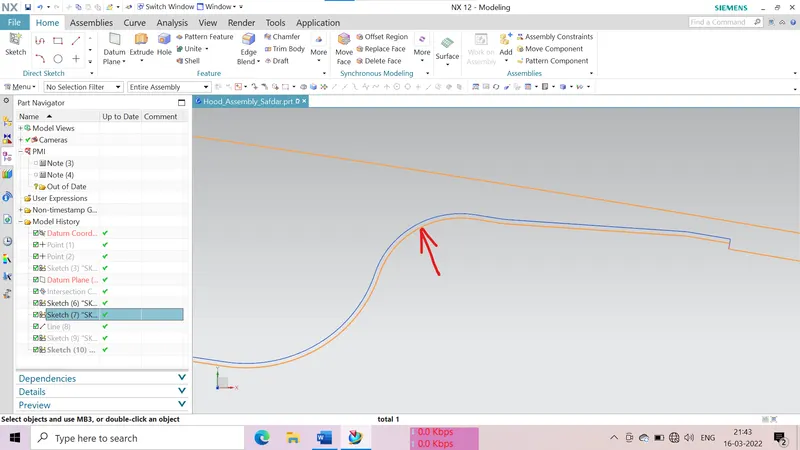
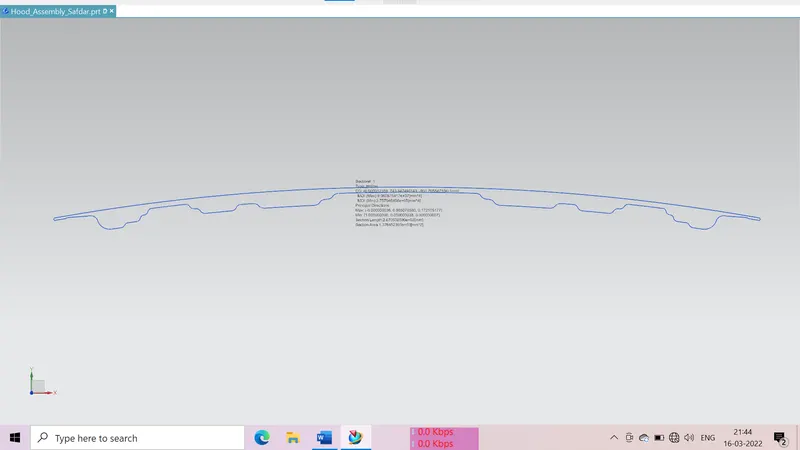
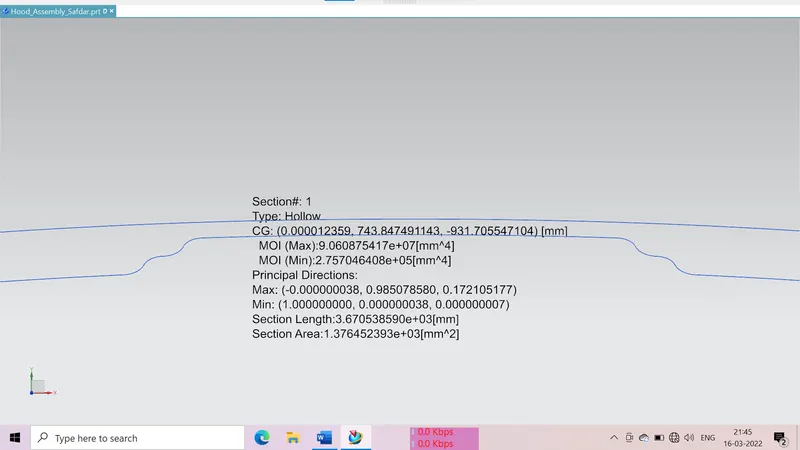
MOI (max)= 9.06×10^7 mm^4
MOI (min)= 2.757×10^5 mm^4
Half of length (y)= 439.8 mm
Section Modulus S=I/y=2.757×10^5 mm^4/439.8 mm =626.875 mm^3
So, the section modulus of modified Hood is 626.875 mm^3.
That’s mean when increase the cross-section area, it increase the moment of inertia so section modulus increase.
Conclusion :-
We saw the result that mean section modulus is directly proportional to moment of inertia. Hence we increase the cross-sectional area, it will increase the moment of inertia, so it will provide more strength.