Section Modulus calculation and optimization
AIM: We are going to analyze the section modulus of the hood using NX CAD software and compare with the modified section of the hood.
SECTION MODULUS: It is the ratio of moment of inertia of the section about the neutral axis to the distance of outer most layer from the neutral axis.
It is denoted by Z.
First we should know the basics of Bending Equations under the following assumptions:
1- Material must be Homogeneous and Isotropic and follows Hookes law
2- Stress does not exceed elastic limit.
3- Cross section area of the beam ( transverse ) remain in plane conditions (i.e no distortion of the plane is allowed) after bending.
4- Beam is Initially straight and prismatic.
5- Beam is subjected to pure bending therefore beam makes an arc of circle.
6- Value of young modulus is same for tensile and compressive stress.
7- No resultant load along the longitudnal axis of the beams.
8- Transverse section of the beam is symmetrical about the line passing through the centroid of cross section of the beam.
According to the Bending equation based on theory of elasticity we have,
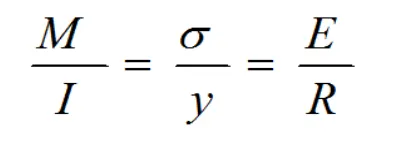
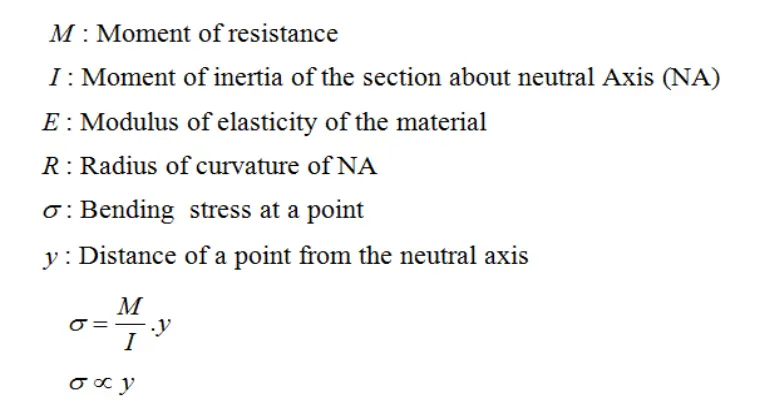
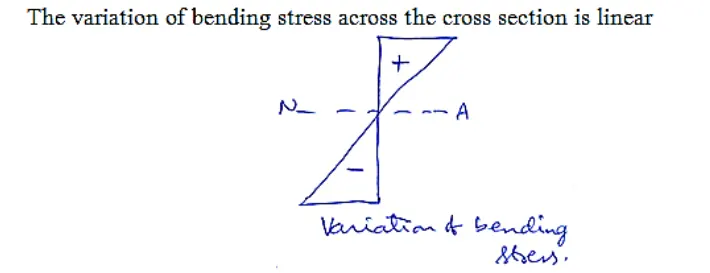
Here bending stress is the linear function of y it signifies that the outermost fibre with respect to the neutral axis will be subjected to maximum bending stress and the neutral plane ( plane containing neutral axis ) will have no stress as shown in the given figure.
So to save the material so that our beam or structure is economical and lighter, (as all the fibres are not subjected to maximum tensile and compressive stress ) we introduce the concept of section modulus.
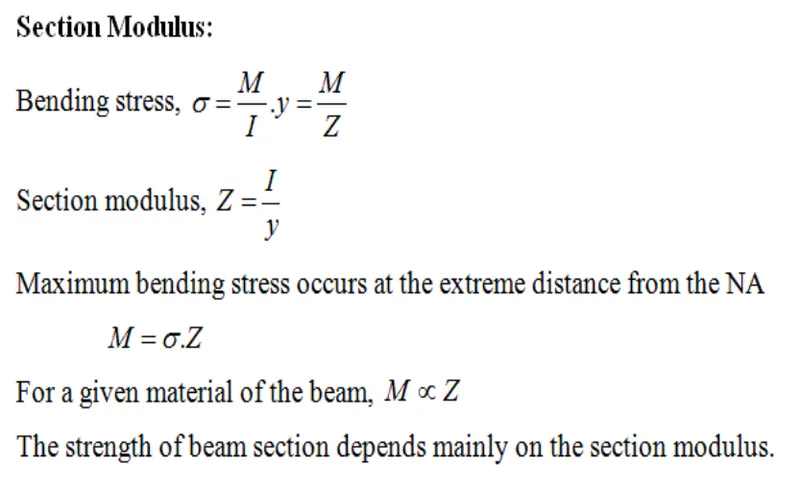
Thats' why I section is more economical among all the cross section shapes for the given material and for a given load.
As the value of I i.e. area moment of inertia increases then Z also increases.
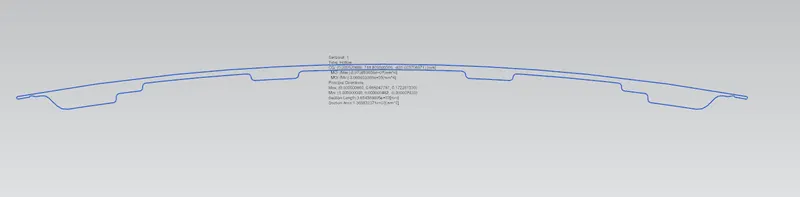
Section modulus of the hood for the 1st case:
Cross section sketch of the hood for case 1
 and
and 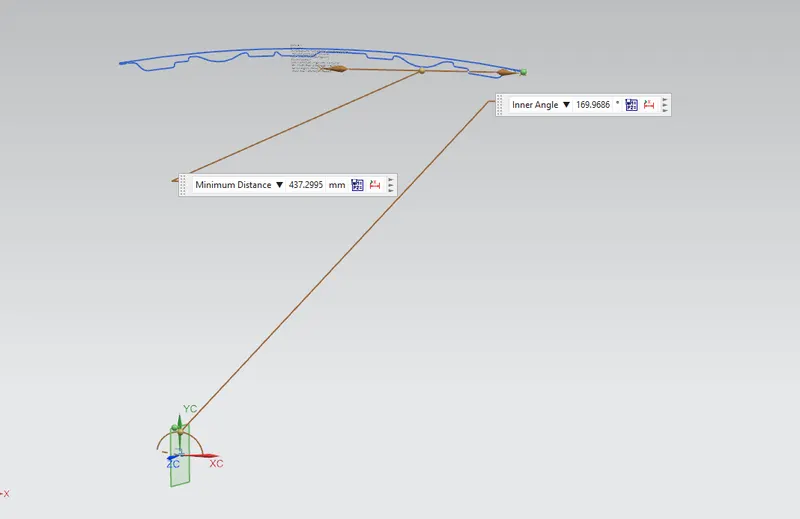
Result of Area moment of inertia for the first case Y(max) = 437.2995 mm
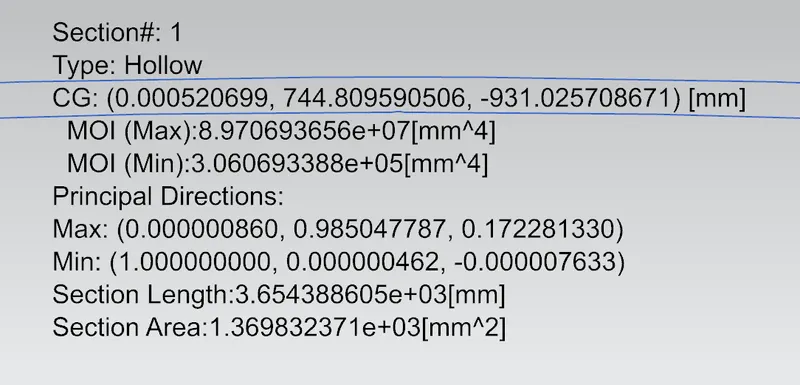
NOTE- We have to take I (min) for design considerations because Hood cross section will fail for the minimum value of Z and hence for minimum value of I.
I(min) = 3.060 * 10 ^ 5 mm^4 (approx.)
Y(max) = 437.2995 mm
Z(min) = 6.99 *10 ^ 2 mm ^3 ( approx )
Section modulus of the hood for the 2nd case:
Cross section sketch of the hood for case 2 ( Here we modify the cross section area of the hood as shown in the Black Box region).
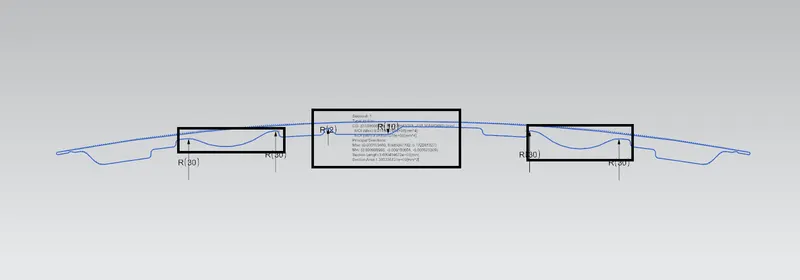
Result of the Area moment of inertia for the second case
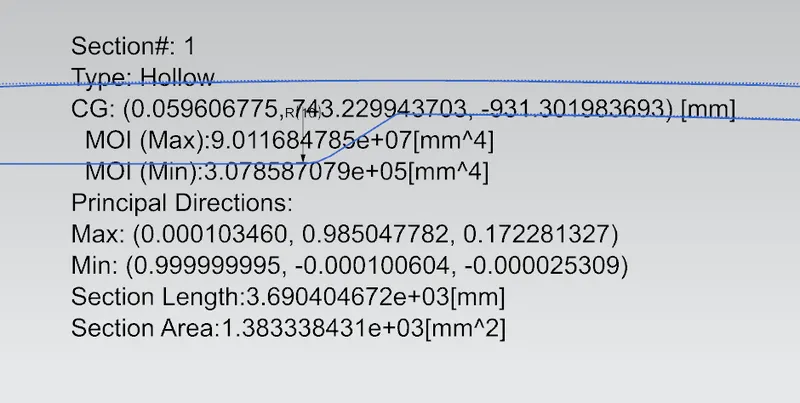
I(min) = 3.079 * 10 ^ 5 mm^4 (approx.)
Y(max) = 437.2995 mm
Z(min) = 7.04 * 10 ^ 2 mm ^3 ( approx.)
Percentage increase in section modulus of the second case with respect to the first case = ( (Z2 - Z1)\ Z1 *100)
= ( ( I2 -I1) \ I1 * 100) ( Since y max is same for both the case eventually cancel out in the given expression)
= (( 3.079 * 10 ^ 5) - (3.060 * 10 ^5))\(3.060 * 10 ^5) *100)
= 0.621 % increase (approx).
Conclusion: We can increase the section modulus of the beam by distributing more area (material) away from the neutral axis of the Beam,We successfully apply this concept to increase the Section Modulus of the beam and section modulus increases by 0.621 %
Thanks
Tushar rastogi.