Section Modulus calculation and optimization
Section Modulus Calculation Of Hood
Aim:-
Calculate the section modulus of the previously designed hood in order to analyze its strength and optimize the design in order to examine the difference in the bending strength of the hood. The greater a structure's section modulus, the more resistant it is to bending.
Section modulus
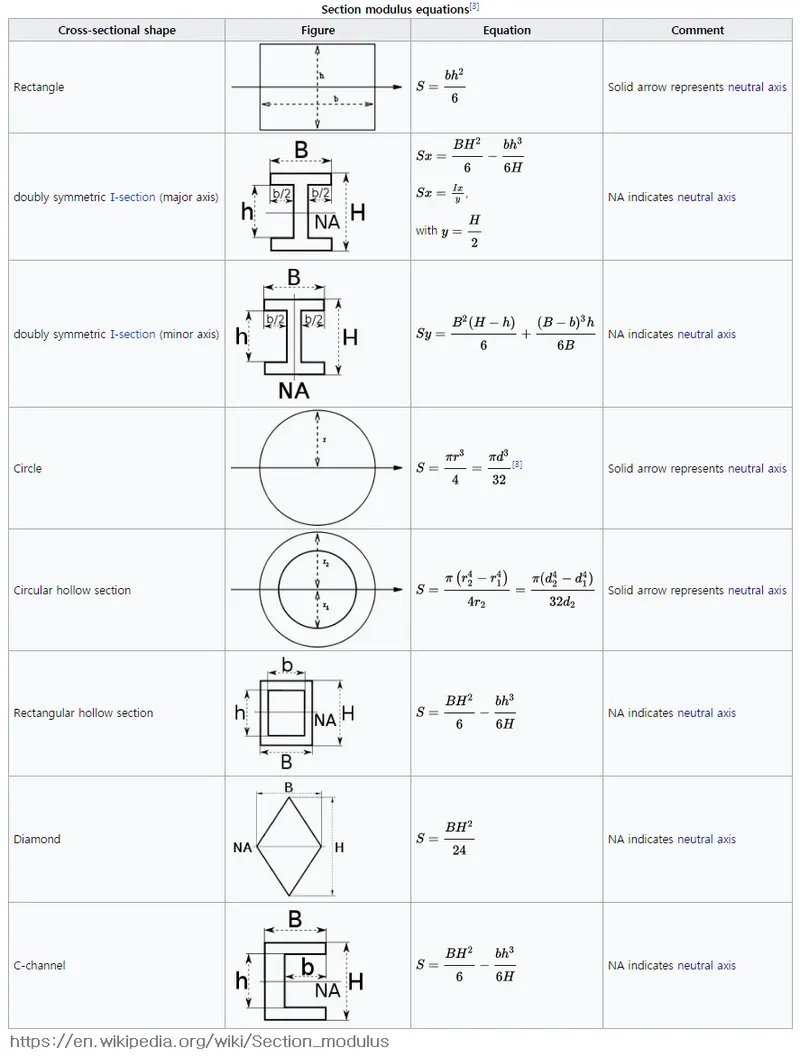
Section modulus is a geometric parameter for a particular cross-section that is utilised in the construction of beams or flexural components. It is also known as Polar Modulus or Torsional Sectional Modulus. Area for tension and shear, radius of gyration for compression, and moment of inertia and polar moment of inertia for stiffness are all geometric parameters utilised in design. Any link between these attributes is heavily influenced by the form in issue. The section moduli of common forms are provided as equations below. Section moduli are classified into two types: elastic section moduli and plastic section moduli.
S=I/Y
where
S = Section modulus
I= Moment of Inertia (Unit mm 4)
Y= Distance from Neutral axis to the extreme end (unit mm)
The Unit of a “section modulus” is (mm3)
Elastic section modulus
For most metals and other common materials, the elastic section modulus is utilised for a general design, up to the yield point.
S = I / y, where I is the second moment of area (or area moment of inertia, not to be confused with a moment of inertia) and y is the distance from the neutral axis to any particular fiber. As shown in the table below, it is commonly stated as y = c, where c is the distance from the neutral axis to the most extreme fiber. It is also frequently used to calculate the yield moment (My), such that My = S y, where y is the material's yield strength.
First section study:
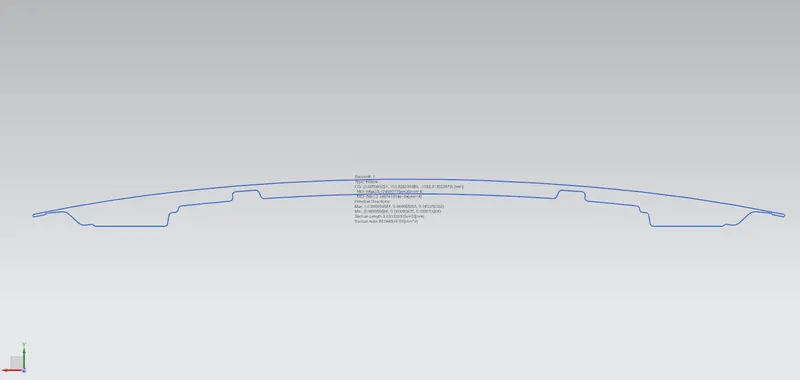
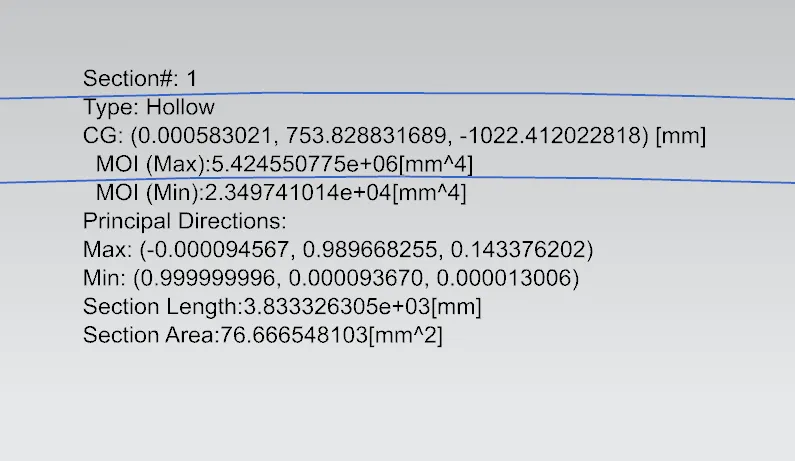
Moment of inertia(max) = 5.42455×10^5×mm^4
Moment of inertia(min) = 2.34974×10^3×mm^4
Y=913.8861/2=456.94305 mm
S=I/Y
S=2.34974×10^3/242.87= 9.67488*10^3 mm^3
with optimized design with an increased depth of 0.5mm
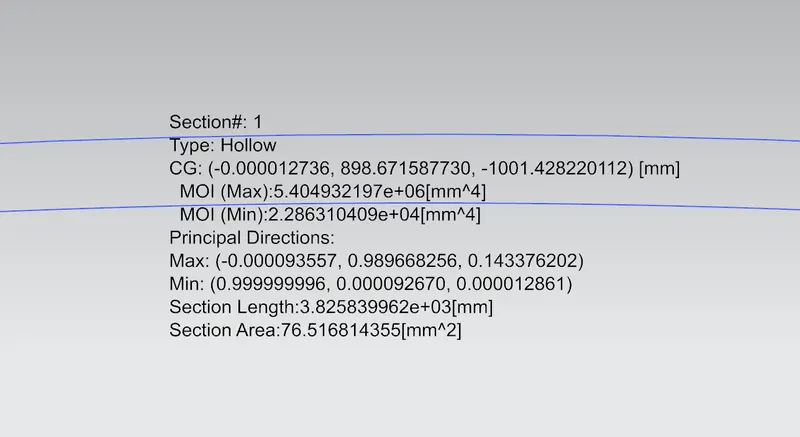
Moment of inertia(max) = 5.404932×10^5×mm^4
Moment of inertia(min) = 2.28631×10^3×mm^4
Y=913.8861/2=456.94305 mm
S=I/Y
S=2.28631×10^3/242.87= 9.41371*10^3 mm^3.
Conclusion
So, in this case, the difference can be observed in the moment of inertia, and the change in section modulus can be seen in the design (depth).