Section Modulus calculation and optimization
SECTION MODULUS CALCULATION AND OPTIMIZATION
AIM
The aim of the challenge is to calculate the section modulus value for the hood we designed and try to improve it.
THEORY/ INTRODUCTION
Section Modulus is also known as Polar modulus. It is the geometric property of the given cross-section of any shaft or beam structures. It is the direct measure of the strength of the shaft section or the beam section. Higher the section modulus of a structure, the more the resistive it becomes to bending. Section modulus is defined as the ratio of polar moment of inertia to the distance of the axis from the neutral axis. Section modulus is of two types: elastic section modulus and plastic section modulus. Which section modulus should be considered depends on the conditions we assume. If the failure is considered till the plastic zone then we can consider plastic section modulus and when the failure is considered up to elastic zone only then elastic section modulus has to be taken into consideration. We need to study the section modulus of the part we designed to know the strength of the part. When we take a hood there will be two cross sections one is the front and the other is side cross section. In most of the cases hood gets involved in a frontal crash and in sometimes the side crash take place.
CALCULATION AND OPTIMIZATION
Section modulus, S = I/ Y
Here I is the moment of inertia and Y is the distance between neutral axis and the extreme end of the section.
Now, we see the section modulus of the sections with regard to Frontal crash scenario and side crash scenario.
CASE-1: FRONTAL CRASH
Existing section:
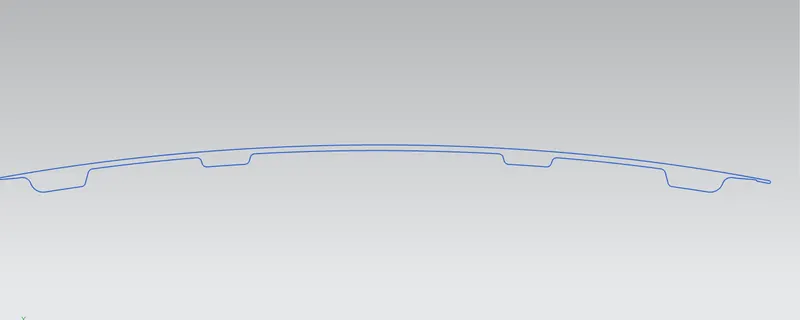
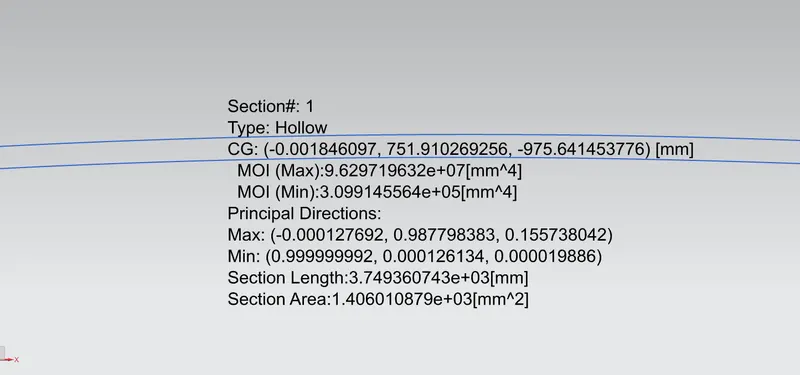
We take the minimum moment of inertia, I= 3.099145564 x 105 mm4 and
Y= 896.9/2= 448.45 mm
Section modulus, S= 3.099145564 x 10⁵/ 448.45 = 691.08 mm3
Now there are two ways we can improve the section modulus by increasing the area of the section.
First method
We can improve the S value by creating the embossed surfaces
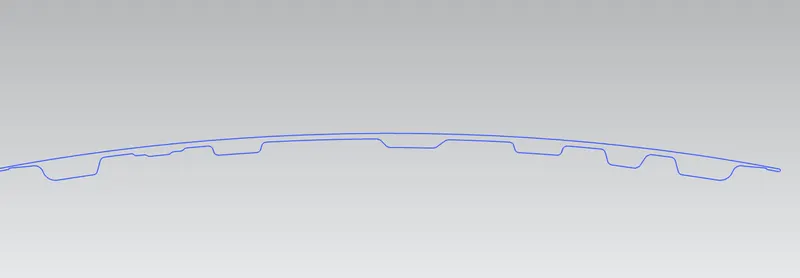
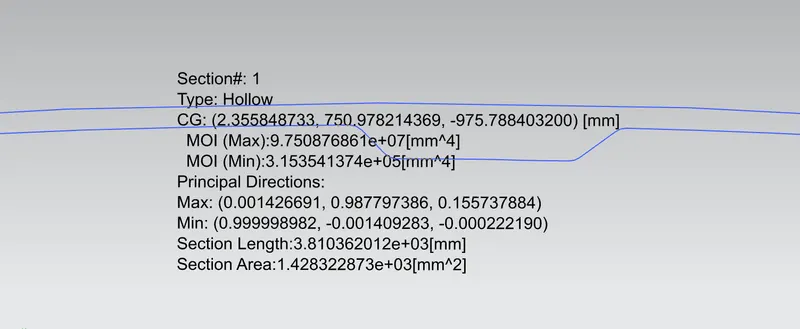
Now, S = 3.153541374 x 10⁵ / 448.45 = 703.21 mm3
Second method
The second method is by completely offsetting the outer boundary of the inner panel.
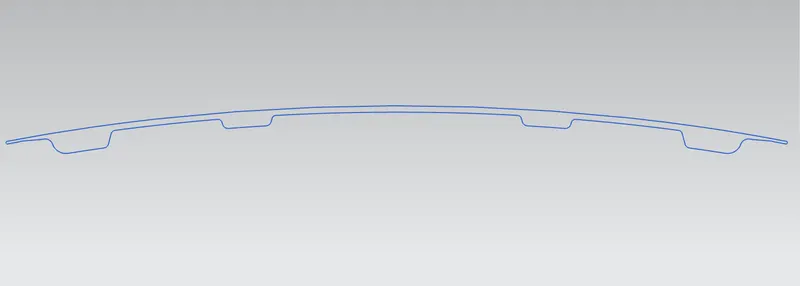
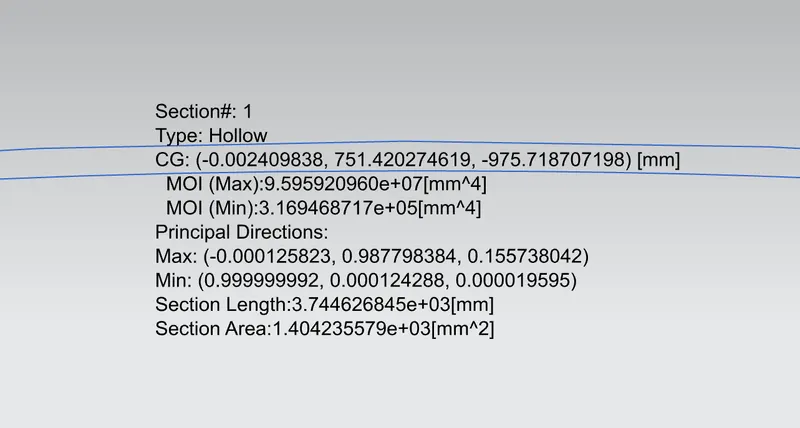
S= 3.169468717 x 10⁵ / 448.45 = 706.76 mm3
From the calculated values we can see that the section modulus is improved in both the cases but depending upon how we would want to increase the area we can choose between these two methods.
CASE-2: SIDE CRASH
Existing section:
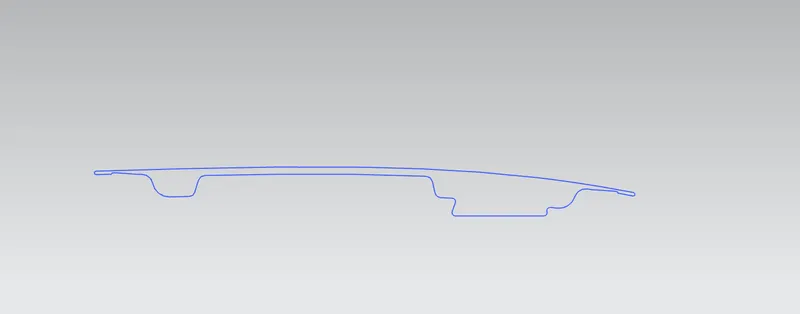
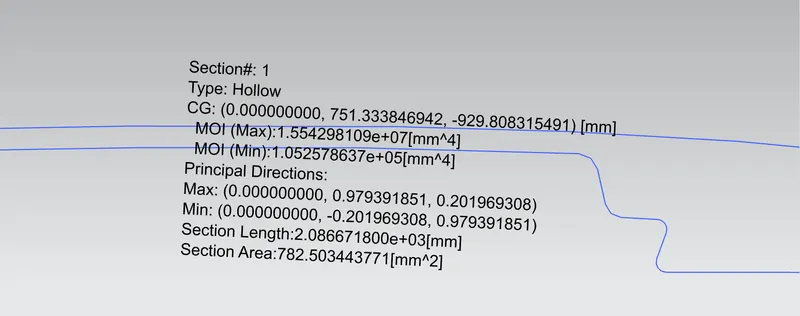
By taking the minimum moment of inertia and the extreme layer we get
I = 1.052578637 x105 mm4 and Y= 476.5/2= 238.25 mm
S= 1.052578637 x10⁵/ 238.25 = 441.8 mm3
Improved section:
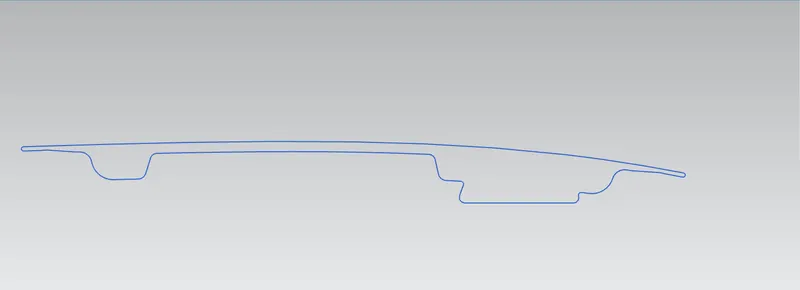
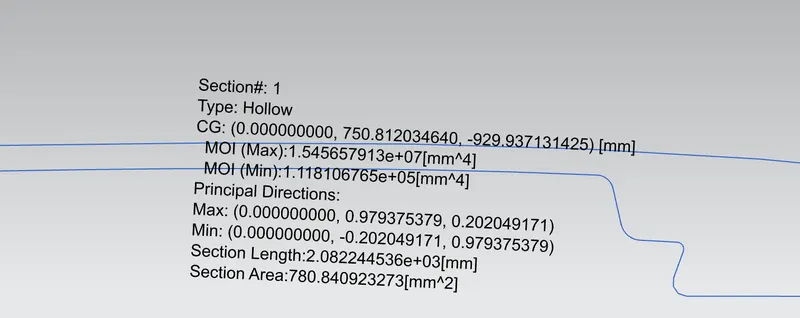
Outer boundary of the inner panel is offsetted by 1mm
S= 1.118106765 x10⁵/ 238.25 = 495.73 mm3
As we can see the section modulus for the part is now improved.
CONCLUSION
Section modulus for the designed hood assembly is calculated and improved.