Section Modulus calculation and optimization
AIM: To increase section modulus of Hood Design
Section Modulus: Section modulus is defined as the ratio of polar moment of inertia to the radius of the shaft or the distance from the neutral axis to the outer most fibres of the section. Moment of inertia is the quantity which signifies tendency to resist the angular deformation/rotation.
Significane of Section Modulus:
As the name suggests it basicaly tells about the strength of section at particular point. We calculate the moment of inertia and then at any required point we can get the section modulus. After taking the section modulus we do bending strength analysis which gives us the maximum bending stress pur part can withstand and then we compare it with Youngs Modulus(strength) of the material which we will be using and with that we can say that out part designed is safe
So by this we can understand how important section modulus is and why we try to keep it optimised
Mathematicaly
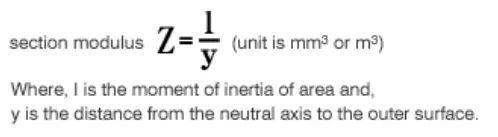
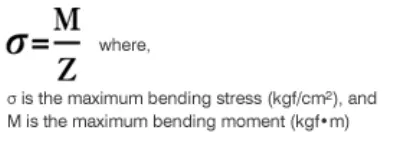
Some Basic Shapes Formula for Section modulus
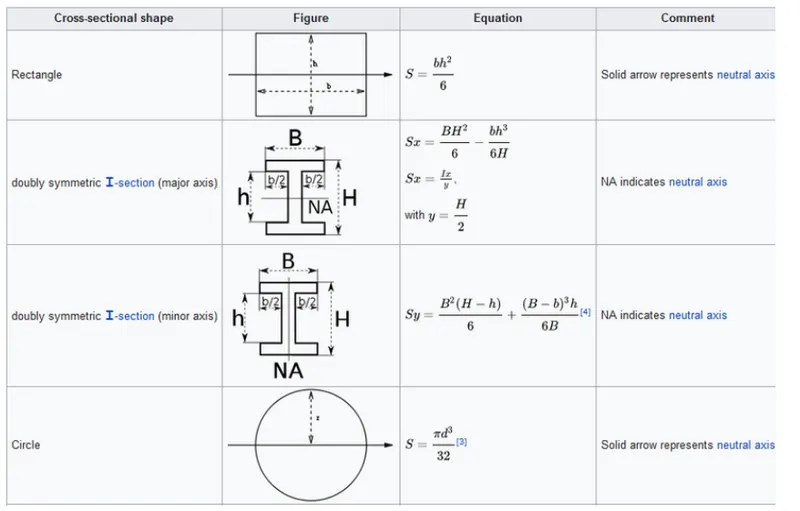
So from above table we can see section modulus is squarely proportional to depth of section so if we concentrate on depth of section then we can increase the value of section modulus significantly.
Due to this reason we keep the Depth more so that it gives more bending strength during loading and our part will not fail during loading conditions
Study of Hood Section:
We will take the intersection of Hood outer and inner panel with plane at center of the hood and make a closed curve sketch as shown in below figure:

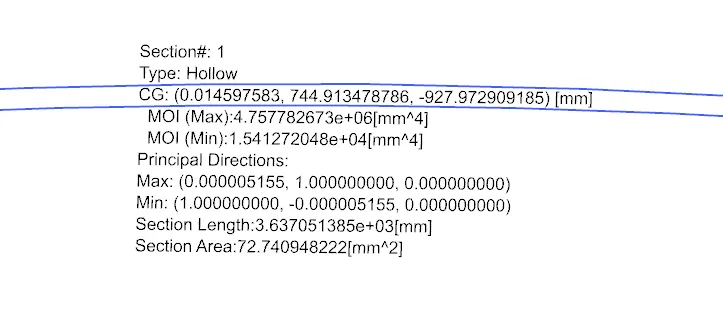
Imin= 1.54x10^4mm4
Now we will modify this section to improve section modulus we will increase the depth of section and calculate new section modulus

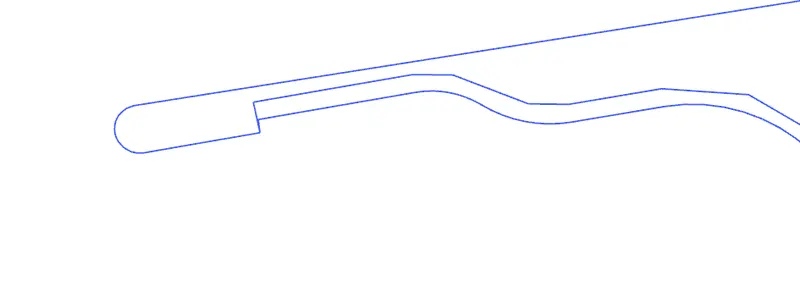
We offset it down by 1 mm this will increase overall depth of section hence moment of inertia will increase
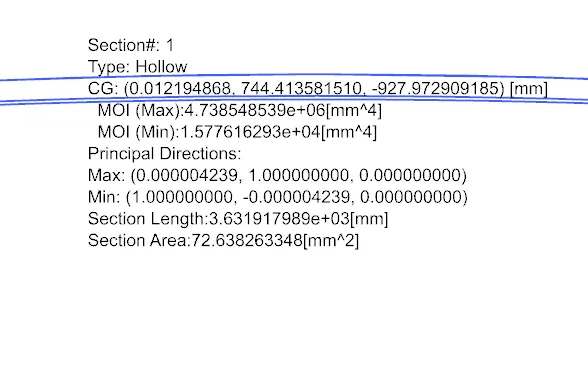
Imin=1.57x10^4mm4 We take minimum values because panel will fail due to low strength so while designing we take minimum value
Now we calculate distance of outermost point from neutral axis:
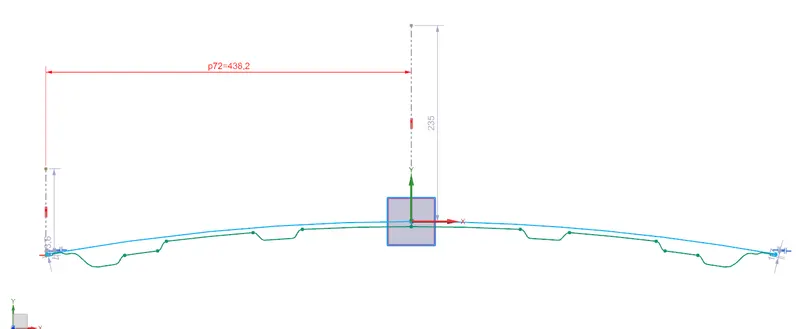
Y=438.2mm
For Section 1
Z=I/Y
I=15412.7mm^4
Section Modulus (Z)= 35.17mm^3
For section 2 i.e. with offset of 1mm downwards (away from outer)
Z=I/Y
I=15776.1mm^4, Y value remain same as outer most point is same
Section Modulus (Z)= 36.12mm^3
Hence by above calculation it is clear that by increasing depth of section we get more Section Modulus and our Section modulus values are optimised.