Section Modulus calculation and optimization
SECTION MODULUS AND OPTIMAZATION
OBJECTIVE: The main intent of this challenge or project is to get a knowledge on section modulus and how to analyse section modulus using a design software and how to optimise our value by modifying the design.
In this project we use Siemens NX software.
SECTION MODULUS
Section modulus is a geometric property for a given cross-section used in the design of beams or flexural members. Other geometric properties used in design include area for tension and shear, radius of gyration for compression, and moment of inertia and polar moment of inertia for stiffness. Any relationship between these properties is highly dependent on the shape in question. There are two types of section moduli, the elastic section modulus, and the plastic section modulus. The section moduli of different profiles can also be found as numerical values for common profiles in tables listing properties of such.
For general design, the elastic section modulus is used, applying up to the yield point for most metals and other common materials.
The elastic section modulus is defined as
S = I / y,
where I is the second moment of area (or area moment of inertia, not to be confused with moment of inertia)
y is the distance from the neutral axis to any given fibre.
It is often reported using y = c,
where c is the distance from the neutral axis to the most extreme fibre.
Simply section modulus is defined as the ration of total moment resisted by the section to the stress in extreme fibre.
SIGNIFICANCE:
- It gives us an idea about how much of load the given structure can withstand
- If the section modulus is increased the moment of resistance increases and hence its load baring capacity also increases.
The section modulus of different sections are given in the below pictures,
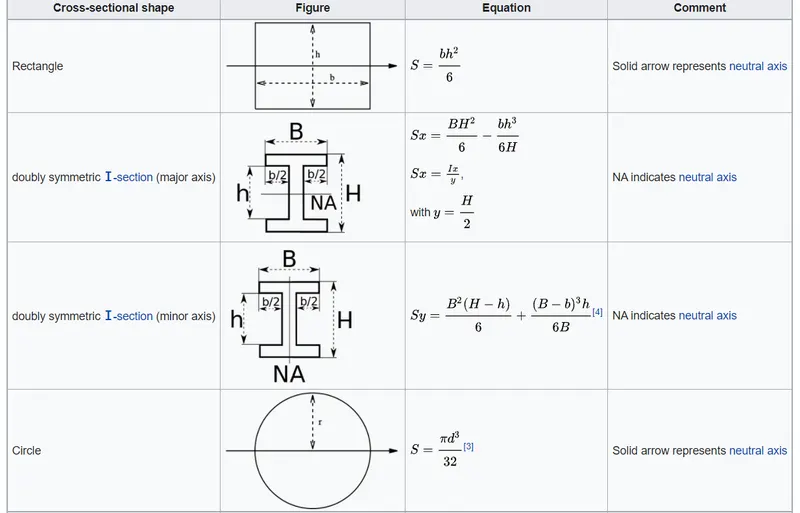
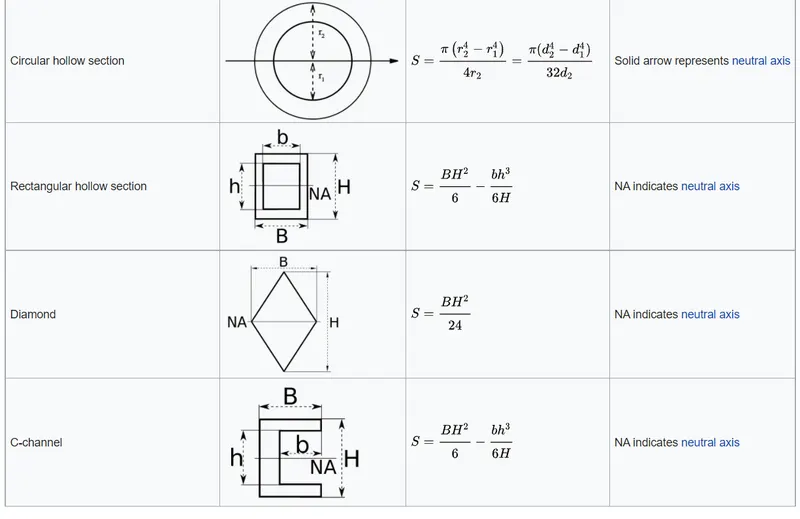
METHOD TO IMPROVE SECTION MODULUS:
Section modulus is directly dependent on the area moment of inertia and the distance from the neutral axis. Hence, to improve the geometry of the carry more bending load, the section modulus can be improved by increasing the area MOI of a given section.
CASE1:
In case1 we will discuss about the section modulus of actual hood without changing the design,
The image of design is as shown in below picture,
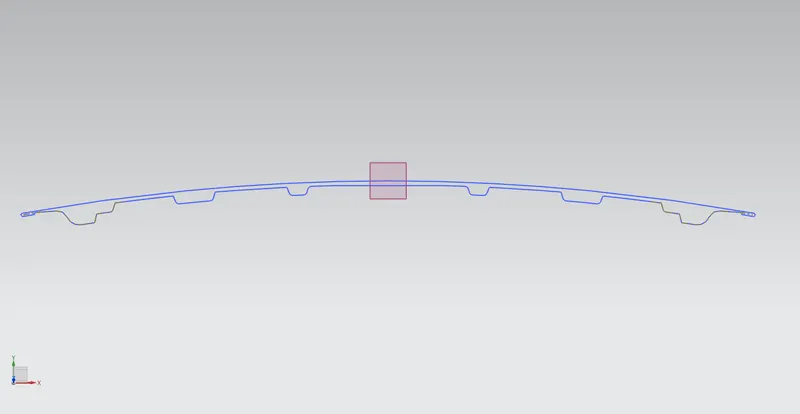
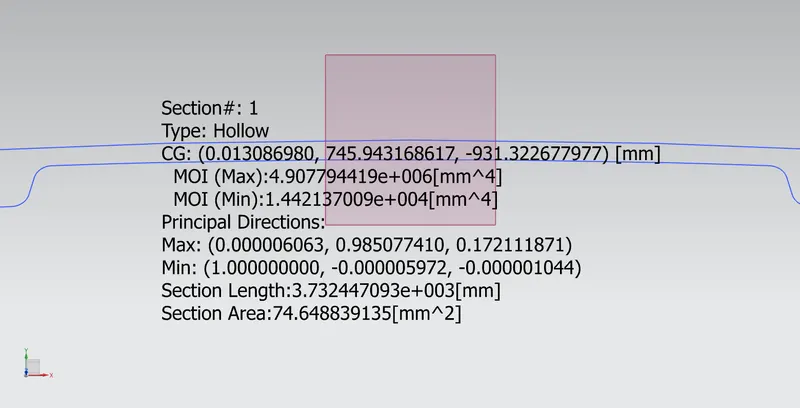
The values of inertia analysis from the software is given in the below picture,
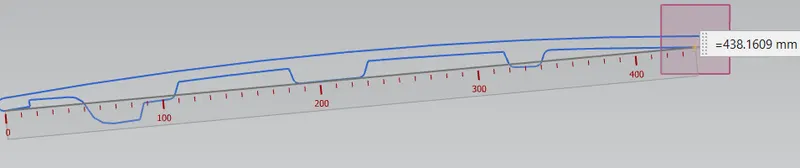
The Y distance is measured as shown in the below picture,
The moment of inertia that I have got from the software is
MOI = 1.44213009e4 mm4
in my case the value of Y is nearly equal to 440 mm
the section modulus in this case is given by the formula
s= I/Y
=1.44213009e4/4
We get,
Section modulus = 32.78 mm3.
CASE2:
In case2, I have increased the distance between hood outer panel and hood inner panel, now the design is changed as shown in the below figure,
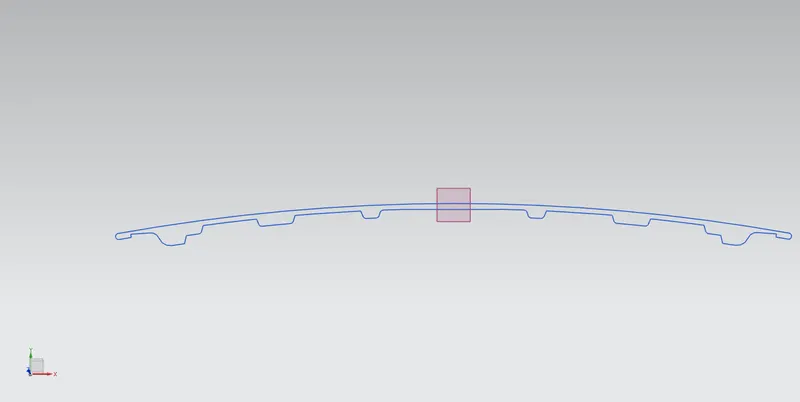
The values of inetria analysis is given in the below picture,
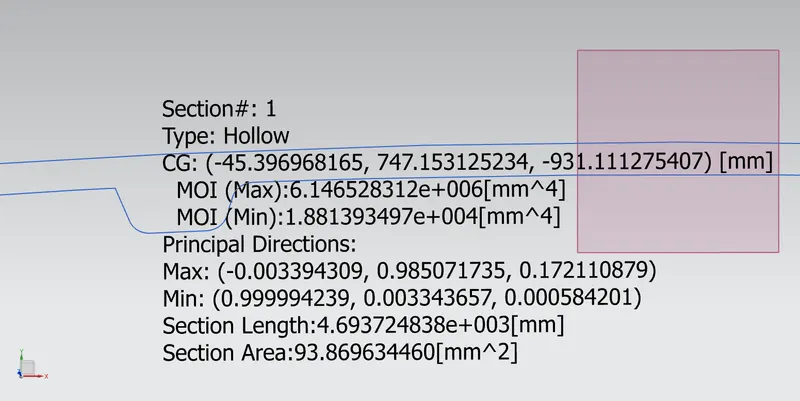
Now the moment of inertia that I have got from the software is
MOI=1.881393497e4 mm4
Now from here we can specify without caluclating that the section modulus is optimized as we know that the section modulus is directly proportional to the moment of inertia of the section.
My Y value is similar to the value in the previous case,
So, Y=440 mm,
Now the section modulus of the modified design is given by the formula,
S=I/Y
=1.881393497e4/440
=42.76 mm3
CONCLUSSION
Thus, we can conclude that the optimization of section modulus is done by changing the distance between hood inner panel and outer panel. Now the hood has more load with standing capacity than previous one.
The other way to do this is to provide more embosses, but don’t have enough space to provide embosses, so that I have increased the distance between the panels and optimized the vakue of section modulus.