Section Modulus calculation and optimization
Aim:To find the section modulus of the hood and optimization to improve the overall section modulus.
Section Modulus
Section modulus is a geometric property for a given cross-section used in the design of beams or flexural members, it is also referred to as the Polar Modulus or the Torsional Sectional Modulus. Other geometric properties used in design include area for tension and shear, radius of gyration for compression, and moment of inertia and polar moment of inertia for stiffness. Any relationship between these properties is highly dependent on the shape in question. Equations for the section moduli of common shapes are given below. There are two types of section moduli, the elastic section modulus and the plastic section modulus.
Mathmatically
Z=I/Y
Z - Section Modulus
I - Area Moment of Inertia
Y - Distance between extreme fibre and Neutral Axis
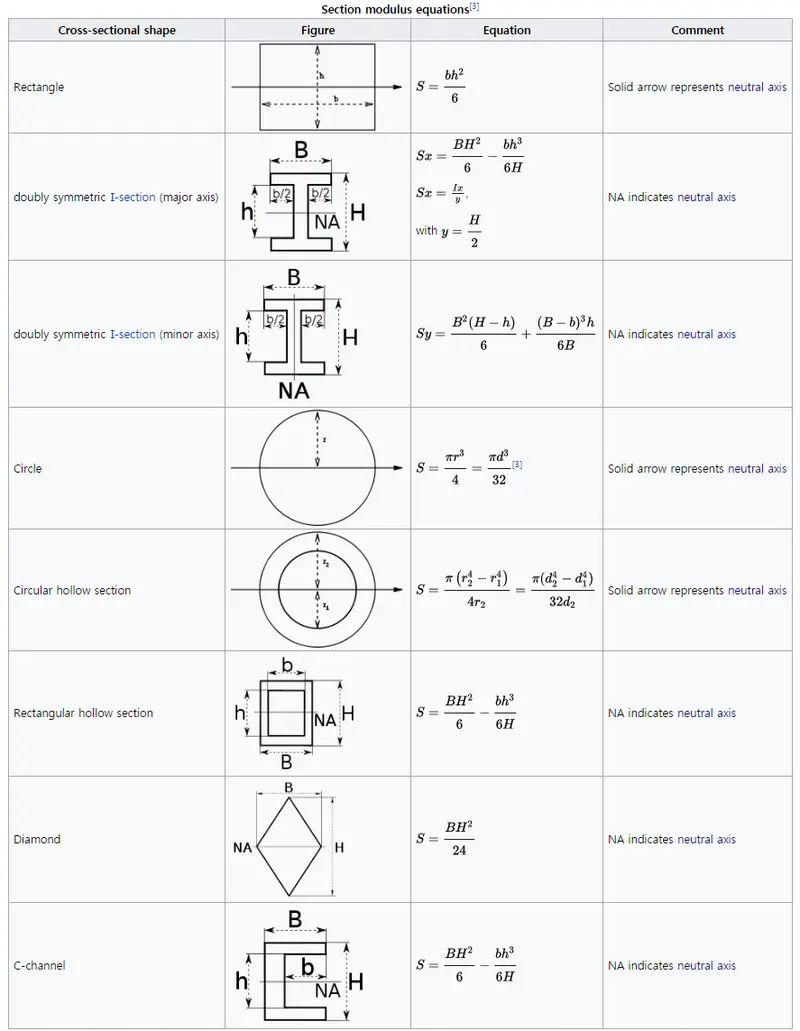
Bending equation
M/I = σ/Y = E/R
Where,
M = Bending Moment
I = Area moment of Inertia
E = Young modulus
R = Radius of gyration
From bending equation
M=Z x σ
from above, for maximum bending strength, the section modulus must be more i.e. the Moment of inertia must be more
Higher the Moment of Inertia higher the strength.
Calculations for Hood section:
The Moment of inertia for the section of hood is calculated using NX CAD Section Inertia Tool
a. First Design:
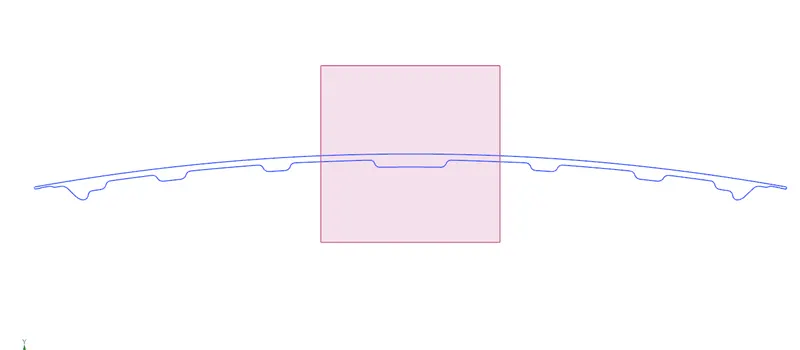
Analysis Result:
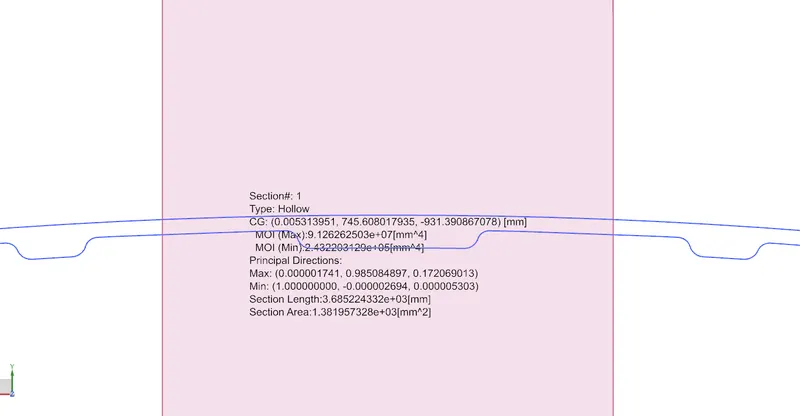
Max MOI= 9.126262503e+07 mm4
Min MOI= 2.432203129e+05 mm4
Y = 440 mm
Section Modulus
Z1=I/Y = 2.43220312*10^5 / 440
Z1= 552.78 mm3
Optimised Design:
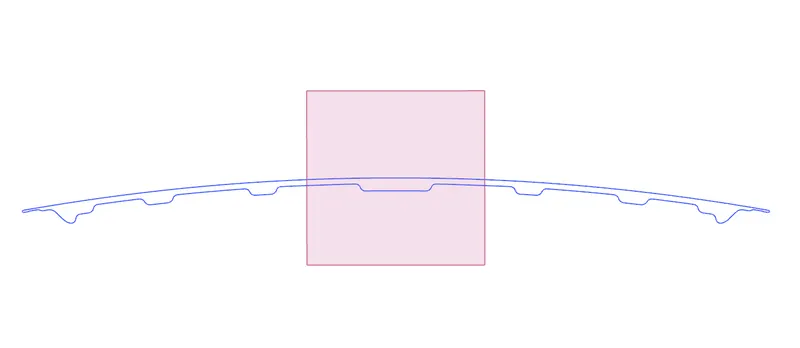
Analysis Result:
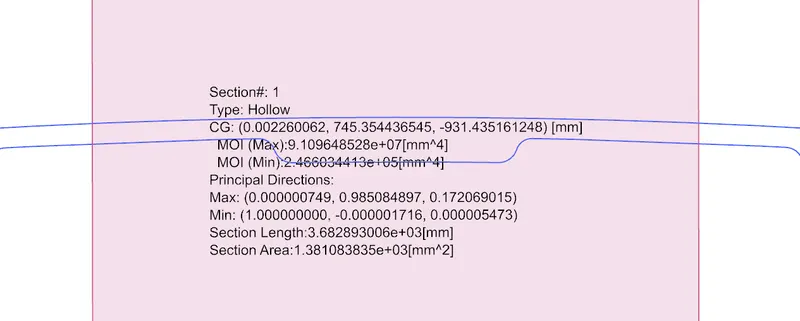
Max MOI= 9.109648528e+07 mm4
Min MOI= 2.466034413e+05 mm4
Y = 440 mm
Section Modulus
Z=I/Y = 2.466034413*10^5 / 440
Z2= 560.46 mm3
From Z1 and Z2,
Z2 > Z1
The section modulus value of Optimsed design is higher than the first design
Conclusion:
As we increase the section area, the moment of inertia & section modulus increase which means strength and load material also increase. Which the moment of inertia directly proportional to the strength of the material.