Section Modulus calculation and optimization
SECTION MODULUS CALCULATION AND OPTIMISATION
AIM:
The objective is to calculate the section modulus of a section based on the Hood design and to determine how the section can be optimised to increase the overall section modulus and thus the strength of the section.
INTRODUCTION:
Section Modulus is the geometric property of the given cross-section of any shaft or beam structures. It is the direct measure of the strength of the shaft section or the beam section. The more the section modulus, the higher is the moment of resistance and hence its load bearing capacity. Hence this study was carried out to investigate the increase in the section modulus by varying its dependant parameters.
DESCRIPTION:
SECTION MODULUS:
- Section modulus is the ratio of total moment resisted by the section to the stress in the extreme fibre.
- Section modulus gives the idea about how much load a given structure can take.
- The Section modulus is calculated at a particular section of the hood by doing a Section Inertia Analysis and obtaining the respective Smax & Smin values of that section.
- It is a way of quantifying a cross-section of a given geometry.
- Section Modulus is given by the equation:
S = I/y
Wherein,
S = Section Modulus
I = Area Moment of Inertia
y = distance between the neutral axis and the extreme end of the object.
The neutral axis is an axis in the cross section of a beam (a member resisting bending) or shaft along which there are no longitudinal stresses or strains
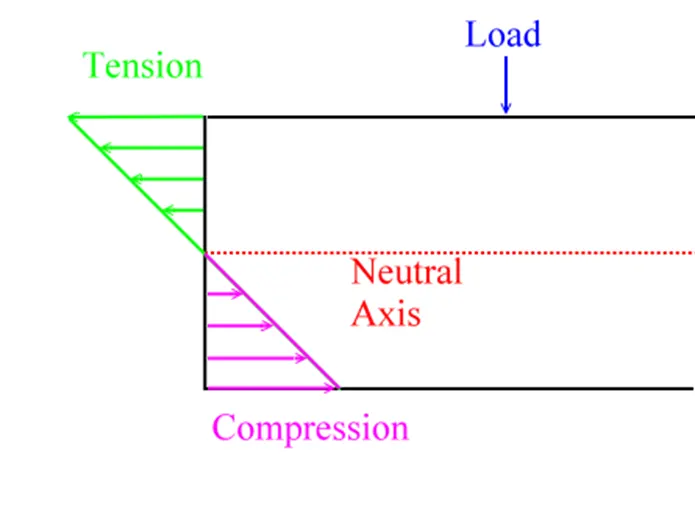
Area moment of inertia also known as second area moment or 2nd moment of area is a property of a two-dimensional plane shape where it shows how its points are dispersed in an arbitrary axis in the cross-sectional plane. This property basically characterizes the deflection of the plane shape under some load.
Example:
Rectangular Section
As we know the moment of inertia of the rectangular section,
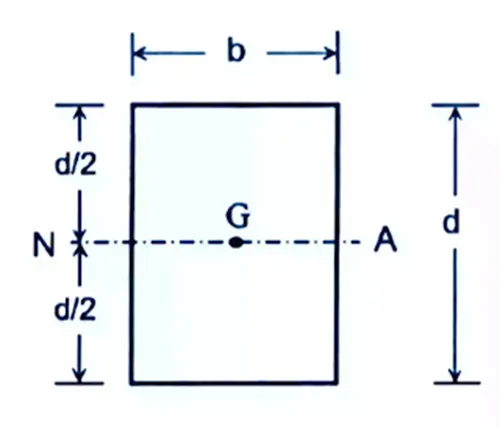
I = bd³/12
And the distance from the neutral axis, ymax = d/2
So,
S= I/ymax
S = (bd³/12)/(d/2)
Therefore, the Section modulus of rectangular section,
S = bd²/6
DESIGN STUDY AND OPTIMISATION:
First, the section modulus of the existing hood design was calculated.
Steps
- Section modulus of initial Hood Design:
- Using intersection curve, the curves of hood section were extracted.
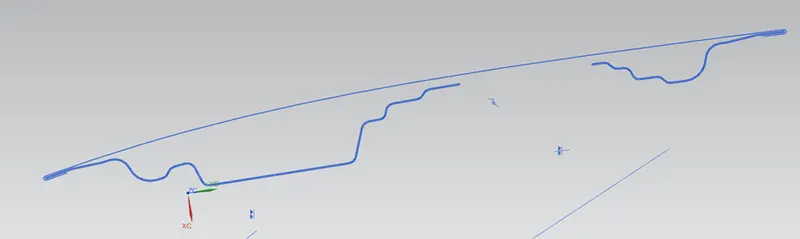
- The required section lines were projected onto a plane and the open ends were joined using straight lines.
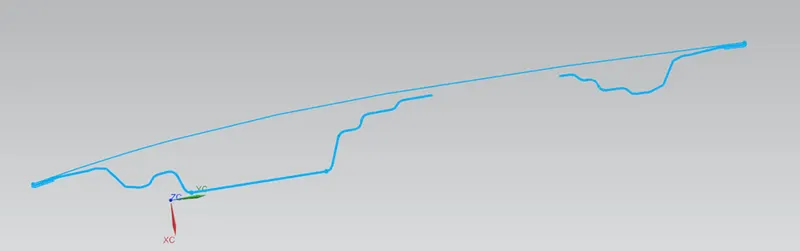
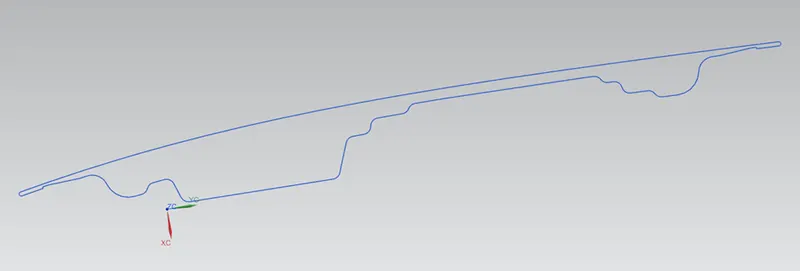
- Using the Section Inertia Analysis, the Imin values for calculation were obtained.
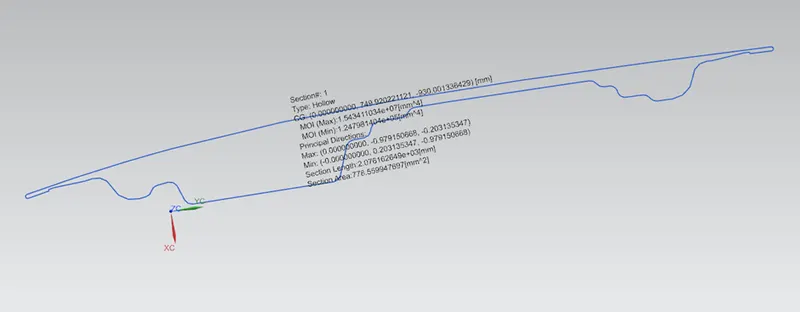
- Section Modulus is given by
S = I/y
Here,
I = Area Moment of Inertia = 1.247981404 X 10^5 mm^4
y = distance between the neutral axis and the extreme end of the object.
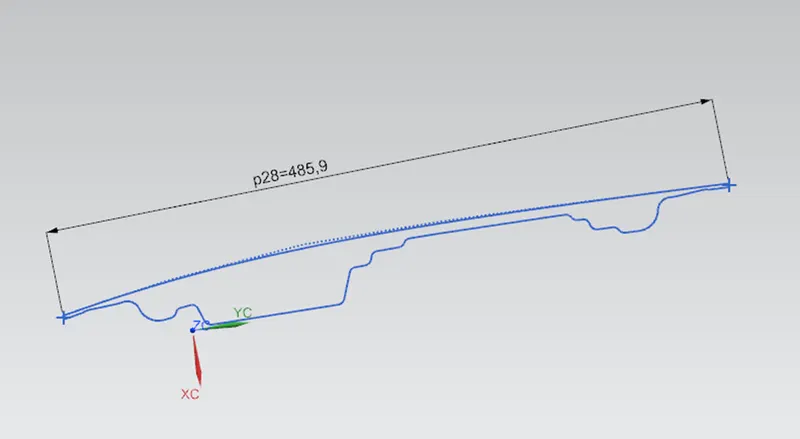
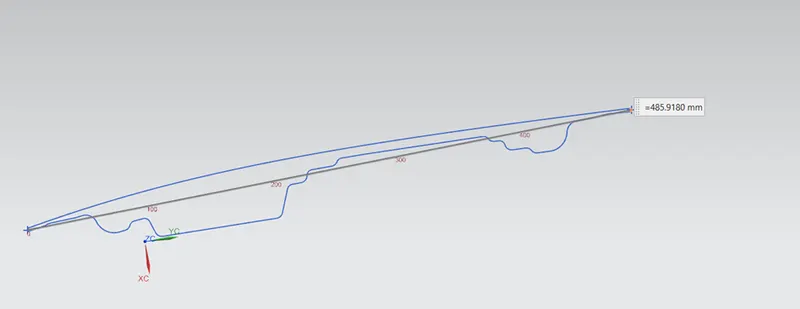
= 485.918/2mm
= 242.959mm
Thus, the calculated Section Modulus = S = I/y = 128.4148152568952mm^3
To increase the section modulus value either the “I” or “y” values from the section modulus equation should be varied. Taking into consideration that the “y” dimension of the hood outer would be constrained to the mating/adjacent parts and changing that would possibly result in a need to change other parts, the approaches to vary the Area moment of inertia(I) were focussed.
The area moment of inertia could be increased by increasing the section area. There are different ways to attain it such as adding embosses, increasing the embossed depths, increasing the depth between the outer and inner panel etc.
Due to some design intent followed previously, increasing the depth of the inner panel and outer panel gap was considered. To study the impact, the inner panel was offset by 0.5mm.
- Section modulus with a 0.5mm offset geometry:
After offsetting the curves of inner panel by 0.5mm outwards, the Section Inertia Analysis results were obtained for the new section:
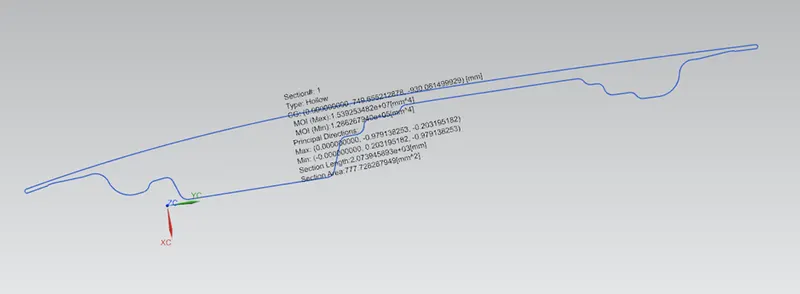
- Section Modulus is given by
S = I/y
Here,
I = Area Moment of Inertia = 1.286267940 X 10^5 mm^4
y = distance between the neutral axis and the extreme end of the object.
= 485.918/2mm
= 242.959mm
Thus, the calculated Section Modulus = S = I/y = 132.3544239974646 mm^3
CONCLUSION:
Consequently, the strength of the hood assembly was successfully increased due to the improvements made in the design.