Section Modulus calculation and optimization
SECTION MODULUS
INTRODUCTION:
What is “SECTION MODULUS”?
Section Modulus is a geometric property used to calculate the bending stresses in a structural member.
Mathematically,
It is defined as the ratio of the moment of inertia of a section about its centroidal axis and to the distance of the extreme layer from the neutral axis.
It is denoted by S.
S = I/ymax
Mathematically, by bending stress equation,
M/I = σmax/ymax
M = σ max × (I/ymax)
M = σ max × S
Where,
I = Moment of Inertia(m⁴)
y = distance from NA to extreme layer(m)
The unit of section modulus is m³.
TYPES OF SECTION MODULUS
There are two types of section modulus:
- Elastic Section Modulus
- Plastic Section Modulus
- ELASTIC SECTION MODULUS
Elastic section modulus is calculated when we are to use the material behaviour till the yield point.
For general design purposes, we use elastic section modulus.
Generally, elastic section modulus is denoted by Sₑ.
So,
Sₑ = I/ymax
Where,
I = Moment of inertia
ymax = Distance from NA to extreme layer.
- PLASTIC SECTION MODULUS
The plastic section modulus is used for materials where the elastic yield is acceptable and the plastic behaviour is considered to be an acceptable range.
It depends on the location of the plastic neutral axis. The plastic neutral axis is the axis that bisects the cross-section such that the compressive force from the region in compression is equal to the tension force from the region under tension. So, for sections with a constant yield stress, the area above and below the plastic neutral axis will be equal, but for mixed sections, this is not necessarily the case.
Mathematically,
The plastic section modulus is the sum of the areas of cross-sections on each side of the plastic neutral axis that may or may not be equal and multiplied by the distance from the local centroid of the two regions to the plastic neutral axis.
Sₚ = (Ac × yc) + (Aₜ + yₜ)
Where,
Ac = Area of cross-section under compression.
Aₜ = Area of cross-section under tension.
yc = Distance from the plastic neutral axis to the centre of gravity of the areas under compression.
yₜ = Distance from the plastic neutral axis to the centre of gravity of areas under tension.
Since on the neutral axis, the area under compression is equal to the area under tension.
So,
Ac = Aₜ
And,
yc = yₜ
CHALLENGE_4 – SECTION MODULUS CALCULATION
To calculate and optimize the section modulus by using the section from Hood design.
TOOL USED: NX_12
- CASE STUDY _1
For this case we consider our section modulus has to be calculated from Hood design followed section taken,
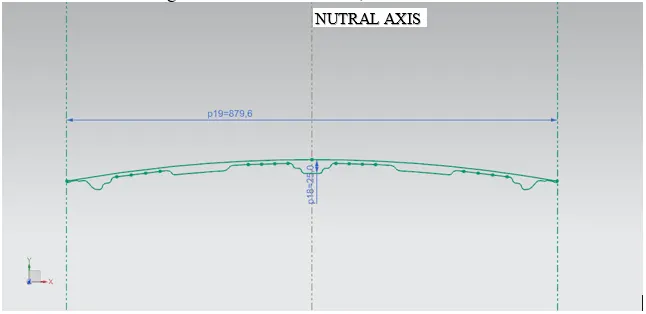
Fig 1: Case_1 Section Modulus calculation
For this case 1, by using NX tool to calculate the MOI by section inertia analysis thus the results are below as,
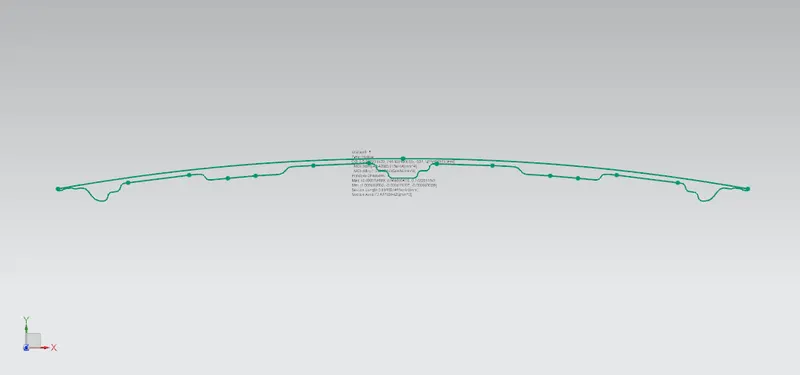
Fig 2: Case_1 Section Inertia Analysis Results
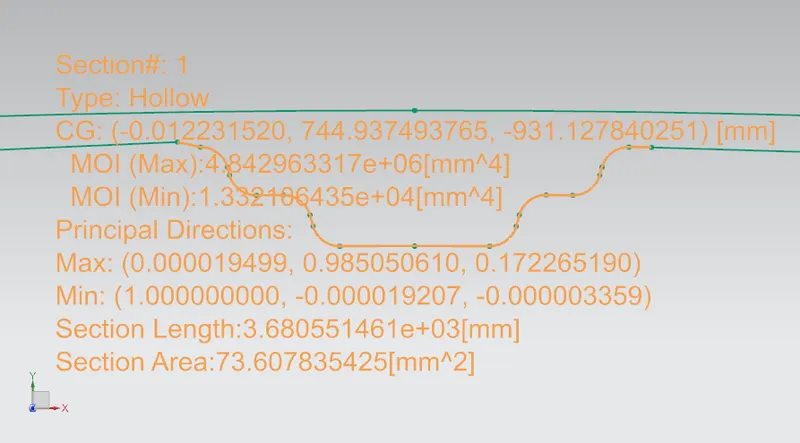
Fig 2.1: Case_1 Section Inertia Analysis Results
From the above results we calculate section modulus by using the MOI min value,
MOI min = 1.332106435 x 104 mm4
ymax = 439.815 mm
Hence,
Section modulus (S) = Imin / ymax
S = 1.332106435 x 104 mm4
439.815 mm
S = 30.312 mm3.
- CASE STUDY _2
For this case we consider our section modulus has to be calculated from Hood design followed section taken,
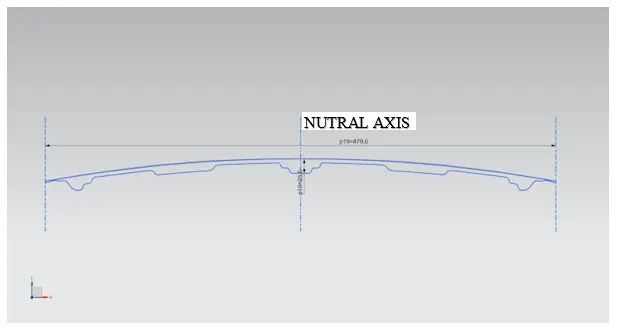
Fig 3: Case_2 Section Modulus calculation
For this case 2, by using NX tool to calculate the MOI by section inertia analysis thus the results are below as,
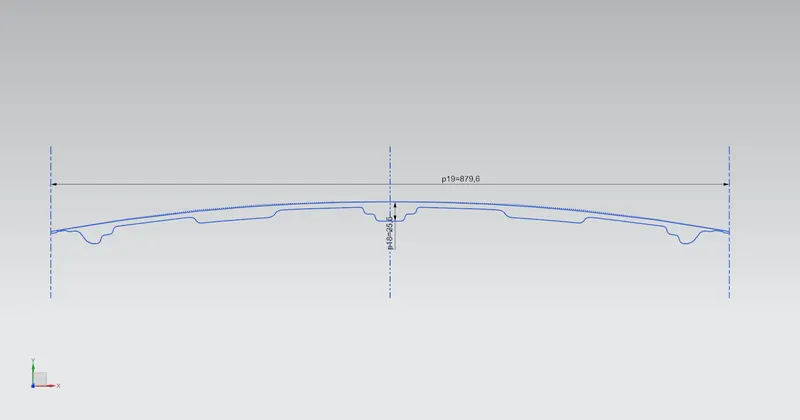
Fig 4: Case_2 Section Inertia Analysis Results
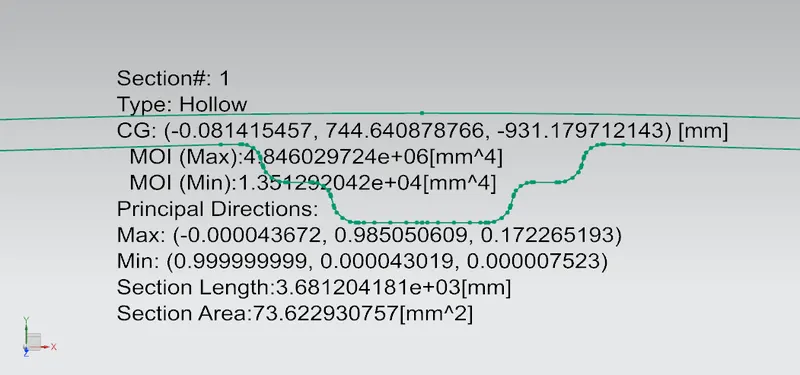
Fig 4.1: Case_2 Section Inertia Analysis Results
From the above results we calculate section modulus by using the MOI min value,
MOI min = 1.351292042 x 104 mm4
ymax = 439.815 mm
Hence,
Section modulus (S) = Imin / ymax
S = 1.351292042 x 104 mm4
439.815 mm
S = 30.724 mm3.
CONCLUSION:
According to the both case study results are below,
Case_1 Section Modulus(S) = 30.312 mm3.
Case_2 Section Modulus(S) = 30.724 mm3.
And Hence, thus the results shown that there is difference in the section of Hood from the outer panel to the inner panel may increase in depth and the MOI also increase. So that the increase in MOI it may causes strengthen the hood.
From this study it may help to improve the strength of the object by varying depth in sectional and also increase the load carrying capacity.