Hood design-Week 2
HOOD DESIGN
OBJECTIVE:
To design and develope hood and ists respective components and also the assembly of hood design.
INTRODUCTION:
WHAT is "HOOD or BONNET"?
The hood or Bonnet of a car is considered as the frontal BIW enclosure component. Hoods are designed to reduce air resistance as the air flow around the car. This hood design that plays major role of the aerodynamic flow affects around the car.
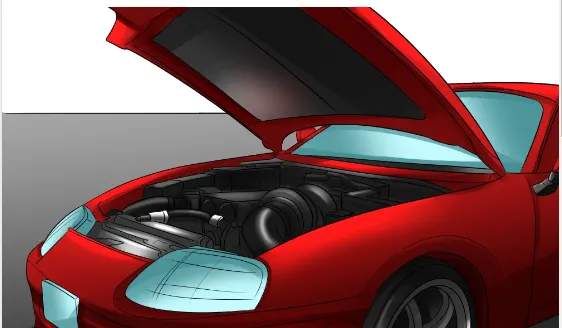
WHY We NEED HOOD OR BONNET IN CAR?
Hoods serves as a great deal of purpose in protecting the passenger in the car. And it also acts as the engine cover too.
COMPONETS OF HOOD AND ITS ASSEMBLY:
The hood and it consists of the following parts are below,
- Hood outer panel
- Hood inner panel
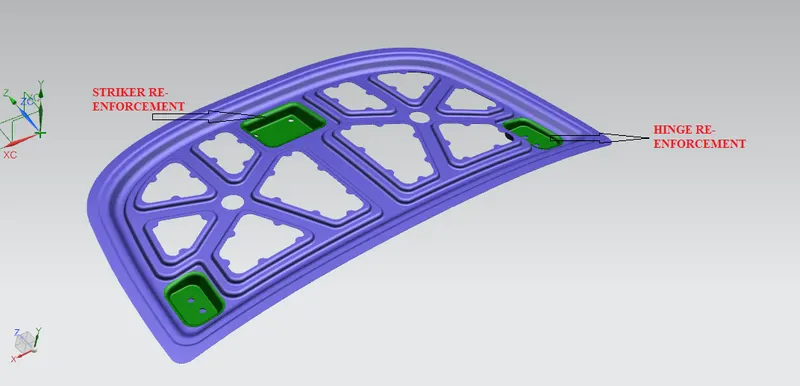
- Latch and Striker Re-enfforcement
- Hinge Re-enforcement
- Gas-stay Re-enforcement
The hood is commonly manufactured by using stainless steel of various grades. In some cases vehicles that considered weighless this kind of hoods are made up of Aluminium too.
1. HOOD OUTER PANEL
The outer panel is to be designed by the styling team to to get good visual appearence to the car by looking. And its thickness 0.75 mm. Hood outer panel while assembly with inner panel it should not assembled by spot welding because of it shows of outer panel appearence looks like not even soomther as well as spot patchs to be visble. So we can overcome this concern by using the masitc sealent for hood assmbly and it also reduces noise and vibrations too.
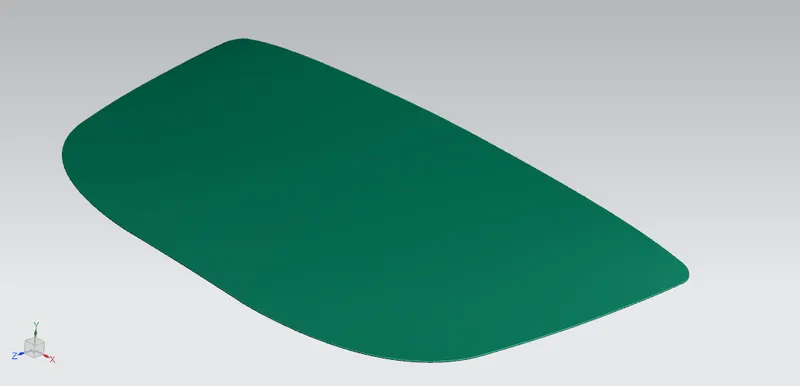
Fig 1: Hood design - Outer panel
2. HOOD INNER PANEL
The hood inner panel is most important part of the BIW in hood assembly it supports to the outer panel of car. And it considered as itself lot of embosses thus the embosses which helps to increasing strengthing the hood. Because when the hood inloves into a vehicle Frontal crash test the force acts on the hood and its inner panel emboss shapes plays major role to dissipates froce by verious region not directy it collopse the hood and it provides passengers safety too. This emboss to be done by the manufacturing process of deep drawing. And its thickness also 0.75 mm.
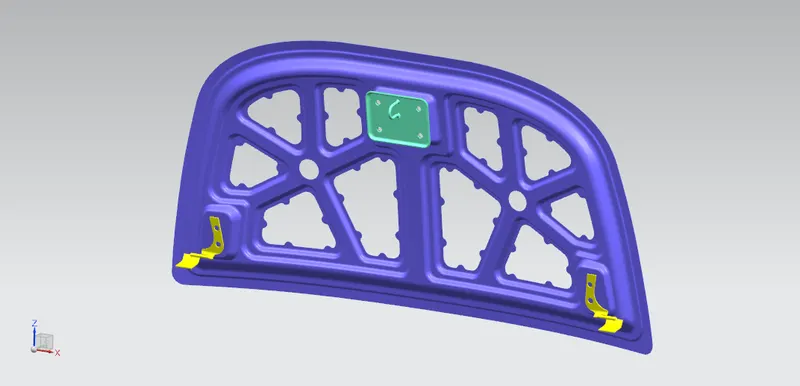
Fig 2: Hood design - Inner panel
Examine " while we have to made consideration in Inner panel design thus the part should be we examine and it shows of this design of the part as weather it is ok or not. From examine thus the part should be checked by its objects,body,faces,edges and its results to be all this kinds to be passed this design part will be good and based on this thickening also performs well otherwise rectify its after that will works.
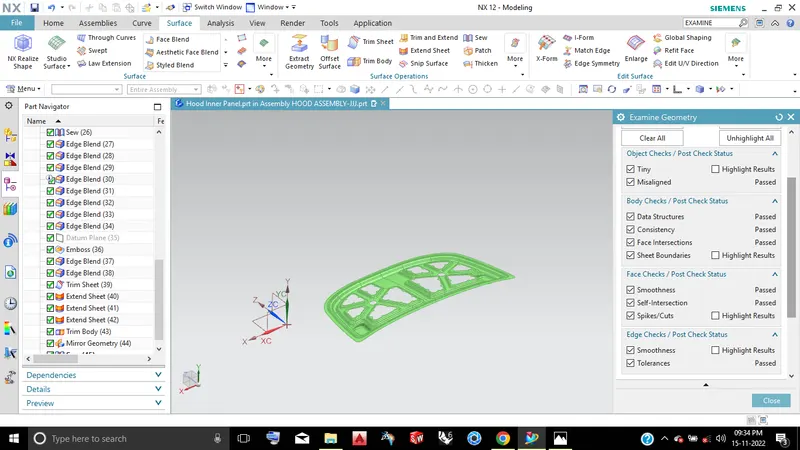
Fig 3: Hood design - Inner panel -Examine
3. LATCH TRAJECTORY
Latch and stiker in car hood it acts as locking system. And latch trajectoy is a path it can be used to positioning the latch, stiker as well as hinges too these are to be positioned in proper way by latch trajactory thus the hood open/close will appeares work properly otherwise it causes to closing issues will occurs.
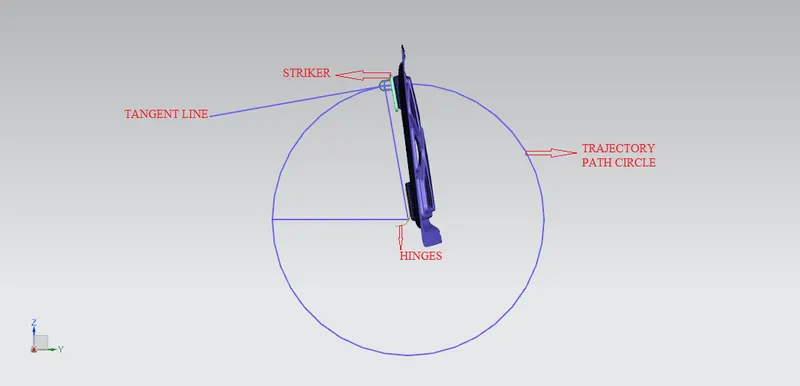
Fig 4: Hood design - Latch Trajectory
4. MASTIC
Mastic is a rubber sealent substance which can be used in the joining proocess of hood outer panel and the inner panel there will be added gap to be fullfiled withs this substance. And it can be reduces the vehicles noise,vibration, and harness. It has to be placed in between minimum 80 mm distance from one to another. It should be upto 3 to 5 mm of thickness. Based on these mastic thickness we will divide the embossing dimension.
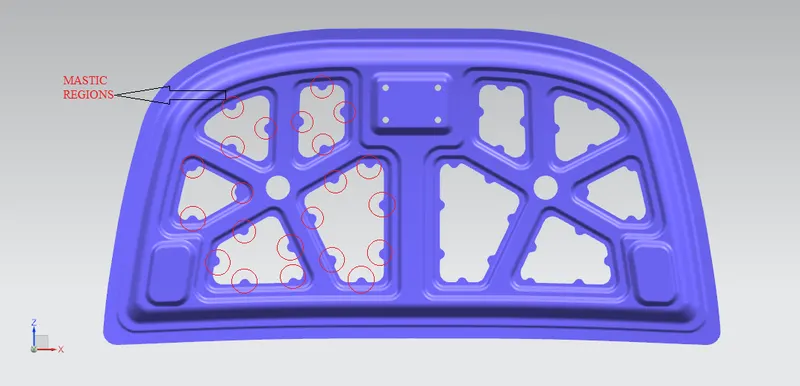
Fig 5: Hood design - Inner Panel Mastic positions
5. HINGES
Hinges are simple mechanical bearing devices that are used to connect two parts to allow them to rotate relative to each other about a fixed axis and in Hood design it plays as major role of hood assembly it connects to fix hood into the engine compartment and it alows to rotate while hood opening as well as closing.
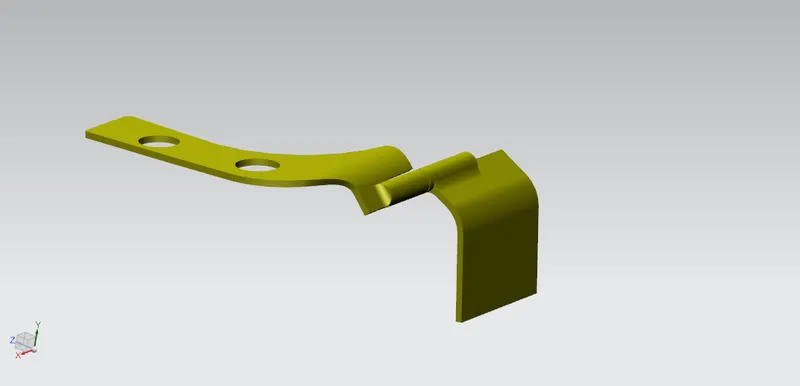
Fig 6: Hood desig - Hinge assembly
MANUFACTURING PROCESS:
DEEP DRAWING:
Deep drawing is one of the ost widely used processes in sheet metal forming. Apart from its use in many othr sectors, it is applied in the automotive industry for manufacturing of car body parts.
Deep drawing is defined as the process of a forming process which occurs under a combination of tensile and compresive conditions. A flat sheet metal blank is formed into hollow body open on one side or hollow body is formed ito hollow body with a smaller cross section.
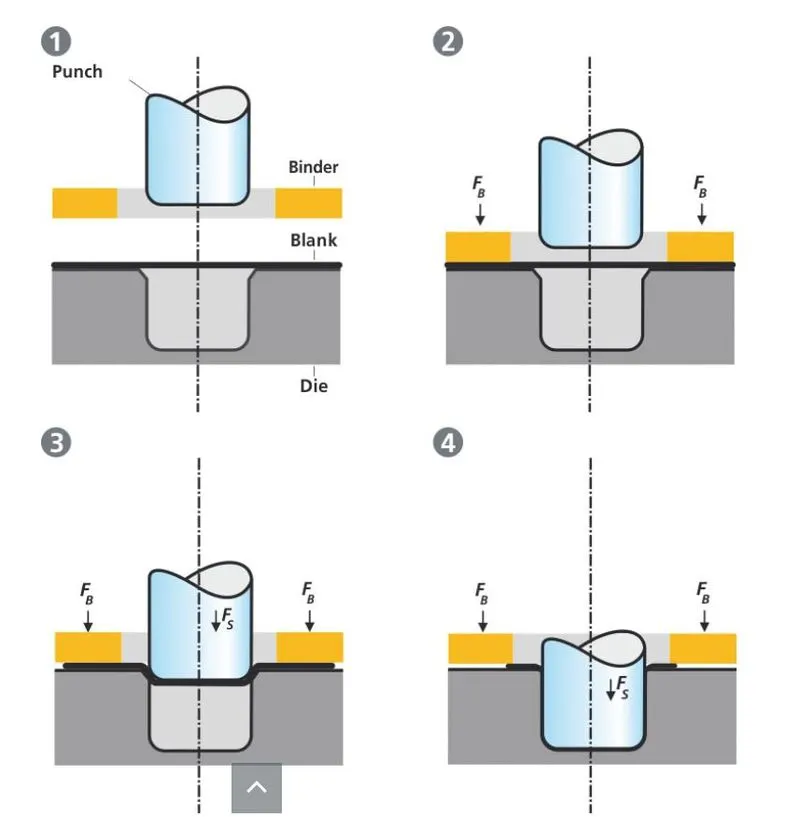
Fig 7: Deep drawing process
HEMMING:
Hemming is a forming operation in which the edges of the sheet are folded or floded over another part in oder to achiveing a tight fit. Normally hemming operations are used to connect parts together, to improe the appearance of a part and to reinforce part edges.
In car prodution, Hemming is used in widely assembly as a secondary operation after deep drawing,trimming and flangging operations to join the sheet metal parts like hood inner and outer panel joins together.
Types:
- Convetional die hemming
- Roll hemming
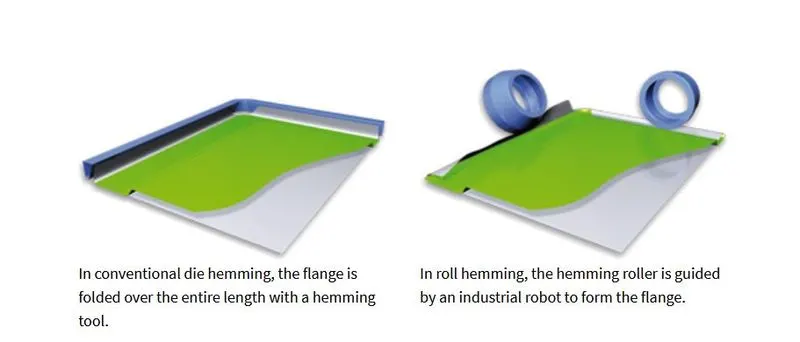
Fig 8: Hemming process
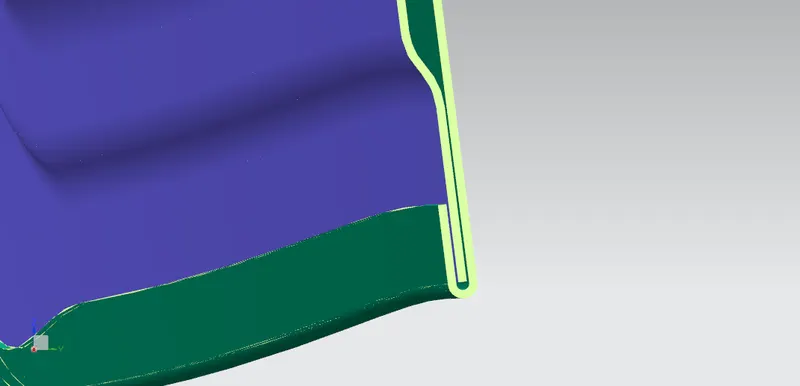
Fig 9: Hood Design - Hem
Design Consideration
Given Data:
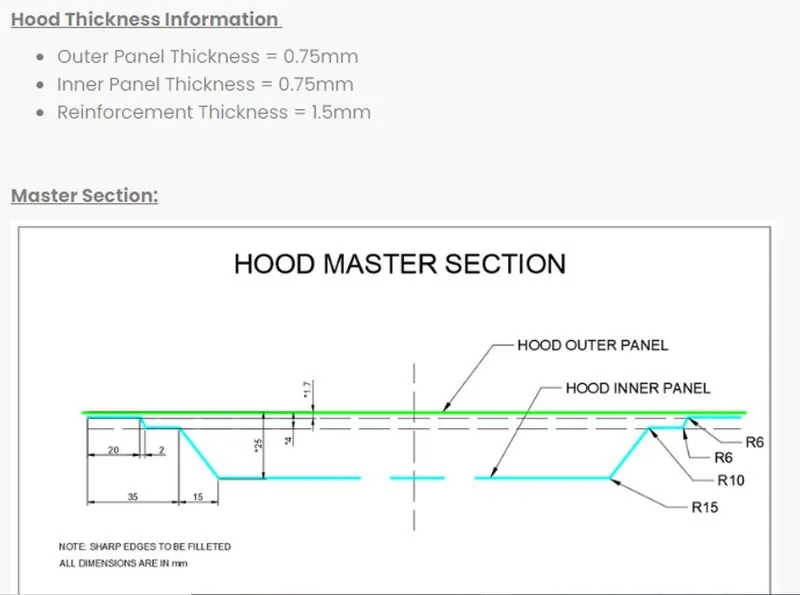
TOOL USED: NX-12
COMMANDS TO BE USED:
To prepareing hood design in NX-12 thus the following commands are used to done the design and the commands are Sketch, Line, Project, Quick Trim, Offset, Fillet, Quick Extend, Intersecting curve, Mirror, Trim geometry, Through Curve, Law extensions, Emboss, Offset surface, Face blend, Edge blend, Sew, Assembly constrains,Wave Gomentry Linker and etc.,
Based on the above given data and from the maste sections thus hood designing of outer penal, inner penal and then the assembly of hood designs are following as bellow are,
HOOD OUTER PANEL
HOOD INNER PANEL
HOOD ASSEMBLY
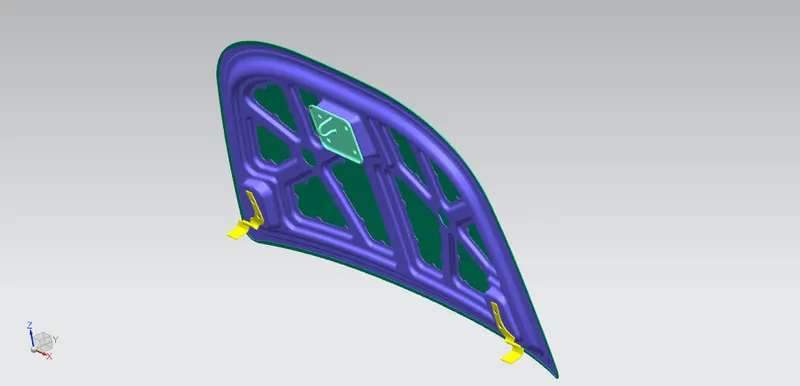
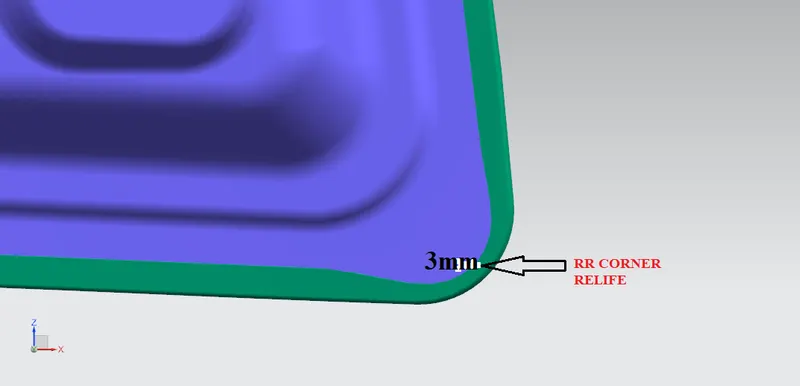
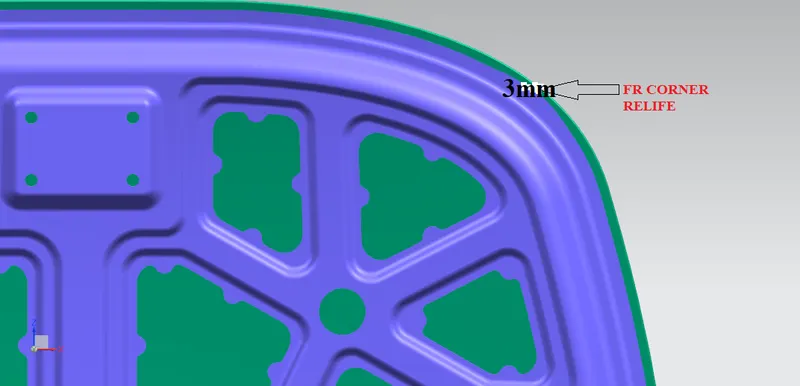
HOOD DESIGN - CORNER RELIFE
RE-ENFORCEMENTS
CONCLUSION:
Thus the hood design of hood inner panel, hooe outer panel and hood design assembly were completed by using of NX-12 software.
NOTED: From mentor, In every emboss creations after edge blend should be maintains altleast of 5mm of land needed for DFM and i will done this in future design challanges.