Section Modulus calculation and optimization
Section Modulus calculation and optimisation
Objective: To calculate the section modulus of the car hood previously designed by finding the Moment of Inertia using the CATIA V5 and also to optimise the cross section for a better result.
Introduction: Section Modulus is a geometric property used in design of flexural members which considers the cross section of the member. It is highly dependant of the shape of the cross section as well as the area of the said section.
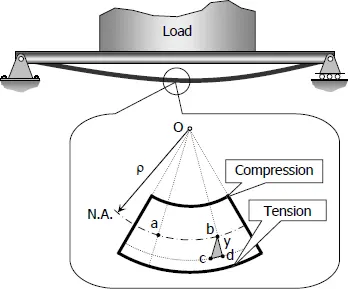
There are 2 types of section modulus :-
1) Elastic Section Modulus: This is used when the yeild point of the material is considered as the acceptable limit. This is the most commonly used standard whenever a component is designed.
2) Plastic Section Modulus: In this case the elastic yeilding is deemed acceptable and plastic deformation is considered as the limit.
The Elastic Section Modulus is defined as
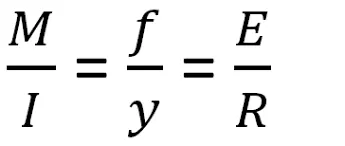
From This bending moment equation we can calculate the section modulus by below formula
S = I/y where;
I = area moment of inertia
Y = distance from the neutral axis to any given fibre
Usually for calculating the Section Modulus, the most extreme fibre which is the farthest from the neutral axis is considered during the calculations.
The significance of Section Modulus is that it defines the resistance of a body to bending. Higher the value of Section Modulus, the more resistant is the body towards bending.
The procedure for calculating the Section Modulus is as follows:
Case 1: Original cross section of the hood
Using the Intersection tool in surface workbench, the cross section of the hood is obtained.
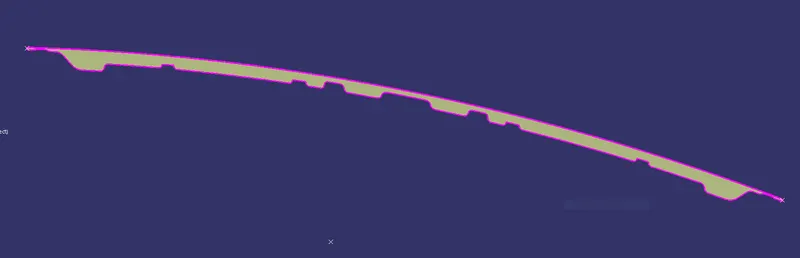
Now, to obtain the value of 'Y', the extreme edge of the hood is measured.
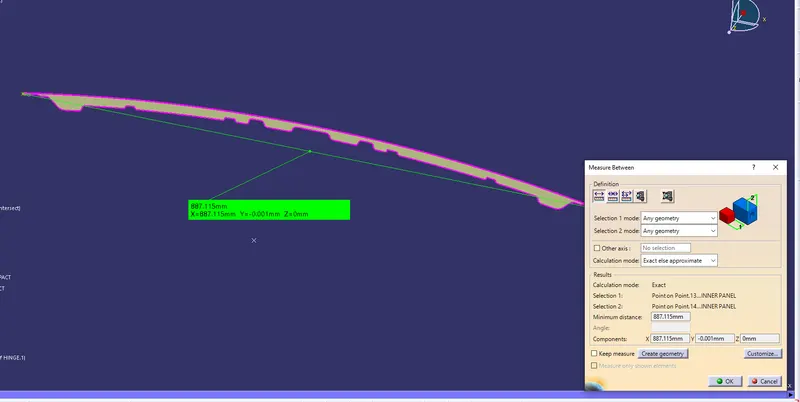
In this case, the distance is approximated to 887.115/2 = 443.55
From the data above:
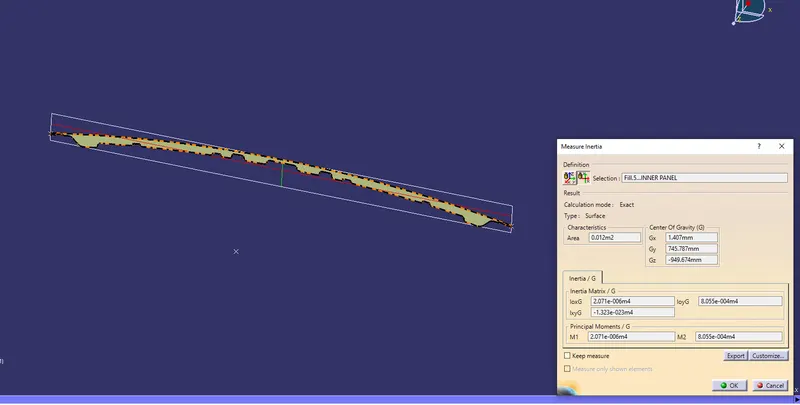
In CATIA with Measure Inertia Command Following are the result which obtained-
| IMPACTS | Minimum | Maximum | Y(mm) |
| FRONT | 2.071e006 | 8.055e008 | 443.55 |
| SIDE | 1.112e006 | 1.39e008 | 239.241 |
Section Modulus For Front Impact = MIN_4669.146 , MAX_1816029.75
Section Modulus For Side Impact = MIN_4648.03 , MAX_581004.092
Case 2: Modified hood cross section
The original cross section curve is modified by offsetting the lower half of the cross section by 2 mm.
SIDE IMPACT-
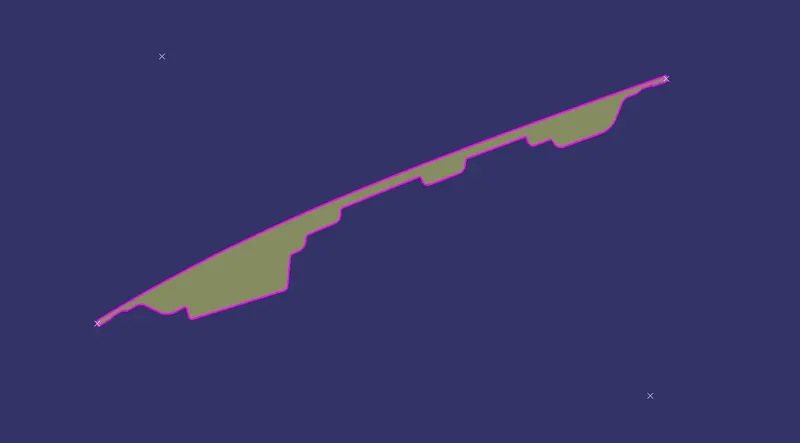
FRONT IMPACT-

the results obtained are as follows:
| IMPACTS | Minimum | Maximum | Y(mm) |
| FRONT | 2.501e006 | 8.055e008 | 443.55 |
| SIDE | 1.33e006 | 1.623e008 | 239.241 |
Section Modulus For Front Impact = MIN_5638.597 , MAX_3898997.245
Section Modulus For Side Impact = MIN_2998.53 , MAX_678395.425
Comparing the minimum Section Modulus values obtained for both cases, it can be deduced that the modified hood gives a greater result. The reason for going with the minimum values is that during designing, the minimum value is given priority if the product is to be made with safety in mind. So manufacturers try to maximise the minimum Section Modulus via optimization.
Conclusion:-
Hence when comparing case 1 & case 2,
1. The section modulus value of case 2 is higher than the case 1.
2. Which Concludes if front and Side Imapct loads will be applied to the Hood , if it is flat then force distribution will not be affective as it will be when we create primary and secondary embosses , Which Results in increasing the section modulus.