Roof Design
OBJECTIVE :
- The objective of this project is to design car roof with essential flanges and reinforcements like ditch area , front roof rail ,bow roofs, central roof rail and rear roof rail for the the given styling surface
- Perform a curvature study on the roof and perform the calculations for the heat distortion and snow load criteria to determine whether the bow roofs are at the correct position
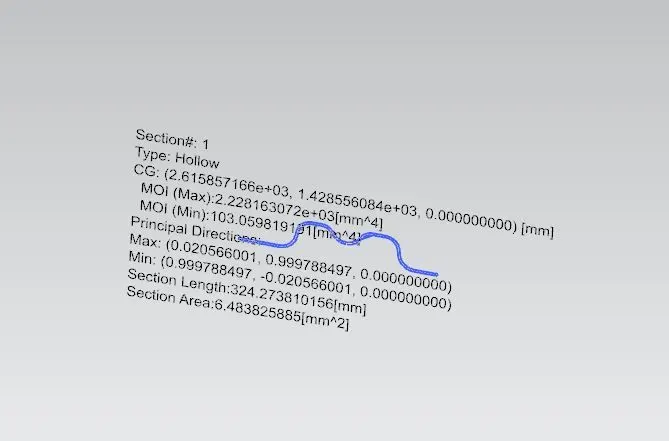
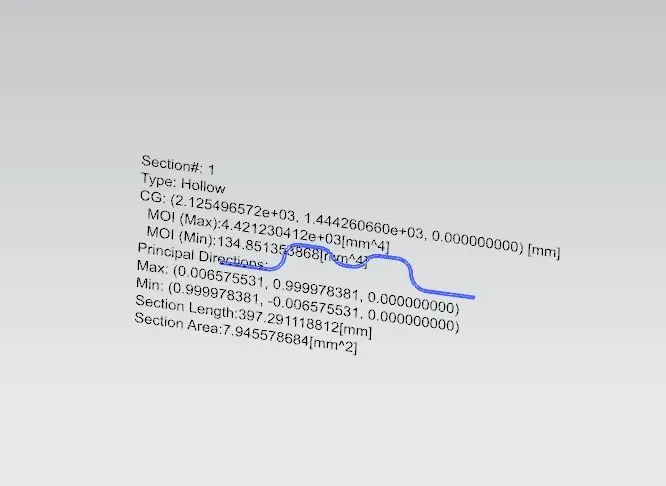
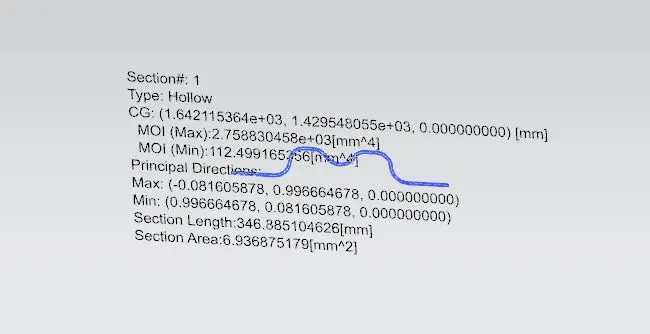
- Finding moment of inertia and section modulus for Bow roofs ,central roof rail . front roof rail and rear roof rail .
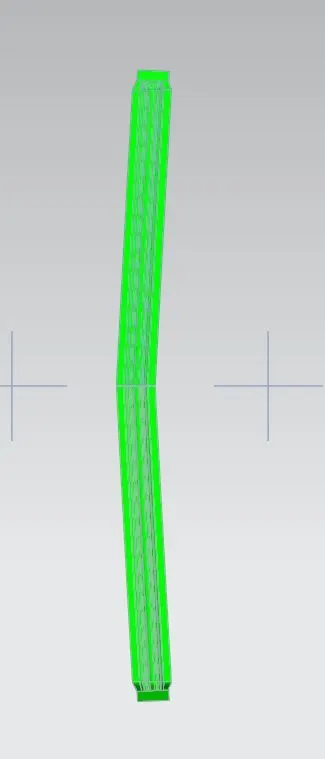
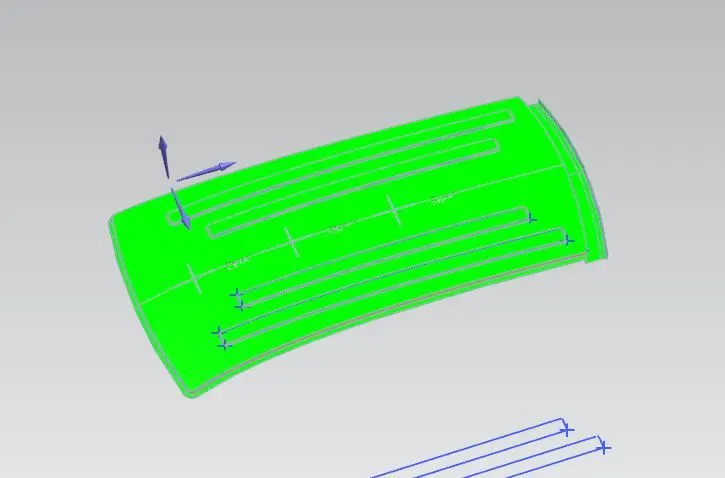
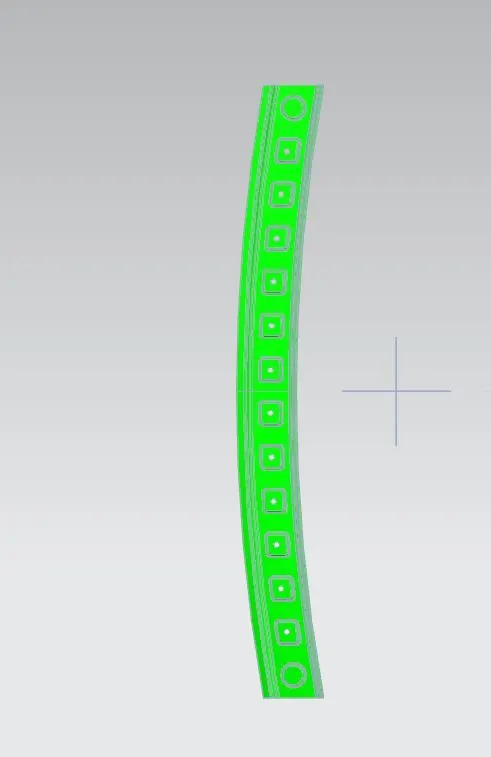
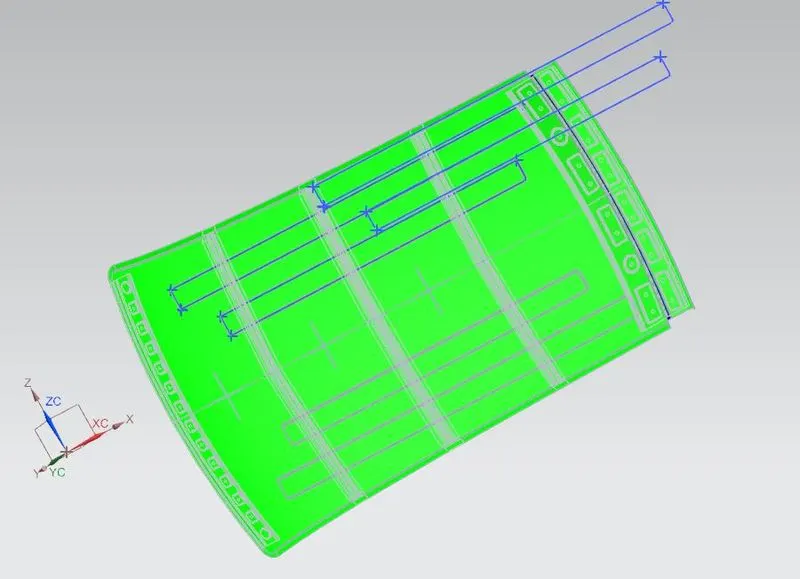
- Perform the draft analysis for each reinforcements
SOFTWARE USED : NX -CAD
INTRODUCTION :
Design of any product starts from an requirement .The design engineer sketches the product based on the the requirement .Then the 2D sketch with the proper dimensions is converted into the 3D model using the advanced CAD software's .The another important thing in the design is that ,every product that is designed should be able to manufactured . so the role of the design engineer is to design the product that can be easily manufactured and with less cost effective .This is the place where the Design for manufacturing [DFM] and Design of assembly [DFA]
takes a role while developing any product .The process of development of design carries on until the design satisfies the customer needs .
Here in this project the product that we are going to develop is a car roof.
Main Parts Of Roof :-
- The roof has an outer panel which is the styling part.
- Strengthening parts are present below an outer panel of a roof, which are front roof rail, Bow roof, Centre roof rail, and Rear roof rail.
- The front roof rail provides provision for the windshield glasses. Visibility criteria and headroom clearance have to be followed while designing the front roof rail. Provision for windshield mounting and inside rearview mirror is provided on the front roof rail.
- The Rear roof rail has hinge mounting for the back door. It is attached at the portion where the back door meets with the roof.
- Bow roofs are provided in between the front roof rail and center roof rail as well as the Rear roof rail and center roof rail. They are provided to enhance the localized strength of the roof and are attached directly to the bottom of the roof with either spot welding or with the help of Mastics.
- Reinforcement center or center roof rail is used as a cross member between Left hand and right-hand bodysides.
- Both the front roof rail and rear roof rail provided with the Master section for the design.
- The below image shows the location.
Design and Functional Requirements for the Roof :-
While designing of roof following considerations have to be taken into account.
- Visibility Criteria
- Head clearance
- Curvature Study
- Head Distortion and snow load criteria
Design Considerations:-
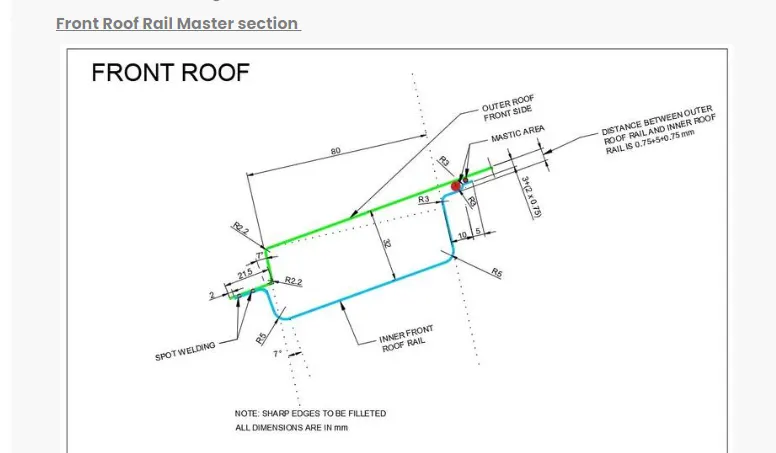
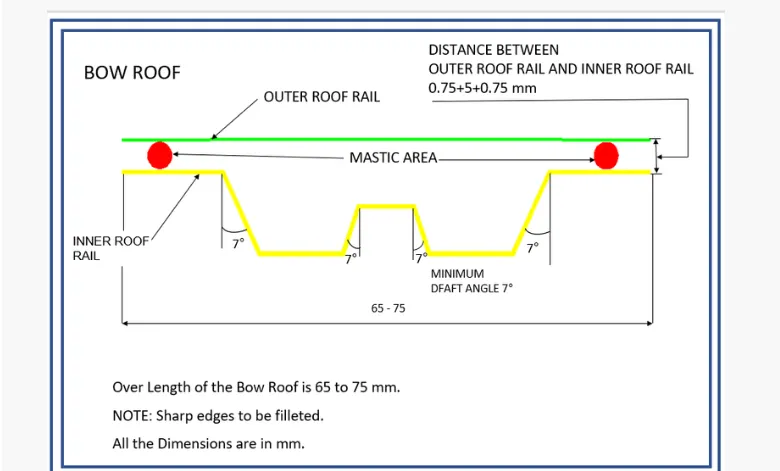
- Clearance of 5 mm should be present between outer roof rail and Front roof rail, Rear roof rail, Bow roof, and Reinforcement center where mastics are used for adhesion.
- Thickness for all sheet metal parts - 0.75 mm.
- All edges should have fillets and there should not be any sharp edges present.
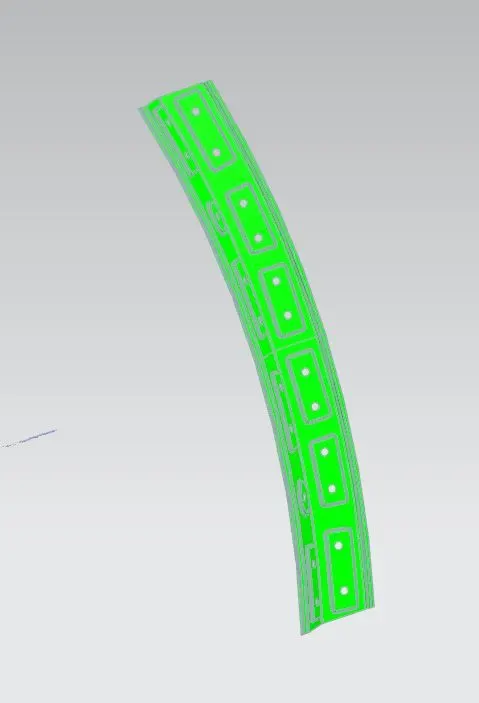
- A minimum draft of 7 degrees is required for all the faces.
Design Of Roof Rail and Bow Roofs :-
A.Front Roof Rail :-
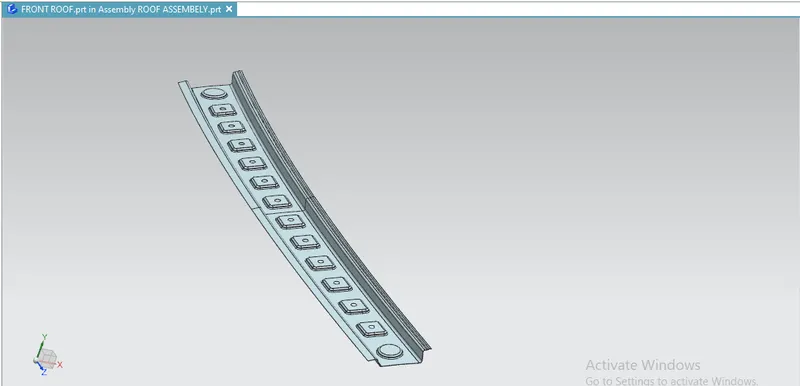
- By following the given Master section and dimensions front roof rail has been designed.
- The below image shows the given master section for the front roof rail.
B.Bow Roof 1 :-
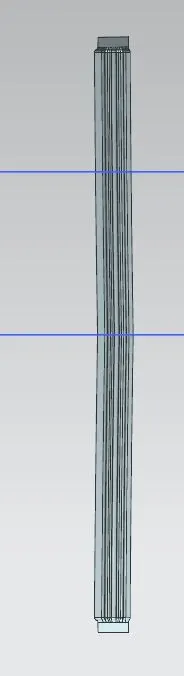
- By following the given Master section Bow Roof has been designed.
- The below image shows the given master section for Bow Roof.
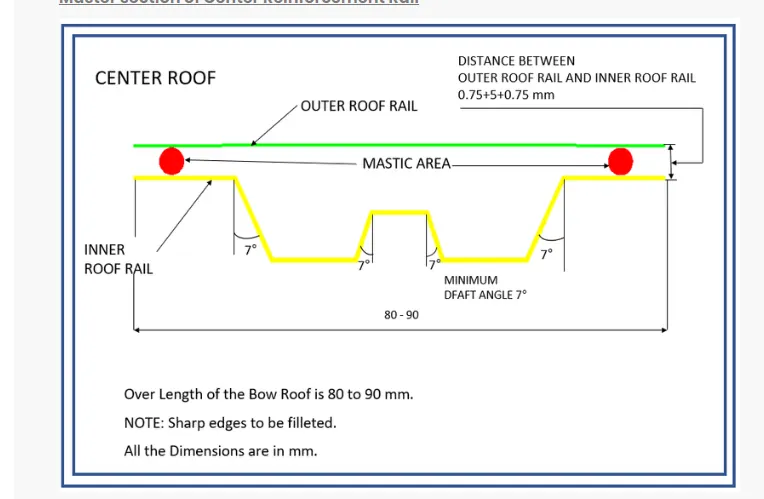
C.Centre Reinforcement :-
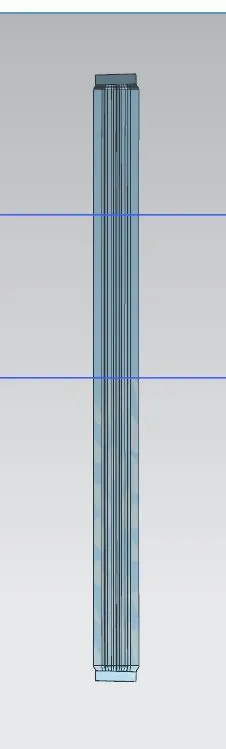
- By following the given Master section Centre Reinforcement Rail has been designed.
- The below image shows the given master section for Centre Reinforcement.
E.Rear Roof Rail :-
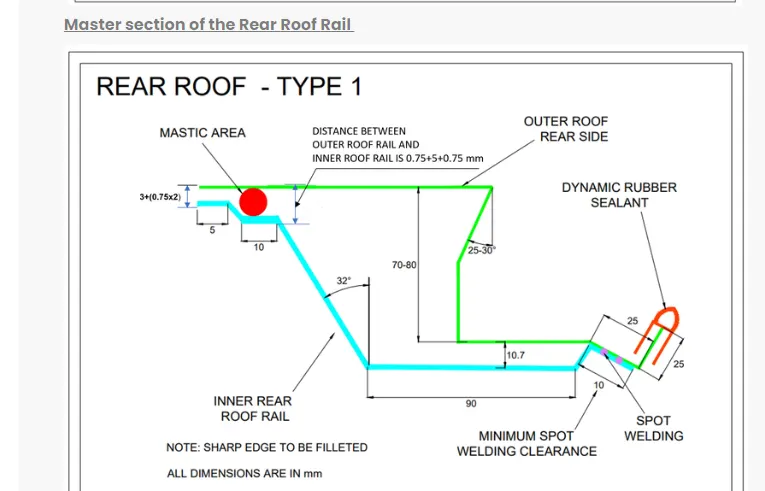
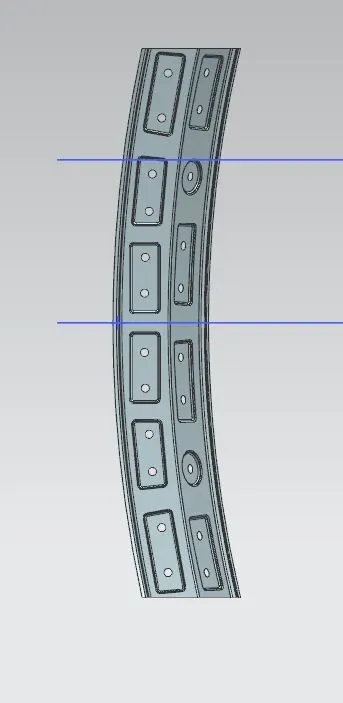
- By following the given Master section Rear Roof Rail has been designed.
- The below image shows the given master section for Rear Roof Rail.
- SECTION MODULUS :
- Section modulus is a geometric property for a given cross-sect ion used in the design of beams or flexural members. Other geometric properties used in design include area for tension and shear, radius of gyrat ion for compression, and moment of inertia and polar moment of inertia for stiffness. Any relationship between these properties is highly dependent on the shape in question.Equations for the section moduliof common shapes are given below.
- There are two types of section moduli:
- The elastic section modulus and The plastic section modulus.
- The elastic section modulus is defined as,
- s= 1/y
- where :
- S= Section modulus
- I = second moment of inertia (or area moment of inertia,not to be conf used with moment of inertia)
- y = the distance from the neutral axis to any given fibre.It is often reported using y = c,where c is the distance f rom the neutral axis to the most extreme fibre.
MOI FOR BOW ROOF RAIL 1 :-
MOI FOR CENTER ROOF RAIL :-
MOI FOR BOW ROOF RAIL2 :-
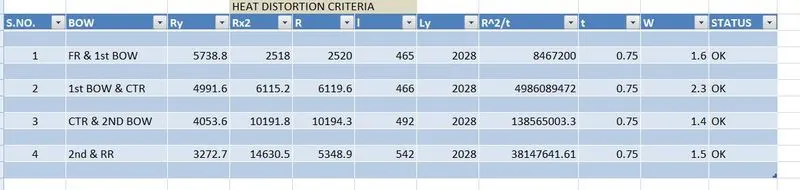
Heat Distortion Analysis :-
- Heat distortion analysis plays a pivotal role in the strength of the roof panel. It is the temperature above which material cannot be used for structural applications.
- This study is used to predict the heat distortion temperature where the material starts to soften when exposed to a fixed load at elevated temperature.
- In order to avoid any bending or damages on the roof, heat distortion temperature can be recalculated using the trial and error method by changing the position of bow roofs. In this way, it can come in the range which is shown below.
Formula
W = [1.73 x 10^(-3) x L] + [1.85 x 10^(-8) x (R^2)/t] + [ 1.10x10^(-3) x l] - 2.68
Judgement Condition using w : OK< 2.7> 3.1
Where
L = Roof Length in X-Direction[mm](Roof dimension in 0-Y)
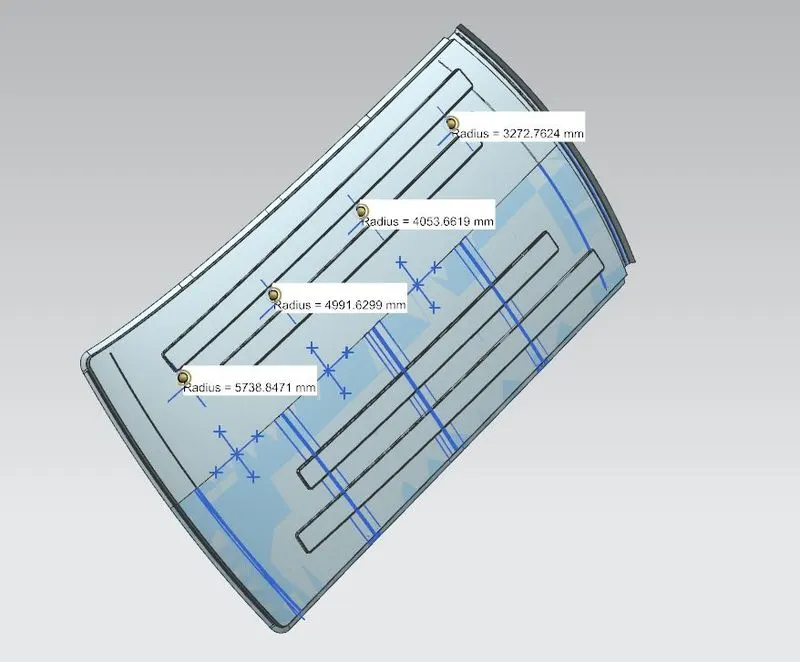
R = Roof curvature
R = 2(Rx*Ry)/(Rx+Ry)
Rx = X curvature
Ry = Y curvature
t = Roof plate thickness [mm]
l = Bow Roof Span [mm]
RELAVENT IMAGES : -
(1) :- Ry values
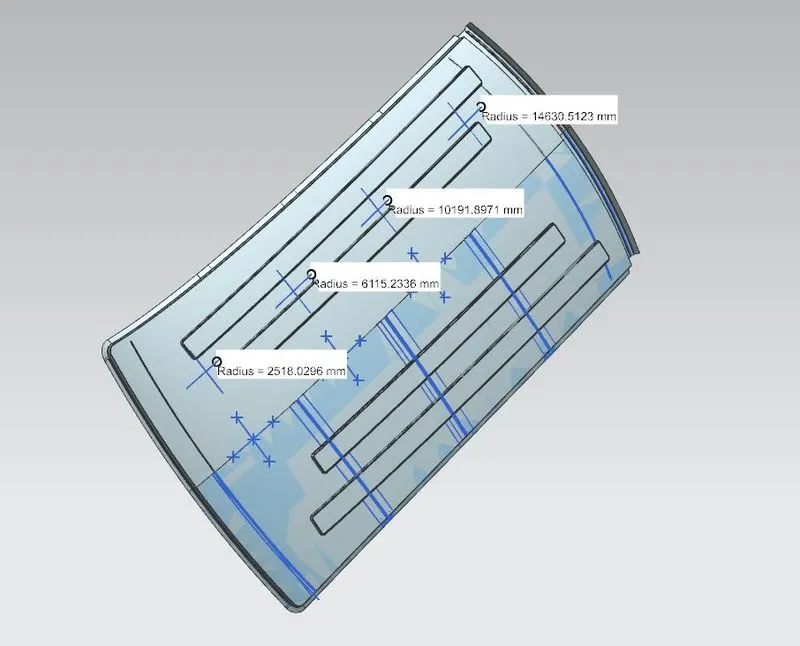
(2) :-Rx values
CALCULATION OF 'W' :-
Snowload Analysis :-
- The purpose behind this analysis is to check the strength of the roof when snow is present on it acting as a load.
- A roof should be designed in such a way that it should rebound to its original shape after the removal of snow.
- Formula
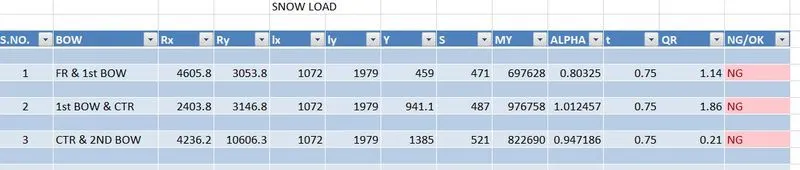
- Qr = [Iy x t2] / [α x s x [(Rx + Ry)/2]2 x 10-8]
- Where
- α = My x Lx2 x 10-12 , My = Y(Ly-Y)
- Judgement condition = Qr ≥ 3.1
- 250 ≤ s ≤ 380
- t = Roof plate thickness [mm]
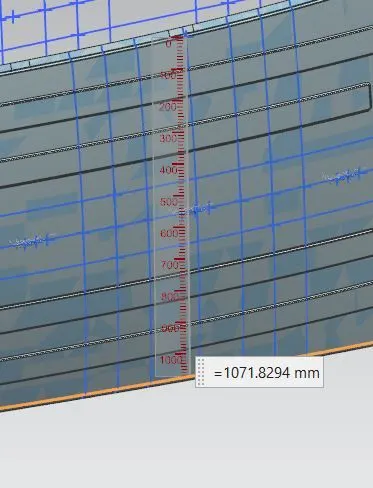
- Ly = Distance between the front and rear roof Rails on the Vehicle along with 0Y[mm]
- Length of Roof panel with the center point between Roof rail Front /Rear as the front and rear reference point.
- Lx = Distance between the Left and Right end of the roof on the Roof BOW [mm]
- Width of the roof panel exposed on the surface.
- Y = Distance front Front Roof Rail to Roof BOW[mm]
- s = Distance for which Roof BOW bears divided load [mm]
- s = L1/2 + L2/2
- Iy = Geometrical moment of inertia of Roof BOW (Y cross-section )[mm4]
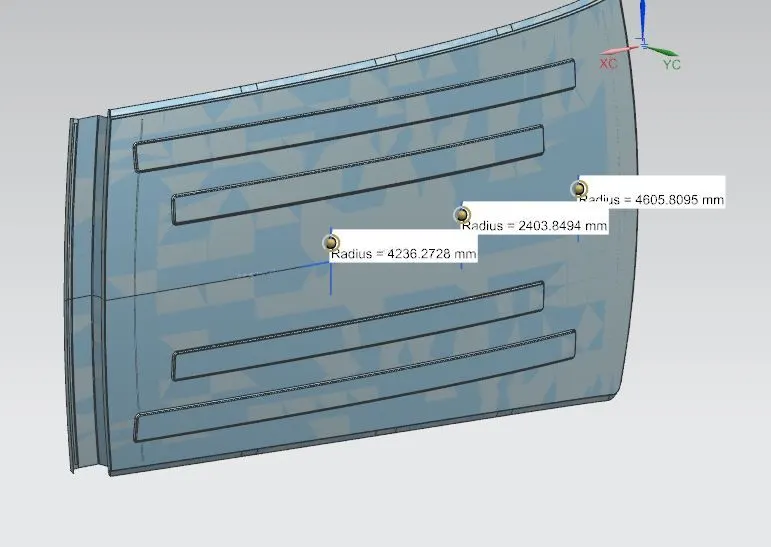
- Rx = Lateral direction curvature radius of roof panel Y cross-section on Roof BOW [mm]
- Roof panel curvature Radius of the Length Lx in Front view
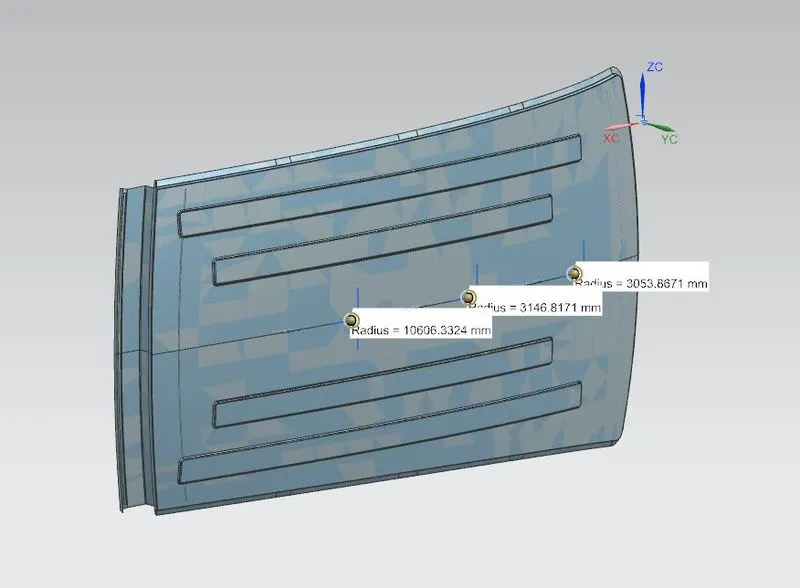
- Ry = Longitudinal Direction curvature radius of the Roof panel X cross-section on Roof BOW [mm]
RELAVENT VALUES : -
(1) :- Rx values :-
(1) :- Ry values :-
(3) :- Ly values
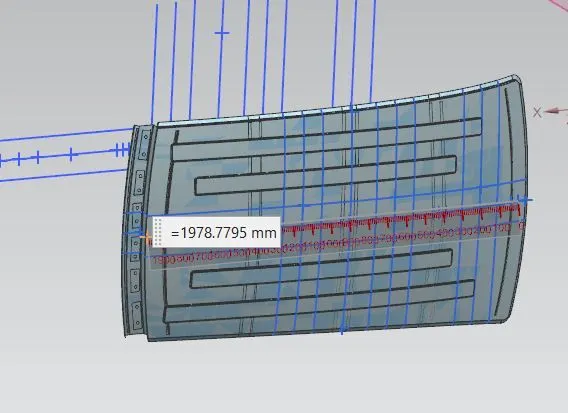
(4) :- Lx values
SNOW LOAD CALCULATION Qr :-
DRAFT ANLYSIS OF ALL PARTS :-
1 :-
2 :-
3 :-
4 :-
5 :-
RESULTS :-
- All the parts have successfully cleared the draft analysis.
- The proposed Roof design has successfully cleared the heat distortion analysis.
- The portion between center roof and Rear Roof Rail is failing in Snowload analysis.
- Embosses have been provided onto the roof outer panel portion where it is failing in snowload analysis. Embosses increase the strength of the roof panel.
CONCLUSION :-
The roof has been successfully designed considering all the design Rules, Master sections, Manufacturing feasibility, Draft analysis, Heat distortion criteria, and snowload analysis.