Roof Design
ROOF DESIGN:-
AIM:
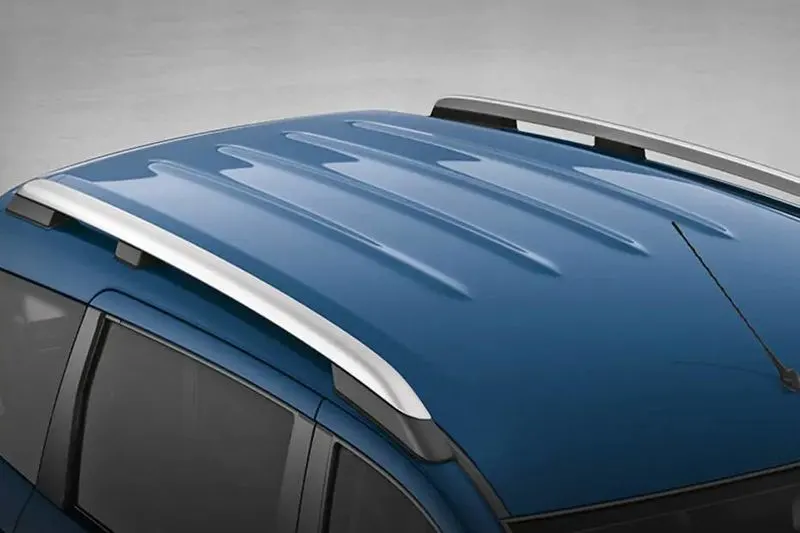
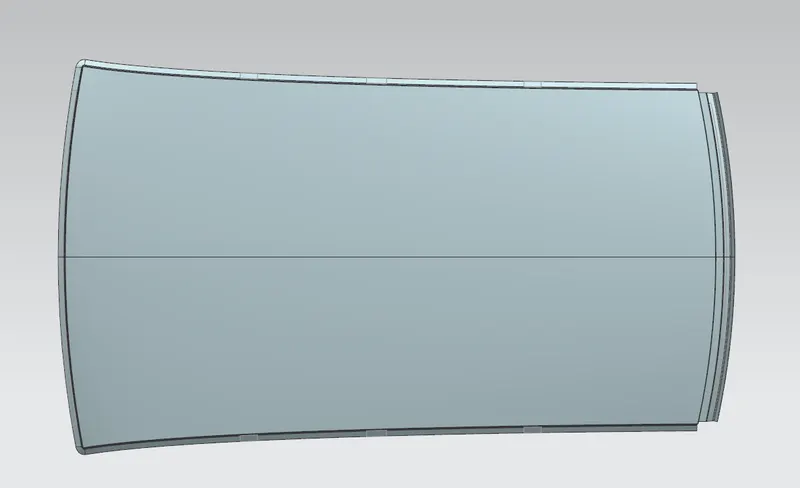
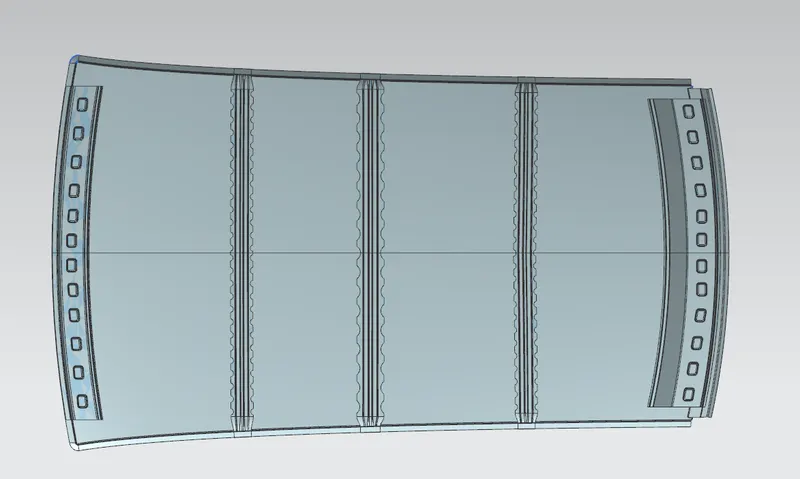
- The objective of this project is to design car roof with essential flanges and reinforcements like ditch area, front roof rail, bow roofs, central roof rail and rear roof rail for the the given styling surface.
- Perform a curvature study on the roof and perform the calculations for the heat distortion and snow load criteria to determine whether the bow roofs are at the correct positions.
- Finding moment of inertia and section modulus for Bow roofs, central roof rail, front roof rail and rear roof rail.
- Perform the draft analysis for each reinforcements.
DESIGN CONSIDERATION:
-
Visibility criteria
-
Head clearance
-
Curvature study
-
Heat distortion and Snow load criteria
-
Draft analysis
CAR ROOF:
An automobile roof or car top is the portion of an automobile that sits above the passenger compartment, protecting the vehicle occupants from sun, wind, rain, and other external elements.
TYPES OF CAR ROOFS:
There are at least three types of roofs commonly installed on cars, namely sunroofs, moonroofs, and also panoramic roofs. Sunroofs are often even called moonroofs. The three are actually different in terms of use and benefits. What are those differences?
1) SUNROOF
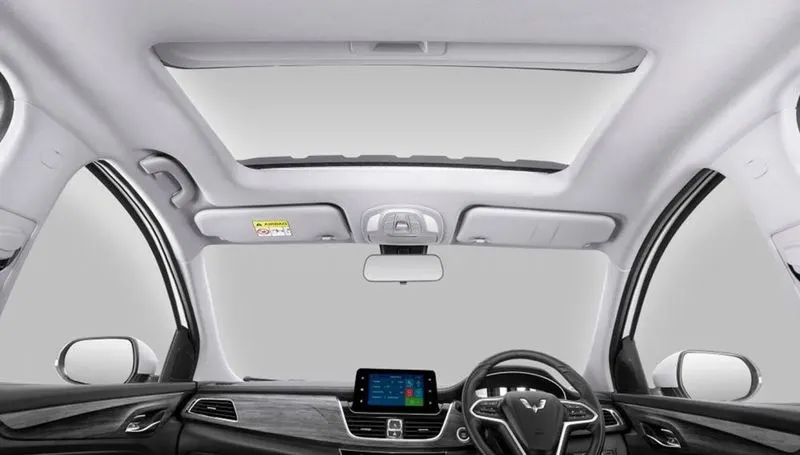
Sunroofs can be opened and closed using an electronic system. Sunroofs cars allow light, fresh air, or even both to enter the car cabin. It’s easier to imagine sunroof as a window on the car roof.
Commonly, sunroofs carry two types of panels made from the same solid metal used for the car ceiling exterior and can be pulled by hand to open the glass panel. Above it is colored glass which can be tilted backward to allow air from outside to enter the cabin.
2) MOONROOF
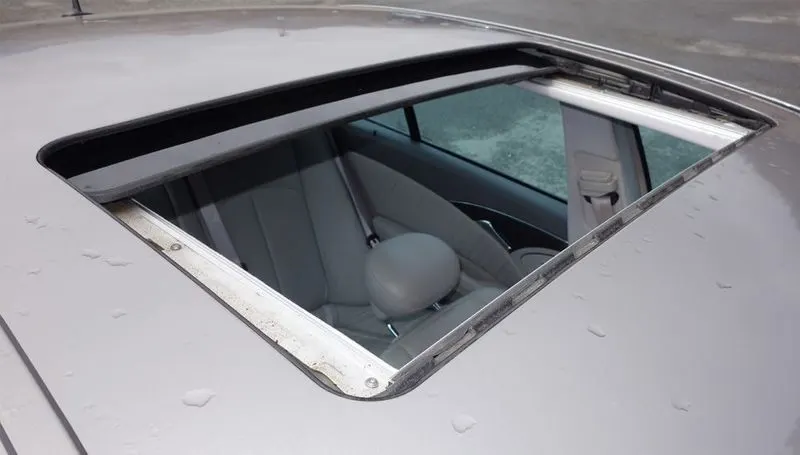
Moonroofs are actually one type of sunroofs. However, the material and uses are different. Moonroofs are made to allow the car driver and passengers to enjoy the outside view at night without having to get out of the car or open the car roof.
Moonroofs have colored glass panels that allow light and air to enter without having to shift the visor. However, lately, moonroofs are also equipped with a metal coating to keep the sunlight from entering directly into the cabin during the day.
Usually, the moonroof opens just slightly compared to the sunroof, so that air and light can enter into the cabin. However, there are a number of car manufacturers who now make moonroofs wide open just like sunroofs.
The working systems between moonroofs and sunroofs are also slightly different. Sunroofs will open outwards when activated, while moonroofs will open backward into the car roof. Up until now, there is no standards to differentiate between sunroofs and moonroofs. For information, in the 80s, the sunroofs were only coated with metal and did not have a glass.
3) PANORAMIC ROOF
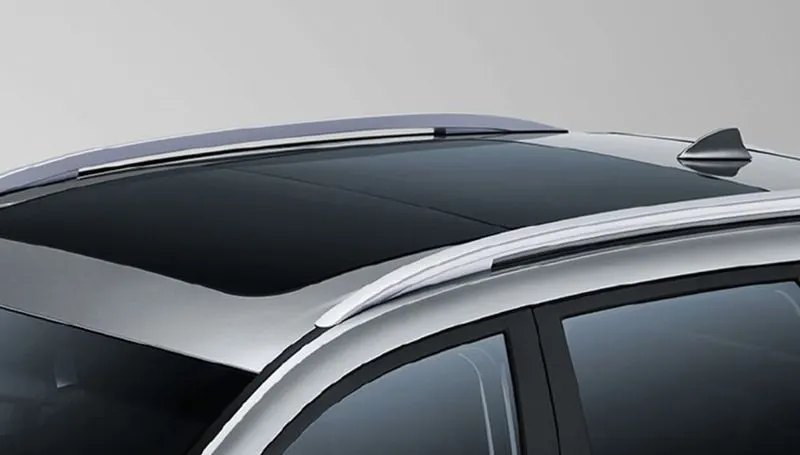
In the last couple of years, the different kind of roofs, namely panoramic roofs is embedded in luxurious cars. Recently, the panoramic roofs have become increasingly popular in premium SUV's.
This type of car roof is generally similar to the moonroofs, which has a large glass panel stretching across the roof, right above the first to the second rows. The panoramic roofs can open wider compared to the moonroofs in general. Panoramic roofs also have coating blinds to keep the cabin cool when the glass layer is closed, but the view in the sky is still visible.
The panoramic roofs offer a different look to the car’s interior so that it becomes more luxurious. You can see the interior of the Wuling Almaz, which has been equipped with this sophisticated feature that makes for an elegant and classy look. Not to mention that you can see the scenery during the day and night without the need to open the roof of the car.
ROOF CRUSH TEST :
Roof crush test is the design given by the IIHS (Insurance Institute of Highway Safety). After analyzing the many accidents IIHS has then fixed some regulations to perform the crush test.
IIHS gives the rating based up on this test. For this they consider two points while giving the rating
- How fast the car can reforms to its original shape after the roll over &
- How deep is the protrusion after the roll over
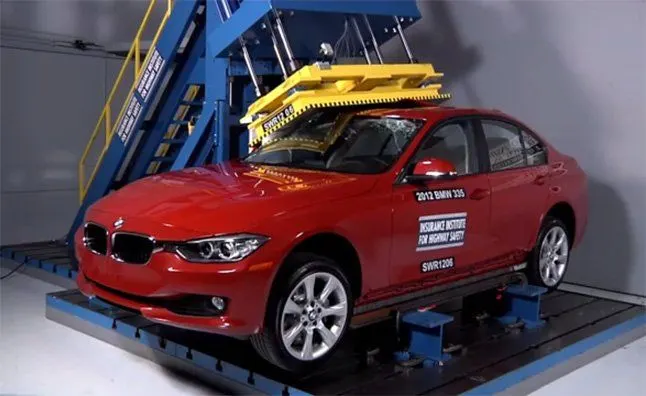
GOAL OF ROOF CRUSH TEST :
To minimize the protrusion into the occupant compartment, so that the seat belts and air bags can do there job in protecting the occupant
CONDITIONS TO FOLLOW FOR ROOF CRUSH TEST :
There are two conditions that should be followed for the roof crush test, they are
INITIAL CONDITION :
- Close and lock all the doors
- Close all the windows
SECOND CONDITION :
Fix the body sill or chassis frame on a hard lever surface horizontally
METHOD OF APPLYING THE FORCE :
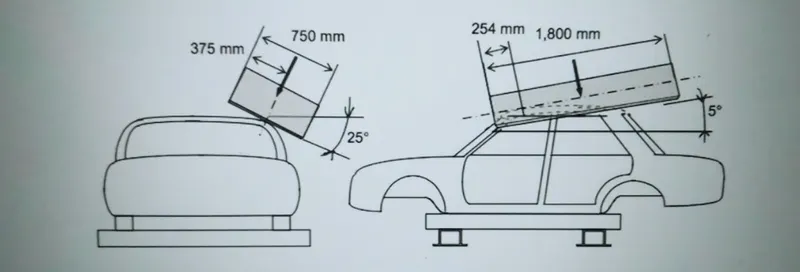
The load is applied in such a way that 50 is tilted from the front end to the rear end and the load will be in 1800 mm in length and 750 mm in width. The load is applied at the position of 250 from the flatness of the roof. The load is applied on the roof for almost 120 sec and the crush speed at which the load applied is 13 mm/sec or less than that
RESULTS :
If the displacements goes above the requirements level then we have to increase the bow roof thickness or add more mastics points to increase the strength. The stronger the roof the better it can protect the occupants in the roll over crashes.
REINFORCEMENTS OF ROOF:-
1) Front Roof Rail
2) Bow Roof Rail
3) Center Roof Rail
4) Rear roof Rail
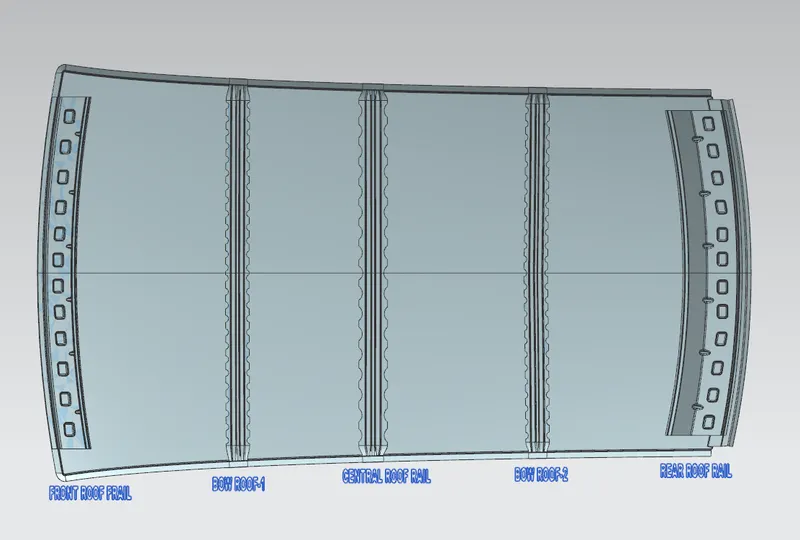
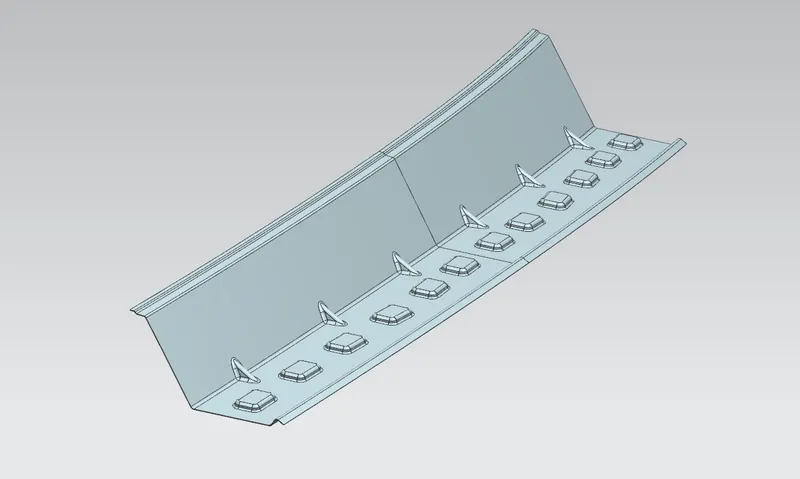
1) Front Roof Rail:
The front roof rail is located on the front of the roof where the wind shield joins with the roof. The visibility criteria and the head room clearance of the passenger are taken into consideration for the bottom flange. One end of the rail is joined using spot welding while the other end is joined with the roof using mastic sealants for increased strength.
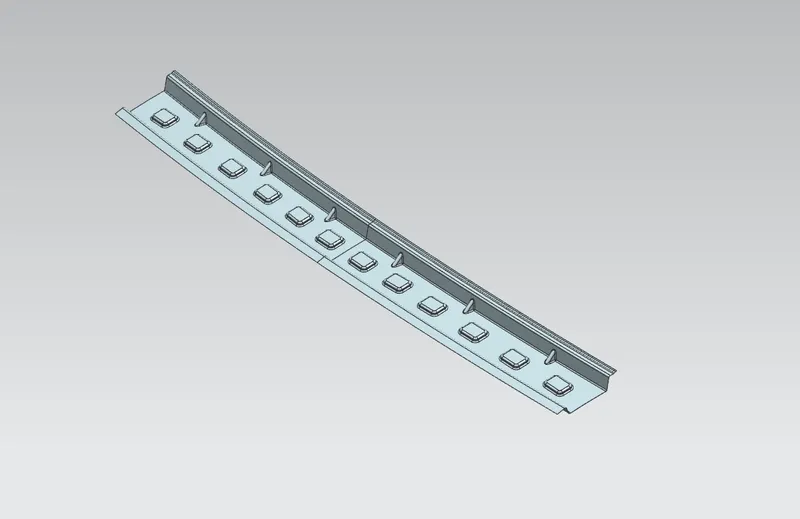
2) Bow Roof-1:
Bow roof is an additional siffening member for the roof to increase the strength and so that it can satisfy the norms. Both the ends are joined together using mastic sealants to increase strength and also since this would not affect the styling of the roof.
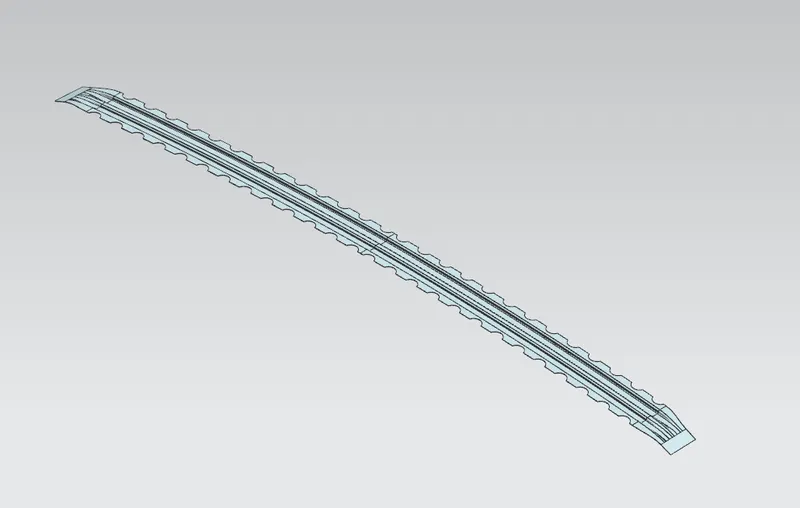
3) Central Roof Rail:
Central Roof rail or the reinforcement centre is located at the centre of the roof. The cross section of this is more since it needs to provide more strength to the roof. Here both are ends are joined together using mastic sealants.
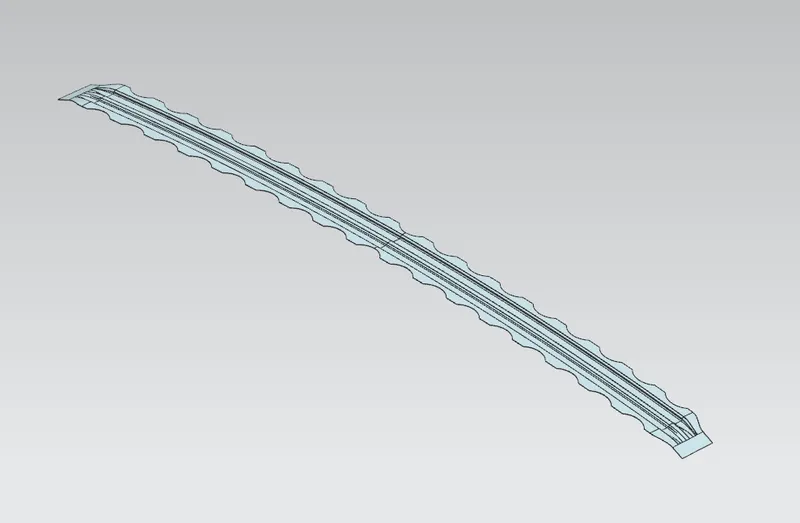
4) Bow Roof-2:
This bow roof also have the same purpose as that of the first one. This one is located between the centre bow roof and rear roof rail.
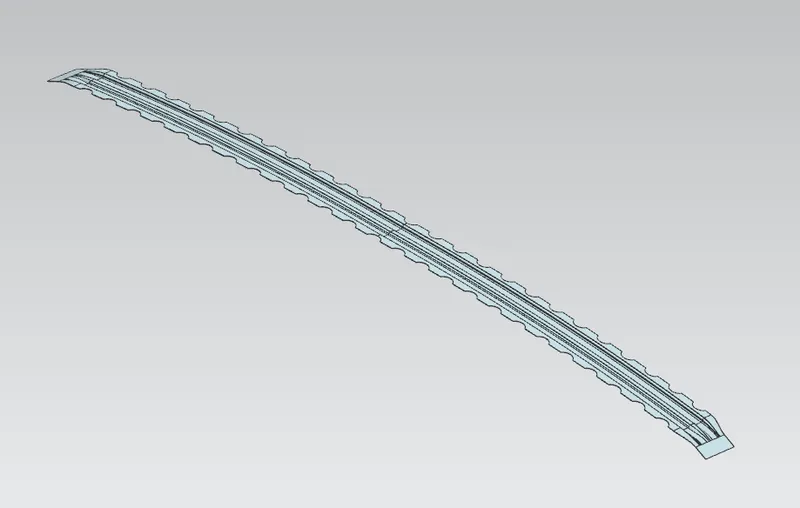
5) Rear Roof Rail:
This roof rail joins with the back door and the roof. Inputs from the backdoor are taken into consideration for designing this roof rail.
Here one end is joined using spot welding while the other end is joined using mastic sealants.
HEAT DISTORTION STUDY ON THE ROOF:
Heat distortion temperature is the temperature at which the metal softens and deforms under a specific load. This study is done to check the ability of the roof to withstand high temperature with respect to the positioning of the reinforcements which contribute to increased strength.
Bow–Roof Prediction Formula
W = [1.73 x 10^(-3) x L] + [1.85 x 10^(-8) x (R^2)/t] + [ 1.10x10^(-3) x l] - 2.68
Where,
L = Roof Length in X-Direction[mm](Roof dimension in 0-Y)
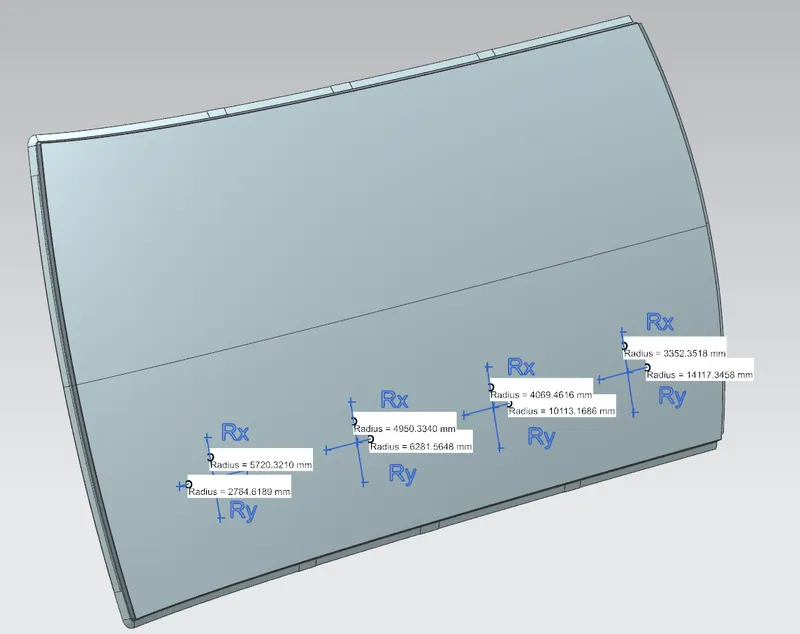
R = Roof curvature
R = 2(Rx*Ry)/(Rx+Ry)
Rx = X curvature
Ry = Y curvature
t = Roof plate thickness [mm]
l = Bow Roof Span [mm]
Judgment Condition
OK< 2.7
|
SECTIONS |
Rx |
Ry |
R |
l |
L |
t |
(R^2)/t |
W |
OK/NG |
|
FRR-BR1 |
5720.3210 |
2784.6189 |
3745.8028 |
441.1 |
2028.4 |
0.75 |
18708051.4886 |
1.66 |
OK |
|
BR1-CRR |
4950.3340 |
6281.5648 |
5537.0591 |
324.5 |
2028.4 |
0.75 |
40878697.9691 |
1.94 |
OK |
|
CRR-BR2 |
4069.4616 |
10113.1686 |
5803.5992 |
403.2 |
2028.4 |
0.75 |
44909018.2323 |
2.10 |
OK |
|
BR2-RRR |
3352.3518 |
14117.3458 |
5418.1028 |
400.5 |
2028.4 |
0.75 |
39141117.2684 |
1.99 |
OK |
CONCLUSION: As per the above values of W it is found that Heat Distortion criteria is fullfiled, Hence reinforcements positions on the roof are OK.
SNOW LOAD:
Snow load criteria study is used to check the durability of the roof to withstand the snow fall on the roof and reflex it is original shape without any permanent deformation after load being removed.
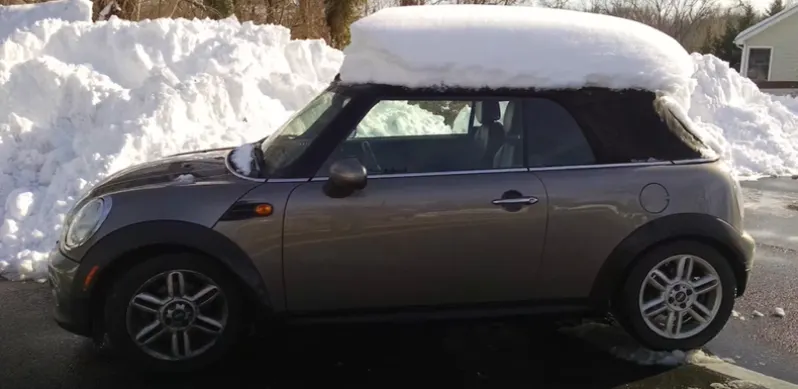
Snow Load Prediction Formula
Qr = [Iy x t2] / [α x s x [(Rx + Ry)/2]2 x 10-8]
Note: The Qr value given over here is correct. There was a typo error in the formula given in the video.
Where,
α = My x Lx2 x 10-12 , My = Y(Ly-Y)
t = Roof plate thickness [mm]
Ly = Distance between the front and rear roof Rails on the Vehicle along with 0Y[mm]
Length of Roof panel with the center point between Roof rail Front /Rear as the front and rear reference point.
Lx = Distance between the Left and Right end of the roof on the Roof BOW [mm]
The width of the roof panel is exposed on the surface.
Y = Distance front Front Roof Rail to Roof BOW[mm]
s = Distance for which Roof BOW bears divided load [mm]
s = L1/2 + L2/2
Iy = Geometrical moment of inertia of Roof BOW (Y cross-section )[mm4]
Rx = Lateral direction curvature radius of roof panel Y cross-section on Roof BOW [mm]
Roof panel curvature Radius of the Length Lx in Front view
Ry = Longitudinal Direction curvature radius of the Roof panel X cross-section on Roof BOW [mm]
Roof panel X curvature radius of length s in Side view
Judgment condition
Qr ≥ 3.1
250 ≤ s ≤ 380
Moment of inertia:-
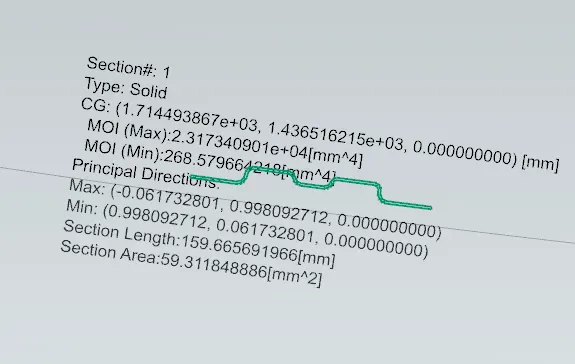
1) BOW ROOF-1 (BR1):
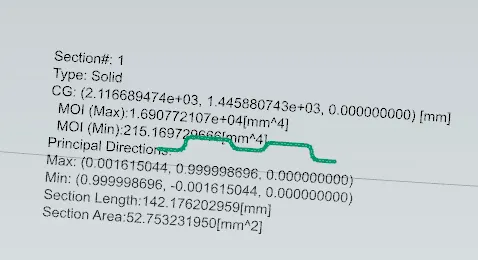
2) CENTRAL ROOF RAIL (CRR):
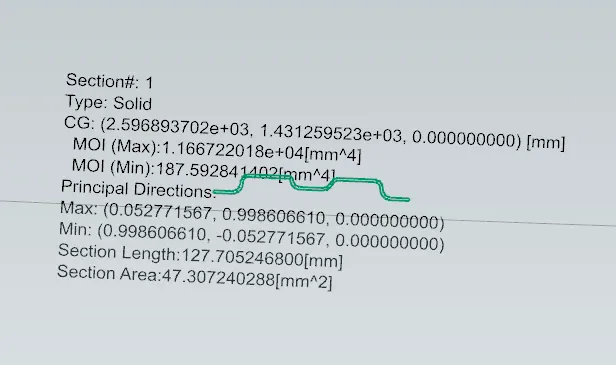
3) BOW ROOF-2 (BR2):
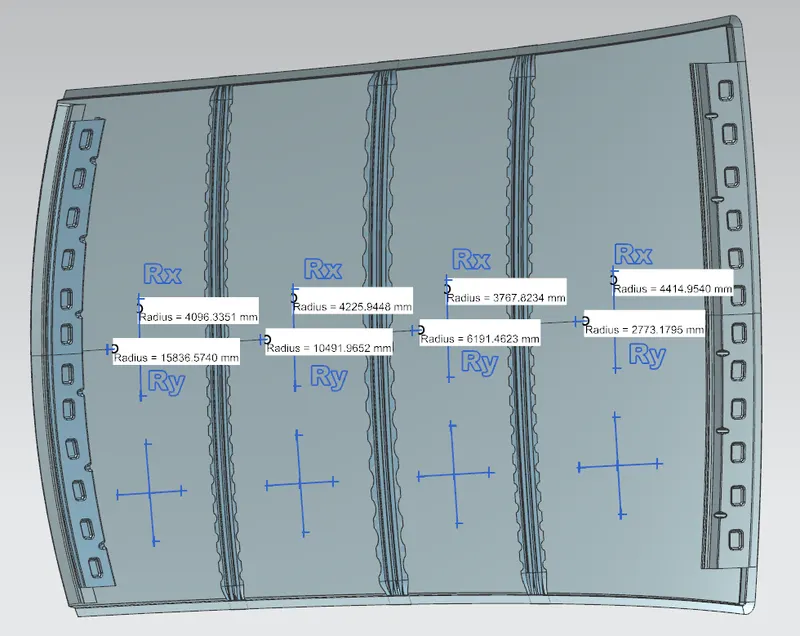
Rx & Ry VALUES:
Result-
|
Bow position |
Iy |
α |
Lx |
Ly |
Y |
S |
Rx |
Ry |
t |
Qr |
OK/NG |
|
FRR-BR1 |
268.5796 |
0.92 |
1102.6 |
1952.9 |
533.2 |
467.55 |
4096.3351 |
15836.5740 |
0.75 |
0.35 |
NG |
|
BR1-CRR |
215.1697 |
1.09 |
1072.8 |
1952.9 |
935.1 |
441.25 |
4225.9448 |
10491.9652 |
0.75 |
0.46 |
NG |
|
CRR-BR2 |
187.5928 |
0.84 |
1051.5 |
1952.9 |
1415.7 |
501.90 |
3767.8234 |
6191.4623 |
0.75 |
1.00 |
NG |
CONCLUSION:
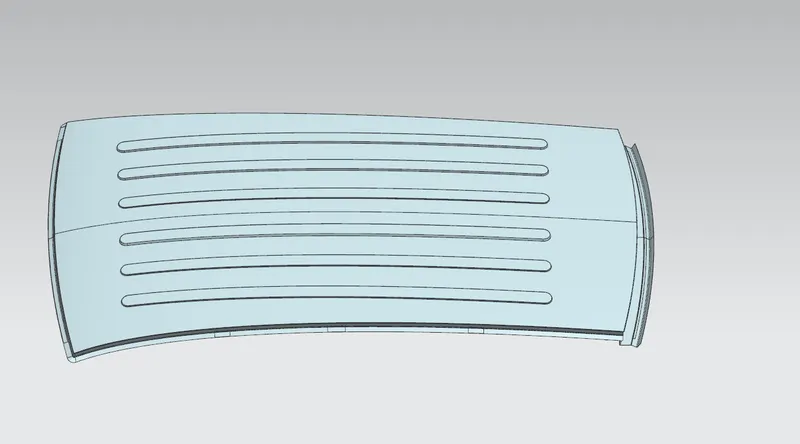
Now since the value of Qr does not satisfy the condition, So to make the roof stronger we create embossses on the roof to strengthen the roof.
DRAFT ANALYSIS :
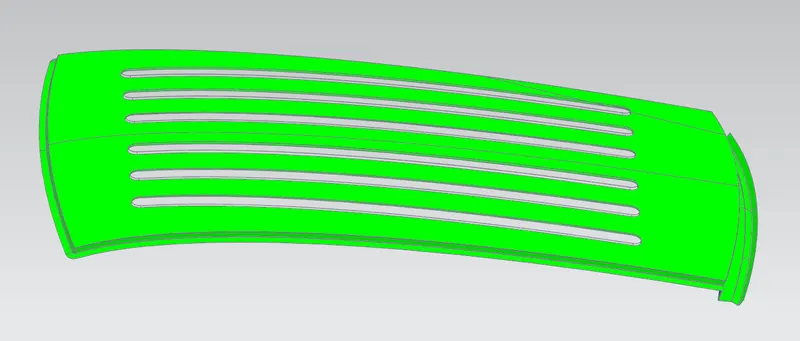
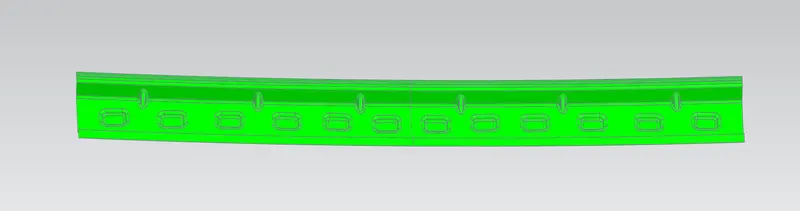
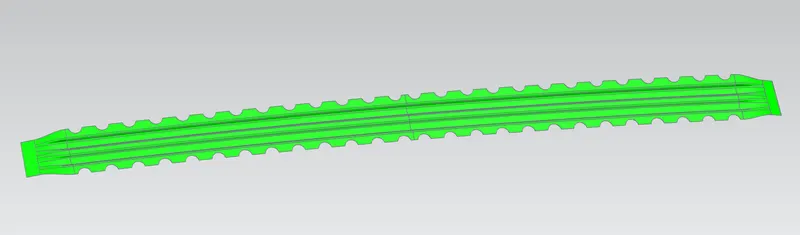
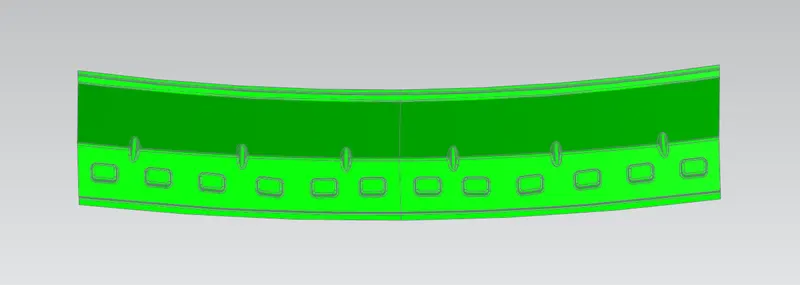
The Draft Analysis command enables you to detect if the part you drafted will be easily removed. This type of analysis is performed based on color ranges identifying zones on the analyzed element where the deviation from the draft direction at any point, corresponds to specified values.
Minimum draft angle of 70 is considered for analysis . green colour infer on the parts that all face along the tooling direction has positive draft angle greater than 70 and passed in analysis.
DRAFT ANALYSIS FOR ROOF OUTER:
DRAFT ANALYSIS FOR FRONT ROOF RAIL:
DRAFT ANALYSIS FOR BOW ROOF-1:
DRAFT ANALYSIS FOR CENTRAL ROOF RAIL:
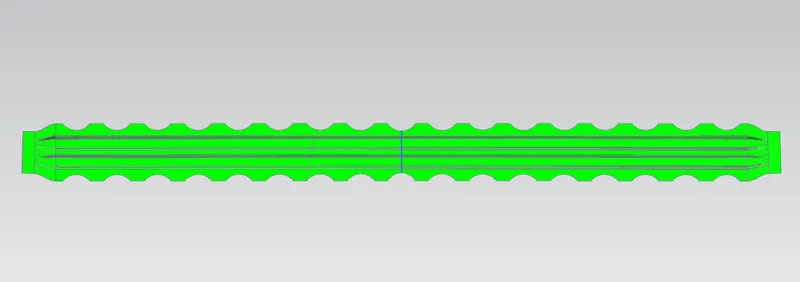
DRAFT ANALYSIS FOR BOW ROOF-2:

DRAFT ANALYSIS FOR REAR ROOF RAIL:
CONCLUSION :
Hence the roof outer, front roof rail, bow roof rails , central roof rail and the rear roof rail is designed by following the master sections and the moment of inertia and draft analysis are carried out to check feasibility manufacturing.