Roof Design
AIM :
To design a car roof and its reinforcements from the given styling surface & master section . And to prepare a detailed report about the engineering standards for roof design such as curvature study on the roof based on the Bow roof prediction & snow load prediction , Draft analysis and manufacturing techniques.
what is a car roof :
A car roof, also known as the roof panel, is the uppermost part of a vehicle's body structure that covers the passenger compartment. It provides protection and structural support to the vehicle, acting as a barrier against weather elements, debris, and potential rollover accidents.
The car roof is typically a horizontal or slightly inclined surface that spans from the windshield to the rear window or trunk area. It connects the front A-pillars, which are located on either side of the windshield, to the rear C-pillars, which are positioned near the rear side windows. The roof panel may extend further to incorporate a rear spoiler or roof rails for additional functionality.
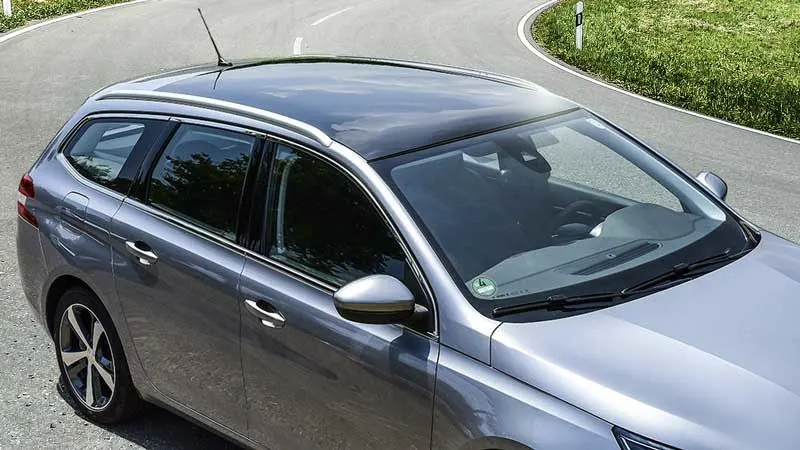
Car roofs are designed to be aerodynamic, reducing drag and improving fuel efficiency. They can be made from various materials, including steel, aluminum, and composite materials like carbon fiber or fiberglass. The choice of material depends on factors such as weight reduction, structural integrity, cost, and manufacturing processes.
Car roofs often include features such as sunroofs or moonroofs, which provide openings to allow light and air into the cabin. These can be manually operated or motorized, allowing occupants to control the amount of light or ventilation desired.
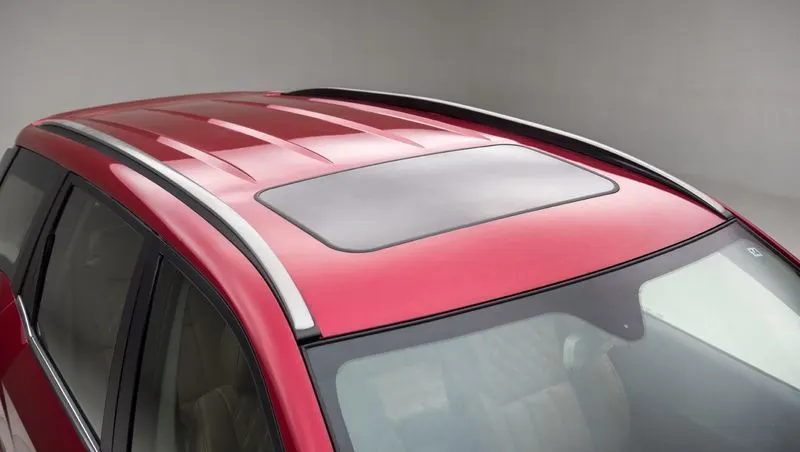
In recent years, panoramic roofs have become popular, providing larger glass areas that extend over a significant portion of the roof. Panoramic roofs enhance the openness and visibility inside the vehicle, giving passengers a greater sense of space and a more enjoyable driving experience.
Overall, the car roof plays a crucial role in the overall design, safety, and functionality of a vehicle, while also contributing to its aesthetics.
Design Consideration of Roof :
The design of a car roof is an important aspect that involves several considerations to ensure safety, functionality, aesthetics, and overall vehicle performance. Here are some key design considerations for car roofs:
-
Structural Integrity: The car roof must be structurally strong and rigid to provide protection to the occupants in the event of a rollover or other impacts. It should be able to withstand loads and distribute forces effectively throughout the vehicle's body structure.
-
Safety Regulations: Car roofs must meet safety standards and regulations set by authorities like the National Highway Traffic Safety Administration (NHTSA) or the European New Car Assessment Programme (Euro NCAP). These standards include minimum strength requirements and guidelines for preventing occupant ejection during a rollover.
-
Weight Reduction: Reducing the weight of the car roof is crucial for improving fuel efficiency and overall vehicle performance. Lightweight materials such as aluminum, high-strength steel, or composites are often used to achieve weight reduction without compromising structural integrity.
-
Aerodynamics: The shape and contour of the car roof contribute to the overall aerodynamics of the vehicle. A streamlined design helps reduce wind resistance, drag, and noise while improving fuel efficiency and stability at higher speeds.
-
Headroom and Interior Space: The car roof design should provide sufficient headroom for passengers while optimizing interior space. This consideration is particularly important for taller individuals and in vehicles where rear seating comfort is a priority.
-
Sunroof and Moonroof Integration: If the vehicle incorporates a sunroof or moonroof, the design must ensure proper sealing, water drainage, and structural integrity to prevent leaks, minimize wind noise, and maintain occupant safety.
-
Styling and Aesthetics: The car roof contributes significantly to the overall exterior design and aesthetics of the vehicle. It should harmonize with the vehicle's overall styling, lines, and proportions, creating a visually appealing and cohesive appearance.
-
Manufacturing Feasibility: The design should take into account the manufacturability and production processes involved in creating the car roof. Design features that can be efficiently produced and assembled on the production line are preferred to optimize manufacturing costs and ensure consistent quality.
-
Integration with Other Roof Components: The car roof may need to integrate with other components such as roof rails, antennas, spoiler, or panoramic glass panels. The design should facilitate the seamless integration and functionality of these elements.
-
Acoustic Performance: The car roof design should consider noise insulation and soundproofing to minimize road and wind noise, ensuring a comfortable cabin environment.
manufacturing techniques for creating vehicle roof :
When it comes to manufacturing car roofs, several techniques and materials are commonly used in the automotive industry. Here are some of the main manufacturing techniques for car roofs:
-
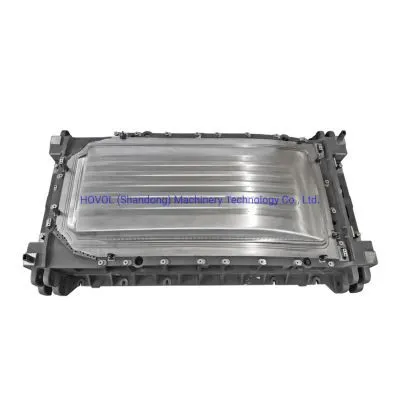
Stamping: Stamping is a widely used method for manufacturing car roofs. In this process, a sheet of metal, typically steel or aluminum, is placed in a stamping press and formed into the desired shape using a combination of dies and punches. Stamping allows for precise shaping and complex contours to be created.
-
Composite Molding: Composite materials, such as carbon fiber reinforced polymer (CFRP) or fiberglass, are becoming increasingly popular for manufacturing car roofs due to their lightweight and high strength properties. Composite molding techniques, such as resin transfer molding (RTM) or compression molding, are used to create the roof panels. In these processes, fibers are impregnated with resin and then molded into the desired shape using heat and pressure.
-
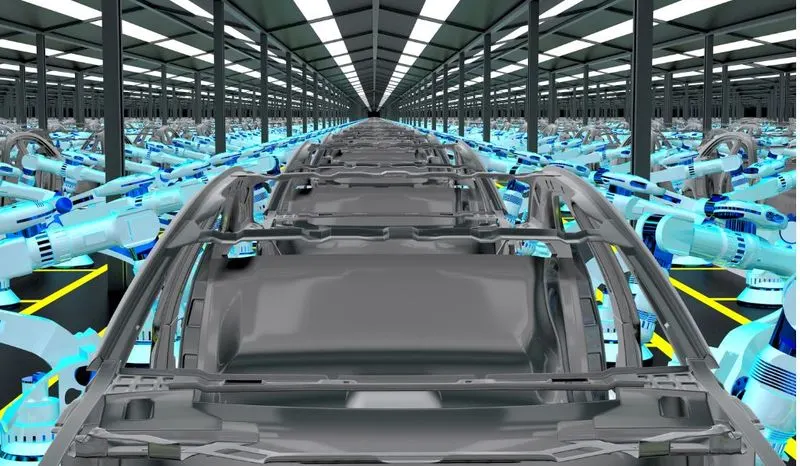
Extrusion: Extrusion is another technique used for manufacturing car roof components, particularly roof rails. In this process, a heated metal billet, usually aluminum, is forced through a die to create a continuous profile with the desired cross-section. The extruded profiles are then cut to the required length and further processed if necessary.
-
Glass Roof Manufacturing: Many modern cars feature panoramic or sunroof options, which involve the use of glass panels. Glass roof manufacturing typically involves processes like cutting, shaping, and tempering. Glass sheets are cut into the desired shape, edges are polished, and the glass is subjected to a controlled heating and cooling process to increase its strength and resistance to shattering.
-
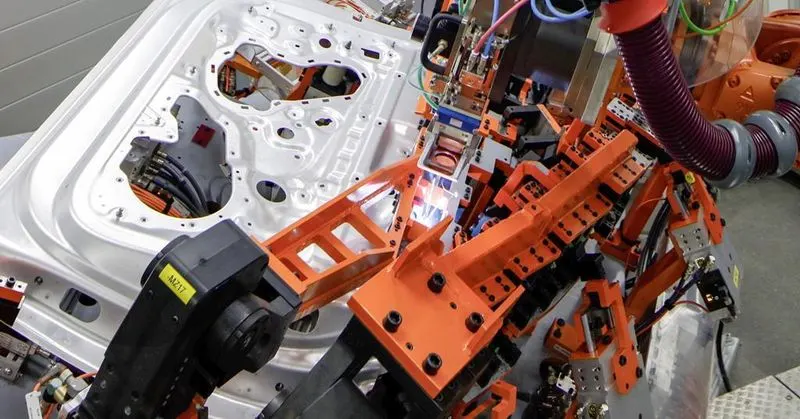
Welding and Joining: Once the individual roof components are manufactured, they need to be joined together to form the complete car roof structure. Welding techniques like spot welding or laser welding are commonly used to join metal roof components. Adhesive bonding techniques may also be employed to securely attach composite or glass elements to the metal structure.
-
Finishing Processes: After the roof components are assembled, various finishing processes are carried out to enhance their appearance and protect against corrosion. These may include surface treatments like painting, powder coating, or anodizing for metal parts. For glass roofs, tinting or coating processes may be applied to provide desired levels of transparency and UV protection.
It's worth noting that different car manufacturers may employ variations of these techniques based on their specific design requirements, material preferences, and production capabilities.
Reinforcement of Roof :
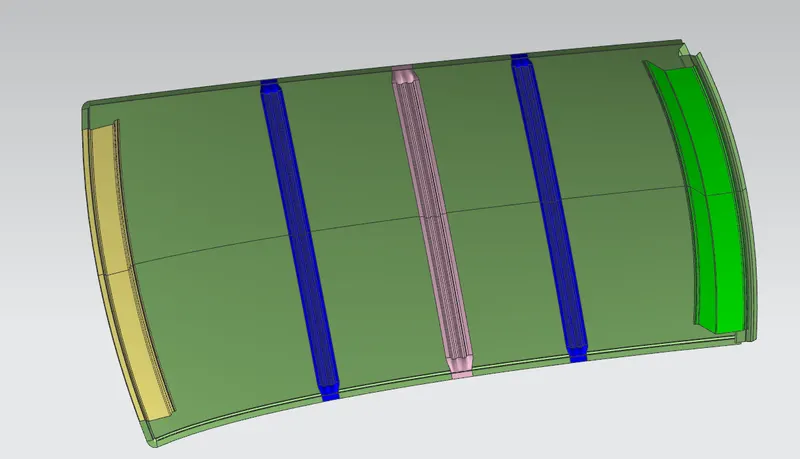
Front Roof Rail :
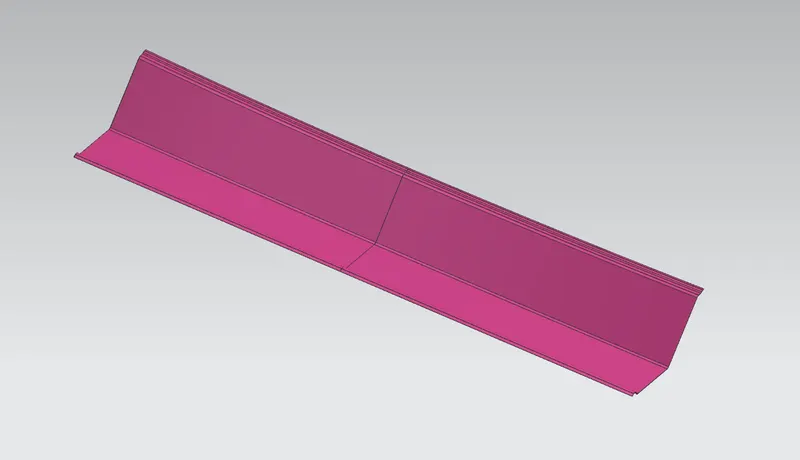
The car front roof rail, also known as the front roof rack or front roof rail system, is a feature found on some vehicles that allows for the attachment of additional cargo carriers or accessories to the roof of the car. It typically consists of two parallel bars or rails mounted on the front portion of the roof.
The front roof rail serves multiple purposes. It provides a stable base for attaching roof-mounted cargo boxes, bike racks, ski racks, or other accessories. This allows you to transport larger items or equipment that may not fit inside the vehicle's cabin or trunk.
These roof rails are usually made of durable materials such as aluminum or steel to withstand the weight and strain of the attached cargo. They are designed to integrate seamlessly with the car's overall aesthetics while providing a secure attachment point.
It's worth noting that not all cars come with factory-installed front roof rails. However, for some vehicles, the roof rail system may be available as an optional feature or as part of a higher trim level. Additionally, there are aftermarket options available for adding roof rails to vehicles that don't come with them from the factory.
When using a car with front roof rails, it's important to follow the manufacturer's guidelines for maximum load capacity and to ensure that any attached accessories are properly secured. Regular maintenance and inspection of the roof rail system are also recommended to ensure its integrity and functionality.
Bow Roof Rail :
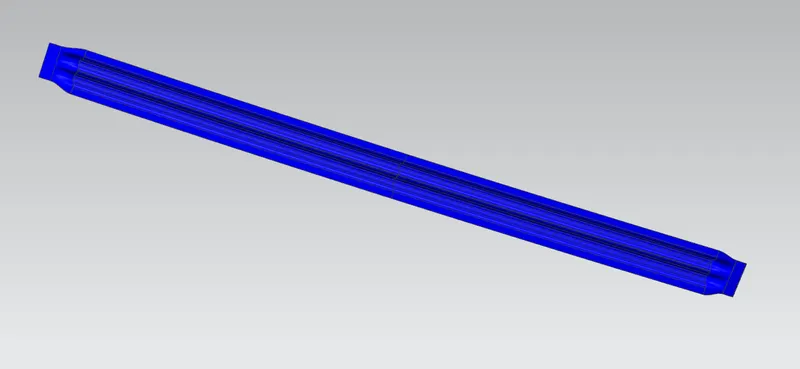
It is provided to give strength to the roof at that areas,it can be created at any number depending upon the length of the roof. Mastic points are provided to join this bow roofs to the outer panel.
Center Roof Rail :
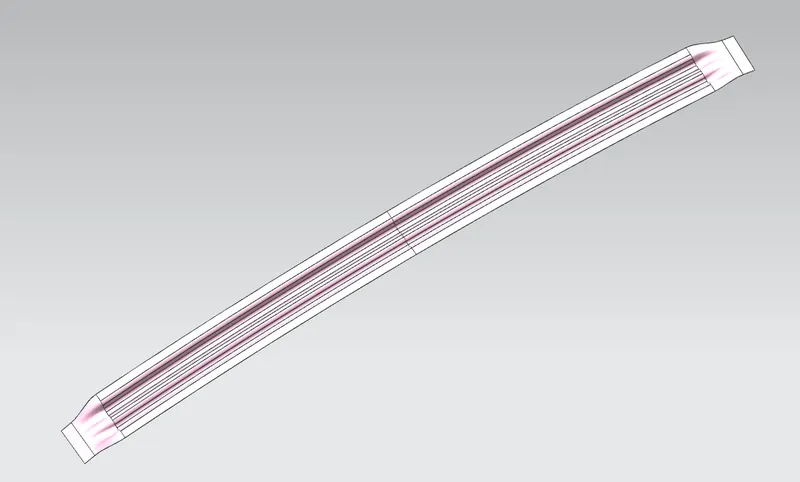
It is provided at the center of the roof to strengthen that area and it is joined to the outer panel by mastic.
Rear roof Rail :
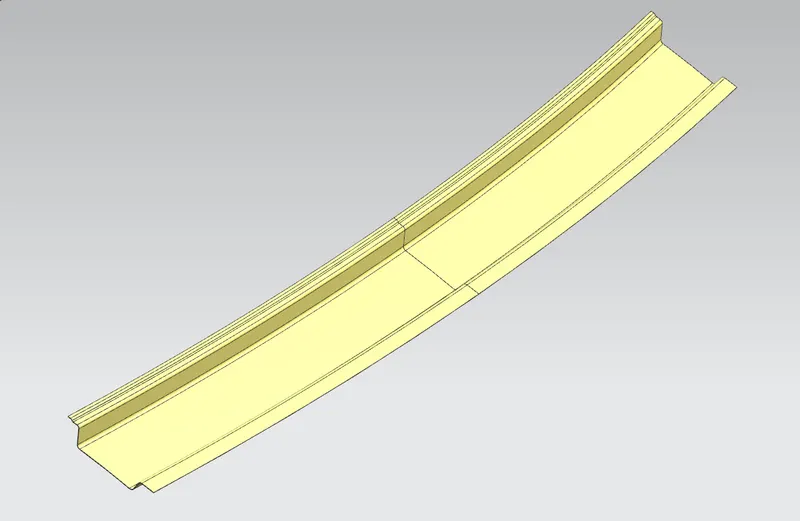
It is provided at the rear part of the roof and it is joined with the outer roof by spot welding. We should take consideration of rear headroom and visibility criteria while desiging this. Embosses are created to strengthen the rear roof rail.
Heat distortion criteria :
Heat distortion criteria for car roofs refer to the maximum allowable deformation or distortion of the roof panel when exposed to high temperatures. This criterion ensures that the roof maintains its structural integrity, dimensional stability, and aesthetic appearance even under extreme heat conditions. Here are some key factors considered in determining heat distortion criteria for car roofs:
-
Material Properties: The choice of material for the car roof is crucial in determining the heat distortion criteria. Different materials have varying thermal expansion coefficients, which can affect their resistance to heat-induced distortion. Metals such as steel and aluminum, as well as composite materials, are commonly used for car roofs due to their thermal stability.
-
Heat Resistance: The material selected for the car roof should have sufficient heat resistance to withstand high temperatures without significant deformation. The heat resistance of a material is influenced by factors such as its melting point, coefficient of thermal expansion, and thermal conductivity. These properties determine how well the material can dissipate heat and maintain its structural integrity.
-
Testing and Validation: Car roof designs undergo rigorous testing to evaluate their performance under high-temperature conditions. Test methods such as heat exposure tests, thermal cycling tests, and heat distortion tests are conducted to assess the material's behavior and deformation characteristics. These tests help determine the maximum allowable distortion or deformation that the roof can exhibit without compromising its functionality and safety.
-
Safety Considerations: Heat distortion criteria for car roofs also consider safety factors, especially in terms of occupant protection. Excessive heat-induced deformation can compromise the structural integrity of the roof, leading to reduced protection in rollover accidents or other impact scenarios. Therefore, the heat distortion criteria aim to ensure that the roof remains intact and provides sufficient protection to the occupants even under high-temperature conditions.
-
Aesthetic Considerations: In addition to safety and structural integrity, the heat distortion criteria also consider the aesthetic appearance of the car roof. Excessive distortion due to heat can result in visible deformations or surface irregularities, affecting the overall visual appeal of the vehicle. Therefore, the criteria aim to maintain the roof's dimensional stability and smooth surface finish even when exposed to high temperatures.
calculation :
formula for W = [1.73 x 10^(-3) x L] + [1.85 x 10^(-8) x (R^2)/t] + [ 1.10x10^(-3) x l] - 2.68
Where,
L = Roof Length in X-Direction[mm](Roof dimension in 0-Y)
R = Roof curvature
R = 2(Rx*Ry)/(Rx+Ry)
Rx = X curvature
Ry = Y curvature
t = Roof plate thickness [mm]
l = Bow Roof Span [mm]
Judgement Condition : OK< 2.7
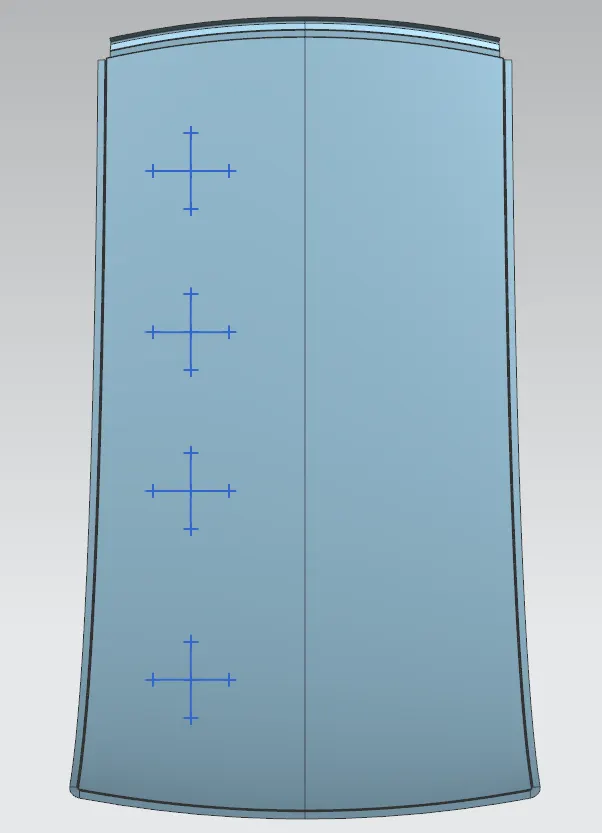
for this roof ,
L = Roof Length in X-Direction[mm](Roof dimension in 0-Y) = 2030.09 mm
t = Roof plate thickness [mm] = 0.75mm
| ROOF RAIL | Rx ( X curvature ) | Ry ( Y curvature ) |
R = 2(Rx*Ry)/(Rx+Ry) |
l ( Bow Roof Span ) | W | RESULT |
| FR - BOW1 | 2932.05 | 5703.98 | 3873.15 | 455.00 | 1.702 | PASS |
| BOW1 - CR | 6875.32 | 4803.51 | 5655.64 | 351.45 | 2.007 | PASS |
| CR - BOW2 | 10434.63 | 4006.29 | 5789.68 | 302.09 | 2.045 | PASS |
| BOW2 - RR | 14107.23 | 3354.01 | 5419.52 | 349.51 | 1.941 | PASS |
This model has passed the heat distortion criteria.
Snow load prediction :
Snow load prediction for a car roof refers to estimating the weight or load of snow that may accumulate on the roof surface during a snowfall event. It involves assessing the potential amount of snow that can accumulate and understanding its impact on the structural integrity of the car roof.
The prediction takes into account various factors, including:
-
Snowfall Rate: The intensity and duration of snowfall play a significant role in determining the snow load. Higher snowfall rates over an extended period can result in a larger accumulation of snow on the car roof.
-
Snow Density: The density or weight of the snow affects the snow load. Different types of snow, such as light and fluffy or wet and compacted, have different densities. The moisture content of the snow, which is influenced by temperature and weather conditions, determines its density.
-
Temperature: The temperature during and after the snowfall event can impact the accumulation and stability of the snow. Subfreezing temperatures generally lead to snow accumulation, while warmer temperatures can cause melting and potential sliding of the snow.
-
Wind Effects: Wind can cause drifting and redistribution of snow, resulting in uneven snow loads on the car roof. Strong winds can increase the snow load in specific areas or cause snow to accumulate on the windward side of the vehicle.
-
Roof Design and Slope: The design and slope of the car roof influence how snow accumulates and distributes its load. Steeper roofs tend to shed snow more easily, while flat or low-slope roofs are more prone to snow buildup.
Snow load prediction for a car roof involves considering these factors and using meteorological data, historical snowfall records, and engineering calculations to estimate the potential weight of snow on the roof. It helps car owners assess the risk of roof damage, potential structural issues, and take necessary precautions such as snow removal to ensure the safety and integrity of the vehicle.
calculation :
formula for Qr = [Iy x t2] / [α x s x [(Rx + Ry)/2]2 x 10-8]
Where,
α = My x Lx2 x 10-12 , My = Y(Ly-Y)
t = Roof plate thickness [mm]
Ly = Distance between the front and rear roof Rails on the Vehicle along with 0Y[mm]
Length of Roof panel with the center point between Roof rail Front /Rear as the front and rear reference point.
Lx = Distance between the Left and Right end of the roof on the Roof BOW [mm]
The width of the roof panel is exposed on the surface.
Y = Distance front Front Roof Rail to Roof BOW[mm]
s = Distance for which Roof BOW bears divided load [mm]
s = L1/2 + L2/2
Iy = Geometrical moment of inertia of Roof BOW (Y cross-section )[mm4]
Rx = Lateral direction curvature radius of roof panel Y cross-section on Roof BOW [mm]
Roof panel curvature Radius of the Length Lx in Front view
Ry = Longitudinal Direction curvature radius of the Roof panel X cross-section on Roof BOW [mm]
Roof panel X curvature radius of length s in Side view
Judgement Condition : OK ≥ 3.1
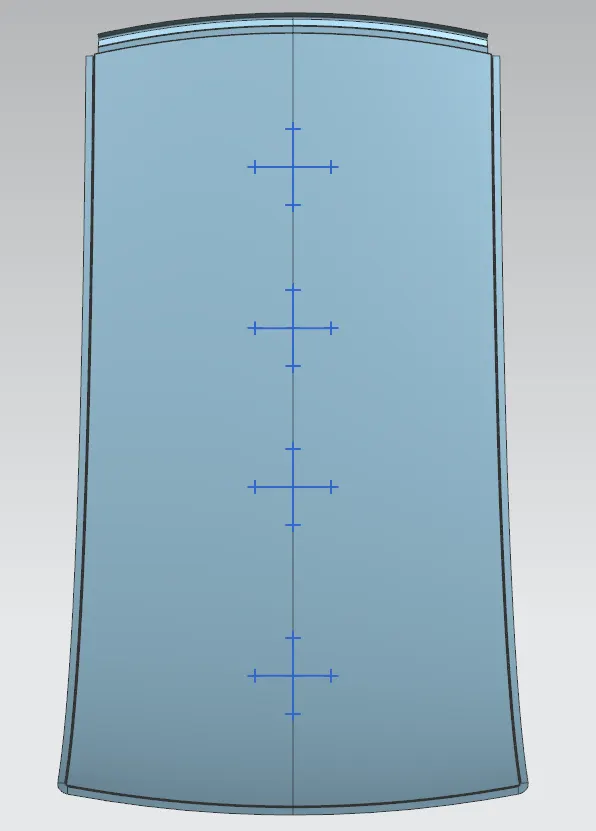
for this roof ,
Ly = Distance between the front and rear roof Rails on the Vehicle along with 0Y[mm] = 2030.09mm
t = Roof plate thickness [mm] = 0.75mm
| ROOF RAIL | My | α | Lx | Y | s | Iy | Rx | Ry | Qr | RESULT |
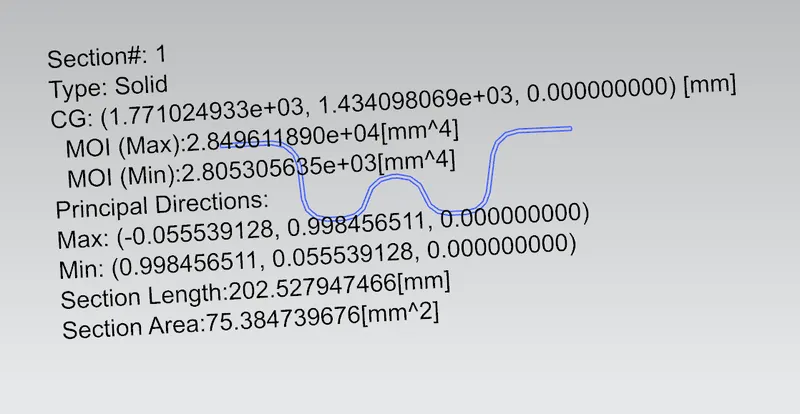
| FR - BOW1 | 849534.06 | 1.0945 | 1135.07 | 589.86 | 511.17 | 2805.30 | 4310.94 | 2951.81 | 21.388 | PASS |
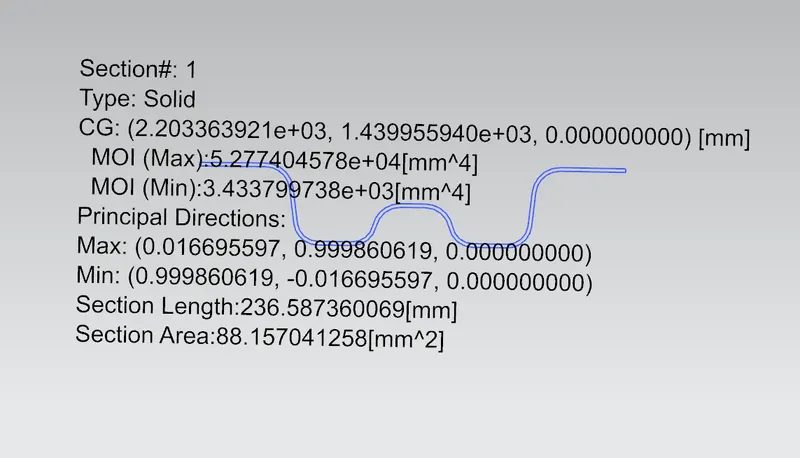
| BOW1 - CR | 690933.04 | 0.8130 | 1084.80 | 432.49 | 407.71 | 3433.79 | 3811.81 | 6819.46 | 12.218 | PASS |
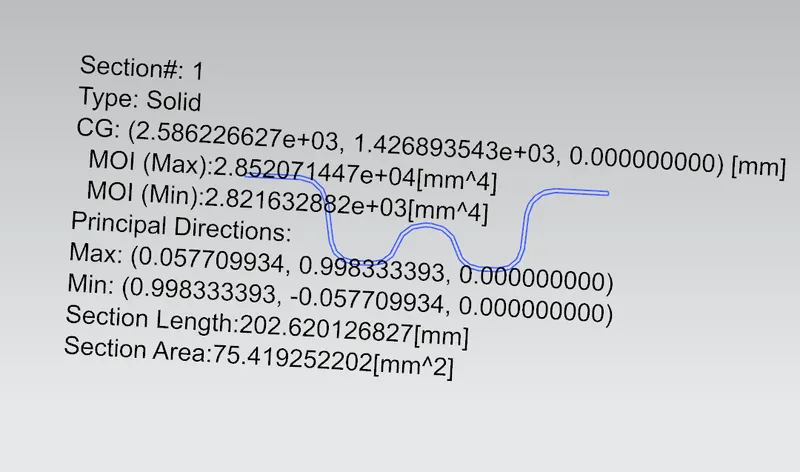
| CR - BOW2 | 630759.62 | 0.7128 | 1063.09 | 382.94 | 454.57 | 2821.63 | 4261.88 | 10901.54 | 8.521 | PASS |
This model has passed the Snow load condition.
section inertia analysis :
bow roof 1 :
central roof :
bow roof 2 :
DRAFT ANALYSIS :
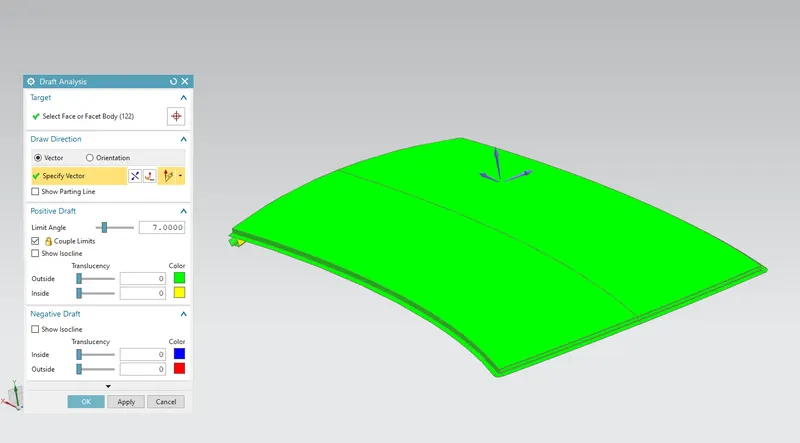
In the context of sheet metal manufacturing, draft analysis refers to the evaluation and examination of a sheet metal design for the purpose of identifying potential issues or areas of improvement related to the manufacturability of the part. It involves analyzing the design's features, dimensions, tolerances, and other specifications to ensure that the part can be successfully produced using sheet metal fabrication processes.
performing draft analysis with 7 degree draft angle .
outer roof :
front roof rail :
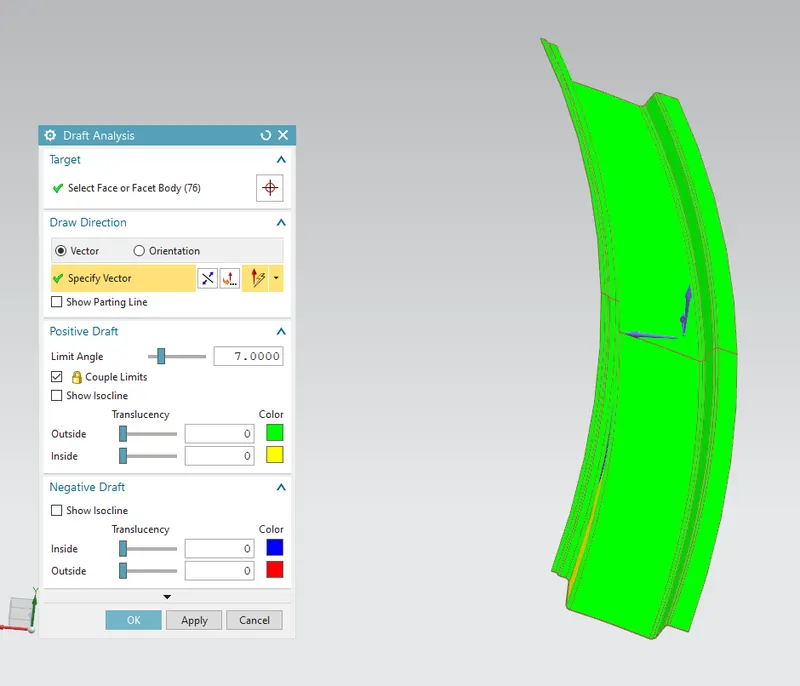
bow roof rail :
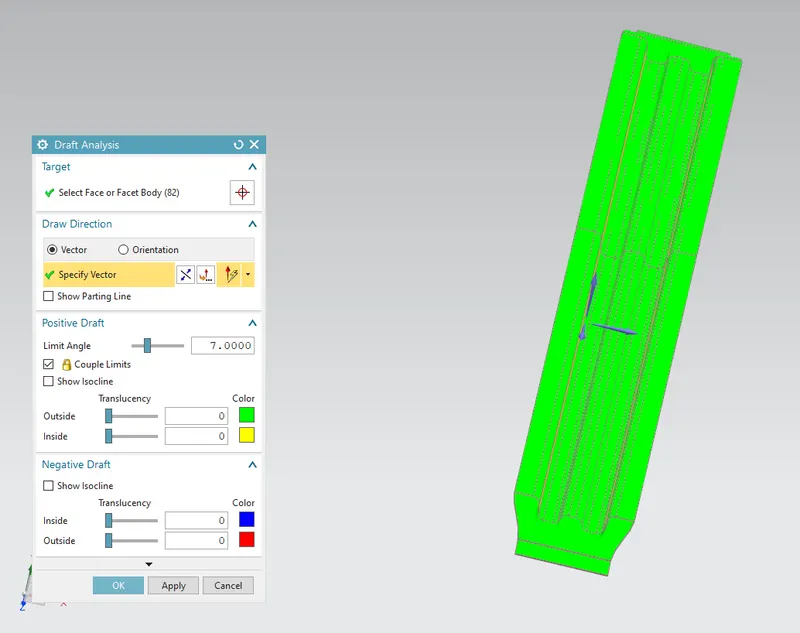
centre roof rail :
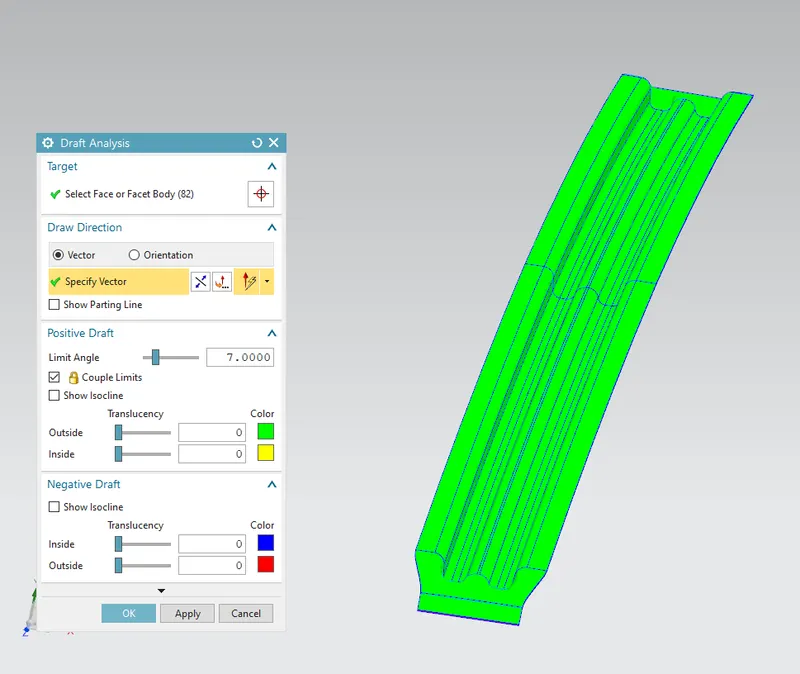
rear roof rail :
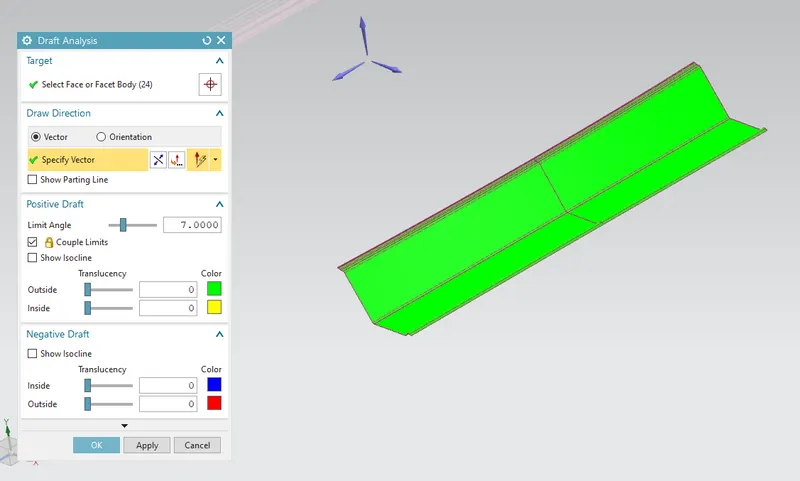
CONCLUSION :
This model of roof and its reinforcements are designed according to the given master section and calculated all the curvature study to determine its strength .