Roof Design
Objective:
- To create a roof assembly from the given master section, with all required reinforcements like bow roof, center roof, front, and rear roof, and perform draft analysis for the designed components to check the manufacturability.
- To perform heat distortion and snow load calculations to ensure the safety of the hood in extreme conditions.
Roof:
The design of a car roof is an essential aspect of automotive engineering, as it plays a significant role in ensuring the safety, aerodynamics, and aesthetics of a vehicle. The roof is an integral part of the car's body structure, providing protection to the occupants from external forces such as impacts, rollovers, and weather conditions.
The design of car roofs depends on below factors:
- Type of vehicle. eg: SUV, Sedan, hatchback, etc.
- Market area. i.e. Target country for development.
- Design and Safety standards
- Cost and durability
Type of Vehicle:
The design of a car roof depends on several factors such as the type of car, the intended use, and the desired aesthetics. Eg: A sports car would require a lower and more aerodynamic roof to reduce drag and improve handling, while an SUV would require a higher and more spacious roof to accommodate more passengers and cargo.
The roof's design must account for the car's weight, the center of gravity, and overall stability to ensure optimal handling and performance.
Market area:
A car roof for a tropical market may need to have more ventilation, sun protection, and durability than a car roof for a temperate market. A car roof for a luxury market may need to have more aesthetic appeal, comfort, and functionality than a car roof for a budget market.
Design and Safety standards:
The car roof should provide adequate protection for the occupants in case of a rollover or a collision. It should also prevent the intrusion of foreign objects or water into the cabin. The car roof should be able to withstand impact forces and deform in a controlled manner to absorb energy and reduce injuries. The car roof should also comply with the relevant safety standards and regulations.
Adding to the previous point, each market has separate standards that the designer needs to satisfy. For example, while designing for the Japanese market, the average size of a person is 5 feet 4 inches, a vehicle designed in the European market cannot the launched in the Japanese market, as accessing the vehicle will be hard and inconvenient to the consumer making it uncompetitive to the market.
Cost and durability:
The car roof should last for the lifetime of the car. It should be able to withstand various environmental conditions, such as heat, cold, rain, snow, and UV rays. It should also be able to resist damage from scratches, dents, or cracks. The car roof should also be easy to repair or replace if needed.
The design needs to be simple and modular which reduces complexity and waste of production. It should use materials that are readily available and easy to process.
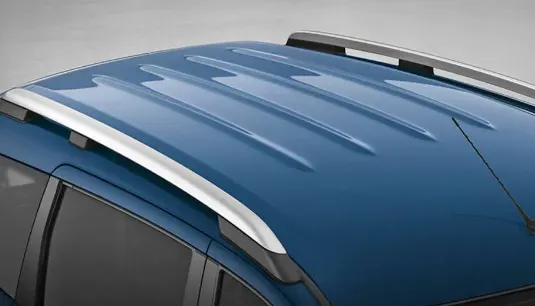
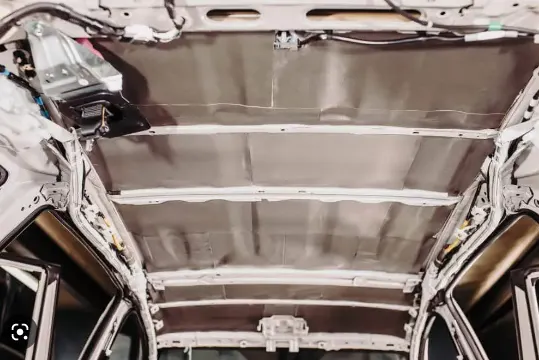
Curvature study of roof:
- The curvature of a car roof is usually designed to serve multiple purposes, including aesthetics, aerodynamics, and functionality.
- The smooth curvature of the roof enables reduced air resistance improving the car's overall efficiency and fuel economy by reducing drag.
- The curvature offers better headroom clearance and enhanced visibility for the passenger.
- It also provides an aesthetic appeal to the car. Curved roofs are often seen as more modern and stylish than flat roofs or other shapes and it attracts customers more.
- Adding to it, The curve shape offers improved strength and stability than flat roofs and acts as a protection feature for the passengers in case of a rollover accident.
Parts of car roof:
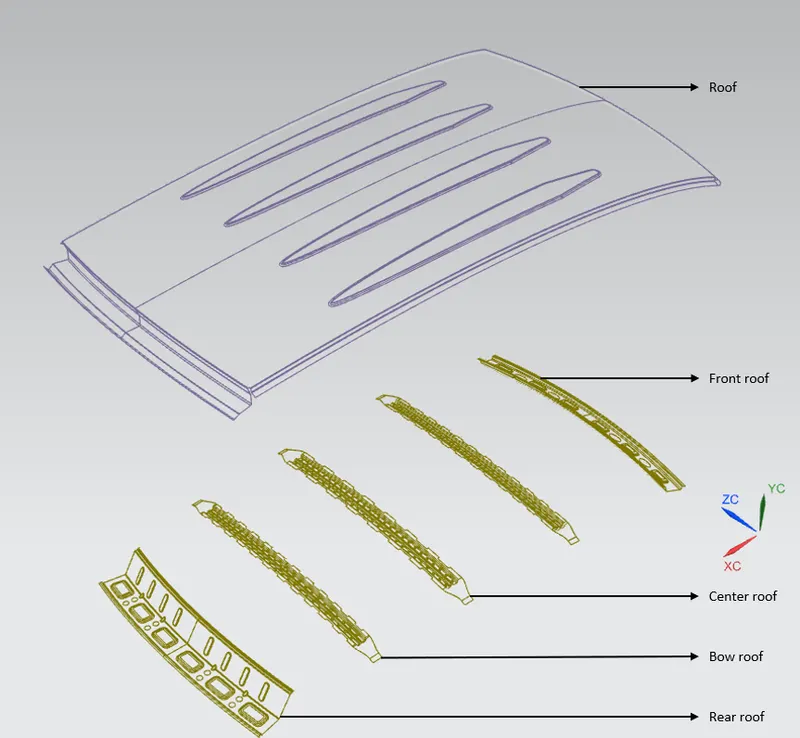
The roof of a car is composed of different parts that provide structural support and protection to the passengers.
- Front roof
- Rear roof
- center roof
- bow roof
Functional Study:
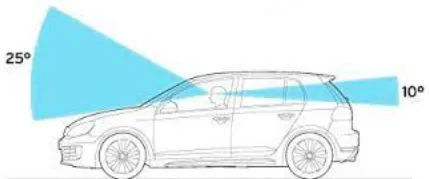
The details mentioned in the master section are strictly followed as deviating it would result in a reduction in
- Reduction in visibility area for the driver
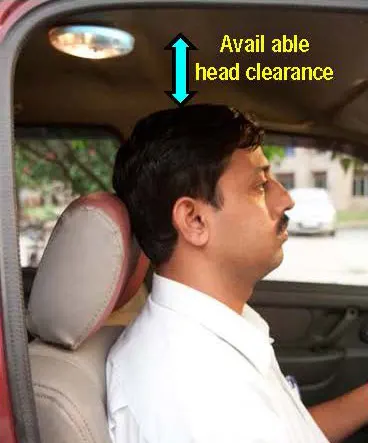
- Head clearance from the roof. (Min 75 mm)
- Improper results in the rollover test
Rollover test:
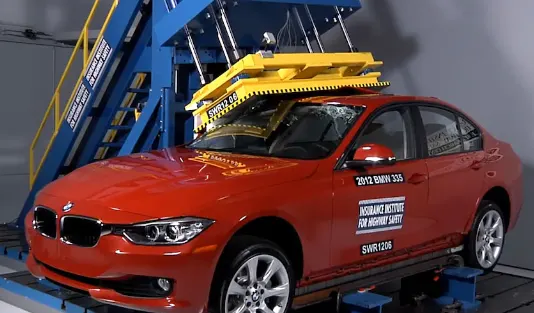
A rollover test is a type of safety test that evaluates how well a car roof can withstand the impact of a rollover crash. In a rollover crash, a car flips over and lands on its roof, which can cause severe injuries or death to the occupants. A rollover test simulates this scenario by placing a car on a platform and tilting it until it falls on its roof. The test measures the amount of force and deformation that the roof experiences during the impact. A car roof that can resist more force and deformation is considered safer than a car roof that collapses easily.
Design considerations:
- Maintained a minimum of 7 deg draft angle for better manufacturability
- Provided a gap of 5 mm for applying mastic sealant
- Sheet metal thickness = 0.75 mm
- Corners are provided for all sharp edges
Front roof panel:
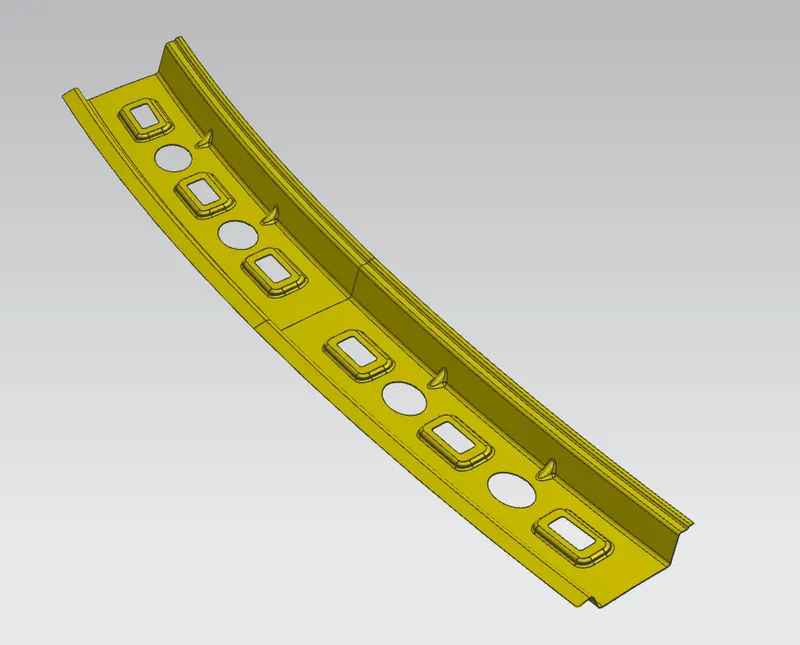
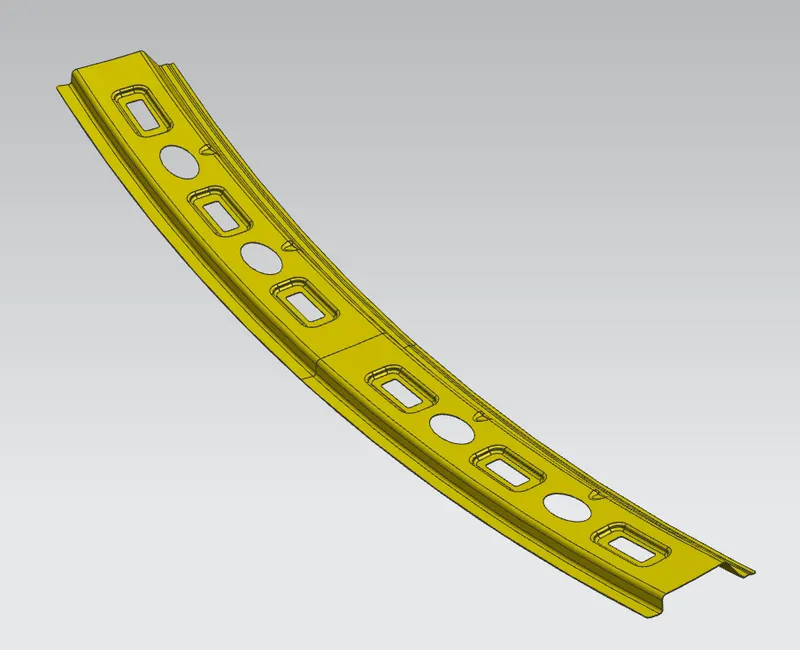
The front roof is the part that connects the windshield to the roof panel. It is an important structural component of the car's body and plays a significant role in providing support for the roof and helping to maintain the car's rigidity. It incorporates bends and curves to provide better strength and rigidity for the roof. The panels are usually made of high-strength materials.
Draft analysis:
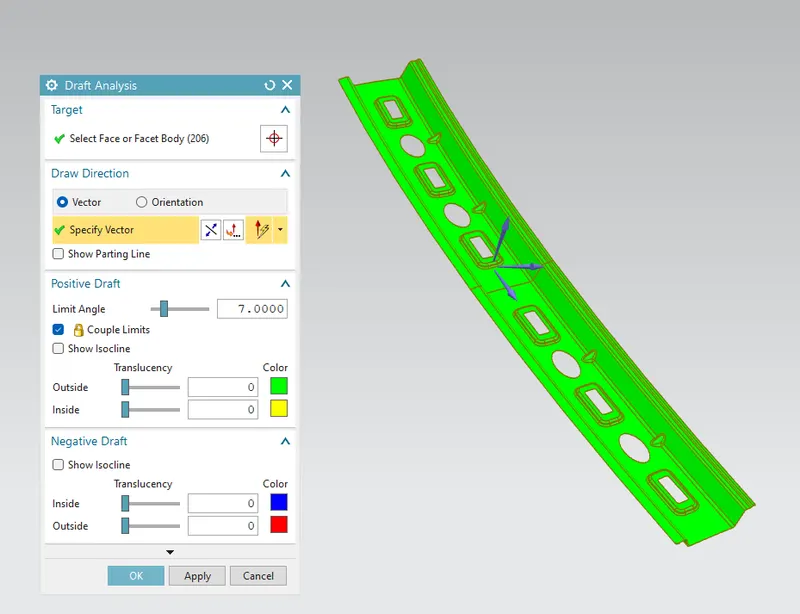
The designed part maintains a minimum draft angle of 7 mm, the part is good for manufacturability with its current features.
Rear roof panel:
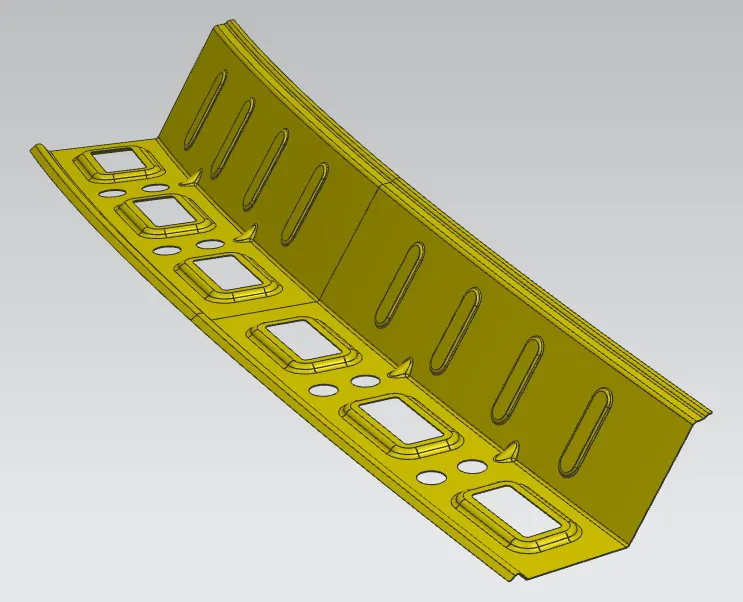
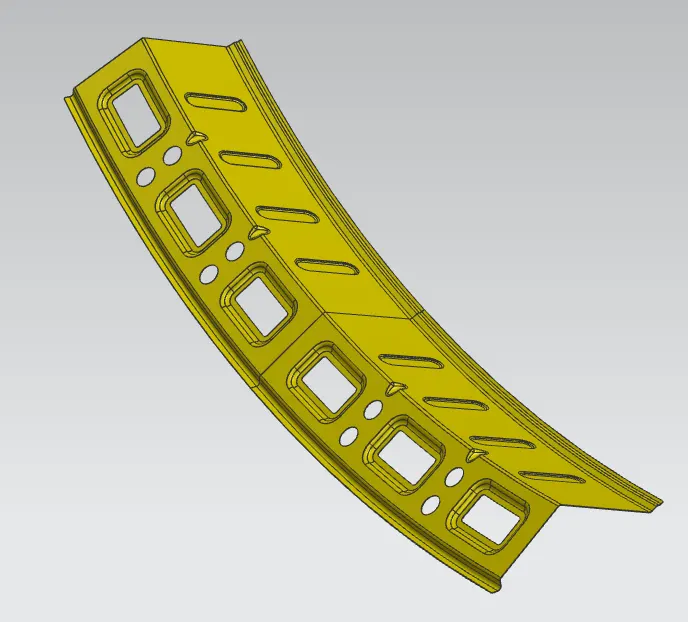
The rear roof panel of a car is the section of the roof that covers the rear seating area, extending from the rear windshield to the end of the vehicle. Like the front roof panel, it is an important structural component of the car's body and plays a significant role in providing support for the roof and helping to maintain the car's rigidity.
Draft analysis:
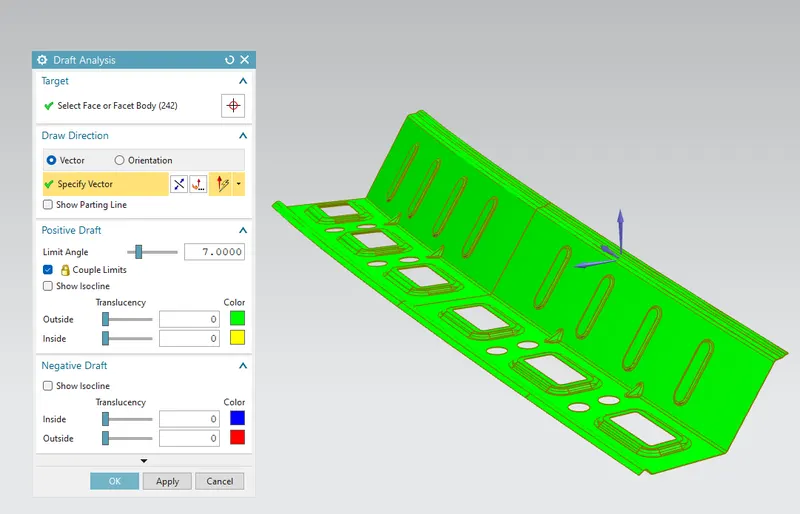
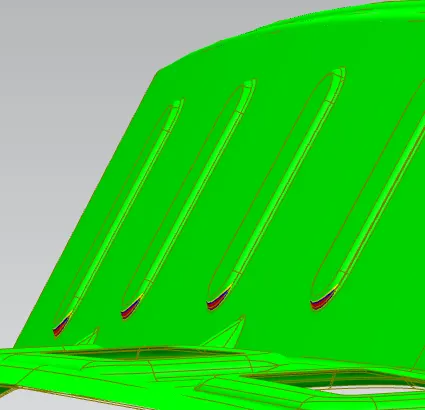
Some features had drafting issues that require a side core while manufacturing. The requirement of the feature is subject to post-FEA results as the features add an additional cost.
Center roof panel:
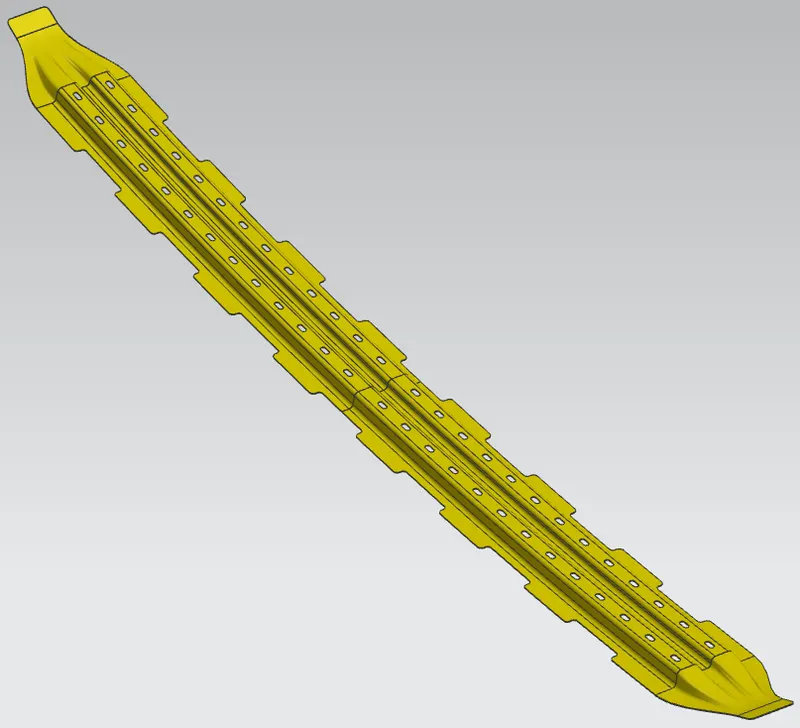
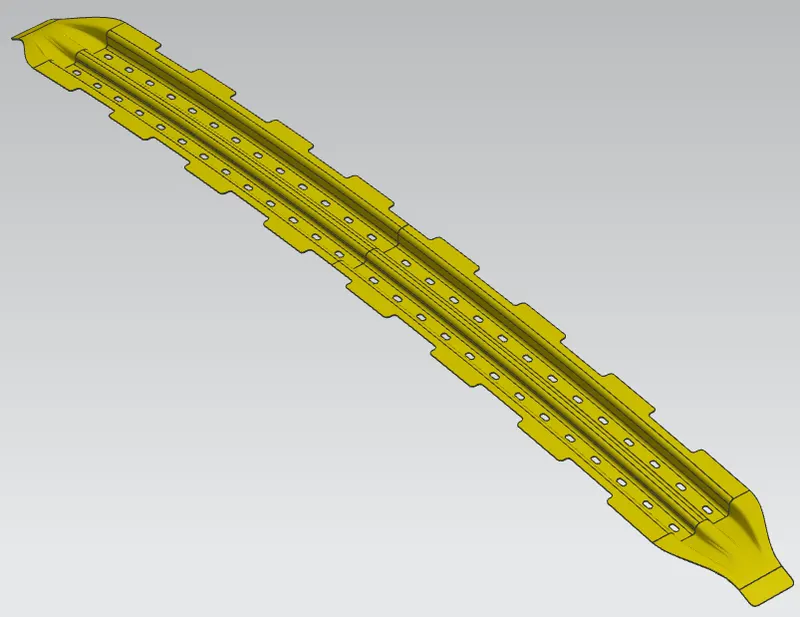
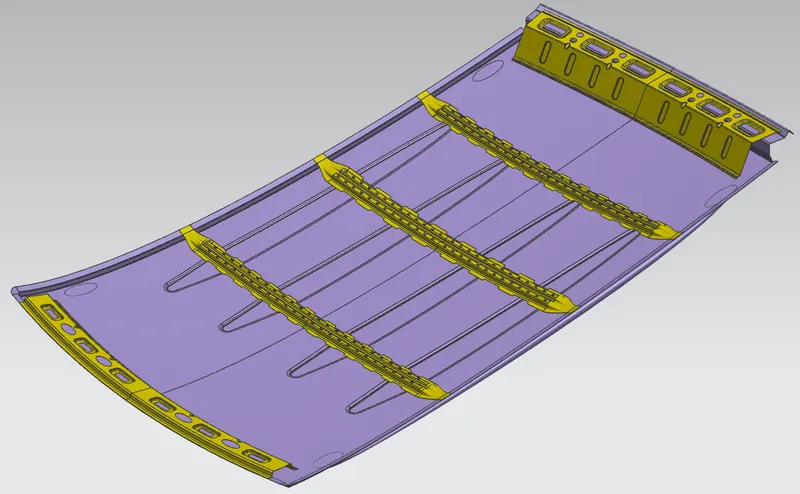
The center roof panel of a car roof is the section of the roof that runs between the front and rear roof panels, typically spanning the width of the vehicle. It is an important structural component of the car's body and plays a significant role in providing support for the roof and helping to maintain the car's rigidity.
The center roof panel is generally placed at a distance of 55-60 %of the overall length of the roof. This is because the front portion of the roof has better curvature, which enables it to offer good strength in the front area. As the rear part of the roof is weak the center roof is usually offset from the center by 5-10 % to maintain distributed strength to the roof.
The cross-section of the center roof panel has a W shape as it offers enhanced weight distribution and improves overall stability.
Draft analysis:
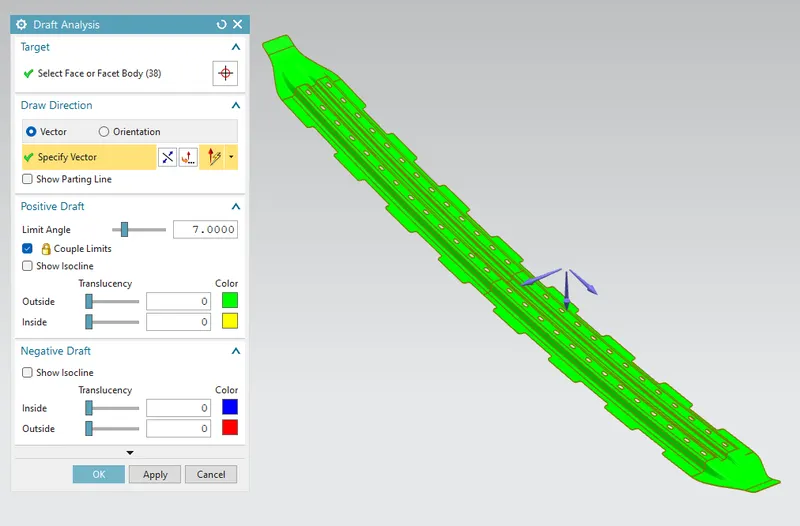
The designed part maintains a minimum draft angle of 7 mm, the part is good for manufacturability with its current features.
Bow roof panel:
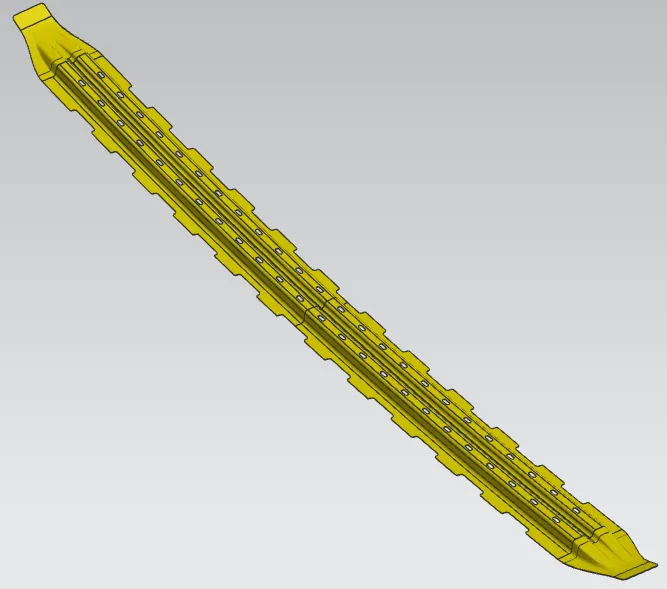
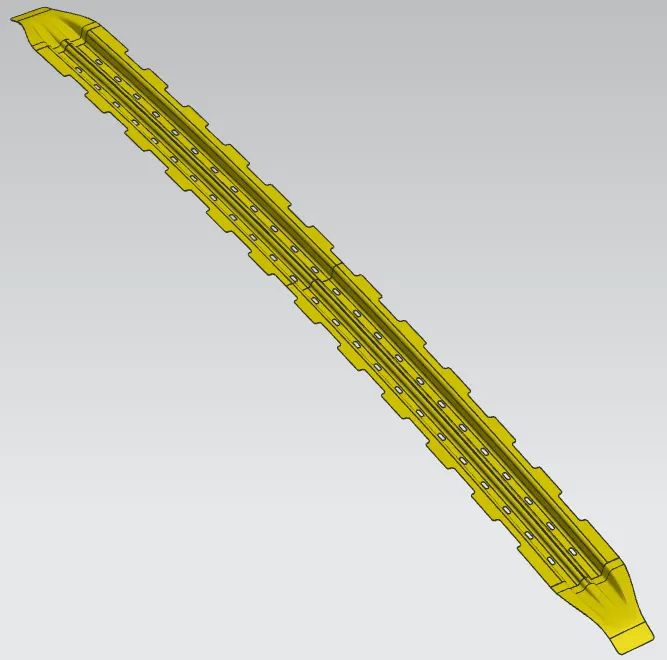
It is an additional strengthening member for the roof. It is placed at the center between the front and the center roof. The bows or ribs are typically made of steel or other high-strength materials and are designed to provide support for the roof panel when it is in the raised position.
In addition to providing support for the roof, the bows or ribs can also help to create a more streamlined, aerodynamic profile when the roof is raised. Some cars may have multiple bows or ribs to provide additional support and help the roof maintain its shape.
Bow Roof 1:
Bow roof 2:
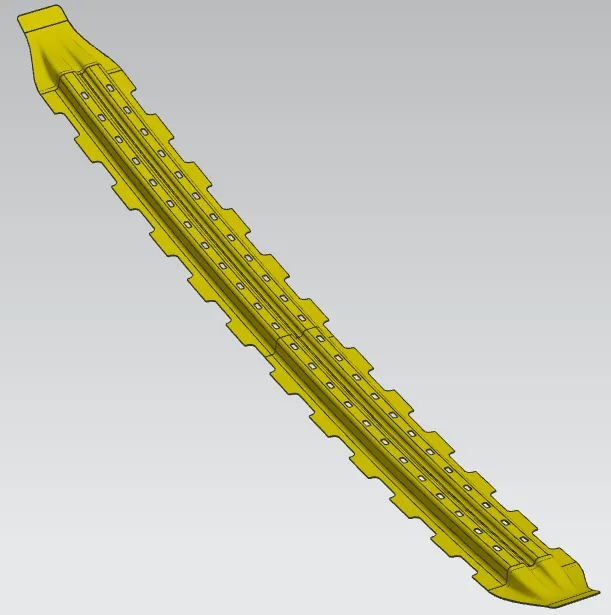
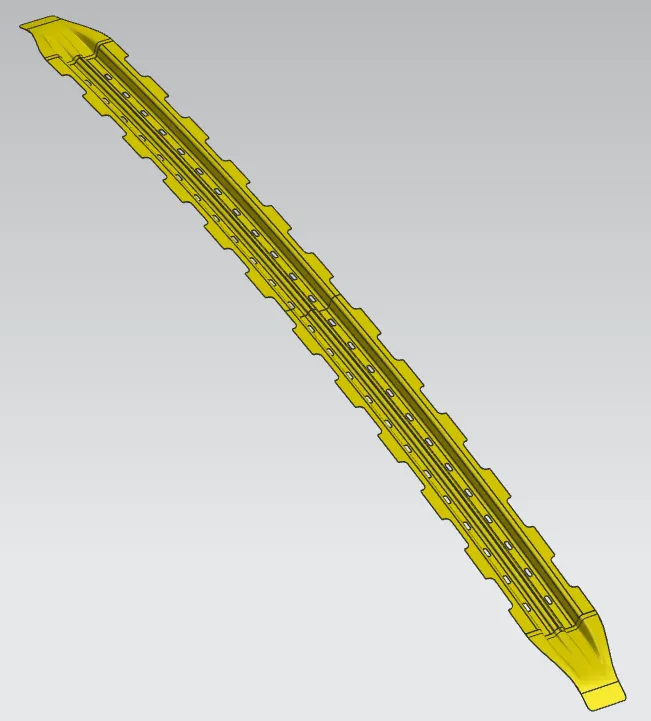
Draft analysis: Bow roof 1: Bow roof 2:
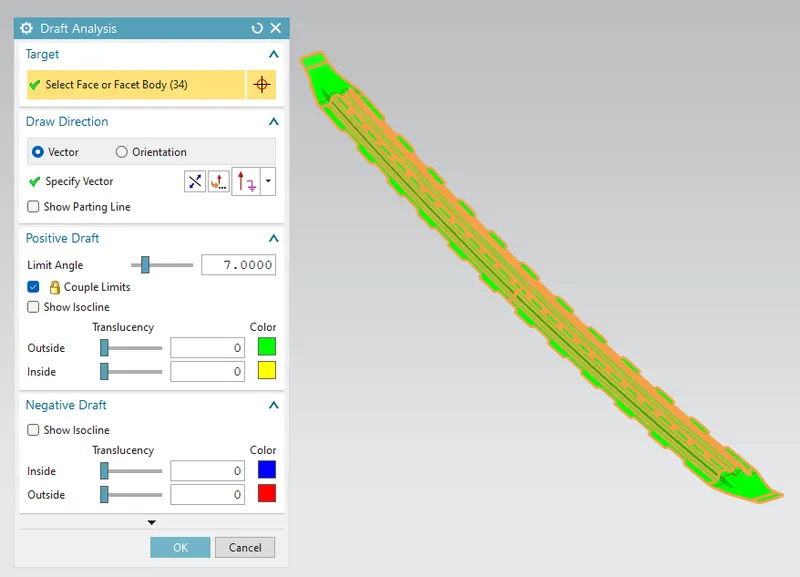
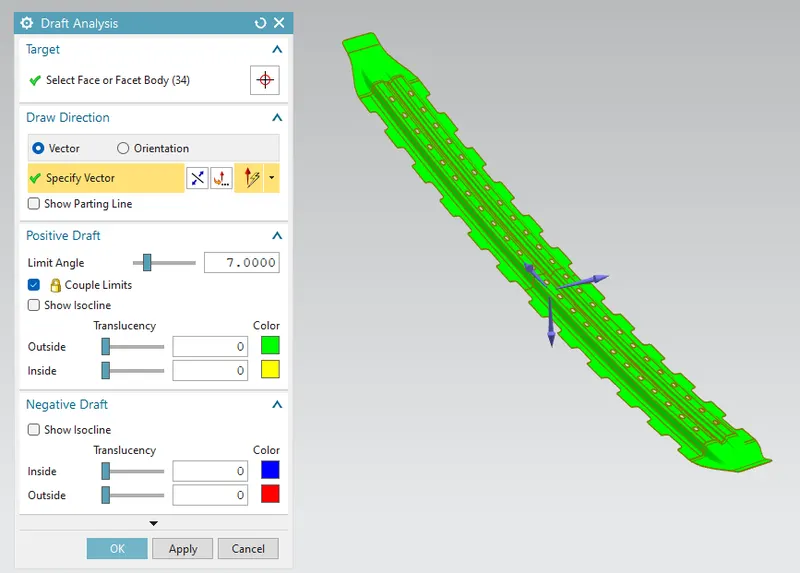
The designed part maintains a minimum draft angle of 7 mm, the part is good for manufacturability with its current features.
Roof:
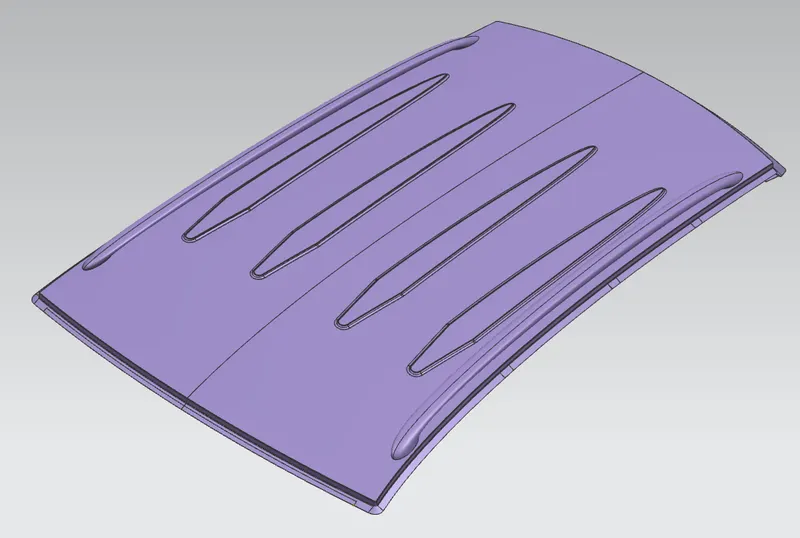
From the provided class A surface the ditch area has been designed along with the rear roof for hinge accessibility.
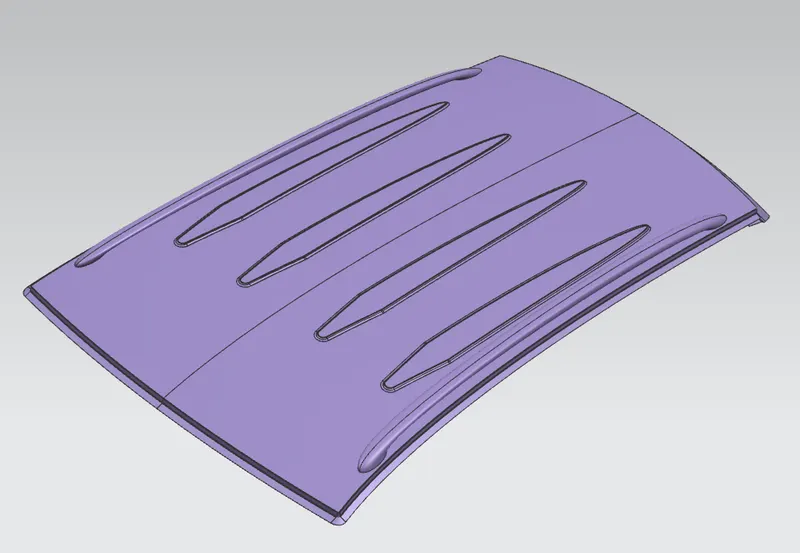
Draft analysis:
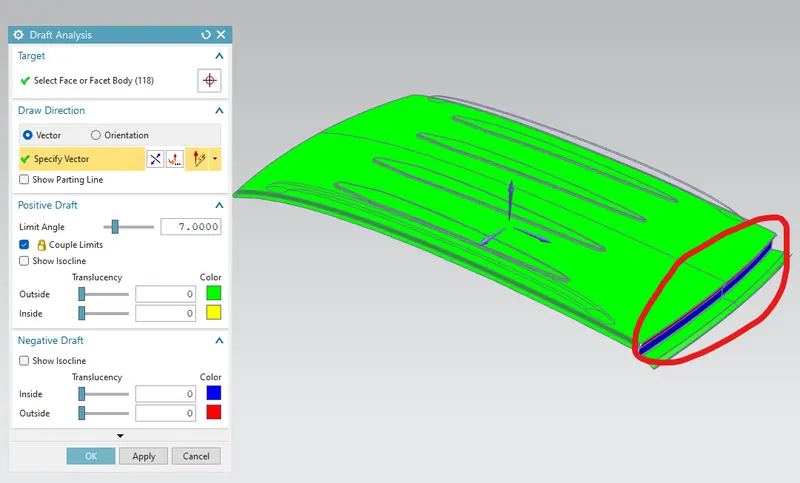
The draft analysis performed for the roof has some issues over the rear end of the roof. This is due to the design requirement for the roof that it is designed to have drafted over the opposite direction. There will be a side core in this case to manufacture the part.
Mastic sealant:
Mastic sealant is a type of adhesive that is used to bond and seal different materials in the automotive industry. It is usually applied as a paste or a liquid and then cured by heat, moisture, or UV light.
Mastic sealant can provide various benefits for automotive applications, such as:
- Improving the structural integrity and durability of the vehicle by reducing vibrations, noise, and corrosion.
- Enhancing the aesthetic appearance and functionality of the vehicle by filling gaps, smoothing surfaces, and preventing leaks.
- Increasing the performance and comfort of the vehicle by improving thermal insulation, sound absorption, and fire resistance.
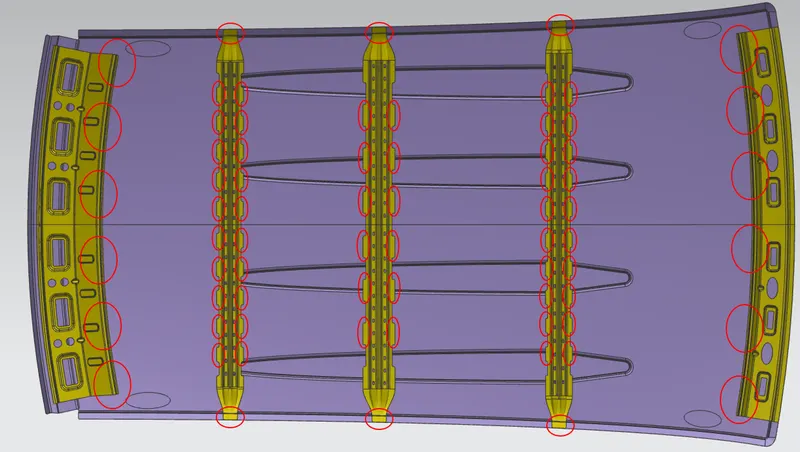
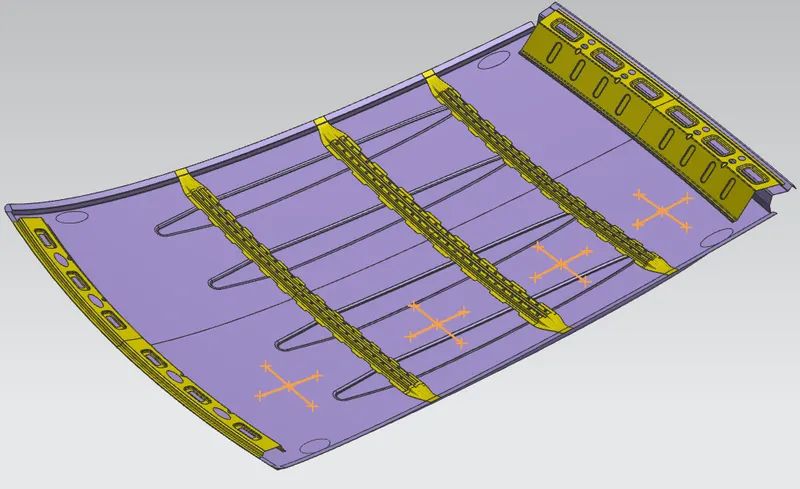
Some of the mastic sealant areas.
The Manufacturing process of the front roof, bow roof, center roof, and rear roof panels:
The manufacturing process involves sheet metal stamping which is first laser cut to the required shape and then stamped using a die.
During assembly, mastic sealants are applied to the panel and then located in position and spot welded.
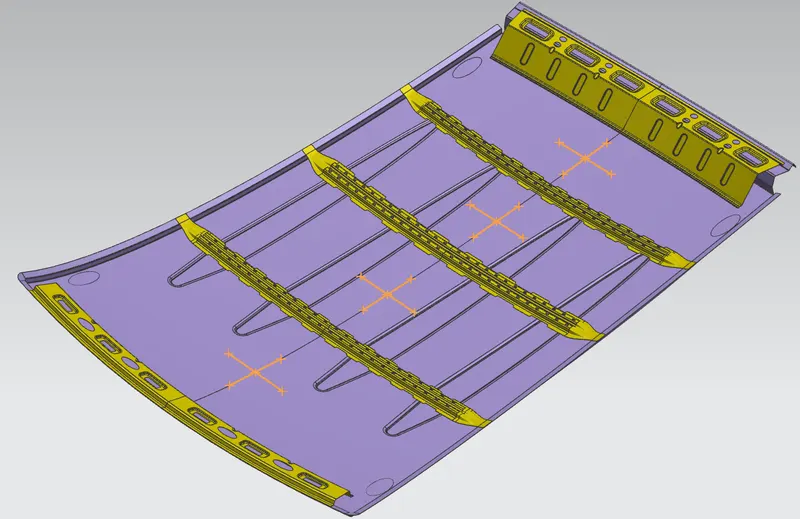
Isometric View:
Calculations:
Heat distortion criteria:
The roof of a car is exposed to high temperatures and solar radiation, which can cause thermal expansion and contraction of the materials. This can lead to deformation and damage to the roof structure and affect the aerodynamics and aesthetics of the car. Therefore, it is important to establish heat distortion criteria for the car roof design and testing. Heat distortion criteria are the maximum allowable changes in shape, size, or position of the roof due to thermal effects. They depend on factors such as the type and thickness of the materials, the geometry and curvature of the roof, the ambient temperature and humidity, and the duration and intensity of the heat exposure.
By applying heat distortion criteria, car manufacturers can ensure the quality and performance of their products and avoid potential failures or defects.
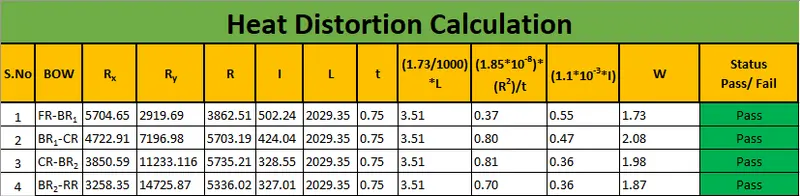
Through repeated observations and experiments, a calculative approach has been developed in the design stage to overcome a series of issues in roof design. The calculative part mentioned has been checked and the designed roof looks to be under the mentioned guidelines.
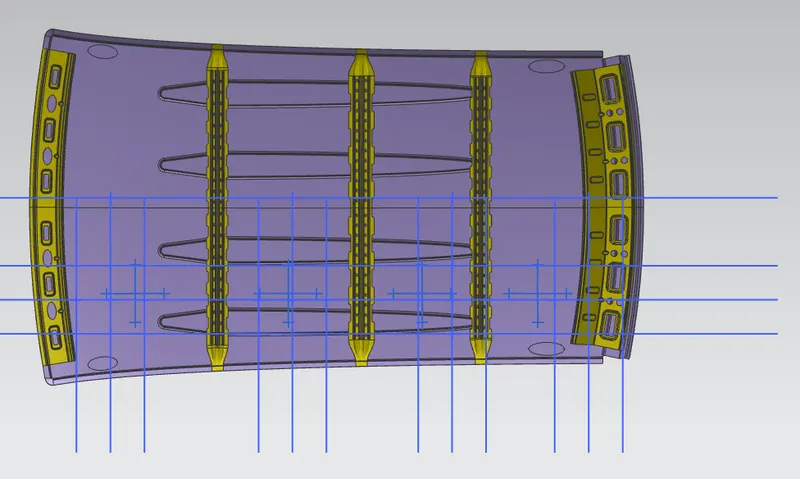
The formula for Heat distortion calculation:
W = [1.73 x 10^(-3) x L] + [1.85 x 10^(-8) x (R^2)/t] + [ 1.10x10^(-3) x l] - 2.68
The values of W fall under the satisfying range of <2.7. The designed roof is safer under heat distortion criteria.
Snow load criteria:
Snow load is the weight of snow that accumulates on a car roof when it is parked outdoors. Snow load can affect the structural integrity and safety of the car roof, especially if it exceeds the design capacity of the roof. Therefore, it is important to consider the snow load criteria when designing and testing car roofs.
Snow load criteria are based on factors such as the geographic location, the climate, the roof shape, the roof material, and the expected snowfall. Different countries and regions may have different standards and regulations for snow load criteria in car roofs. Car manufacturers and engineers should follow the relevant standards and regulations when designing and testing car roofs for snow load resistance.
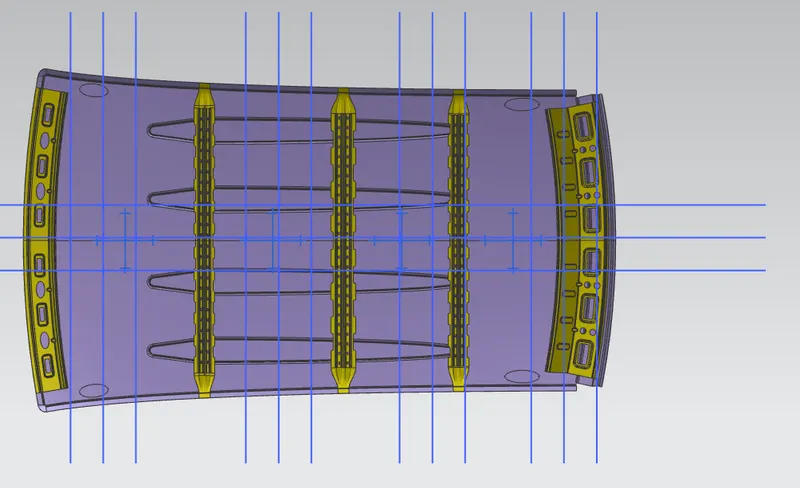
The calculative part mentioned has been checked and the designed roof looks to be under the mentioned guidelines.
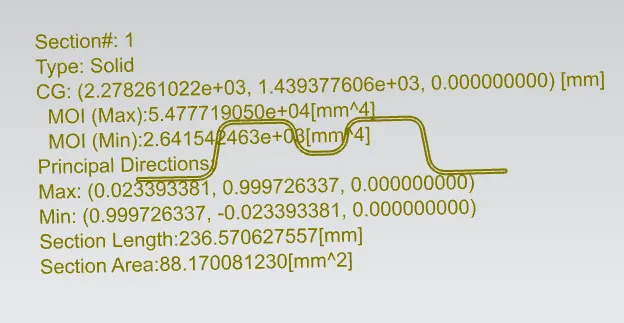
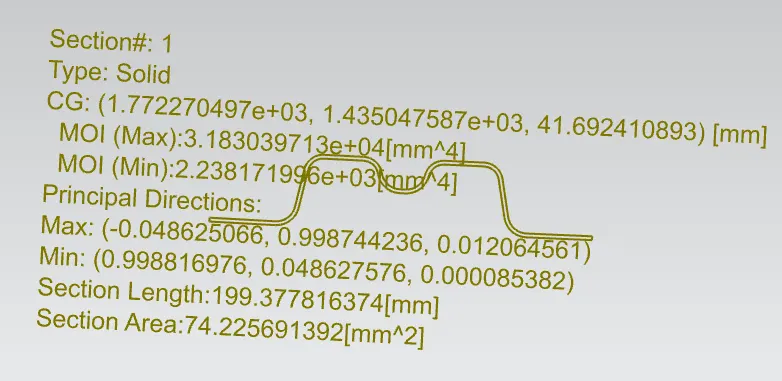
Moment of Inertia:
Center roof:
Bow roof 1:
Bow roof 2:
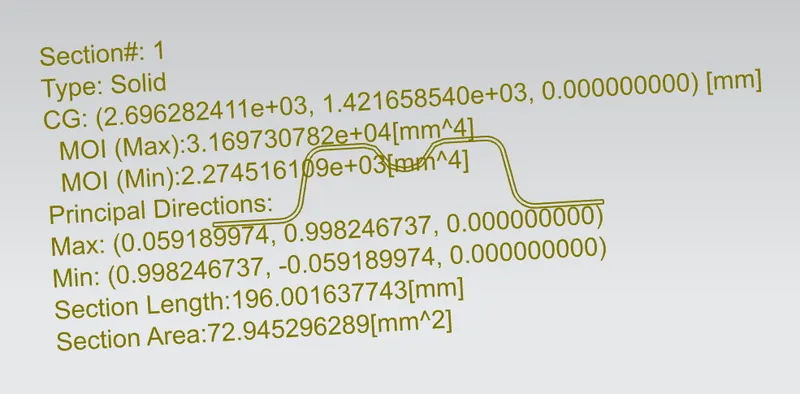

Formula for Snow load criteria:
Qr = [Iy x t2] / [α x s x [(Rx + Ry)/2]2 x 10-8]
The Qr value falls above the required value of >3.1. The designed roof is safer under snow load criteria.
Conclusion:
- Roof assembly has been created from the master section as per the provided design criteria.
- The developed design has been checked for draft analysis individually and observed to have a provided minimum draft angle of 7 degrees.
- The snow load and heat distortion calculations are performed to the design and have satisfied the given conditions.