Roof Design
Design of Automobile Roof
Aim:-
To design a roof along with the reinforcements for a vehicle using the given roof styling skin data, according to the master section and vehicle norms, engineering standard and finally curvature study calculations to find the roof strength and durability.
Introduction of automobile roof:-
The section of material, usually sheet metal, forms the roof of a vehicle.
An automobile roof or car top is the portion of an automobile that sits above the passenger compartment, protecting the occupants from sun, wind, rain and other external elements. It also provides structural strength to the overall automobile design.
The roof covers the front and rear doors and is connected to an A-pillar, B-pillar, and C-pillar. It is supported by reinforcement bow roofs with front and rear rails.
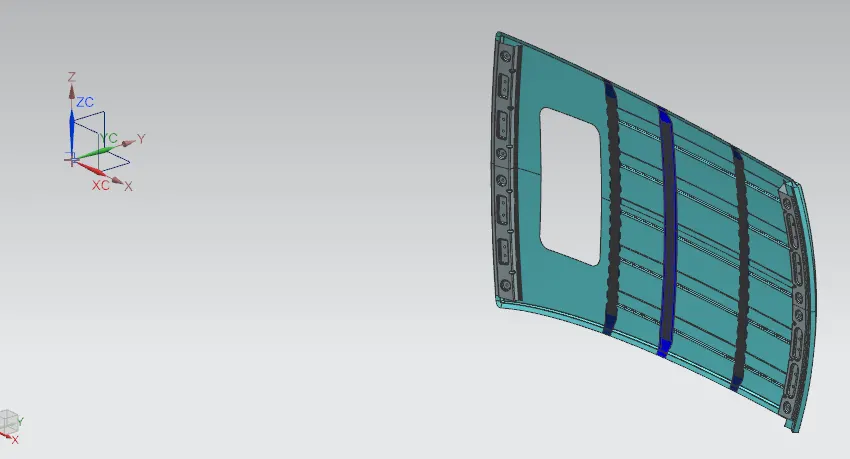
Roof Types:-
There are at least five types of roofs commonly installed on cars.
- Solid roof.
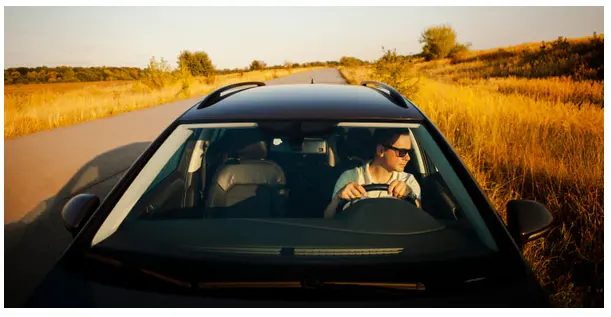
- Sunroof.
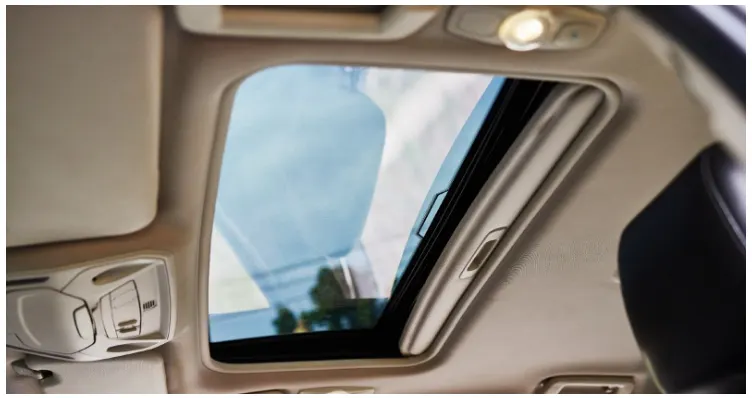
- moon roof.
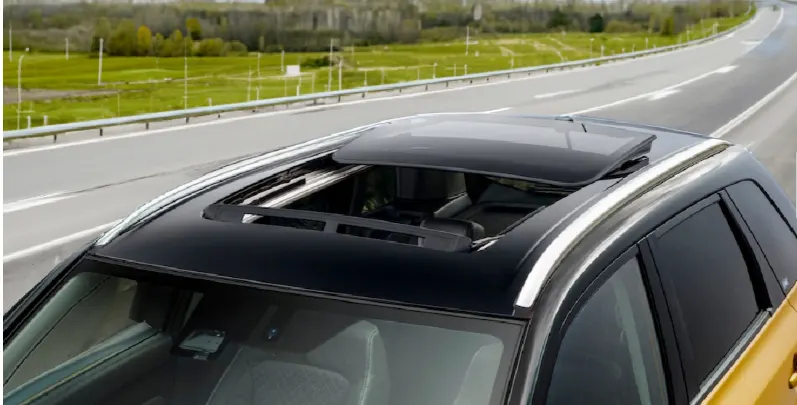
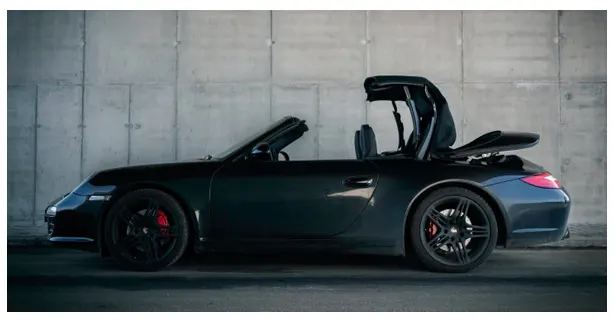
- Convertible roof.
- Panoramic roof.
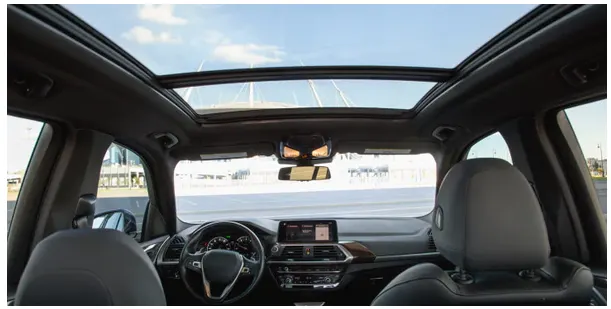
Sunroofs are often even called moonroofs. The three are different in terms of use and benefits. Sunroofs and moonroofs' basic difference is a glass or metal panel that's installed in the roof of a car, truck or SUV that slides open or pops up to allow light and air into the interior cabin. A moonroof is typically a clear or tinted glass panel that slides between the roof and the headliner and is often tilted open to let in the fresh air.
A panoramic roof is a type of moonroof that is merely stationary, so while it's sometimes called a moonroof it's a glass roof. Panoramic roof is offered as an available option on most mainstream models or as a standard feature for most luxury cars. Panoramic roofs come with multiple panels in the roof, Which are either operable or fixed.
Apart from these many more variations on the automobile roof developed industry. Some variations are Hardtops, T-tops, and Vinyl roofs.
Tooling axis:-
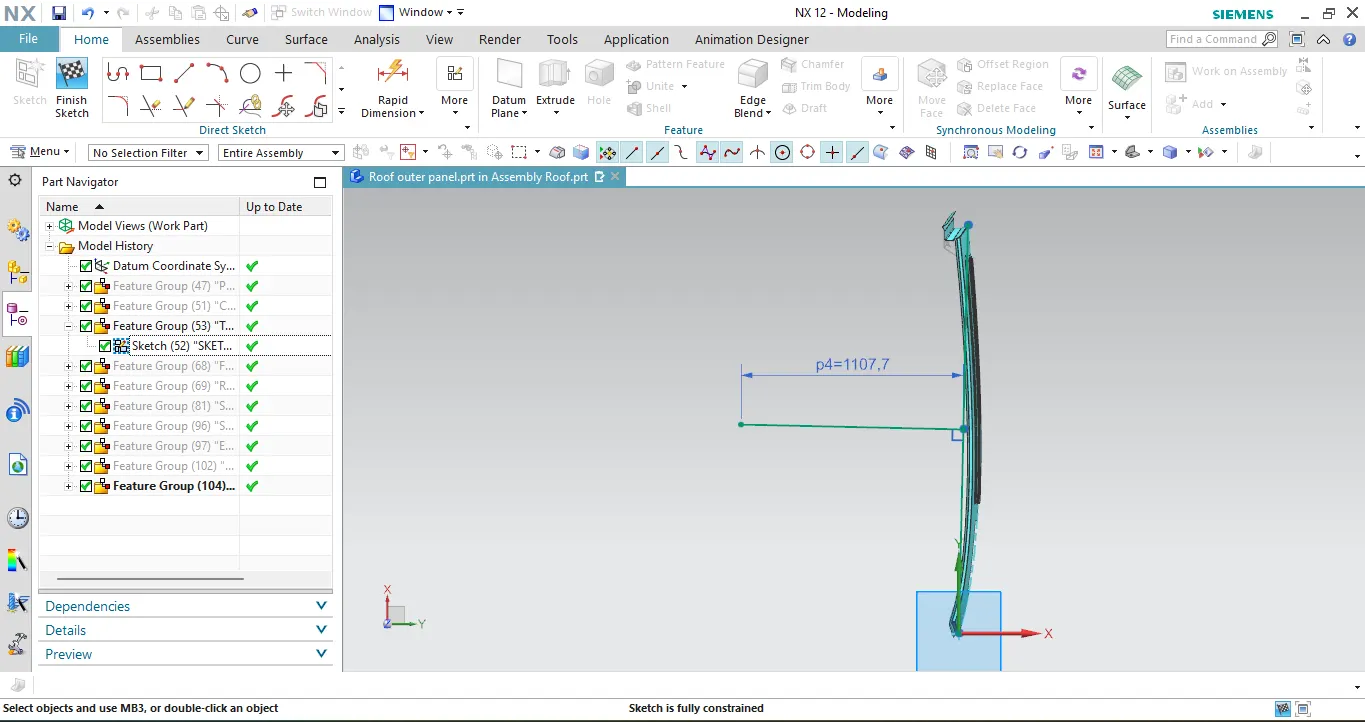
At first, visually check the roof outer surface( styling surface) then trim the surface using the XY datum plane. Then using the sketch I create a tooling axis. This is the tooling axis used for all parts.
Design Consideration:-
- Visibility criteria.
- Headroom clearance.
- Curvature study.
- Hear distortion and Snow load criteria.
- Draft analysis.
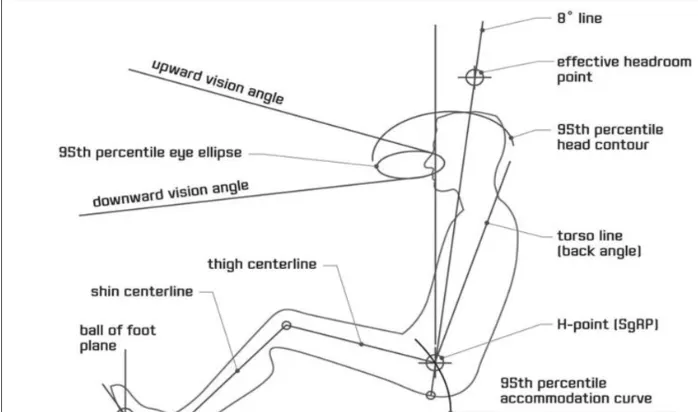
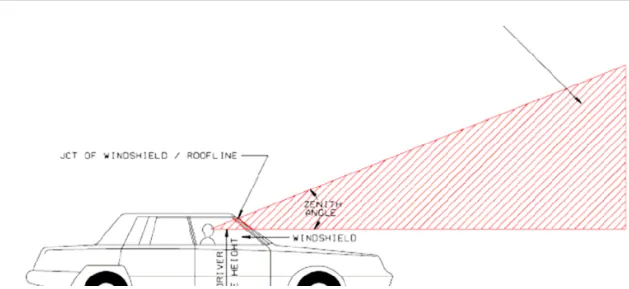
1. Visibility Criteria:-
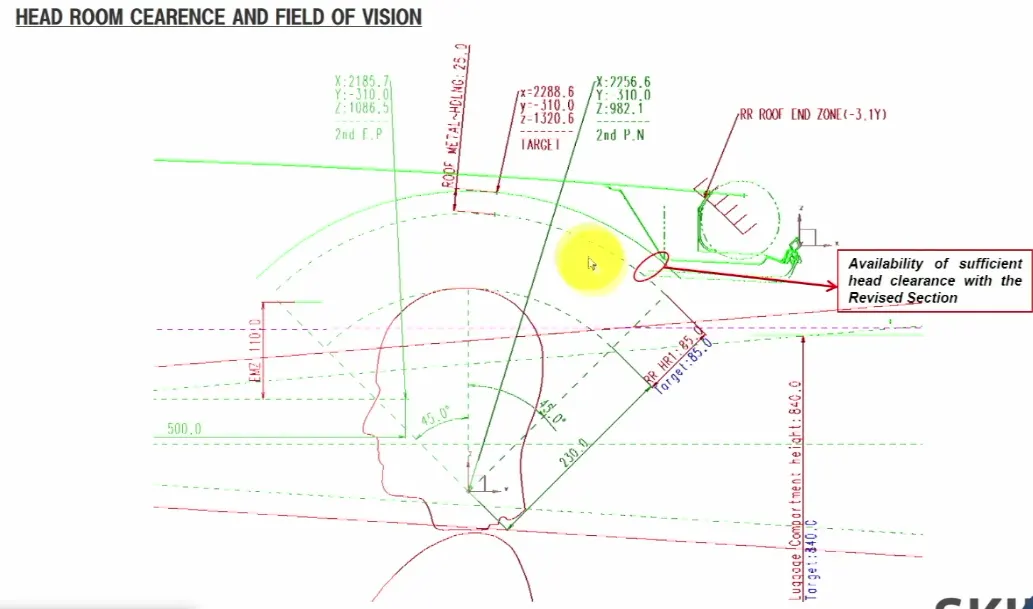
2. Headroom Clearance:-
Here Headroom clearance is 80 mm minimum.
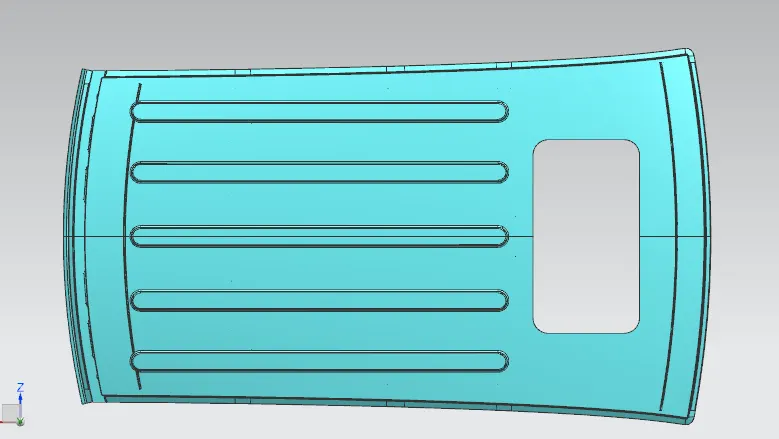
Roof outer panel:-
The roof outer panel thickness is 0.75mm.
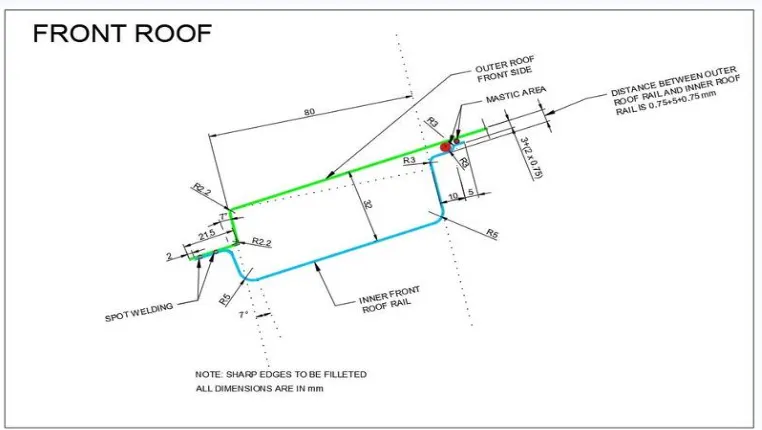
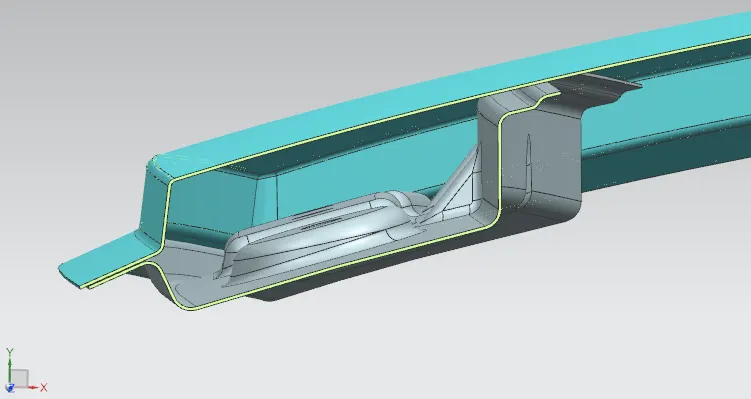
Front Roof rail:-
The front roof rail is jointed with windshield glass, body sild outer and inner panels using mastic sealant.
The manufacturing requirements are emboss depth should be less than 10 mm. and the minimum fillet radius should be 3mm+ thickness.
Functional requirements are headroom clearance is 80mm minimum, visibility critical.
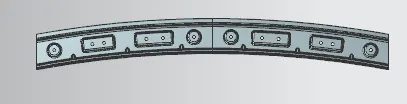
The front roof rail thickness is 0.75mm.
Rear Roof Rail:-
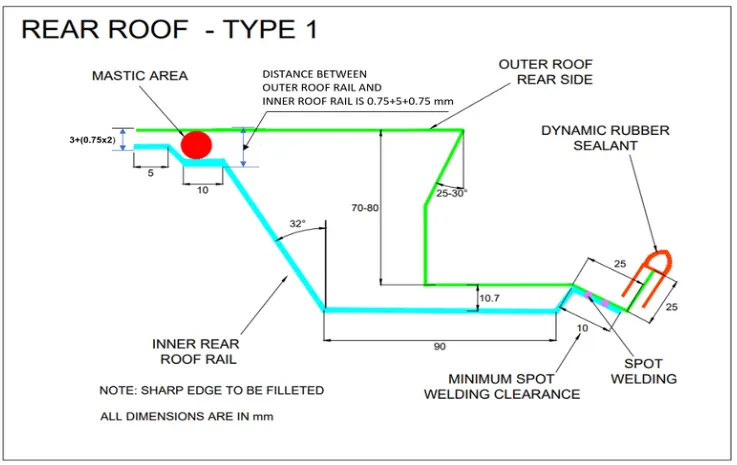
The rear roof rail is joined with the back door and body sild outer using mastic sealant.
Manufacturing requirements are that emboss depth should be less than 10 mm. and the minimum fillet radius should be 3mm+ thickness.
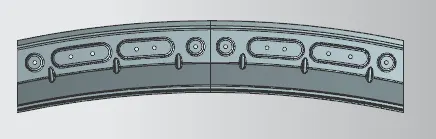
The rear roof rail thickness is 0.75mm.
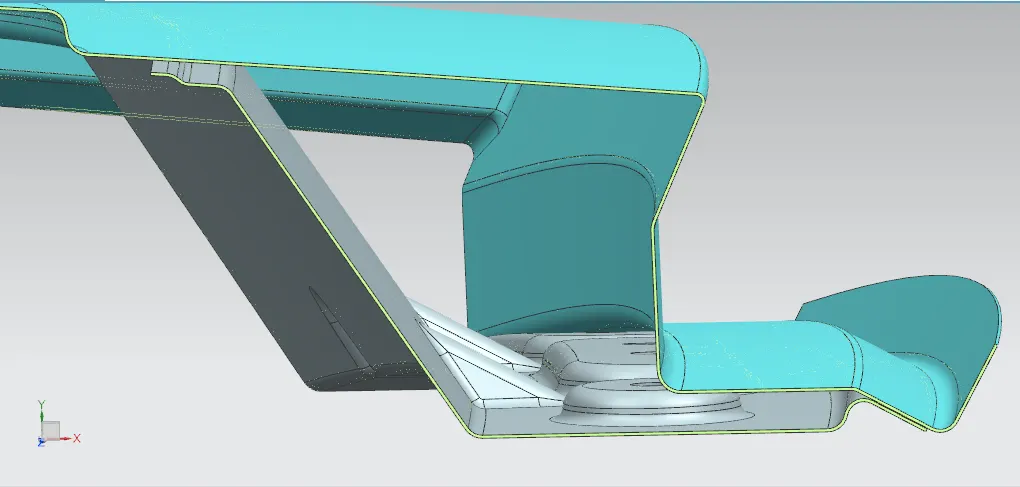
Center Roof:-
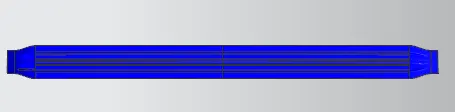
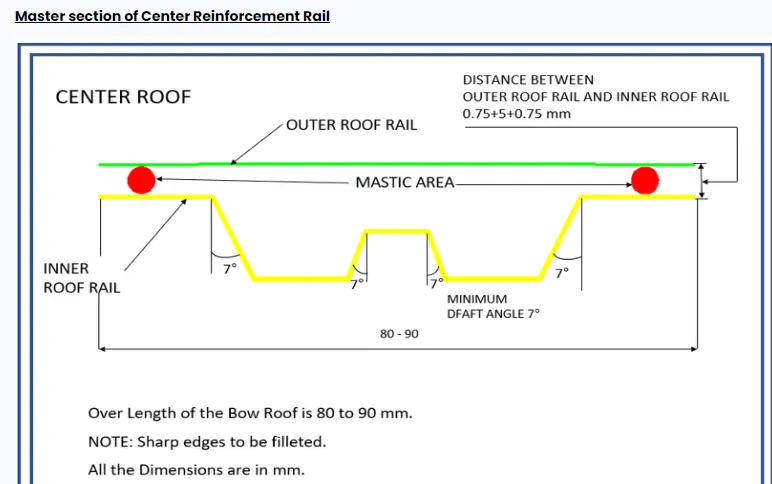
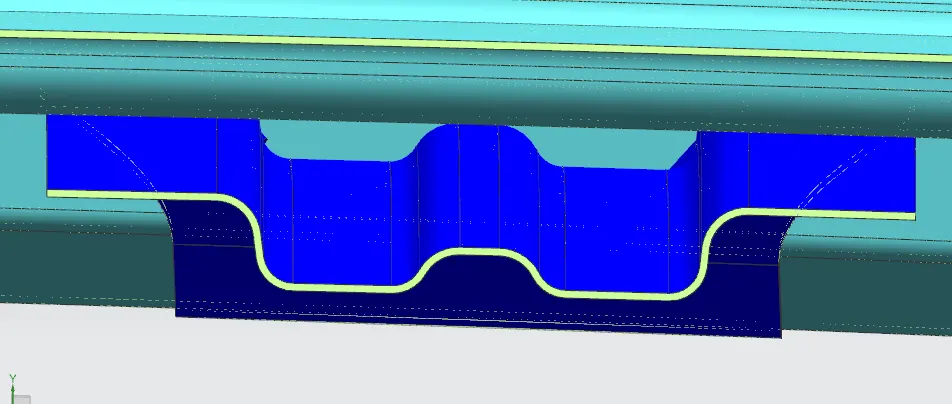
Center roof thickness is 0.75mm.
Bow Roof :-
Mastics are applied between roof and the roof rail and bow roof. when the mastic gooses out it joints the roof rails, bow roof with the roof. As we have curvature in front and more flat in the back side of the roof. It is sufficient to have reinforcement center alone in front and both the roof bows behind. Number of bow roof increases if the car size becomes longer and taller. More taller car means more flat region means more bow roof.
Bow Roof 1:-
Bow roof 1 thickness is 0.75mm.

Bow Roof 2:-
Bow roof 2 thickness is 0.75mm.

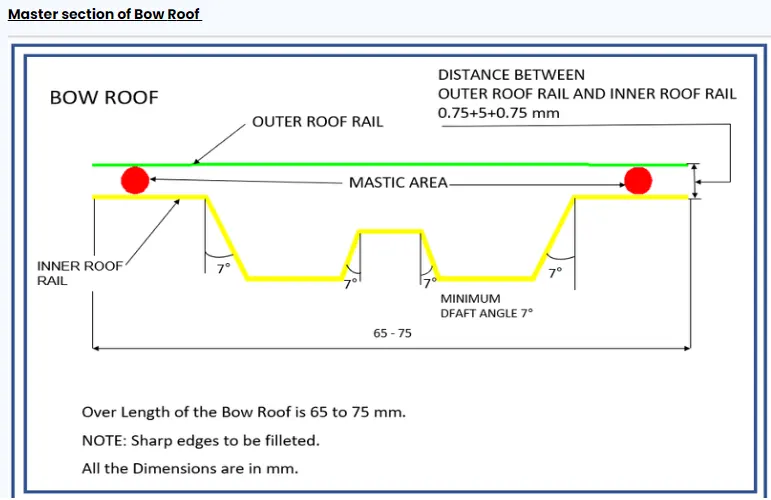
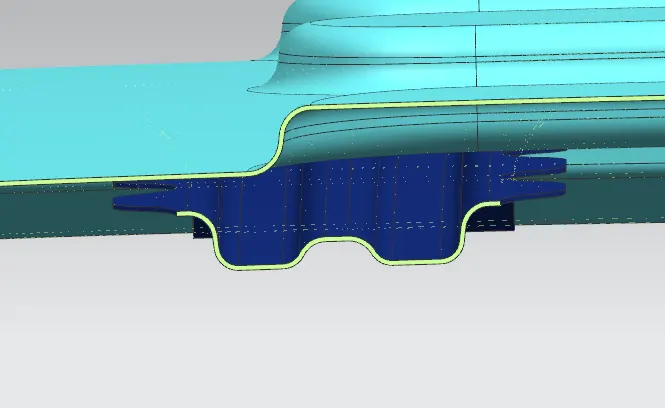
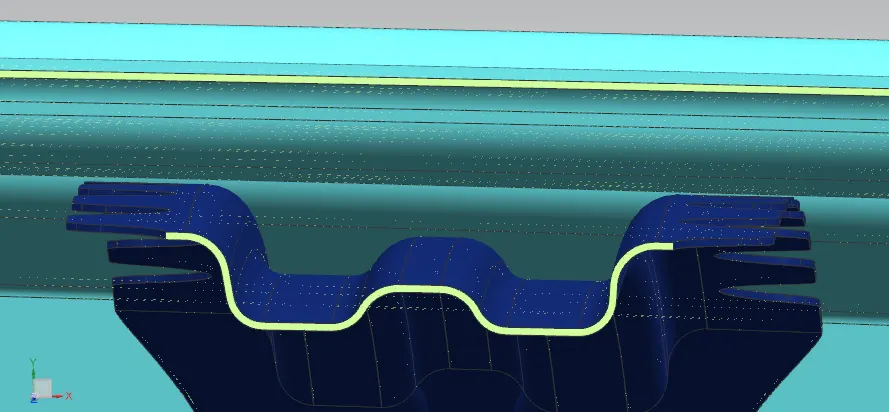
All parts are designed followed by the master section.
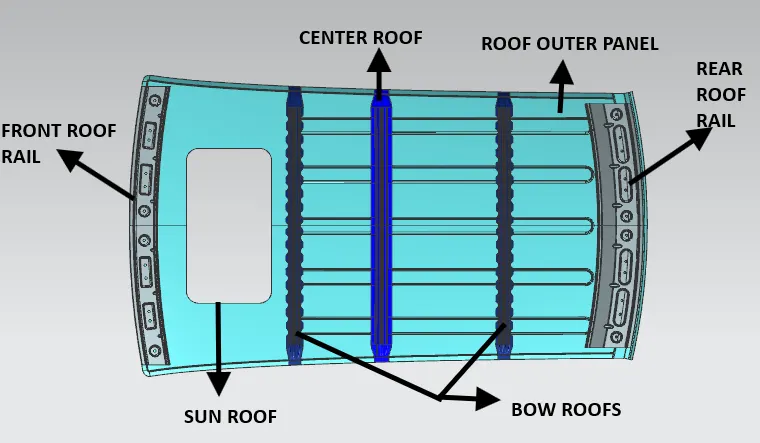
3. Curvature study:-
To satisfy the roof's heat distortion and snow load performance, We have to determine the desired optimum location of bow roofs and roof plate thickness. If the roof is exposed to high temperatures for a long time the roof structure will tend to deform. This study will help to check whether our design is valid and if not will help to determine the optimum position of the radius to avoid the deformation of the roof. Similarly, if the roof is subjected to a heavy load of snow, it will tend to deform or fail. We have to position the rails at desired specific locations to improve the strength under the snowed conditions.
4. Heat distortion and snow load criteria:-
HEAT DISTORTION CRITERIA:-
This study helps to determine the positions of bow roofs to provide strength to the roof and avoid bending or deformation of the roof due to hear. The value is supposed to be less than 3.1 in the above design. We have found W value is less than 3.1 in al components. Hence the heat distortion criteria is perfect.
A bow roof curvature study using the formula below will help us to check whether the bow roof positions impart the required strength of the roof.
W = [1.73*10^(-3)*L]+[1.85*10^(-8)*(R^2)/t]+[1.10*10^(-3)*I]-2.68
L = Roof length in X direction (mm). [Roof dimension in 0-Y.]
R = Roof curvature.
R = 2*(Rx * Ry)/(Rx + Ry)
Rx = X curvature.
Ry = Y curvature.
t = Roof plate thickness.
I = Bow roof spam (mm).
Judgment condition W < 2.7

FR = Front roof rail.
RR = Rear roof rail.
CTR = Center roof.
BF 1 and BF 2 = Bow roof 1 and 2.
Snow Load Criteria :-
This evaluation is performed in cold regions where snow occurs roof design must pass through there calculation to ensure that it has sufficient stiffness to withstand the load due to accumulation of snow over the roof.
A bow roof curvature study using the formula below will help us to check whether the bow roof positions impart the required strength of the roof.
Qr = [ Iy*t2]/[α*S[(Rx + Ry)/2]210-8]
t = Roof plate thickness(mm)
Ly = Distance between the front and rear roof rails on the vehicle along with 0Y (mm). Length of roof panel with the center point between roof rail front and rear as the front and rear reference point.
Lx = Distance between the left and right end of the roof on the roof Bow (mm). The width of the roof panel is exposed on the surface.
Y = Distance front Front roof rail to Roof bow (mm).
Iy = Geometrical moment of inertia of roof bow (Y cross-section) (mm4).
Rx = Lateral direction curvature radius of roof panel Y cross-section on roof bow(mm).
Roof panel curvature radius of length Lx in front view.
Ry = Longitudinal direction curvature radius of the roof panel X cross-section of roof bow(mm).
Roof panel curvature radius of length s in side view.
α = My*Lx2*10-12
My = Y(Ly - Y)
S = Distance for which roof bow bears divided load (mm). S = L1/2+L2/2
Judgment Condition :-
Qr ≥ 3.1
250 ≤ S ≤ 380

FR = Front roof rail.
RR = Rear roof rail.
CTR = Center roof.
BF 1 and BF 2 = Bow roof 1 and 2.
CTR, BOW ROOF1 and 2 Section Inertia Analysis :-
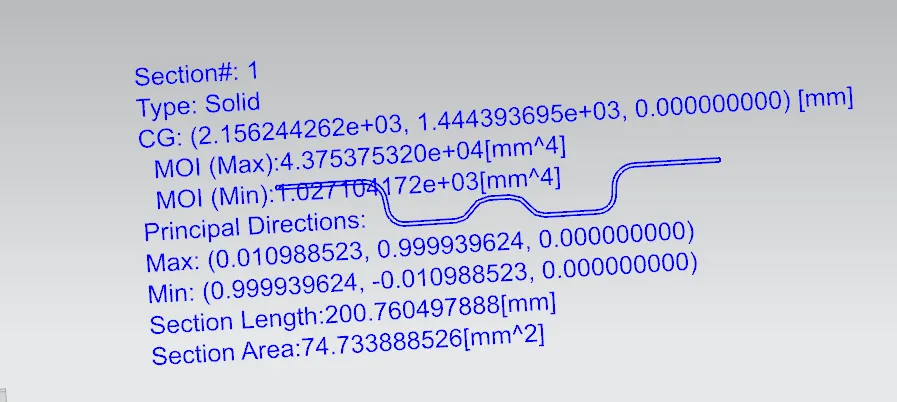
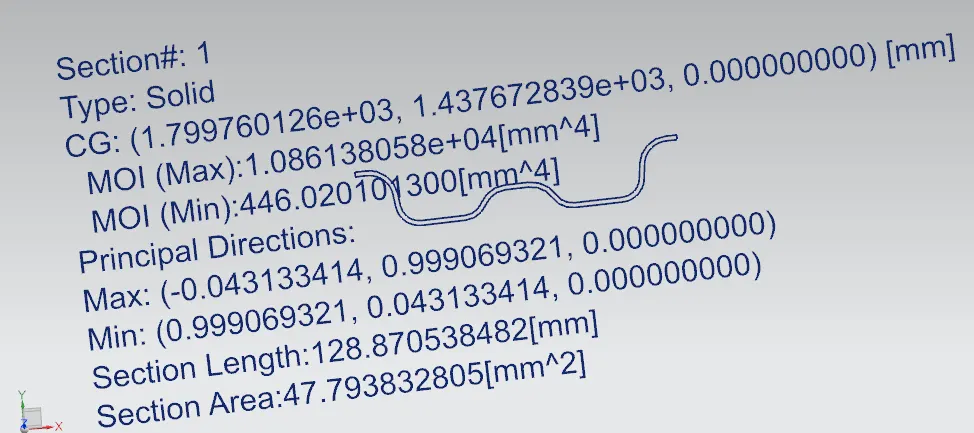
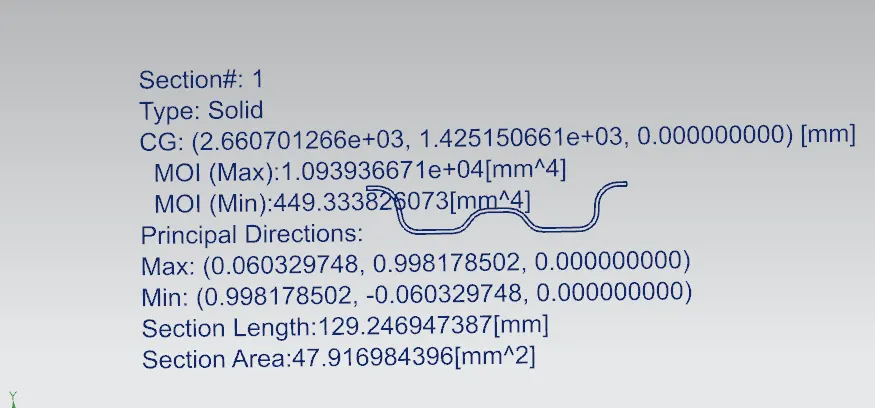
Here CTR & BF2 snow load criteria calculation less than 3.1. That's the reason I create some embosses on the roof outer surface because emboss improves the part strength.
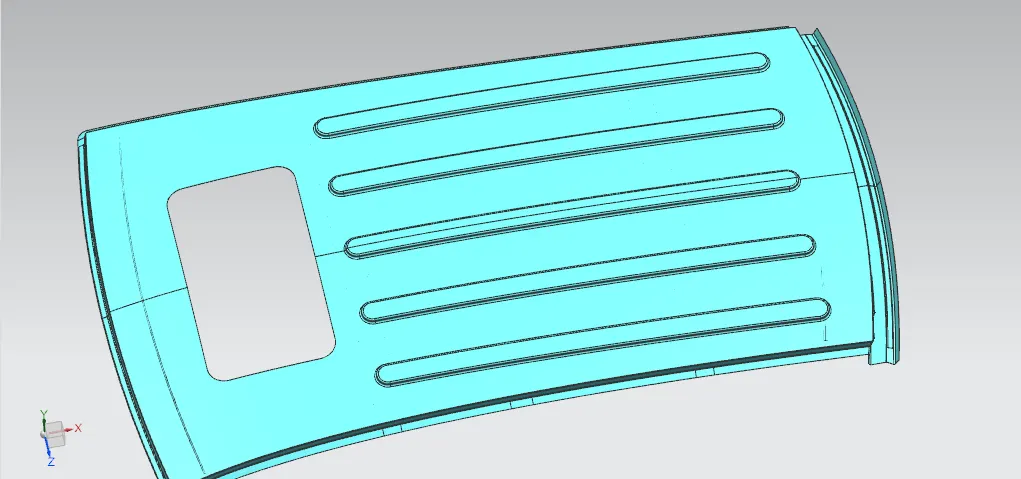
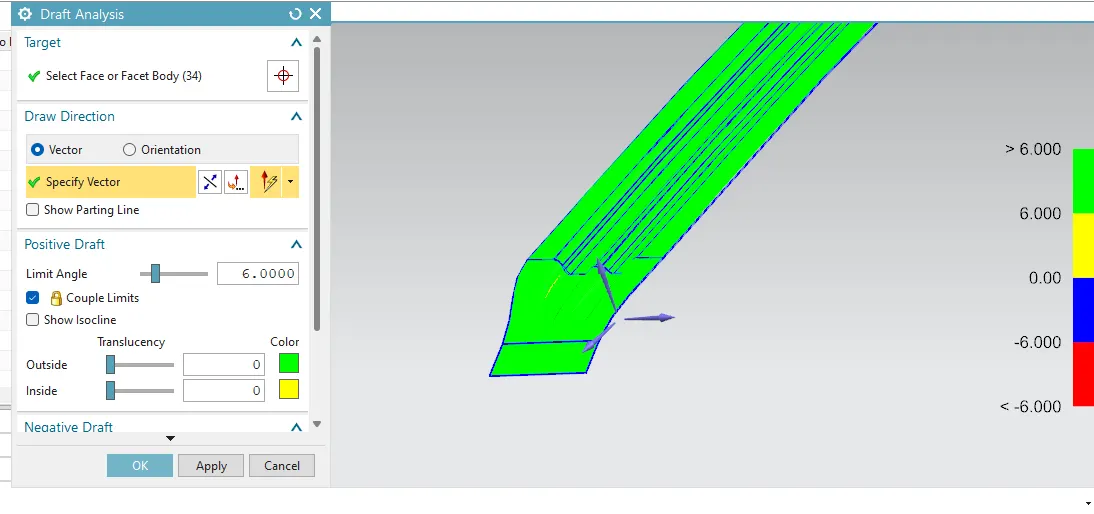
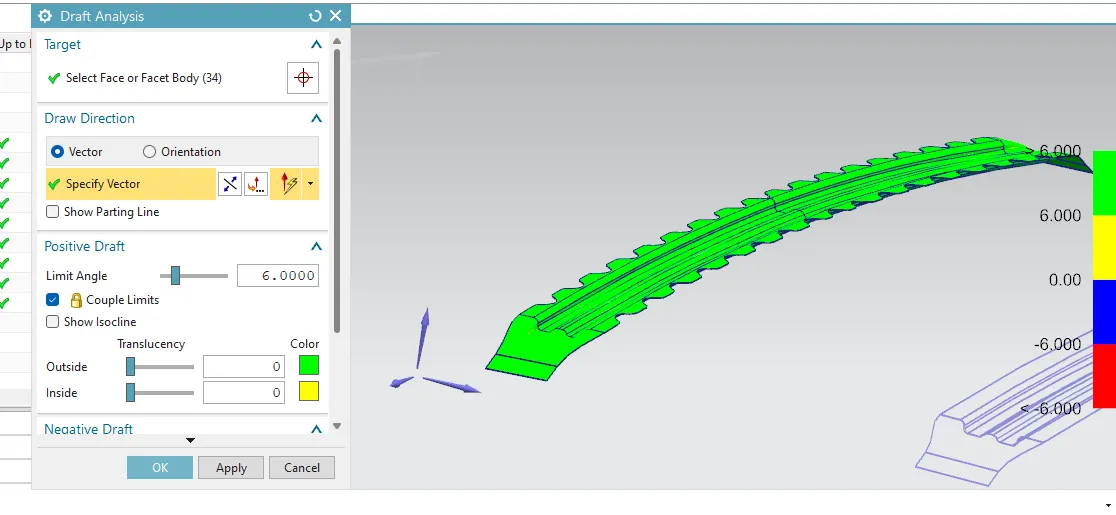
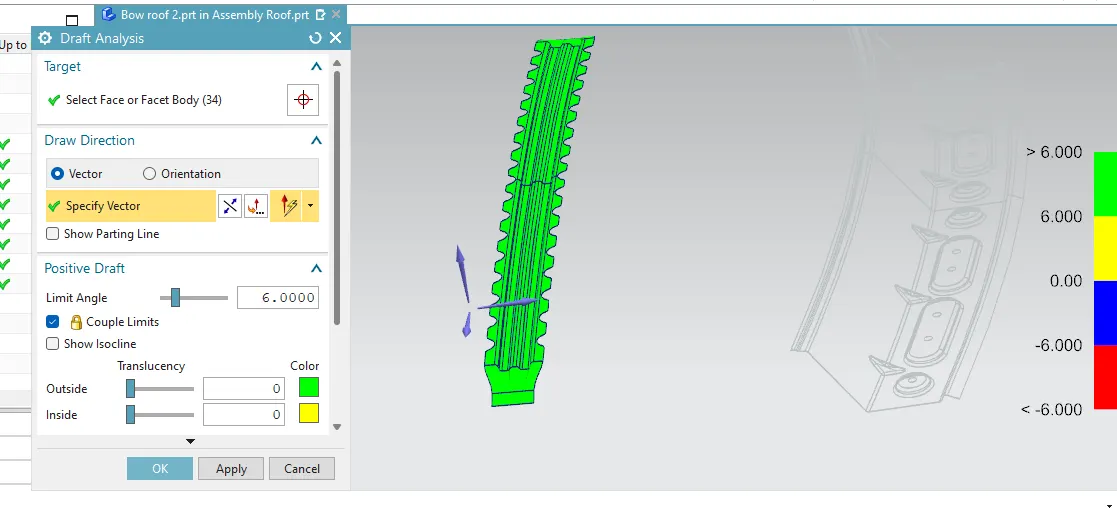
Draft Analysis :-
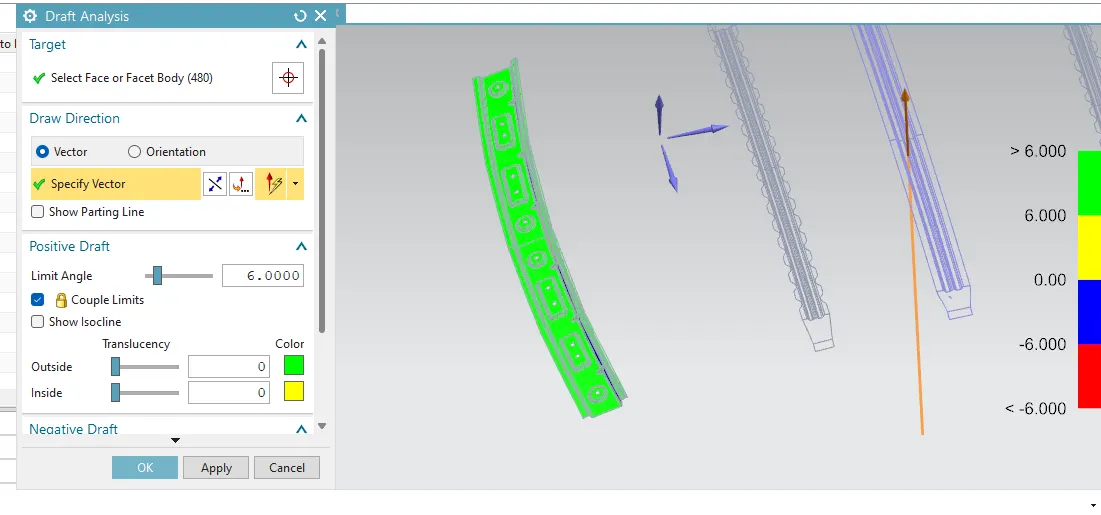
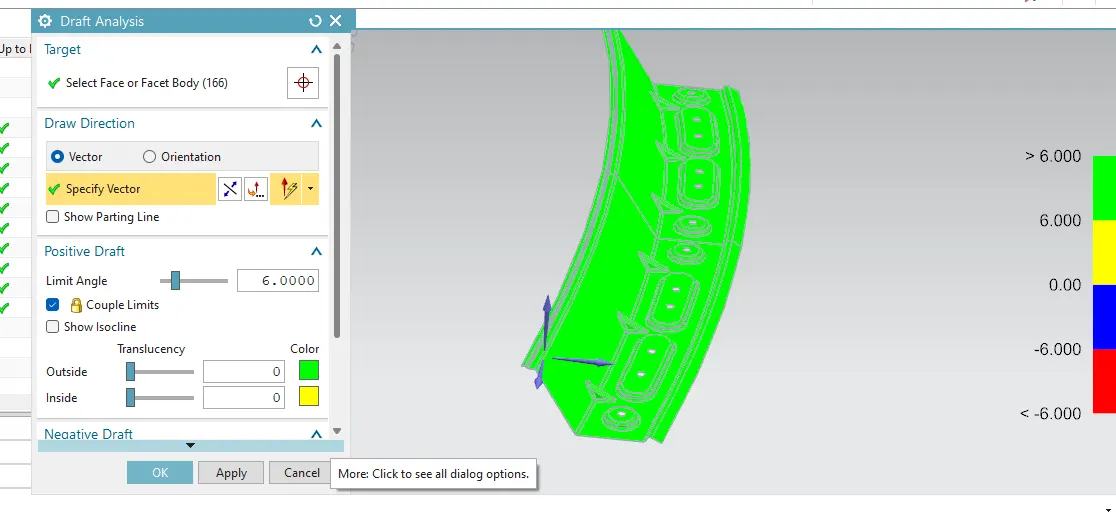
The draft allows parts to be rejected or ejected from the mold. The draft analysis is to identify the draft angle of the part. The minimum draft angle is 7 deg. In the given green indicates the draft 6 deg. and blue indicates the negative value.
Roof Outer Surface
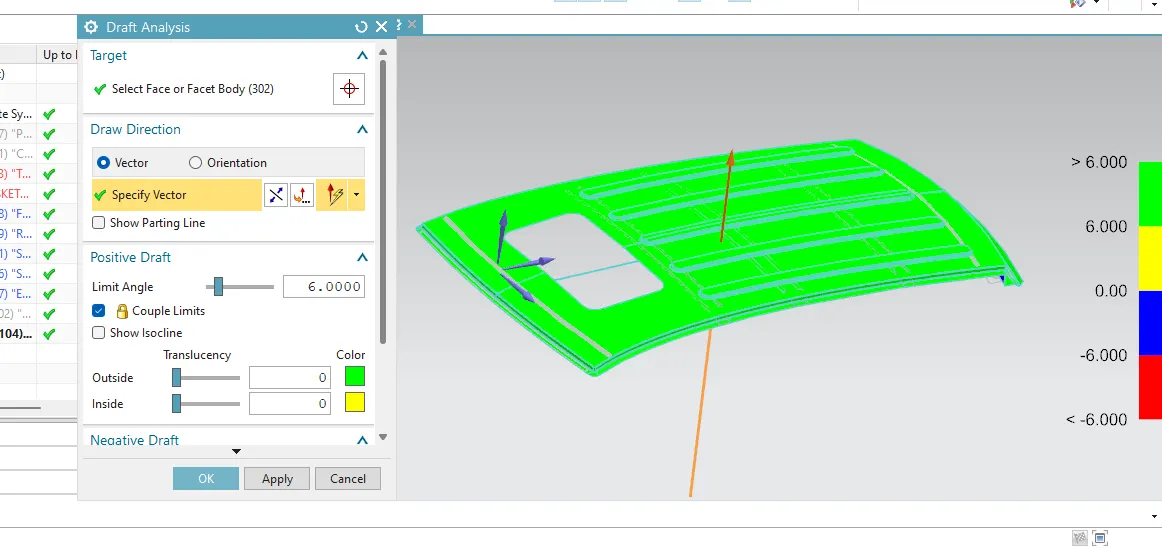
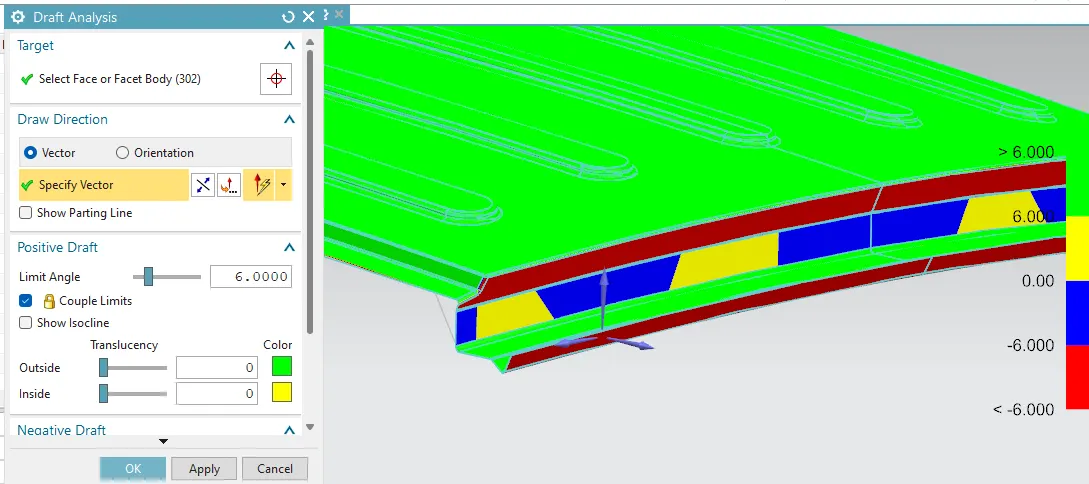
The master section follows this surface.
Front Roof Rail
Rear Roof Rail
Center Roof
Bow Roof1 and Bow Roof2
Conclusion :-
Thus the roof reinforcement were designed from the skin data received and draft analysis , Heat distortion and Snow load criteria were verified.