Roof Design
ROOF DESIGN
Aim: To design car roof with front roof rail, center roof rail, rear roof rail and bow roof rails and check for heat distortion and snow load condition along with section inertia.
Roof:
A car roof is the uppermost part of a car's body that encloses the passenger compartment and provides protection from the elements. The roof can be made of various materials such as metal, fiberglass, or plastic, and can come in a variety of shapes and styles, depending on the car's design. The primary function of the car roof is to provide protection to the passengers from rain, wind, sun, and other weather conditions. It also provides structural support to the car, helping to distribute weight and absorb impact during a collision. Additionally, the car roof may also have features such as sunroofs, moonroofs, or convertible tops that allow for additional ventilation or provide an open-air driving experience. There are different types of car roofs, such as fixed roofs, retractable roofs, and removable roofs. Fixed roofs are permanently attached to the car and cannot be removed or retracted. Retractable roofs, on the other hand, can be folded or retracted into the car's body, allowing for open-air driving. Removable roofs can be completely removed from the car, providing a completely open-top driving experience.
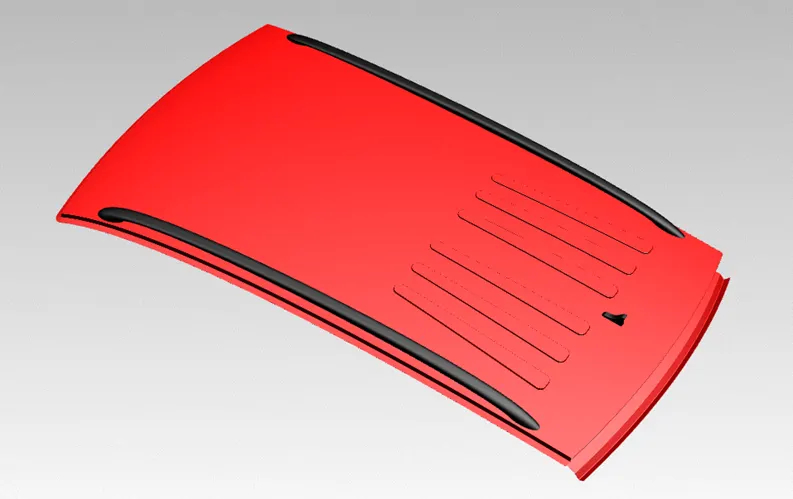
Model of roof with master section:
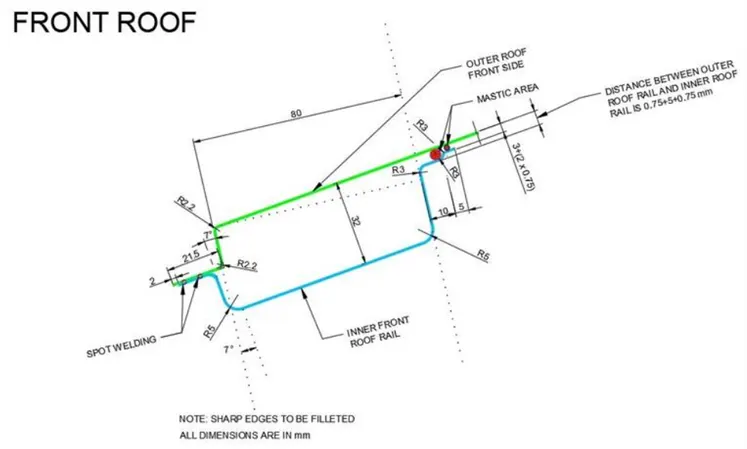
Front roof rail:
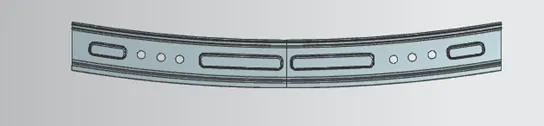
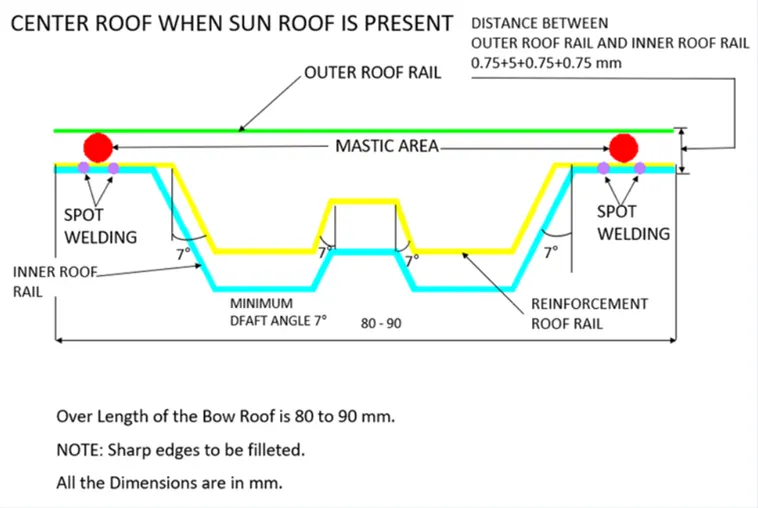
Centre roof rail with sun roof:

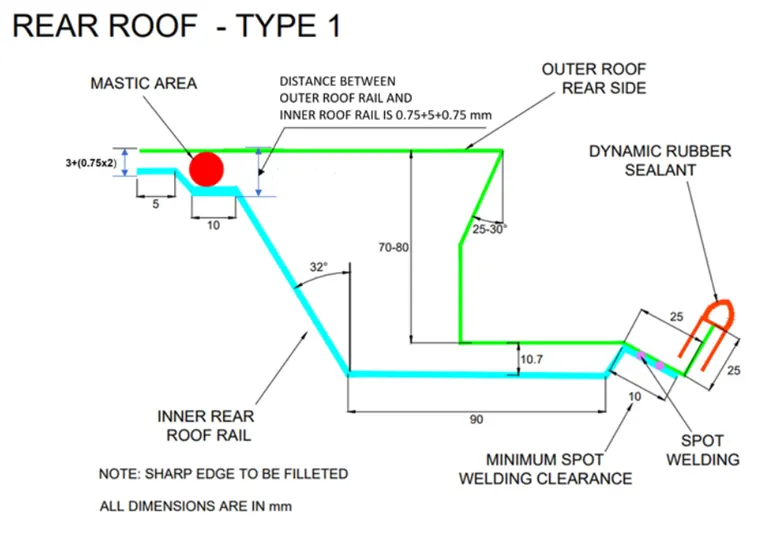
Rear roof rail:
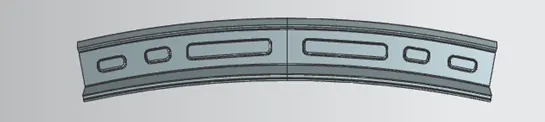
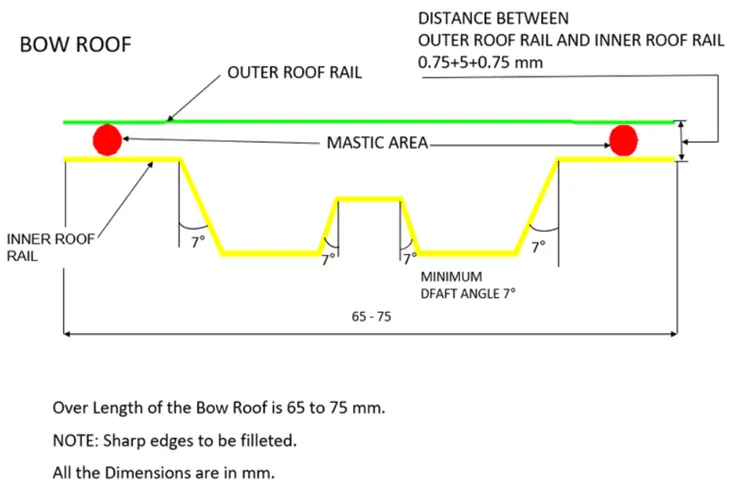
Bow roof rails (1 & 2):

Roof assembly:
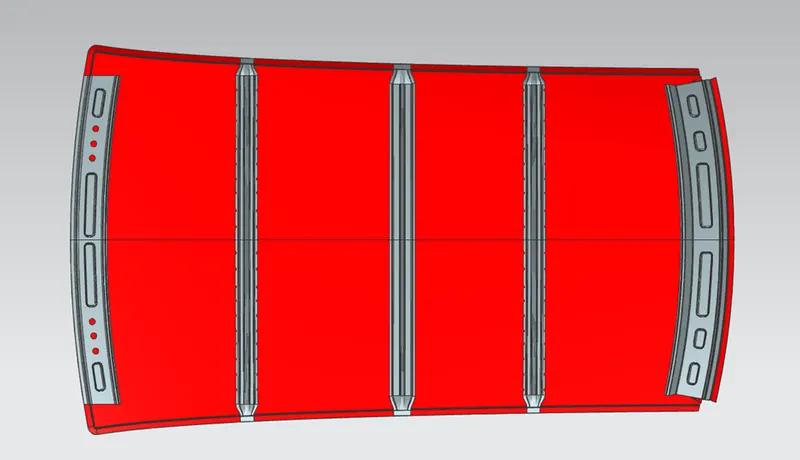
Heat Distortion study on the roof:
The heat distortion study plays a major role in sheet metal usage. Heat distortion temperature is the temperature limit above which the material cannot be used for the structural applications. This study is used to predict the heat distortions temperature at the material where it starts to soften when exposed to a fixed load at elevated temperature. In order to avoid bending or damages on the roof, based on the heat distortion temperature, this study will predict the bow roof position which helps to strengthen the roof.
W = [1.73 x 10^(-3) x L] + [1.85 x 10^(-8) x (R^2)/t] + [ 1.10x10^(-3) x l] - 2.68
Where,
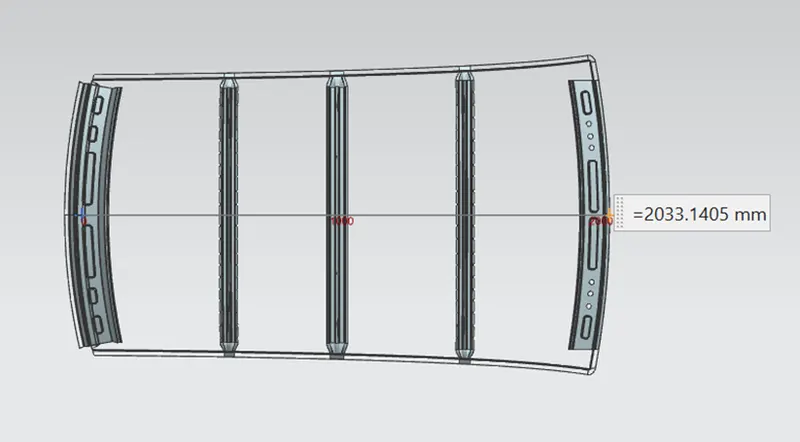
L = Roof Length in X-Direction[mm](Roof dimension in 0-Y)
R = Roof curvature
R = 2(Rx*Ry)/(Rx+Ry)
Rx = X curvature
Ry = Y curvature
t = Roof plate thickness [mm]
l = Bow Roof Span [mm]
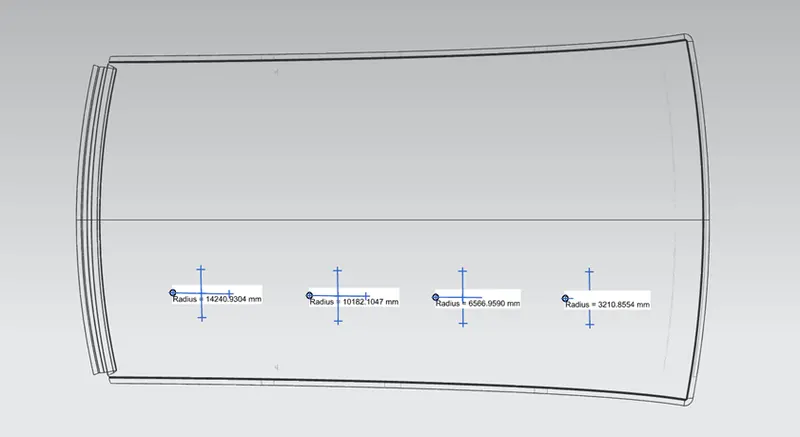
Rx values,
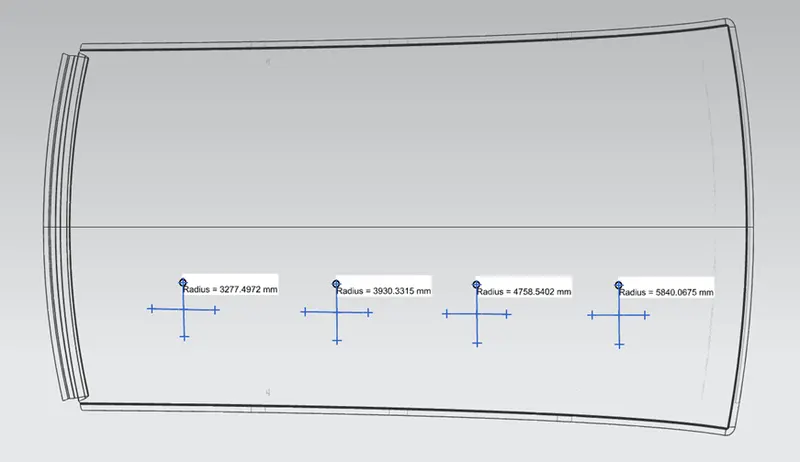
Ry values,
I value,
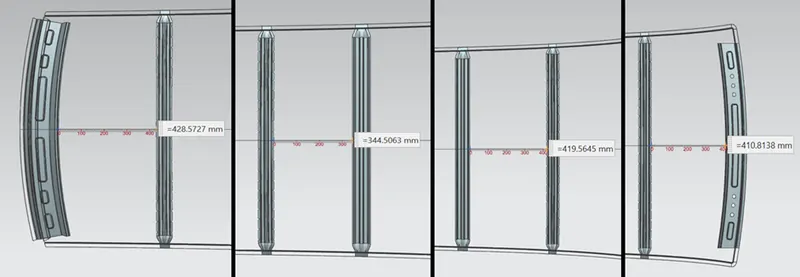
Length (L),
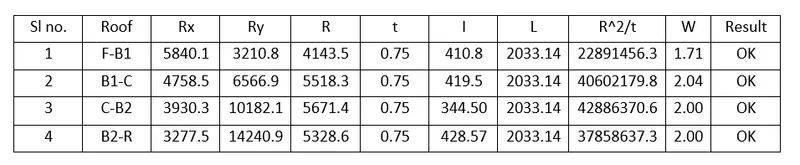
Where,
F = Front roof rail
B1 = Bow roof rail 1
C = Center roof rail
B2 = Bow roof rail 2
R = Rear roof rail
Judgement condition satisfied i.e OK < 2.8
Snow load condition:
This test is done to know how the roof is behaving when there is a snow over. Normally due to the snow weight the dent will happen. But the roof should be designed in such a way that when the snow is removal the roof should go it its original position. This basic requirement for snow load criteria.
Qr = [Iy x t2] / [α x s x [(Rx + Ry)/2]2 x 10-8]
Note: The Qr value given over here is correct. There was a typo error in the formula given in the video.
Where,
α = My x Lx2 x 10-12 , My = Y(Ly-Y)
t = Roof plate thickness [mm]
Ly = Distance between the front and rear roof Rails on the Vehicle along with 0Y[mm]
Length of Roof panel with the center point between Roof rail Front /Rear as the front and rear reference point.
Lx = Distance between the Left and Right end of the roof on the Roof BOW [mm]
The width of the roof panel is exposed on the surface.
Y = Distance front Front Roof Rail to Roof BOW[mm]
s = Distance for which Roof BOW bears divided load [mm]
s = L1/2 + L2/2
Iy = Geometrical moment of inertia of Roof BOW (Y cross-section )[mm4]
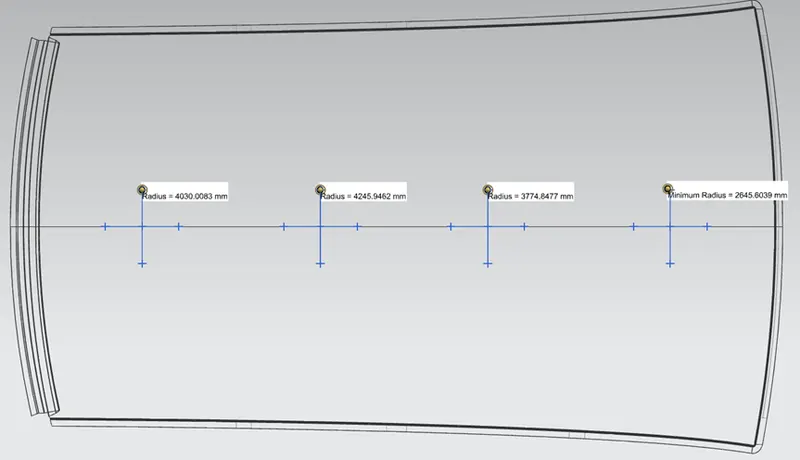
Rx = Lateral direction curvature radius of roof panel Y cross-section on Roof BOW [mm]
Roof panel curvature Radius of the Length Lx in Front view
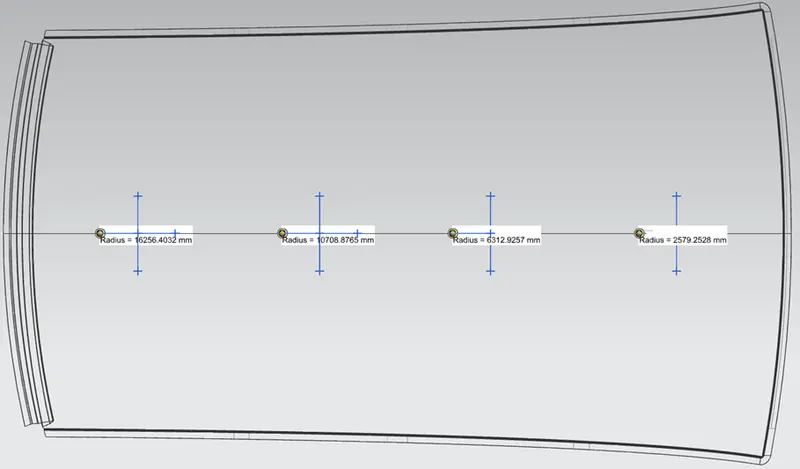
Ry = Longitudinal Direction curvature radius of the Roof panel X cross-section on Roof BOW [mm]
Roof panel X curvature radius of length s in Side view
Rx value,
Ry value,
Ly value,
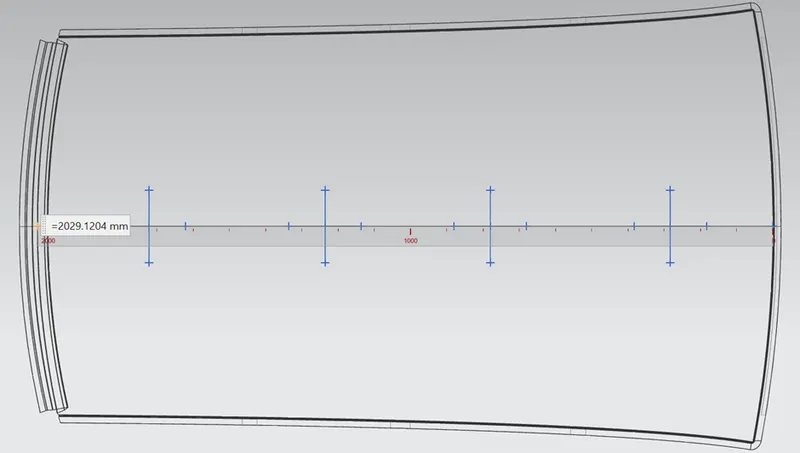
Lx value, (Multiply with 2 for full length)
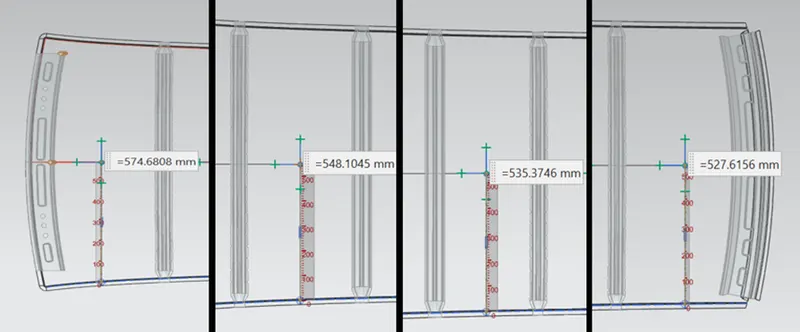
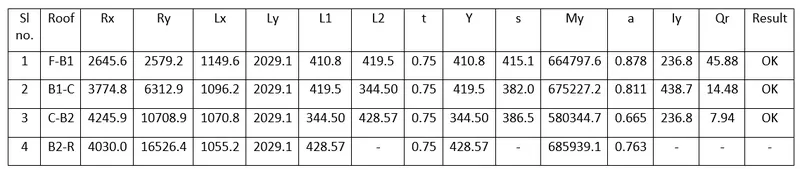
Where,
F = Front roof rail
B1 = Bow roof rail 1
C = Center roof rail
B2 = Bow roof rail 2
R = Rear roof rail
Judgement condition satisfied,
i.e Qr ≥ 3.1
250 ≤ s ≤ 380
Section inertia of roof rails:
Front roof rail,
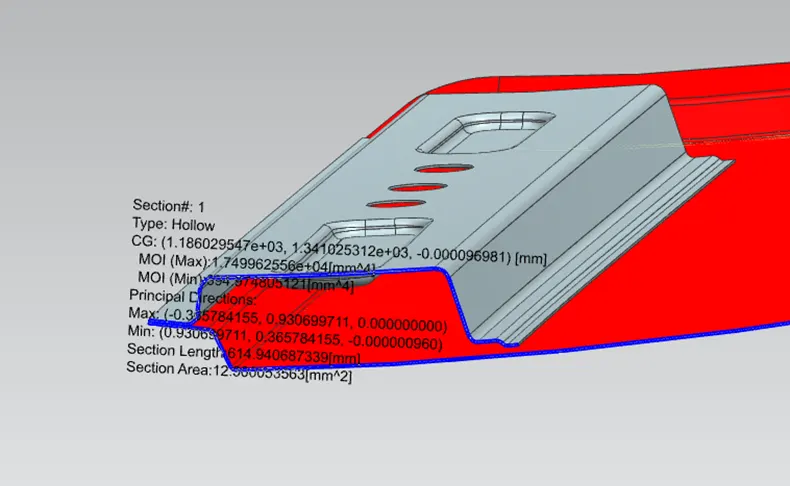
Bow roof rail (1 & 2),
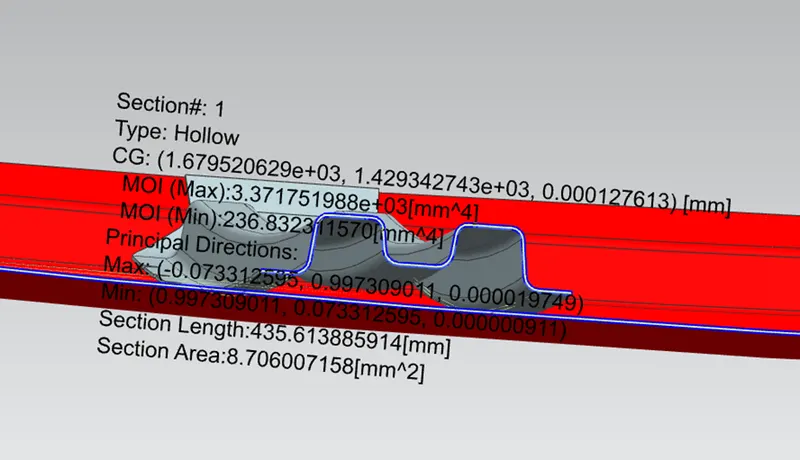
Centre roof rail with sun roof,
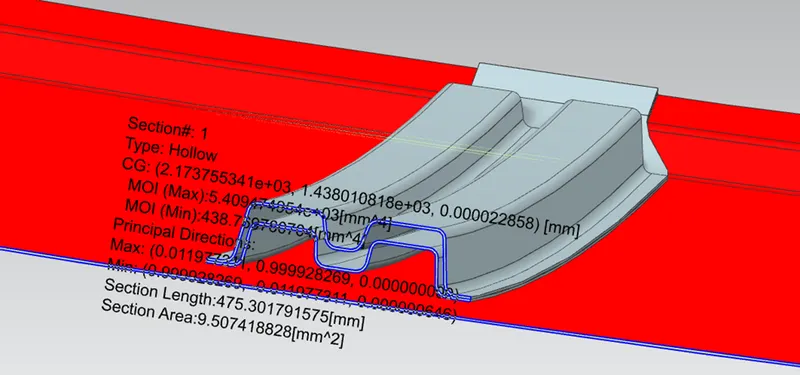
Rear roof rail,
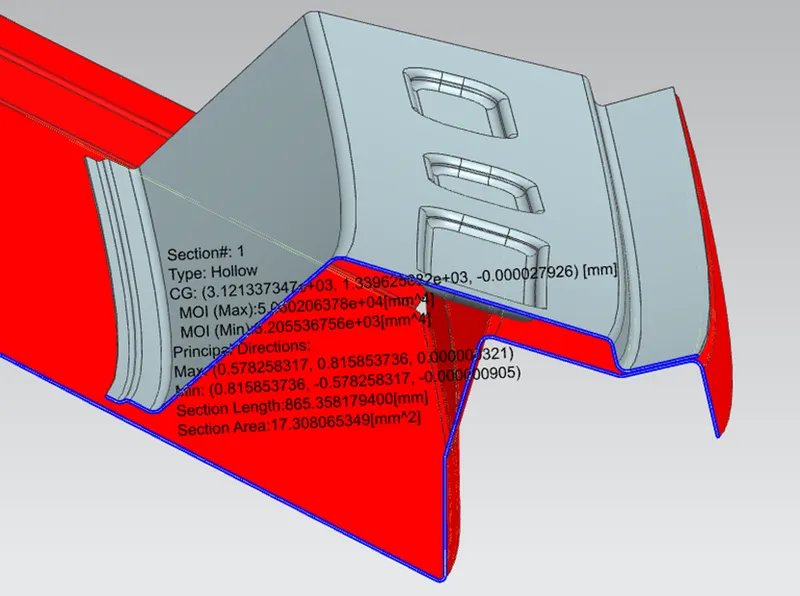
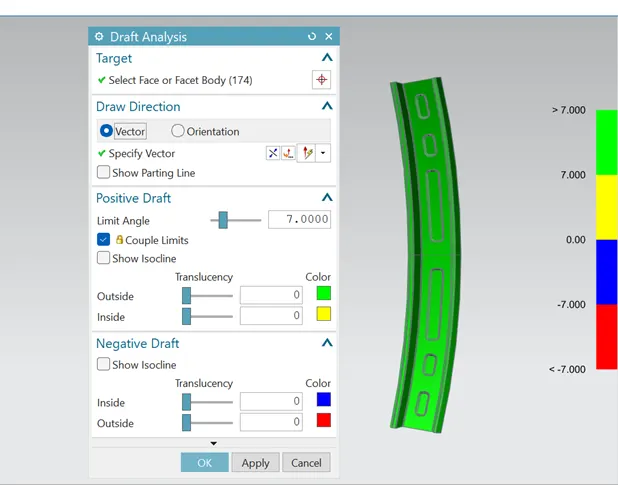
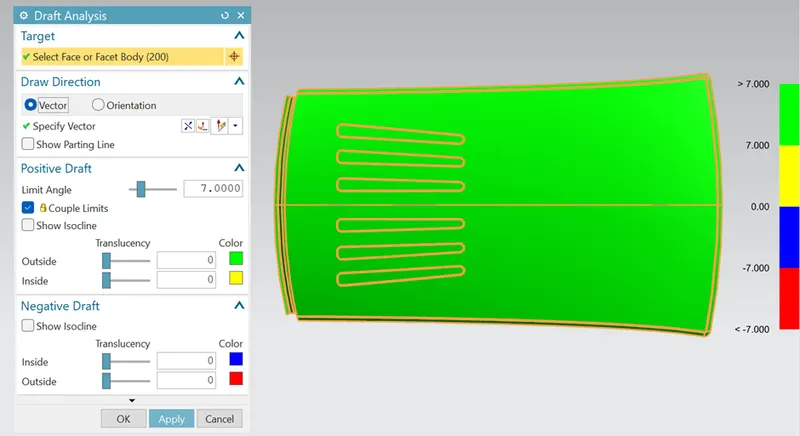
Draft analysis:
Roof top,
Front roof rail,
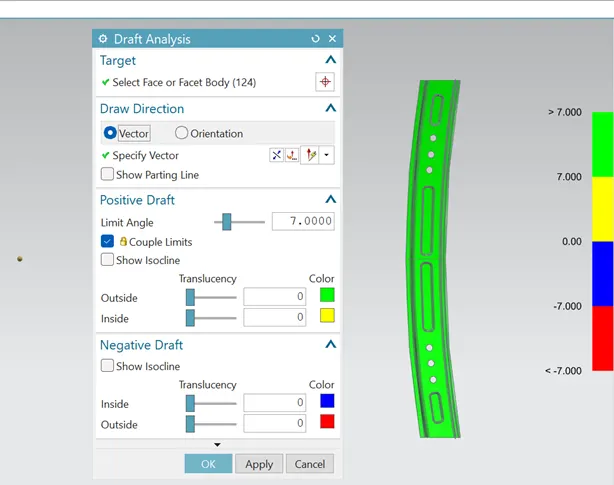
Bow roof rail 1,
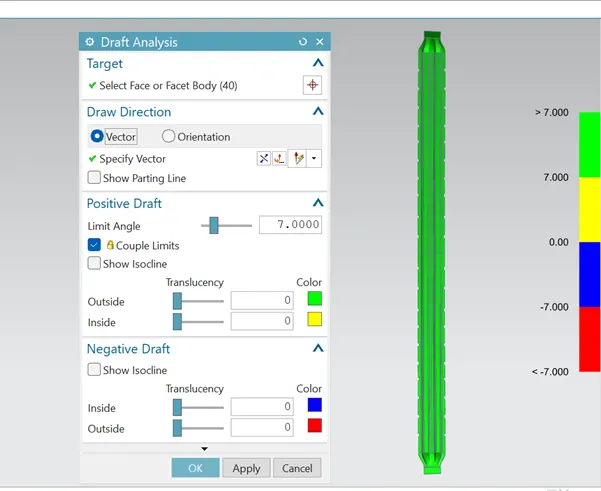
Centre roof rail,
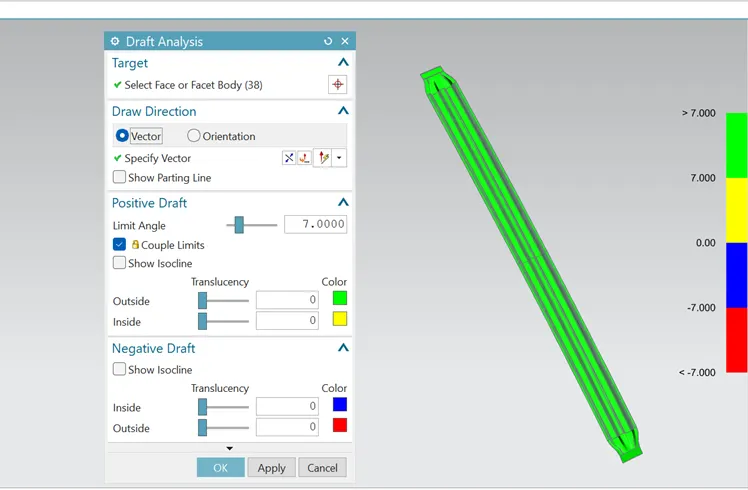
Bow roof rail 2,
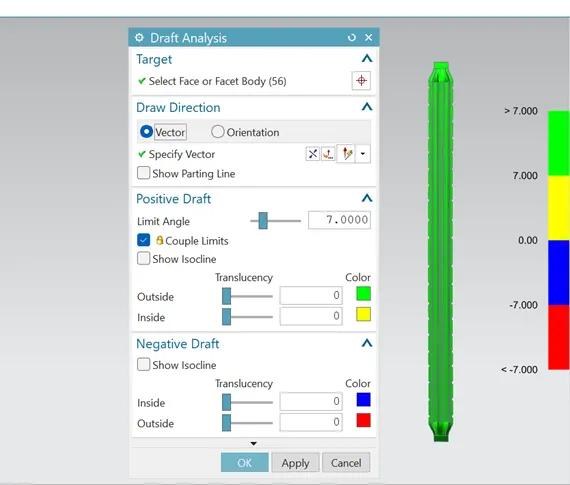
Rear roof rail,