Roof Design
AIM:
To design a roof with all the Reinforcements like front roof rail, rear roof rail, and bow roofs by following the given master sections considering all the design considerations, and also performing a roof curvature study
OBJECTIVE:
- Roof outer panel and reinforcement designing
- Roof Curvature study
- Roof Draft analysis
WHAT IS A ROOF?
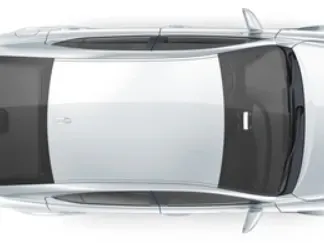
The top covering of an automobile above the seating area of the driver and passenger, which protects the occupants sitting inside the vehicle from sun, wind, rain, and other external elements is called the roof of the automobile.
DESIGN CONSIDERATION OF ROOF:
- the viewing area and windshield fitment area are to be considered
- Taking into account the height of the passengers to be seated and allotting the headspace.
- Heat Distortion and snow load criteria for the protection against the external elements
- Manufacturability of the roof
- Safety Parameters consideration for all possible incidents. some of the safety tests performed are the roof crush test and rollover test.
MANUFACTURING PROCESS OF ROOF:
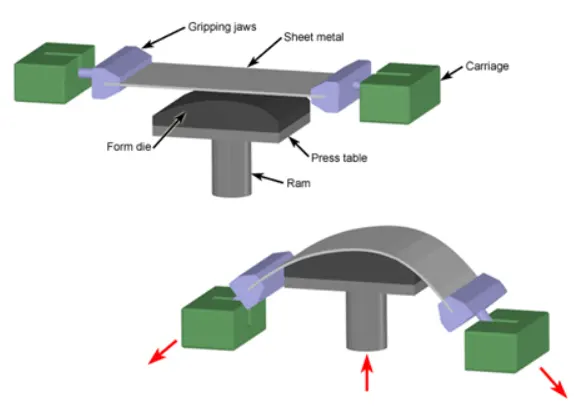
Roofs are usually manufactured by Stamping, bending, and Forming process. In this process, the sheet metal is subjected to pressure over the dies of the desired shape, and the deformation results in the shape formation. A lot of factors are taken into consideration during the process such as the material type, type of forming,draft, reusability load application, etc. The roof is just a stamped or formed panel which is not strong on its own so reinforcements are used which are also manufactured using the same process.
ROOF REINFORCEMENTS:
The roof from external seems to be a single panel but the inner side comprises various strengthening reinforcements and supporting elements so that it can withstand the external elements and keep the occupants safe. These elements are called Rails. These are created with respect to the design consideration given above.
The main Rails of the roof are as follows:
- Front Roof Rail.
- Bow Roof Rail.
- Center Roof Rail.
- Secondary Bow Roof Rail.
- Rear Roof Rail.
ROOF DESIGN:
In this challenge, we will be designing the Roof outer panel along with the above Roof Rails from the provided roof styling and master sections
- ROOF OUTER PANEL
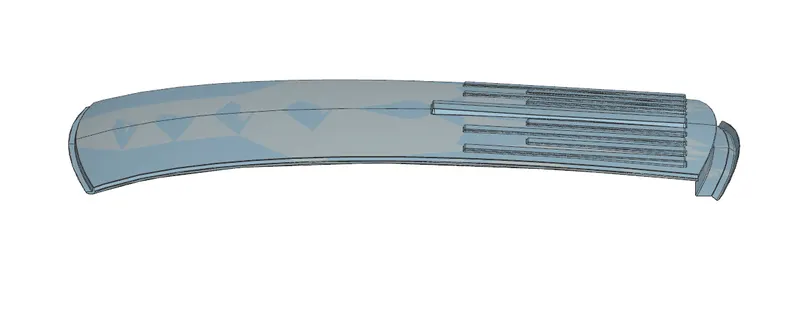
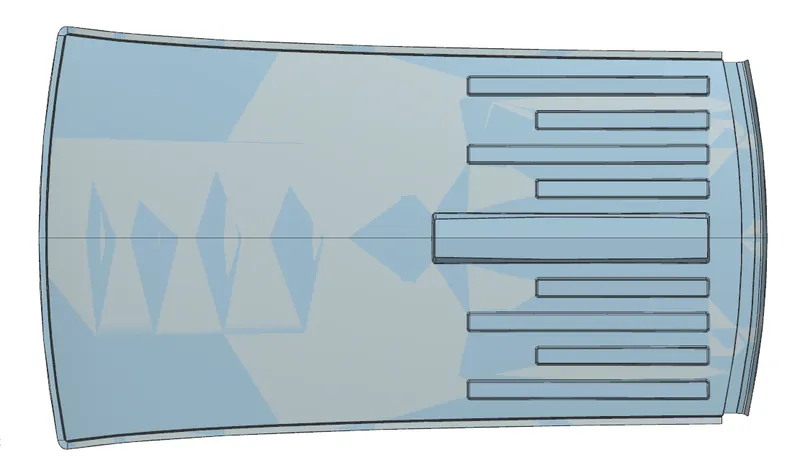
It is the panel that is seen in the top view of the vehicle. But the extended edges of this panel are not seen as it is concealed by the other BIW components followed by the other aesthetic surface. These extended edges known as the drip area serves the joining purpose for the reinforcement which is joined using spot welding. windshield clearance and back door mounting area is been taken into consideration in the drip area.
we have taken the surface from the styling (WAVE geometry linker)and have extended the sheet for the drip area using law extension, Through curves and edge blend, and created the Roof outer panel (embosses were also added in the flat region for strengthening purposes)
ROOF OUTER PANEL
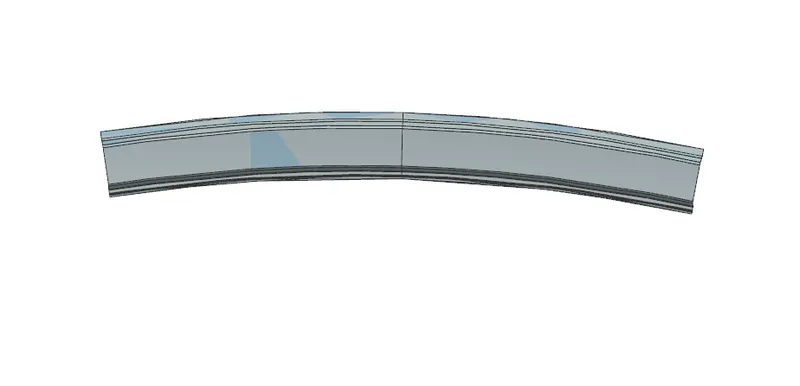
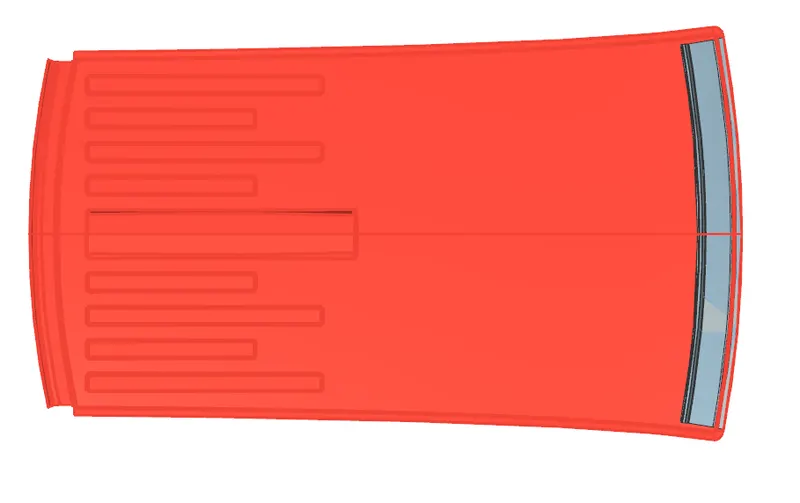
- FRONT ROOF RAIL
It is the reinforcement that joints the windshield glass, body outer, and inner panel towards the front. It was designed with the help of the master section using law extension, offset surface an edge blend then each surface was sewed together.
FRONT ROOF RAIL
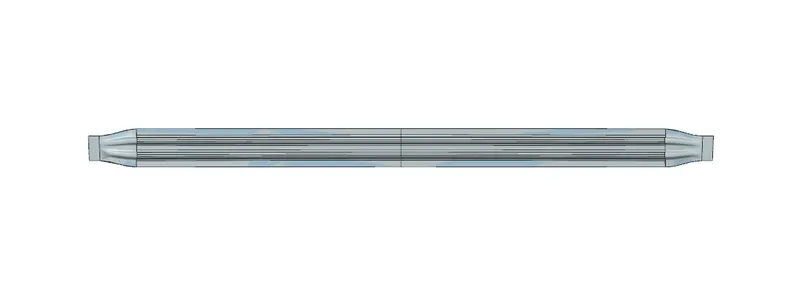
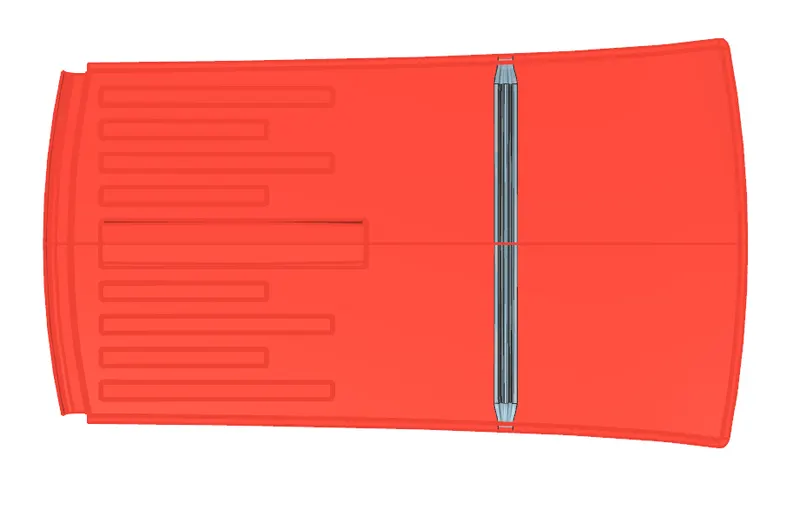
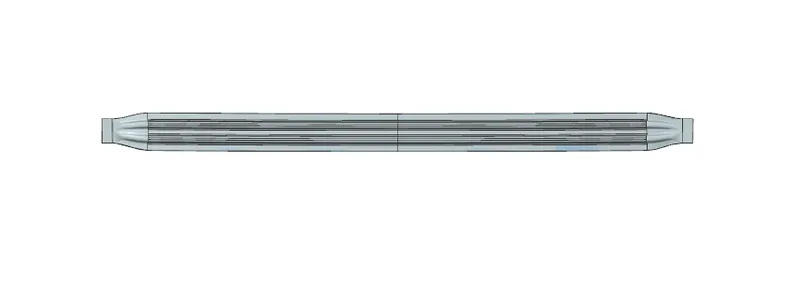
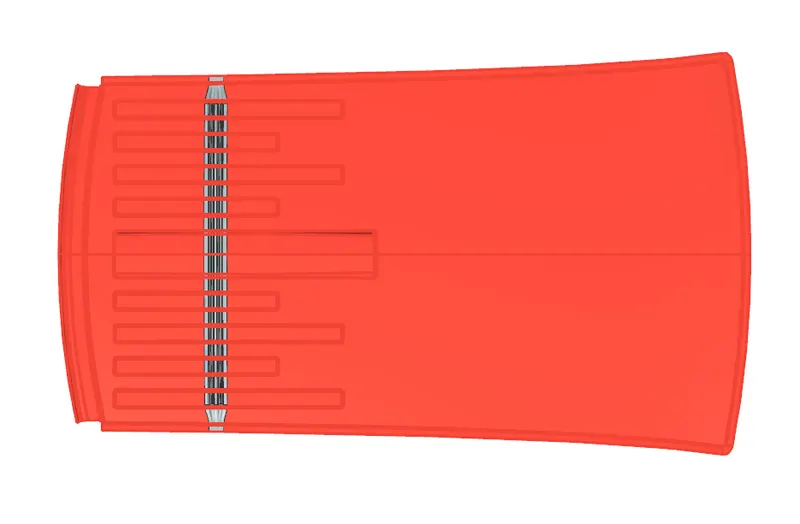
- BOW ROOF RAIL/SECONDARY BOW ROOF RAIL
These reinforcement rails are provided at the flatter surfaces of the roof. Depending upon the length of the roof the number of bow roofs increases. In our current model, we have two bow roof rails for better strengthening of the roof. with the help of the given master section by using offset surface, trim surface, and law extension we designed the Bows.
BOW ROOF RAIL AND SECONDARY BOW ROOF RAIL
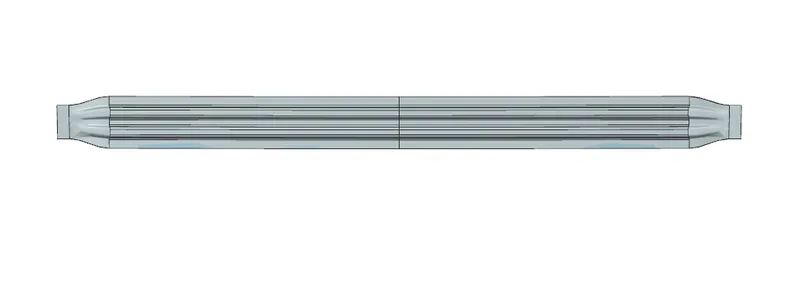
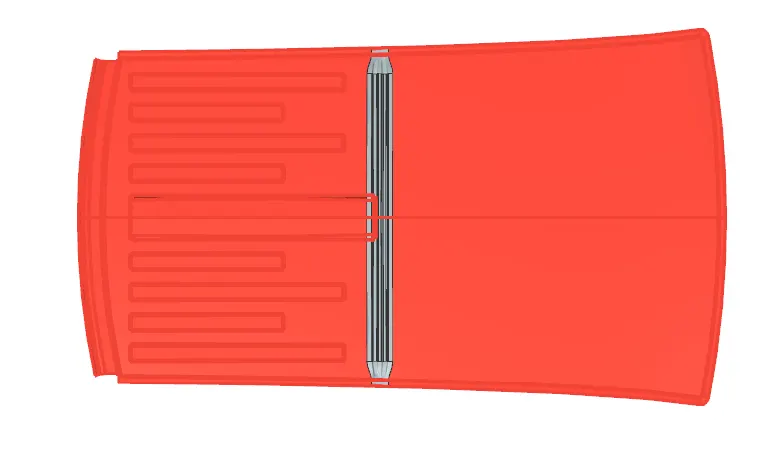
- CENTER ROOF RAIL
This reinforcement is similar to the bow roof rail but wider in width and position is positioned at the center of the roof. Depending upon the type of roof more reinforcement is also provided (sunroof center roof rail). The designed center roof rail is for the normal roof created with the help of the master section given. The same bow roof rail commands were used to design the model.
CENTER ROOF RAIL
- REAR ROOF RAIL
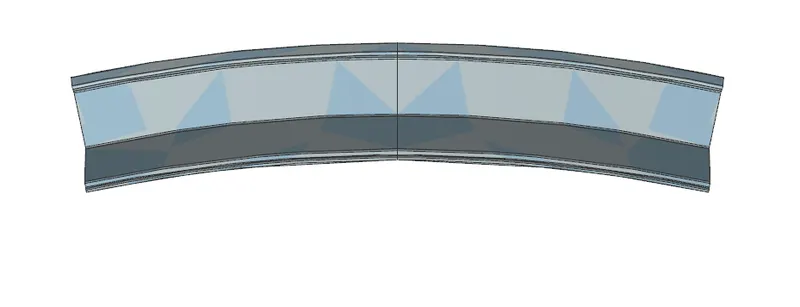
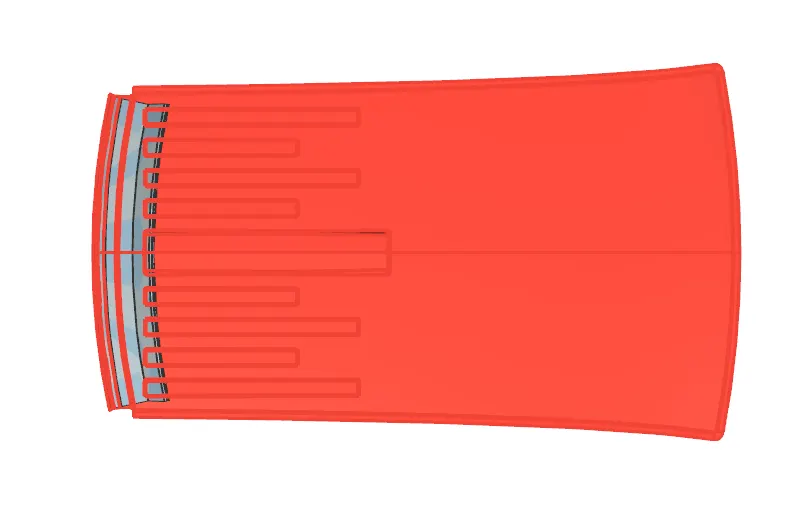
This reinforcement rail is located at the rear of the roof which in account provides provision for the back door mounting. this was also designed with the master section provided using law extension, offset surface, and edge blend commands.
REAR ROOF RAIL
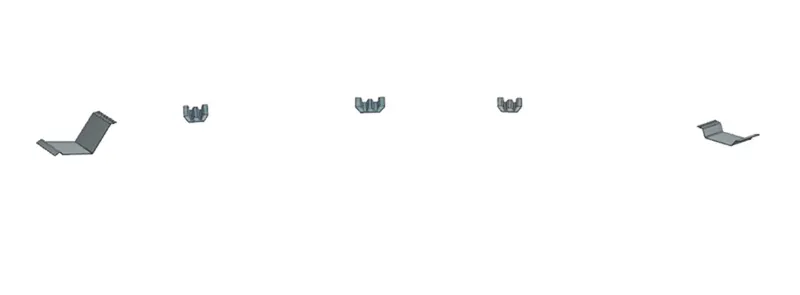
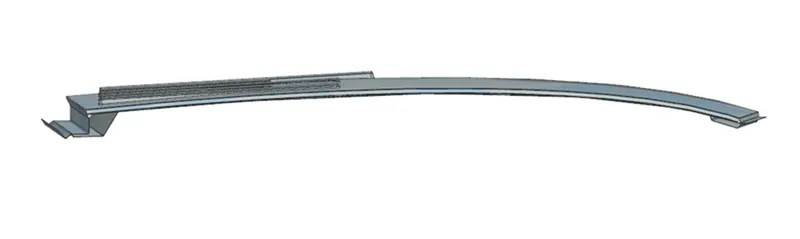
ROOF ASSEMBLY PICS
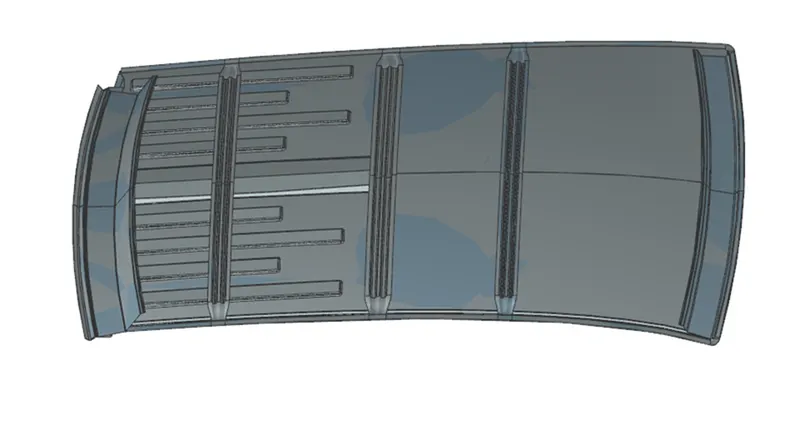
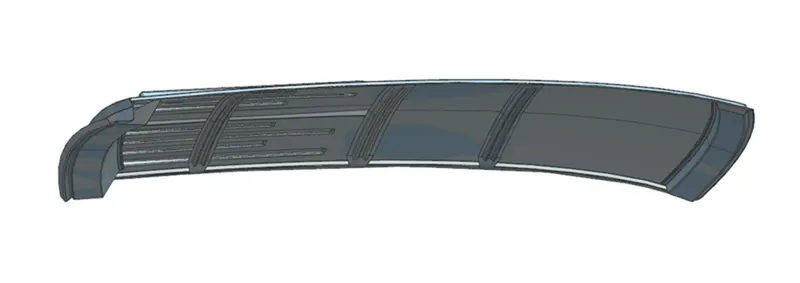
ROOF CURVATURE STUDY:
To make sure whether the design passes the analysis test some of the criteria are to be considered before the design of bow rails under the roof. They are,
- Heated Distortion study on the roof
- Snow Load Condition
- HEAT DISTORTION STUDY ON THE ROOF.
The heat distortion study plays a major role in sheet metal usage. Heat distortion temperature is the temperature limit above which the sheet cannot be used for structural applications. This study is used to predict the heat distortion temperature at the material where it starts to soften when exposed to a fixed load at an elevated temperature. In order to avoid bending or damage on the roof, based on the heat distortion temperature, this study will predict the bow roof position which helps to strengthen the roof.
BOW – roof prediction study
W= [1.73x10 ^ (-3) x L] + [1.85 x 10^ (-8) x (R^2)/t] + [1.10 x 10^ (-3) x1] – 2.68
Where,
L = Roof strength in X- Direction [mm] (Roof dimension in 0 – Y)
R = Roof curvature
R = 2 (Rx*Ry) / (Rx + Ry)
Rx = X Curvature
Ry = Y curvature
t = Roof plate thickness [mm]
I = Bow Roof span [mm]
Judgment Condition: OK < 2.7
To calculate the heat distortion from the above formula we will be needing Rx and Ry values to find them.
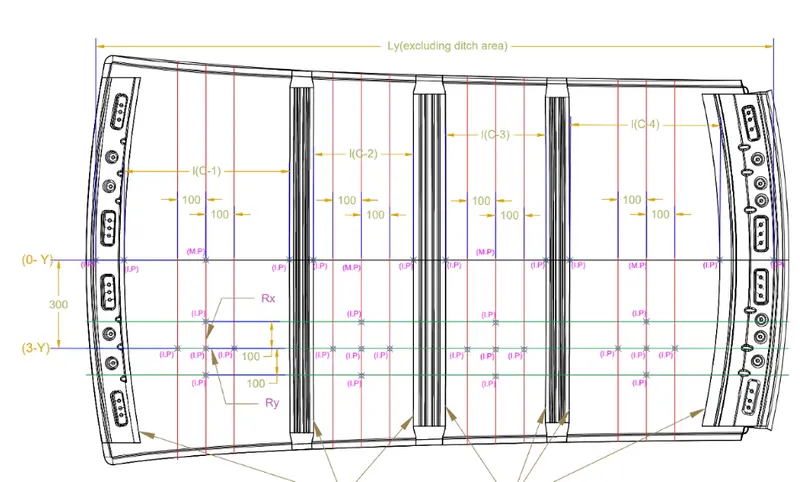
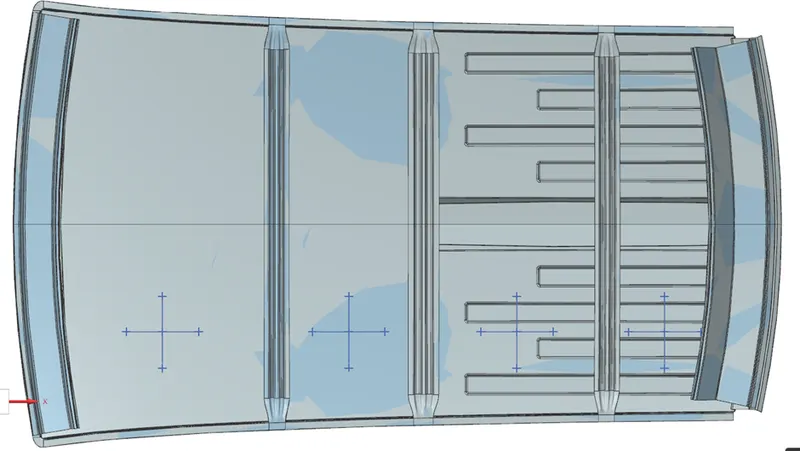
PROCEDURE
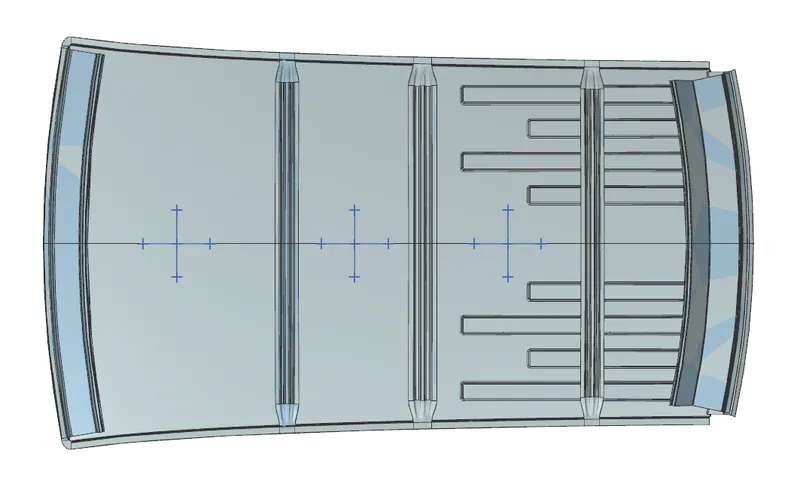
- Create a datum coordinate in the assembly and take the plan reference for the sketch
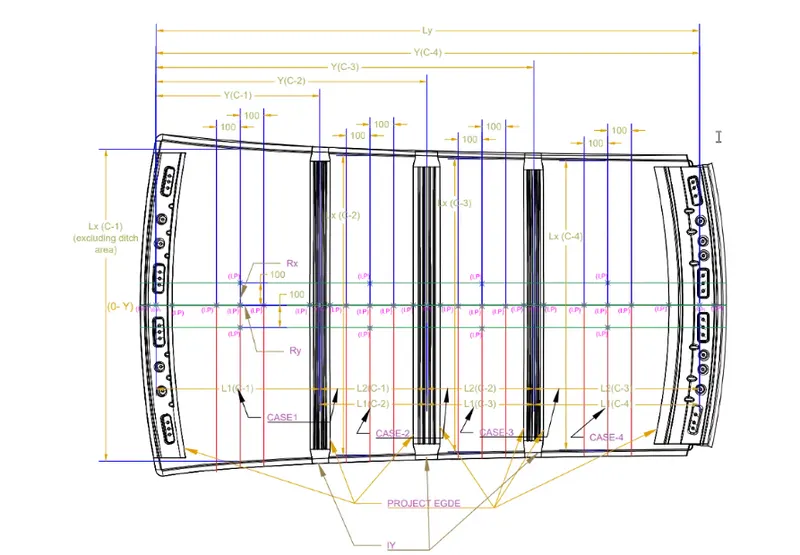
- Draw a line horizontally through the center of the Roof at 0-Y and offset it 300mm (A-a) and then we will symmetrically offset that line(A-a) by 100mm ie (A1-a1 &A2-a2)
- Create the midpoint of the front roof rail and bow roof rail 1 distance line. Draw a vertical line on the midpoint and offset symmetrically 100mm
- Intersecting point is created with the intersecting horizontal and vertical offset lines and they are projected on the roof surface
- with the help of a 3-point arc, the x and y direction arc is measured ie. the Rx and Ry
- follow the same till the rear roof rail.
CALCULATION TABLE:

From the above table, we can conclude that all the values of W are less than 2.7, which implies that the current positioning of the Bow is Okay as per the design.
- SNOW LOAD CONDITION.
This test is done to know how the roof is behaving when there is snow over it. Normally due to the snow weight, there will be a dent formation. But the roof should be designed in such a way that when the snow is removed the roof should go it its original position. This is the basic requirement for snow load criteria.
Qr = [Iy x t2] / [α x s x [(Rx + Ry)/2]2 x 10-8]
Where,
α = My x Lx2 x 10-12 , My = Y(Ly-Y)
t = Roof plate thickness [mm]
Ly = Distance between the front and rear roof Rails on the Vehicle along with 0Y[mm]
Length of Roof panel with the center point between Roof rail Front /Rear as the front and rear reference point.
Lx = Distance between the Left and Right end of the roof on the Roof BOW [mm]
The width of the roof panel is exposed on the surface.
Y = Distance front Front Roof Rail to Roof BOW[mm]
s = Distance for which Roof BOW bears divided load [mm]
s = L1/2 + L2/2
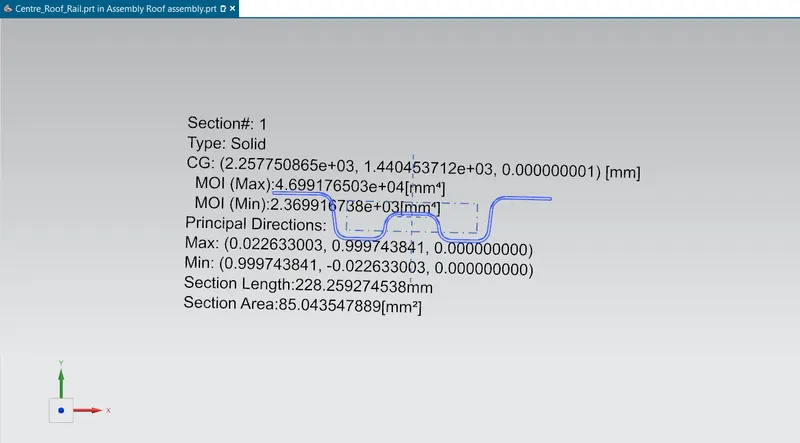
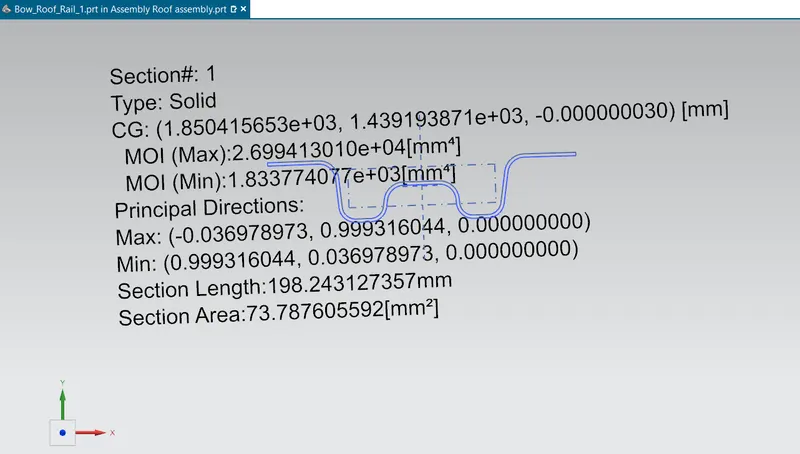
Iy = Geometrical moment of inertia of Roof BOW (Y cross-section )[mm4]
Rx = Lateral direction curvature radius of roof panel Y cross-section on Roof BOW [mm]
Roof panel curvature Radius of the Length Lx in Front view
Ry = Longitudinal Direction curvature radius of the Roof panel X cross-section on Roof BOW [mm]
Roof panel X curvature radius of length s in Side view
Judgment condition Qr ≥ 3.1 250 ≤ s ≤ 380
To calculate the snow load condition from the above formula we will be needing Rx, Ry, and Iy values to find them.
PROCEDURE
- Create a center line at the 0-Y region of the roof and then offset the same to 100mm on each side.
- Draw a vertical line at the midpoint of the line drawn from the center points of the FRR and BR 1
- Offset the vertical line to a distance of 100mm on each side.
- Create intersection points and project them on the roof.
- From these projected points, make a 3-point arc and the Rx and Ry values.
- Project the extreme edges of the styling surface for measuring the width at the respective sections.
- followed the same till the rear roof rail.
- we can get the Iy value of the rails with the help of intersection curves and section inertia analysis
Iy of Center Roof Rail
Iy of Bow Roof Rail 1
Iy of Bow Roof Rail 2
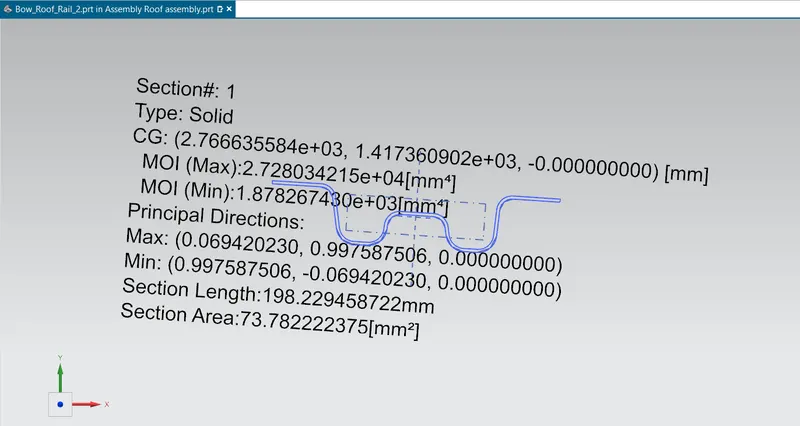
CALCULATION TABLE:

From the above table, we can conclude that our design is satisfying the snow load condition as all three readings are greater than 3.1
DRAFT ANALYSES OF ROOF RAILS.
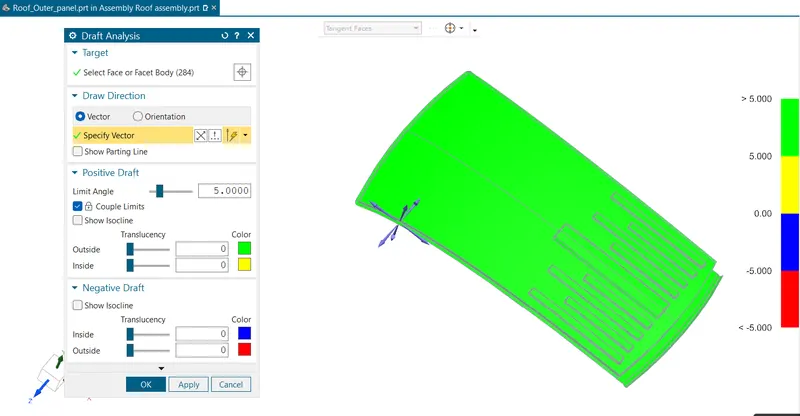
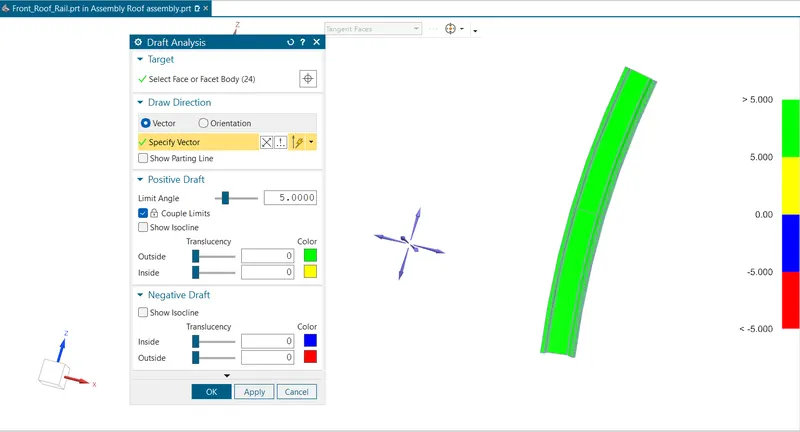
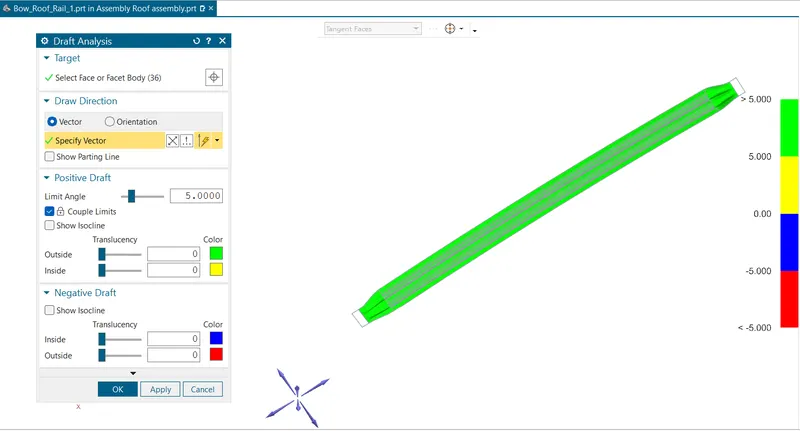
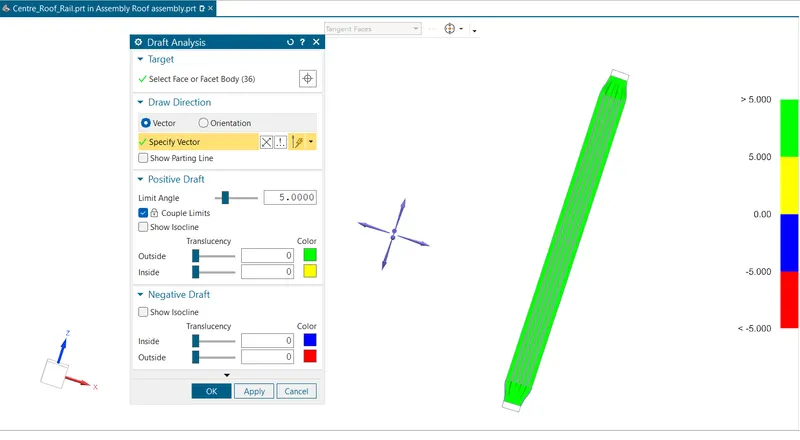
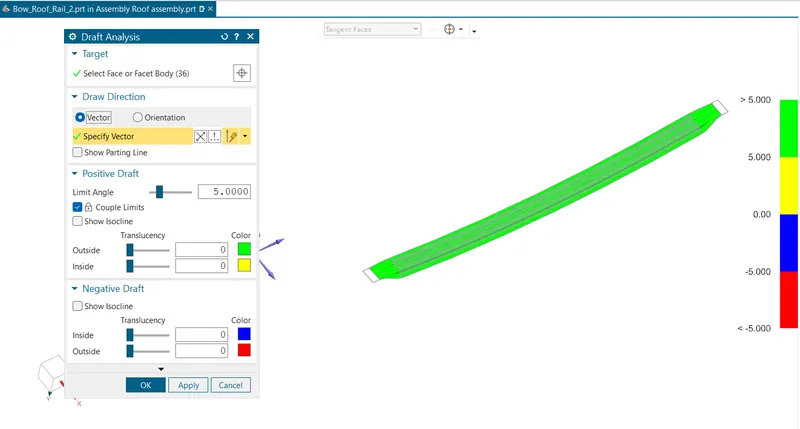
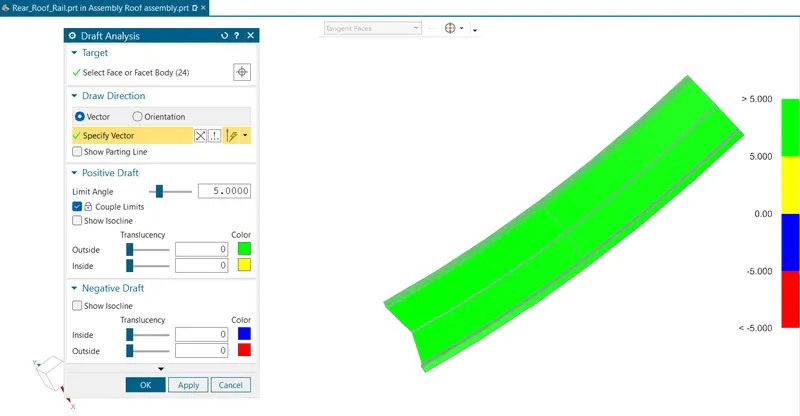
Draft Analysis is carried out to check the manufacturing feasibility of the roof and all these reinforcement rails. All the components should be designed by considering at least the minimum draft angle of 7 Deg.
- ROOF OUTER PANEL
- ROOF FRONT RAIL
- BOW ROOF RAIL 1
- CENTER ROOF RAIL
- BOW ROOF RAIL 2
- REAR ROOF RAIL
CONCLUSION:
We have successfully designed the roof along with the reinforcements according to the given master section and the styling surface, by considering all the design parameters. Also performed the curvature study in which the heat distortion and snow load conditions were checked and the design met the judgment conditions. The draft ability was also checked and the design passed the required conditions.