Roof Design
Roof Design and Calculations
Objective:
Given Car Roof styling design develop a BIW Roof of a car with Front Roof Rail, Bow Roof Rail, Center Roof Rail, and Rear Roof Rail by following the engineering standards. The roof must be subjected to Draft Analysis for verifying whether it satisfies the manufacturing requirements. Curvature Study and calculation needs to be carried out for the designed roof.
Roof:
A car roof or car top is the portion of an automobile that sits above the passenger compartment, protecting the vehicle occupants from sun, wind, rain, and other external elements.
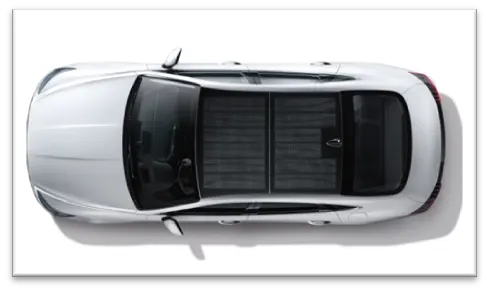
Modern Roof Design Car Roof with Solar panel
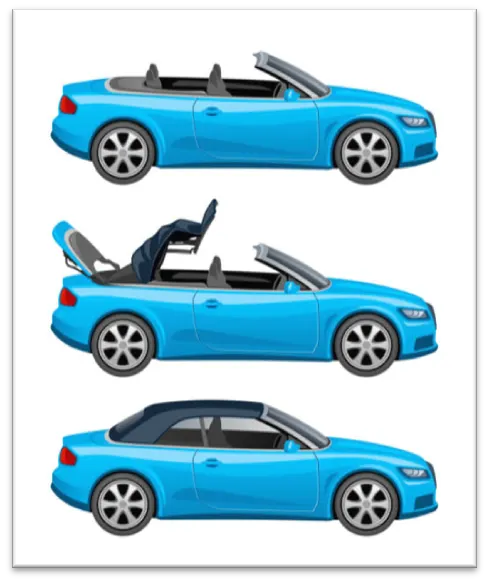
Convertible Car Roof
Type of Roof:
- Hard Top
- Sun Roof
- Moon Roof
- Panoramic Roof
- Convertible Roof
Hard Top
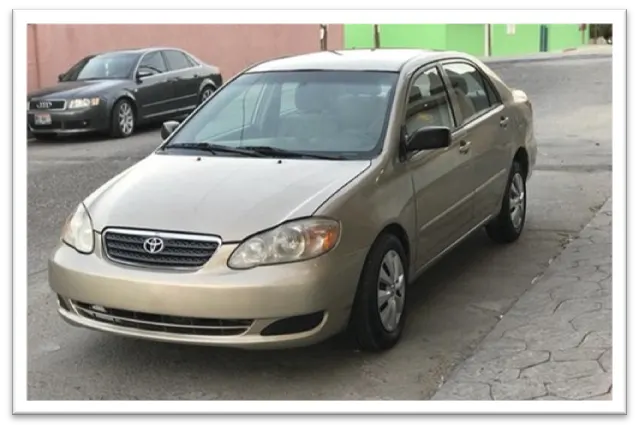
The fixed hardtop is your traditional car roof and is suitable for all climes and weather. It protects car occupants from the sun and wind when driving. It also offers more sense of privacy and noise-free driving. Many cars designed this way also tend to be more stable and solid than other types of roofs.
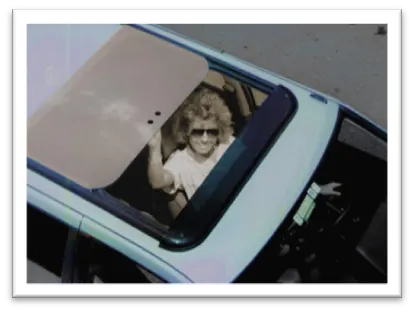
Sun Roof
Sunroofs can be opened and closed using an electronic system. Sunroofs cars allow light, fresh air, or even both to enter the car cabin. It’s easier to imagine sunroof as a window on the car roof.
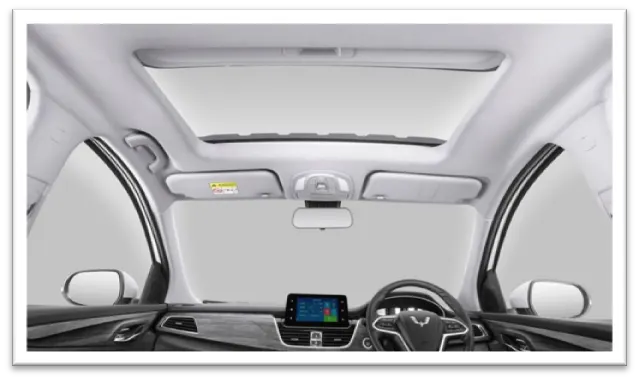
Commonly, sunroofs carry two types of panels made from the same solid metal used for the car ceiling exterior and can be pulled by hand to open the glass panel. Above it is colored glass which can be tilted backward to allow air from outside to enter the cabin.
Moon Roof
Moon roofs are actually one type of sunroof. However, the material and uses are different. Moon roofs are made to allow the car driver and passengers to enjoy the outside view at night without having to get out of the car or open the car roof.
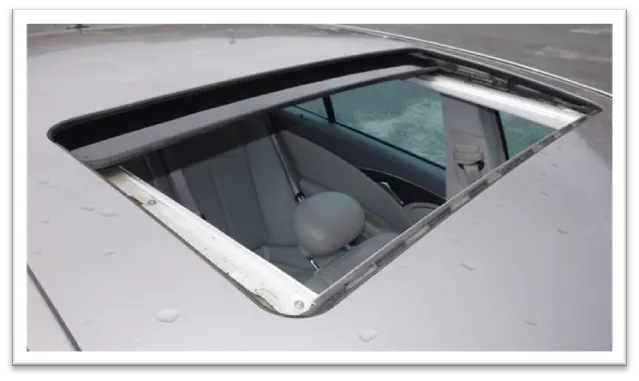
Moon roofs have colored glass panels that allow light and air to enter without having to shift the visor. However, lately, moon roofs are also equipped with a metal coating to keep the sunlight from entering directly into the cabin during the day.
Usually, the moon roof opens just slightly compared to the sunroof, so that air and light can enter into the cabin. However, there are a number of car manufacturers who now make moon roofs wide open just like sunroofs.
The working systems between moon roofs and sunroofs are also slightly different. Sunroofs will open outwards when activated, while moon roofs will open backward into the car roof.
Panoramic Roof
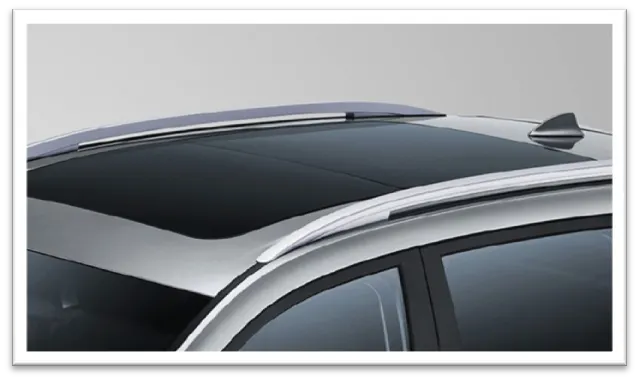
This type of car roof is generally similar to the moon roofs, which has a large glass panel stretching across the roof, right above the first to the second rows. The panoramic roofs can open wider compared to the moon roofs in general. Panoramic roofs also have coating blinds to keep the cabin cool when the glass layer is closed, but the view in the sky is still visible.
Convertible Roof
Convertibles are passenger cars that can be driven with or without the entire roof in place. They were first introduced as open-air vehicles; no roofs, no sides.
But by the end of the 19th century and the early 20th century, car engineers built more powerful engines that could power a folding roof. These were the forerunners of the convertibles that we have today.
There are different types of convertibles based on the method of conversion and the materials used.
Hard top Convertibles
Hardtop convertibles come with a retractable hard metal roof. This convertible roof is fully electric. It uses hydraulic pumps, cylinders, and various motors that separate the roof into panels stored on one another.
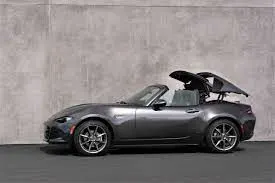
Most hardtop convertibles fold the roof by employing different motors, hydraulic pumps, and pistons to divide the roof into two or more independent panels, which are then stowed on top of each other just like a pile of metal in the boot or within their specialized storage compartment. Hardtop convertibles provide a higher level of perceived safety, particularly in the case of a rollover and protection from theft and associated damage, such as someone attempting to cut the roof open with a razor.
Soft-top convertibles
These vehicles are named “soft-top” because the roof is made up of fabric. The material could be made of nylon or even PVC. One of the major advantages of soft-top compared to hardtop convertibles is that they reduce weight on the vehicle. The storage is easier due to the flexibility of the fabric, and they are much easier to manufacture.
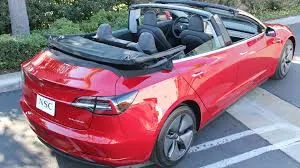
Frequently, these include
- Polypropylene or vinyl is the most common materials because of their durability.
- Rubber is a fantastic material for safety and cleaning.
- Linen or canvas is both visually appealing.
Roof Test:
We all know Roof is the topmost part of the car, which safeguard the passengers, Now its time to check how strong the Roof.
We can check the Roof strength in some testing procedure. Commonly known as Vehicle Crash Test.
Crash tests are conducted to assess vehicle safety. Crash tests involve the collision of vehicles in a controlled environment in order to assess their safety. Impact tests between different forces are carried out to analyses the damage induced by impact forces at different velocities. These tests are usually performed between two vehicles or between a vehicle and an obstacle
In the United States, two organizations are responsible for gathering and reporting on vehicle crash test data: The National Highway Traffic Safety Administration (NHTSA) and the Insurance Institute for Highway Safety (IIHS). Both organizations conduct extensive testing to determine the safety of vehicles.
Roof Strength Test:
In the test, the strength of the roof is determined by pushing an angled metal plate down on one side of the roof at a slow, but constant speed and measuring the force required to crush the roof. The force applied relative to the vehicle's weight is known as the strength-to-weight ratio. The peak strength-to-weight ratio recorded at any time before the roof is crushed 5 inches is the key measurement of roof strength.
The following data will be recorded during testing of each vehicle roof:
1) Load versus displacement.
2) Time versus displacement
3) Vehicle movement at the rocker panels as recorded by the 4 dial indicators.
As a minimum, record the readings from the dial indicators:
- A) Before load application.
- B) At maximum displacement of loading device travel.
- C) Immediately after loading device removal.
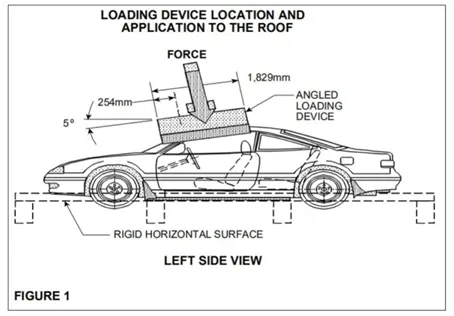
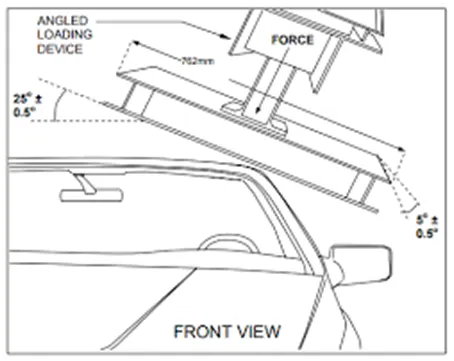
A good rating requires a strength-to-weight ratio of at least 4. In other words, the roof must withstand a force of at least 4 times the vehicle's weight before the plate crushes the roof by 5 inches. For an acceptable rating, the minimum required strength-to-weight ratio is 3.25. For a marginal rating, it is 2.5. Anything lower than that is poor.
Frontal Crash Test:
A frontal crash is the most common type of crash resulting in fatalities. Major strides have been made in frontal protection.
IIHS conducts three different frontal crash tests:
Moderate overlap test (formerly known as the frontal offset test)
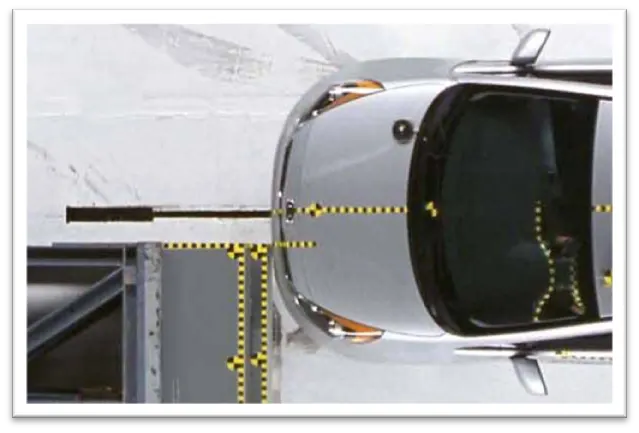
In the moderate overlap frontal test, a vehicle travels at 40 mph toward a barrier with a deformable face made of aluminum honeycomb. The barrier face is just over 2 feet tall. A Hybrid III dummy representing an average-size man is positioned in the driver seat. Forty percent of the total width of the vehicle strikes the barrier on the driver side.
The forces in the test are similar to those that would result from a frontal offset crash between two vehicles of the same weight, each going just under 40 mph.
Driver-side small overlap test
In the driver-side small overlap frontal test, a vehicle travels at 40 mph toward a 5-foot-tall rigid barrier. A Hybrid III dummy representing an average-size man is positioned in the driver seat. 25%of the total width of the vehicle strikes the barrier on the driver side. This crash test is a challenge for some safety belt and airbag designs because occupants move both forward and toward the side of the vehicle.
Most modern cars have safety cages encapsulating the occupant compartment and built to withstand head-on collisions and moderate overlap frontal crashes with little deformation. At the same time, crush zones help manage crash energy to reduce forces on the occupant compartment. The main crush-zone structures are concentrated in the middle 50 percent of the front end. When a crash involves these structures, the occupant compartment is protected from intrusion, and front airbags and safety belts can effectively restrain and protect occupants.
Small overlap frontal crashes primarily affect a vehicle's outer edges, which aren't well protected by the crush-zone structures. Crash forces go directly into the front wheel, suspension system and firewall. It is not uncommon for the wheel to be forced rearward into the footwell, contributing to even more intrusion in the occupant compartment and resulting in serious leg and foot injuries. To provide effective protection in small overlap crashes, the safety cage needs to resist crash forces that aren't tempered by crush-zone structures. Widening these front-end structures also helps.
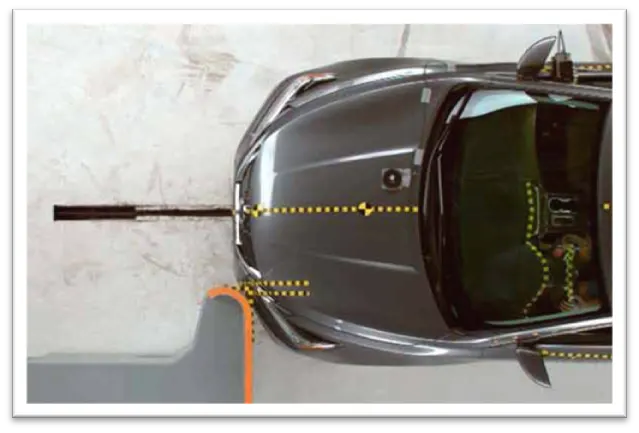
Passenger-side small overlap test.
The passenger-side test is the same as the driver-side test except the vehicle overlaps the barrier on the right side. In addition, instead of just one Hybrid III dummy, there are two — one in the driver seat and one in the passenger seat.
Ratings criteria
Engineers consider three factors to determine how a vehicle rates in the moderate overlap and small overlap frontal test.
Structure/safety cage: To assess a vehicle's structural performance, engineers measure the amount of intrusion into the occupant compartment at key locations in the interior and exterior of the vehicle after the crash. The amount and pattern of intrusion shows how well the front-end crush zone managed the crash energy and how well the safety cage held up.
Injury measures: Sensors in the dummies, in the case of passenger-side small overlap are used to determine the likelihood that a driver or passenger would sustain various types of injuries in a similar real-world crash. Measures recorded by sensors in the head, neck, chest, legs and feet of the dummy indicate the level of stress or strain on that part of the body in other words, the risk of injury.
Restraints/dummy movement: Even if injury measures are low, it's important to consider the movement of the dummy or dummies during the crash, since not all occupants are the same size as the dummies or seated exactly the same way. A close call for a dummy could be an actual injury for a person.
Before each crash test, technicians put greasepaint on the dummy's head, knees and lower legs. After the test, the paint shows what parts of the vehicle came into contact with those parts of the dummy. The paint, combined with high-speed film footage of the crash, allows engineers to evaluate the movement of the dummy or dummies.
Heat distortion condition:
Heat distortion temperature is the temperature at which the metal softens and deforms under a specific load. Roof of a car is probably the only component which is exposed to sun for almost all the time, so this study is done to check the ability of the roof to withstand high temperature with respect to the positioning of the reinforcements which contribute to increased strength.
W = [1.73 x 10^(-3) x L] + [1.85 x 10^(-8) x (R^2)/t] + [ 1.10x10^(-3) x l] - 2.68
Where,
L = Roof Length in X-Direction [mm](Roof dimension in 0-Y)
R = Roof curvature
R = 2(Rx*Ry)/(Rx+Ry)
Rx = X curvature
Ry = Y curvature
t = Roof plate thickness [mm]
l = Bow Roof Span [mm]
Judgment Condition
OK< 2.7
|
S.no |
Reinforcement Position |
Rx |
Ry |
R |
l |
L |
t |
(R^2)/t |
W |
Result |
|
1 |
Fr. Rail to 1st Bow roof |
10128.2399 |
4026.01885 |
5761.73 |
378.79 |
2029.2925 |
0.75 |
44263376.79 |
2.07 |
OK |
|
2 |
1st to Center roof |
4970.79770 |
6203.48772 |
5519.15 |
425.08 |
2029.2925 |
0.75 |
40614688.96 |
2.04 |
OK |
|
3 |
Center to 2nd Bow roof |
3969.22683 |
10623.2552 |
5779.15 |
430.00 |
2029.2925 |
0.75 |
44531432.96 |
2.12 |
OK |
|
4 |
2nd to Rear roof |
3318.61051 |
37473.7336 |
6097.26 |
284.50 |
2029.2925 |
0.75 |
49568772.68 |
1.96 |
OK |
Snow load condition:
Snow load criteria study is done to check the ability of the roof to withstand snowfall and bounce back to its original shape without any permanent deformation once the load is removed.
Qr = [Iy x t^2] / [α x s x [(Rx + Ry)/2]^2 x 10^8]
Where,
α = My x Lx^2 x 10^-12 ,
My = Y(Ly-Y)
t = Roof plate thickness [mm]
Ly = Distance between the front and rear roof Rails on the Vehicle along with 0Y[mm]
Length of Roof panel with the center point between Roof rails Front /Rear as the front and rear reference point.
Lx = Distance between the Left and Right end of the roof on the Roof BOW [mm]
The width of the roof panel is exposed on the surface.
Y = Distance from Front Roof Rail to Roof BOW[mm]
s = Distance for which Roof BOW bears divided load [mm]
s = L1/2 + L2/2
Iy = Geometrical moment of inertia of Roof BOW (Y cross-section) [mm4]
Rx = Lateral direction curvature radius of roof panel Y cross-section on Roof BOW [mm]
Roof panel curvature Radius of the Length Lx in Front view
Ry = Longitudinal Direction curvature radius of the Roof panel X cross-section on Roof BOW [mm]
Roof panel X curvature radius of length s in Side view
Judgment condition
Qr ≥ 3.1
250 ≤ s ≤ 380
|
S.no |
Reinforcement position |
Iy |
α |
Lx |
Ly |
Y |
S |
Rx |
Ry |
t |
Qr |
Result |
|
1 |
Fr. Rail to 1st Bow roof |
1.026724*10^3 |
0.89435011 |
1140 |
1922 |
476.3 |
491.2 |
4531.5 |
2599.2 |
0.8 |
10.34 |
OK |
|
2 |
1st to Center roof |
1.177255*10^3 |
1.09233687 |
1088 |
1922 |
982.3 |
508 |
3764.1 |
6095.4 |
0.8 |
4.91 |
OK |
|
3 |
Center to 2nd Bow roof |
1.035787*10^3 |
0.70155615 |
1045 |
1922 |
1492 |
470.1 |
4281.3 |
6077.8 |
0.8 |
6.59 |
OK |
|
4 |
2nd to Rear roof |
0 |
1059 |
1922 |
1922 |
215.1 |
4071.6 |
7296.4 |
0.8 |
#DIV/0! |
- |
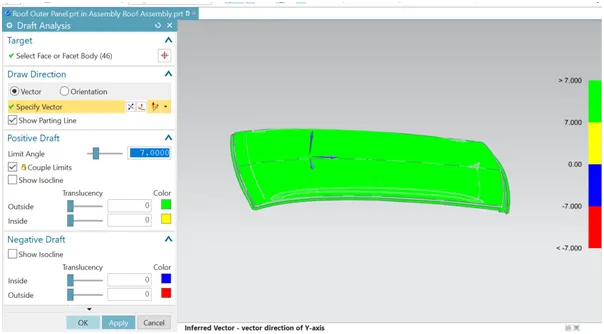
Draft Analysis:
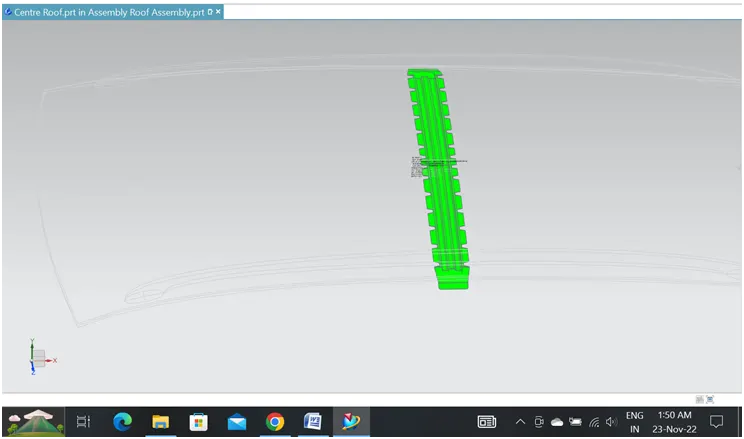
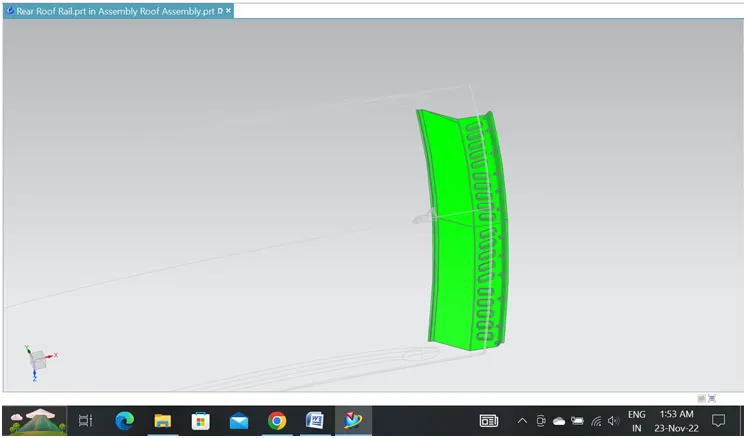
The draft analysis technique is used to analyze whether our part model created in CAD is manufacturable based on the draft condition applied. Here the part should get easily removed from the panel dies (in case of Sheet metal part) or Mold (in case of plastic).
No parts can be ejected from the tool if it is having a straight 90-degree profile from its base surface. A small draft angle is provided to each and every area of the component in order to get easy removal of the component from the tool.
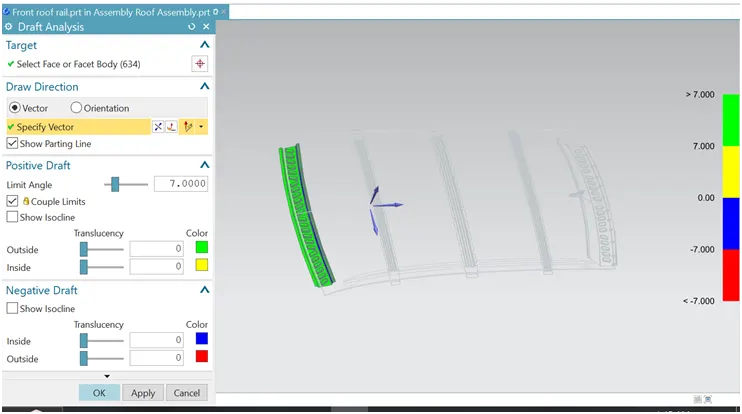
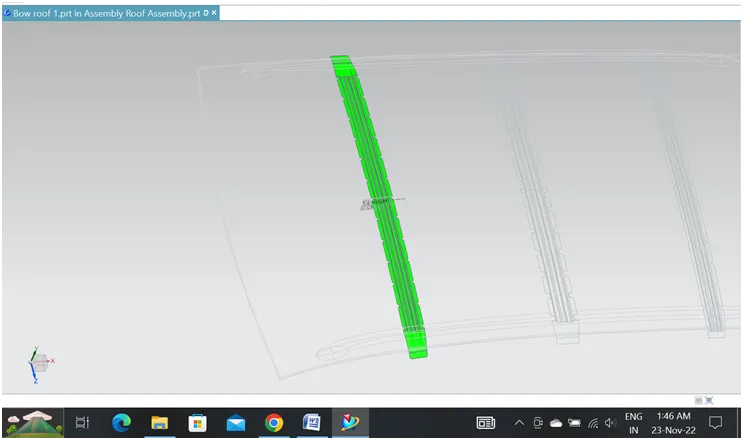
Here we are providing a direction in which components should eject in order to get easy removal of components from the tool. In other words, it also lets us know whether the model is having a draft angle and how much is the draft angle from the tool direction.
Roof Outer Panel
Fr Roof Rail
1st Bow Roof
2nd Bow Roof
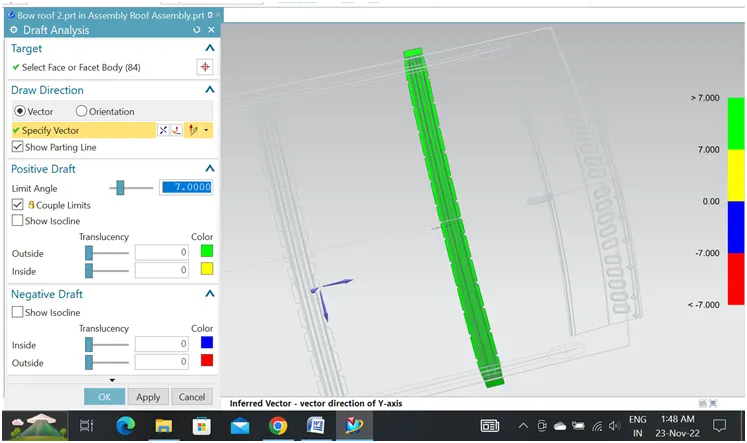
Centre Roof Rail
Rear Roof Rail
Conclusion:
- As per given master section data Roof Outer panel with ditch area, Bow Roofs, Center Roof, Front & Rear Roof rail created
- Heat distortion & snow load calculation steps performed
- Draft analysis performed
- Satisfy all the condition. Hence Roof and the reinforcement design is ok