Hood design-Week 2
Hood Assembly
A car hood panel is one of the most important components of the BIW (body in white), it is considered as the closure sheet-metal component. The hood or bonnet is the hinged cover over the engine of motor vehicles. Hoods can open to allow access to the engine compartment for maintenance and repair
Styles & Materials:
On front engine cars, the hood may be hinged at either the front or the rear edge, or in earlier models (e.g. the Ford Model T) it may be split into two sections, one each side, each hinged along the centre line. A further variant combines the bonnet and wheel arches into one section and allows the entire front bodywork to tilt forwards around a pivot near the front of the vehicle (e.g. that of the Triumph Herald).
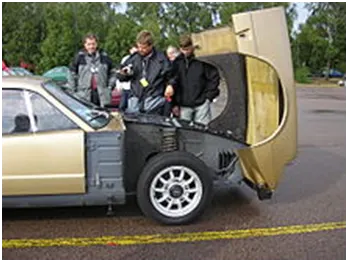
Hoods are typically made out of the same material as the rest of the body work. This may include steel, aluminum, fiberglass or carbon fiber. However, some aftermarket companies produce replacements for steel hoods in fiberglass or carbon fiber to make the vehicle lighter.
Locking Mechanism:
The Hood latch is usually located below the steering wheel, beside the driver’s seat or set into the door frame. This handle is connected to an insulated cable that runs towards the front of the vehicle. The other side of the cable is connected to a latch under the hood that keeps the hood flush against the car’s body.
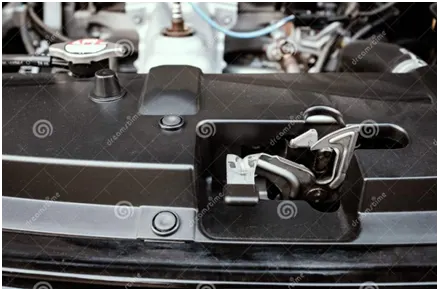
Pulling the interior release handle will disengage the latch and open the hood a few inches. Once the latch has been disengaged, and the hood lifts a few inches, a safety latch will stop the hood from being fully raised.
Structure of Hood:
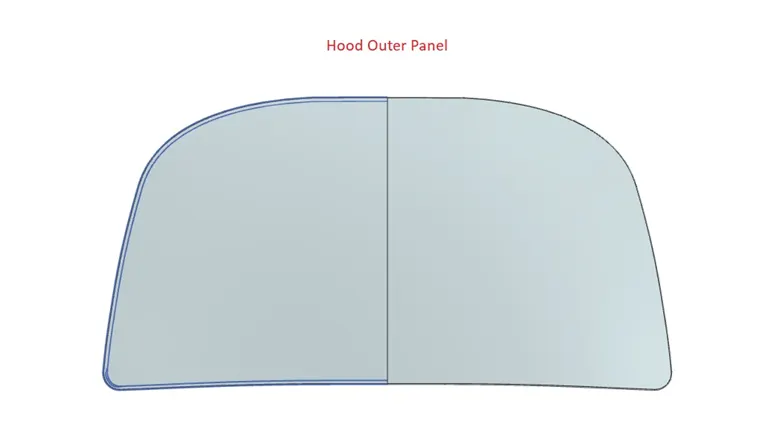
A hood panel consists of two panels that are hemmed together to form the automotive hood assembly.
- The inner panel of the hood is not visible to the customer but this is the engineering feature of the outer panel.
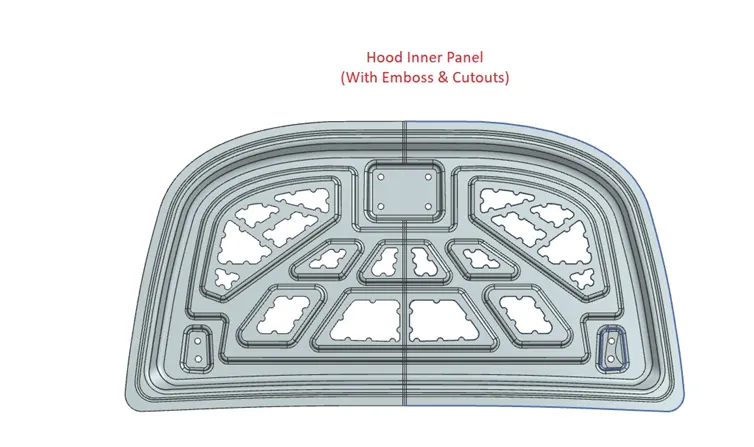
- The outer panel has the aesthetic look to it but on its own is very weak and not capable of handling force during impact
Things to consider for Hood Design:
- Wrap around Distance:
The wrap around distance is measured from the ground (vertical extension of the foremost centre point of the vehicle) along the outer structure of the vehicle to the pedestrian contact point.
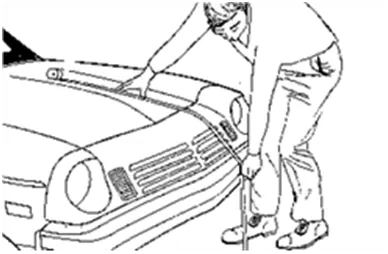
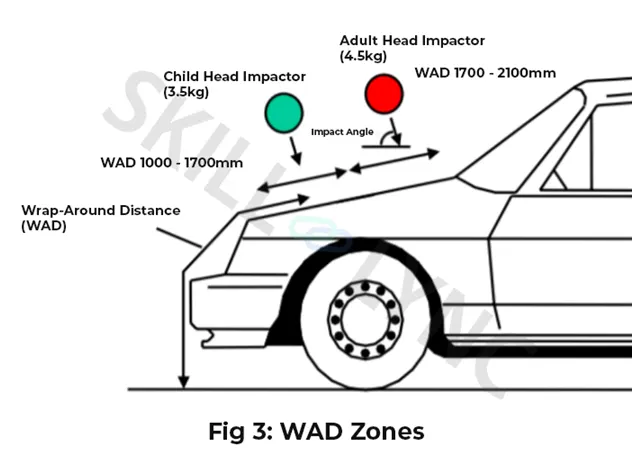
To be specific the Wrap Around Distance is a measurement of the distance from the ground to the head impact zone over the outer surface of the car. The wrap-around distance is measured longitudinally in the centre of the vehicle from the ground.
Based on the Wrap Around Distance (WAD), two test areas will be created namely the Child head impact zone and the Adult head impact zone.
- The child head impact zone is between 1000 to 1700 mm WAD
- Adult head impact zone ranges between 1700 to 2100 mm WAD.
- Mastic point:
The main function of mastic point is to reduce NVH (Noise ,Vibration and Harshness) that created on hood. So, by providing more in number of mastic points at center area of hood will increase the performance of car. It has capability to reduce the NVH for the radius of 80mm
Sheet metal production process:
The production process of the outer panel of the hood mainly includes blanking, deep drawing, trimming, turn up, and side turn up. Among them, deep drawing is a key process to ensure the quality of parts
- Blanking:
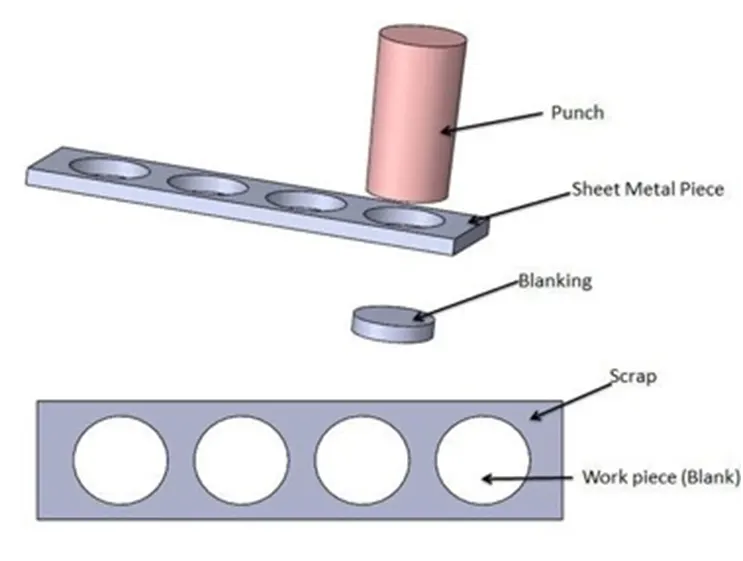
Blanking is a steel manufacturing process in which a flat, geometric shape (or “blank”) is created by feeding a coil of sheet metal into a press and die. In this process the blank is punched out from large metal sheet.
.
- Deep drawing:
The deep drawing process is a forming process which occurs under a combination of tensile and compressive conditions. A flat sheet metal blank is formed into a hollow body open on one side or a hollow body is formed into a hollow body with a smaller cross-section.
Deep drawing processes are divided into three types:
- Deep drawing with tools
- Deep drawing with active means
- Deep drawing with active energy
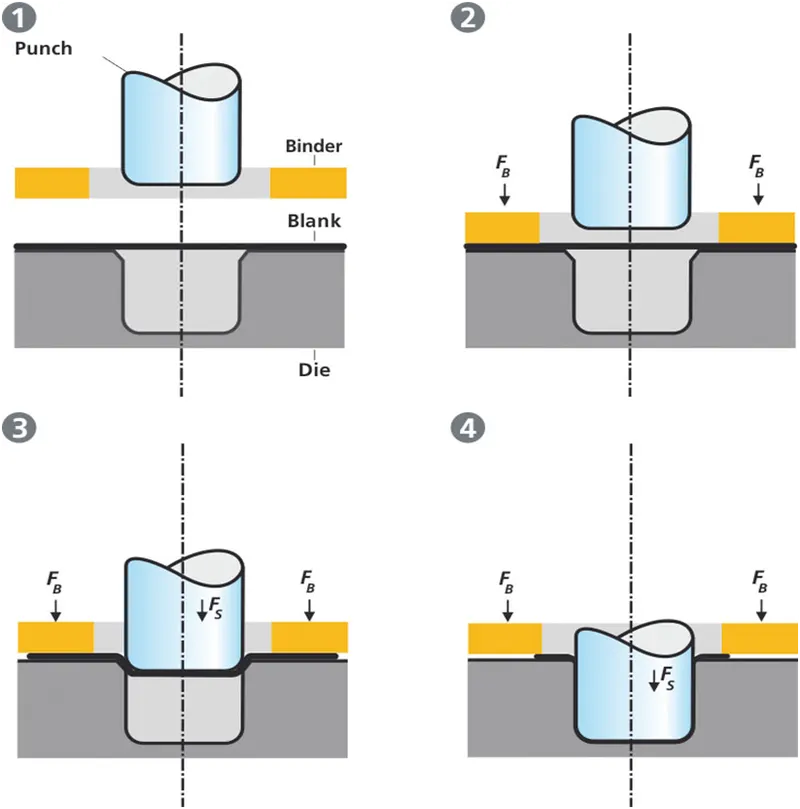
The rigid tools consist of a punch, die and binder. In deep drawing, the plate holder closes after the metal sheet blank has been inserted.
Next the sheet is clamped between the die and the binder. This process slows down the flow of the sheet while it is being drawn and thereby prevents wrinkles from forming under the binder.
The punch stretches the sheet over the die radius and forms it in the die. The amount of punch force necessary for forming is thereby continually increased up to the lower dead center of the punch.
- Trimming:
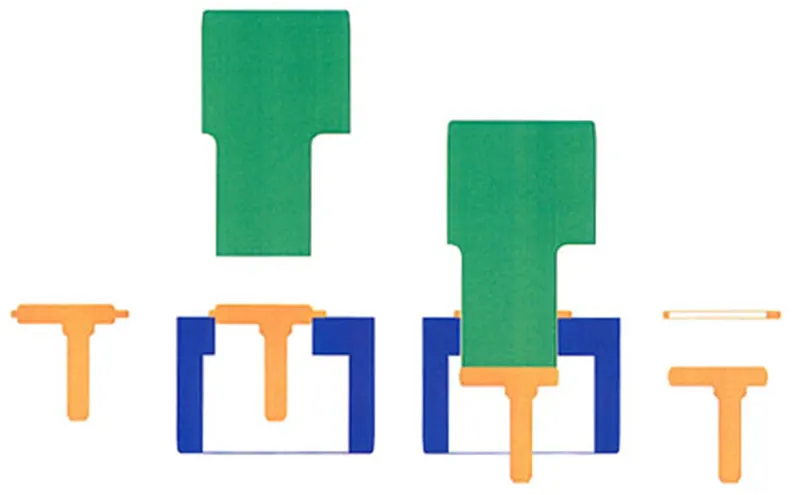
The trimming process is the shearing of excess material from the headed configuration of complex shapes so as to obtain the final design and specifications.
- Hemming:
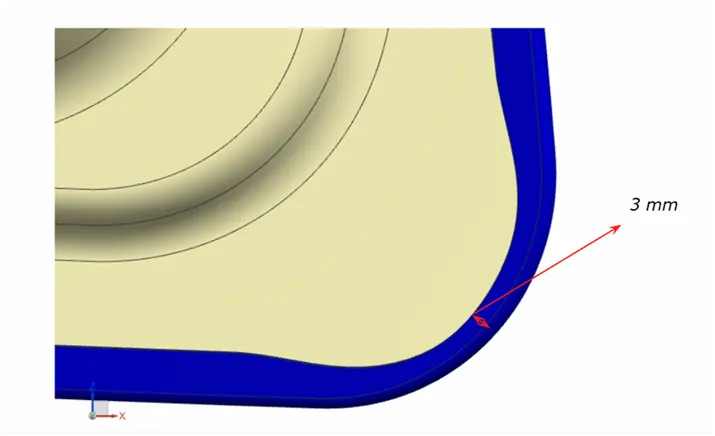
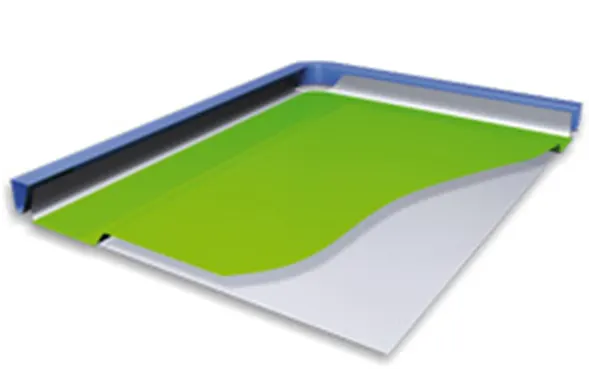
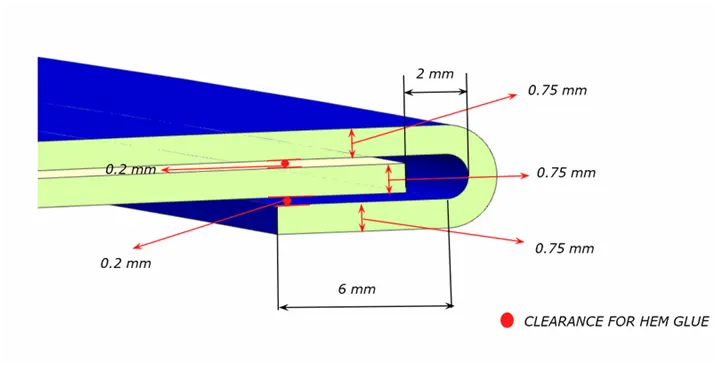
Hemming is a forming operation in which the edges of the sheet are folded or folded over another part in order to achieve a tight fit. Normally hemming operations are used to connect parts together, to improve the appearance of a part and to reinforce part edges.
Types of Hemming:
- Conventional die hemming
Conventional die hemming is suitable for mass production. In die hemming, the flange is folded over the entire length with a hemming tool. Normally the actual hemming is a result of a forming operation in which the flange is formed with a hemming tool after the drawing and trimming operations have been completed. The formed flange is then hemmed in several process steps. These steps include, for example, the pre-hemming and final hemming depending on the respective opening angle of the flange. Production plants for conventional die hemming are very expensive, but the cycle times are very low.
- Roll Hemming:
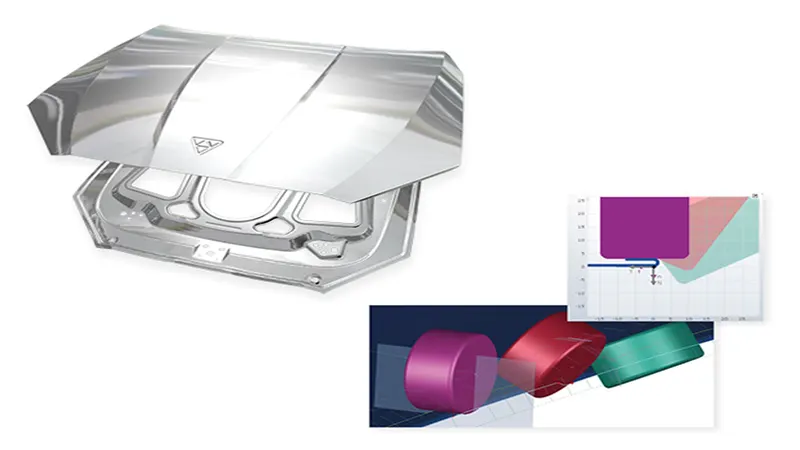
Roll hemming is carried out incrementally with a hemming roller. An industrial robot guides the hemming roller and forms the flange. Roll hemming operation can also be divided into several pre-hemming and final hemming process steps. Roll hemming is very flexible to use and tool costs are significantly lower as compared to those of conventional die hemming. However, the cycle times are much higher since the hemming is realized using a hemming roller which follows a defined path.
Project: Hood Design
Objective:
Design a Hood along with proper Hinge & Striker placement with proper dimension.
Data to be used:
Hood thickness information:
- Outer panel thickness: 0.75mm
- Inner panel thickness: 0.75mm
- Reinforcement thickness: 1.5mm
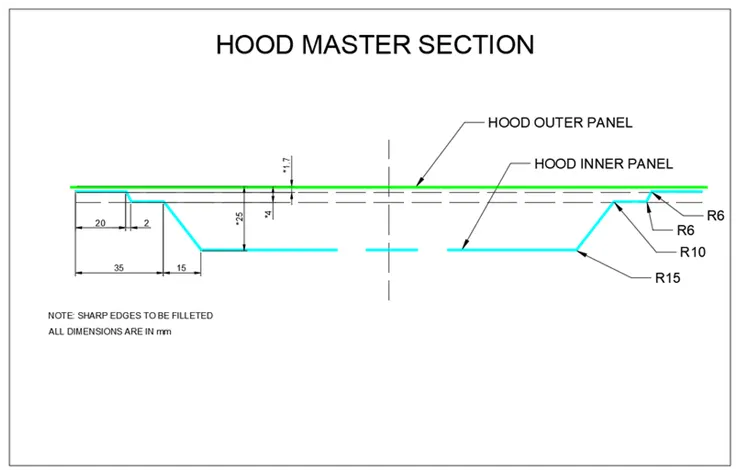
Master data:
Hemming Process:
Edge Relief: