Roof Design
Roof Design
Aim:-
To develop the essential flanges and reinforcements with appropriate dimensions and checking draft by performing Draft analysis, Calculating Section inertia, Heat distortion and Snow load on the roof.
Objective:-
The main objectives of this project is
- To design and assemble a Car Roof with proper Reinforcements by following the engineering standards using the software Siemen NX
- To check whether the Roof designed is capable to withstand high temperature and load with respect to the positioning of Reinforcements which contributes more strength.
Introduction:-
What is roof:-
An automobile roof or car top is the portion of an automobile that sits above the passenger compartment, protecting the vehicle occupants from sun, wind, rain, and other external elements. Because the earliest automobiles were designed in an era of horse-dawn carriages, early automobile roofs used similar materials and designs
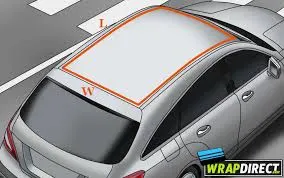
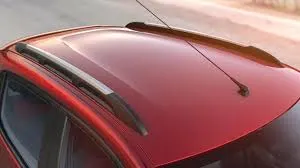
In the past roof was introduced as cover for passenger compartment but later on, it also used as a luggage carrier, sunroof and in recent past years with the introduction of the solar paneled electric vehicle got a major boost in the automotive industry.
Types of roof:-
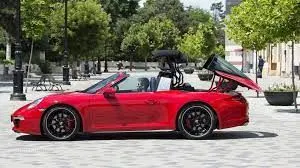
- Convertible roofs
- Hardtops.
- Sunroofs.
- T-tops.
- Targa tops.
- Vinyl roofs.
Here are the images of different car roofs.
- Convertible roofs:-
2.Hardtops:-
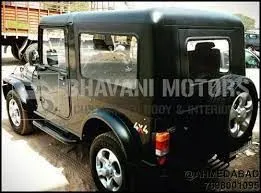
3.Sunroofs:-
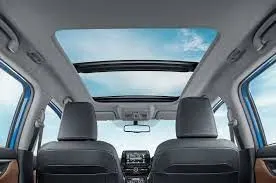
4.T-tops:-
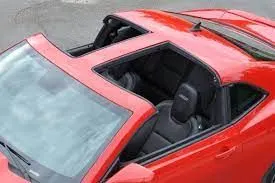
5.Targa tops:-
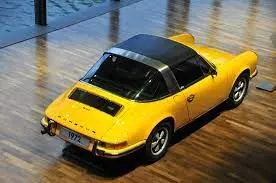
6.Vinyl roofs:-
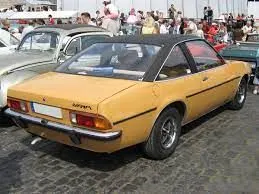
The following factors should be consider for the roof design:-
- Visibility criteria
- Head clearance for comfort
- Safety Parameters
- Draft analysis
- Heat distortion and Snow Load
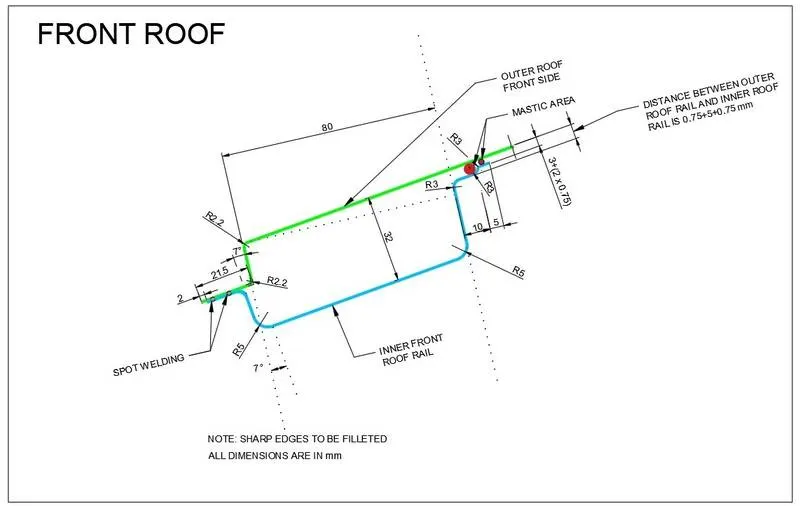
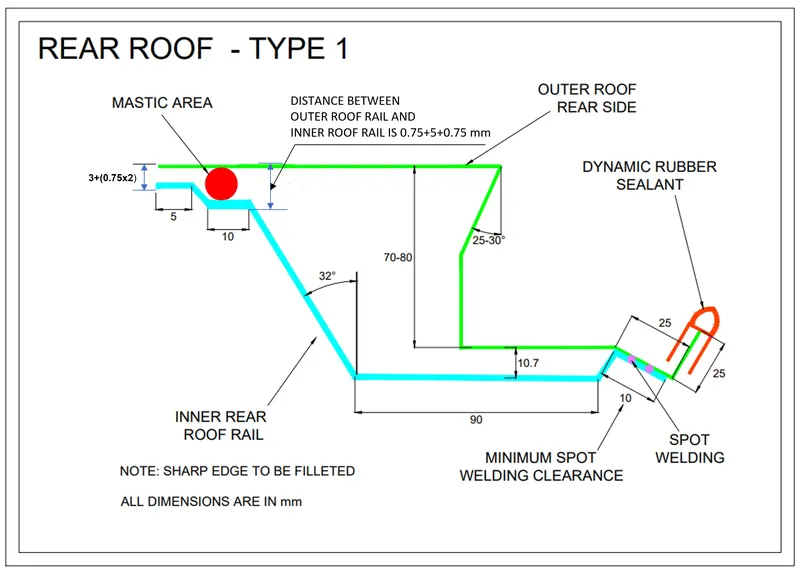
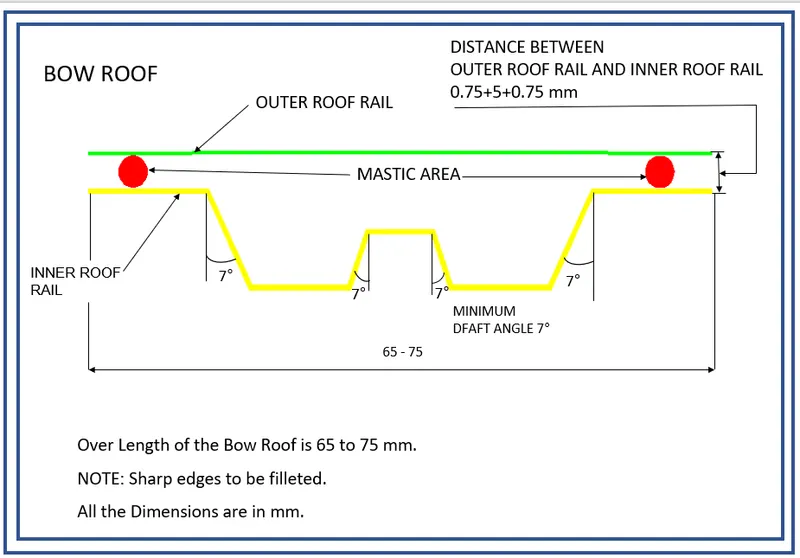
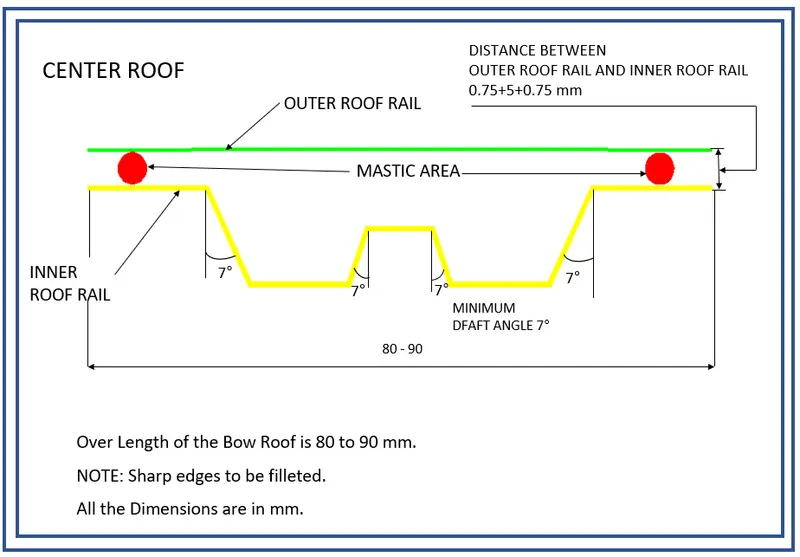
To design a roof with reinforcements we have a master sketch and some reference images:-
Front roof:-
Rear roof:-
Bow roof rail:-
Center roof rail:-
Procedure:-
Components of roof:-
- Front roof rail
- Rear roof rail
- Bow roof
- Centre roof rail
- Ditch area
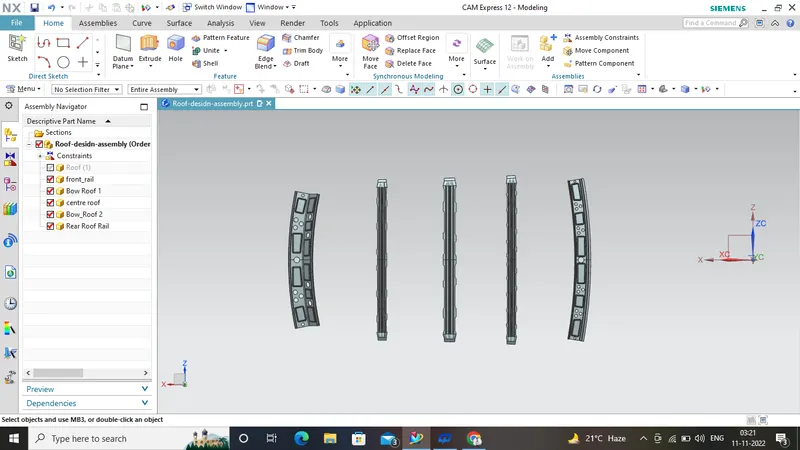
Front roof rail:-
With the help of master sketch we designed a front roof with proper dimensions and creataed a embosses to strengthen the part and brackets are given for mounting.
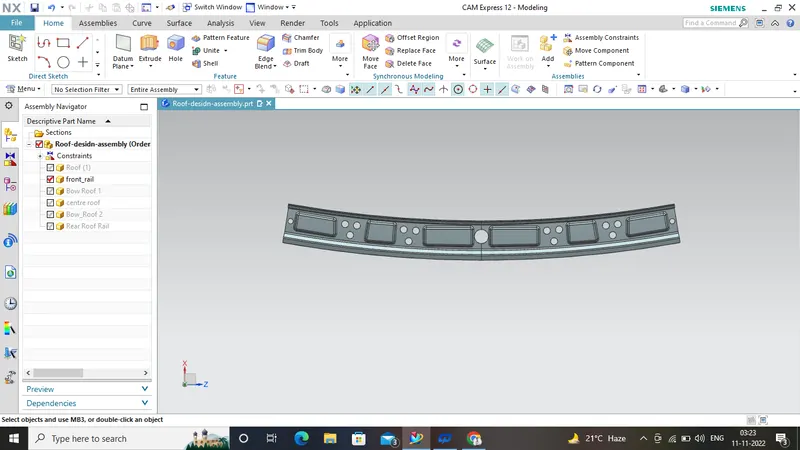
Front roof rail is used to provide strength to the roof panel front and it also acts as link between windshield glass, roof panel and headliner. Spot welds are applied at wind shield end of the rail and the other end is joined with roof using mastic sealent which also increases the strength.
Rear roof rail:-
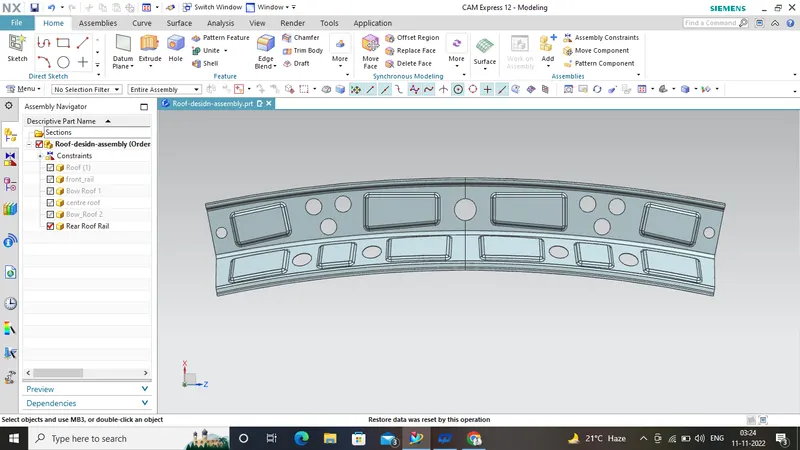
Rear roof rail is again used to strengthen the roof and it acts as a link between back glass and roof which connected to the backdoor of the car.Spot welds are applied at back doorend of the rail and the other end is joined with roof using mastic sealent.
Center roof rail:-
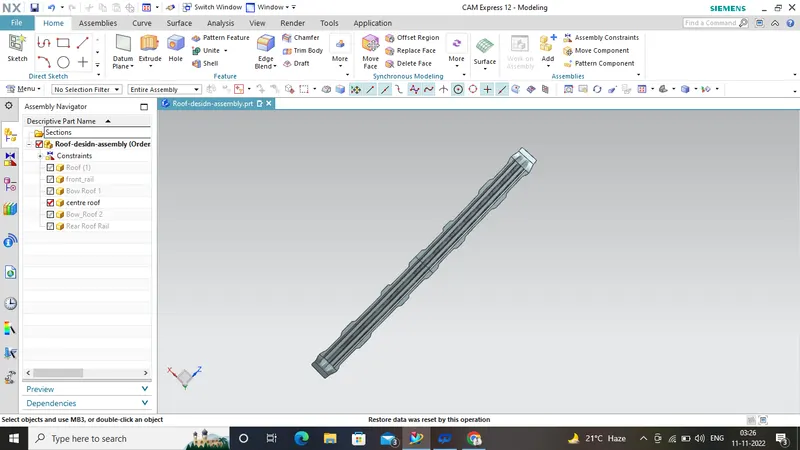
This is a roof rail that will be at the centre of the roof to provide strength and stability to the roof.Here the centre roof rail is joint with the roof through mastic sealent.
Bow roof rail:-
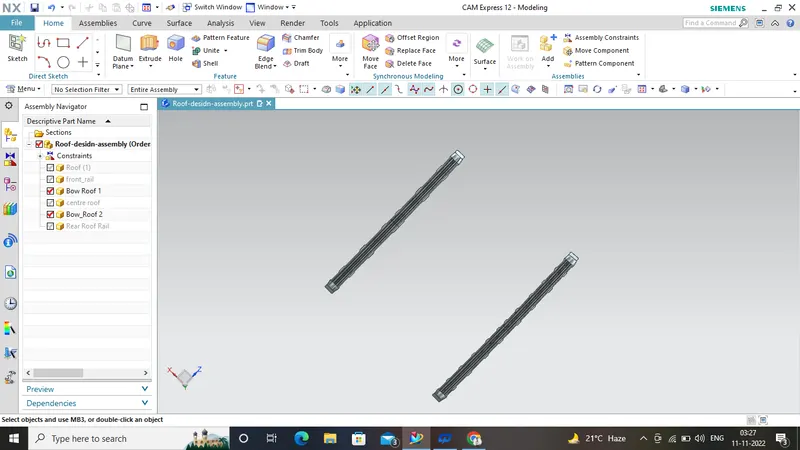
Here we designed the bow roof by offseting the outer surface and combined those surfaces with studio surface command by giving certain draft angle.
Bow roof is used for strengthening purpose
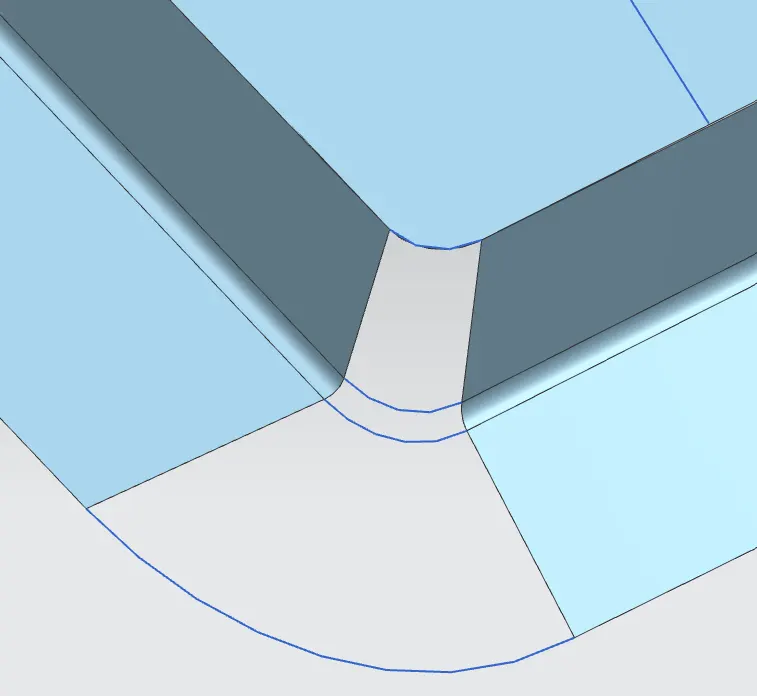
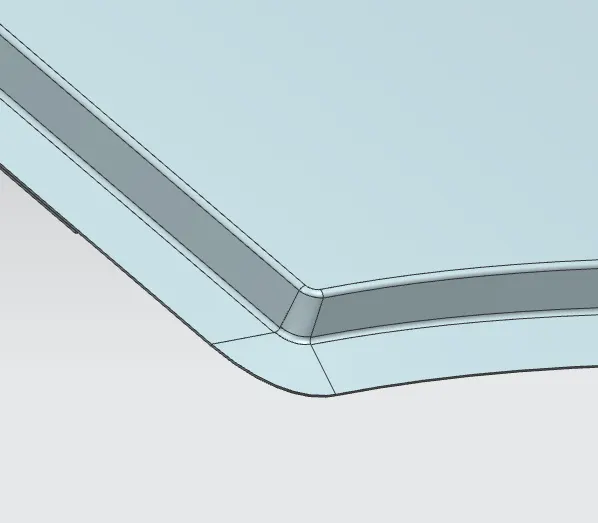
The Flanges are created at the front outer panel to avoid sharp edges by using bridge curve and Through curves as show in below fig.
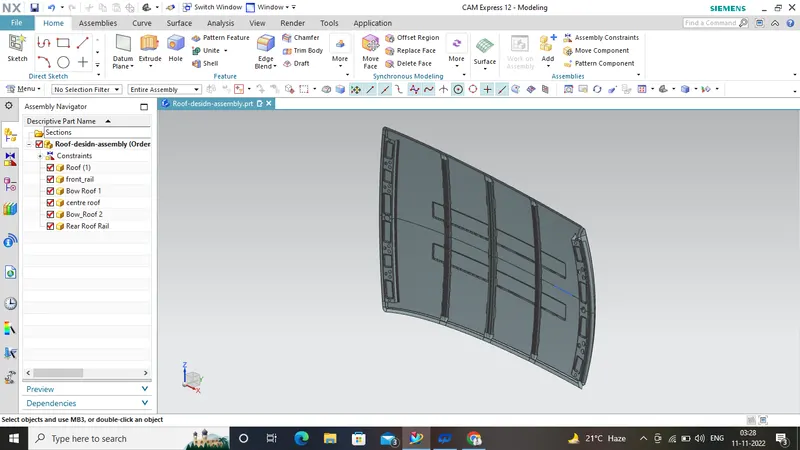
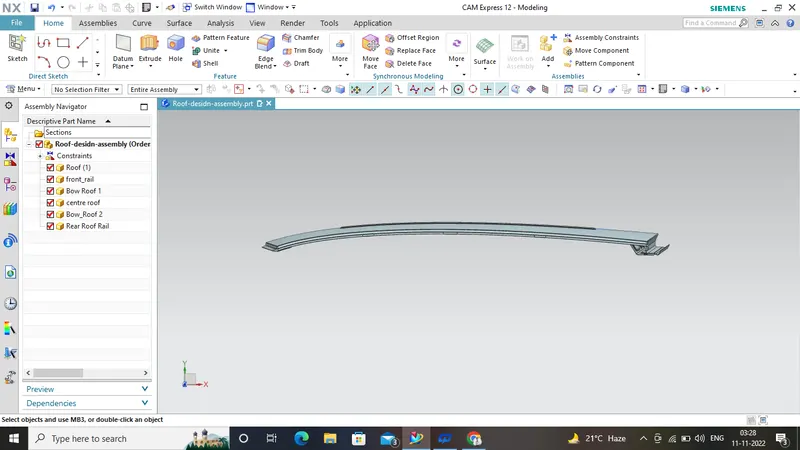
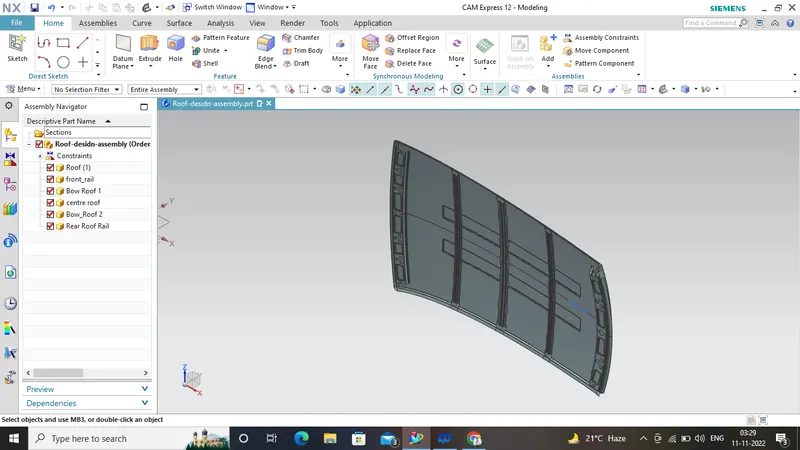
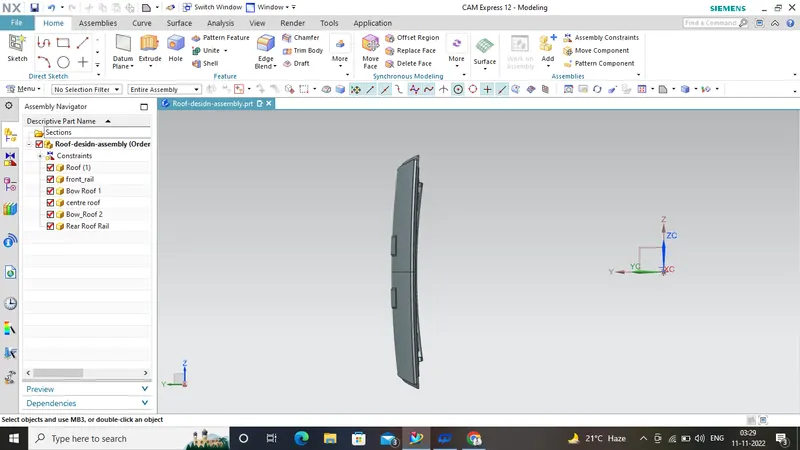
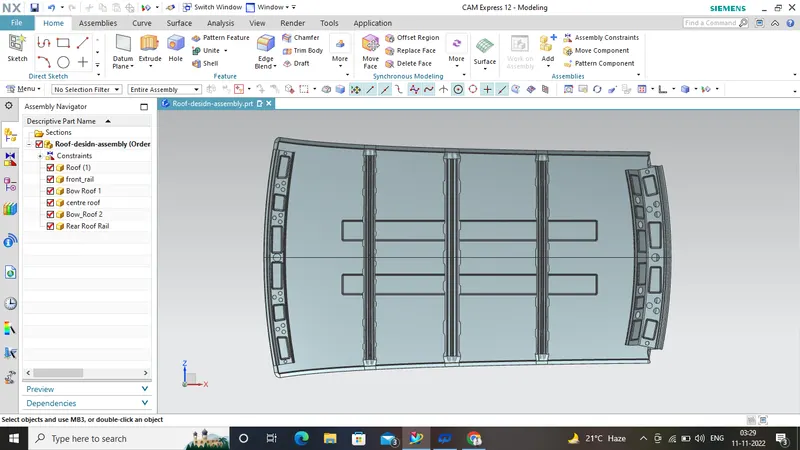
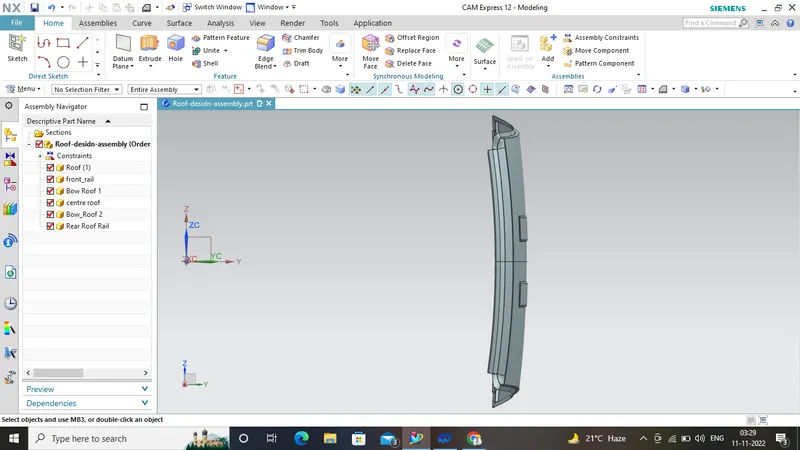
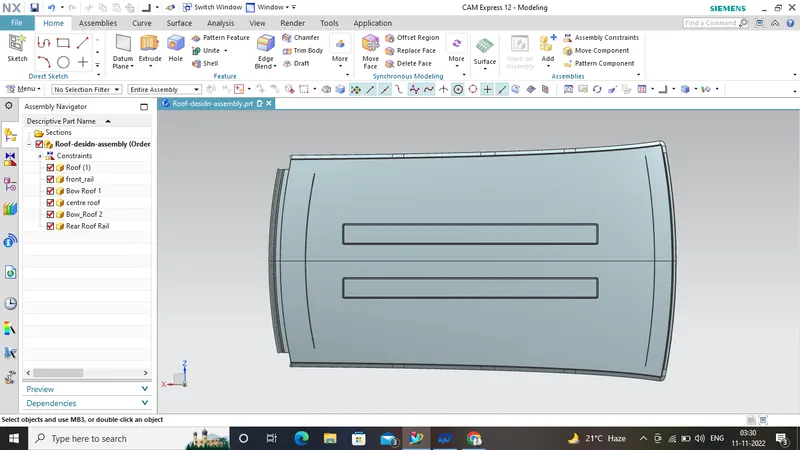
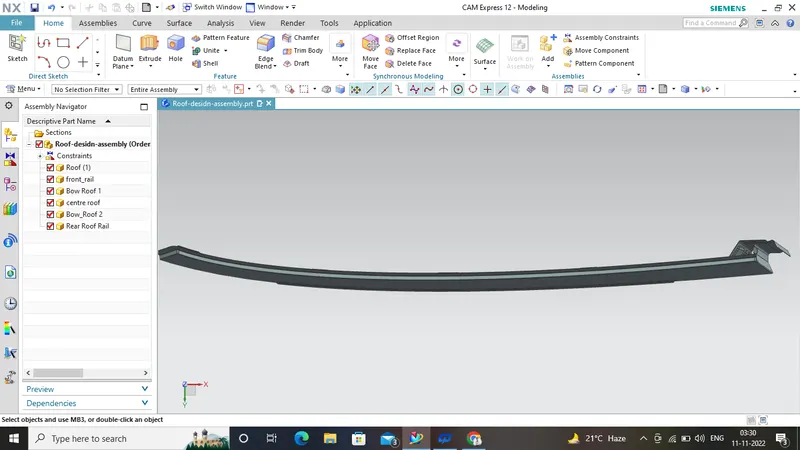
Assemble images in all views in below shown:-
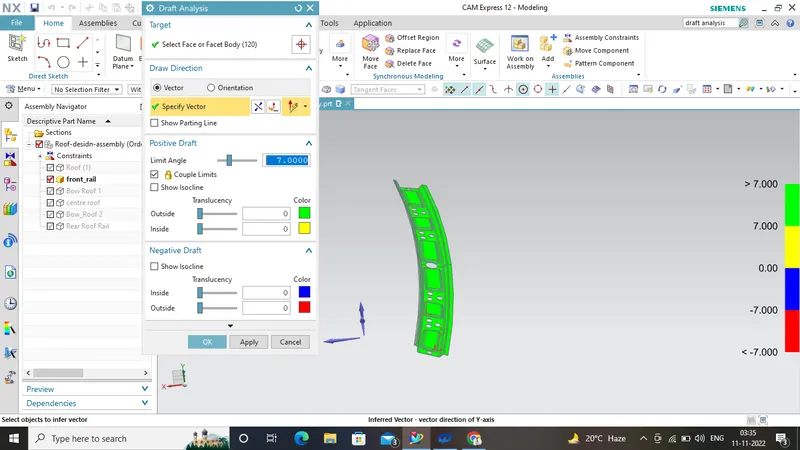
Front roof rail draft analysis:-
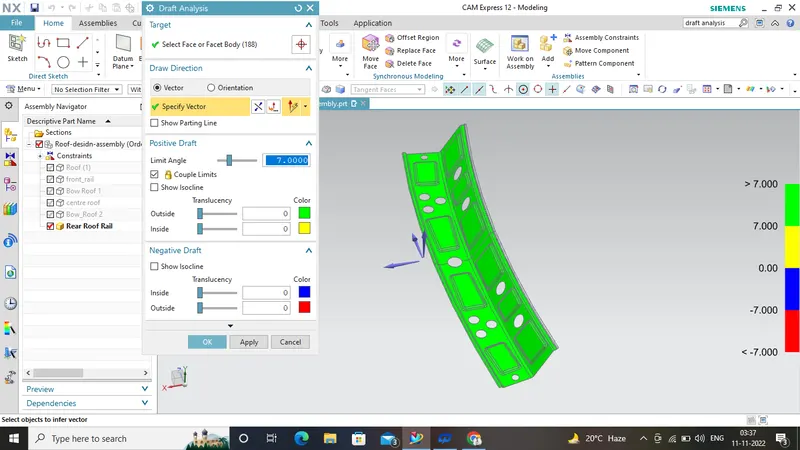
Rear roof rail draft analysis:-
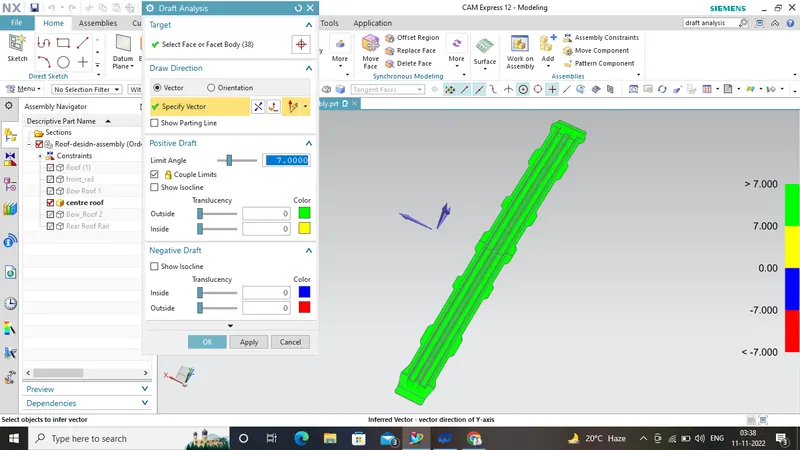
Center roof rail draft analysis:-
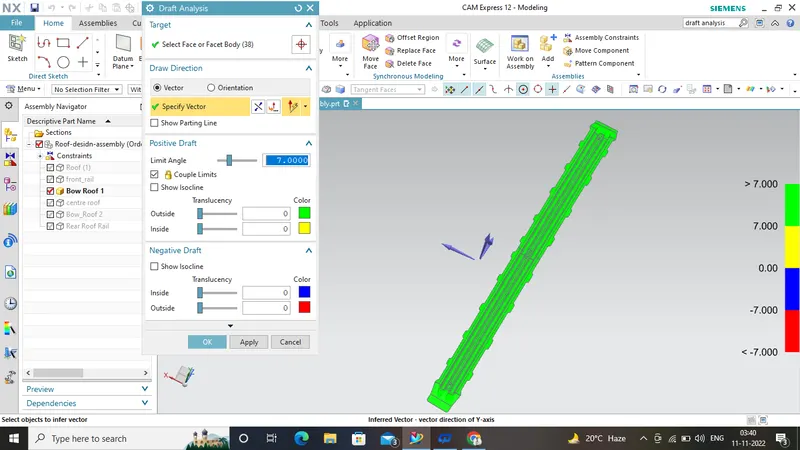
Bow roof1 draft analysis:-
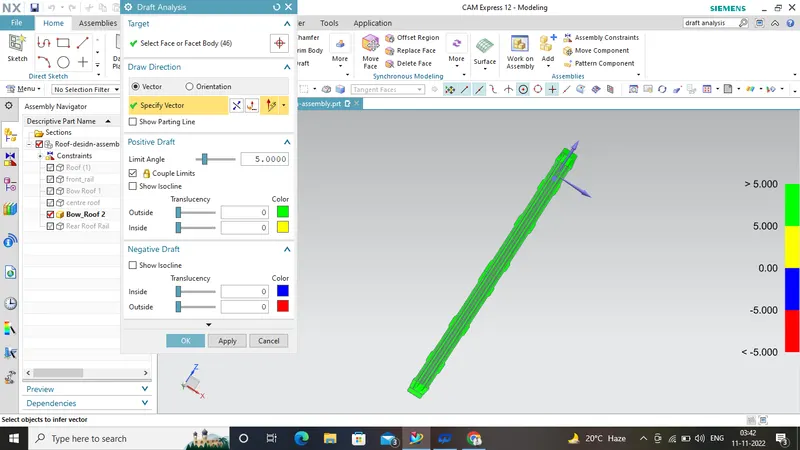
Bow Roof 2 Draft Analysis:-
Heat Distortion calculation:-
This is the calculation to check whether the roof can withstand high temperature with respect to the positioning of the reinforcements with out any deformation .
The Heat distortion criteria is W < 2.7
we have the equation
W = [1.73 x 10^(-3) x L] + [1.85 x 10^(-8) x (R^2)/t] + [ 1.10x10^(-3) x l] - 2.68
Judgement Condition : OK< 2.7
'.' Where
L = Roof Length in X-Direction[mm](Roof dimension in 0-Y)
R = Roof curvature
R = 2(Rx*Ry)/(Rx+Ry)
Rx = X curvature
Ry = Y curvature
t = Roof plate thickness [mm]
l = Bow Roof Span [mm]
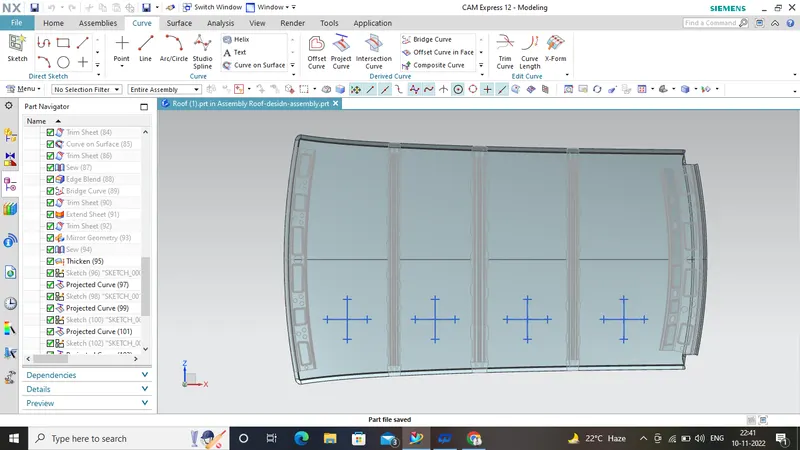
The measured values and the calculations are depicted in the table below .Here in each cases this model pass the heat distortion criteria
| s.no | Bow Roof | Rx | Ry | R | L | t | l | W | OK/NG |
| 1 | Front roof and Bow roof 1 | 5736.64 | 2572.68 | 3552.29 | 2035.02 | 0.75 | 405.82 | 1.6 | OK |
| 2 | Bow roof 1 and centre roof | 5023.77 | 5985.36 | 5462.57 | 2035.02 | 0.75 | 354.37 | 1.96 | OK |
| 3 | Centre roof and Boe roof 2 | 4111.63 | 9905.2 | 5811.08 | 2035.02 | 0.75 | 390.2 | 2.1 | OK |
| 4 | Bow roof 2 and Rear roof | 3354.61 | 14097.05 | 5419.55 | 2035.02 | 0.75 | 447.09 | 2.06 | OK |
Here
- 'l' value is from one reinforcement centre to another reinforcement centre value.
- 'L' value is the total length from one end to another end.
According to the judgement criteria OK< 2.7> 3.1, All values are satisfied.
Snow Load Calculation:-
In the winder season , in some countries there will be a huge load of snow on the roof top of the car. So for the roof it is necessary to have enough strength to bear this snow load
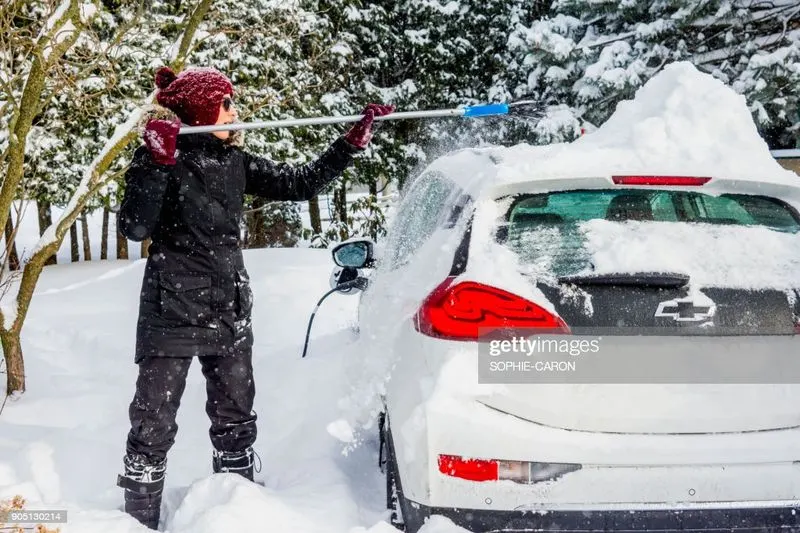
The snow criteria is Qr ≥ 3.1
We have the equation
Qr = [Iy x t2] / [α x s x [(Rx + Ry)/2]2 x 10-8]
Where
α = My x Lx2 x 10-12 , My = Y(Ly-Y)
Judgement condition = Qr ≥ 3.1
250 ≤ s ≤ 380
t = Roof plate thickness [mm]
Ly = Distance between the front and rear roof Rails on the Vehicle along with 0Y[mm]
Length of Roof panel with the center point between Roof rail Front /Rear as the front and rear reference point.
Lx = Distance between the Left and Right end of the roof on the Roof BOW [mm]
Width of the roof panel exposed on the surface.
Y = Distance front Front Roof Rail to Roof BOW[mm]
s = Distance for which Roof BOW bears divided load [mm]
s = L1/2 + L2/2
Iy = Geometrical moment of inertia of Roof BOW (Y cross-section )[mm4]
Rx = Lateral direction curvature radius of roof panel Y cross-section on Roof BOW [mm]
Roof panel curvature Radius of the Length Lx in Front view
Ry = Longitudinal Direction curvature radius of the Roof panel X cross-section on Roof BOW [mm]
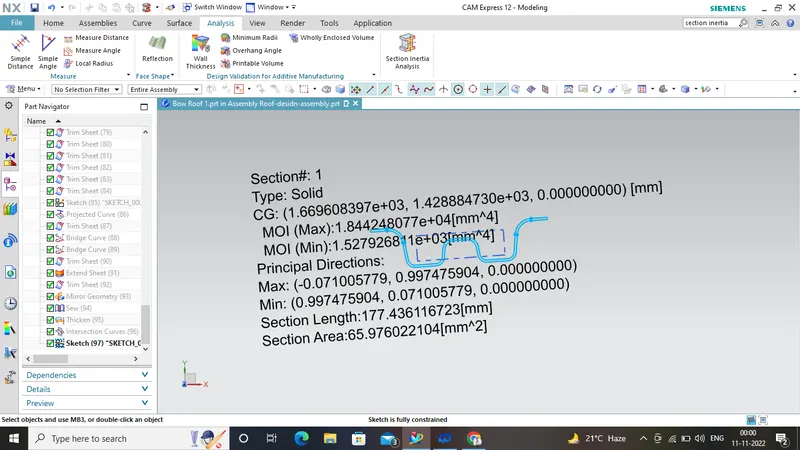
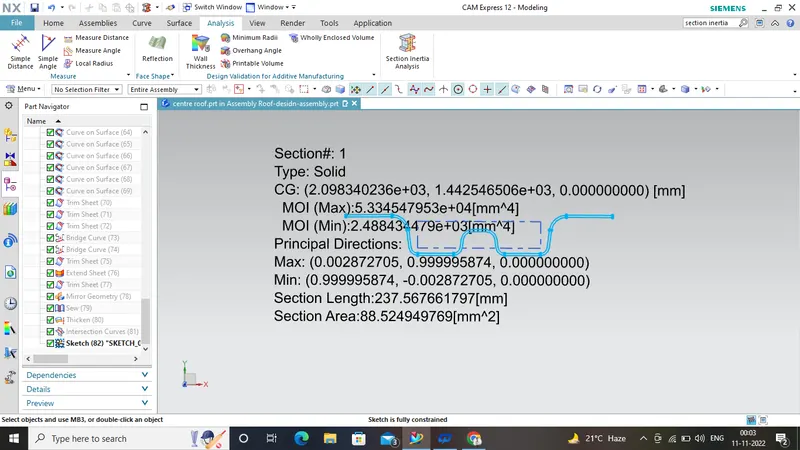
For the Snow load calculation first of all we need to find the section inertia of the three Reinforcements which are Bow roof 1, Bow roof 2 and the Center Reinforcement
Steps to calculate snow load condition:-
1.Steps is same as heat distortion criteria but the difference is we calculate the Rx and Ry at the centerline of the roof along the y-axis
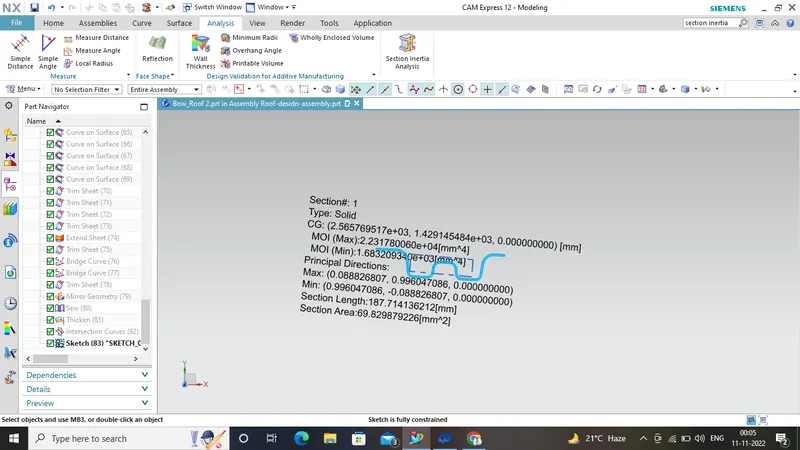
2.We have to calculate the moment of inertia of each reinforcement(Bow) which can as follows in NX software.
3.We use the intersection curve command in NX software to get the sectional area of the bow along the XY plane.
4.Now we project these curves on the other plane parallel to XY-plane at some offset distance.
5.Now we use a sectional inertia analysis tool to calculate the MOI as follows
Bow Roof One:-
Centre Roof:-
Bow Roof 2:-
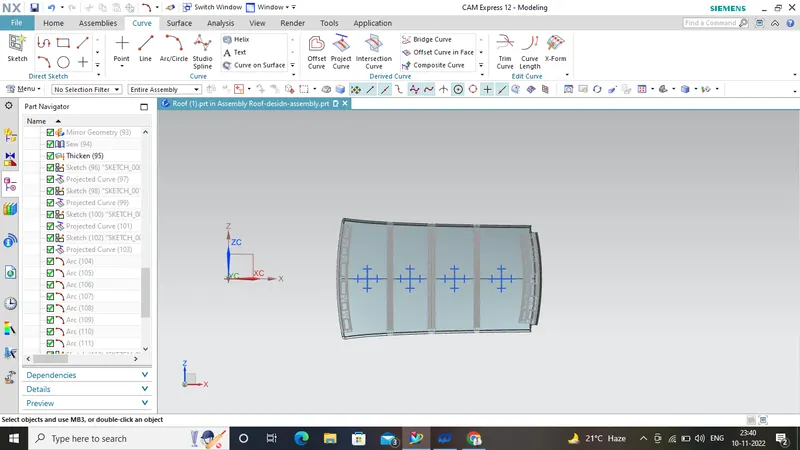
To get the values a sketch was created on top of Roof:-
- O-Y line was created in the center of roof
- A line between First and center Roof rail was created
- Then two lines on both sides at 100mm was created
- Similar lines were created between other center roof rail, both Bow Roof rails and rear roof rails
- Intersection points were created and projected on the roof
Snow load calculation table:-
| S.No | Bow Roof Sections | Rx | Ry | Iy | S | My | t | ∝ | Qr | OK/NG |
| 1 | Front Rail Roof & Bow Roof 1 | 4511.56 | 2626.08 | 1.53e^3 | 380.1 | 570578.86 | 0.75 | 0.75 | 23.88 | OK |
| 2 | Bow roof 1 & Centre Roof | 3756.7 | 5892.97 | 2.49e^3 | 372.28 | 813339.43 | 0.75 | 0.98 | 16.67 | OK |
| 3 | Centre Roof & Bow Roof 2 | 4203.67 | 10259.16 | 1.68e^3 | 418 | 665723.23 | o.75 | 0.77 | 5.61 | OK |
So, according to the Judgement condition = Qr ≥ 3.1
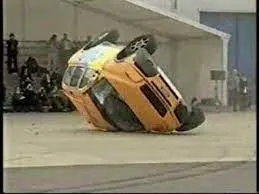
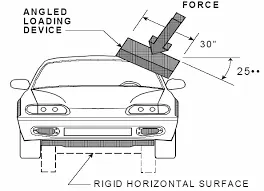
After Completing the Design there are physical test of vehicle is done to check the strength of the Roof with vehicle.
There are various Car Roof Designs to check their strength some tests are done which are:
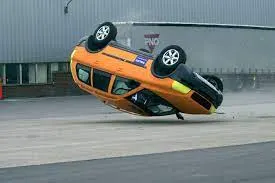
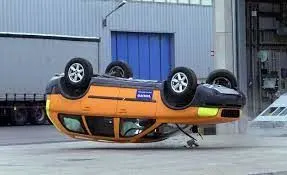
Car Roll-over Test :-
The Roll-over test is conducted because a rollover is a type of vehicle crash in which a vehicle tips over onto its side or roof. Rollovers have a higher fatality rate than other types of vehicle collisions.
Vehicle rollovers are divided into two categories: tripped and untripped. Tripped rollovers are caused by forces from an external object, such as a curb or a collision with another vehicle. Untripped crashes are the result of steering input, speed, and friction with the ground.
The vehicles which have a higher center of gravity like SUV or Small Trucks are more prone to Roll-over. Rollover accidents typically involve a singular vehicle that loses control due to icy or snowy road conditions, soft road shoulders, uneven ground, collision with curbs or guardrails after a vehicle has lost traction, or hitting an obstacle while driving.
During a rollover accident the regional body distribution of injuries normally effects five main areas: head and neck, thorax, abdomen, upper limbs, and lower limbs. The majority of rollover crash victims sustain multiple injuries throughout these regions with the head and neck being the most vulnerable area. Some of the most common rollover injuries include: traumatic brain injury, spinal cord injury, broken bones, and cuts, scrapes, and bruises. These injuries are caused from slamming into another vehicle or obstacle, impact with unsecured cargo, contact with broken glass or torn metal, or from being tossed within the vehicle or ejected from the vehicle.
Conclusion:-
- Roof assembly has been made by following all the engineering standards and considerations
- Heat distortion criteria is been successfully passed
- Snow load criteria is been successfully passed and to over come that Embosses are added on the Roof outer panel