Roof Design
Roof design
Main objective
A car roof is responsible for protecting the passenger from rain, wind, sunlight, accidents.Roof rails are provided to give strength to the outer panel and also provide support to other commodities present in a car.
There are different types of reinforcement
1.Front roof rail
2.Rear roof rail
3.Bow roofs
Roof panel with reinforcement
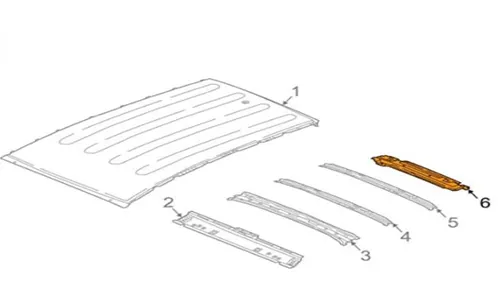
The following factors should be considered for the roof design:
- Visibility criteria
- Head clearance for comfort
- Safety Parameters
- Draft analysis
- Heat distortion and Snow Load
Front roof rail
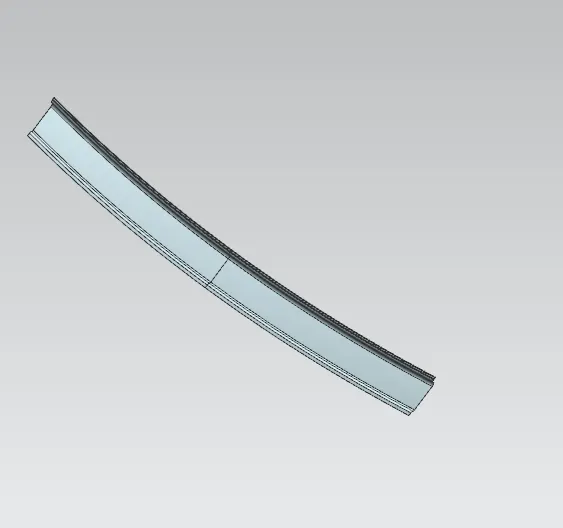
Front roof rail is used for supporting the roof for externally applied forces occurring at accidents.To increase the strength of the we can provide embosses.Design parameters to be considered,the length should be 60 to 80mm.The front side of the front rail is joined to front ditch area by spot welding and other end is joined with the help of mastic sealent.
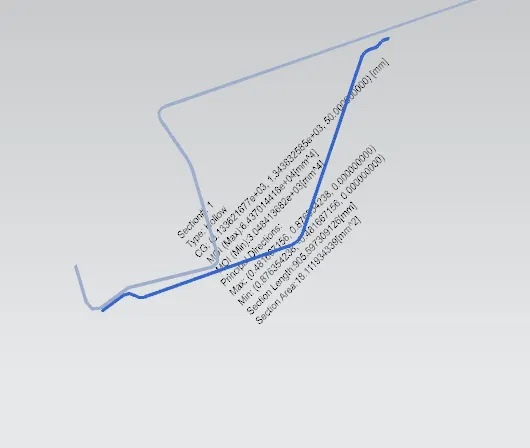
Master section of front roof rail
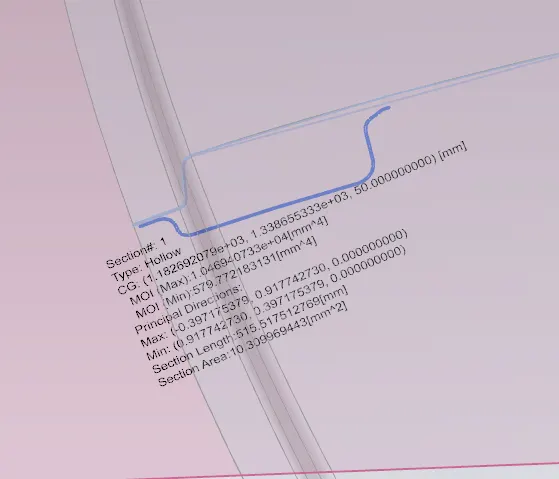
Rear rail roof
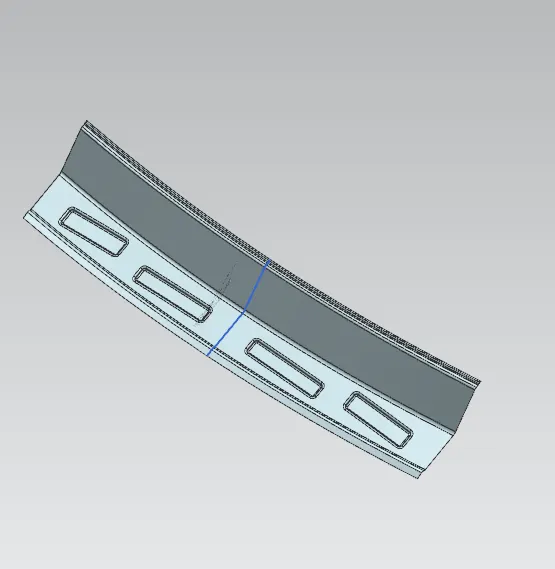
The design parameters are the length should be 80-100mm.To increase the strength provided embosses.On one side of the rail spot welding for joining with ditch area on the other end mastic sealent are applied to join.
Master section of rear roof rail
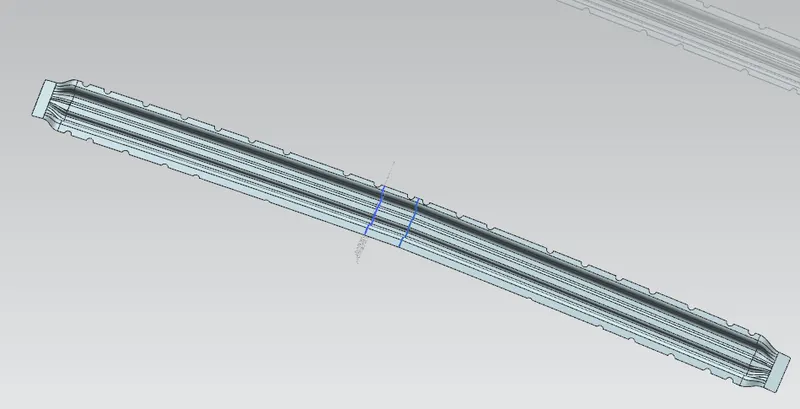
Bow roof 1
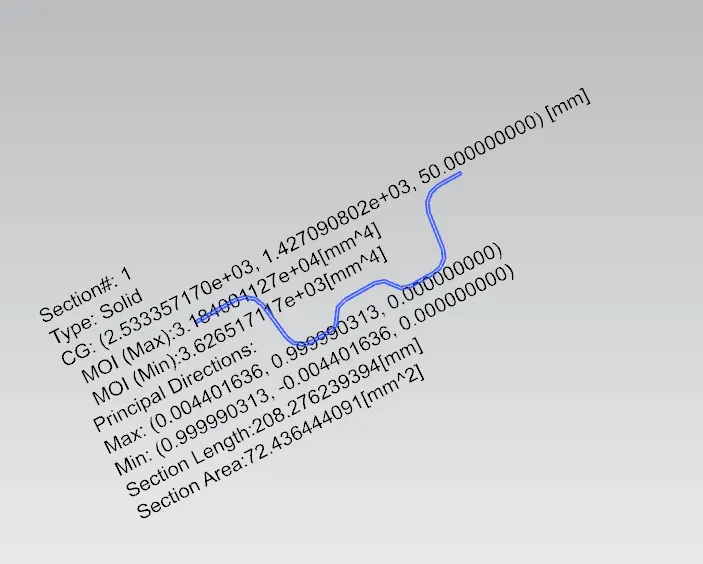
Master section of bow roof 1
Centre roof rail
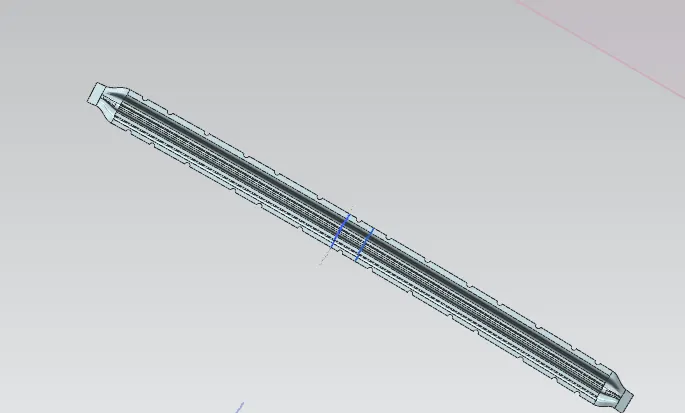
It acts as the balance between bow roof 1 and bow roof 2 . Usually, Reinforcement center roof rails are fixed at the center of the roof for connecting to the B – Pillar support structure.By applyingg mastic sealent the joining is done.
Master section of centre roof rail
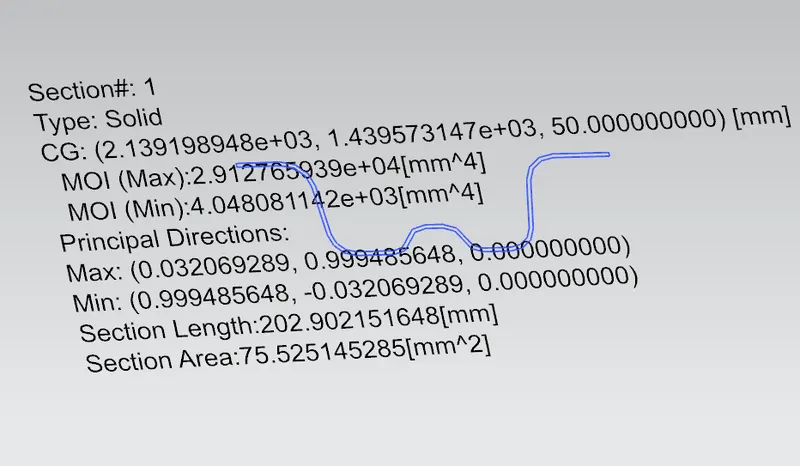
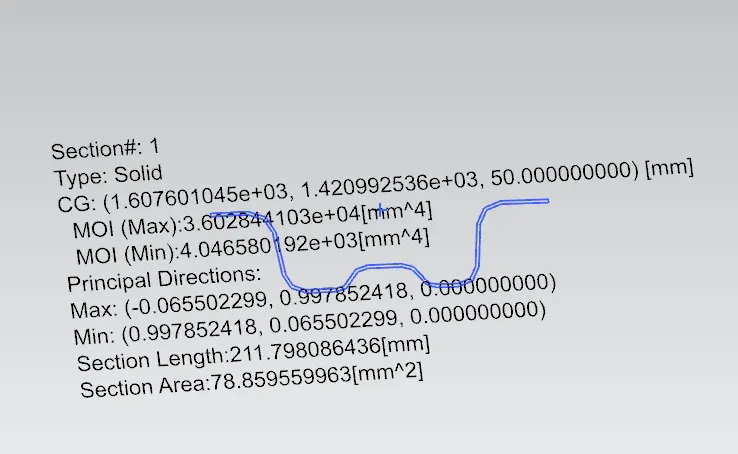
Bow roof 2
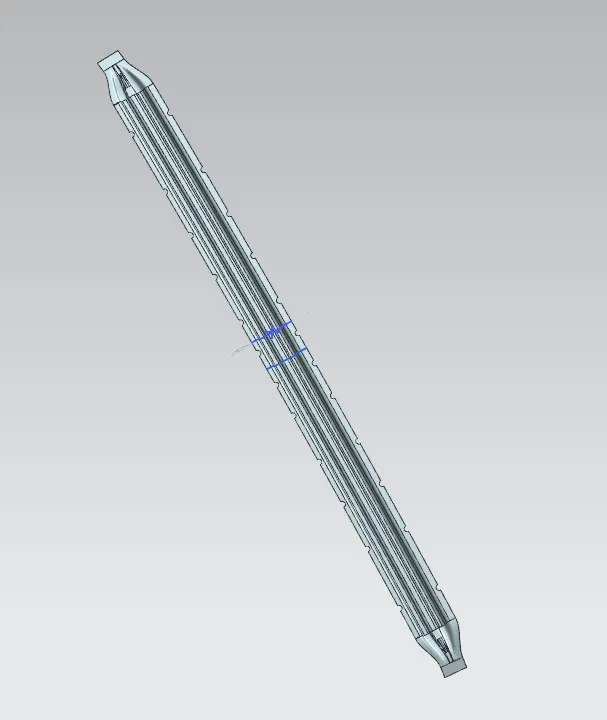
Master section of bow roof 2
MASTIC SEALANTS OF ROOF
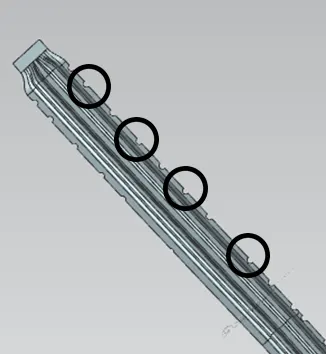
Mastic sealent is a type of rubber after appling it spreads and joins the two surfaces.By using mastic sealent the surface does not deform.Mastic sealent spreads 80mm after appling to the surface.
Spot Welding
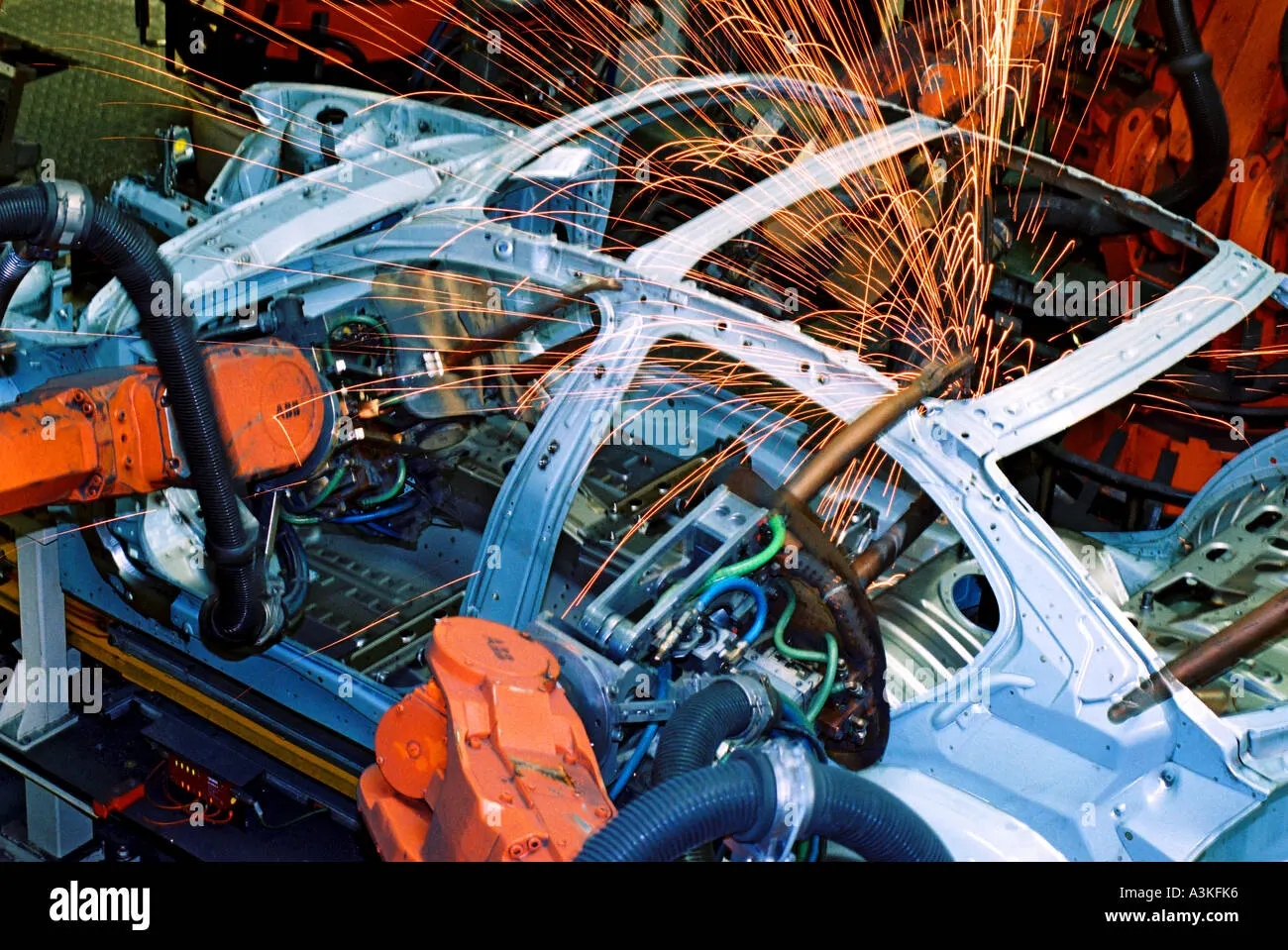
Spot welding is an economical method for joining metals that is commonly used in car manufacturing plants.
The method is adaptable to high speed automation and is under strict cycle times.
To reduce the cost we can go for spot welding.
Emboss
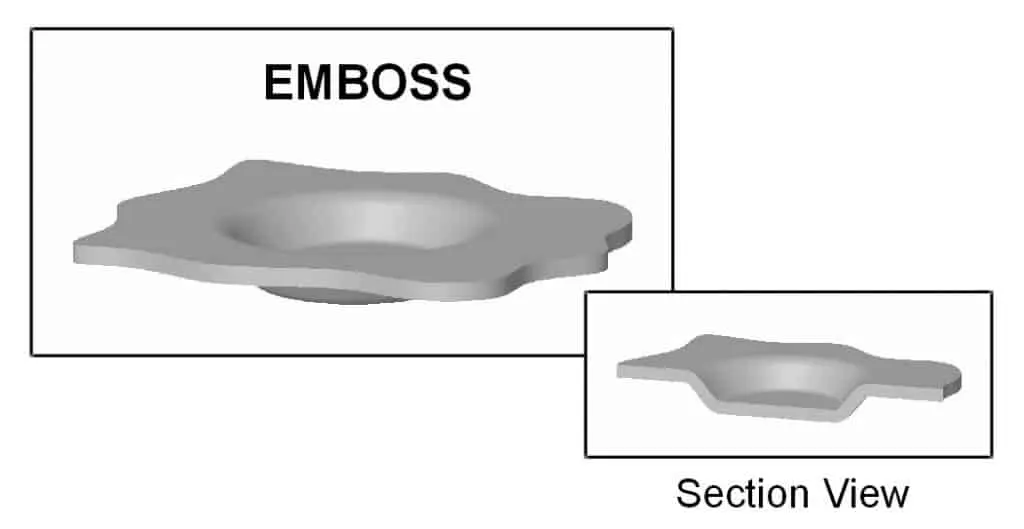
Embossing is a metal forming process for producing raised or sunken designs or relief in sheet material by means of matched male and female roller dies, theoretically with no change in metal thickness, or by passing sheet or a strip of metal between rolls of the desired pattern.Metal sheet is drawn through the male and female roller dies producing a pattern or design on the metal sheet. Depending on the roller dies used, different patterns can be produced on the metal sheet.By provided to increase the strength of the part.
Heat Distortion Calculations
W = [1.73 x 10^(-3) x L] + [1.85 x 10^(-8) x (R^2)/t] + [ 1.10x10^(-3) x l] - 2.68
Judgement Condition : OK> 3.1
Where
L = Roof Length in X-Direction[mm](Roof dimension in 0-Y)
R = Roof curvature
R = 2(Rx*Ry)/(Rx+Ry)
Rx = X curvature
Ry = Y curvature
t = Roof plate thickness [mm]
l = Bow Roof Span [mm]
To find Rx and Ry value
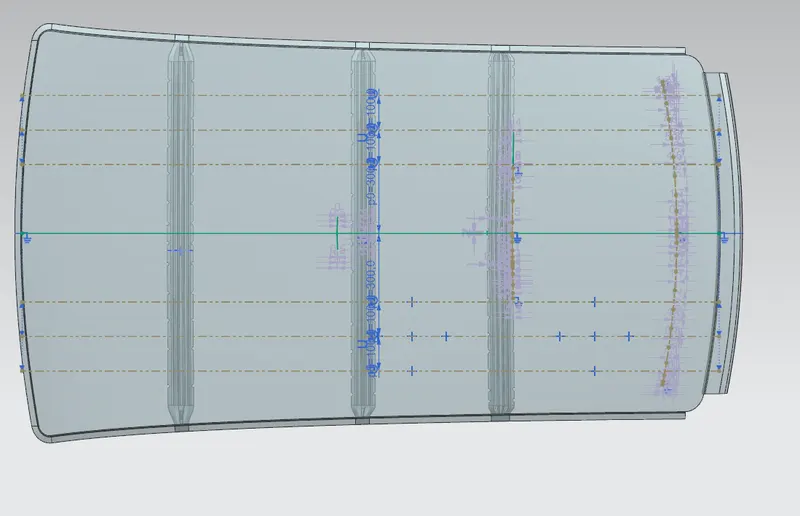
1.Offset the centre 300mm to other any side
2.Offset 300mm line to 100mm and 100mm
3.Intersaction point to be created
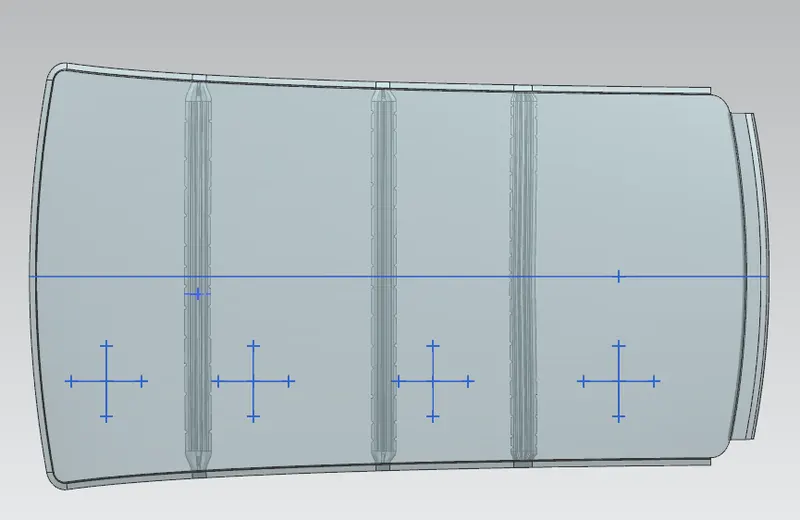
Draw the arc by using 3 point arc and we can get the radius of the arc
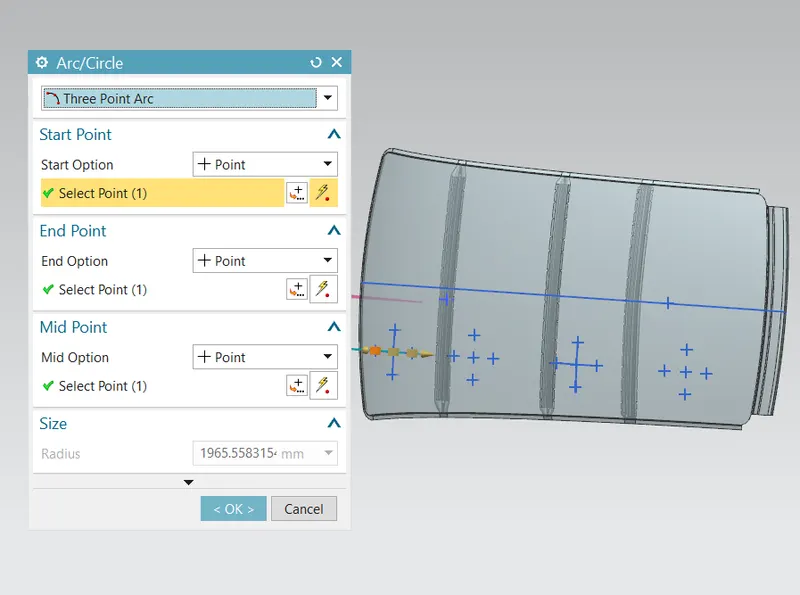
Horizontal line shows the Rx value
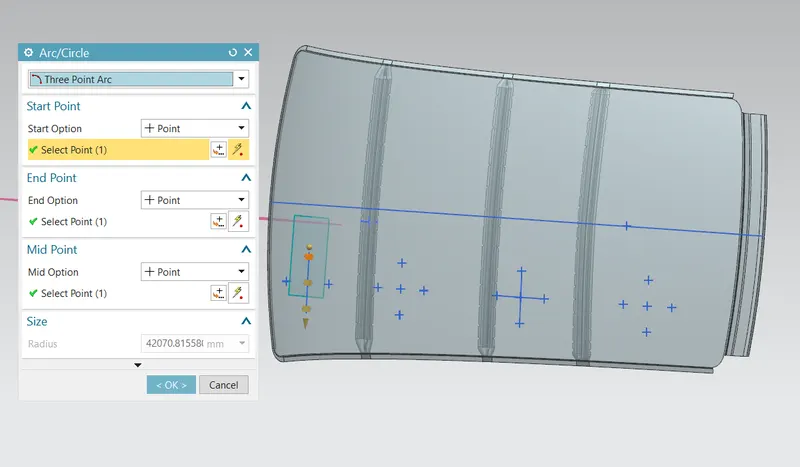
Vertical lines shows Ry value
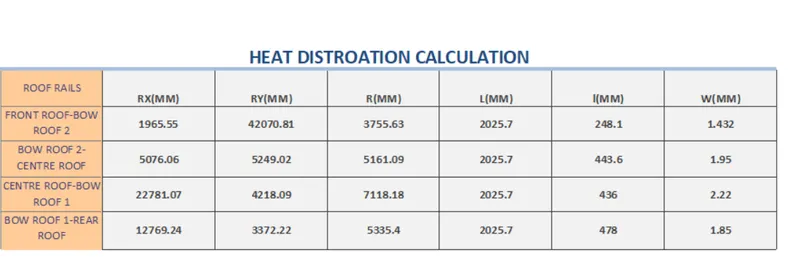
As ber above table values are W>2.7.So that all the bow roof are placed in the correct place.
Snow load
Snow load criteria study is used to check the durability of the roof to withstand the snow fall on the roof and reflex it is original shape without any permanent deformation after load being removed.
Snow load calculation
Qr = [IY x t2] / [α x s x [(RX + RY)/2]2 x 10-8]
Where,
α = My x LX2 x10-12, My = Y(Ly–Y)
Judgement condition = Qr > 3.1
250 < s < 380
t = Roof plate thickness[mm]
LY = Distance between the front and rear roof rails on the vehicle along with 0Y[MM],
Length of roof panel with the center point between roof rails front/ rear as the front and rear reference point.
LX= Distance between the left and right end of the roof on the roof bow[mm],
With of the roof panel exposed on the surface.
Y = Distance between Front roof rails to roof bow [mm],
s = Distance for which roof bow bears divided load [mm],
s = L1/2 + L2/2
Iy = Geometrical moment of inertia of roof bow (Y cross – section) [mm4],
RX = Lateral direction curvature radius of roof panel Y cross section on roof bow [mm4],
Roof panel curvature radius of the length LX in front view.
RY = Longitudinal direction curvature radius of the roof panel X cross section on roof bow[mm4].
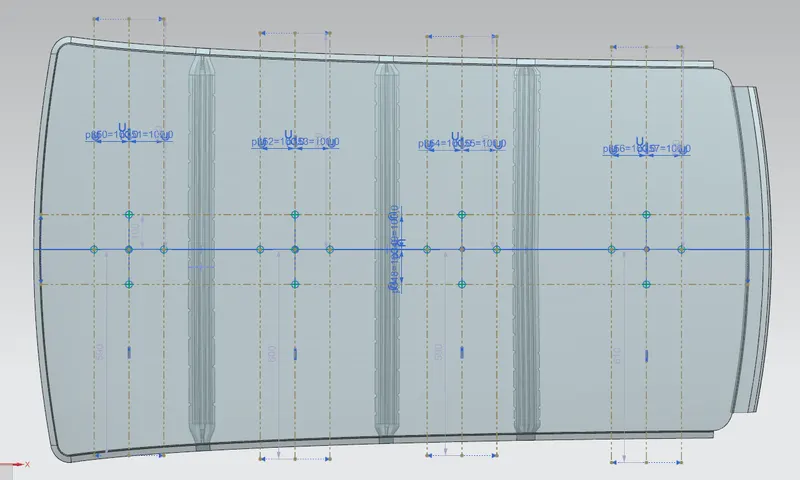
For snow load we to take centre and we have take centre points bwtwen the rails from that point we have to take offset of 100mm on both sides and point the intersaction point.
Same as in vetical lines gives the Ry value and horizontal line gives the Rx value.
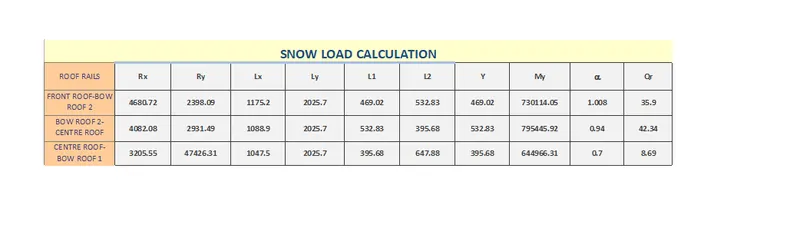
As per the condition Qr>3.1.The values after calculating the values all are above 3.1 so the placed bow roof all are placed in correct place.
Conculsion
All the necessary reinforcement are created and Calculation of Heat Distoration and snow condition are satisfied.