Roof challenge
- Project Intention
- Create the Front Roof Rail, Bow Roof, Center Roof, and Rear Roof Rail for the given Roof Model.
- Design should be compatible with Master Section Drawing.
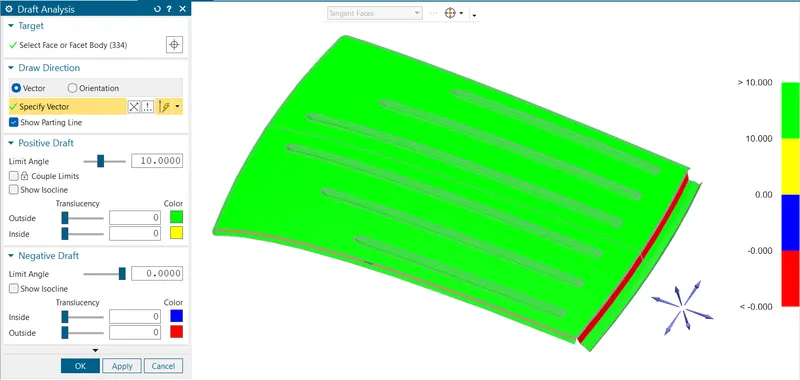
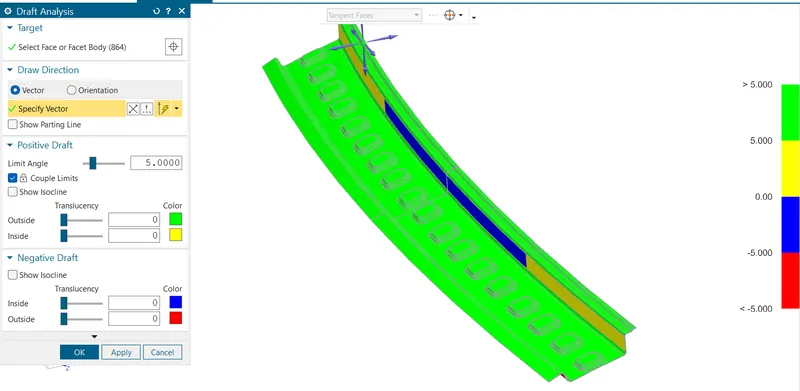
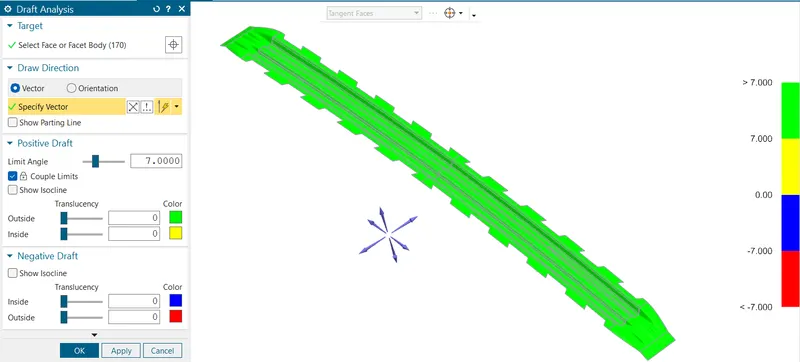
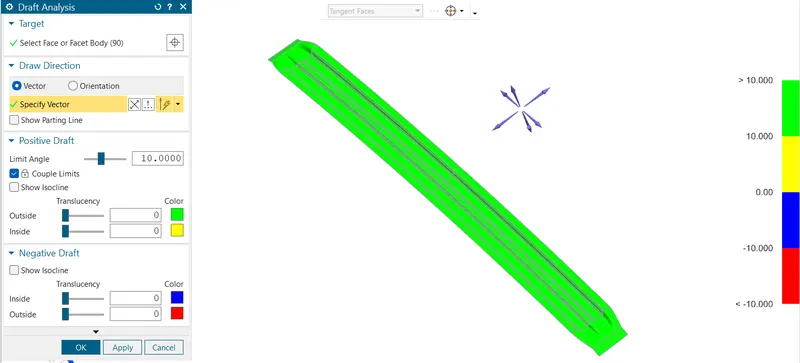
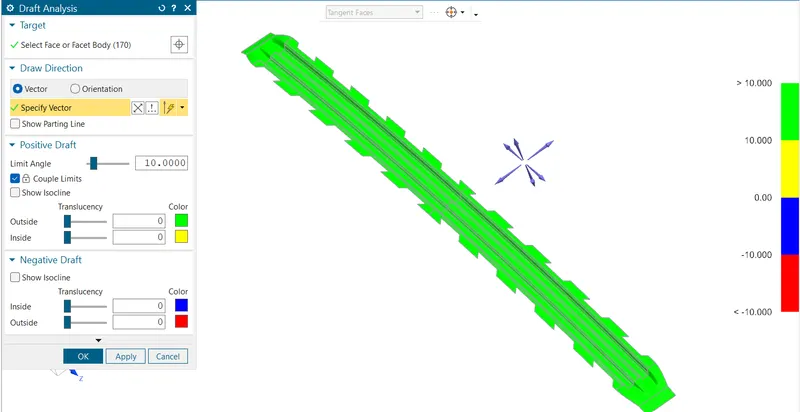
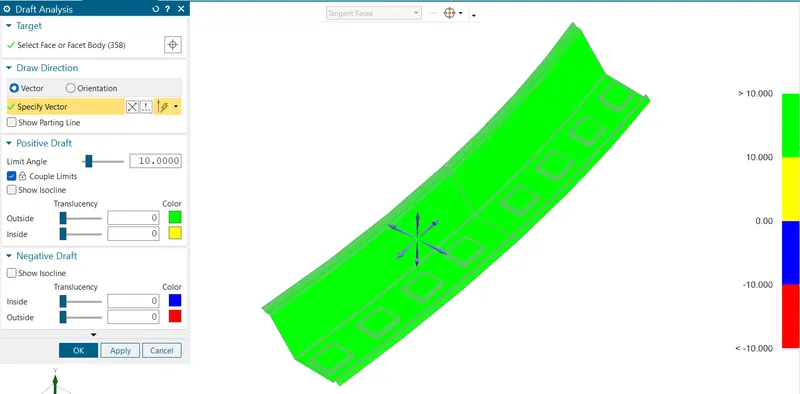
- Follow the design Standard and analysis the Draf angle.
- Analyze Heat Distortion and Snow Load.
- Roof
The roof is the important part which guards the passenger against bad weather. The roof has components they are,
- Roof Outer
- Front Roof Rail
- Bow Roof
- Center Roof
- Rear Roof Rail
1. Roof Outer
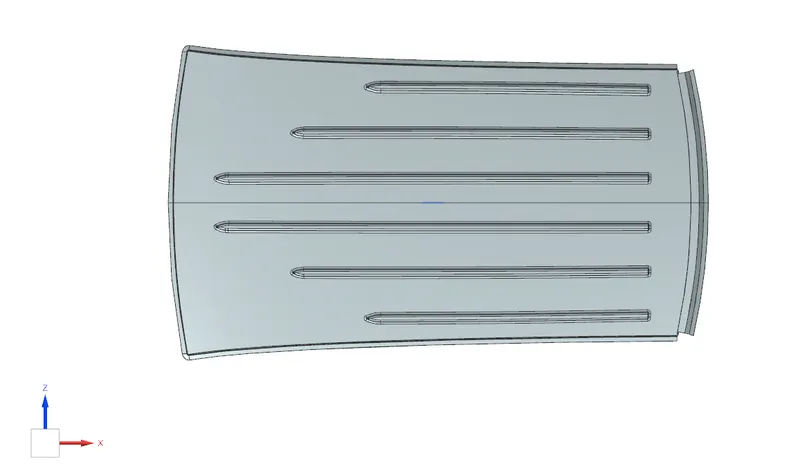
2. Front Roof Rail
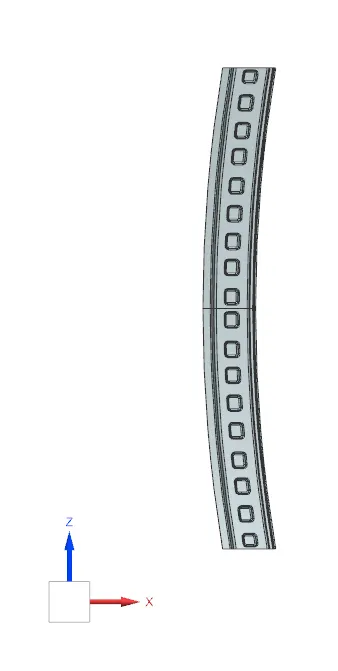
3. Bow roof
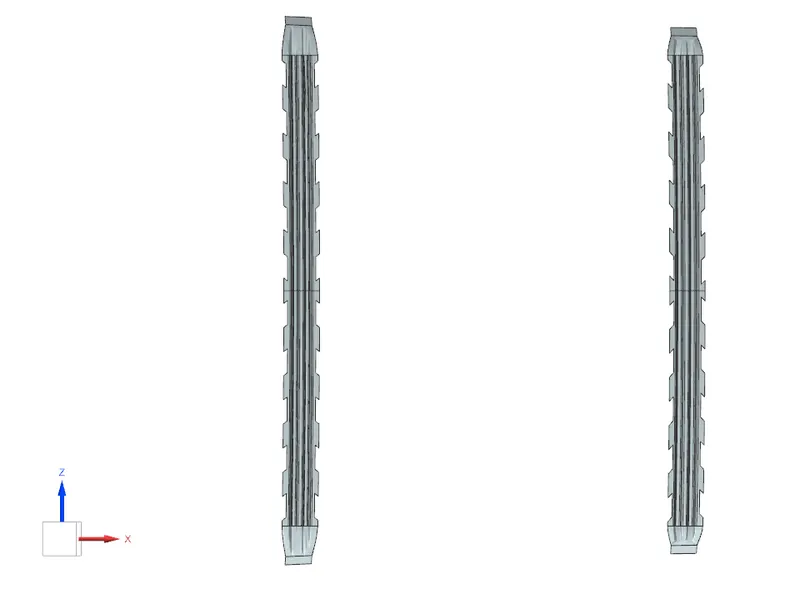
4. Center Roof
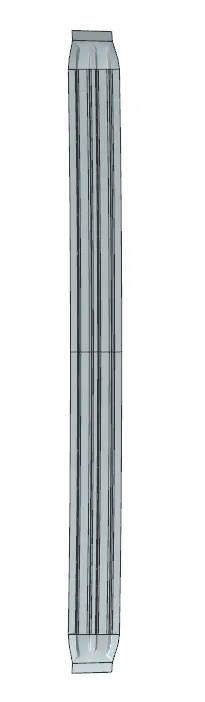
5. Rear Roof Rail
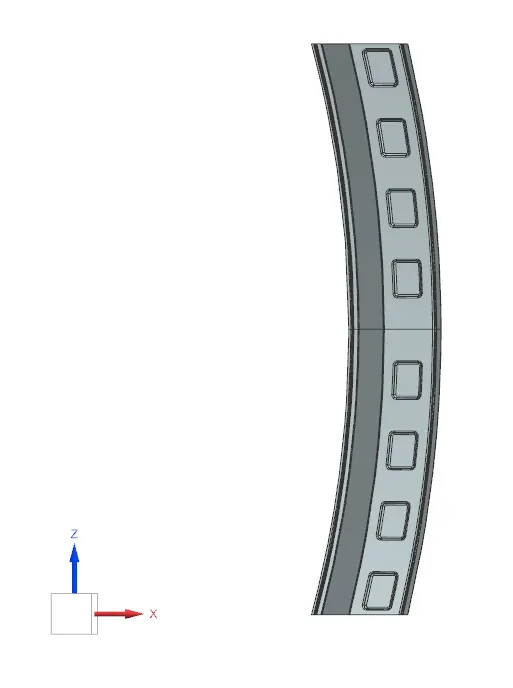
- Designed Roof Images
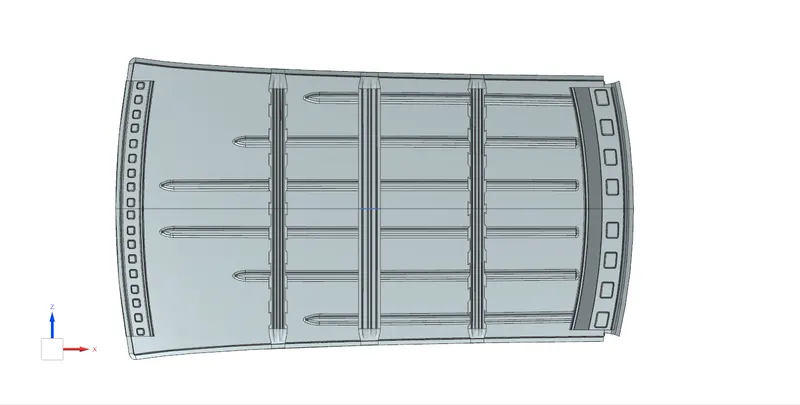
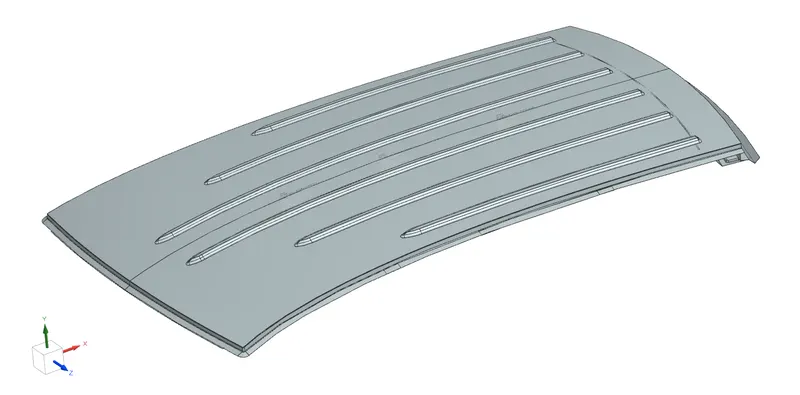
- Draft Analysis
- Heat distortion criteria
The roof temperature will either increase or decrease during the daytime due to weather conditions. Due to the temperature changes, roof material might get deform. Heat Distortion Criteria analysis helps to avoid this problem. This method also helps to improve the Roof Quality and strength.
below is the Formula used to justify the roof's Heat distortion Condition. if the W value is less than 2.5 represent the roof has good heat distortion criteria.
W = [1.73 x 10^(-3) x L] + [1.85 x 10^(-8) x (R^2)/t] + [ 1.10x10^(-3) x l] - 2.68
Where,
L = Roof Length in X-Direction[mm](Roof dimension in 0-Y)
R = Roof curvature
R = 2(Rx*Ry)/(Rx+Ry)
Rx = X curvature
Ry = Y curvature
t = Roof plate thickness [mm]
l = Bow Roof Span [mm]
- Heat distortion criteria Report
|
S.NO |
REGION |
L |
t |
I |
Rx |
Ry |
R |
R2/t |
W |
OK/ NG |
|
1 |
FRR-BR1 |
2028.6mm |
0.75mm |
511.6 |
2983.0mm |
5696.2mm |
3915.5 |
20441520.33 |
1.77 |
OK |
|
2 |
BR1-CR |
2028.6mm |
0.75mm |
290.4 |
6767.8mm |
4829.2mm |
5636.5 |
42360040.20 |
1.93 |
OK |
|
3 |
CR-BR2 |
2028.6mm |
0.75mm |
357.2 |
10301.8mm |
4031.7mm |
5795.3 |
44781318.06 |
2.05 |
OK |
|
4 |
BR2-RRR |
2028.6mm |
0.75mm |
399.1 |
14231.8mm |
3333.7mm |
5402.0 |
38909028.66 |
1.99 |
OK |
The roof overcame the Heat distortion analysis.
- Snow Load Prediction
Snow load Prediction is used to improve rooftop weight loading capacity. When load applies on the rooftop the roof shape will deform if an overloaded dent may happen on the rooftop. Hence the Snow Load Prediction is helping to avoid this problem, This analysis is helping to improve load capacity on rooftops.
below formula is used to calculate the Snow Load Prediction. Qr should be greater than 3.1 (Qr ≥ 3.1)
Qr = [Iy x t2] / [α x s x [(Rx + Ry)/2]2 x 10-8]
Where,
α = My x Lx2 x 10-12 , My = Y(Ly-Y)
t = Roof plate thickness [mm]
Ly = Distance between the front and rear roof Rails on the Vehicle along with 0Y[mm]
Length of Roof panel with the center point between Roof rail Front /Rear as the front and rear reference point.
Lx = Distance between the Left and Right end of the roof on the Roof BOW [mm]
The width of the roof panel is exposed on the surface.
Y = Distance front Front Roof Rail to Roof BOW[mm]
s = Distance for which Roof BOW bears divided load [mm]
s = L1/2 + L2/2
Iy = Geometrical moment of inertia of Roof BOW (Y cross-section )[mm4]
Rx = Lateral direction curvature radius of roof panel Y cross-section on Roof BOW [mm]
Roof panel curvature Radius of the Length Lx in Front view
Ry = Longitudinal Direction curvature radius of the Roof panel X cross-section on Roof BOW [mm]
Roof panel X curvature radius of length s in Side view
- Snow Load Prediction Report
|
S.NO |
REGION |
t |
Lx |
Ly |
L1 |
L2 |
Rx |
Ry |
Y |
S |
Iy |
My |
α |
Qr |
OK/ NG |
|
1 |
FRR-BR1 |
0.75mm |
980mm |
2028.6mm |
515.8525mm |
290.4421mm |
2998.0441mm |
565.8453.mm |
515.8525mm |
403.1473 |
114.4665 |
780354.5797 |
0.7494 |
6.711 |
OK |
|
2 |
BR1-CR |
0.75mm |
980mm |
2028.6mm |
290.4421mm |
357.4046mm |
6740.8437mm |
579.8171.mm |
880.0625mm |
323.9233 |
257.4869 |
1010784.784 |
0.9707 |
4.584 |
OK |
|
3 |
CR-BR2 |
0.75mm |
980mm |
2028.6mm |
357.4046mm |
400.0629mm |
10740.0374mm |
570.5563mm |
1325.5395mm |
378.7337 |
212.4723 |
931934.4636 |
0.8950 |
1.099 |
NG |
Section 3 gets NG. changes should have happened on the Roof.
- Conclusion
The Roof was designed as per the master section Condition
Heat Distortion has been analyzed
Snow Load has been analyzed