Roof challenge
Objective:
To design the roof using class A surface and front roof rail, rear roof rail using, bow roof using master section provided in problem statement. Add necessary reinforcements and validate the design by Heat Distortion Criteria and Snow Loaded Criteria.
Introduction:
The roof of an automobile is the top section that is covered in a sheet metal framework. The primary goal of a roof is to shield the car's occupants from the elements outside, including rain, dust, sun, wind, and other weather conditions.
Roof components include the outer panel, front roof rail, rear roof rail, and other reinforcements. Sun roofs, inside lighting, and other features are occasionally included.
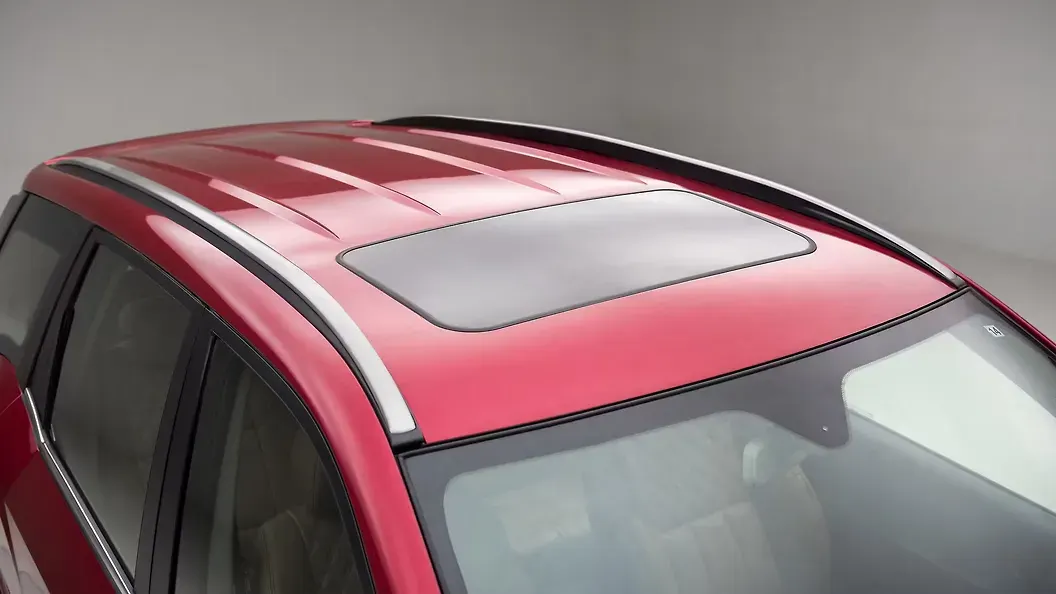
Design Constraints for Roof
Following factors govern the design of the roof.
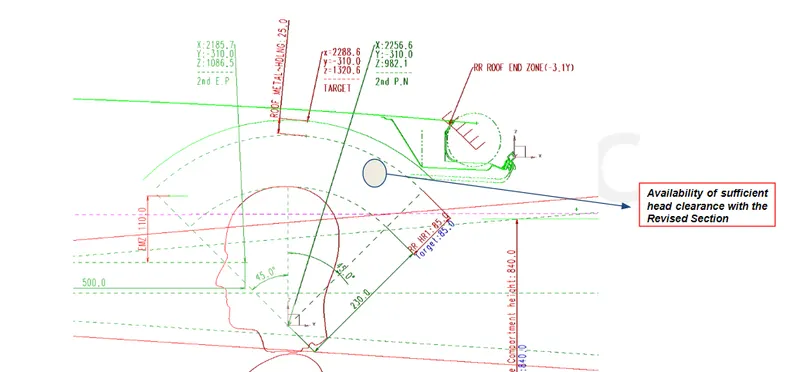
1. Head Clearance
It is mandatory for the roof designer to give enough clearance above the head of the passengers inside the vehicle to prevent head injuries and convenience inside the vehicle.
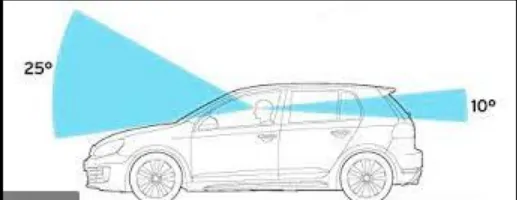
2. Visibility Criteria:
This criteria restricts the roof length in such a way that it should hinder the driver's vision.
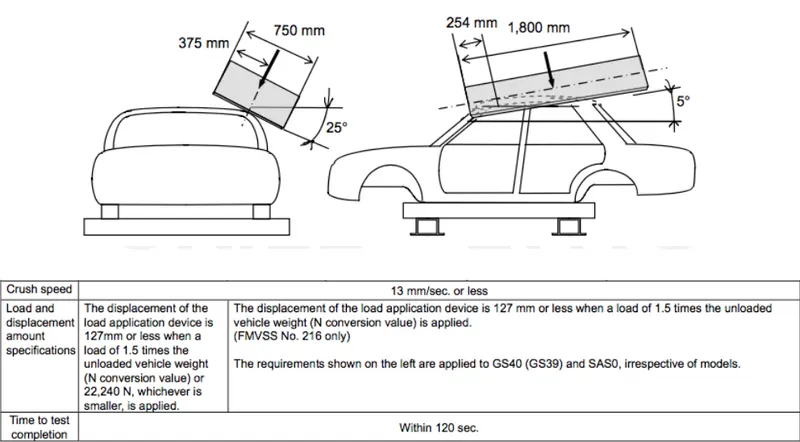
3. Roof Crush Test
This criteria decides whether the roof is able to sustain the impact when the vehicle rolls over in an accident. The load shown at angle basically shows how impact by road will affect the roof.
4. Draft Analysis Criteria
The roof and its reinforcements are basically produced by stamping and deep drawing process in which atleast 7 degree draft is necessary. Otherwise the manufacturing of the parts is difficult, time consuming and uneconomical. Embosses, ditch area require minimum 7 degree draft clearance for easy manufacturing of the parts.
5. Heat Distortion and Snow Load Test
Heat Distrortion Criteria
We first draw a line which is at 300 mm in negative y direction and then draw two parallel lines at 100 mm each above and below to the previous line at 3Y as shown in following figure. We find a centre line between the extreme points of roof rails and bow roofs. And then draw two parallel lines at 100mm left and right to the centre line. This helps in determing the Rx and Ry.
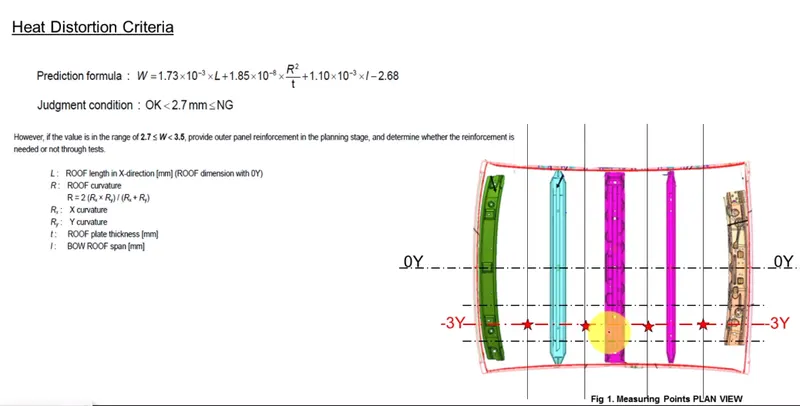
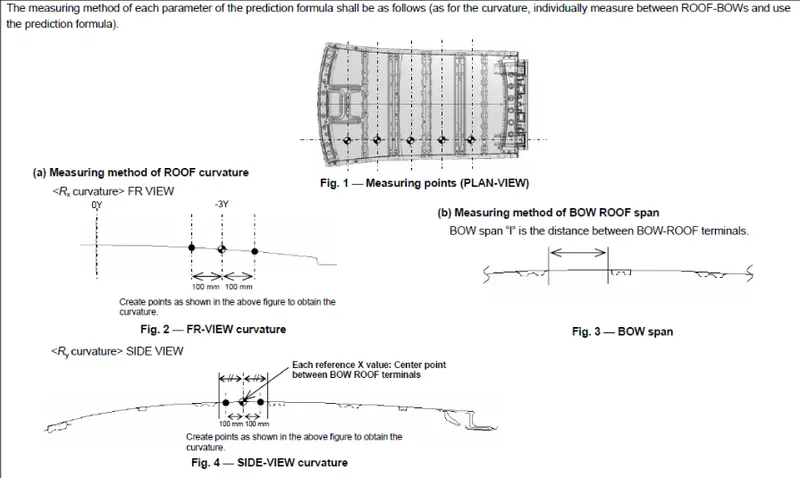
As per above guidelines, Rx, Ry, l, L, W and t are calculated. Following figure shows the sketch drawn to locate points for calculating Rx, Ry and Bow span.
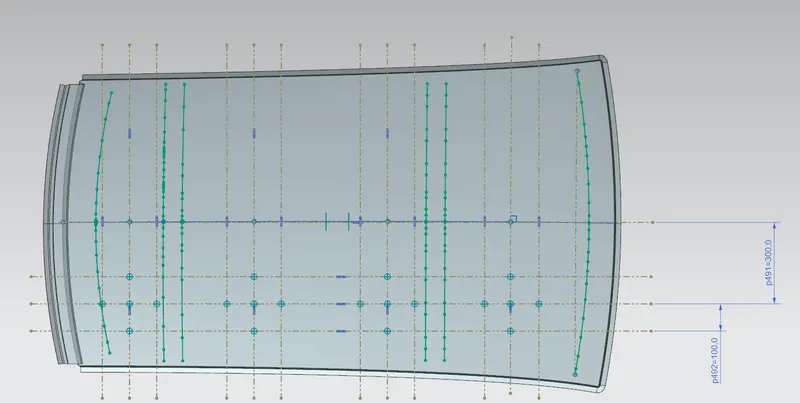
Calculations for positions of BOW roofs and CTR are tabulated below

According to the problem statement in the challenge, if the W value is less than 2.7, then the positions pf bow roof rails and CTR, RR and FR are okay as per Heat Distortion Criteria.
Snow Loaded Criteria
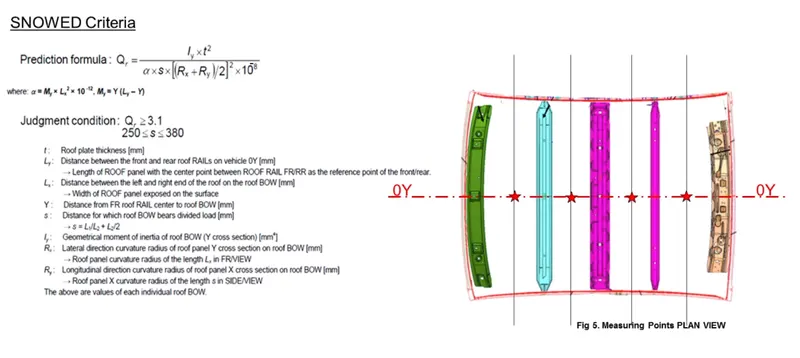
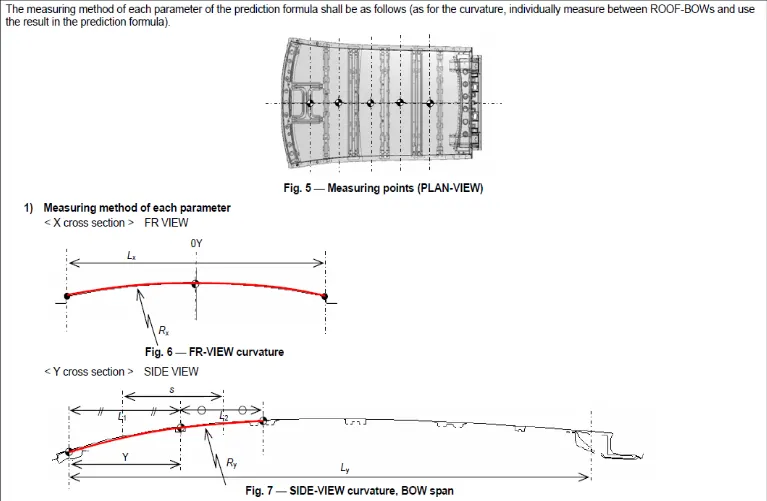
Following sketch has been made to determine Rx and Ry for calculating respective parmeters.
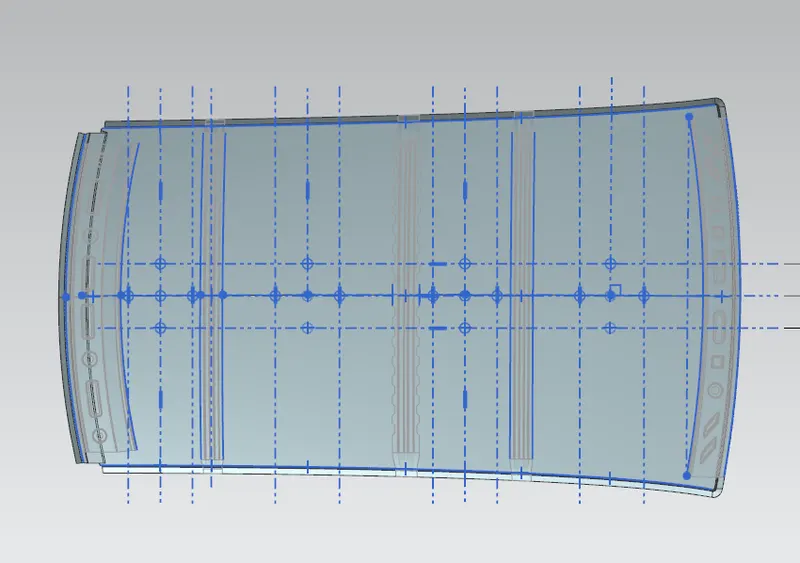
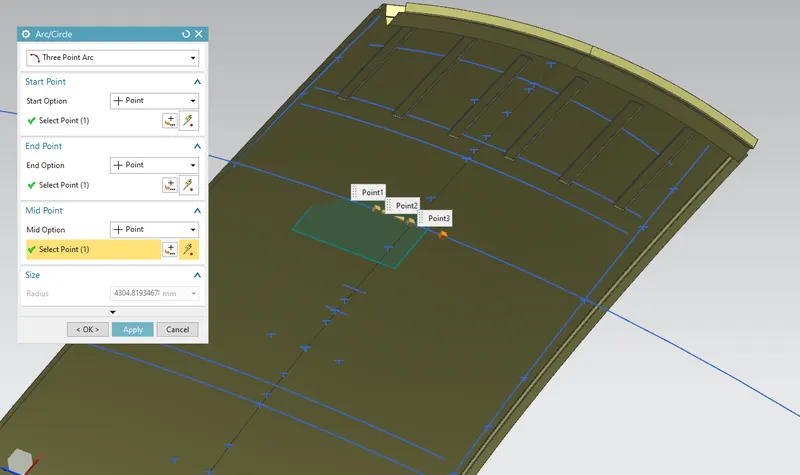
Like above illustrated figure, Rx and Ry are calculated.
Calculations for Snow Loaded criteria are tabulated below:

Snow Loaded condition doesn't pass the judgement criteria on 2nd Bow Roof.
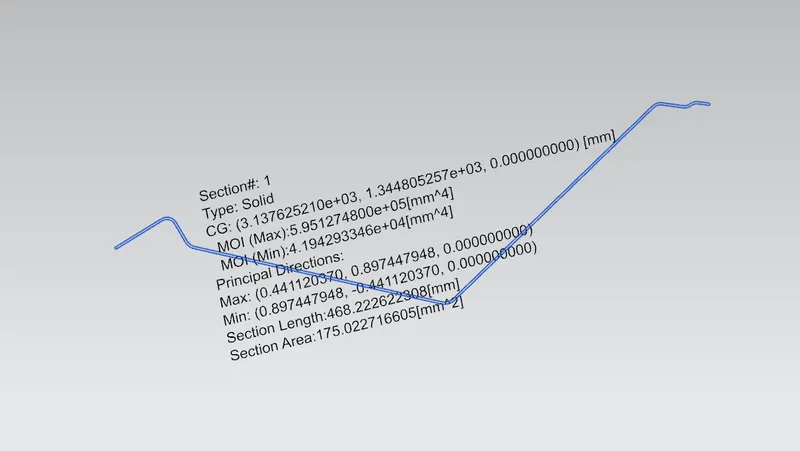
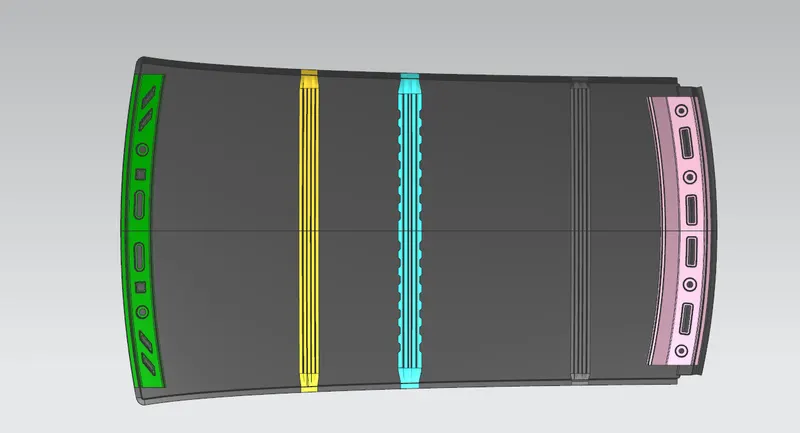
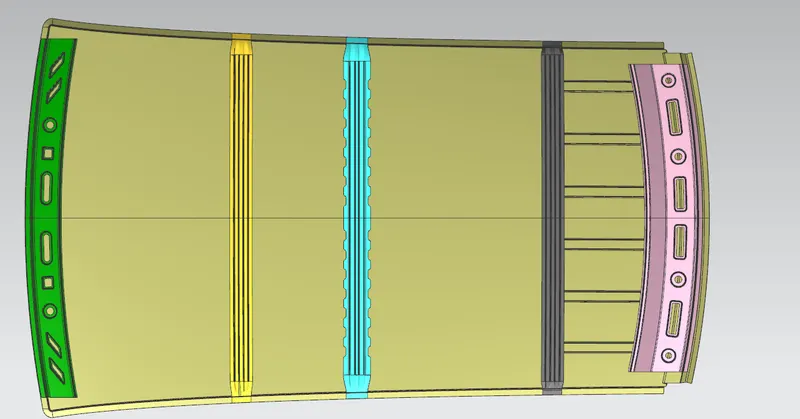
Model Views and Section Modulus
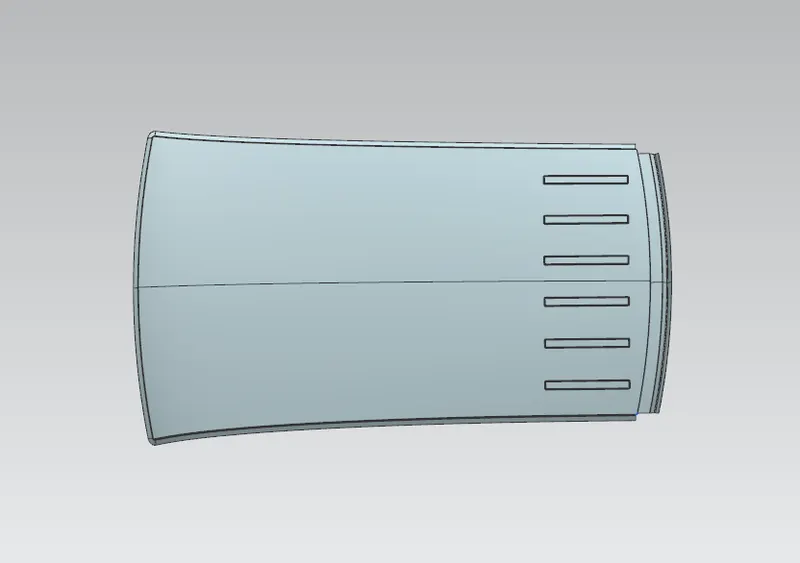
Roof Outer Panel
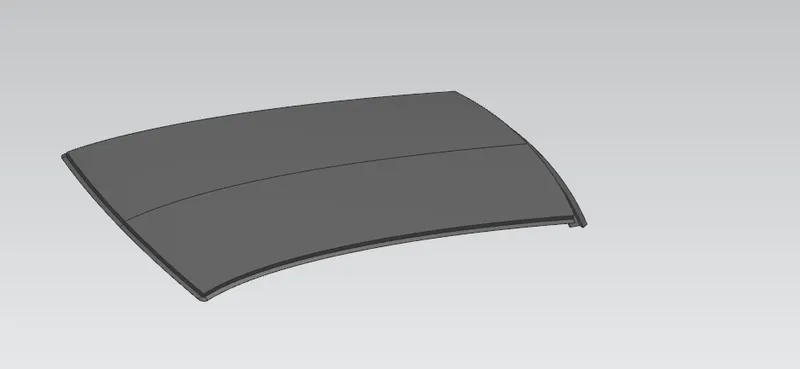
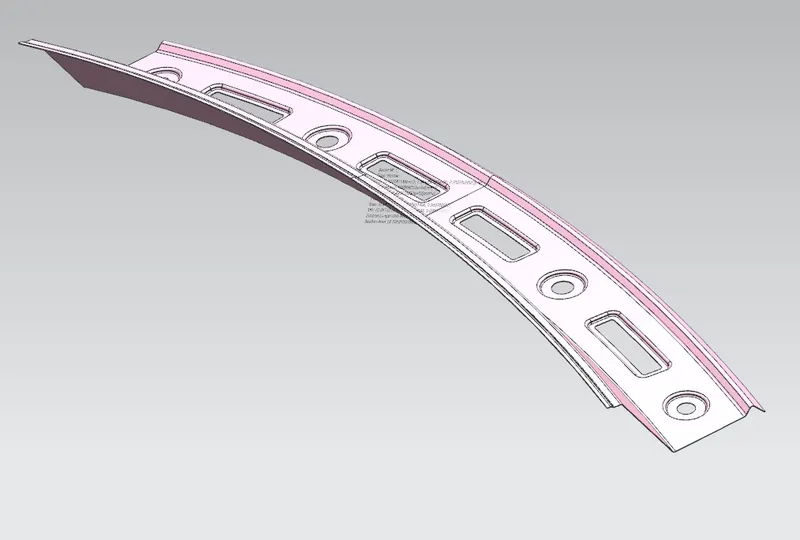
FR Rail
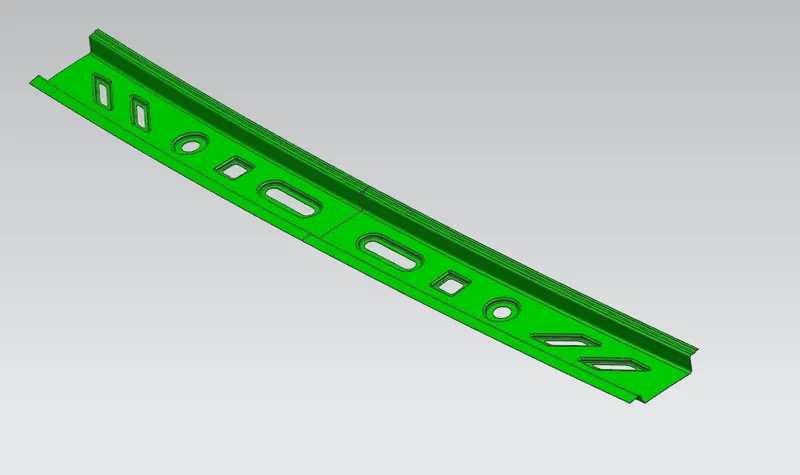
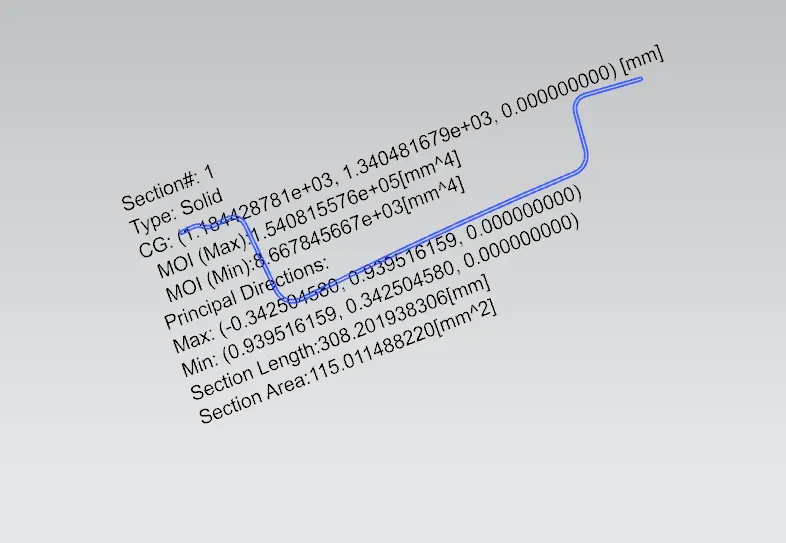
Bow Roof 1
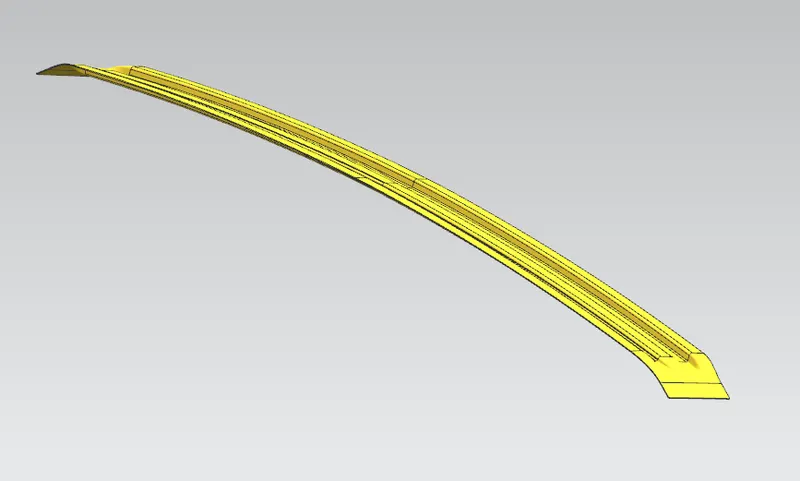
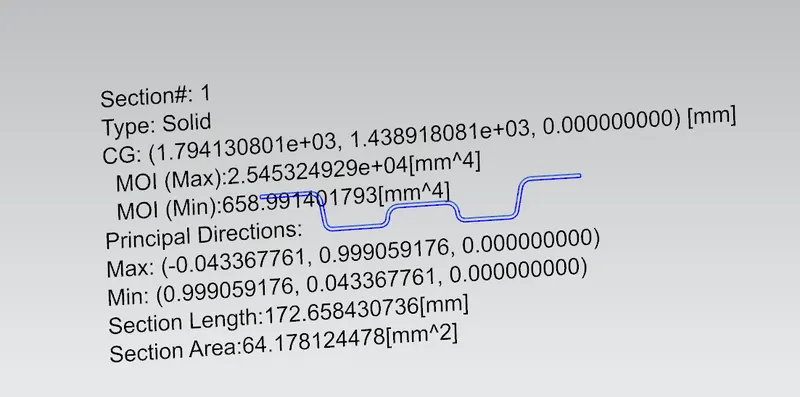
CTR
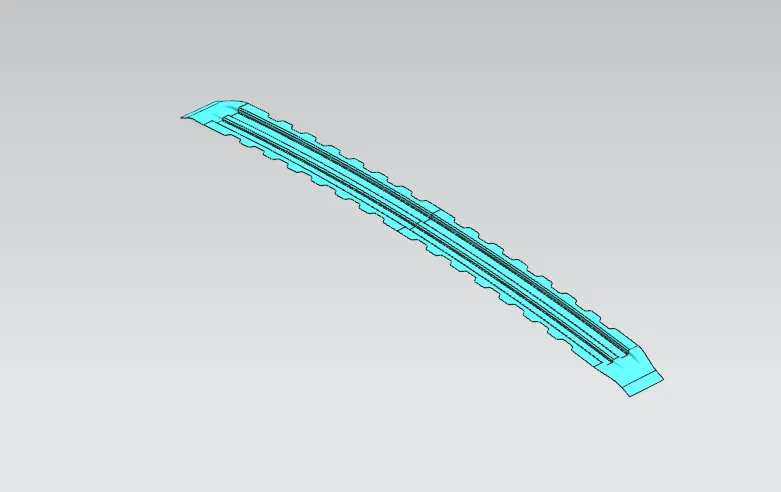
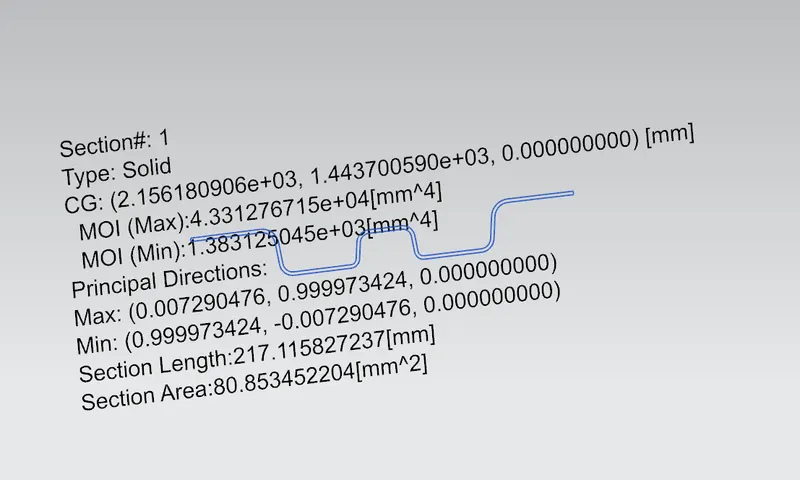
Bow Roof 2
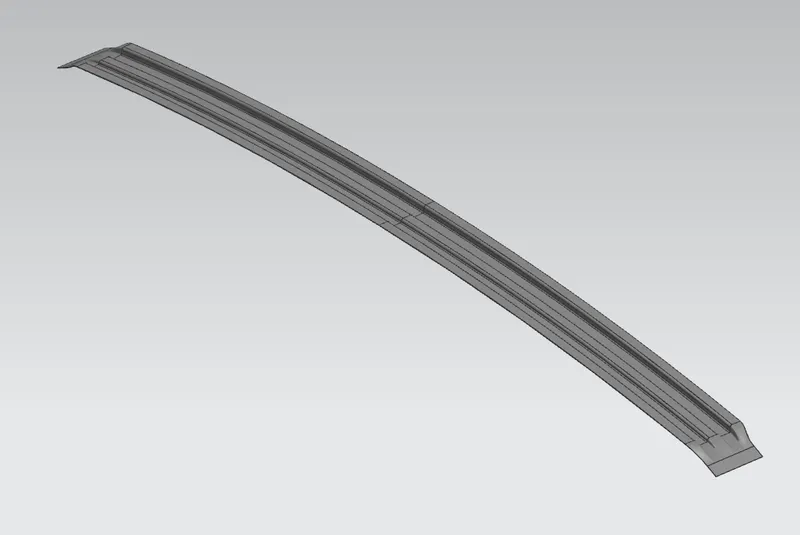
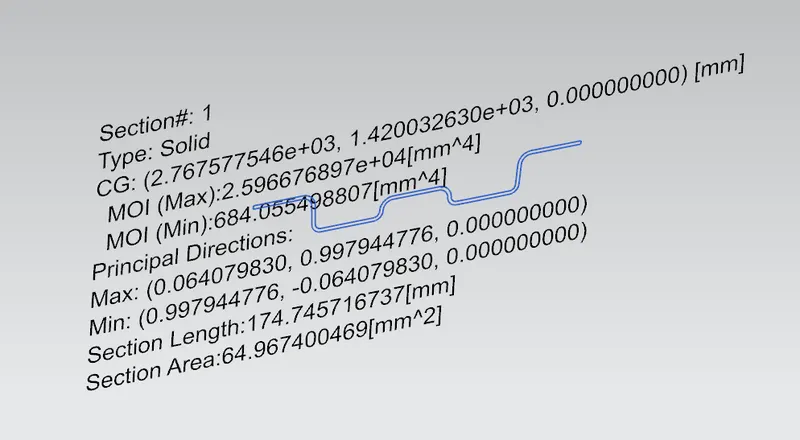
RR Rail
Conclusion:
The roof design only passes the Heat Distortion Criteria for all the sections. According to Snow Loaded criteria, 2 out of 3 sections pass the design calculation. Fo the section where, snow loaded criteria fails, embossing is done on outer panel to compensate the design lag.