Roof challenge
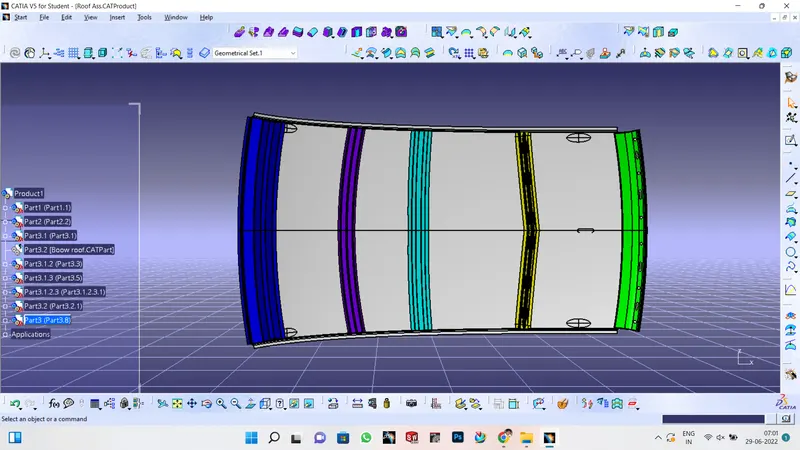
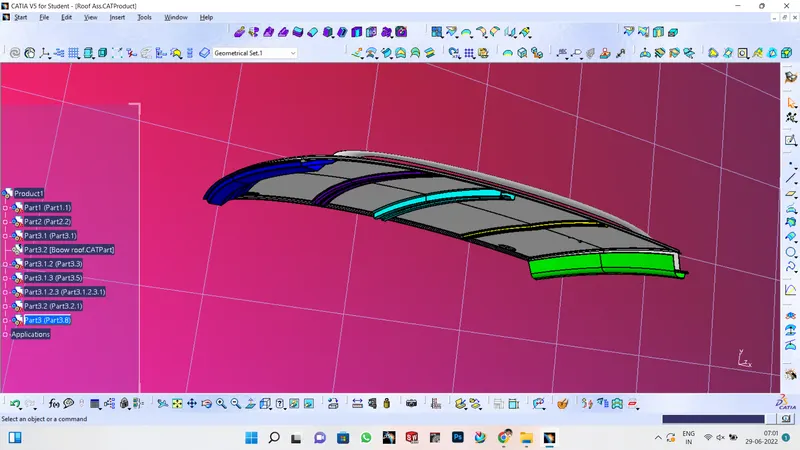
DESIGN OF ROOF
AIM:
To design the Roof creating its essential flanges and reinforcements using the roof styling given as the input.
INTRODUCTION:
An automobile roof or car top is the portion of an automobile that sits above the passenger compartment protecting the vehicle occupants from sun, wind, rain, and other external elements.
1. Hardtops
When we talk about hardtops, we are referring to the common rigid forms of automobile roofs which we see around. In modern-day cars, this type of roof is made from metal or plastic.
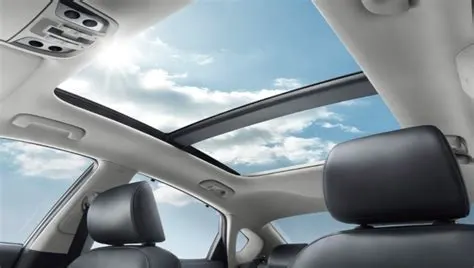
2. Sunroof:
This type of roof is also quite popular. You might have been seeing it around. A sunroof is an operable type of roof that allows for an opening in the roof of an automobile; say a window in a roof. It can allow either light or air or both to enter the vehicle. They are either operated manually or automatically.
3. Convertibles:
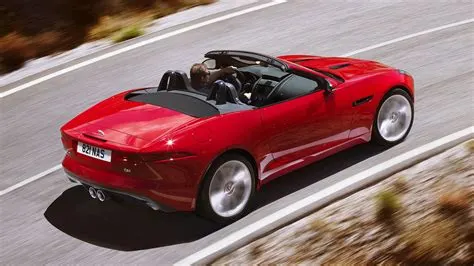
Oyaaaaa, everyone wants to talk about convertibles. Anyways, convertibles are passenger cars that can be driven with or without the entire roof in place. They were first introduced as open-air vehicles; no roofs, no sides.
But by the end of the 19th century and the early 20th century, car engineers built more powerful engines that could power a folding roof. These were the forerunners of the convertibles that we have today.
Under the styling surface of the roof. Other structures contribute to its strength and stability. They are mainly installed on the flatter surface of the roof. The other structures that lie inside the roof are:
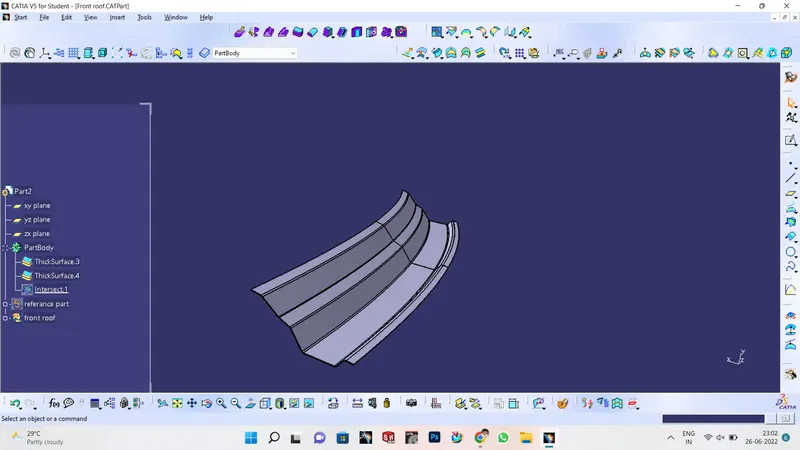
- Front roof rail: Front roof rail is used to provide strength to the roof panel and it also acts as a link between windshield glass, roof panel, and headliner. Headroom clearance and visibility criteria should be considered the important factor while designing the front roof rail.
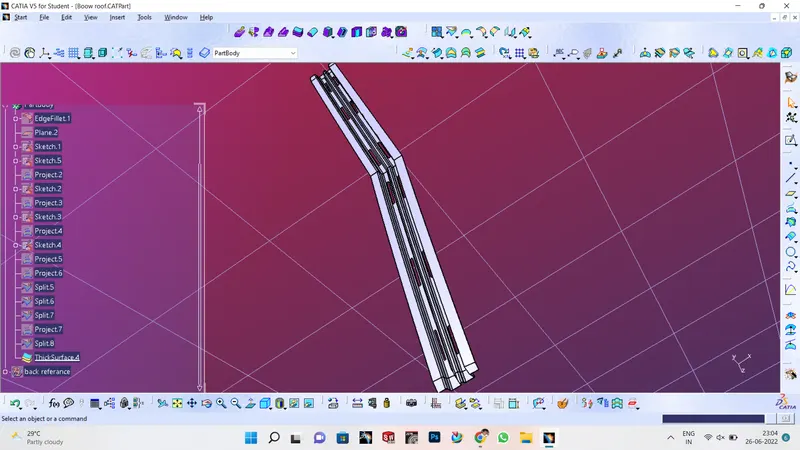
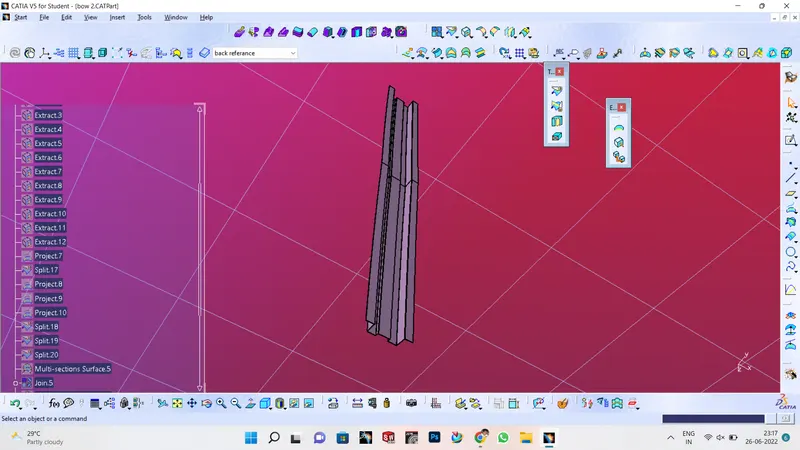
- Bow roof - Bow roofs are again the roofs that will provide support to the roof panel by increasing its strength The position of the bow roofs is the very factor that needs to be considered. The bow roofs should be straight.
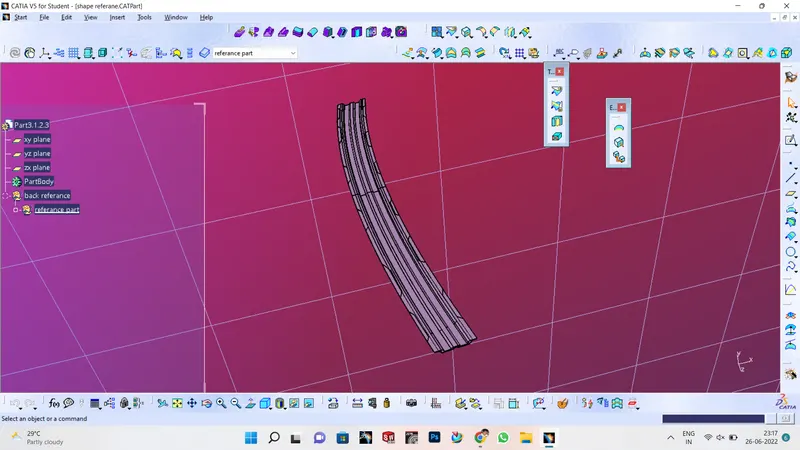
- Center roof rail - This is a roof rail that will at the center of the roof to provide strength and stability to the root.The center roof rail will be a straight roof rail.
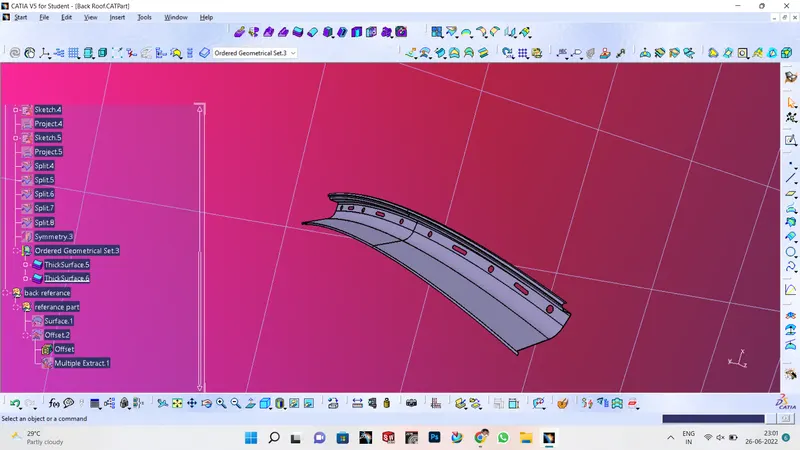
- Rear roof rail - Rear roof rail is again used to strengthen the roof and this acts as a link between the roof panel and the backglass which is connected to the backdoor of the car.
Rear roof rail:
Front roof rail:
Bow roof:
Center roof rail:
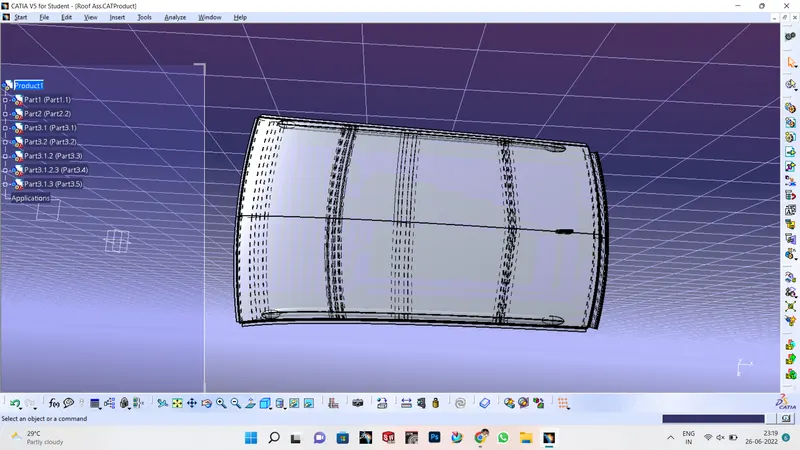
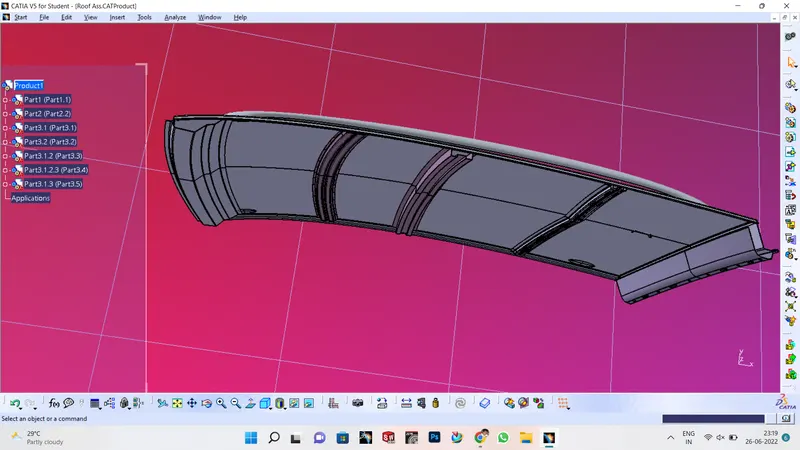
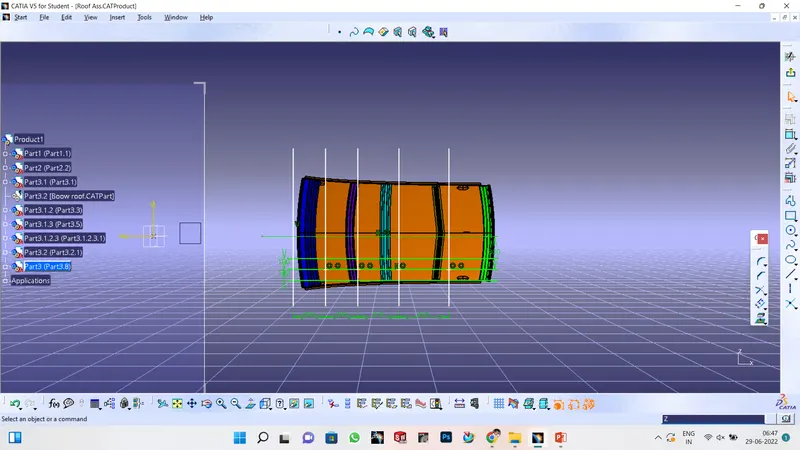
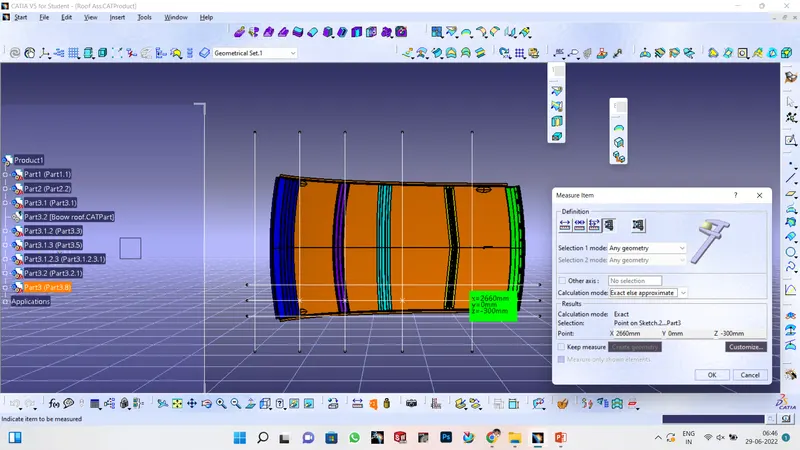
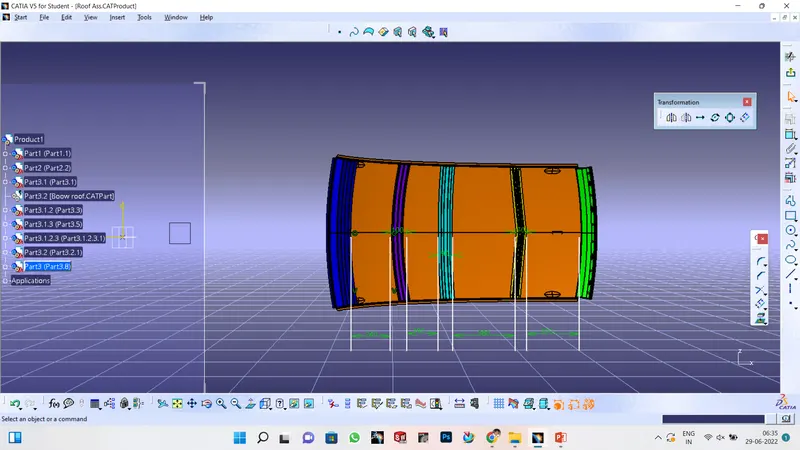
ASSEMBLY OF ROOF:
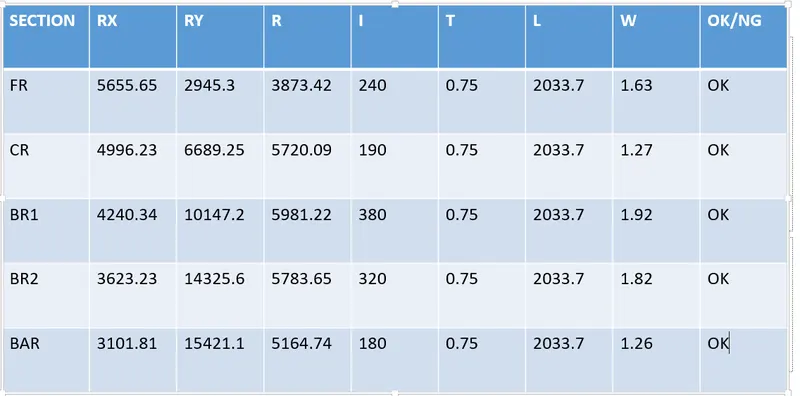
Bow–Roof Prediction Formula
W = [1.73 x 10^(-3) x L] + [1.85 x 10^(-8) x (R^2)/t] + [ 1.10x10^(-3) x l] - 2.68
Where,
L = Roof Length in X-Direction[mm](Roof dimension in 0-Y)
R = Roof curvature
R = 2(Rx*Ry)/(Rx+Ry)
Rx = X curvature
Ry = Y curvature
t = Roof plate thickness [mm]
l = Bow Roof Span [mm]
Judgment Condition
OK< 2.7
ROOF ANALYSIS:
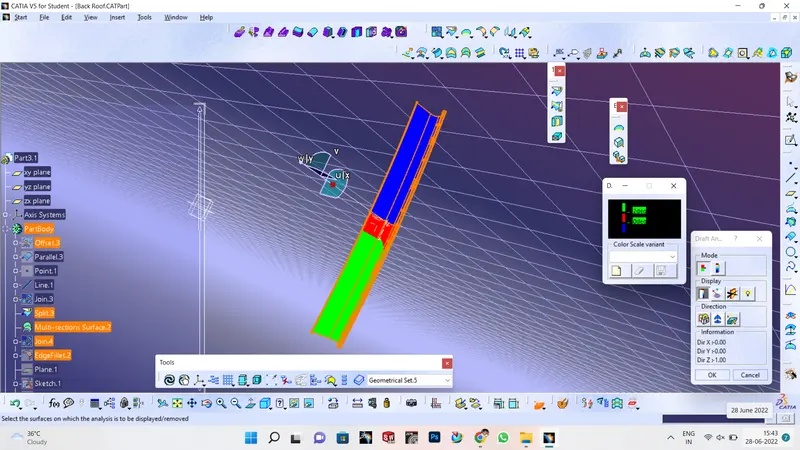
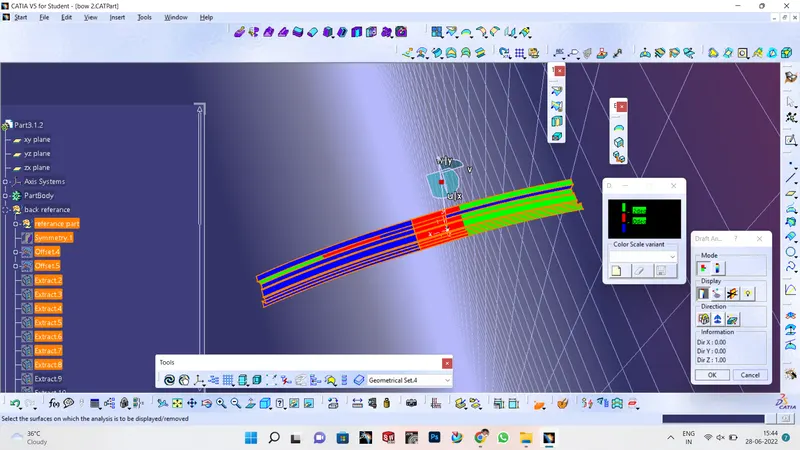
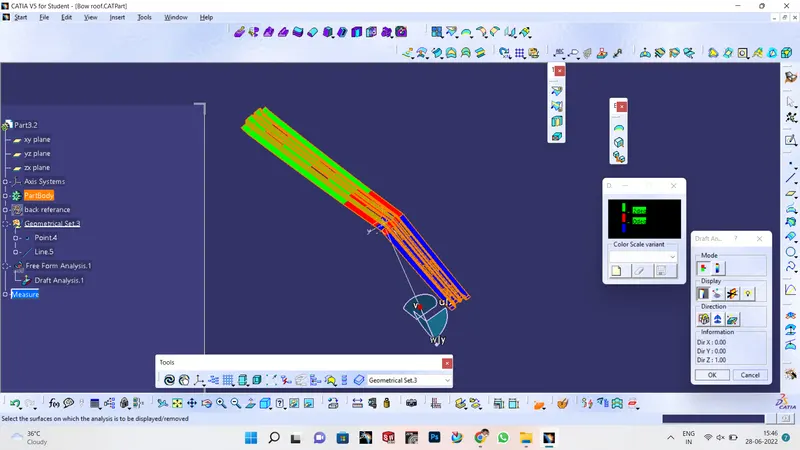
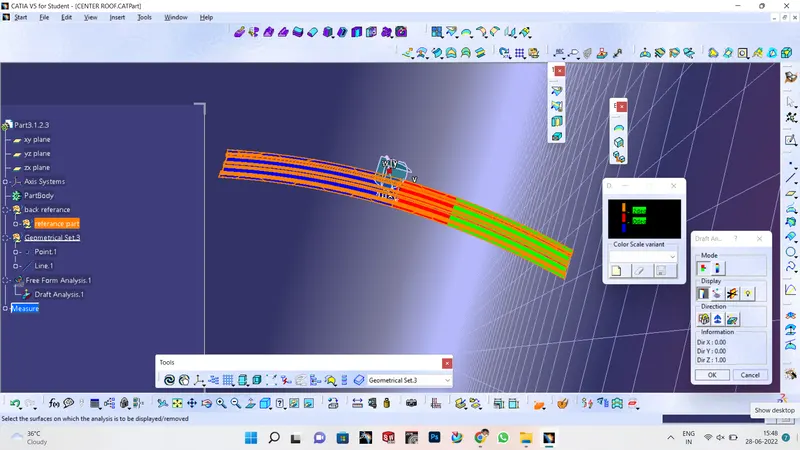
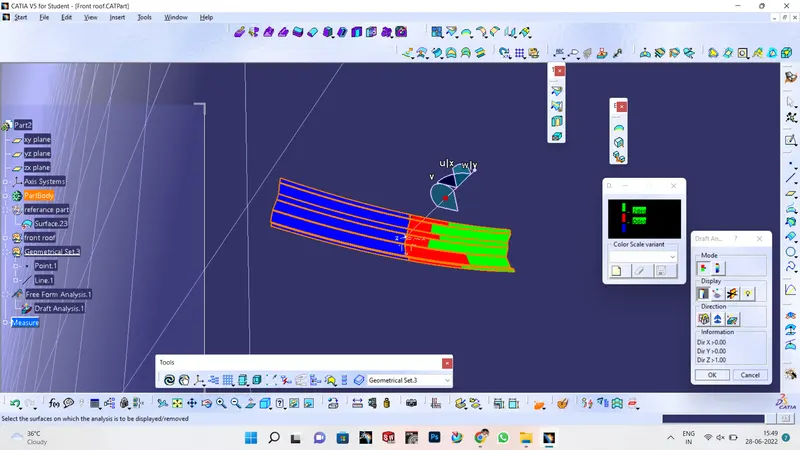
FOR ROOF DESIGN THE GIVEN SECTION MODULUS FORMULA IS:
S = I/y
Where,
S = Section Modulus
I = Moment of Inertia
y = distance between the neutral axis and the extreme end of the object
BACK ROOF:
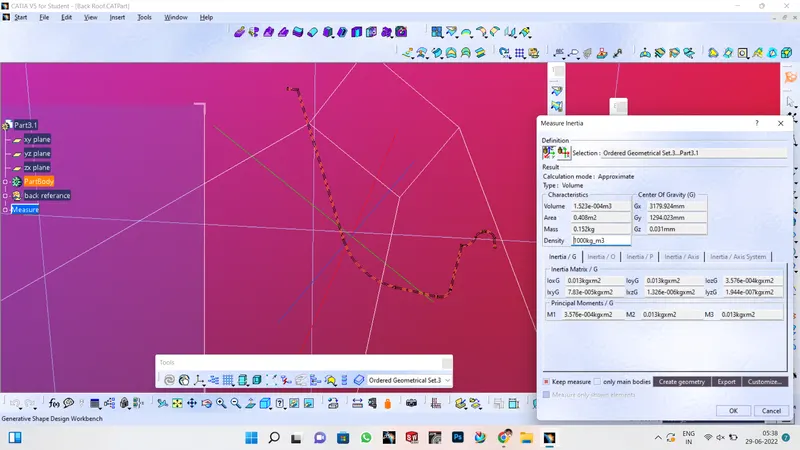
Smax=Imax/Y
= 3.576/60
=0.00596e^-004
FRONT ROOF:
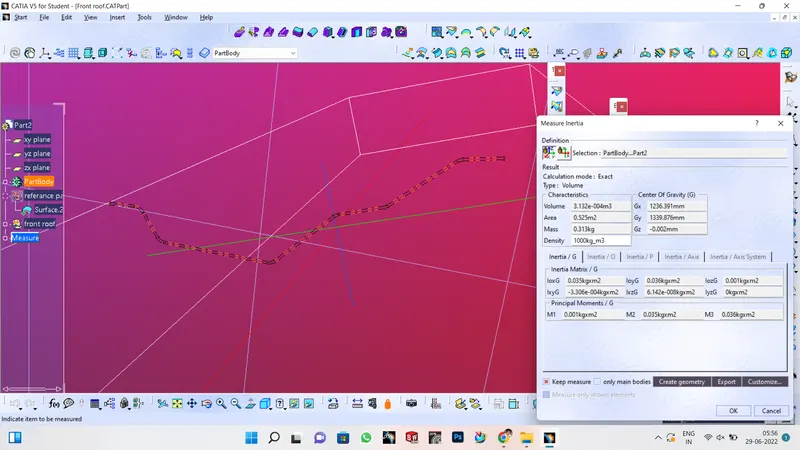
Smax=Imax/Y
= 0.001/97
=1.0309e^-5
BOW ROOF:
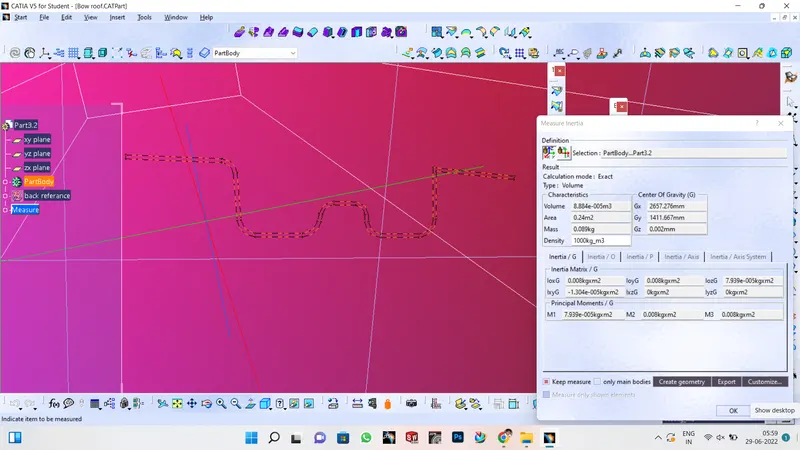
Smax=Imax/Y
=7.939/80
=0.19847e^-5
BOW ROOF 2:
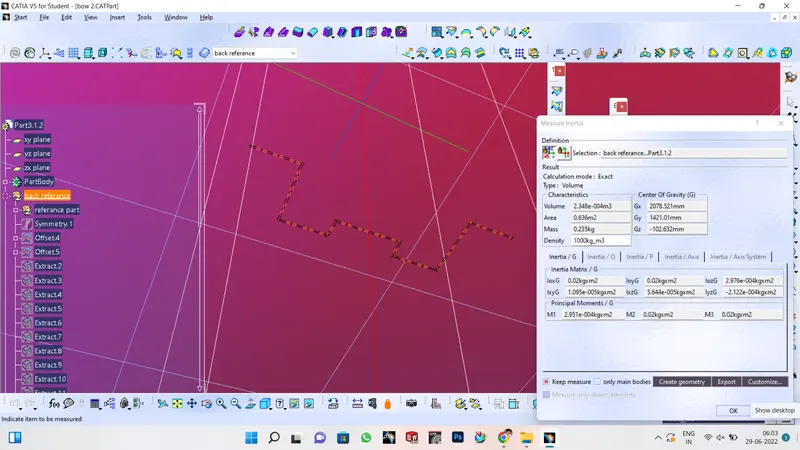
Smax=Imax/Y
=2.951/55
=0.053e^-4
CENTER ROOF:
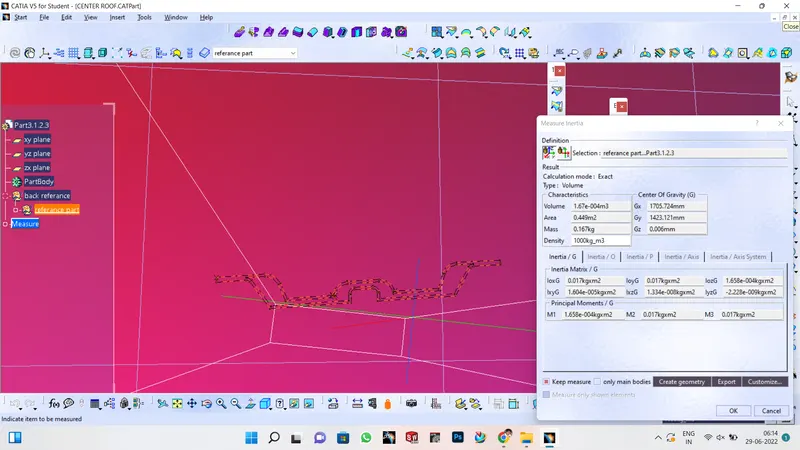
Smax=Imax/Y
=0.658/45
=0.036e^-4
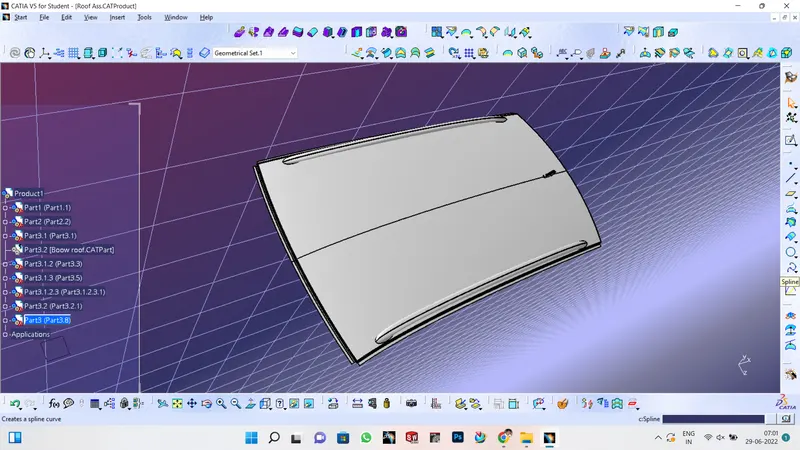
CONCLUSION:
This Concludes the design and Analysis of the Roof using the styling surface given as the input.