Roof challenge
OBJECTIVE:-For the Given Roof styling, Develop the essential flanges and reinforcements, Provide appropriate dimensions and check for Draft analysis, and submit your Section Inertia report on the 0-Y section.Do a curvature study on the roof and perform calculations to determine the position of the Bow-roof.
CAR ROOF
An automobile roof or car top is the portion of an automobile that sits above the passenger compartment, protecting the vehicle occupants from sun, wind, rain, and other external elements. Because the earliest automobiles were designed in an era of horse-drawn carriages, early automobile roofs used similar materials and design variations.In the past roof was introduced as cover for passenger compartment but later on, it also used as a luggage carrier, sunroof and in recent past years with the introduction of the solar panelled electric vehicle got a major boost in the automotive industry.
Roof has the following functions:
- protects from external damage
- prevents passenger and vehicle from accidents
- luggage carrier
- design of the roof also affects in giving aerodynamic shape to vehicle
- sunroof
- solar panelled roof in EV
Since the roof has numerous functions so the roof has to be stronger enough to withstand the damage experienced by it. To have good strength and stiffness, the roof is made with different components such as front roof rail, rear roof rail, bow roofs, etc.
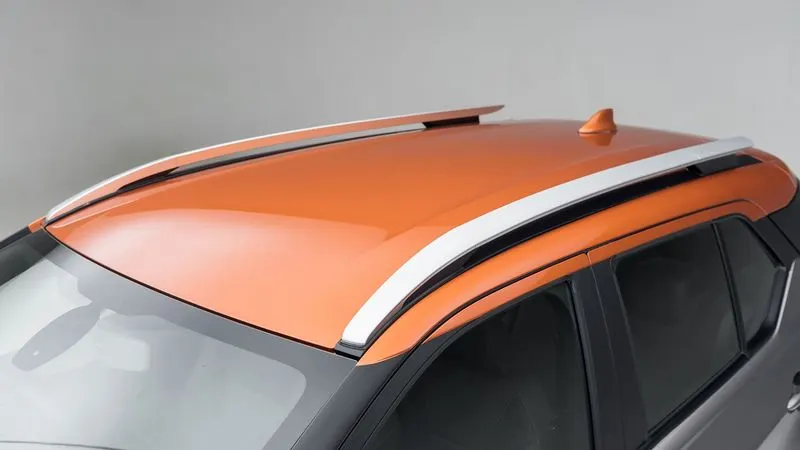
VARIATIONS :-
- Convertible roofs
- Hardtops
- Sunroofs
- T tops
- Targa tops
- Vinyl roofs.
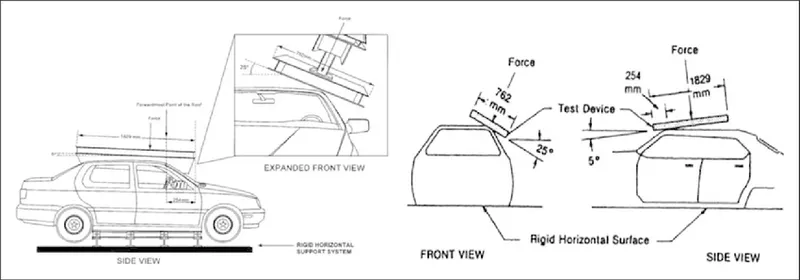
ROOF CRUSH RULE IN VEHICLE ROLLOVER STANDARDS
With all of the standards and regulations required for vehicles today, it comes as a surprise to many when they discover that the government has no performance standard for roofs when it comes to vehicle rollovers. Instead of requiring rollover testing on vehicles before they go to market, the government requires a stationary roof crush rule to test a vehicle roof’s integrity. Determining the structural integrity of a vehicle’s roof is critical, as a crushed roof can injure and kill passengers no matter how well they are restrained. At Mitch Grissim & Associates in Nashville, our team is here to zealously advocate for you after a vehicle rollover accident. Call or contact us today to schedule a free consultation to learn more about your legal options after a crash
OLD ROOF CRUSH RULE
The old roof crush rule was first enacted in 1973, which required automakers to submit a sample of every vehicle model’s roof to a stationary roof crush test before it was sold. During this test, a weight would be pressed against one edge of the roof, and it was required to withstand at minimum 1.5 times the weight of the vehicle. It had to do so up to 5,000 pounds without crushing more than five inches.
NEW ROOF CRUSH STANDARDS
New roof crush standards were implemented in 2009. Now, vehicles that weigh 6,000 pounds or less must be able to withstand three times the vehicle’s weight applied alternatively to the left and right sides of the roof. The roof is not allowed to crush so far that it would touch the head of a median-height male test crash dummy. For vehicles that weigh between 6,000 and 10,000 pounds, their roofs must be able to withstand 1.5 times their vehicle weight on the roof without crushing.
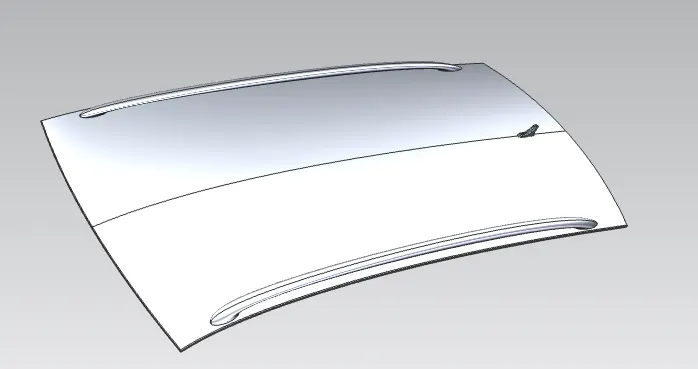
GIVEN DATA
A class surface along with railing rack
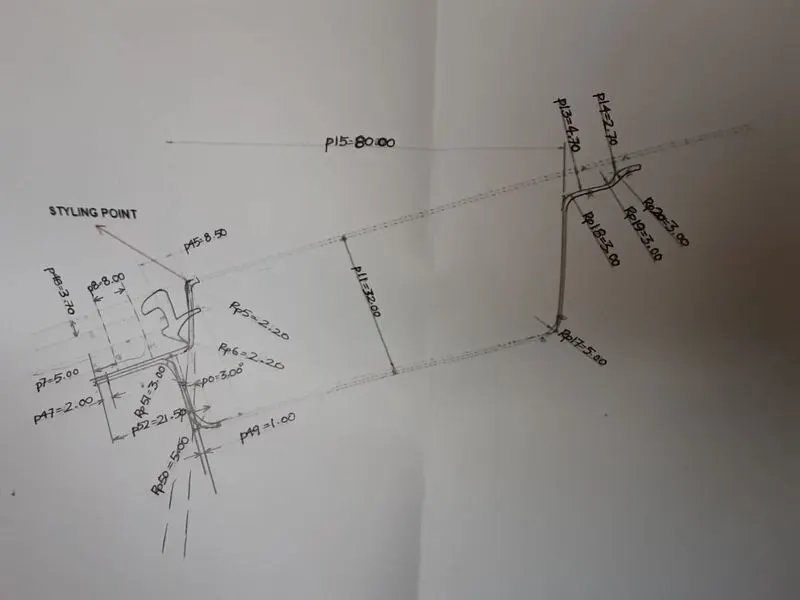
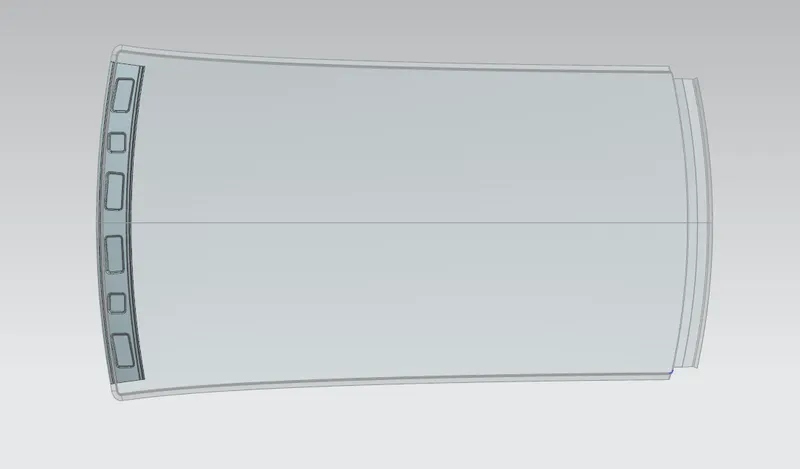
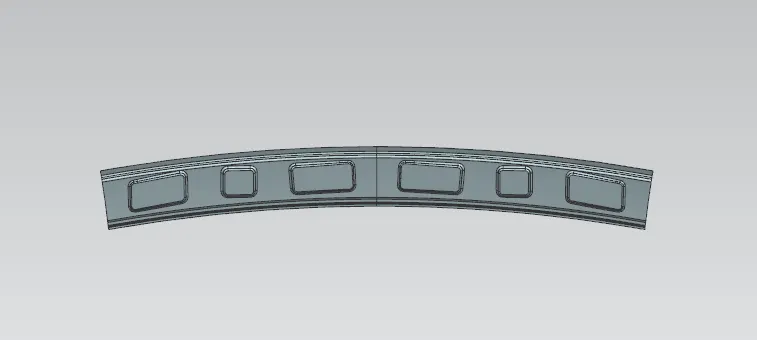
FRONT ROOF RAIL
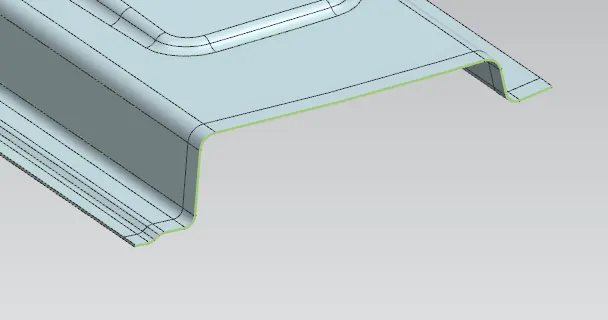
Front roof rail designed by using given master section
section view:-
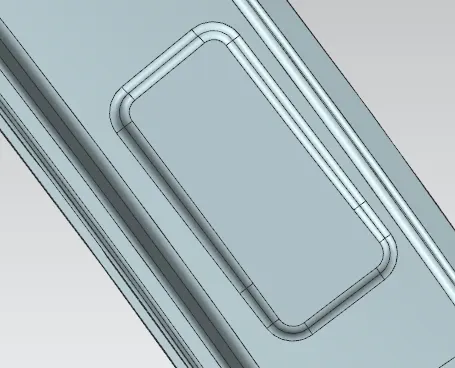
emboss:- to stengthen the part
REAR ROOF RAIL
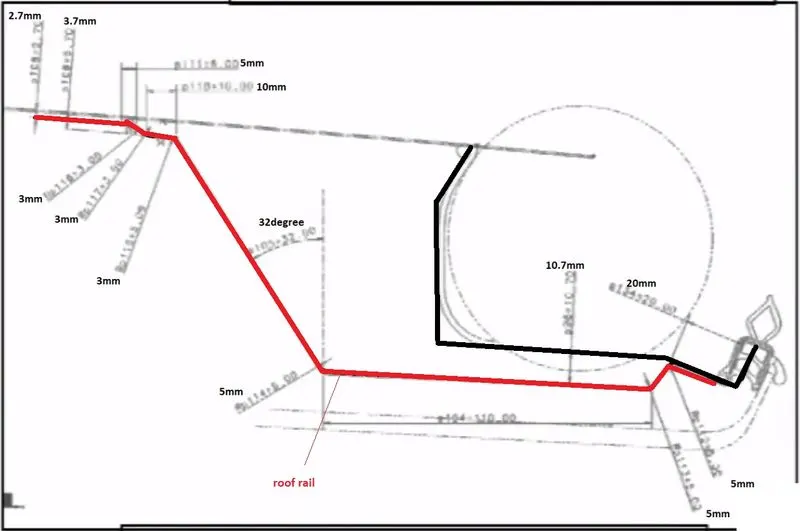
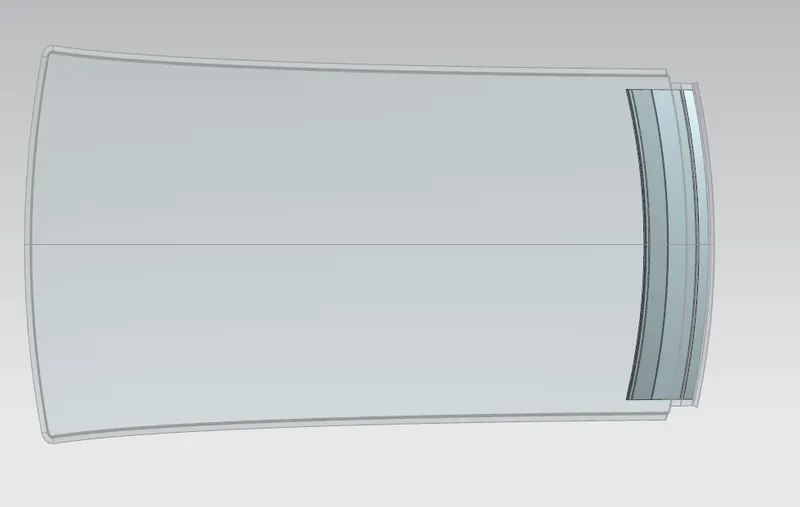
SECTIONAL VIEW:-
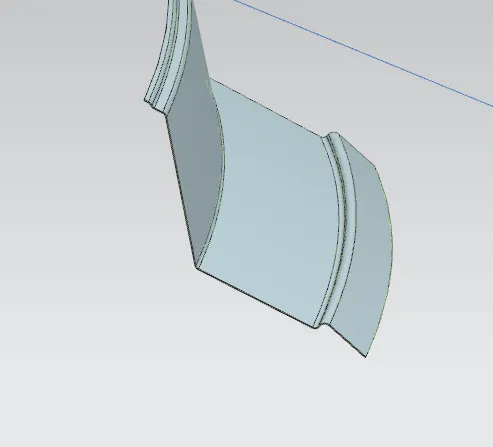
CENTRE ROOF RAIL
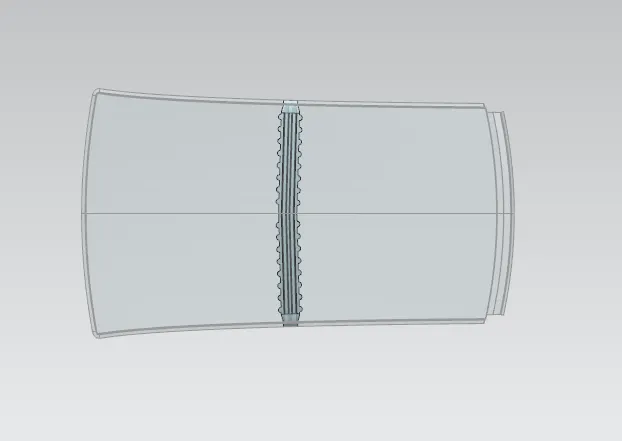
SECTION VIEW:-
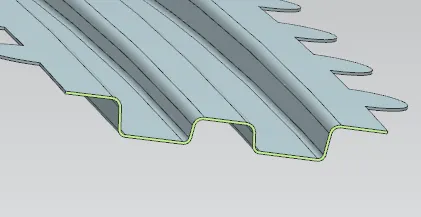
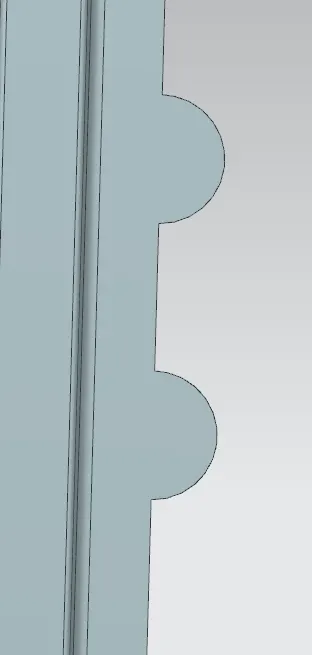
MASTIC AREA:-
ROOF BOW 1 AND ROOF BOW 2
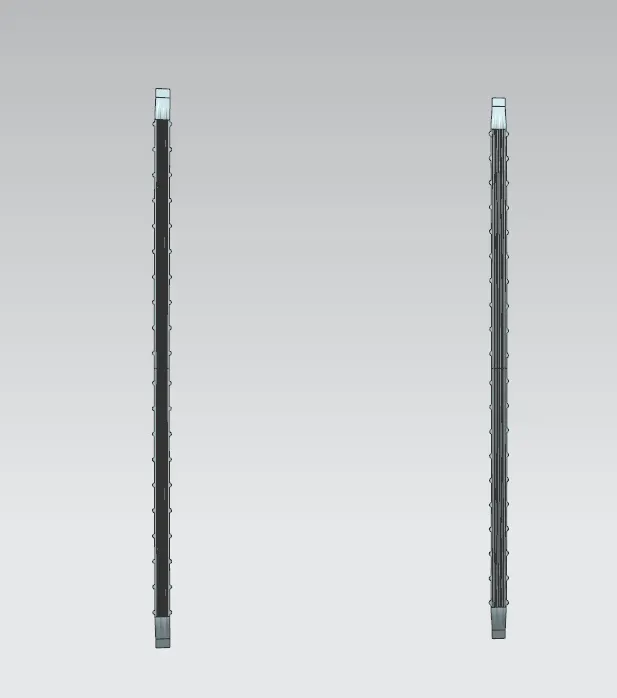
SECTIONAL VIEW :-
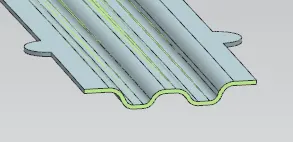 BOW 1
BOW 1
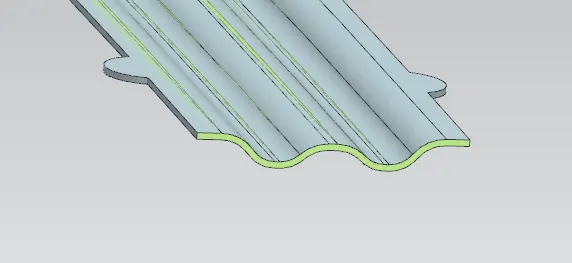 BOW 2
BOW 2
DITCH AREA
The place where the portion of the main roof concealed by the BIW pannels.
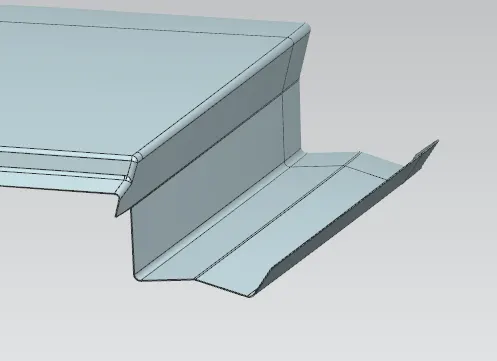
FINAL PRODUCT
Having a thickness of 0.75 mm
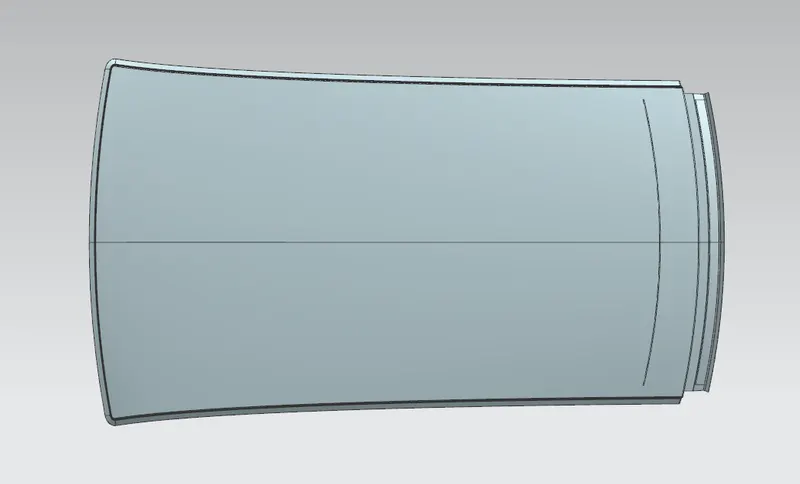
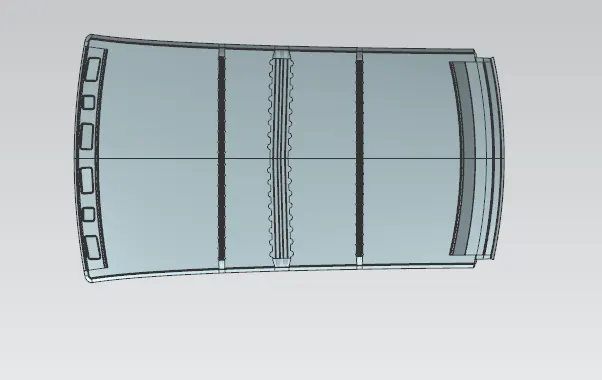
CURVATURE STUDY ON ROOF
HEAT DISTORTION CRITERIA:- heat distortion criteria: Heat distortion temperature is the temperature at which the metal softens and deforms under a specific load. This study is done to check the ability of the roof to withstand high temperature with respect to the positioning of the reinforcements which contribute to increased strength.
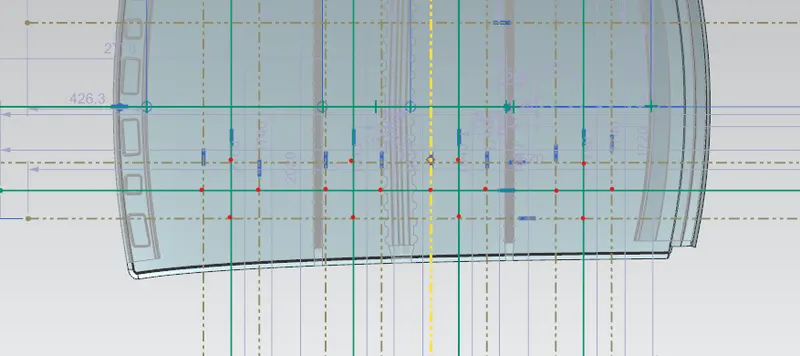
POINTS BASED ON THE REFERENCE LINES BY OFFSETTING OY LINE 300MM AND 100 MM ON BOTH SIDE OF THE OFFSETED LINE AND SAME OFFSET ON THE LINES BETWWEN THE PARTS.
W = [1.73 x 10^(-3) x L] + [1.85 x 10^(-8) x (R^2)/t] + [ 1.10x10^(-3) x l] - 2.68
Judgment Condition
OK< 2.7
Where
L = Roof Length in X-Direction[mm](Roof dimension in 0-Y)
R = Roof curvature
R = 2(Rx*Ry)/(Rx+Ry)
Rx = X curvature
Ry = Y curvature
t = Roof plate thickness [mm]
l = Bow Roof Span [mm]
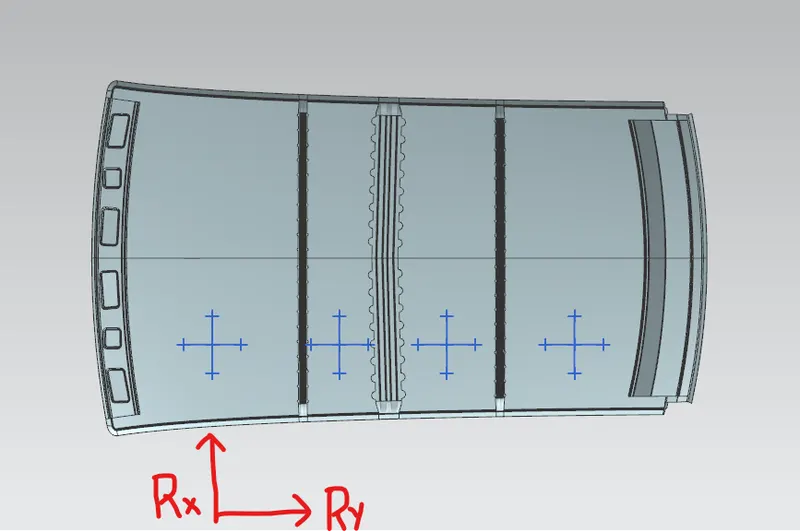

SNOW LOAD CRITERIA:-
To check the ability to withstand under heavy snowfall conditions and regain its original shape without any permanent deformation.
Snow load Prediction formula
Qr = [Iy x t2] / [α x s x [(Rx + Ry)/2]2 x 10-8]
Note: The Qr value given over here is correct. There was a typo error in the formula given in the video.
Where
α = My x Lx2 x 10-12 , My = Y(Ly-Y)
Judgment condition
Qr ≥ 3.1
250 ≤ s ≤ 380
t = Roof plate thickness [mm]
Ly = Distance between the front and rear roof Rails on the Vehicle along with 0Y[mm]
Length of Roof panel with the center point between Roof rail Front /Rear as the front and rear reference point.
Lx = Distance between the Left and Right end of the roof on the Roof BOW [mm]
The width of the roof panel is exposed on the surface.
Y = Distance front Front Roof Rail to Roof BOW[mm]
s = Distance for which Roof BOW bears divided load [mm]
s = L1/2 + L2/2
Iy = Geometrical moment of inertia of Roof BOW (Y cross-section )[mm4]
Rx = Lateral direction curvature radius of roof panel Y cross-section on Roof BOW [mm]
Roof panel curvature Radius of the Length Lx in Front view
Ry = Longitudinal Direction curvature radius of the Roof panel X cross-section on Roof BOW [mm]
Roof panel X curvature radius of length s in Side view
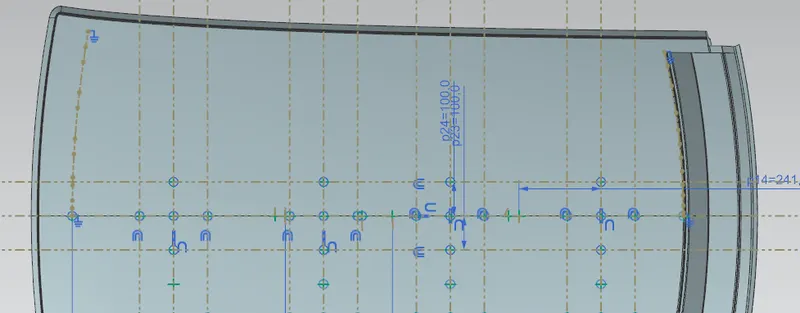
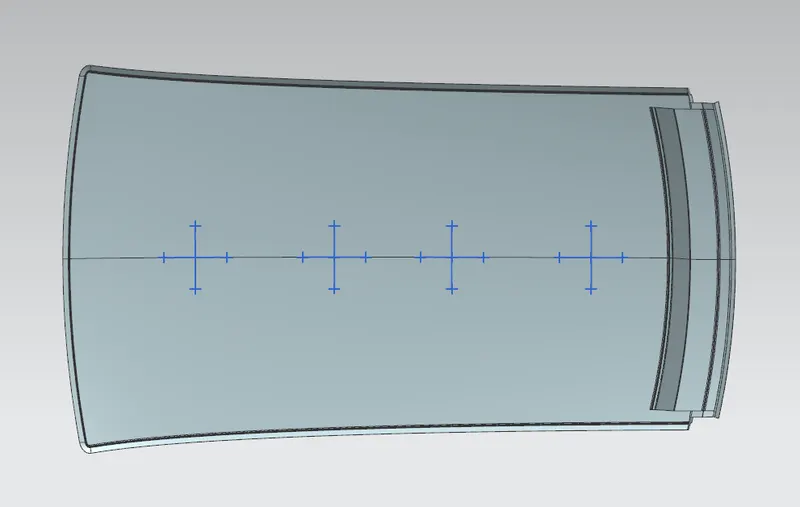

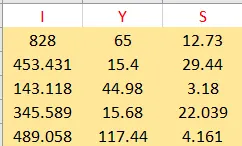
SECTION MODULUS
FRONT ROOF RAIL:-
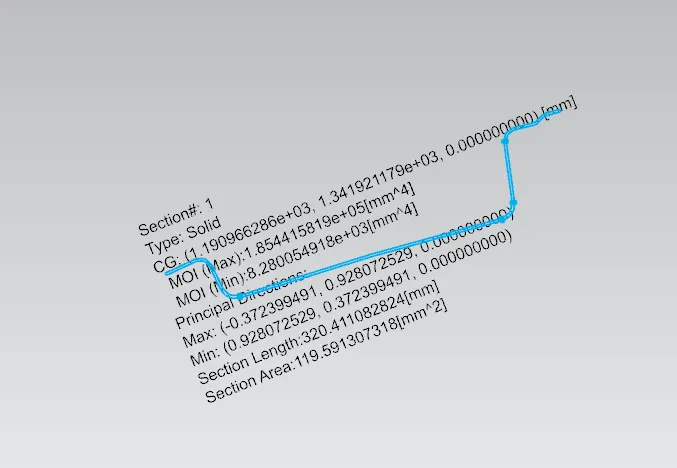
BOW 1:-
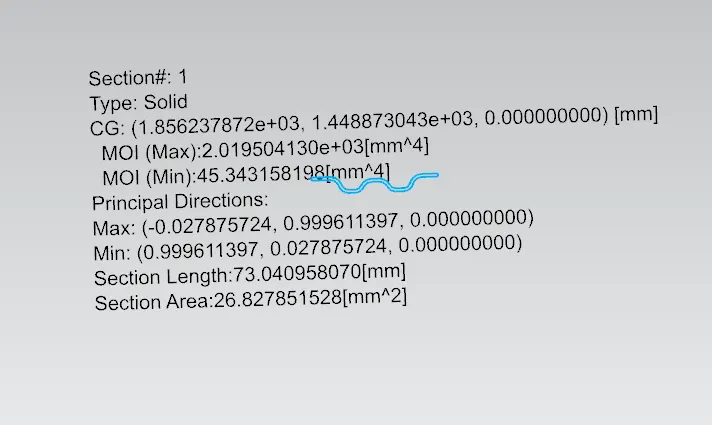
CENTRE ROOF RAIL:-
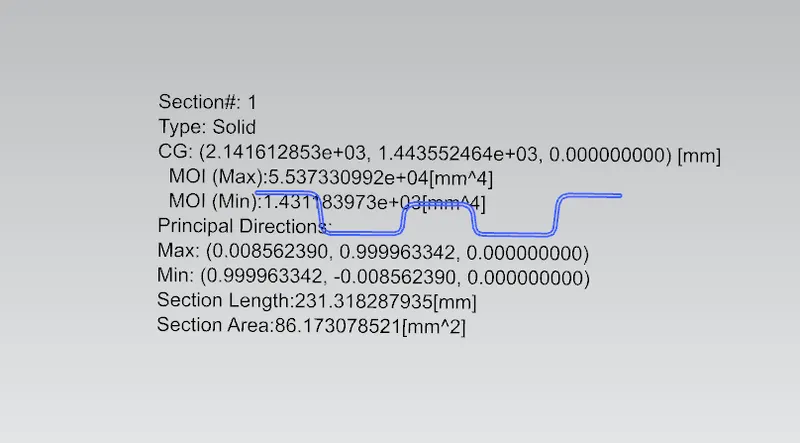
BOW 2:-
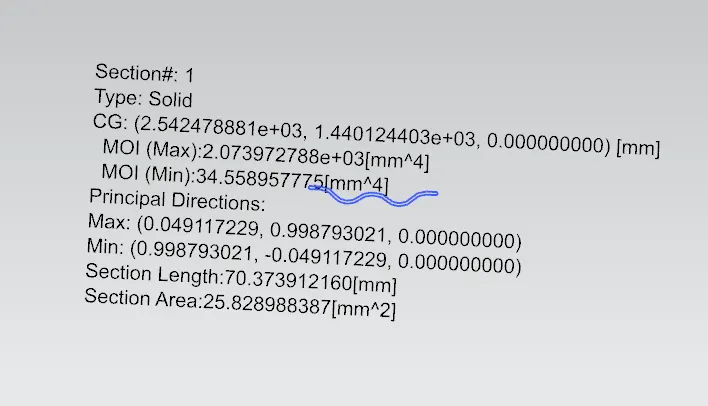
REAR ROOF RAIL:-
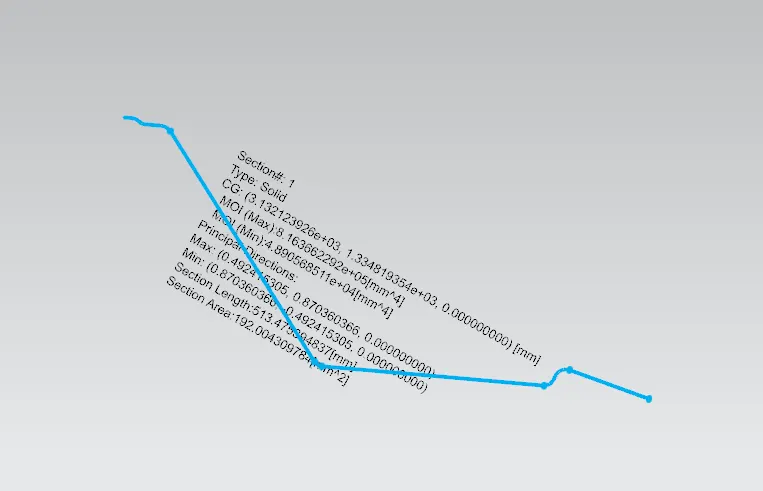
Section modulus , S=I/Y
DRAFT ANALYSIS
It is done to check the designed surface clear the minimum draft of 5mm for manufacturability.
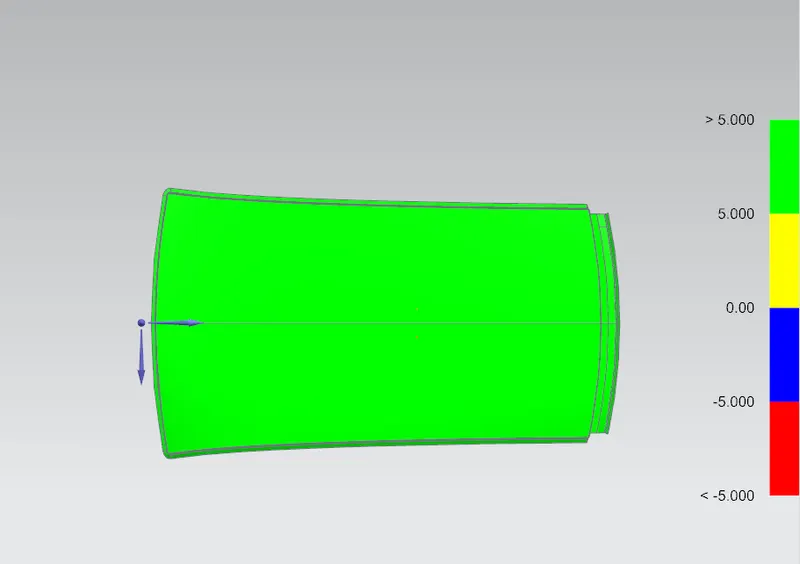
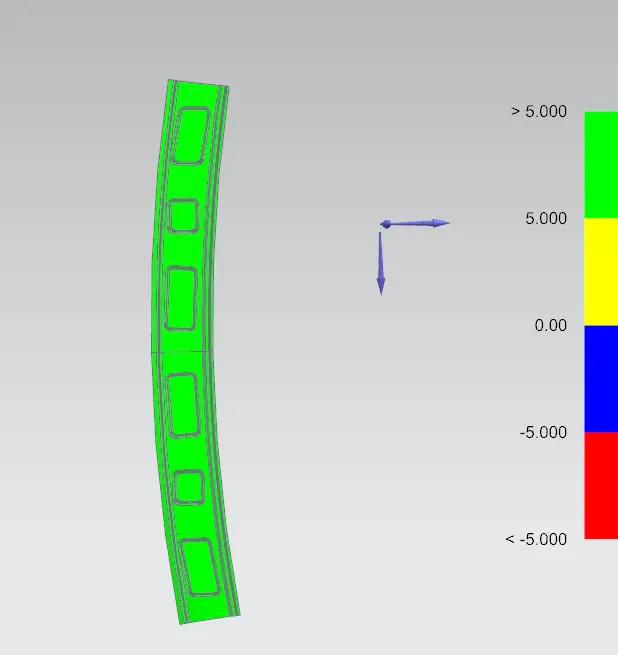
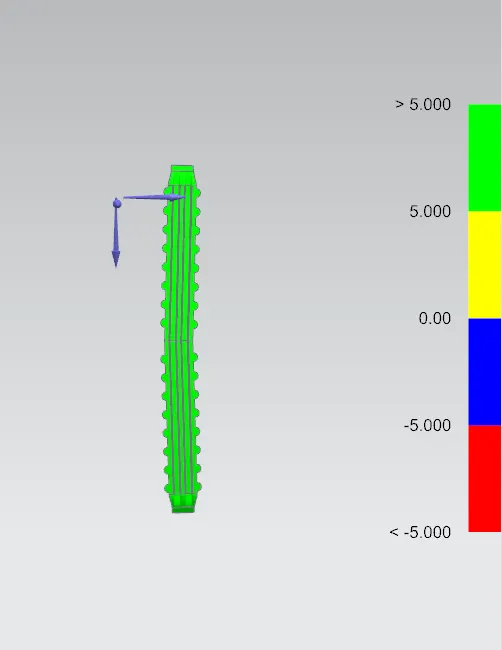
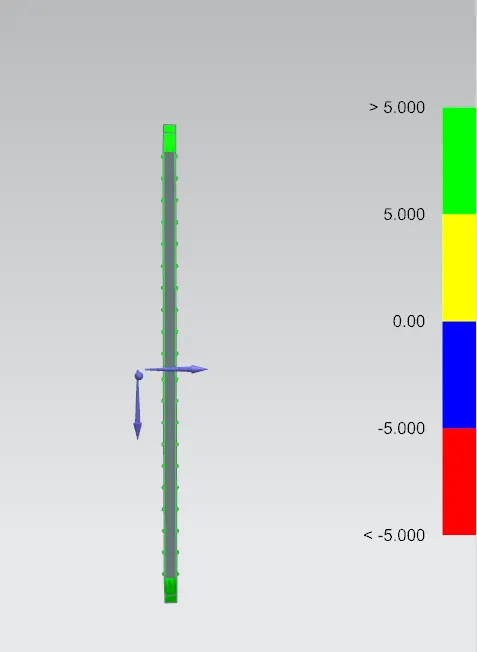
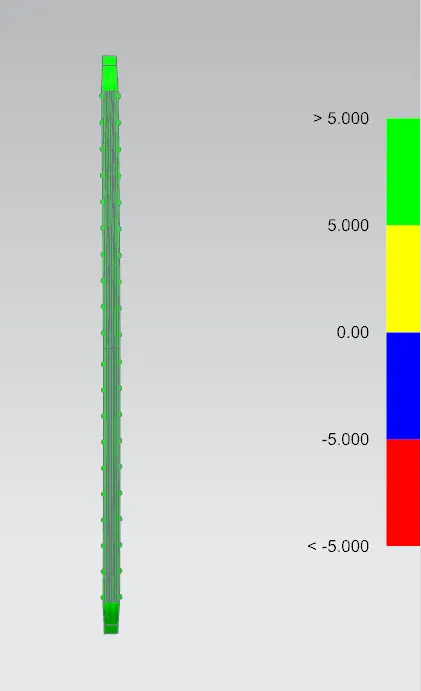
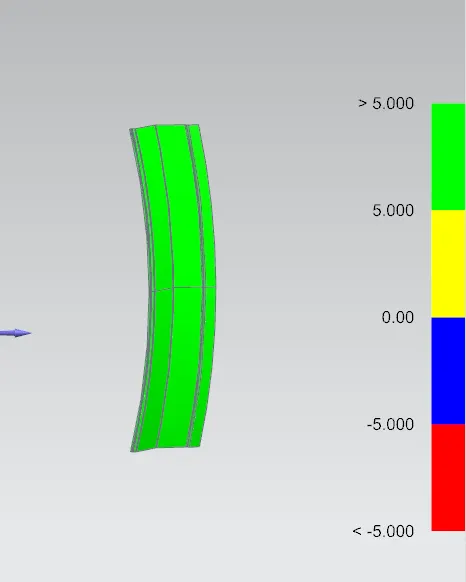
All components have positive draft.
CONCLUSION
Components are designed according to the design standards and regulations.They satisfy the analysis accordingly.