Hood design-Week 2
AUTOMOBILE HOOD DESIGN
A car hood, also referred to as a bonnet in some other countries, is the hinged cover that rests over the engine of a front-engine vehicle. Its purpose is to provide access to the engine for repair and maintenance. A concealed latch is typically used to hold down the hood.Hoods are usually made from the same material as the rest of the body. This can be steel, aluminum, fiberglass, or carbon fiber. However, some aftermarket companies produce fiberglass or carbon fiber steel hood replacements to make the vehicle lighter.
The hood release system is common on most vehicles and typically consists of an inner hood latch/lock handle, a hood release cable, and a hood lock assembly. The hood lock handle is usually located under the steering wheel, next to the driver’s seat, or in the door frame.

HOOD MATERIALS :-
Car hoods are typically constructed from steel and sometimes from aluminum. Aftermarket car hoods may be constructed from various other materials, including carbon fiber, fiberglass, or dry carbon.
FUNCTIONS OF HOOD :-
- Gives good looks.
- Help to design car aerodynamically stable.
- Hoods are provided with different vent designs for cooling purpose of an engine and carburator at high speed.
- Cover the engine from external dirt and dust.And also due to its Aerodynamic shapes to reduce the vehicle drag.
- Reduces NVH.
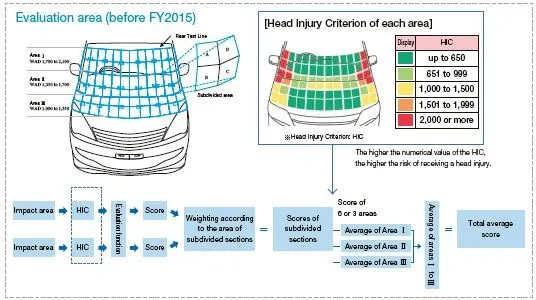
- Helping to protect pedestrians from head impact in collisions.
DESIGN CONSIDERATIONS :-
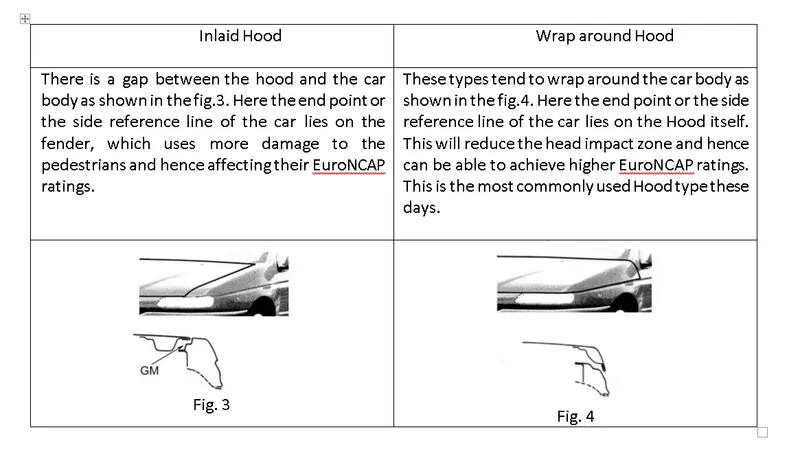
WRAP AROUND HOOD AND INLAID HOOD
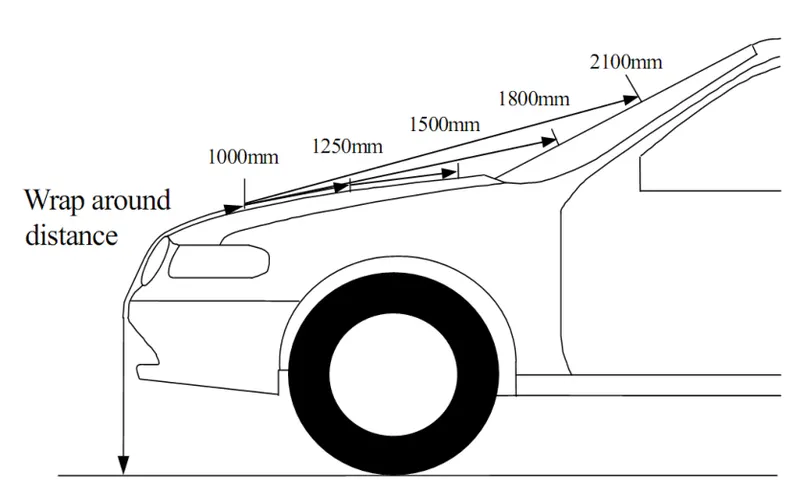
WRAP AROUND DISTANCE
It is the trace of the points received on the front structure, when one end of flexible tape of required length held at ground reference level and other end in contact with the front structure.
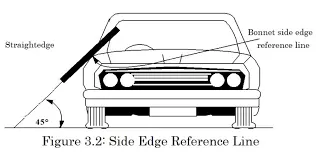
SIDE REFERENCE LINE
The trace of the highest contact point between straight edgeiclined at an angle of 45 degree and the side of the vehicle.
IMPACT AREA FOR CHILD AND ADULT
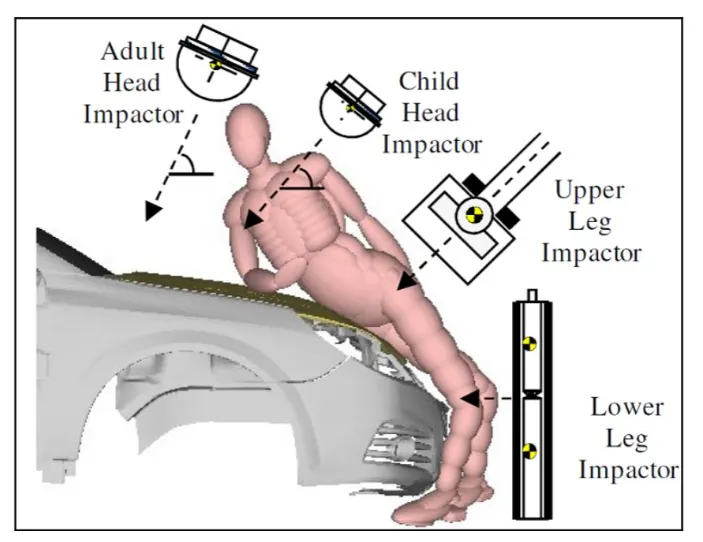
based on these impact region the thickness of the hood is reduced to allow minimal impact.Hood in those regions should absord and dissipate energy.
PEDESTRIAN HEAD IMPACT ZONE
PARTS OF A HOOD :-
- OUTER PANEL
- INNER PANEL
- HINGES
- LATCH AND STRIKER
- SUPPORT ROD OR GAS STAY
DESIGNING OF HOOD
 \
\
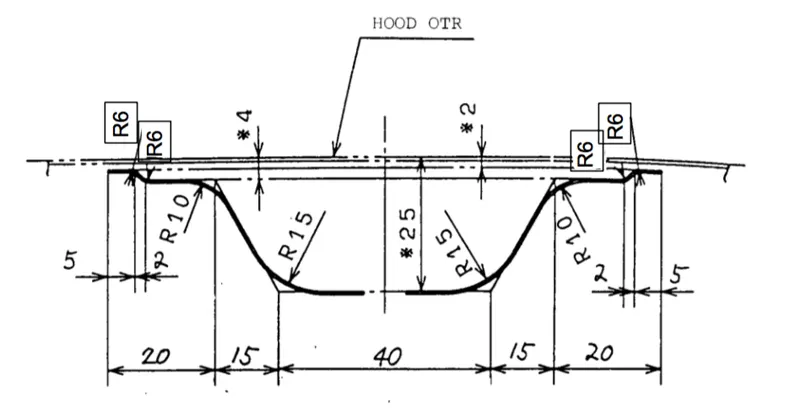
Hood Thickness Information,
- Outer Panel Thickness = 0.75mm
- Inner Panel Thickness = 0.75mm
- Reinforcement Thickness = 1.5mm
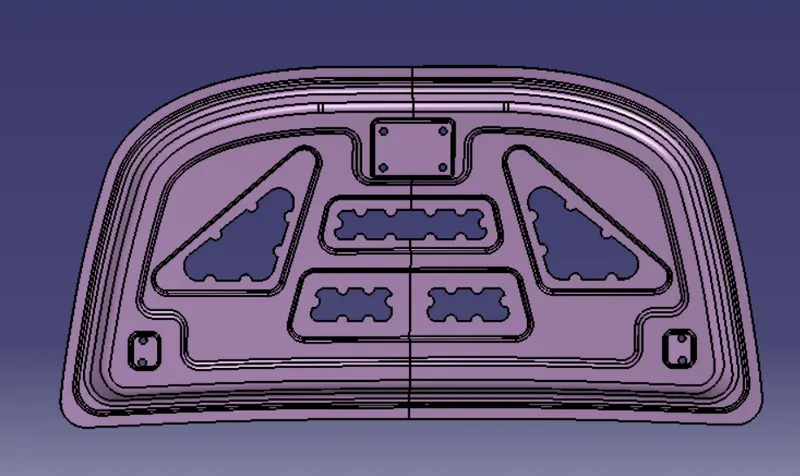
INNER PANEL DESIGN
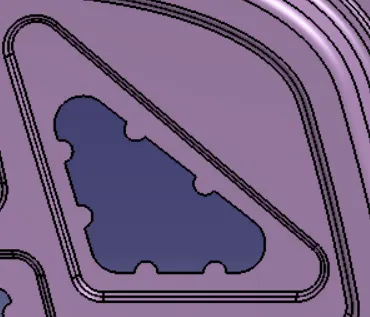
To design the inner panel we need a reference surface that we need to extract from the given styling surface. this extracted surface can be used as the reference surface.Design construction is done by using CATIA V5.The thickness must be of 0.75mm.
EMBOSS ON INNER PANEL
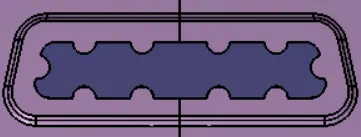
Embosses are designed to distribute the impact force on outsidewhich protects the passenger during the crash.
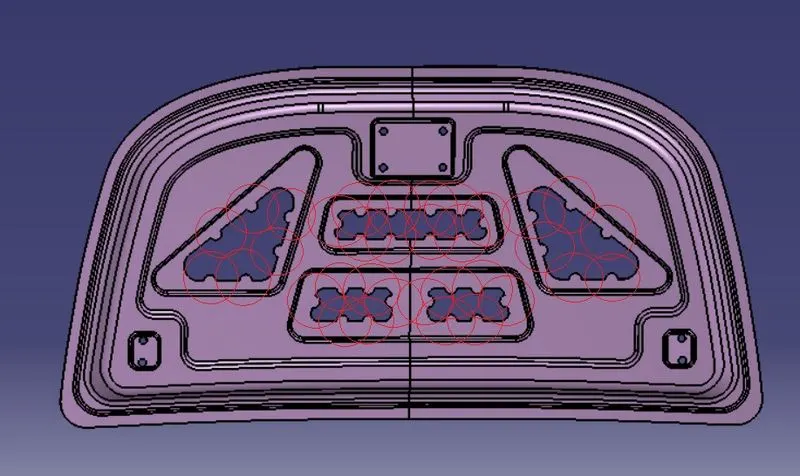
MASTIC POINTS:-
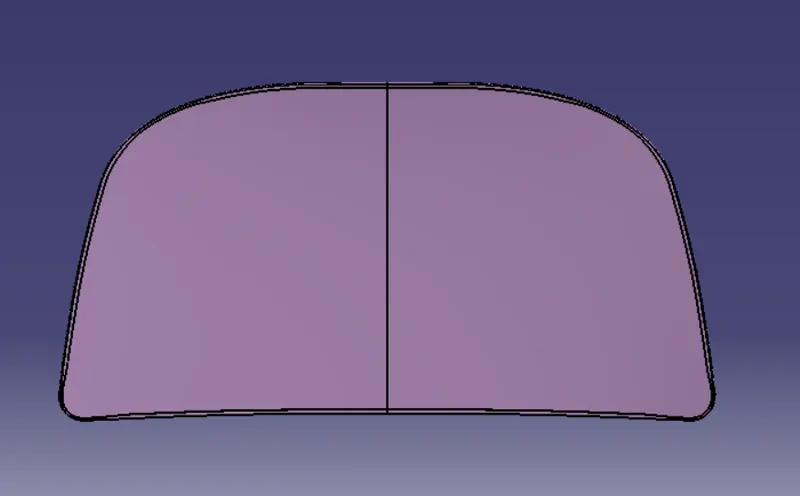
OUTER PANEL
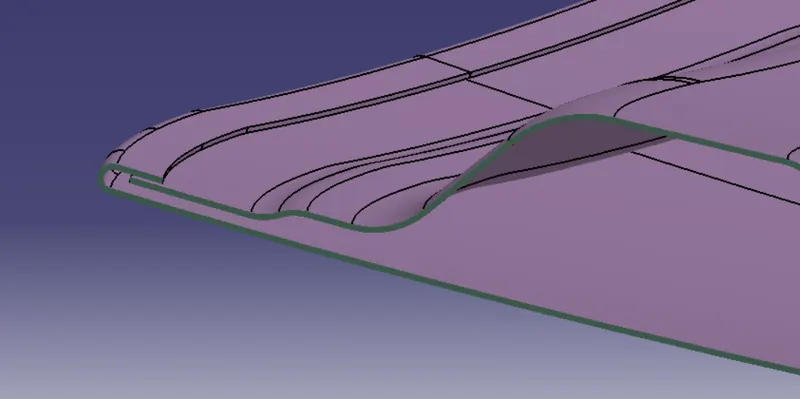
HEMMING PROCESS
Hemming is a forming operation in which the edges of the sheet are folded or folded over another part in order to achieve a tight fit. Normally hemming operations are used to connect parts together, to improve the appearance of a part and to reinforce part edges.
In car part production, hemming is used in assembly as a secondary operation after deep drawing, trimming and flanging operations to join two sheet metal parts (outer and inner) together. Typical parts for this type of assembly are hoods, doors, trunk lids and fenders.
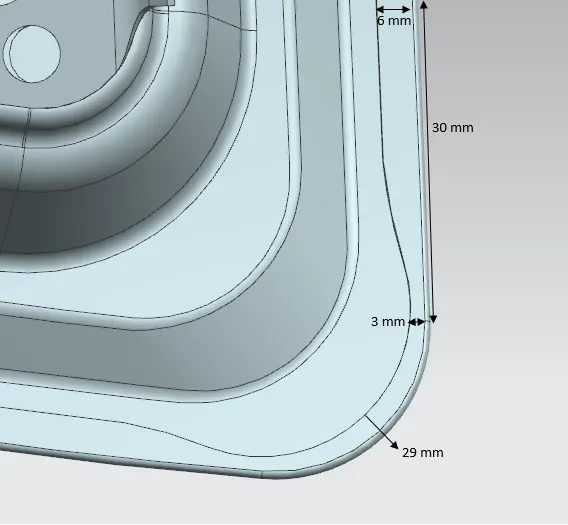
The accuracy of the hemming operation is very important since it affects the appearance of the surface and surface quality. Material deformations, which occur during the hemming process, can lead to dimensional variations and other defects in parts. Typical hemming defects are splits or wrinkles in the flange, material overlaps in the corner areas or material roll-in. This is why it is important to use simulation tools in order to, on the one hand, better understand the hemming process and, on the other hand, significantly reduce the number of “trial and error” loops during tryout und production.
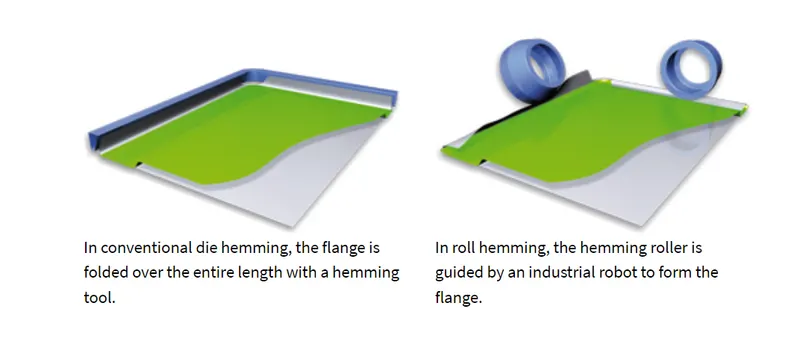
There are various types of hemming operations:
- Conventional die hemming
- Roll hemming
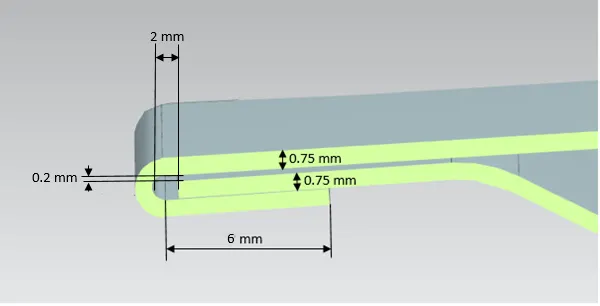
SURFACE AFTER HEMMING :-
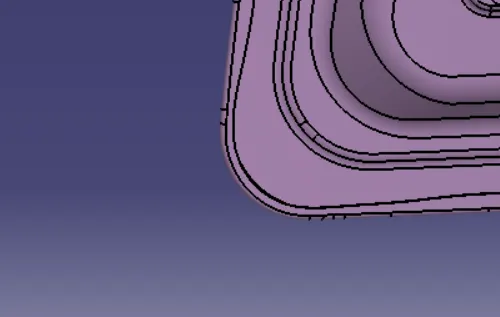
While doing the hemming process a relief angle is formed at the product of this process when attaining the corner of the sheet metals.
HOOD COMPONENTS
LATCH :-
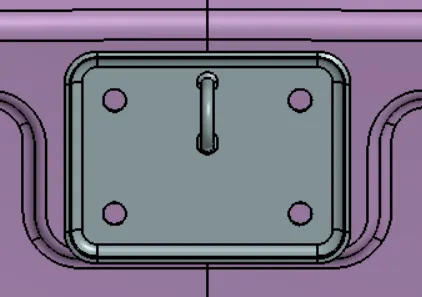
The hood latch is an extremely simple latch. When the hood is closed, the latch slides over what is called a catch, and a spring covers the latch to keep it snug. When you pull the knob inside the car to open the hood, the hood latch cable opens the latch, allowing it to bypass the catch and open
HINGE :-
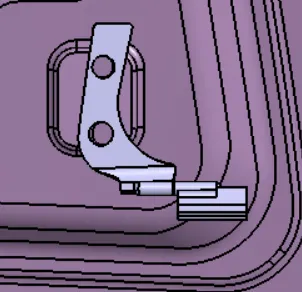
Hinge is a component that fixes the hood with the fendor of the car.
LATCH TRAJECTORY MOTION :-
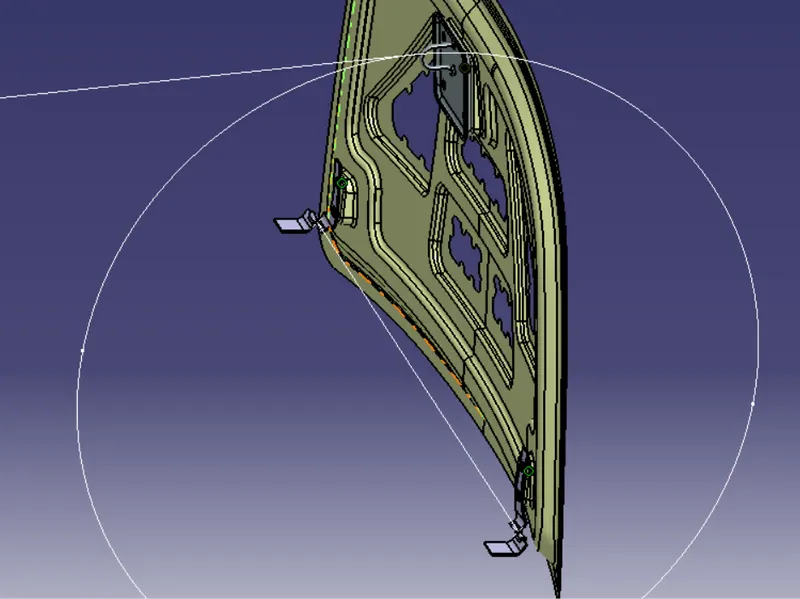
The latch trajectory must be perpendicular to the hinge axis for the proper opening and closing of the hood.
IMPACT FORCE DISTRIBUTION
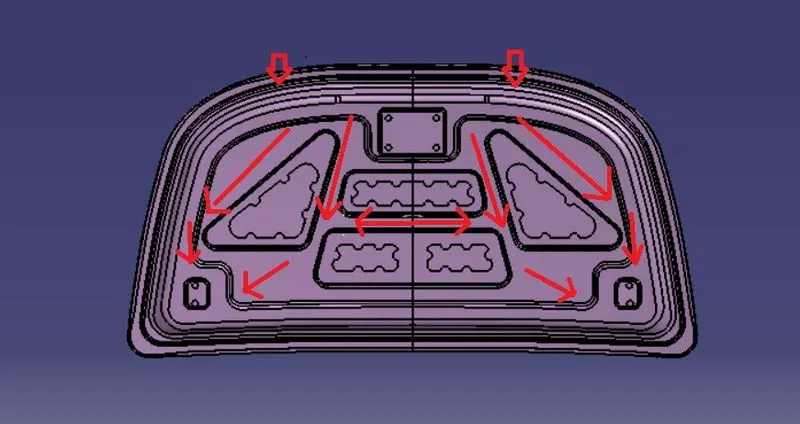
The hood design to be made in such a way that the force distribution must be controlled and directed outwards from the vehicle.
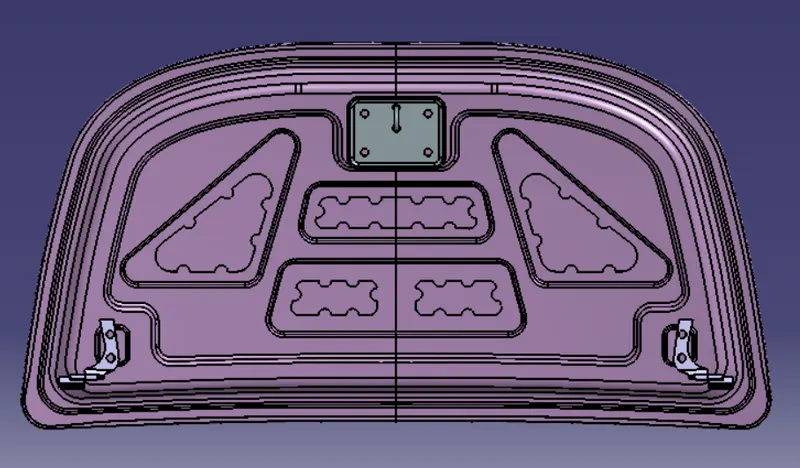
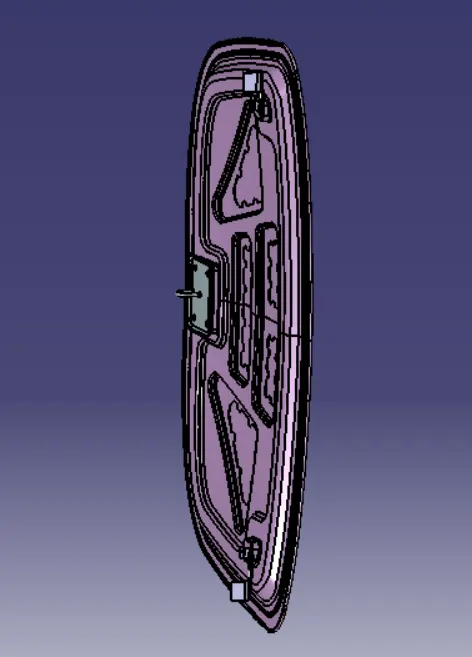
FINAL PRODUCT
CONCLUSION
We have designed a hood according to the rules and regulations of the manufacturers standards.