Roof challenge
Design of the Car Roof with its Components (Roof Rails), Check the Draft Analysis and Curvature Study
Object :-
To design the car roof with its component (roof rails) and to develop essential flanges and reinforcement for given roof styling, and check the draft analysis. To do a curvature study on the roof and perform calculation to determine the position of bow roof.
Introduction :-
Car top is the portion of an automobile that sits above the passenger compartment is called car roof. It protects the vehicle occupants from sun, wind, rain and other external element. It used to make by usually sheet metal from steel.
Car Roof Design Consideration:-
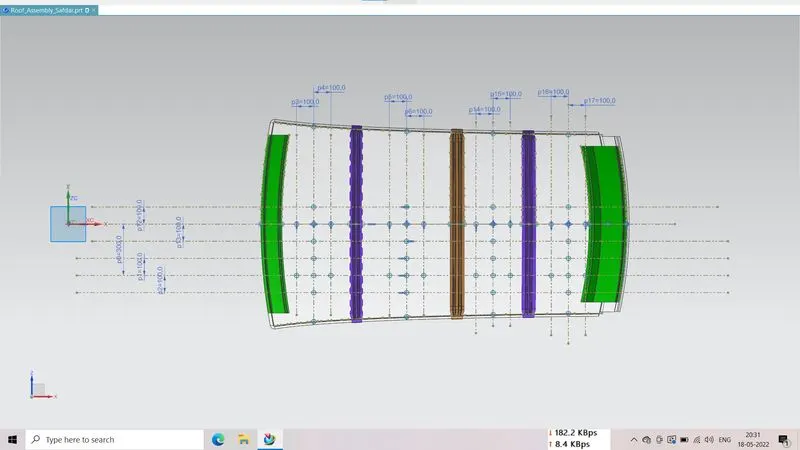
To make a car roof it designs a little tilt and flat. It is made of sheet which is very weak. To strengthen it, the support of bow roof rail has to be given it. There are at least three roof rails in a roof (front roof rail, rear roof rail, center roof rail). If needed I can increase the number of roof rails. Where the roof is curve, there strength is more. And where the roof is flat, there strength is less. To support the bow roof rail keep in mind the flat and curve part of the car. That in which part to support, where will the support be, at what distance will it be, and what should be the strength (section inertia) of the support, all of these verify the value of Heat Distortion Criteria and Snowed Criteria.
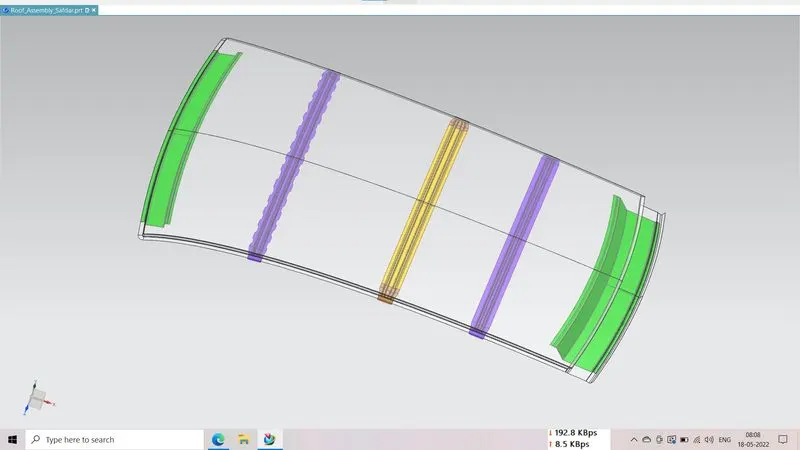
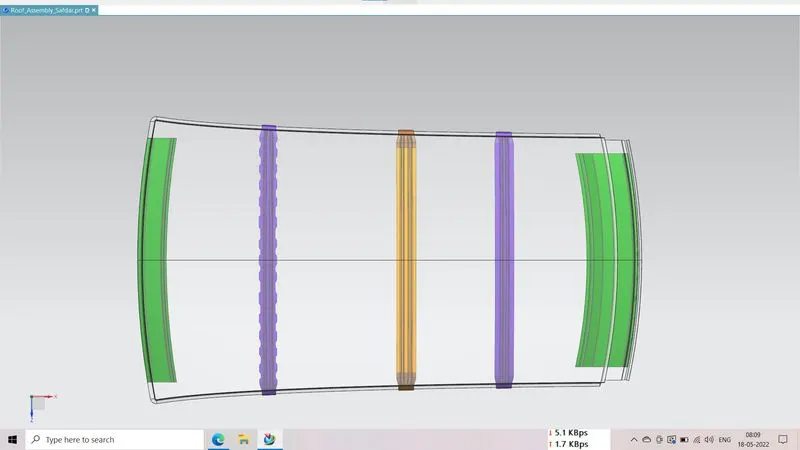
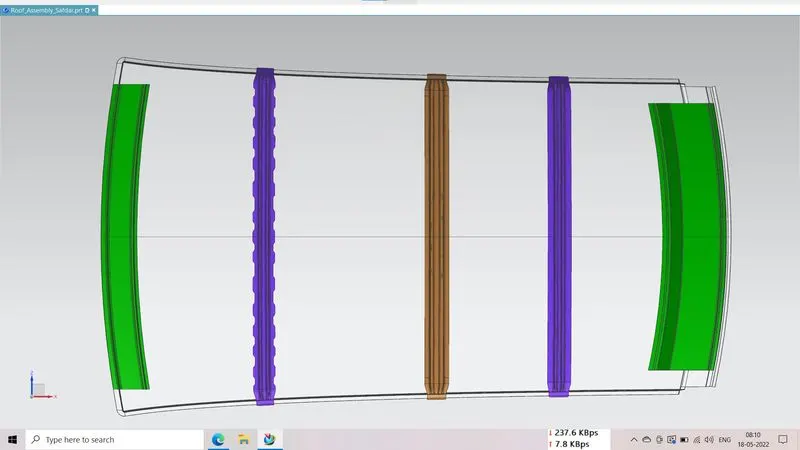
Car Roof Component -
1. Car Roof Upper Part
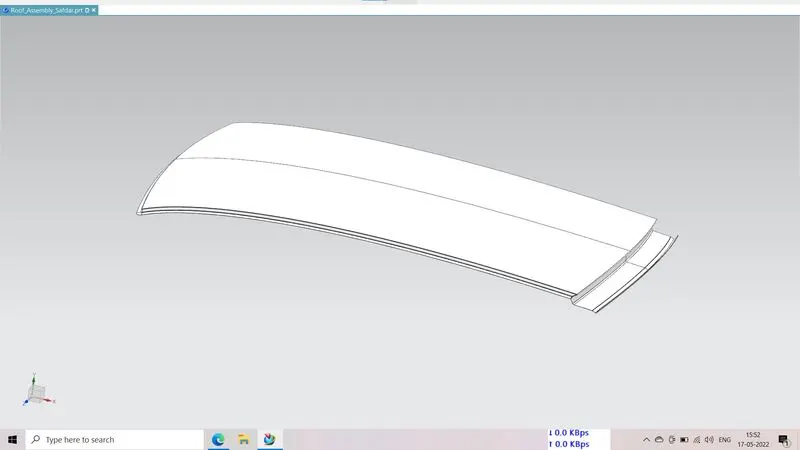
2. Front Roof Rail
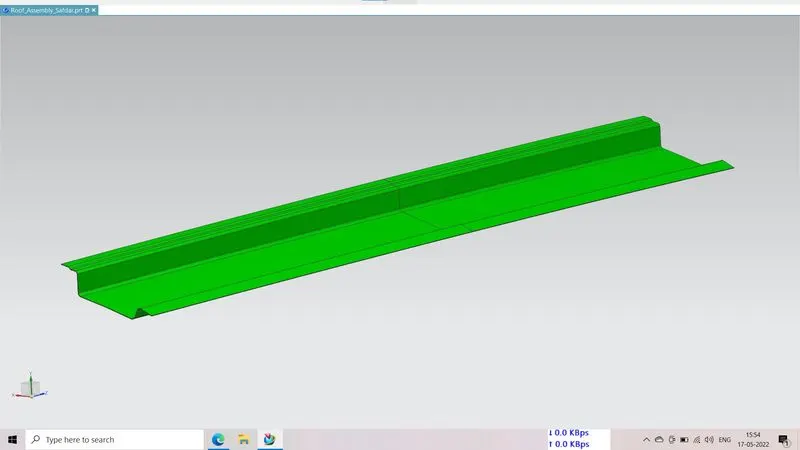
3. Rear Roof Rail
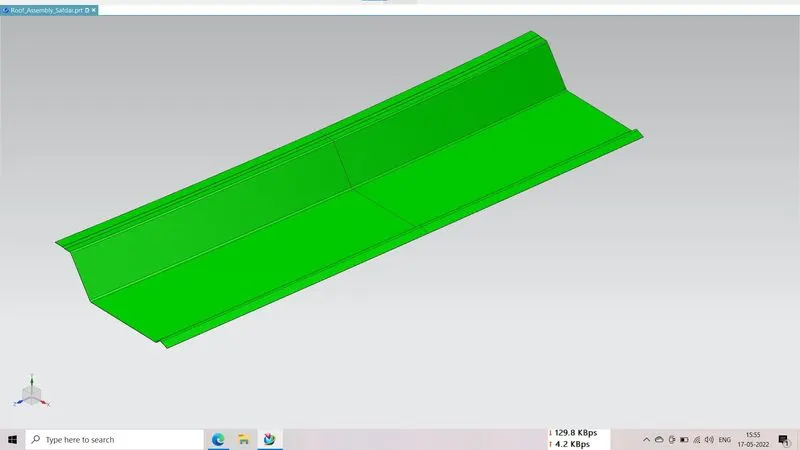
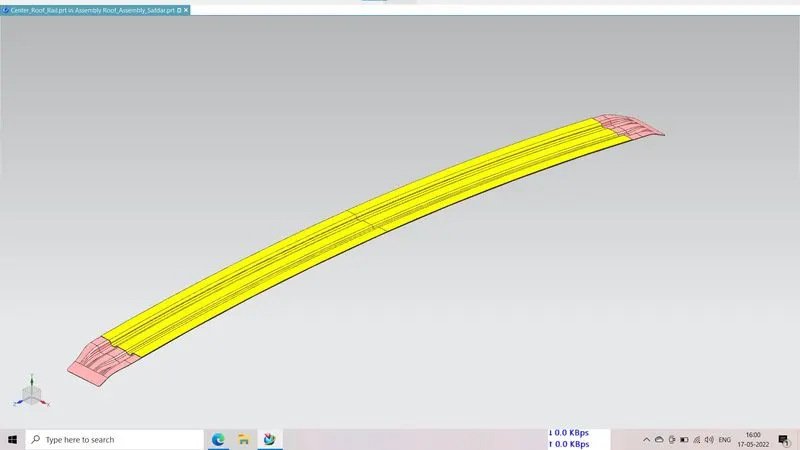
4. Center Roof Rail- This is center roof rail. Over it the yellow part is given reinforcement.
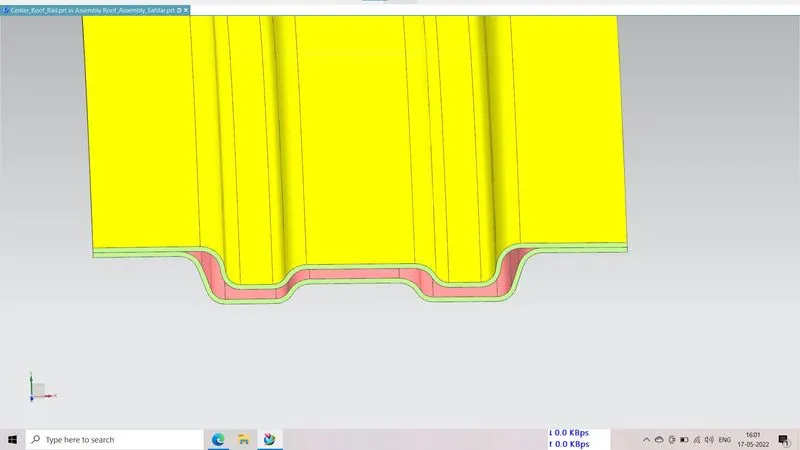
Cross-section View of Center Roof Rail-
5. Bow Roof Rail 1
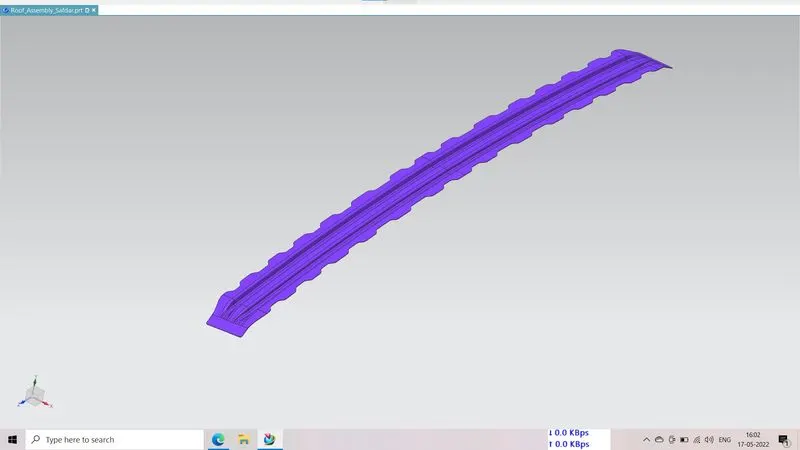
6. Bow Roof Rail 2
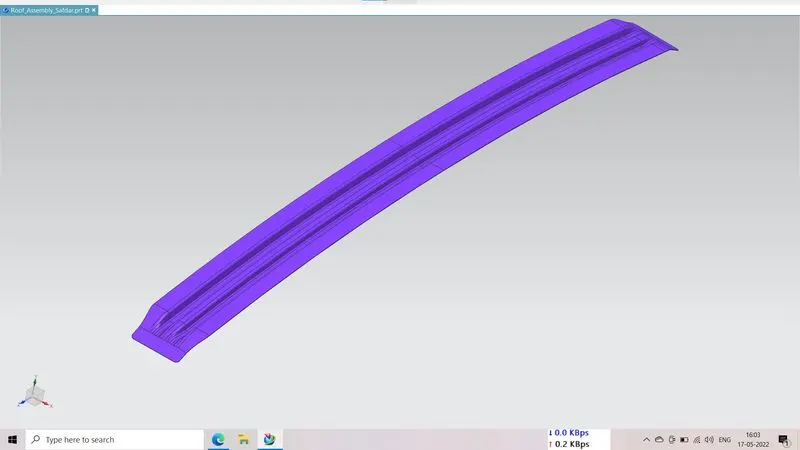
Car Roof Design Methodology :-
Taking a reference to the styling surface we have designed the roof outer body. We have given a required flanged and ditch area. After this, taking reference to it, we have designed a Front Roof Rail. Front part of front roof rail where the windshield glass attach, there is spot welding between front roof rail and ditch area of roof outer body. So we take 0 mm gap between them. While between back part of front roof rail and roof outer body, it attaches with mastic bead. So we put the gap between them according to design and mastic bead. While making the front roof rail, we keep in mind its visibility criteria, value of section inertia, height, deep, expand. We made the emboss with keeping in mind the draft angle. If we take a draft angle less than 3 degree then wear of punch and die is more. Then production price increase. Similarly we made the Rear Roof Rail. We made this with also keep in mind rear visibility criteria, section inertia value, But making rear roof rail we give a clearance for opening the back door. So that back door can open easily and prevent the damage of rear roof rail. Similarly we made the centre rail. It is situated between front roof rail and rear roof rail according to design. To strengthen it we gave a reinforcement on it. Centre roof rail and reinforcement both are spot welding together. So we don’t keep clearance between them. Reinforcement and roof outer body both are attach with mastic bead. So we gave a gap about 5mm between them for mastic bead. After this we made a Bow Roof Rail 1 between front roof rail and centre roof rail and we made a Bow Roof Rail 2 between centre roof rail and rear roof rail. These two (Bow1 and Bow2) are attached the roof outer body with mastic bead. So we there also keep gap about 5mm between Bow and roof outer body. After designed all of it we followed the value of heat distortion criteria and snowed load criteria. If not followed then redesigned and give appropriate value of flange, emboss, distance etc. and followed the value of heat distortion criteria and snowed load criteria.
Front Roof Rail, Rear Roof Rail, Centre Roof Rail, Bow Roof Rail
All of these are given to increase the load capacity of car roof. At where the roof is more weak there we give a roof rail with increased strength.
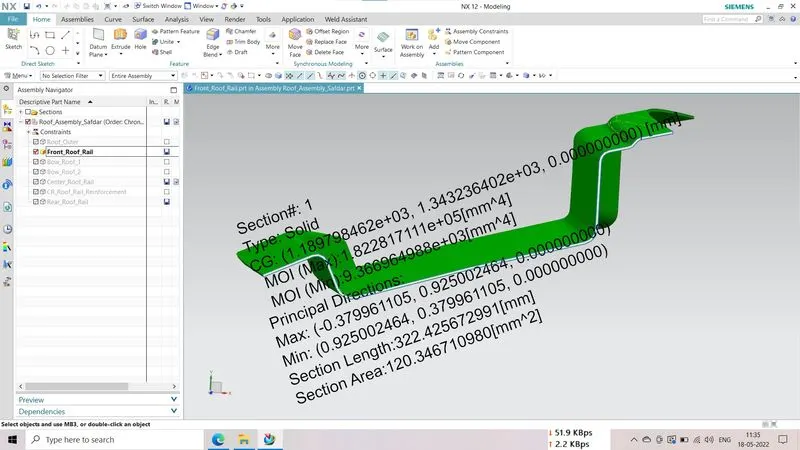
Section Inertia-
Section inertia or area moment of inertia is a property of a two-dimensional plane shape which characterizes its deflection under loading. It is denoted by I. It is also known as second moment of inertia or area moment of inertia. The area moment of inertia has dimensions of length to the fourth power.
Section Inertia & Cross-section View of -
1. Front Roof Rail -
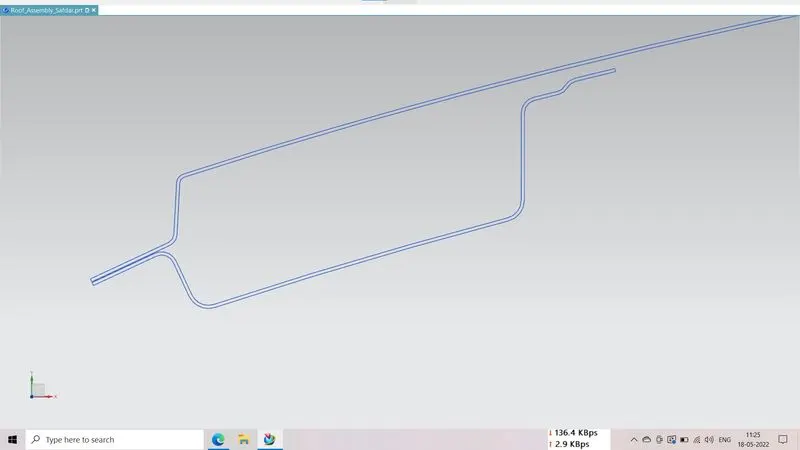
2. Rear Roof Rail -
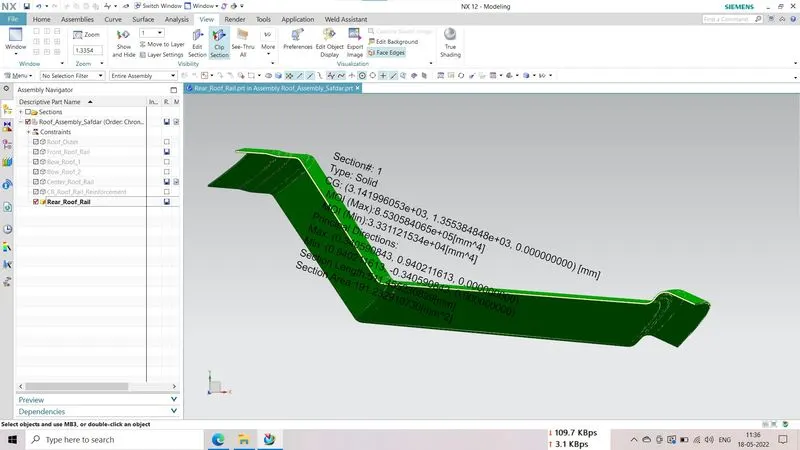
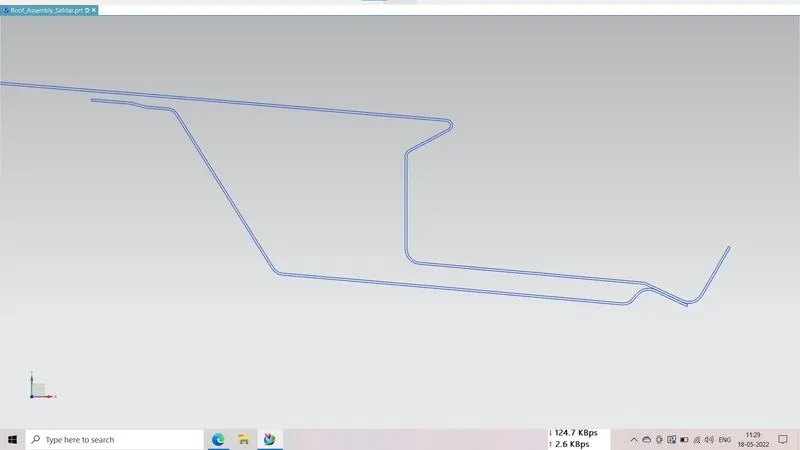
3. Center Roof Rail -
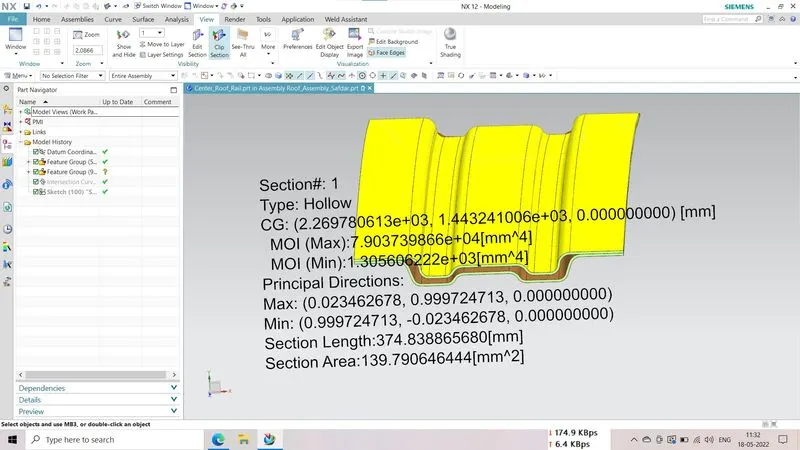
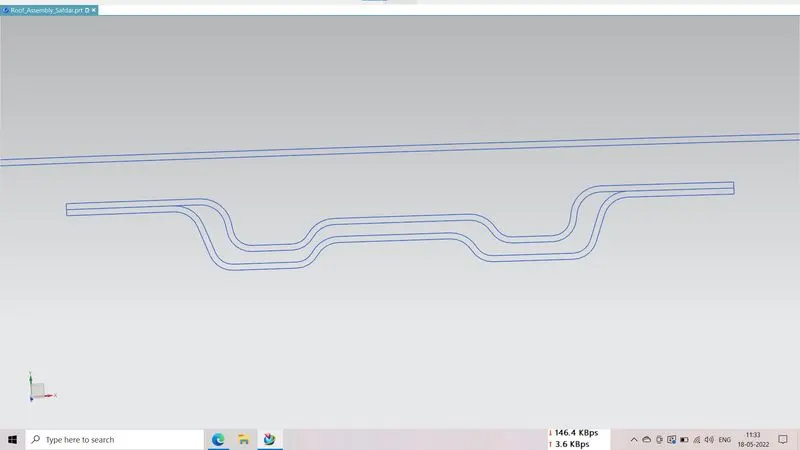
4. Bow Roof Rail 1 -
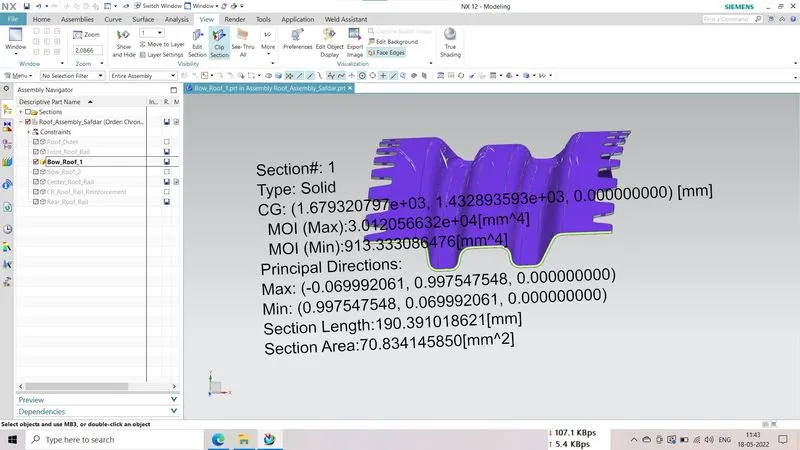
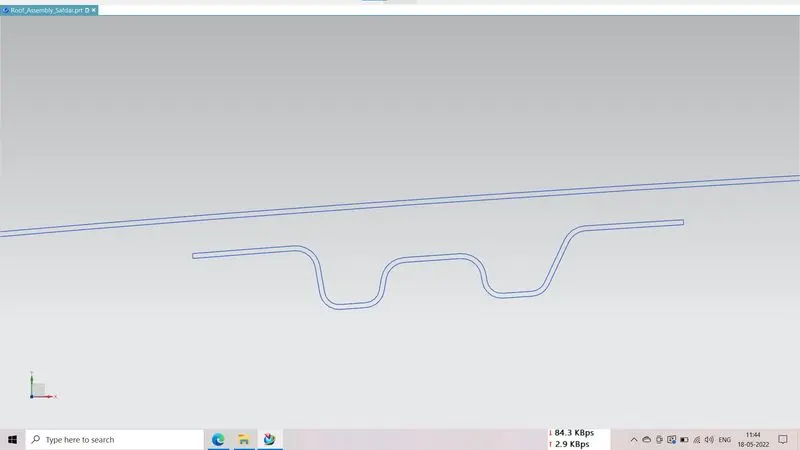
5. Bow Roof Rail 2 -
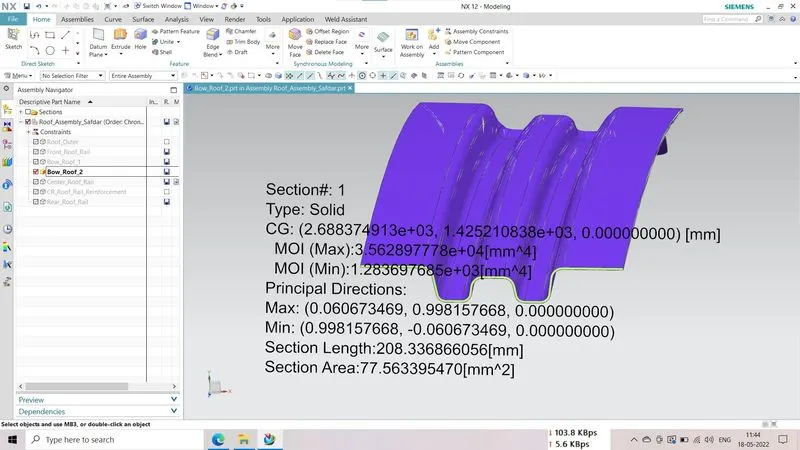
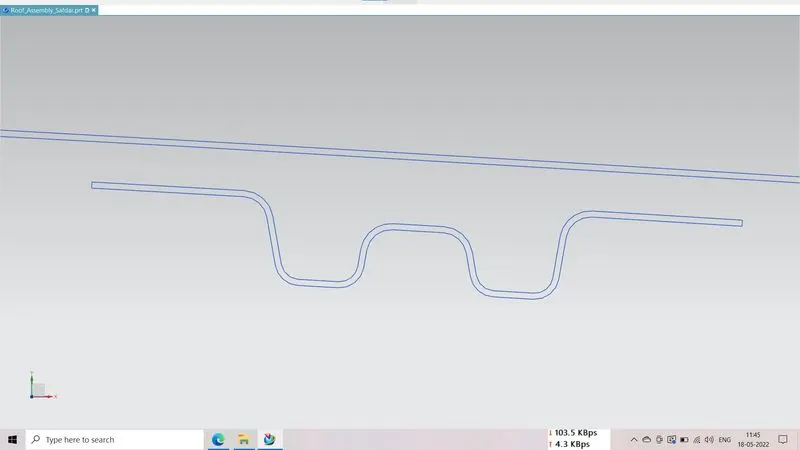
Heat Distortion Criteria-
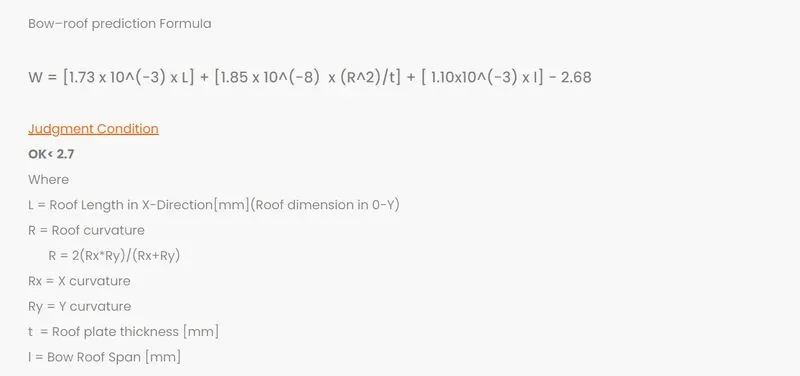
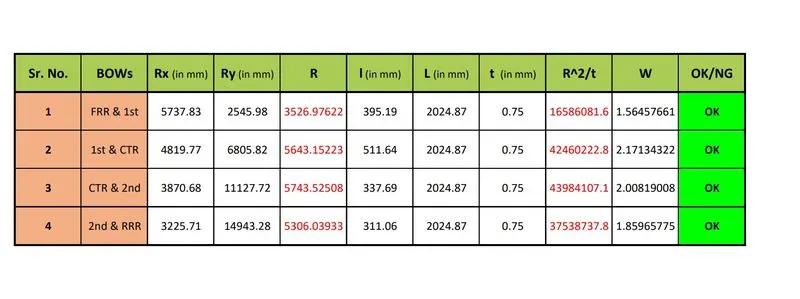
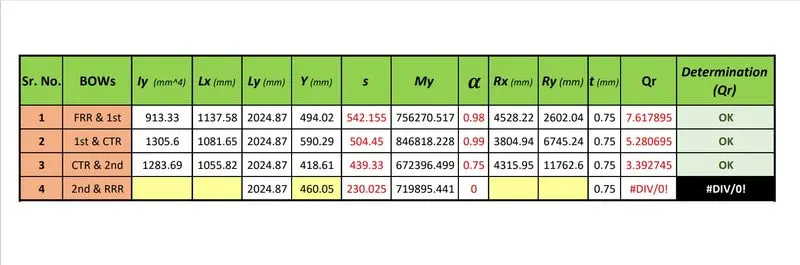
In many countries the atmosphere temperature is high. By which metal expand. To prevent the deflection of sheet it should be follow the value heat distortion criteria. The value should be less than 2.7, if value is not following then change the essential value.
Snow Load Determination-
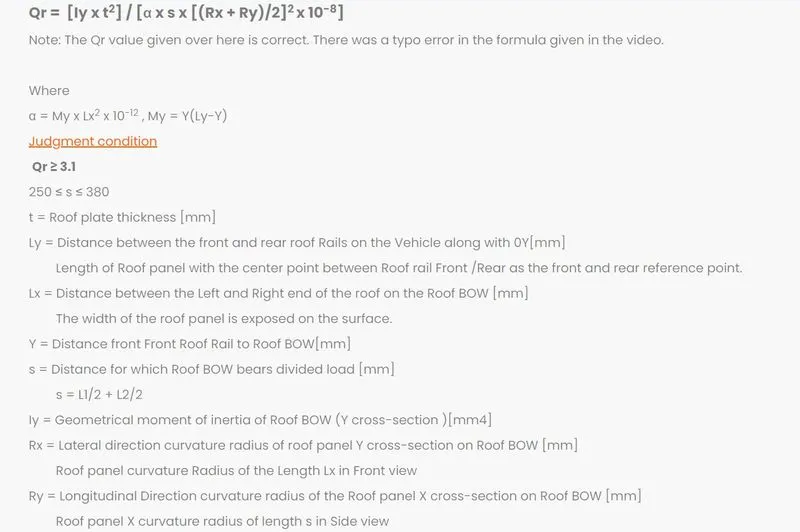
In many countries the atmosphere temperature is low. By which metal expand. To prevent the deflection of sheet it should be follow the value snow load determination. The value should be greater than 3.1, if value is not following then change the essential value.
Snow load Prediction formula
Draft Analysis-
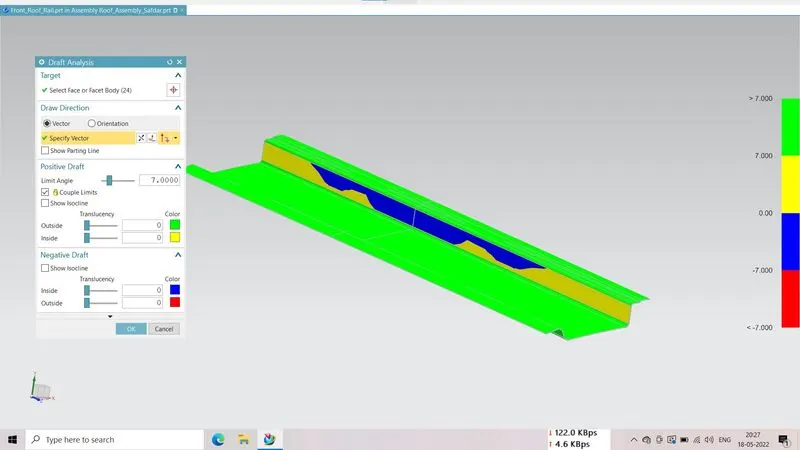
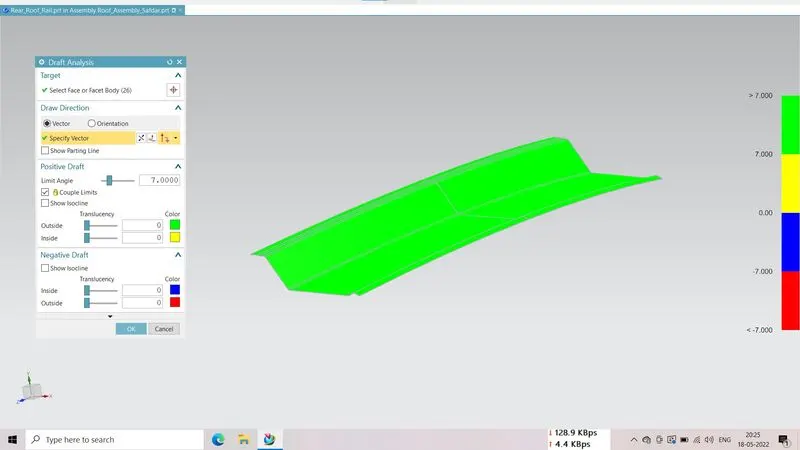
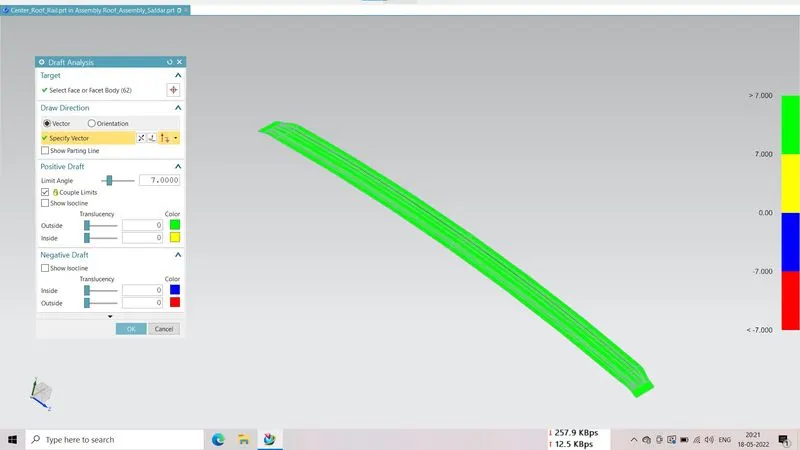
The draft analysis command enables you to detect if the part you drafted will be easily removed. This type of analysis is performed based on colour ranges identifying zones on the analysed element where the deviation from the draft direction at any point, corresponds to specified value.
In this project we have taken 7 degree minimum draft angle.
Green Zones means - Draft angle is more than 7 degree.
Yellow zone means - Draft angle is between 0 - 7 degree.
Blue zones means - Draft angle is between 0 to -7 degree.
Red zones means - Draft angle is less than -7 degree.
Draft Analysis -
1. Front Roof Rail -
2. Rear Roof Rail
3. Center Roof Rail
4. Center Roof Rail Reinforcement
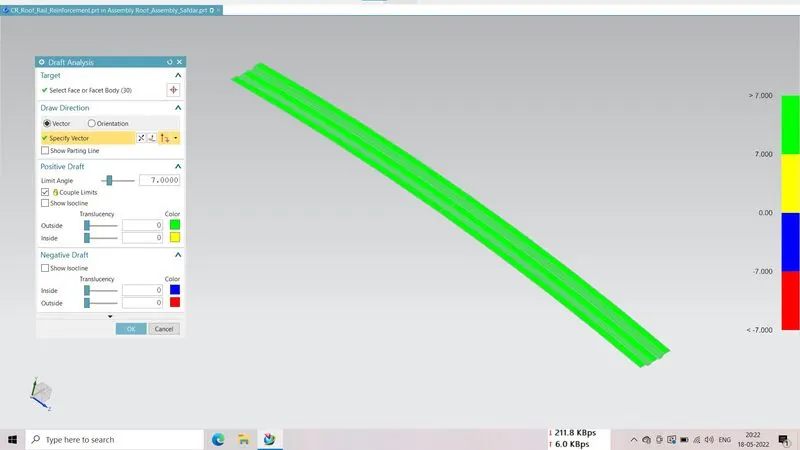
5. Bow Roof Rail 1
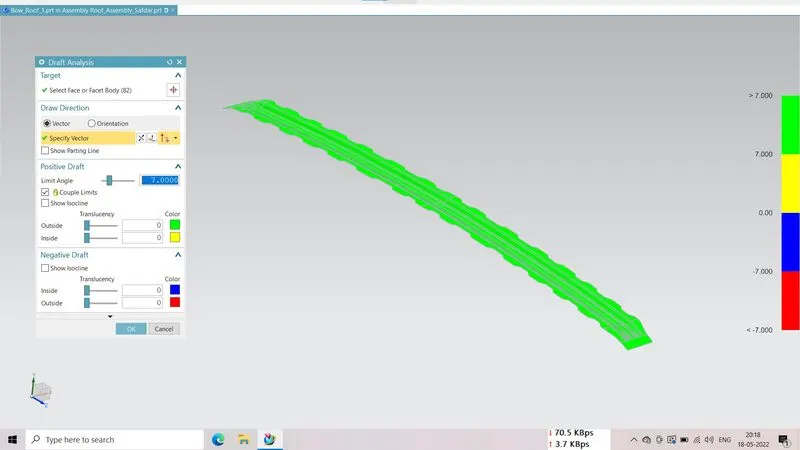
6. Bow Roof Rail 2
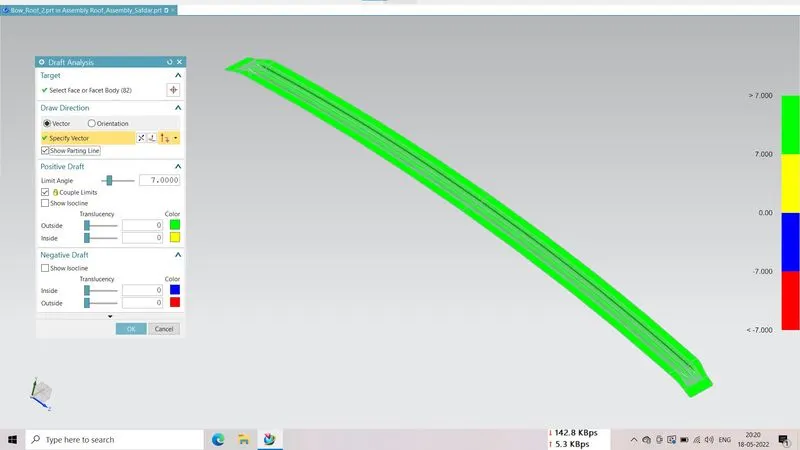
Embossing-
Embossing is a metal stamping process for producing raised or sunken designs or reliefs by passing metal sheet or strip between rolls of desired pattern. The process enables repeated production without variation and does not change the metal wall thickness.
Stamping-
The process of turning sheet metal into a useful part or component is called sheet metal stamping. The metal is fed into a press, where the stamping tool also known as die, creates the desired shape.
Deep Drawing–
Deep drawing is a sheet metal forming process in which a sheet metal blank is radially drawn into a forming die by the mechanical action of a punch. The process is considered deep drawing when the depth of the drawn part exceeds its diameter.
Conclusion :
In this project I learnt many things that how to design the car roof with keep in mind the draft angle, front and rear visibility criteria, draft analysis, emboss. And how many require the bow roof rail and how much strength. How to increase the strength of bow roof rails. And how to verify the heat distortion determination and snow load criteria.