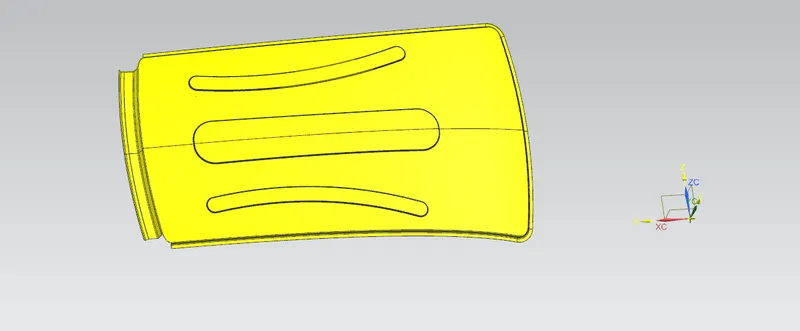
Roof challenge
AIM- Designing of Roof reinforcement, rear roof rail, front roof rail and check whether the reinforcement’s position is as per the snow load and heat distortion condition.
What is a roof?
Roof is the top portion of the car which prevents the passenger from all the harsh environment conditions like sun, wind, rain etc. and it is supported by A,B,C pillars we shape the roof aerodynamically to reduce the boundary layer effect of the wind when the car is in motion.
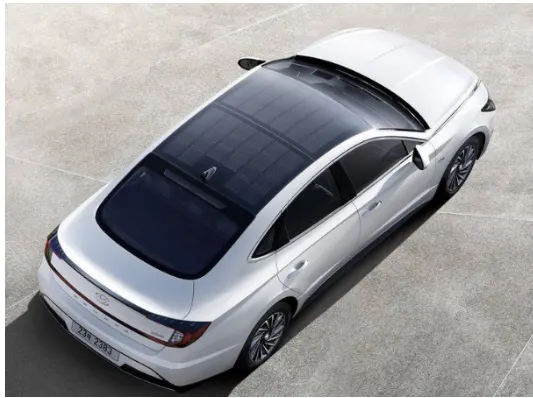
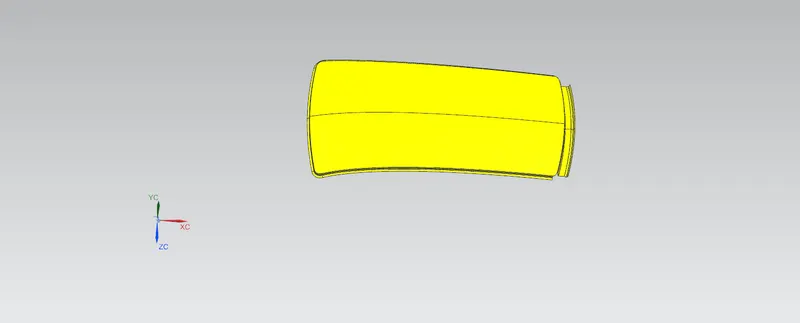
Design consideration for designing the roof
We have to consider certain aspect while designing the roof these are given as follows
1- Front visibility criterion - We have to think about whether driver is able to see properly through the windshield for this purpose we give 3 deg. to the ditch area flange
2- Head clearance - We have to make ensure that there should be a proper gap maintained between the head of the passenger to the inner surface of the roof so that the driver can comfortably see through outside the windscreen.
ROOF ASSEMBLY
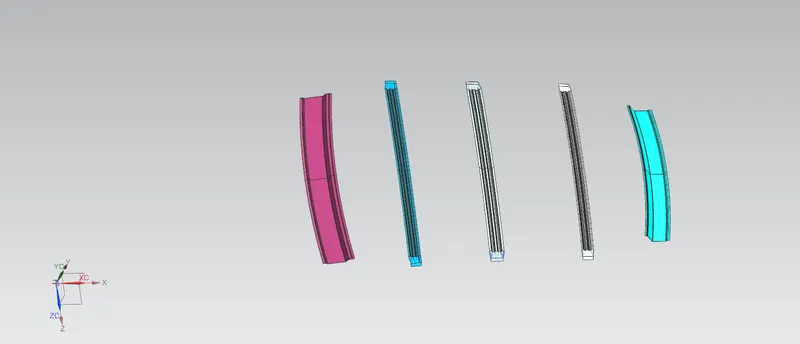
- Roof outer panel
- Front roof rail.
- Rear roof rail.
- Bow roof 1
- Central roof rail.
- Bow roof 2
Roof outer panel
It is the main component which protect us from harsh environmental conditions.
It deals with the aesthetic and the aerodynamic aspect of the car.
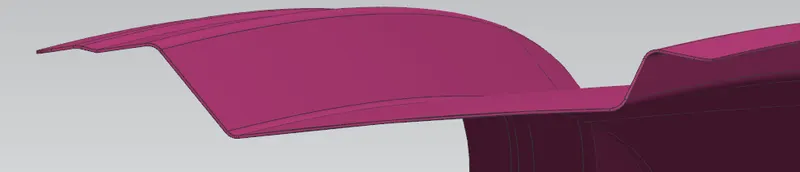
Front roof rail
- It is used to provide strength for a front roof panel.
- We have to think about front visibility criterion, head clearance criterion while designing the front roof rail
- With this component roof panel, headliner, windshield is attached.
- It is made from body side outer scrap material.
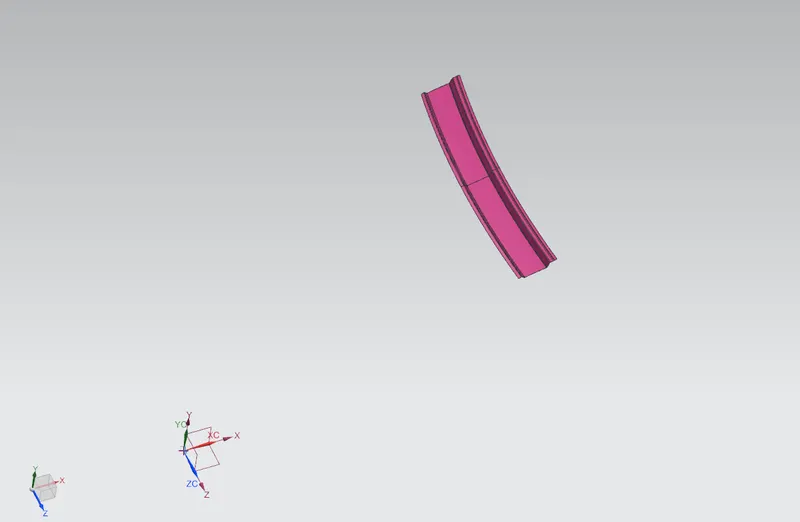
Rear roof rail
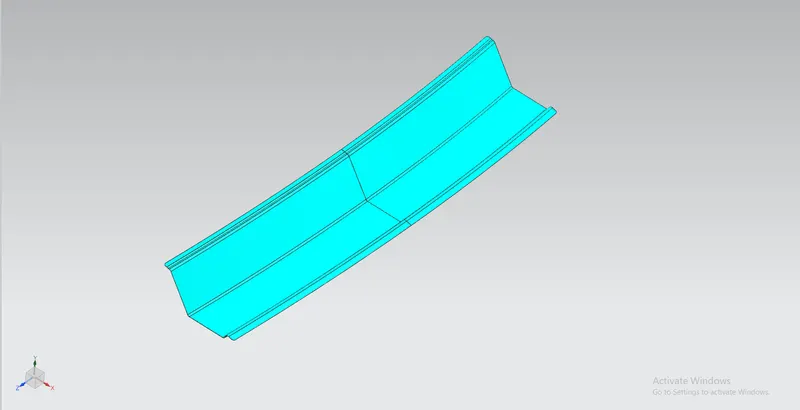
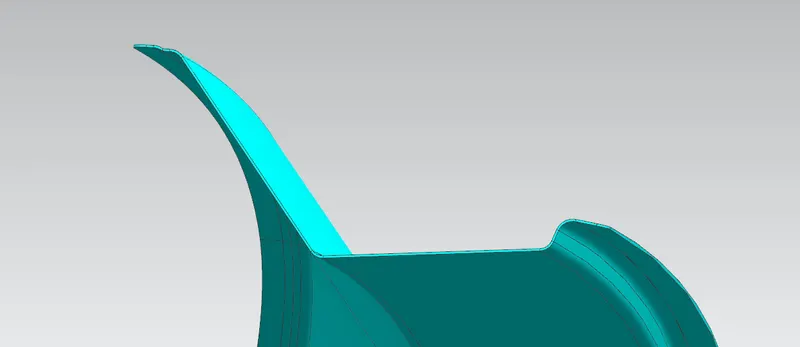
- It is used to provide the strength for a rear roof panel.
- We have to think about rear visibility criterion and rear head room criterion while designing the rear roof rail.
- From rear roof rail, back door inner panel together with hinge for opening of back door is attached.
Bow roof 1 and 2
- It is the additional reinforcement for the roof.
- These are manufactured from the body side outer scrap material.
- 5mm clearance between(inner side of outer roof) to( outer side of bow roof) is deliberately left for mastic application.
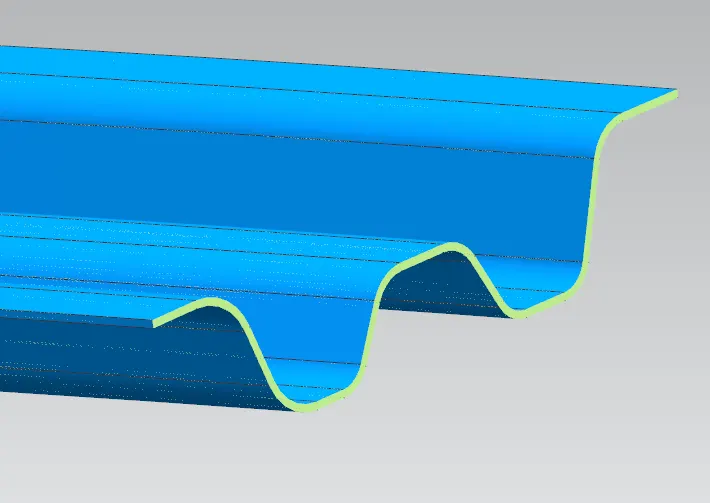
Center roof rail
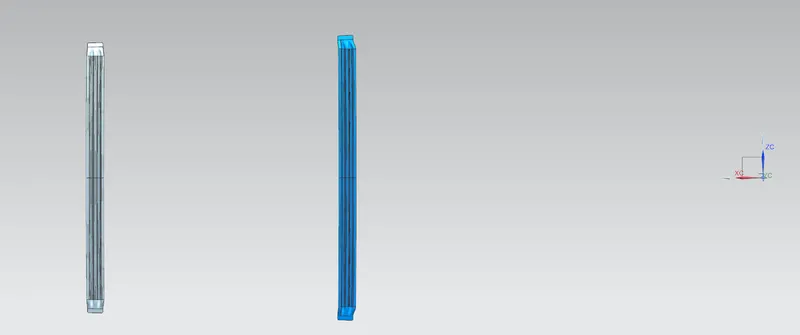
- Due to accidents when the car is upside down, the center roof rail will play the major role as most of the load is taken by the center roof rail and ensure passenger safety.
- It is always attached with the B-pillar to ensure the load tranfer to the other side due to side crash.
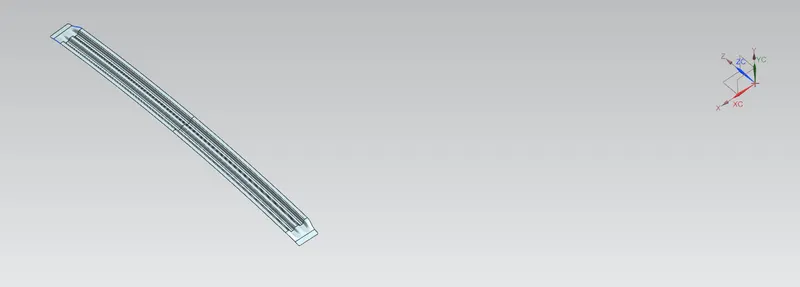
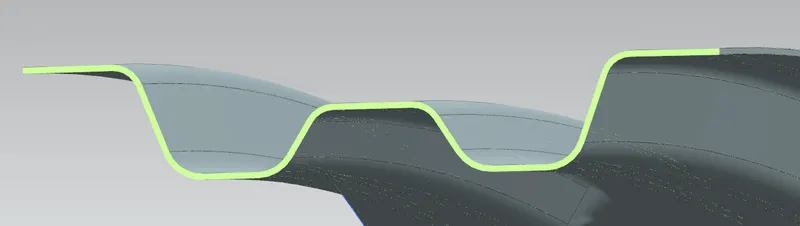
Roof assembly
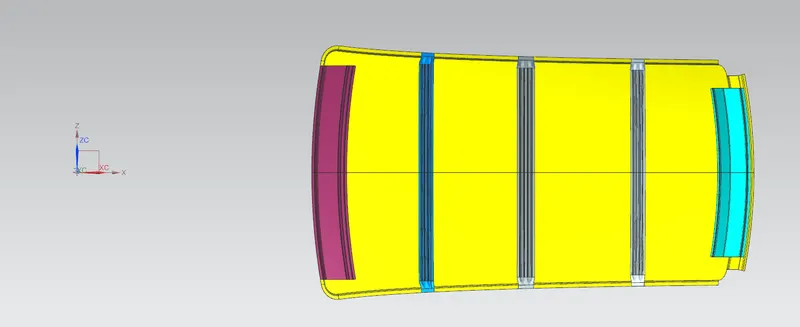
NOTE-
1- JOINING OF BOW ROOF RAIL TO THE DITCH AREA IS THROUGH SEAM WELDING.
2-JOINING OF BOW ROOF RAIL SURFACE TO THE ROOF IS THROUGH HEMMING.
SEAM WELDING
It is a form of resistance welding in which we use two roller to weld the workpiece here we get a leak proof joint
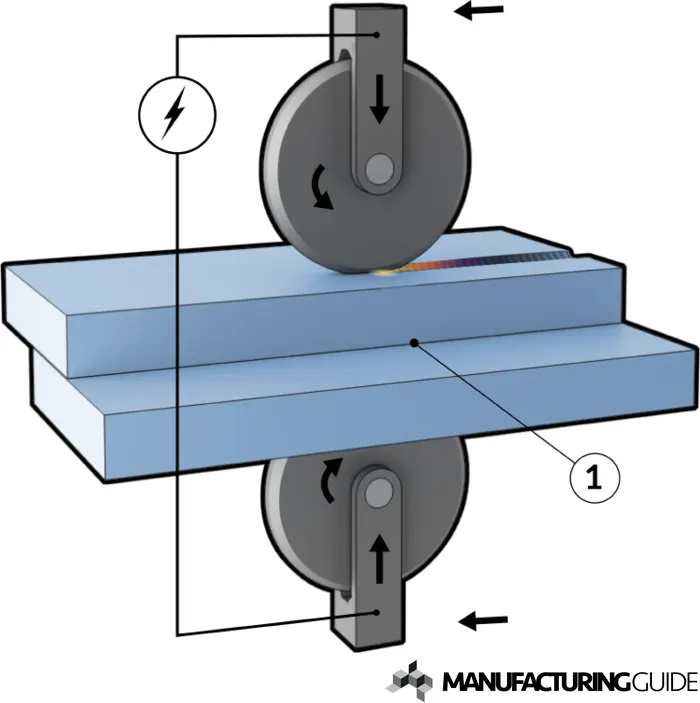
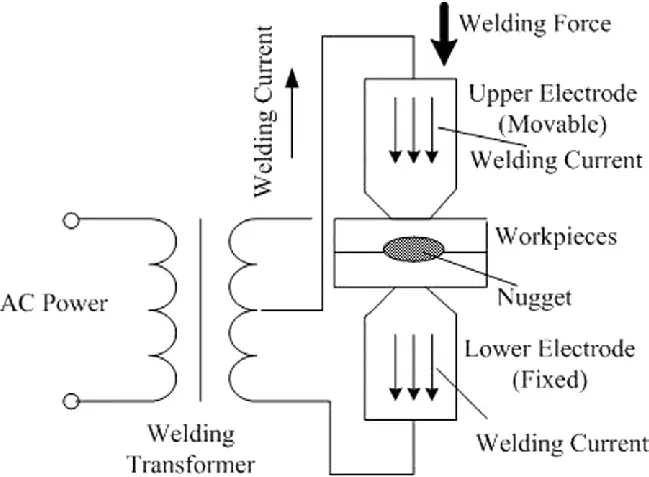
SPOT WELDING OPERATION
this type of welding comes under resistance welding operation in which we create lap joint (putting one metal object over the another) here we apply sufficient pressure with the help of conducting electrode after that we create the large potential difference between the metal object since air (which is present at the interface between the metal which is in contact) is the bad conductor of electricity there is a large value of resistance at the interface due to the heating effect, material between the interface melts and joint in the form of spot takes place at the interface.
HEMMING
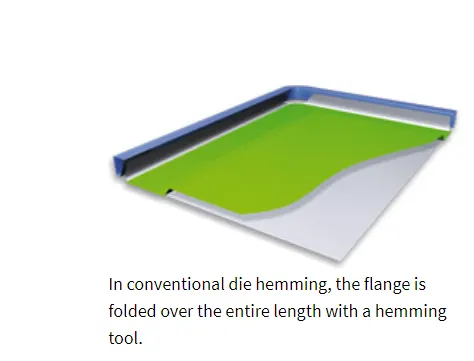
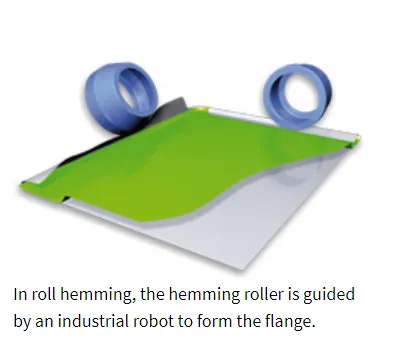
Hemming is a forming operation in which the edges of the sheet are folded or folded over another part in order to achieve a tight fit. Normally hemming operations are used to connect parts together, to improve the appearance of a part and to reinforce part edges. thats why we use joining of the inner panel to the outer panel by hemming and mastics.
Hemming are of two types
1- Conventional die hemming
Useful for masss production here we use hemming tool and entire flange is folded with one shot.
2- Roll die hemming
Here we gradually fold the flange hence cycle time is high but tool handling is easy and also cost efficient.
CRITERIA FOR PREDICTING THE POSITION OF BOW ROOF
There are two criteria to ensure the effectiveness of bow roof reinforcement
1- HEAT DISTORTION ANALYSIS
Here we ensure that the position of the bow roof is such that the functionality of the roof in terms of strength can withstand the elevated temperature because the material of the roof will lose its strength (becomes more ductile not suitable for the static structure) above a certain temperature so we have to place the bow roof to the most affected location such that Roof retains its functionality.
PROCEDURE
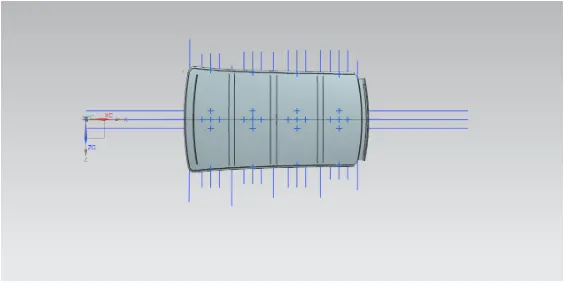
1- Draw a horizontal line passing through the 0-Y axis of the Roof.
2- Offset 300 mm on either side along the 0-Y axis.
3- Offset 100mm above and below from this offset line.
4- Draw the vertical line in the middle of the two components offset 100 mm on both sides of this line as shown below.
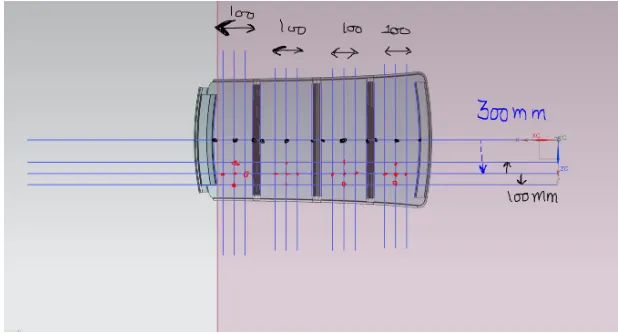
5- Project intersection point on the roof outer panel.
6- Draw the 3- point arc and find the value of Rx and Ry using the local radius command.
FORMULA
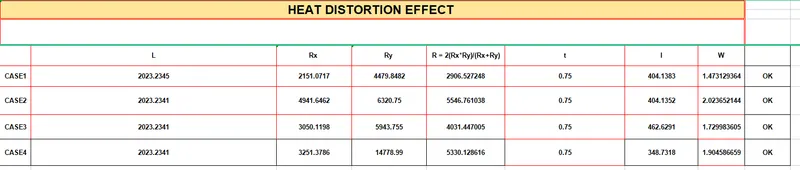
W = [1.73 x 10^(-3) x L] + [1.85 x 10^(-8) x (R^2)/t] + [ 1.10x10^(-3) x l] - 2.68
Judgment Condition : OK< 2.7> 3.1
Where
L = Roof Length in X-Direction[mm](Roof dimension in 0-Y)
R = Roof curvature
R = 2(Rx*Ry)/(Rx+Ry)
Rx = X curvature
Ry = Y curvature
t = Roof plate thickness [mm]
l = Bow Roof Span [mm]
2- SNOW LOAD CRITERION
Suppose we live in the region where snowfall happens frequently so our car roof should withstand the load because of snowfall and get back into the original shape once the load is removed.
PROCEDURE
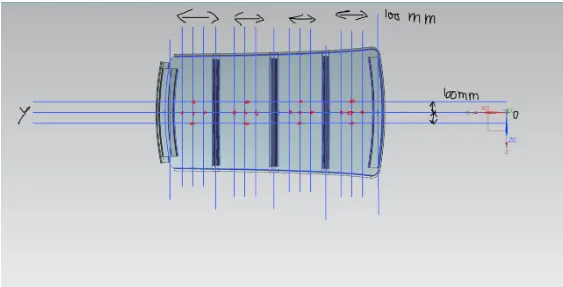
1-Draw the horizontal line along the 0-Y axis.
2- Offset 100 mm on both sides along the 0-Y axis.
3- Draw the vertical line in the middle of the midline of two consecutive roof components.
4- Project the intersection point on the roof outer panel and create the 3-D Arc and calculate the radius of curvature Rx and Ry using local radius analysis command.
Snow load Prediction formula
Qr = [Iy x t2] / [α x s x [(Rx + Ry)/2]2 x 10-8]
Where
α = My x Lx2 x 10-12 , My = Y(Ly-Y)
Judgment condition = Qr ≥ 3.1
250 ≤ s ≤ 380
t = Roof plate thickness [mm]
Ly = Distance between the front and rear roof Rails on the Vehicle along with 0Y[mm]
Length of Roof panel with the center point between Roof rail Front /Rear as the front and rear reference point.
Lx = Distance between the Left and Right end of the roof on the Roof BOW [mm]
Width of the roof panel exposed on the surface.
Y = Distance front Front Roof Rail to Roof BOW[mm]
s = Distance for which Roof BOW bears divided load [mm]
s = L1/2 + L2/2
Iy = Geometrical moment of inertia of Roof BOW (Y cross-section )[mm4]
Rx = Lateral direction curvature radius of roof panel Y cross-section on Roof BOW [mm]
Roof panel curvature Radius of the Length Lx in Front view.
Ry = Longitudinal Direction curvature radius of the Roof panel X cross-section on Roof BOW [mm]
Roof panel X curvature radius of length s in Side view.
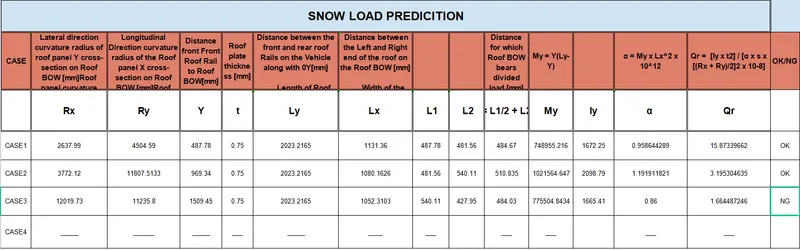
Here the value of Qr is not in the range as required for the third case so there 3 ways to strengthen the roof
1- Adjusting the positions of Bow roof.
2- Using additional bow roof to strenghten the roof
3- Creating embosses on the outer surface of the roof.
Draft analysis
We do draft analysis to ensure the manufacturing feasibility of the material
Draft analysis of the outer roof
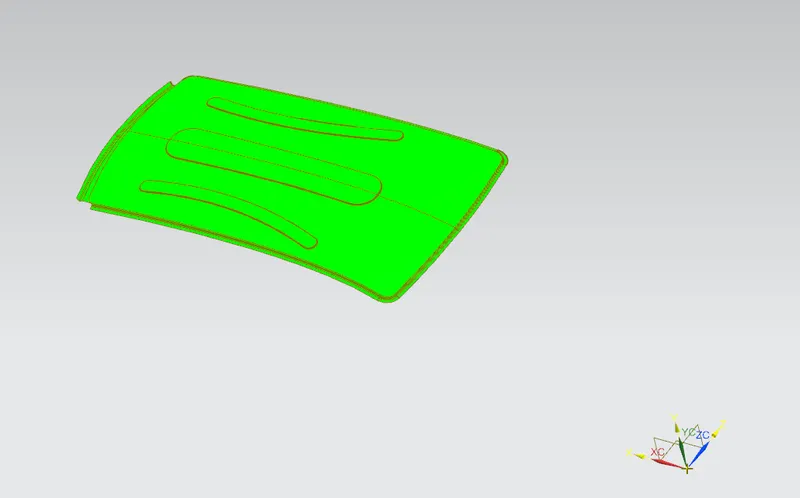
Draft analysis of the bow roof 1 and 2
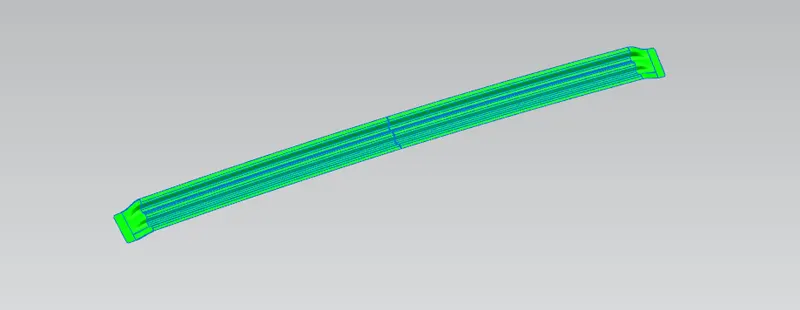
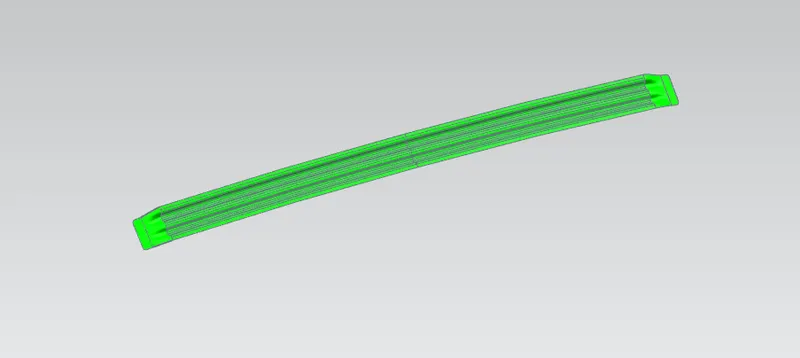
Bow roof 1 Bow roof 2
Draft analysis of the central roof
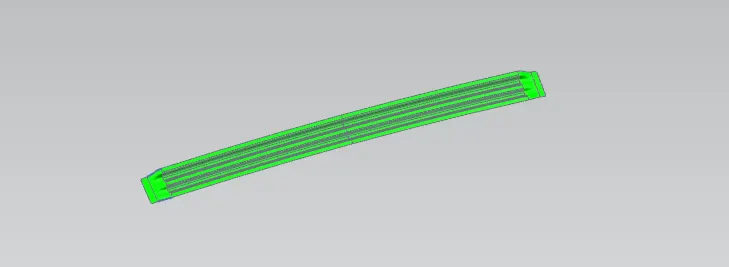
Central roof
Draft analysis of the front roof rail
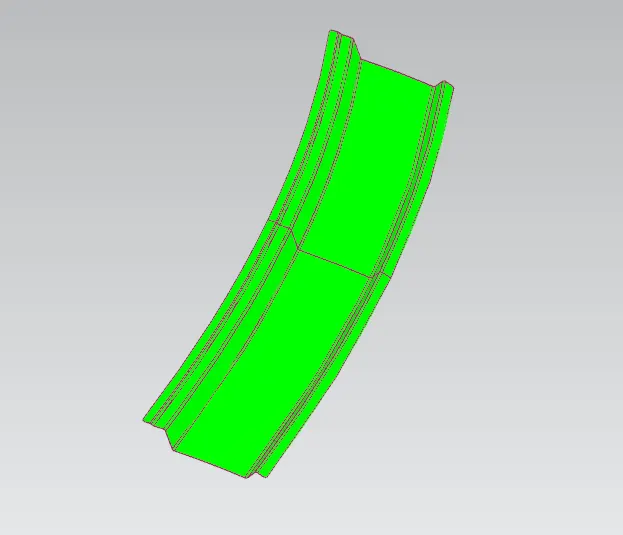
Draft analysis of the rear roof rail
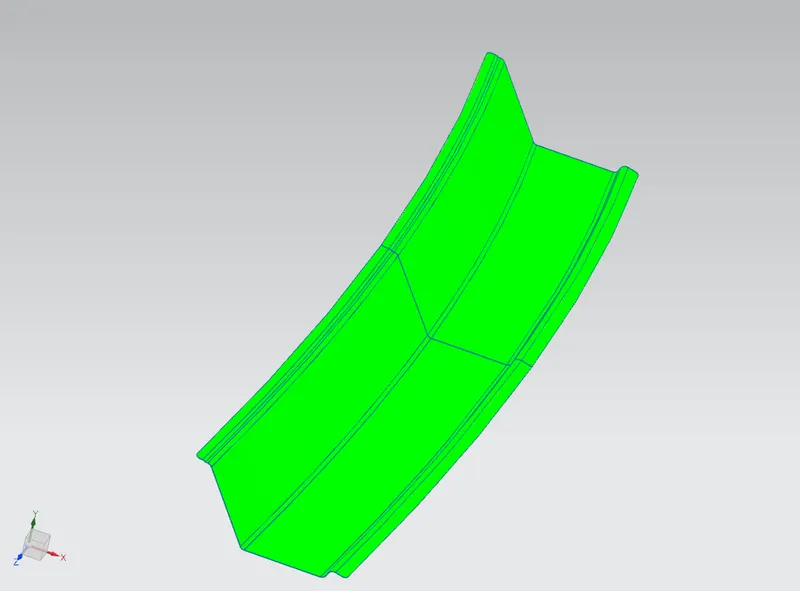
CONCLUSION
We study the functional requirement of bow roof and do the analysis of the roof based on harsh environment conditions
1- Heat distortion analysis —------> BOW ROOF PASS
2-Snow load criteria —---------> MODIFICATION REQUIRED.
- And we modified the roof by creating embosses on the outer panel as shown below