Roof challenge
Aim:
To modify for the given roof styling skin data, Develop the essential flanges and reinforcements, provide appropriate dimensions and check for Draft analysis.
It also performs the roof calculations using by snow load Prediction formula and heat distortion of the Bow–roof prediction Formula.
Roof:
The roof is placed at the top position of the car that roof protection from wind, sunlight, rains and crash force. The roof protects the passengers safe drive.
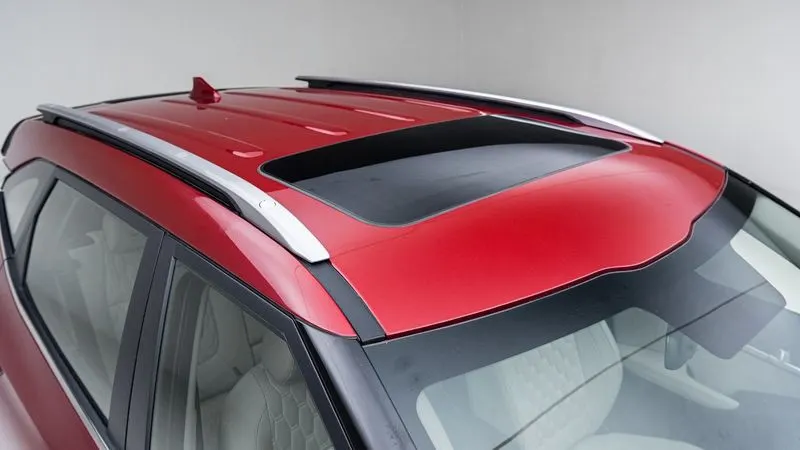

Roof is a styling surface part . it fixed with the BIW sheet body through the rails and panels inside of the upper roof to provide the strength and stiffness.
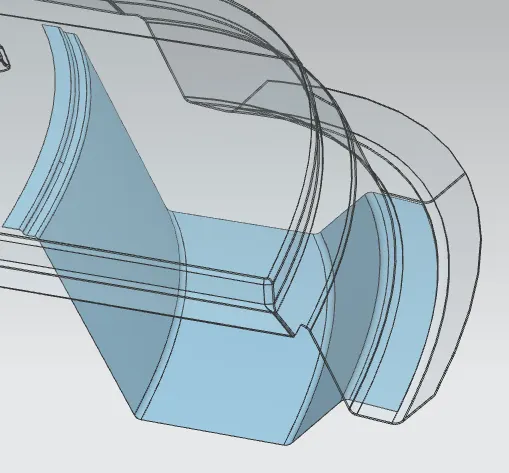
Ditch area play an important role and to fixed the reinforcement on the roof compartment.
The rails and reinforcements are combined together to the ditch area with spot welding process.
The required tool opening angle is only 3 degrees.
The factors involved in before creation ditch area,
- Headroom clearance
- Visibility criteria
- Back door assembly
- Windshield Assembly
Software using the Nx CAD:
Class A Styling Input
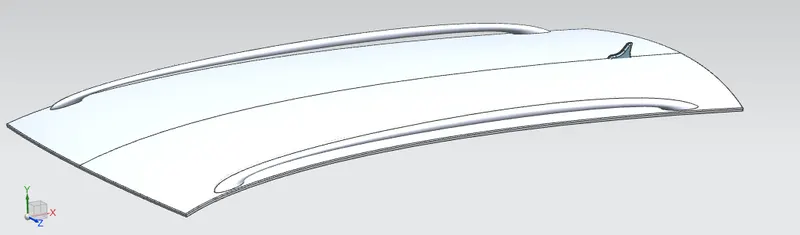
After the file is opened, the part is not combined together to the roof part surface. But as the individual surface parts.
It is also seen as the surface is perfect as asymmetrical shape. It helps work on the half part.
It creates the entire roof. we will work on the half surface and mirror to complete the roof design.
Components for Roof Design:
1. Front Roof Rail
2. Rear Roof Rail
3. Front Bow Rail
4. Centre Bow Rail
5. Rear Bow Rail
6. Ditch Area
Front Roof Rail:
Front roof is created by using given master section.
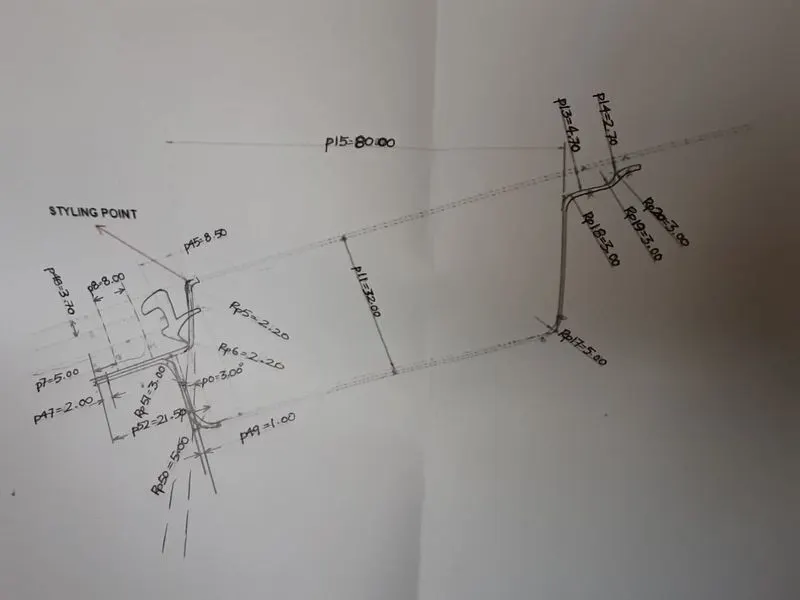
Designed Model:
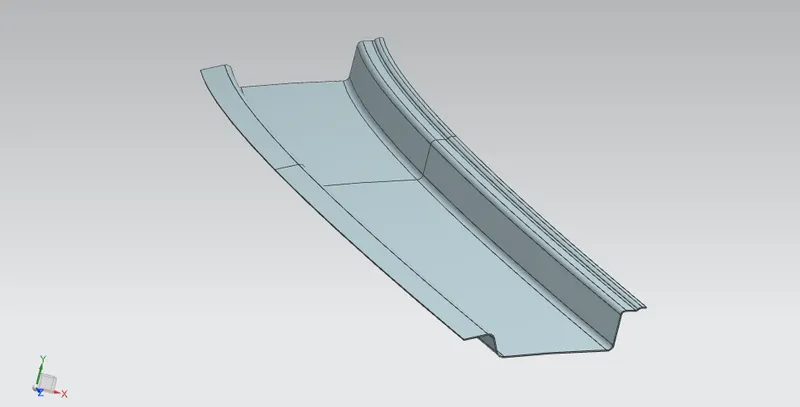
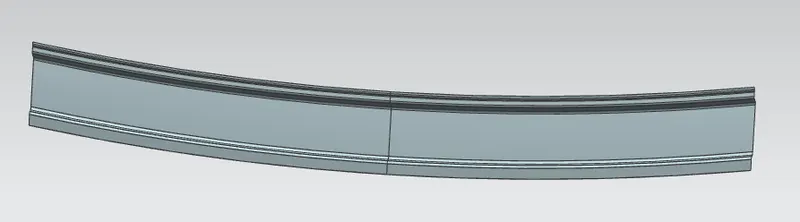
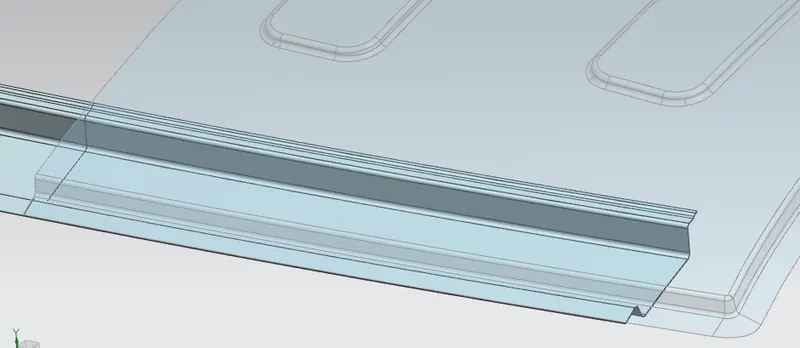
The front roof provides the strength for the roof panel front. It also performs between windshield glass, roof panel and headliner. Spot welding processes are applied at windshield end of the rail and the other end is combined with the roof using the mastic sealant it also increases the strength.
Rear Roof Rail:
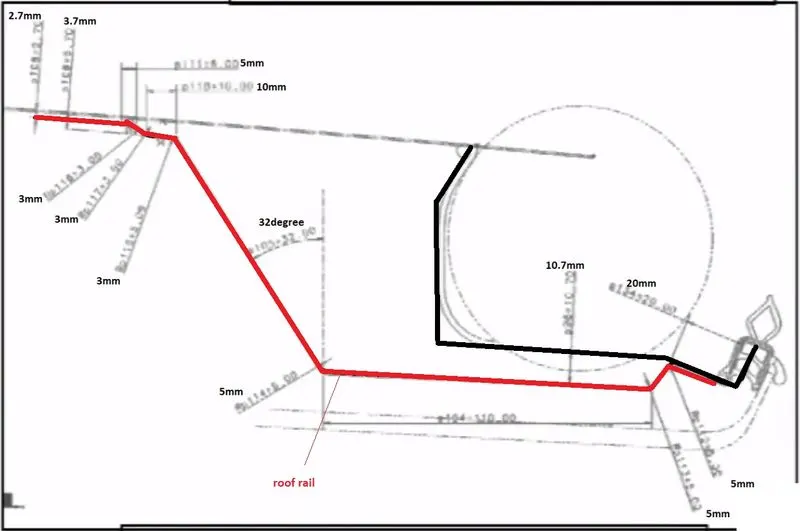
Rear Roof is created by using the the given master section.
Designed Model:
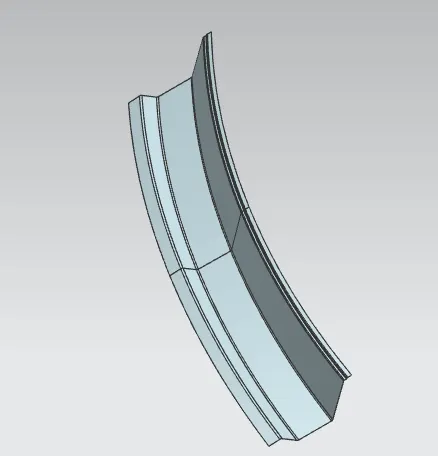
The rear Roof provides strength to the roof outer pane.l it also performs between back glass and roof. it connected to the back door of the car. Spot welding process are applied at back door end of the rail and another end is combined to roof using the mastic sealant.
Bow Roof:
It provides strength to the area between the front roof and centre roof rail. It also provides strength to the area between the centre roof rail and rear roof rail to provide enough strength. It is created in any numbers depending upon the roof length but position of the bow is justified using the curvature study.
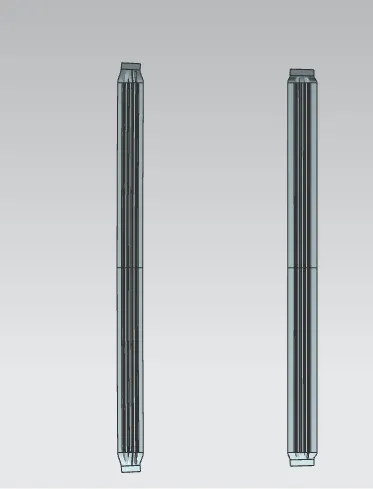
Front Bow Rail:
It is created at front of the roof. It is combined with the mastic seal
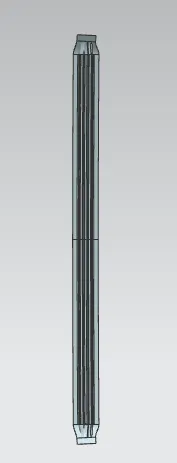
Centre Bow Rail:
It was created at the centre of the roof. it is combined with the mastic seal.
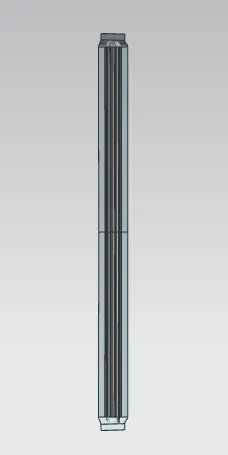
Rear Bow Rail:
It was created at the rear of the roof It also combined with the mastic seal.
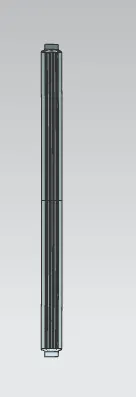
Ditch Area:
Ditch Area is an extended position of the main roof closed by the other BIW panels. The rail support of the roof is together to the ditch area using a spot welding process
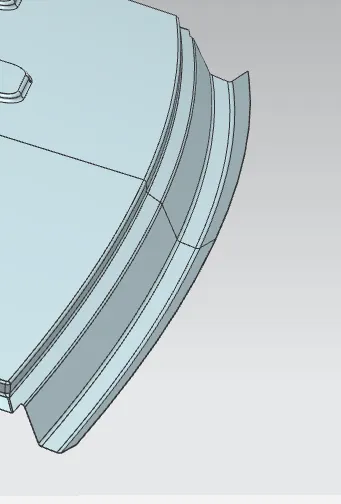
Roof calculation:
Snow load Criteria:
Snow load Criteria study is complete by checking the ability of the withstand snowfall and bounce back to its original shape without any deformation once the load is removed.
- To calculate the snow load condition using the snow load prediction formula.
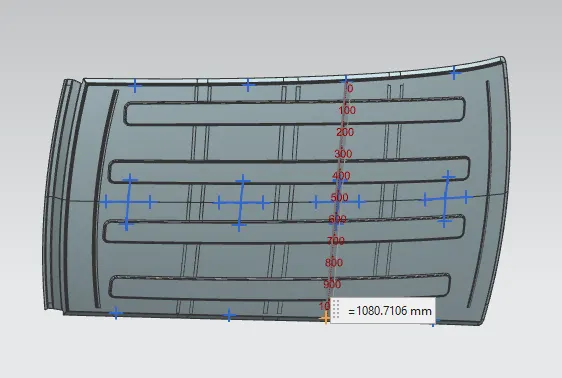
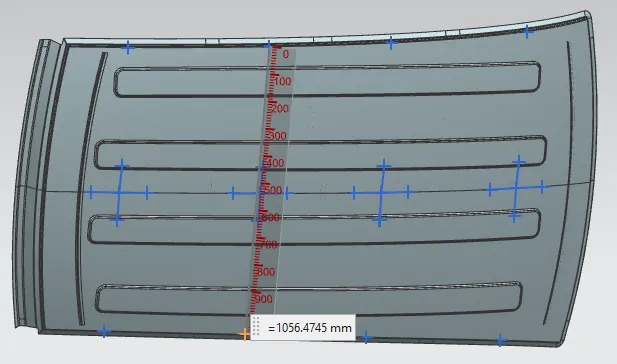
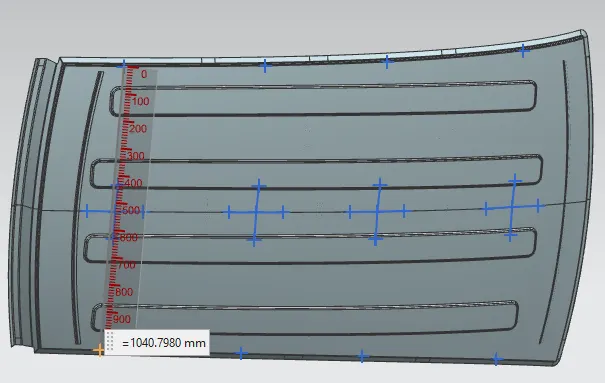
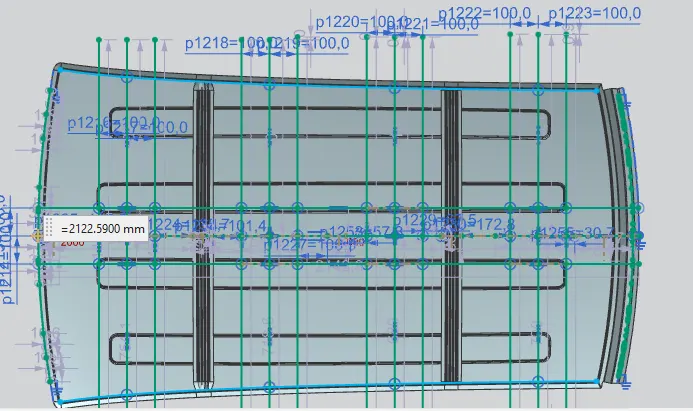
- Create a sketch and draw a line on the OY axis from the centre of the roof.
- From the drawn line take a parallel line distance of 100 mm on both sides.
- To make an intersection point of those lines and create a three arc point.
- To measure values for a particular length of the roof.
This sketch represents the snow load prediction calculation showing whether the strength is satisfied or not satisfied.
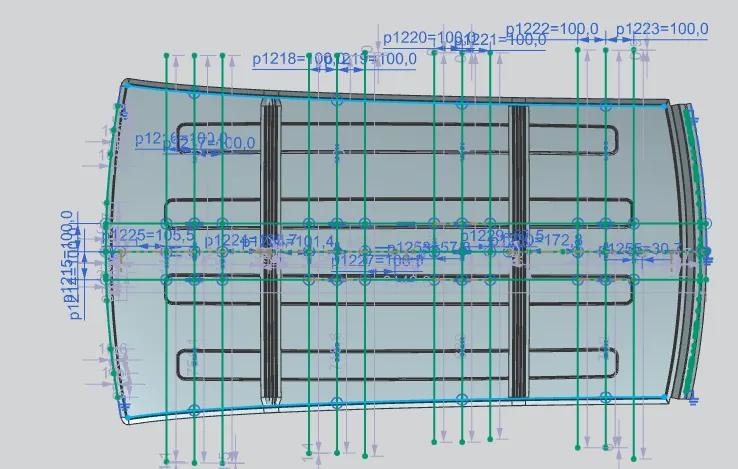
Lx &Ly values:
Lx = 1133.53 mm
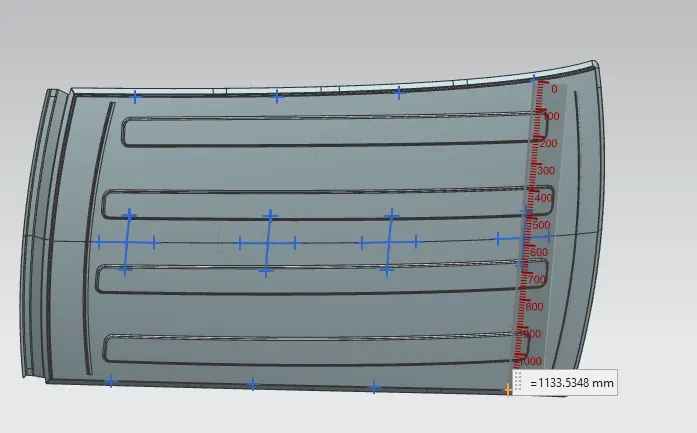
Lx = 1080.71 mm
Lx =1056.47 mm
Lx = 1040.79 mm
Ly=2122.59 mm
Snow load Prediction formula:
Qr = [L y x t2] / [α x s x [(Rx + Ry)/2]2 x 10-8]
Where
α = My x Lx2 x 10-12 , My = Y(Ly-Y)
Judgement condition = Qr ≥ 3.1
250 ≤ s ≤ 380
| Bow | Rx | Ry | Lx | Ly | s | Y | t | `alpha` | Qr | 0k/NG |
| Front Roof to Front Bow | 899.38 | 2655.31 | 1133.53 | 2122.59 | 1628.06 | 532.96 | 0.75 | 1.088 | 21.33 | Ok |
| Front Bow to Centre Bow | 882.64 | 6525.13 | 1080.71 | 2122.59 | 1601.65 | 485.43 | 0.75 | 0.928 | 5.95 | OK |
| Centre Bow to Rear Bow | 919.04 | 10871.16 | 1056.47 | 2122.59 | 1589.53 | 401.99 | 0.75 | 0.749 | 2.88 | NG |
| Rear Bow to Rear Roof | 872.21 | 16778.08 | 1040.79 | 2122.59 | 1581.69 | 543.37 | 0.75 | 0.930 | 10.44 | Ok |
Snow load condition is satisfied in the area between the front roof and the front bow.
It is satisfied with the area between the rear bow and the rear roof.
It is satisfied with the area between the front bow and the centre bow.
It is not satisfied with the area between the centre bow and the rear bow.
So this condition is not satisfied for the strength of the roof.
I will provide the strength for the roof and embossed are created for strength impact of the roof.
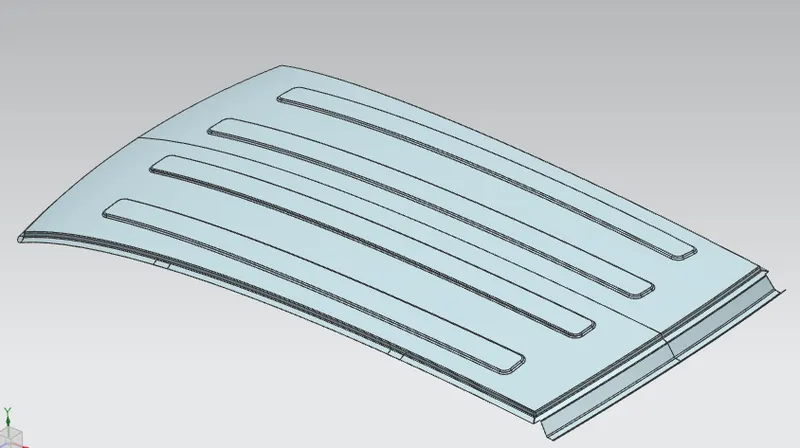
Roof Calculation:
Heat distortion criteria: re
The "heat distortion temperature" (HDT) is often used in the product literature of commercial polymers as an indicator of the mechanical softening temperature. The alternative name is “heat deflection temperature”. The study is complete by checking the ability of the roof to withstand high temperatures with respect to the position of place of reinforcement. It contributes to increased strength.
- To calculate the heat distortion criteria condition using the Bow-roof prediction formula.
- Create a sketch and draw a line on the OY axis from the centre of the roof.
- From the drawn line take a parallel line distance of 300mm from the horizontal line.
- Draw a line from a distance of 100mm on both sides.
- To make an intersection point of those lines and create a three arc point.
- To measure values for a particular length of the roof
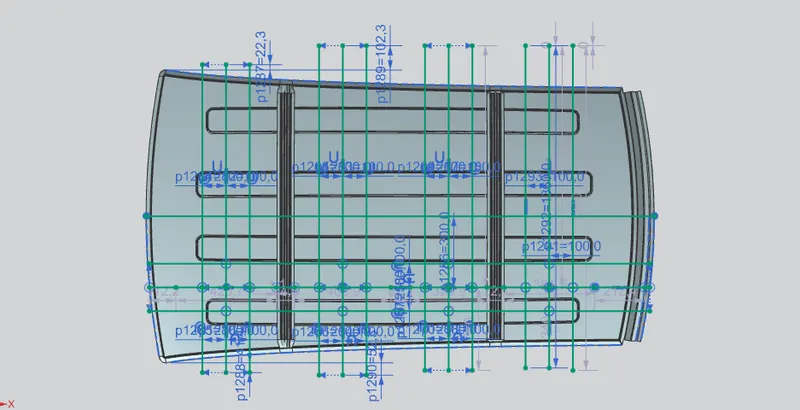
L value:
L = 2028.02 mm
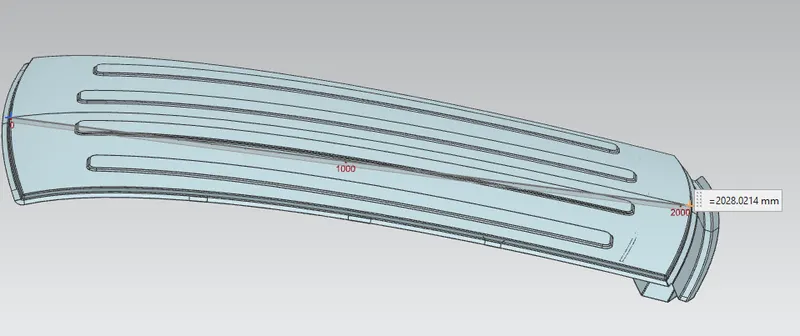
Bow–roof prediction Formula:
W = [1.73 x 10^(-3) x L] + [1.85 x 10^(-8) x (R^2)/t] + [ 1.10x10^(-3) x l] - 2.68
Judgement Condition : OK< 2.7> 3.1
Where
L = Roof Length in X-Direction[mm](Roof dimension in 0-Y)
R = Roof curvature
R = 2(Rx*Ry)/(Rx+Ry)
Rx = X curvature
Ry = Y curvature
t = Roof plate thickness [mm]
l = Bow Roof Span [mm]
| Bow | Rx | Ry | R | l | L | t | R^2/t | W | OK/NG |
| Front Roof to Front Bow | 2288.52 | 2194.87 | 2240.71 | 424.73 | 2028.02 | 0.75 | 6694375.06 | 1.418 | OK |
| Front Bow to Centre Bow | 6633.42 | 2380.71 | 3503.88 | 405.87 | 2028.02 | 0.75 | 17846455.688 | 1.604 | OK |
| Centre Bow to Rear Bow | 10449.41 | 2217.45 | 3658.53 | 323.88 | 2028.02 | 0.75 | 16369566.73 | 1.486 | OK |
| Rear Bow to Rear Roof | 246972.15 | 2479.85 | 4910.39 | 381.53 | 2028.02 | 0.75 | 32149239.23 | 1.841 | OK |
This condition shows that the design is nice and limits are satisfied with the standard.
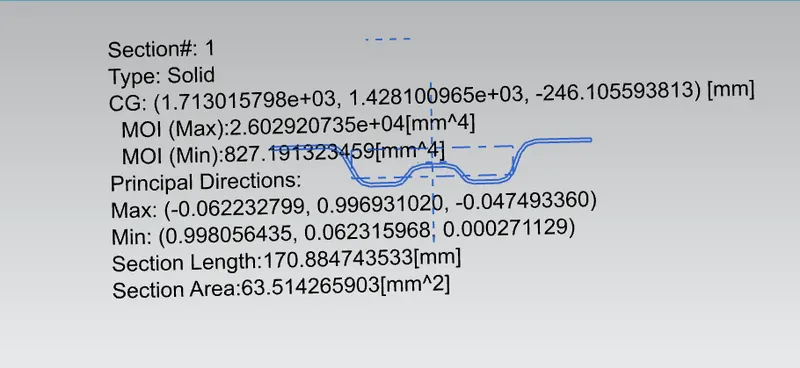
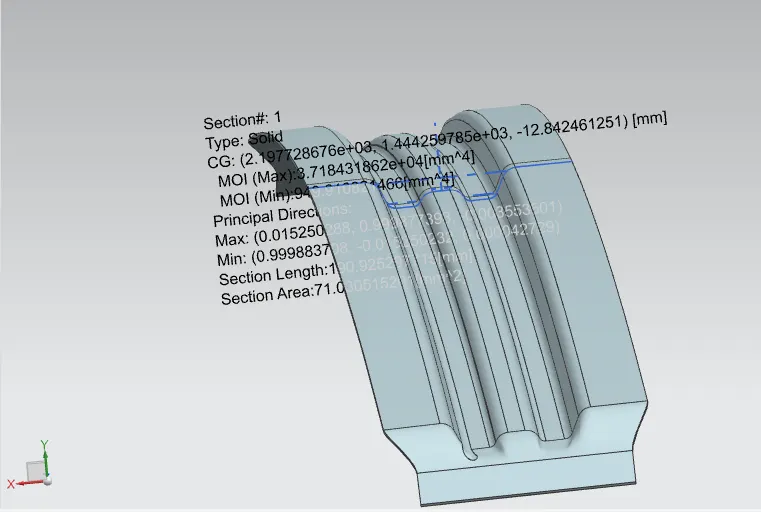
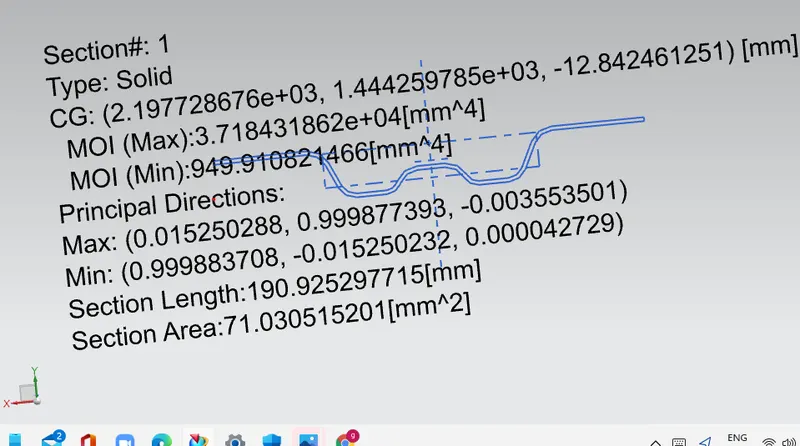
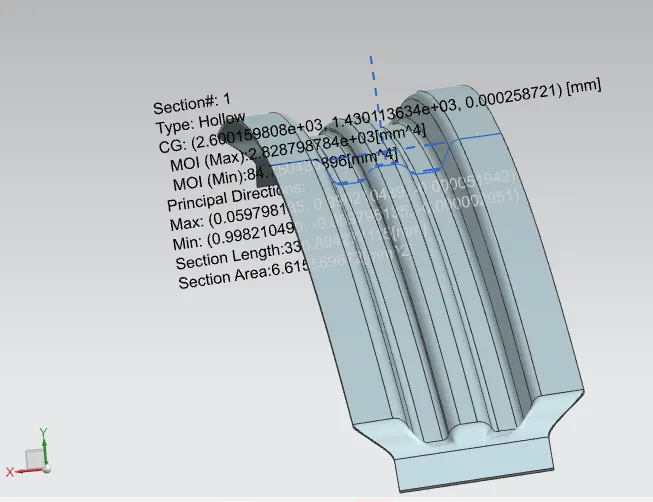
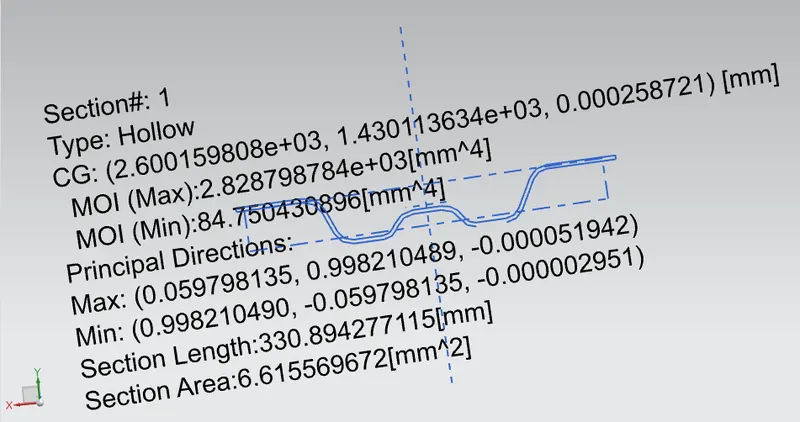
Section Modulus for Bows:
Section Modulus is a geometric property for a given cross-section used in the design of beams or flexural members, it is also referred as the polar modulus or the torsional Section Modulus.
To Use the Section from your Bows and calculate the section modulus using the formula S = I/y.
S = Section Modulus.
I = Moment of Inertia.
y = distance between the neutral axis and the extreme end of the object.
| Bows | Imin (mm^4) | Y(mm) | S (mm^3) |
| Front Bow | 827.19132 | 36.09 | 22933.580 |
| Centre Bow | 949.91082 | 41.0625 | 231318.84 |
| Rear Bow | 84.75043 | 36.079 | 23490.23 |
Front Bow:
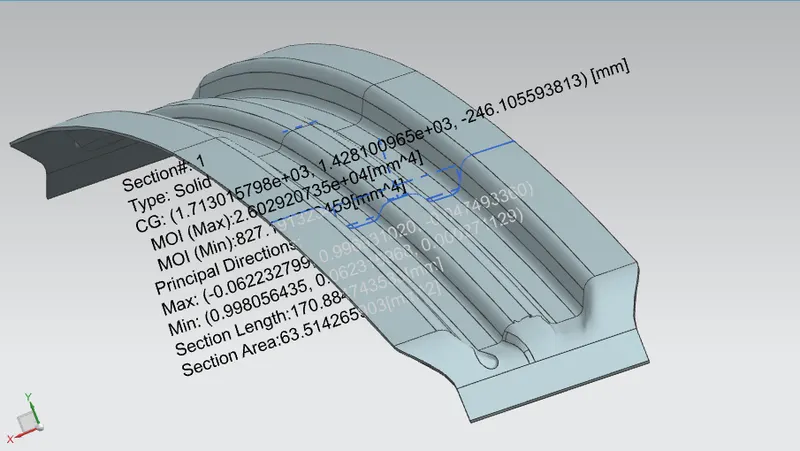
Centre Bow:
Rear Bow:
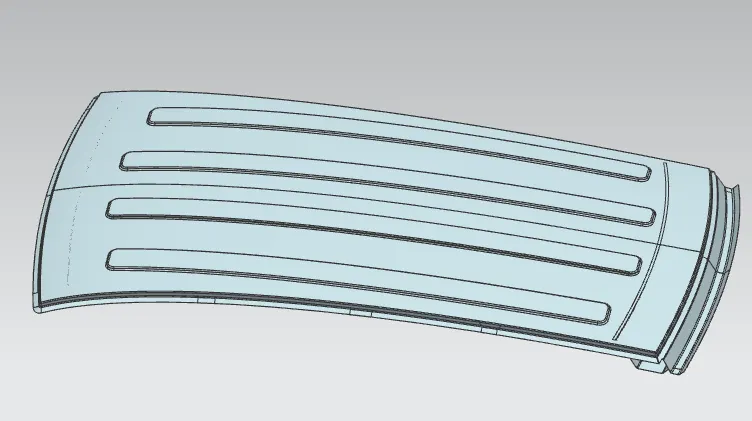
Final Roof:
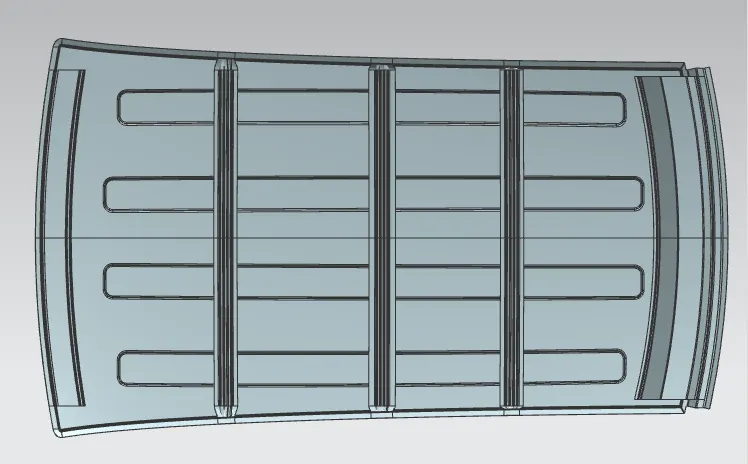
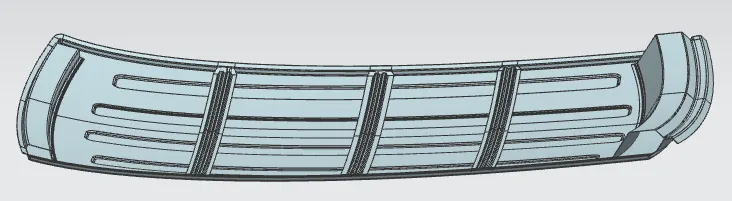
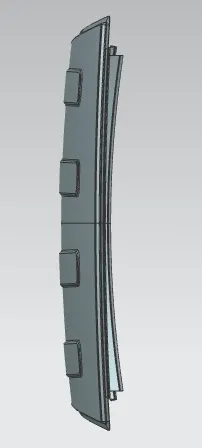
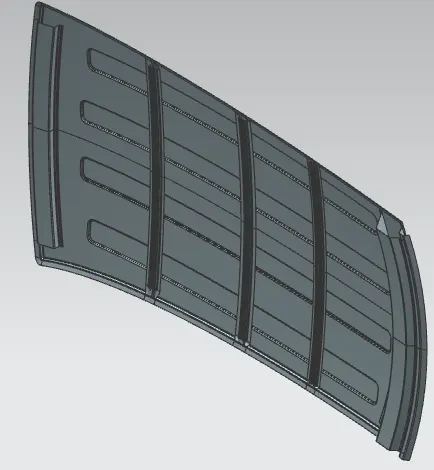
Bows and Roofs:
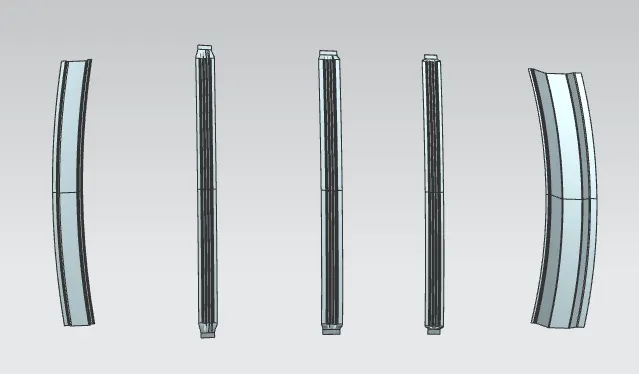
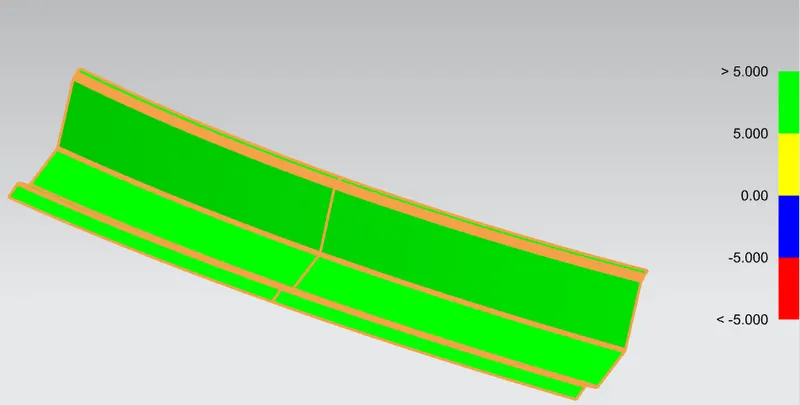
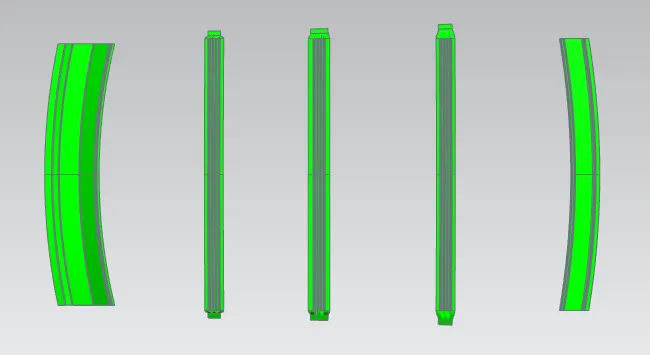
Draft Analysis:
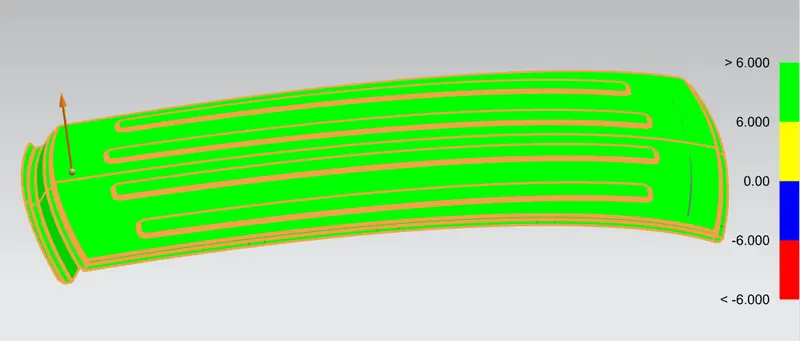
To check the features designed part clearance the minimum draft angle of 5 degrees for manufacturability. This type of analysis is performed on the colour ranges identifying zones of analyzed components where the deviation from the draft direction at any point corresponds to specified values.
Roof:
Front Roof Rail:
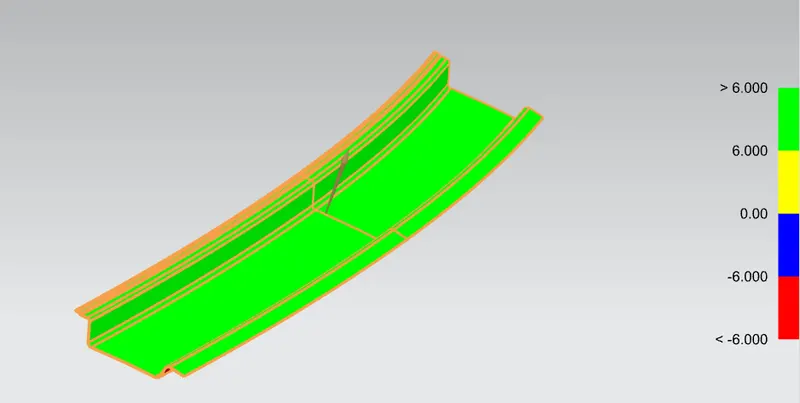
Front Bow Rail:
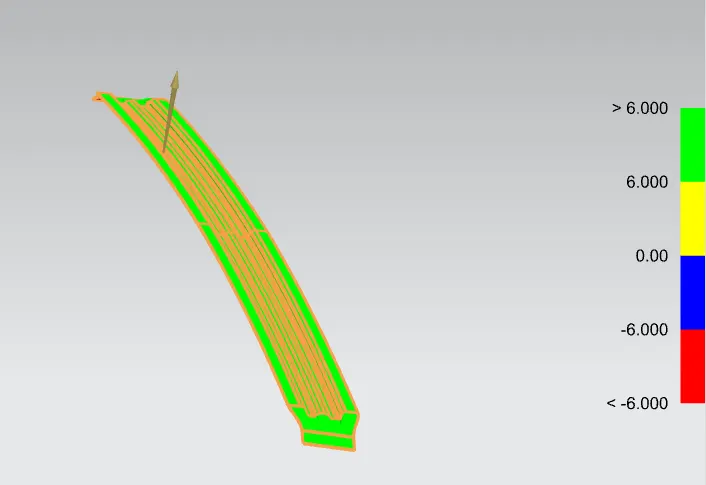
Centre Bow Rail:
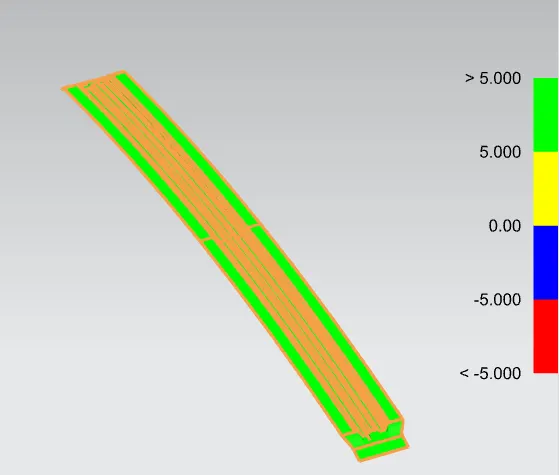
Rear Bow Rail:
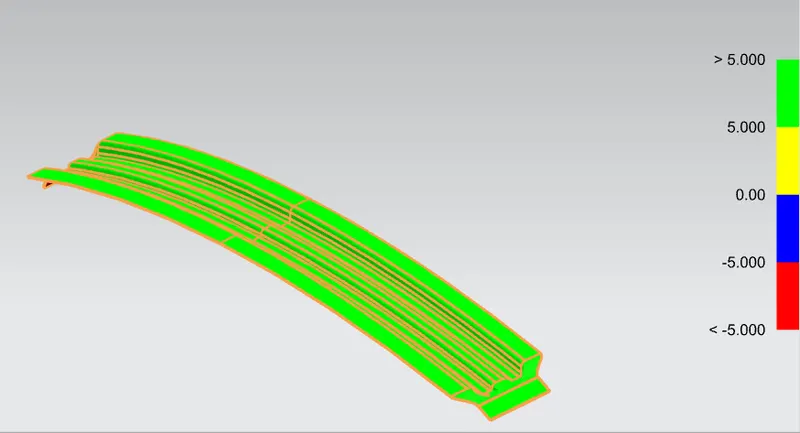
Rear Roof Rail:
Roofs and Bows:
Final Conclusion:
- Roof parts such as front roof, rear roof, front bow, centre bow and rear bow rails are required with flanges and reinforcements are designed.
- Curvature studies show that the roof was analyzed with heat distortion and snow load standards.
- Draft analysis was completed to the ability of manufacturability