Roof challenge
Aim :
For the Given Roof styling, Develop the essential flanges and reinforcements, Provide appropriate dimensions and check for Draft analysis, and submit your Section Inertia report on the 0-Y section.
Car Roof :
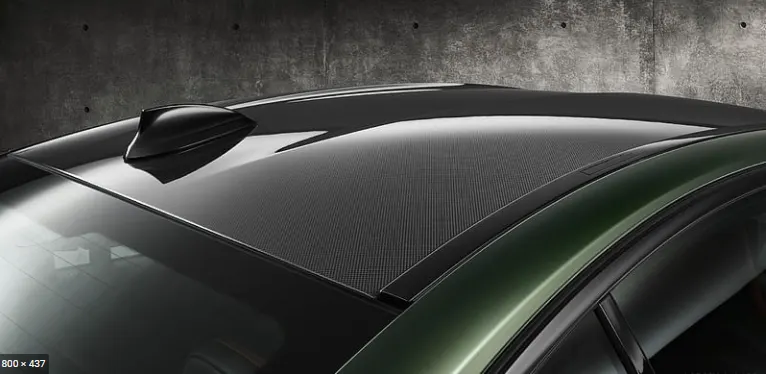
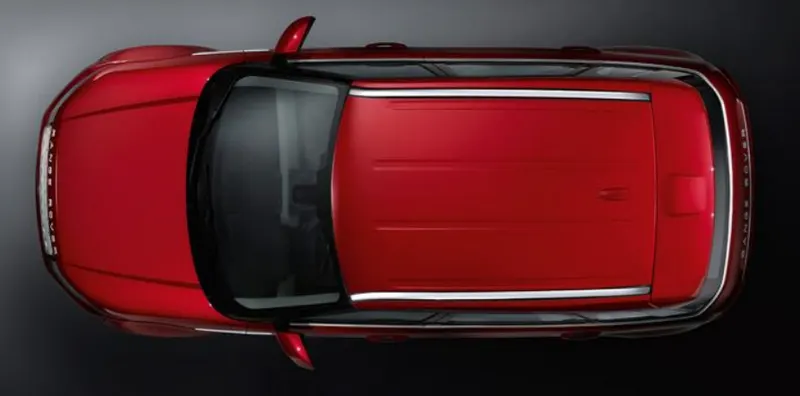
An automobile roof or car top is the portion of an automobile that sits above the passenger compartment, protecting the vehicle occupants from sun, wind, rain, and other external elements.
Types of Car Roofs :
- Convertible roofs.
- Hardtops.
- Sunroofs.
- T-tops.
- Targa tops.
- Vinyl roofs.
Different Components of a Car roof :
- Roof
- Front Roof Rail
- Centre Roof Rail
- Rear Roof Rail
- Bow Roof 1
- Bow Roof 2
Roof :
An automobile roof or car top is the portion of an automobile that sits above the passenger compartment, protecting the vehicle occupants from sun, wind, rain, and other external elements.
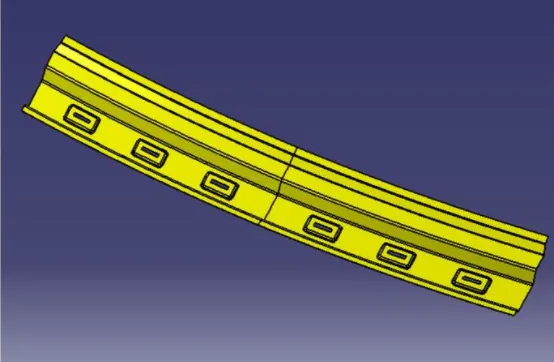
Front Roof Rail :
The roof rail is a feature that is found predominantly in estate cars or vans. Roof rails serve as a basic support for transporting things on the roof. With their help, the car can be put to varied use if the interior is already full.
Rear Roof Rail :
Centre Roof Rail :
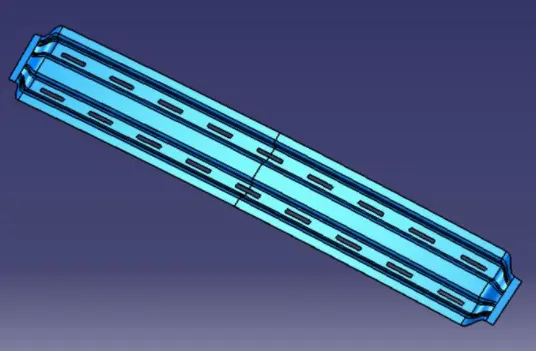
Bow Roof 1 :
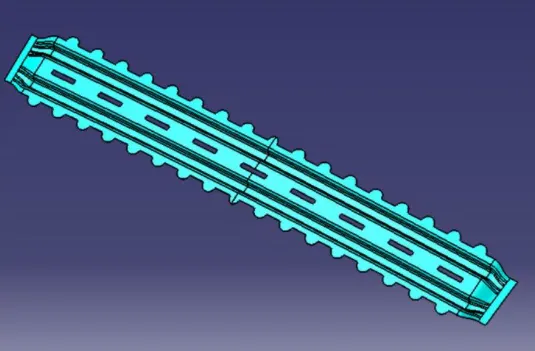
Bow Roof 2 :
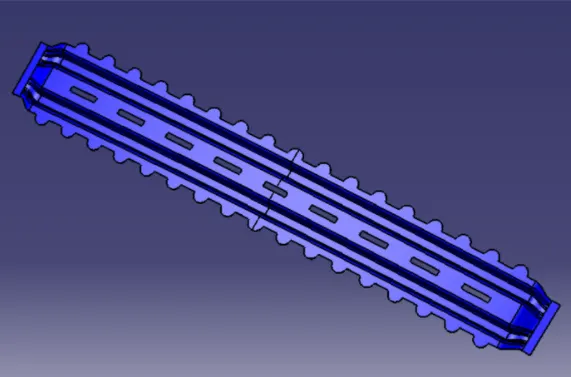
Given data :
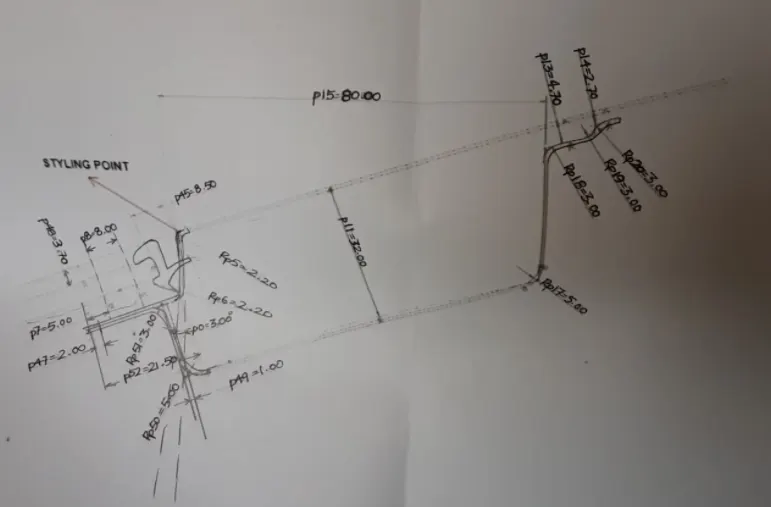
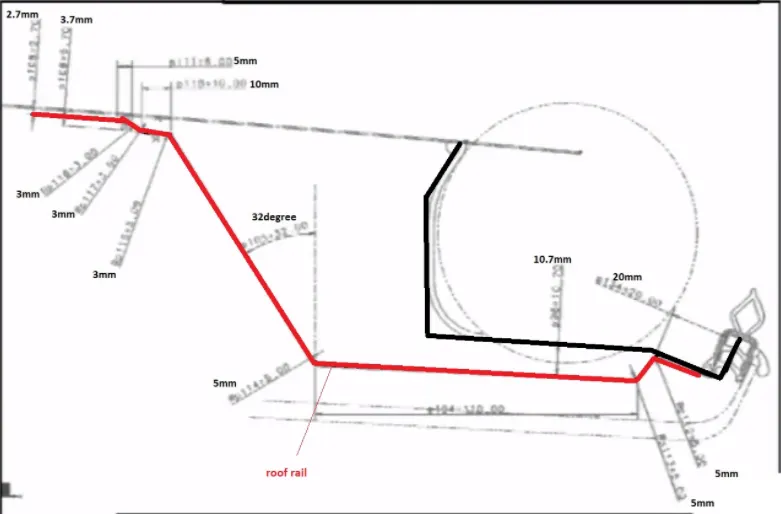
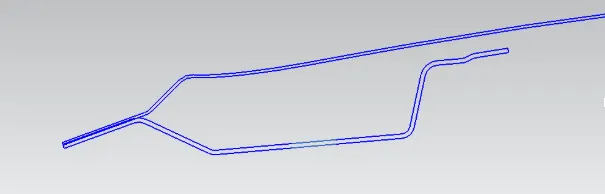
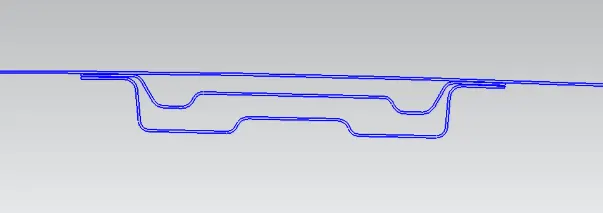
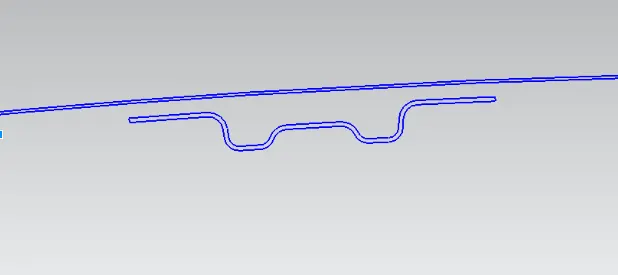
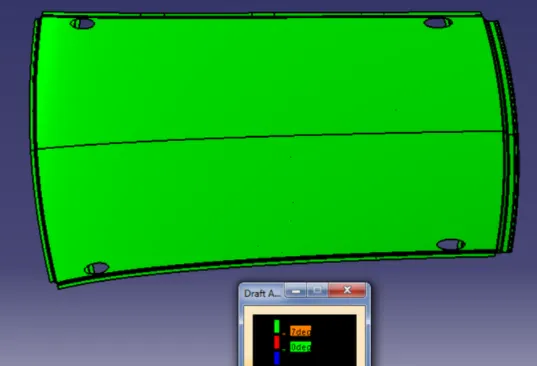
Draft Analysis of the Roof and Components :
- Roof
- Front Roof Rail
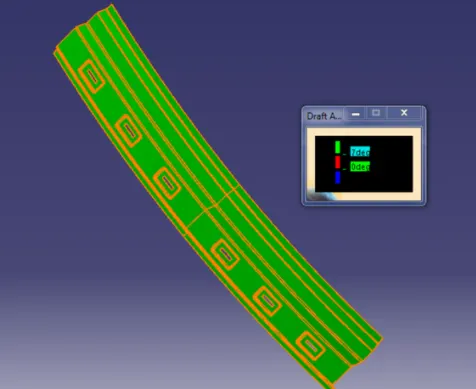
- Centre Roof Rail :
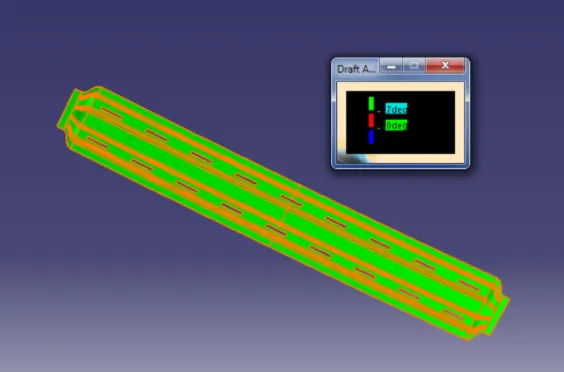
- Rear Roof Rail :
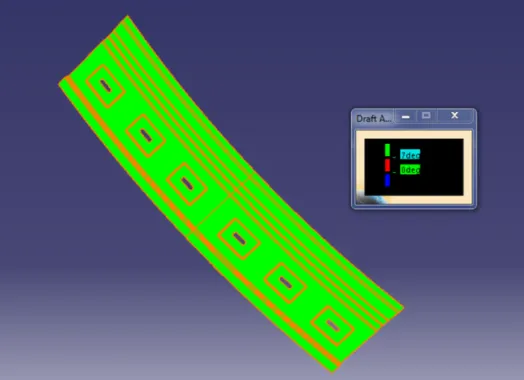
- Bow Roof 1 :
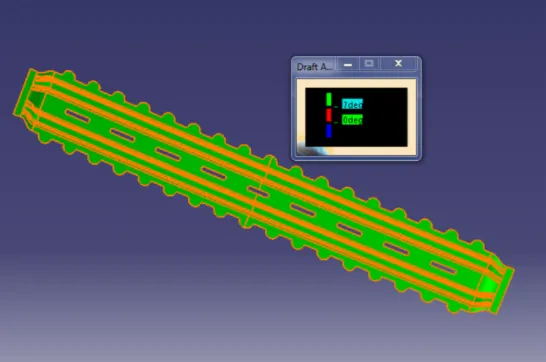
- Bow Roof 2 :
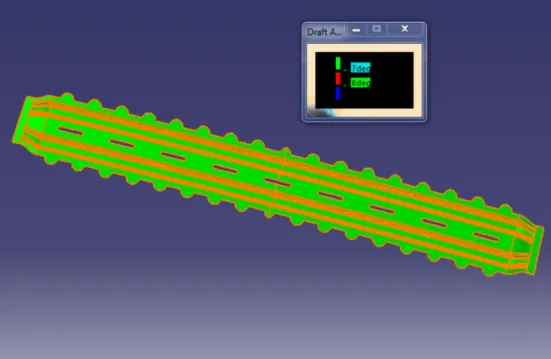
Section Modulus Calculation :
Section Modulud is a geometric property for a given cross-section used in the design of beams or flexural members. Other geometric properties used in design include area for tension and shear, radius of gyration for compression, and moment of inertia and polar moment of inertia for stiffness. Any relationship between these properties is highly dependent on the shape in question. Equations for the section moduli of common shapes are given below. There are two types of section moduli, the elastic section modulus and the plastic section modulus. The section moduli of different profiles can also be found as numerical values for common profiles in tables listing properties of such.
S = I / Y
Central Roof Rail & Bow Roof Rail :
S = I / Y
I = 2.582e - 008 mm ^4
Y = 79.936 mm
S = 25820 / 79.936 = 323.008 mm^3
Bow Roof 1 :
S = I / Y
I = 4.947e - 009 m^4 = 49470 mm ^4
Y = 78.853 mm
S = 49470 / 78.853 =627.3699 mm^3
Bow Roof 2 :
S = I / Y
I = 5.829e - 009 m ^4 = 58290 mm^4
Y = 78.433 mm
S = 58290 / 78.433 = 743.182 mm^3
Heat Distortion Criteria :
Heat Distortion is the temperature at which the metal softens and deforms under a specific load. This study is done to check the ability of the roof to withstand high temperature with respect to the positioning of the reinforcements which contributes to increase the strength.
Formula to Calculate H.D:
- W = [1.73 × 10⁻³ × L + 1.85 × 10⁻⁸ × ((R2) ÷ t) + 1.10x10⁻³ × l ] - 2.68
- R = 2(Rx× Ry) ÷ (Rx+Ry)
Where,
L = Roof Length in X-Direction [mm] (Roof dimension in 0-Y)
R = Roof curvature
Rx = X curvature
Ry = Y curvature
t = Roof plate thickness [mm]
l = Bow Roof Span [mm]

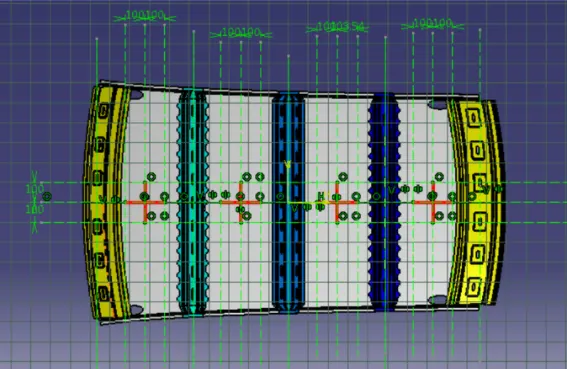
Snow Load Calculation :

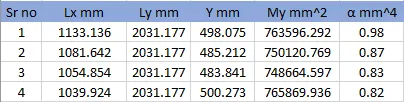
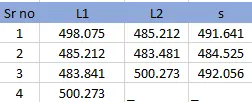
Calculation of α and s factor :
Assembly :
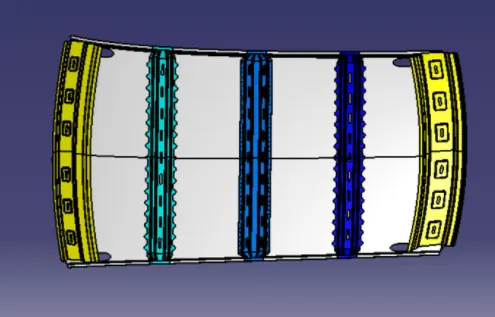
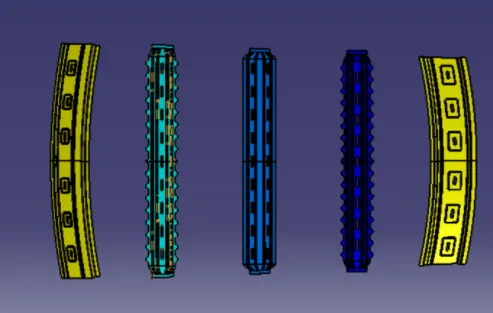
Sectional View :
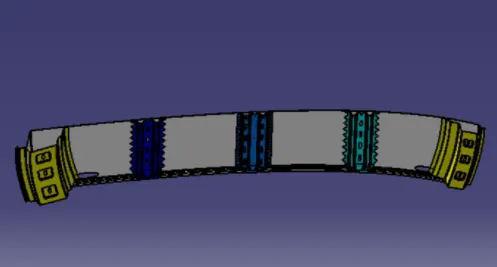
Conclusion :
The Roof is designed considering all the design parameters and the curvature study to resist Heat Distortion and Snow Load Condition.