Roof challenge
AUTOMOTIVE ROOF DESIGN
INTRODUCTION
The roof of a car plays a vital part in the vehicle's aerodynamics and interior strength. The BIW of the roof has an impact on the consequences of crush load, snow load, and heat distortion criteria. Internal roof structures include front roof rails, rear roof rails, bow roof 1 and 2, rear roof rails, and reinforcement roof rails. These structures were built in accordance with the project's requirements. Their position was also supported by the necessary criteria. Roofs typically have a curve along Xc and Yc. However, some parts of the roof are flatter than others; for example, as you get closer to the roof's trailing edge, the roof becomes flatter. This flatness is sometimes supplied on purpose to limit the formation of a wake region while traveling faster. Building a roof is similar to building a house. The roof, like the home, requires pillars and the above-mentioned internal framework to assure safety and function. In a rollover test, the roof must behave well. There can't be any spot welds or visible fastenings on the roof's outer panel because it's a class A surface. Mastics play an important part in interacting with the roof panel. internal BIW components.
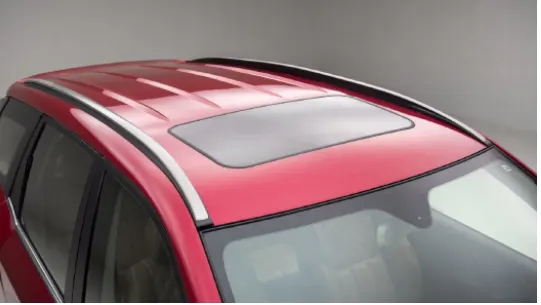
The roof is designed by following some criteria
1. Visibility criteria as safety and functionality
2. Head clearance for ease and comfort
3. Draft analysis for easy manufacturing and tooling
4. Safety parameters for users
5. Heat distortion
6. snow load criteria
MASTER SECTION OF FRONT ROOF RAIL
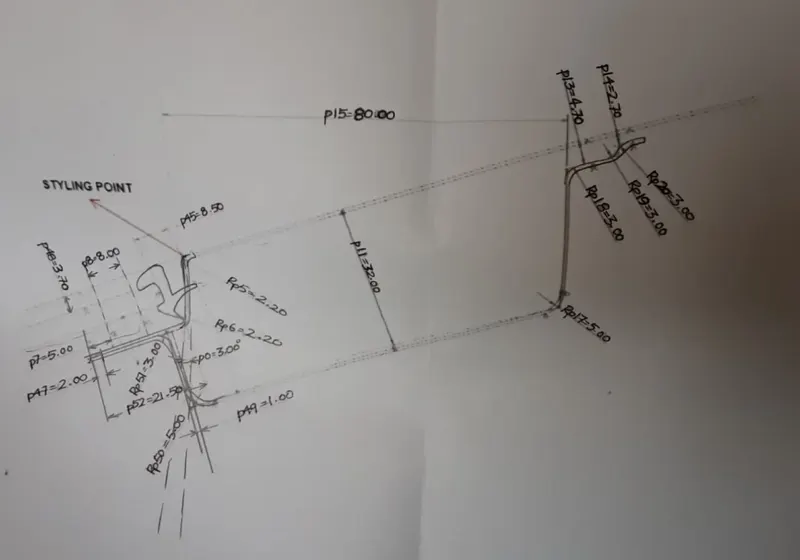
FRONT ROOF RAIL:
It is the support that connects the windshield glass, body side outer and inner panels, and the body side outer and inner panels. Because it is often produced from bodyside outer scrap, the rail is 0.75mm thick. For deep drawing, a draught angle of 3-5 degrees is offered. For the bottom most flange, the passengers' visibility standards and head room clearance are taken into account. The windshield and roof ends are spot welded, while the front roof rail's opposite end is welded.
For further strength, mastic sealants were used to attach the roof.
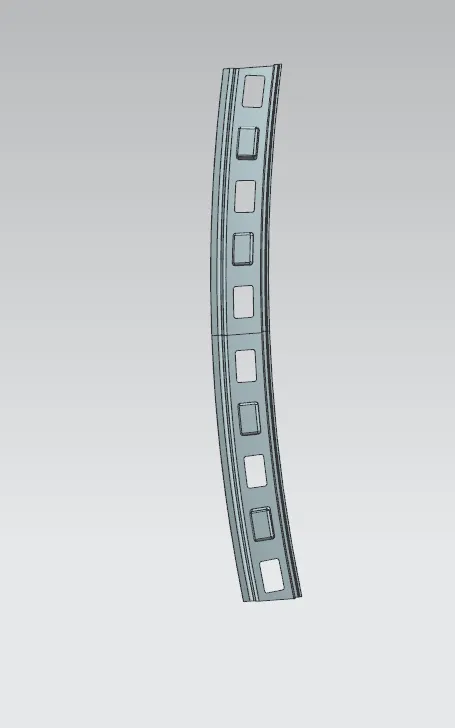
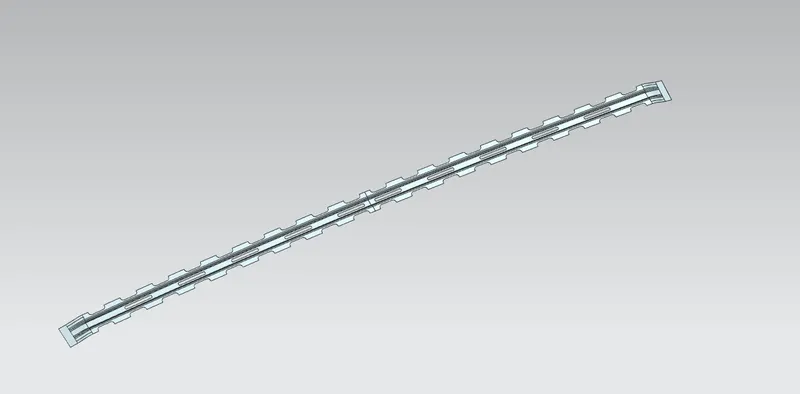
BOW ROOF 1:
Center of the bow roof 1 is an additional stiffening part utilized in the roof assembly for localized strength increase, and it is joined to the roof directly using multiple spot welding or even mastic sealant.
BOW ROOF 2:
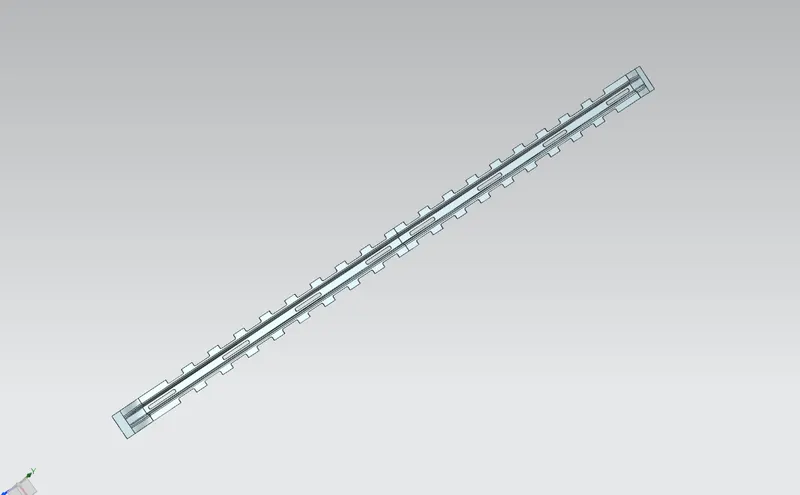
It is comparable to bow roof 1 in that it serves the same purpose as the preceding but with a lesser span, hence it is utilised with a smaller structure.
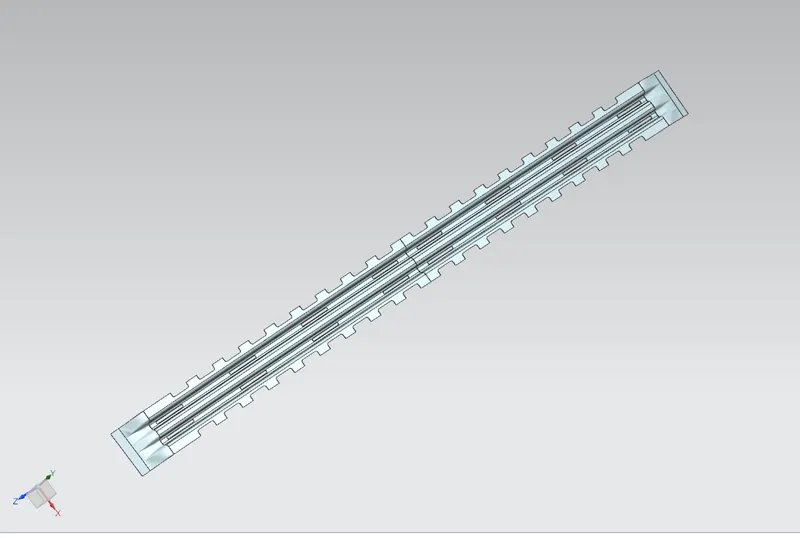
CENTER ROOF RAIL: Roof in the center Between the bodyside left and right hands, a rail or reinforcement center serves as a cross member. In certain circumstances, the reinforcement centre is not connected to the roof, while in others, it is connected to both the roof and the bodyside. The Bow roof and the reinforcing center are bonded using spot welds or mastic sealants.
REAR ROOF RAIL:
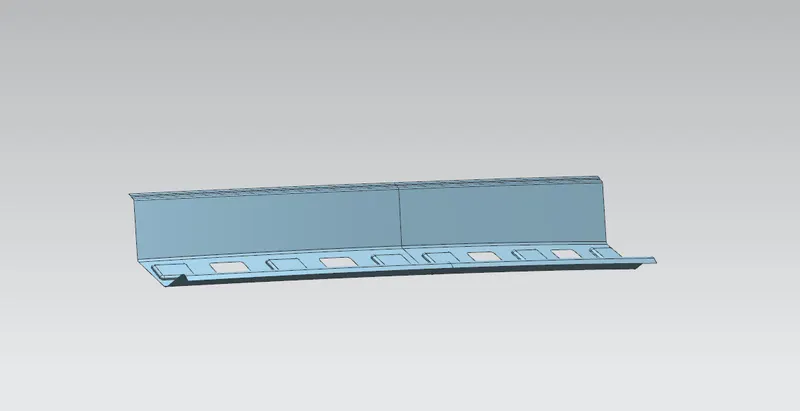
Masting sealants were used to join the back door to the rear roof rail. Because if we use more than 0.75 mm for the rear roof rail, the overall weight of the car will grow, resulting in poor performance, the need for more power, and the weight of the car will simply increase.
This 0.75mm thickness is ideal and standard for automotive sheet metal components. Automotive sheet metal components are available in thicknesses ranging from 0.65 mm to 0.75 mm. It is the support that connects the backdoor, the outer and inner panels on the bodyside. To accommodate, input from the backdoor design is also taken. When designing the rear roof rail, consider the required clearance, as well as headroom clearance and back view parameters. The backdoor end of the rail is spot welded, while the other end is welded to the roof. I added some embosses to the front roof rail for added robustness. We use embosses to increase the component's strength.
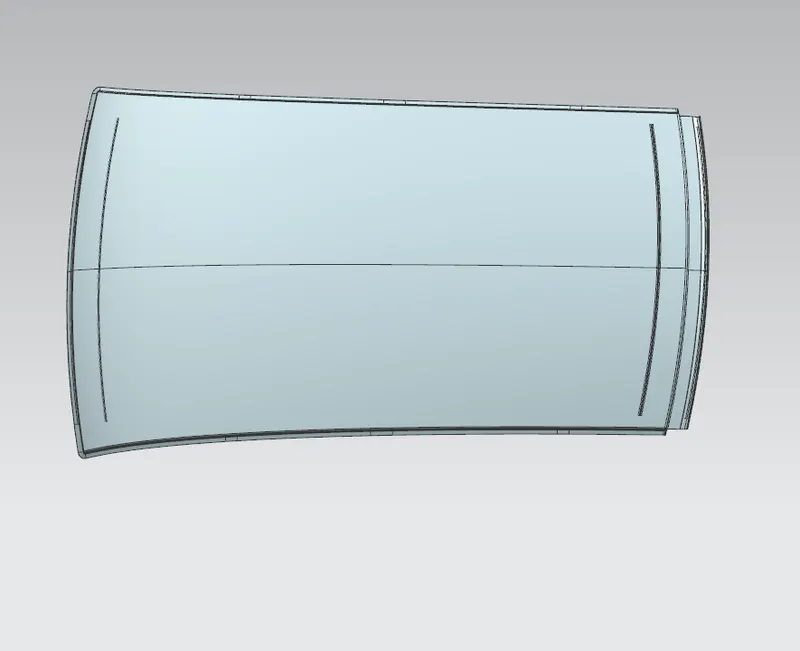
Roof Assembly
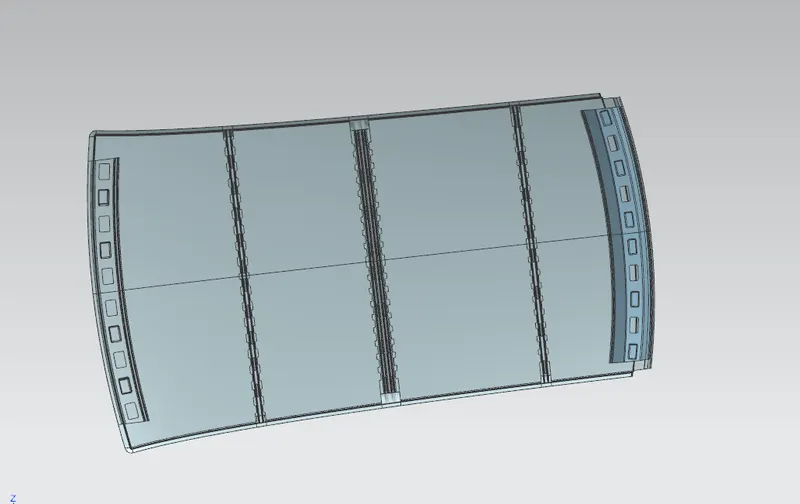
DRAFT ANALYSIS:
Front Roof Rail
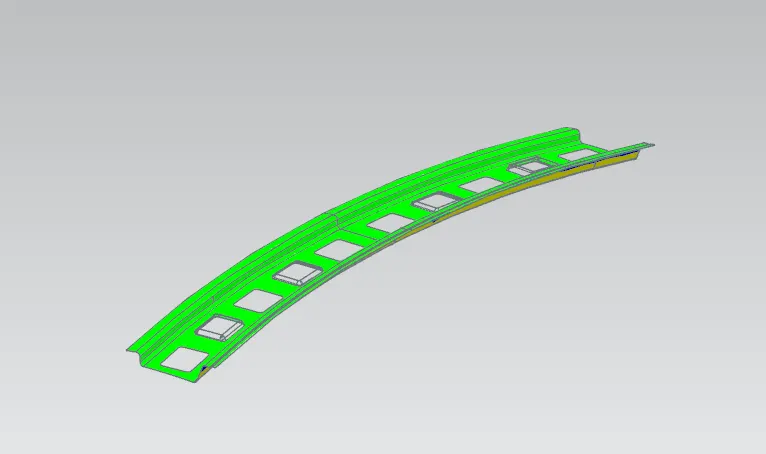
Bow Roof 1.
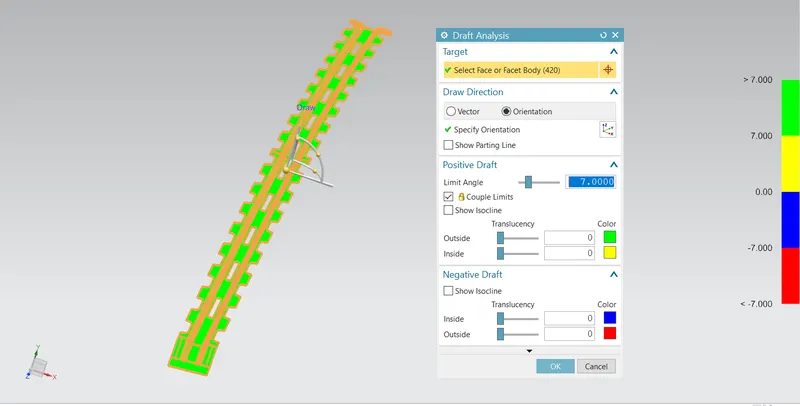
Center Roof Rail
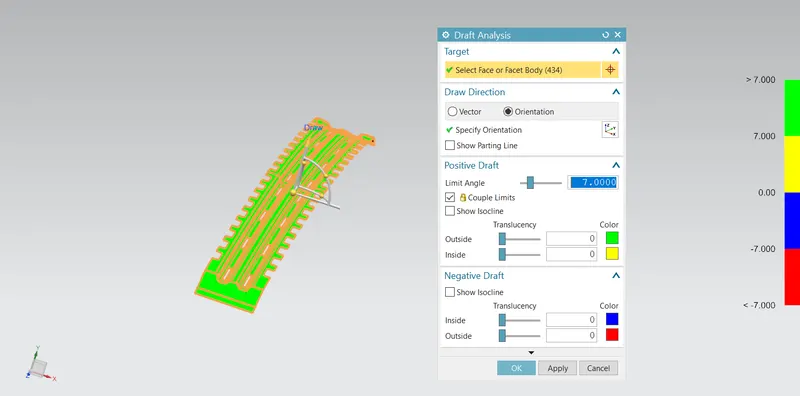
Bow Roof 2
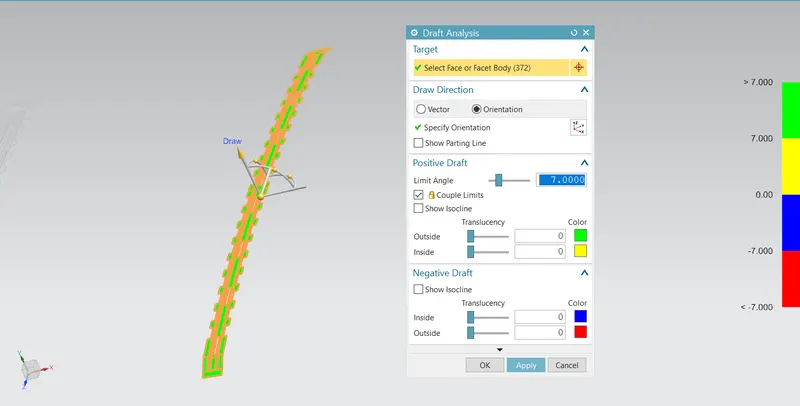
Rear Roof Rail
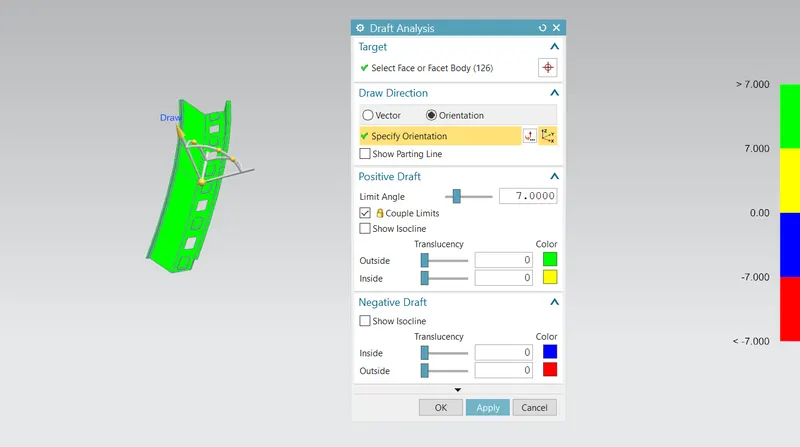
HEAT DISTORTION CURVATURE STUDY:
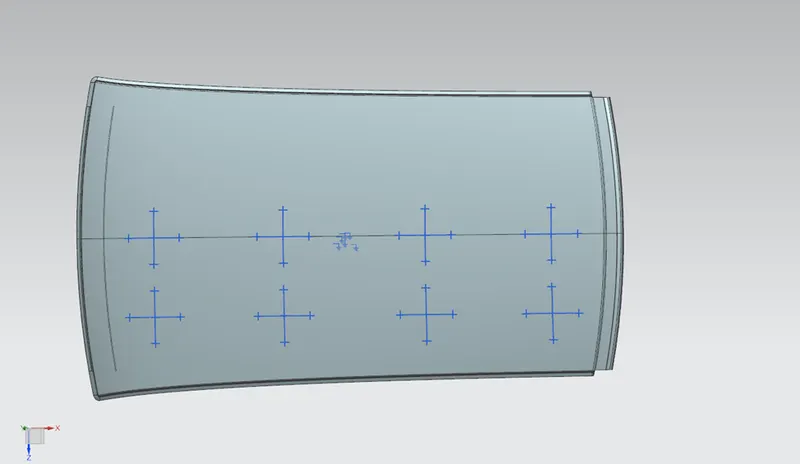
In the use of sheet metal, the heat distortion investigation is very significant. The heat distortion temperature is the maximum temperature at which a material may no longer be used for structural purposes. This research is used to forecast the temperature at which a material begins to weaken when exposed to a fixed load at an increasing temperature. This study will estimate the bow roof position on the roof to strengthen the roof, in order to avoid bending or damages on the roof, based on heat distortion temperature.
Curvature study on the roof:
Bow – roof prediction Formula is given as
W = 1.73x10^-3 x L+1.85x10^-8 x (R^2)/t + 1.10x10^-3 x l - 2.68
Where
L = Roof Length in X – Direction (mm) (Roof dimension in o-Y)
R = Roof curvature
R = 2(Rx * Ry) / (Rx + Ry)
Rx = X curvature
Ry = Y curvature
t = Roof plate thickness (mm)
l = Bow Roof Span (mm)
Judgement condition: ok < 2.7mm < NG

SNOW LOAD CRITERIA:
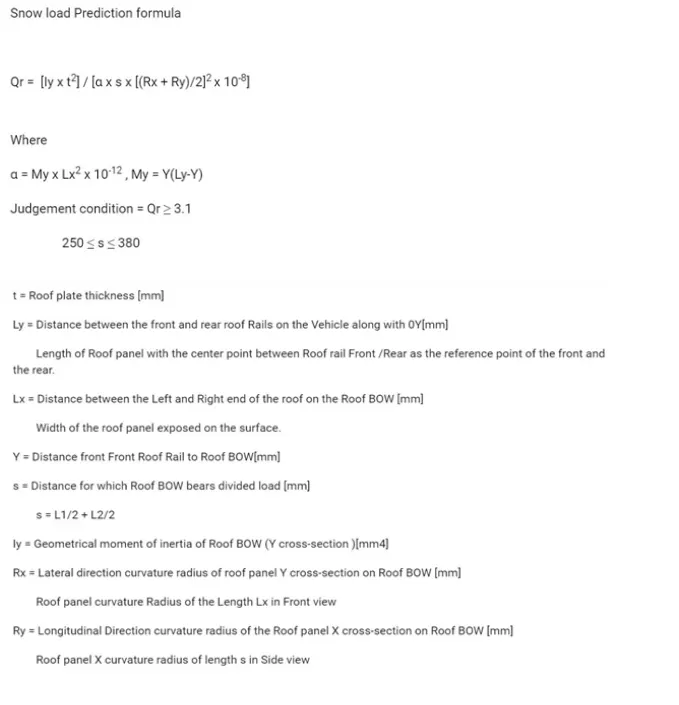

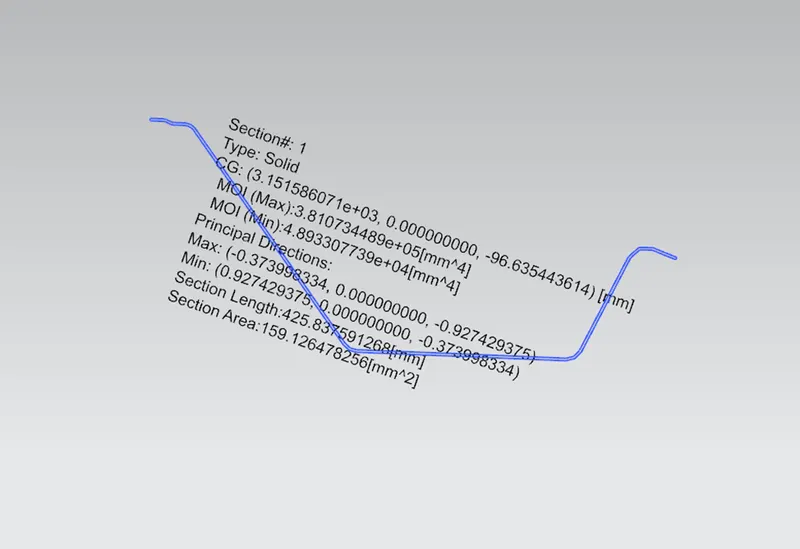
Moment of Inertia (Iy):
Front roof Rail.
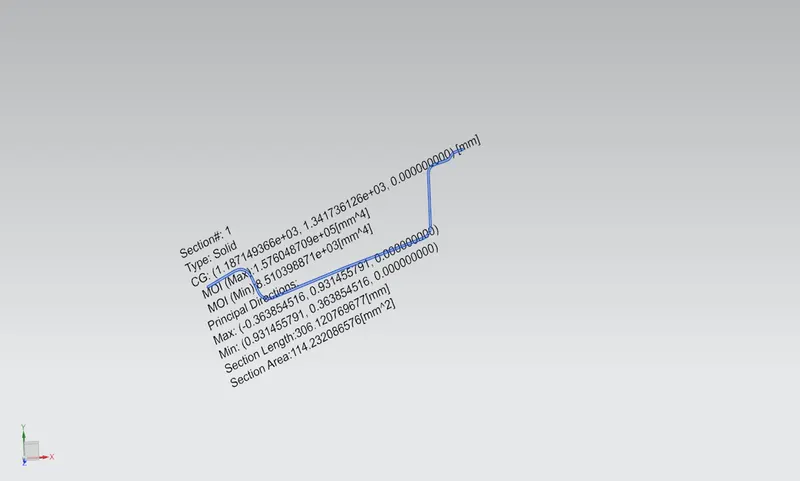
Bow roof 1.
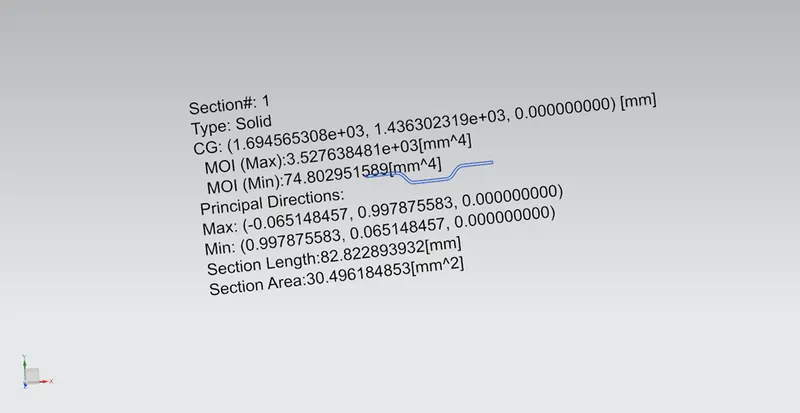
Center roof rail.
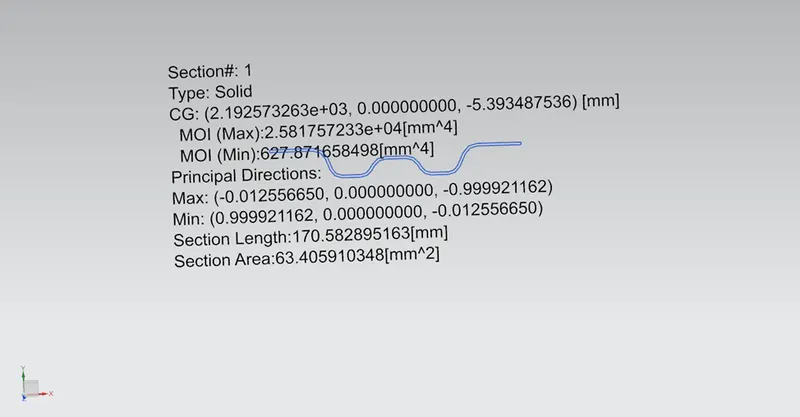
Bow roof 2
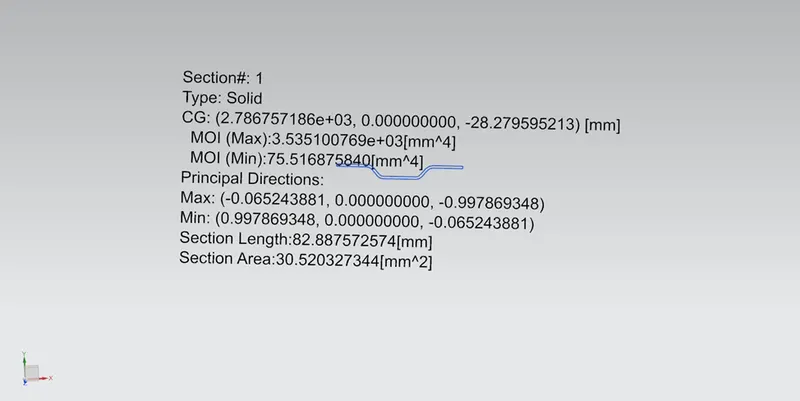
Back roof rail.