Roof challenge
Aim: To create the Roof and its essential flanges and reinforcement.
Software used: CATIA V5.
Objectives:
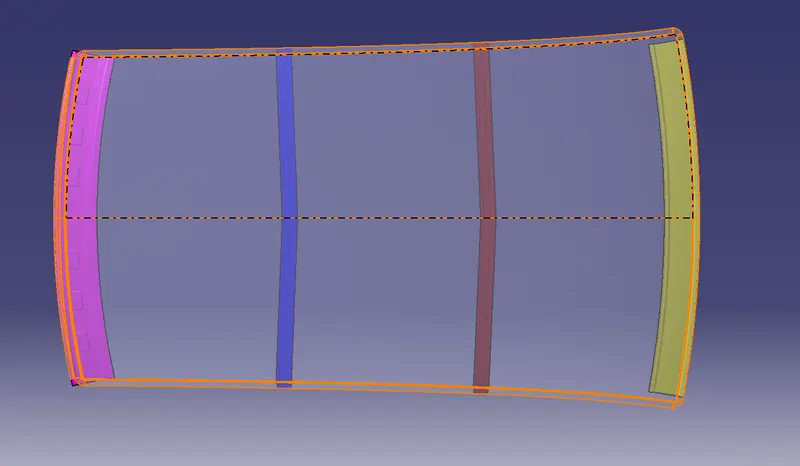
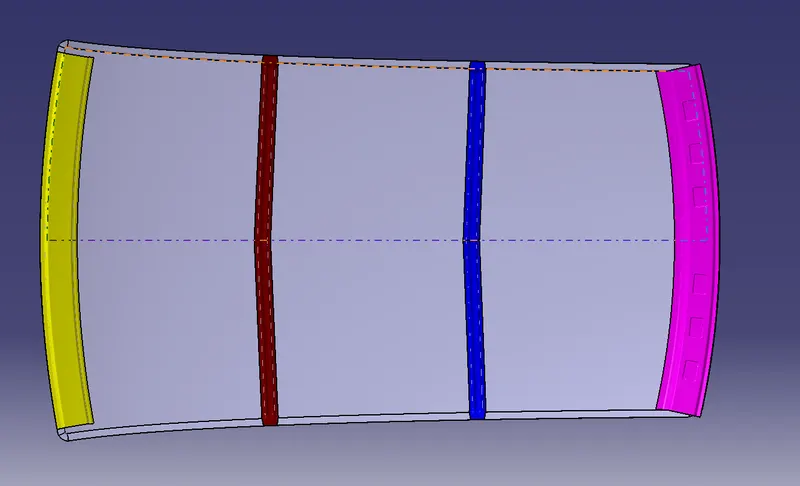
1. Design the roof from the given styling surface with Front and Rear roof rails.
2. Create the Bow roof rails and center Bow with reinforcement.
3. Do a curvature study on the roof and validate the design by applying the Heat distortion criteria and Snow Load criteria.
4. Perform the section modulus.
5. Perform the draft analysis.
Introduction :
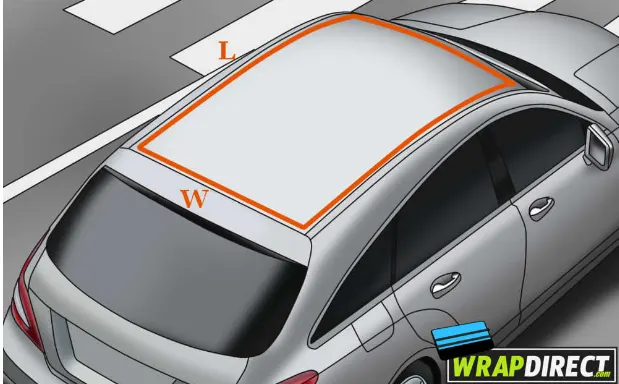
An automobile roof or car top is the portion of an automobile that sits above the passenger compartment, protecting the vehicle occupants from sun, wind,rain,and other external elements.
The roof is a styling surface part which is fixed with the BIW body through the rails and panels inside the upper roof to provide it strength and stiffness.
Ditch area plays an important role here to fix the reinforcement on the component.
The rails and reinforcements are joined to the ditch area with a spot weld where it's not the styling part.
The required tool opening angle is minimum 3 Degrees.
Factors which is considered before creating Ditch area-
1.Headroom clearance
2.Visibility criteria
3.Back door assembly
4.Windshield assembly
MAIN COMPONENTS OF ROOF:
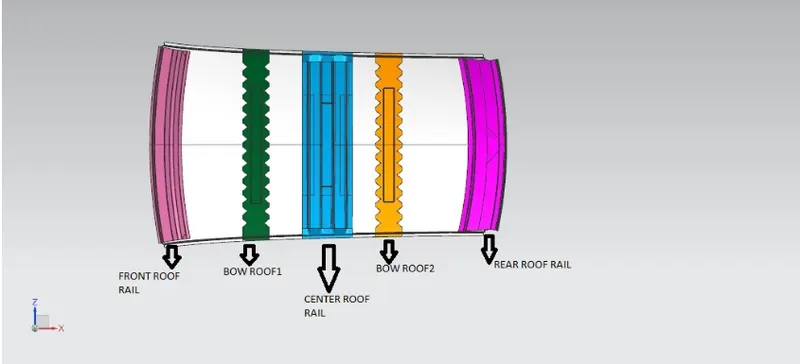
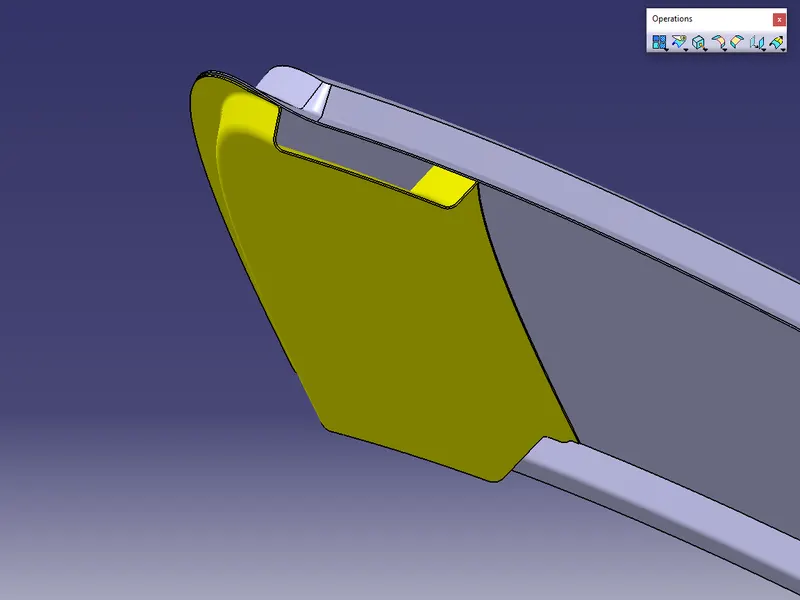
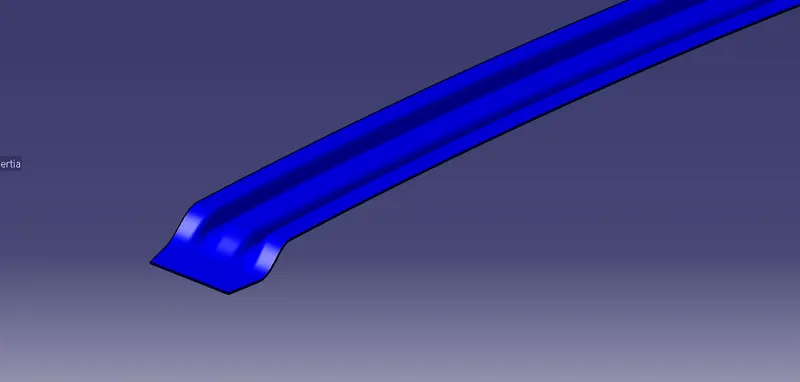
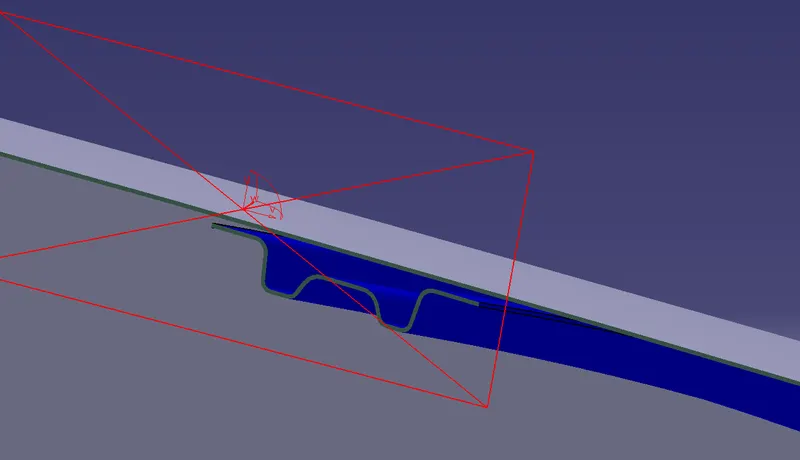
FRONT ROOF RAIL:
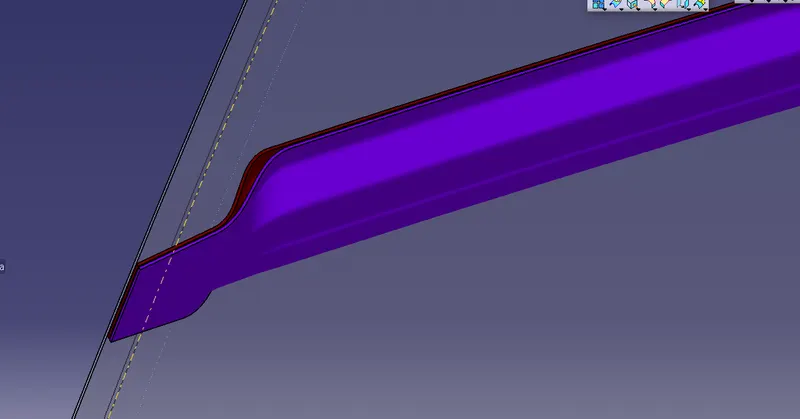
Front roof rails are used in the assembly of a roof in which it provides mounting provisions to windshield glasses and the changes in the front roof rail influences the frontal visibility of the passenger.The major design factor considered is the headroom clearance.The front roof rail also provides provisions for mounting the inside rearview mirror.
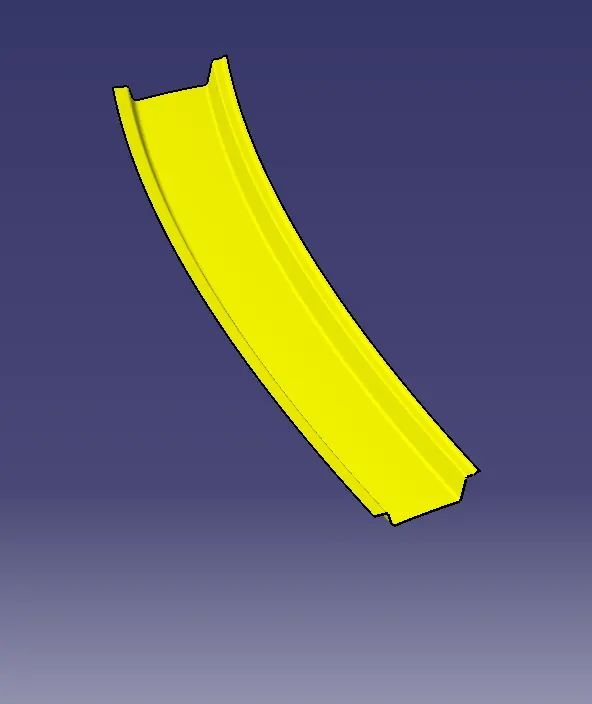
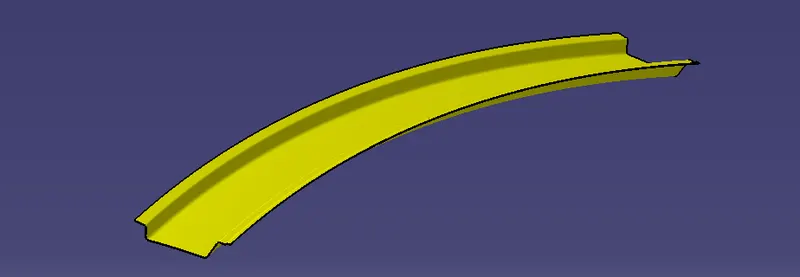
BOW ROOF1:
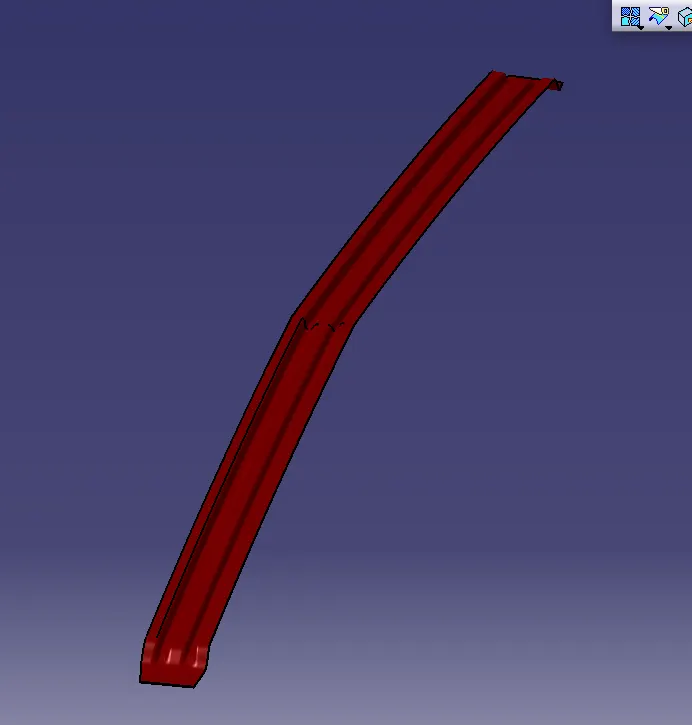
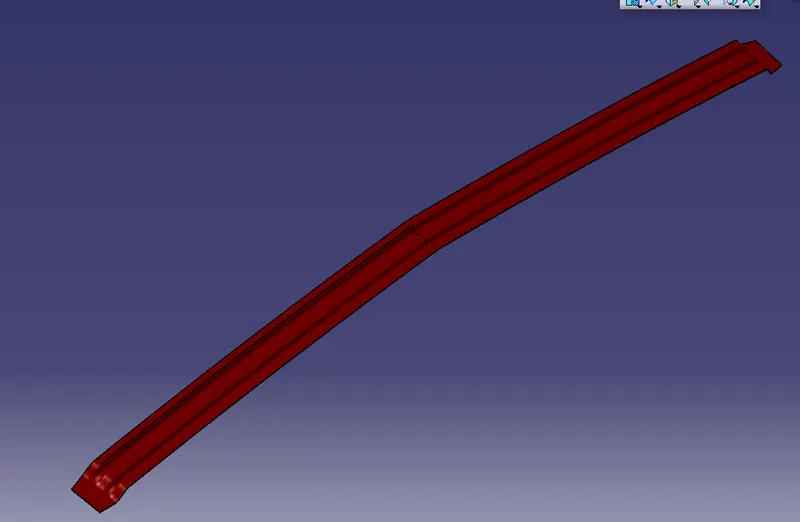
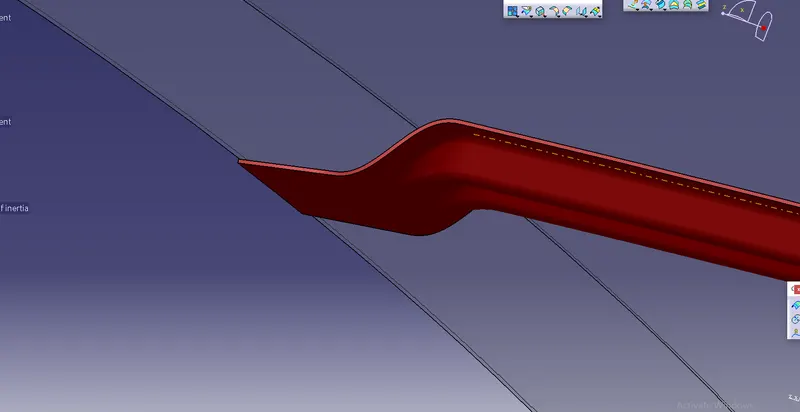
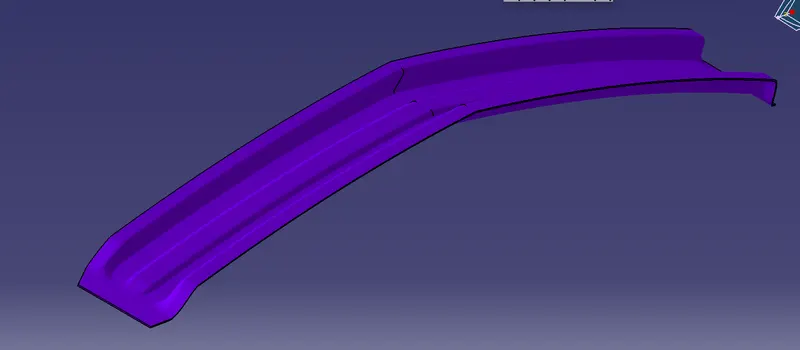
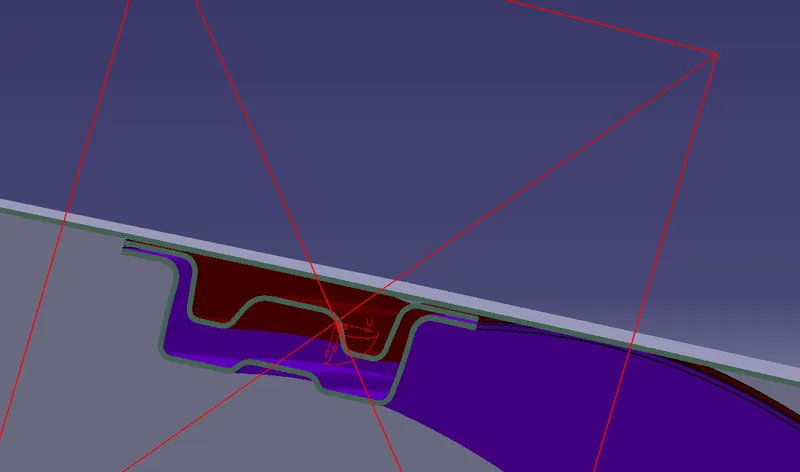
BOW- Roof center 1 is an additional stiffening member used in the roof assembly for the localised strength improvement and it is join directly to roof itself with several spot welding or even with the mastic sealent.
CENTER ROOF RAIL(REINFORCEMENT CENTER):
The reinforcement center is used as a cross member between bodyside LH & RH respectively. In some cases, the reinforcement center is not joined with the roof and in some other cases, it is made to join in both roof and bodyside. The reinforcement center and BOW roof are joined either spot weld or by mastic sealants and provisions for the same are given.
Bow roof-2
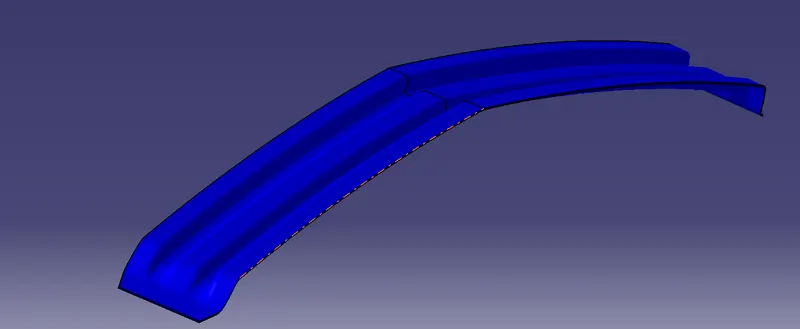
The bow roof center 2 is similar to that of bow roof center1 which serves the same purpose as the previous but with a limited extend and hence it is used with a smaller cross section.
REAR ROOF RAIL:
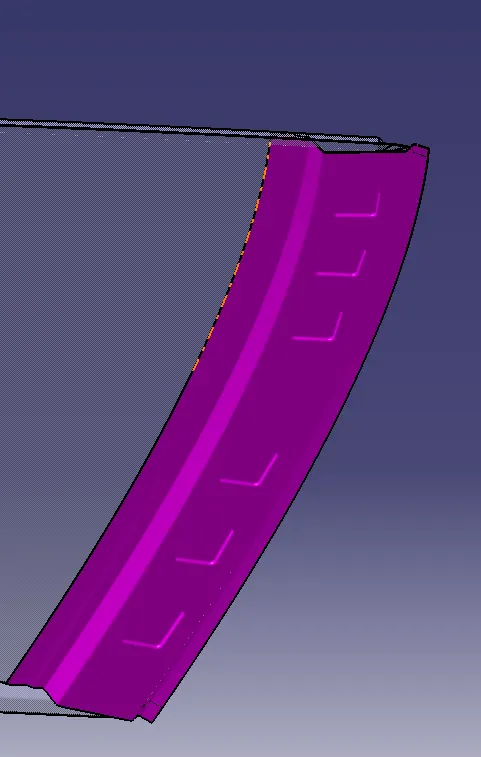
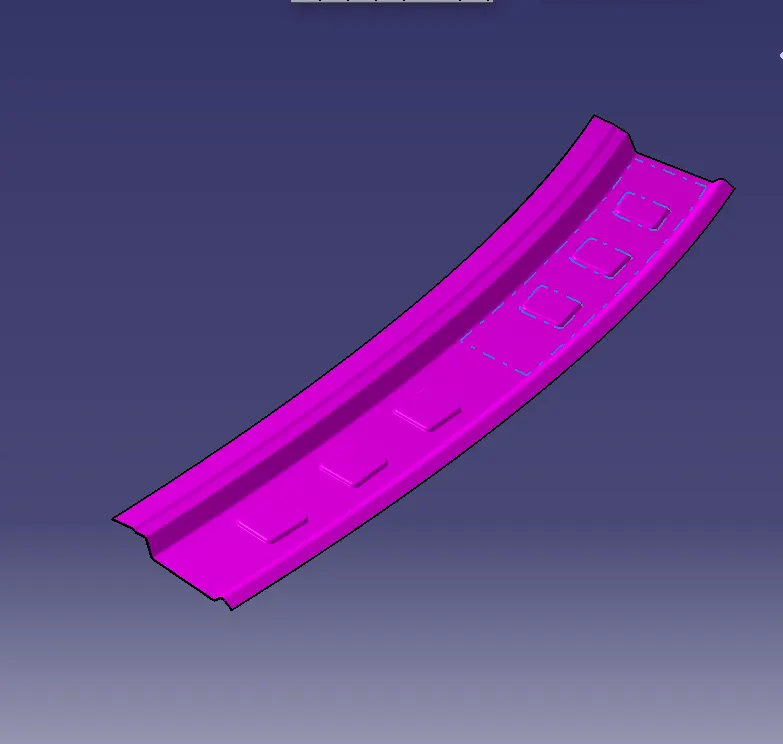
The rear roof rail is the one of the importent component of roof assembly which is used for the back door mounting.similar to front roof rail importen design consideration include rear passanger head clerance rear visibility of the vehicle.
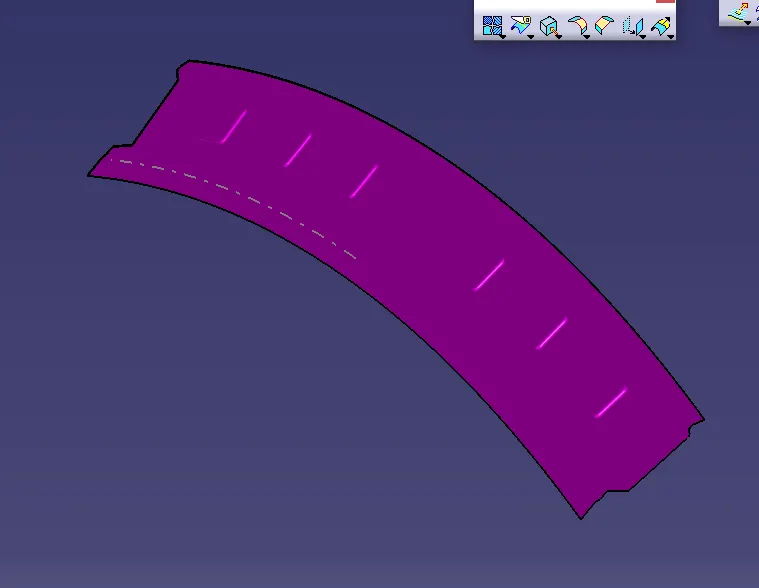
Curvature study on the Roof:
After getting the final body it has to be checked and justify that it passes the standards.
The tests we are done on the Roof are which satisfies the standards and the Bow roof positioning and the Final design are
1. Heat distortion
2. Snow load
3. Roll-over
Here we have tested Heat distortion and Snow load criteria.
Heat distortion criteria:
Heat distortion test is to check the strength of the roof. Heat distortion temperature is when the metal softens and deforms under specific loads.
1.To calculate the heat distortion criteria by the bow roof position formula,
2.We need to create a sketch , draw a line on the center of the roof on OY axis
3.Next draw a line from the center line by a 300mm distance
4.After that draw a line from 100mm distance on both sides of the 300mm line
5.Then draw a line between the center of roof rails and draw the lines from the center line by the distance of 100mm on both sides.
6.Atlast make an intersection on these lines from a coincident line to get points.
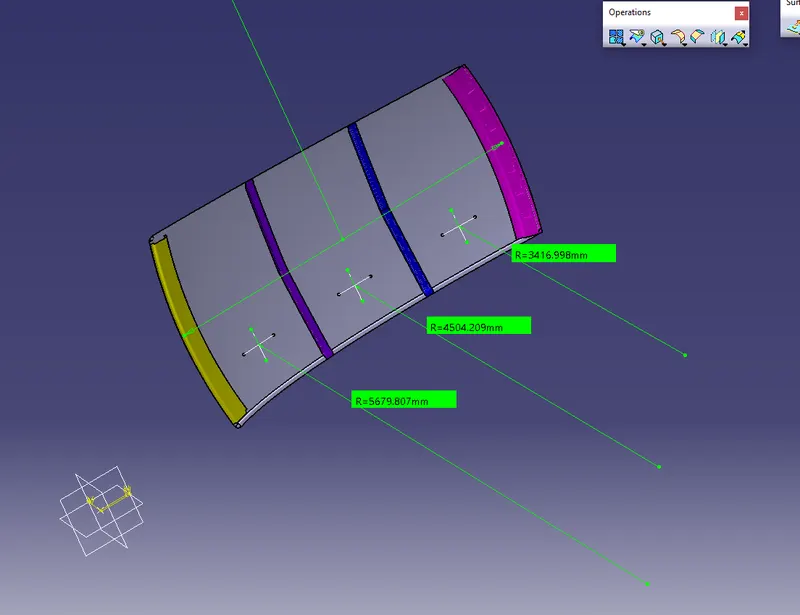
From that point draw a three point arc and measure the Radius of the arc that will be our Rx and Ry values.
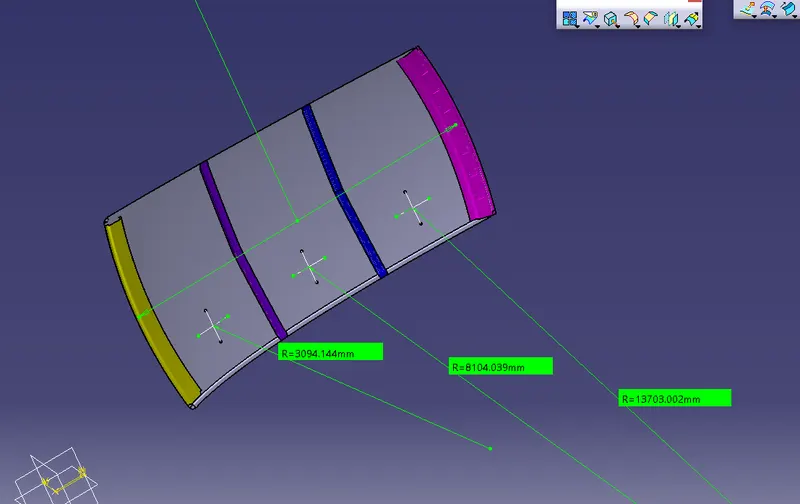
Bow–roof prediction Formula
W = [1.73 x 10^(-3) x L] + [1.85 x 10^(-8) x (R^2)/t] + [ 1.10x10^(-3) x l] - 2.68
Judgement Condition : OK< 2.7> 3.1
Where
L = Roof Length in X-Direction[mm](Roof dimension in 0-Y)
R = Roof curvature
R = 2(Rx*Ry)/(Rx+Ry)
Rx = X curvature
Ry = Y curvature
t = Roof plate thickness [mm]
l = Bow Roof Span [mm]
| BOW | L | Rx | Ry | R=2(Rx*Ry)/(Rx+Ry) | t | l | R^2/t | W | OK/NOt |
| Front roof rail to Bow 1 | 2033.705 | 5679.807 | 3094.144 | 4005.98 | 0.75 | 545.584 | 21397167.68 | 1.73 | OK |
| Bow 1 to Bow 2 | 2033.705 | 4504.209 | 8104.039 | 5790.22 | 0.75 | 593.724 | 44702196.86 | 2.31 | OK |
| Bow 2 to Rear roof rail | 2033.705 | 3416.998 | 13703.002 | 5469.99 | 0.75 | 601.181 | 39894387.466 | 2.23 | OK |
Snow load criteria:
Snow load test used to verify that roof assembly exhibited no permanent deflection due to distributed load representing snow load.
1.To calculate the snow load condition, we have a snow load formula
2.To measure the required values
3.I created a sketch and draw a line on OY axis from the center if the roof
4.From that line draw a parallel line distance of 100mm on both sides
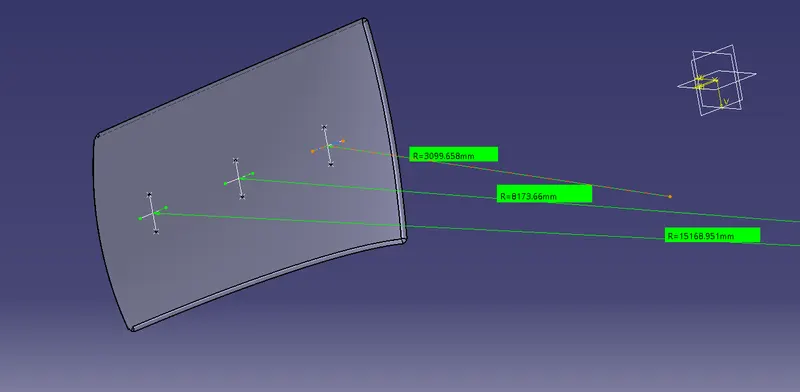
5.Then make intersection points of these lines and draw a three point arc.
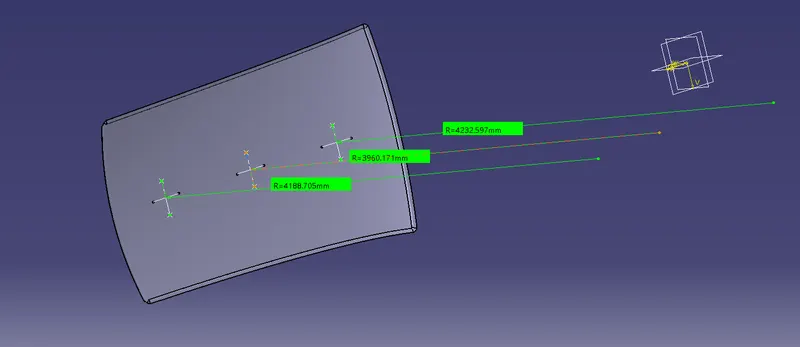
Measure the Radius of the arcs, the arc on the OY axis going to be our Ry and the perpendicular arcs will be Rx.
Qr = [Iy x t2] / [α x s x [(Rx + Ry)/2]2 x 10-8]
Where
α = My x Lx2 x 10-12 , My = Y(Ly-Y)
Judgement condition = Qr ≥ 3.1
250 ≤ s ≤ 380
t = Roof plate thickness [mm]
Ly = Distance between the front and rear roof Rails on the Vehicle along with 0Y[mm]
Length of Roof panel with the center point between Roof rail Front /Rear as the front and rear reference point.
Lx = Distance between the Left and Right end of the roof on the Roof BOW [mm]
Width of the roof panel exposed on the surface.
Y = Distance front Front Roof Rail to Roof BOW[mm]
s = Distance for which Roof BOW bears divided load [mm]
s = L1/2 + L2/2
Iy = Geometrical moment of inertia of Roof BOW (Y cross-section )[mm4]
Rx = Lateral direction curvature radius of roof panel Y cross-section on Roof BOW [mm]
Roof panel curvature Radius of the Length Lx in Front view
Ry = Longitudinal Direction curvature radius of the Roof panel X cross-section on Roof BOW [mm]
Roof panel X curvature radius of length s in Side view.
| BOW | ly | My=y(ly-y) | α | s | Rx | Ry | Qr |
| Front roof rail to Bow rail 1 | 985299.99 | 861348.33 | 1.017 | 301.176 | 4232.59 | 3099.65 | 13.4 |
| Bow rail-1 to Bow rail-2 | 9852 | 854273.50 | 1.009 | 297.01 | 3960.17 | 8173.66 | 50.69 |
| Bow rail-2 to Rear rail | 197800 | 822559.42 | 0.97 | 0.97 | 4188.705 | 15168.95 | 43.83 |
Section modulus:
Section modulus formula
S = I/y
S = Section Modulus
I = Moment of Inertia
y = distance between the neutral axis and the extreme end of the object
Front Roof Rail:
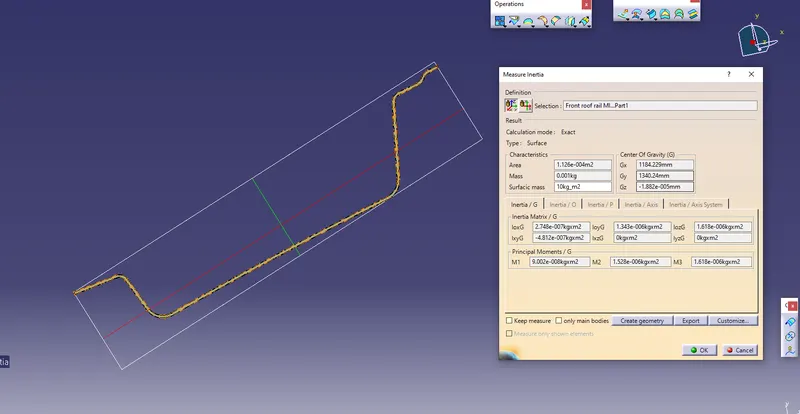
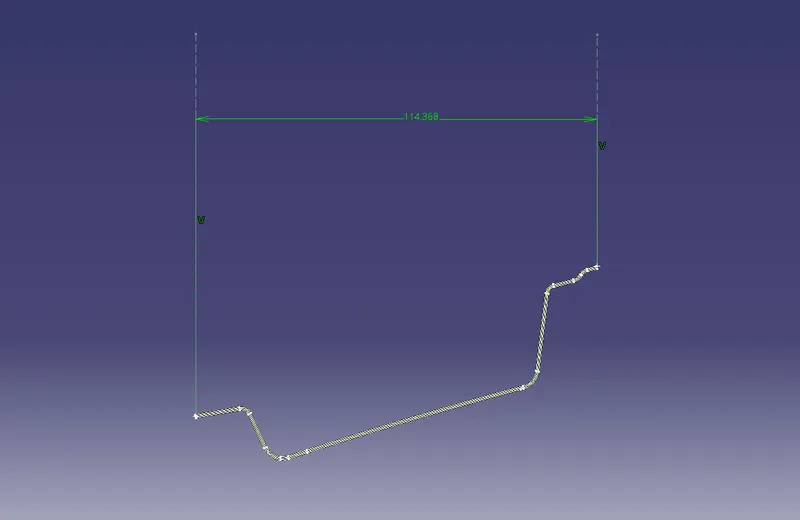
By taking the minimum value from the two value
Unit is converted from meter to millimeter
M1 = 1528000mm^4
Y =114.368/2
Y=57.184
S =I/Y
S =152800/57.184
S = 2672.0761mm^3
Bow Roof -1
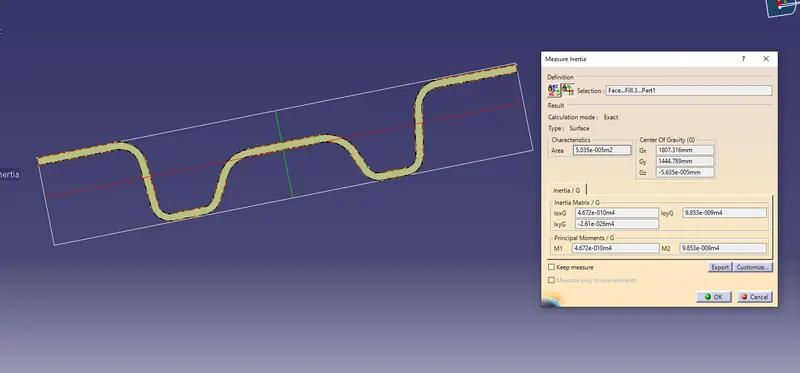
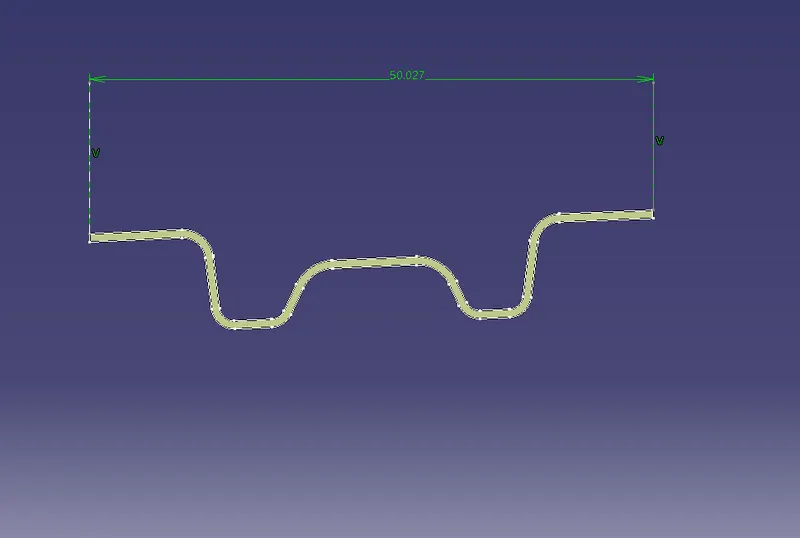
By taking the minimum value from the two value
Unit is converted from meter to millimeter
M1 =985299.99 mm^4
Y =50.027/2
Y=25.0135
S =I/Y
S =985299.99/25.0135
S = 39390.7286mm^3
Bow roof 2
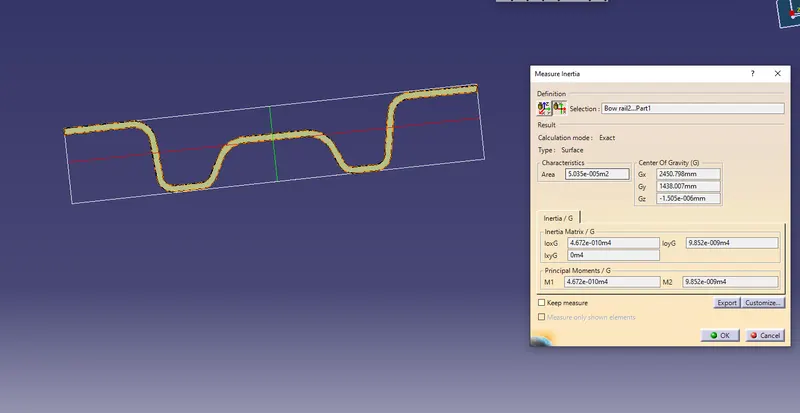
By taking the minimum value from the two value
Unit is converted from meter to millimeter
M1 =9852 mm^4
Y =50.005/2
Y=25.0025
S =I/Y
S =9852/25.0025
S = 394.0405mm^3
Center rainforcement
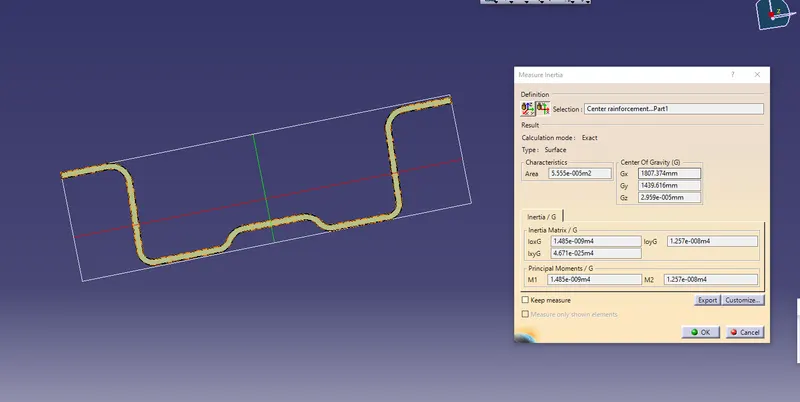
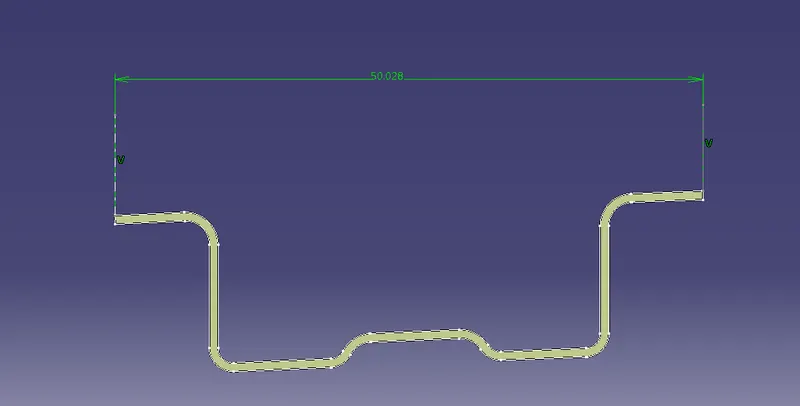
By taking the minimum value from the two value
Unit is converted from meter to millimeter
M1 =12570 mm^4
Y =50.028/2
Y=20.014
S =I/Y
S =12570/20.014
S = 628.060mm^3
Rear roof rail
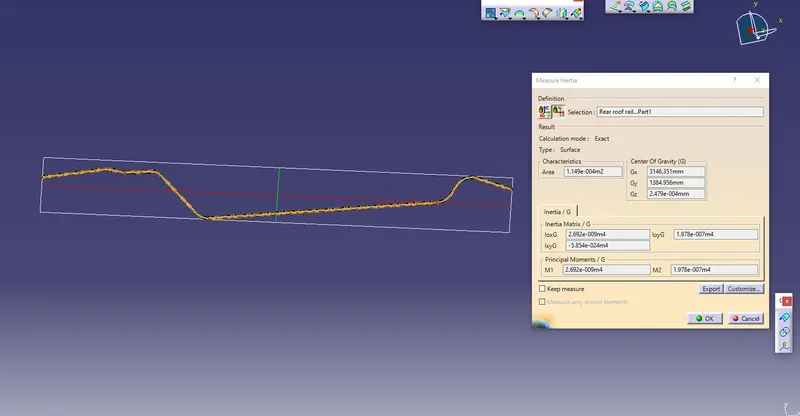
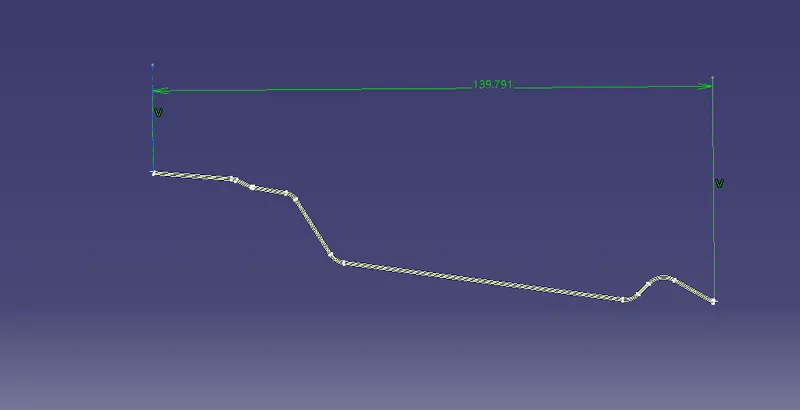
By taking the minimum value from the two value
Unit is converted from meter to millimeter
M1 = 197800mm^4
Y =139.79/2
Y=69.89
S =I/Y
S =197800/69.89
S = 2830.1616mm^3
Draft Analysis
FRONT ROOF RAIL
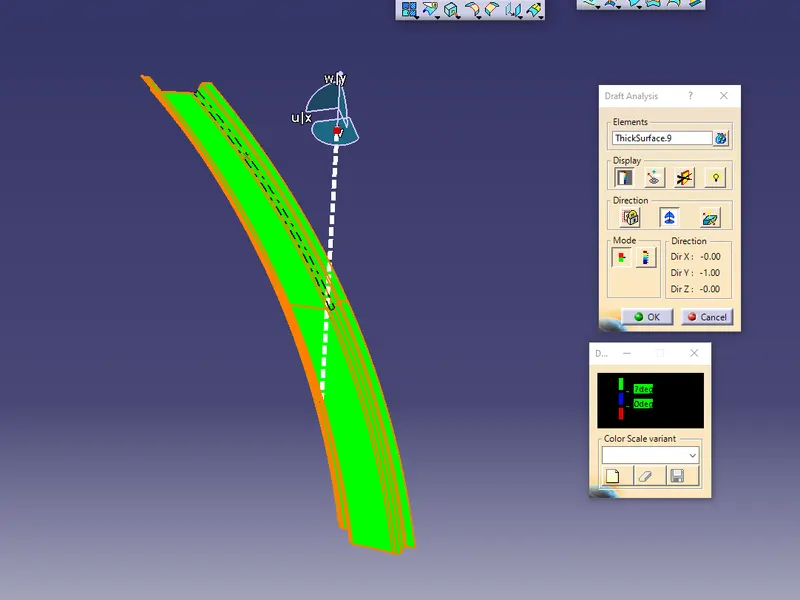
Bow rail 1
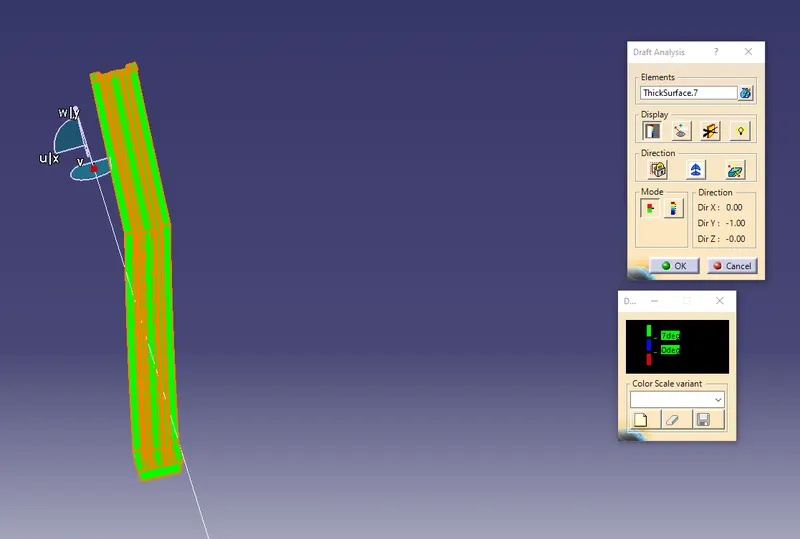
Bow rail 2
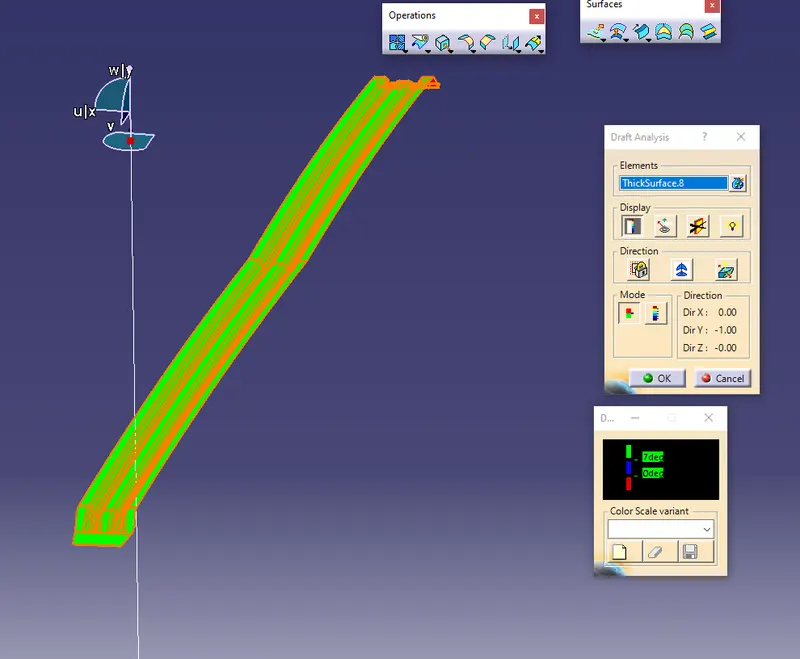
Center rainforcement
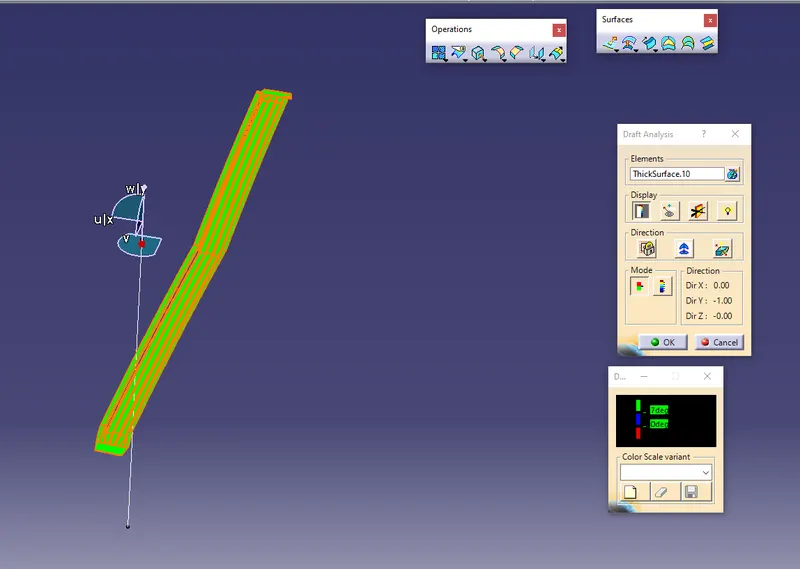
Rear roof rail
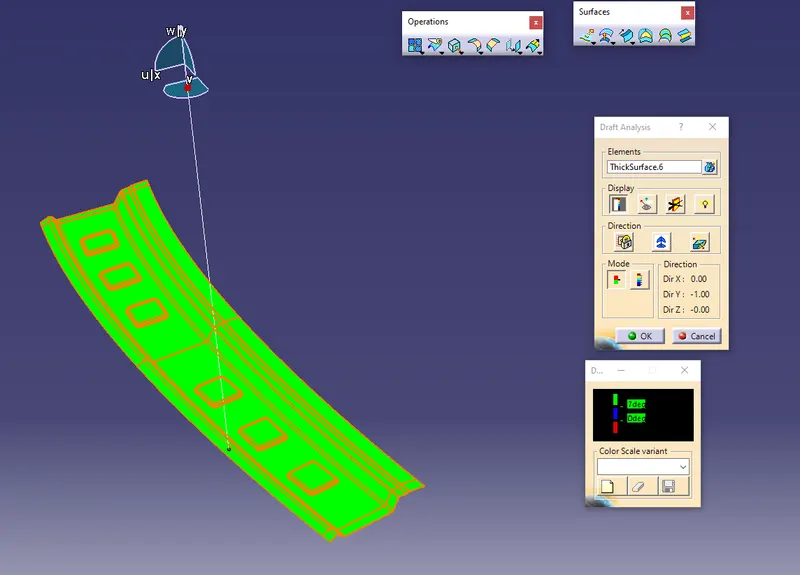
Final Product
Learned Outcome:
Learned How yo calculate Heat distortion and Snow Load test.
Learned to create rails with the standards.