Design of Roof
AIM:
- To develop the necessary flanges and reinforcement from the styling A surface and Check for the draft analysis.
- To do a curvature study on the roof and perform calculation to determine the position of the bow-roof.
INTRODUCTION:
A curved styling surface of the roof is much stronger than Flat roof. In order to increase the strength of the roof, it was designed with roof reinforcements like front roof rail, central roof rail, rear roof rail, embosses and the bow roofs and joined to the surface of the roof with the different joining processes.
In this design, there are three bow roofs, one reinforcement center, a front roof rail and a rear roof rail and analysis is made to study their impact towards strength. Curvature study of the roof includes Heat distortion test and Snow load condition. If roof passes these curvature study it will be forwarded to CAE analysis or else it will be reported to styling personnel to modify the curvature of styling surface. Embosses also helps in strengthening the roof surface if the changing curvature would interfere the aesthetics of car.
METHODOLOGY:
ROOF:
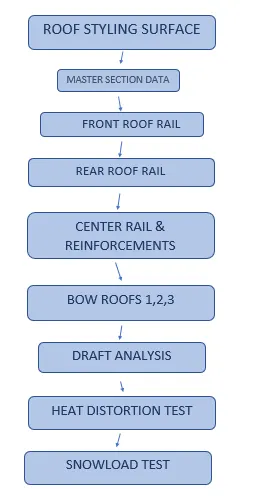
It consists of a styling surface, Front roof rail, Bow roof rail, Centre roof rail with reinforcement and Rear roof rail. To provide a better strength to the roof and safety to passengers inside.
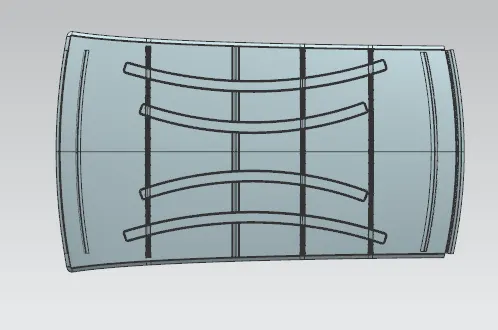
REINFORCEMENTS:
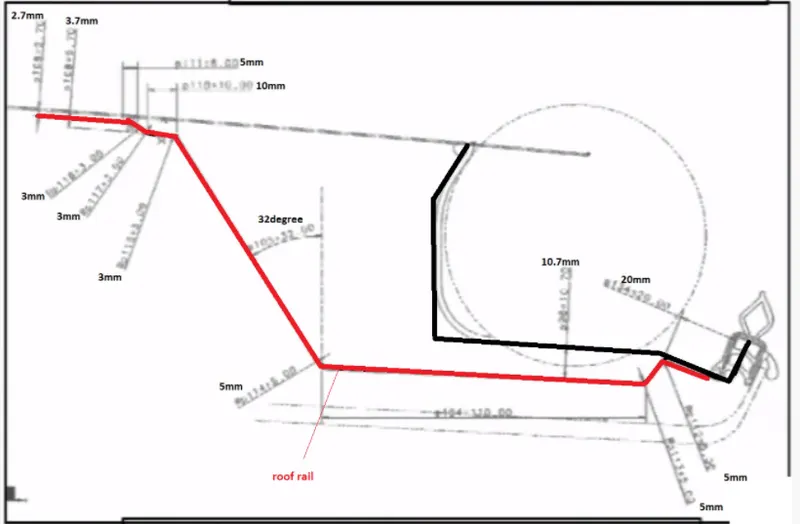
FRONT ROOF RAIL:
It is used to support the front part of the roof surface.
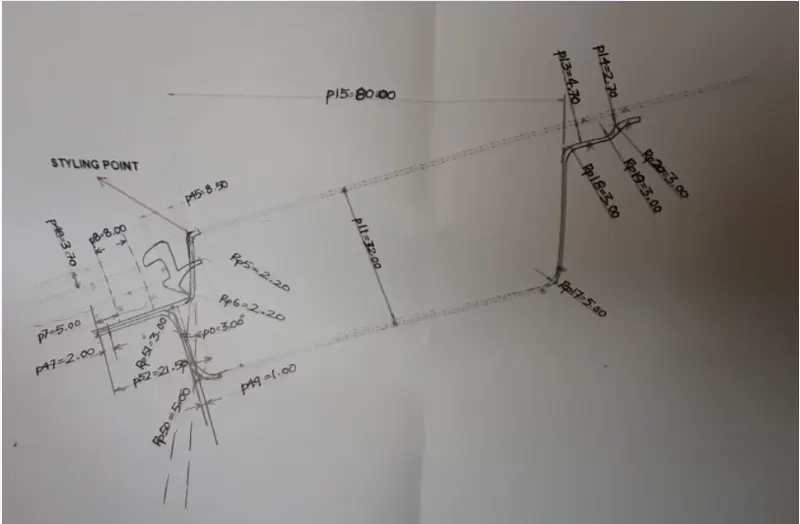
MASTER SECTION:
REAR ROOF RAIL :
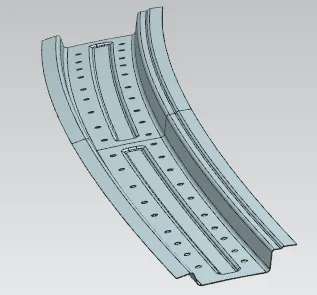
It is used to support the rear end of the roof surface.
MASTER SECTION:
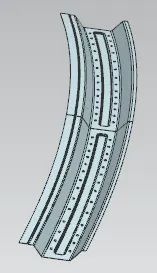
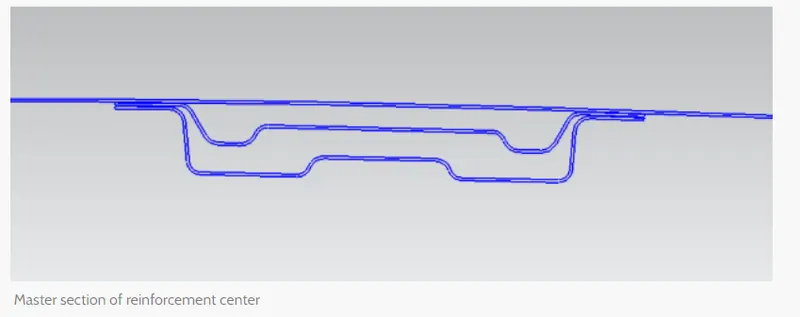
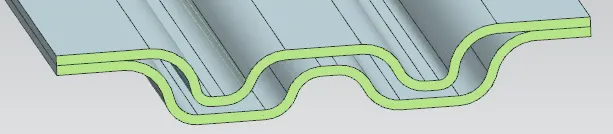
CENTER ROOF RAIL:
It is used to support the center of roof. It consist of a bow roof as reinforcement.
BOW ROOF 1:
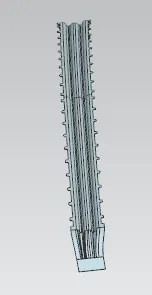
It is used to support the area between front roof rail and center roof rail.
BOW ROOF 2:
It is used to support the area between bow roof 3 and center roof rail.
BOW ROOF 3:
It is used to support the area between rear roof rail bow roof 2.
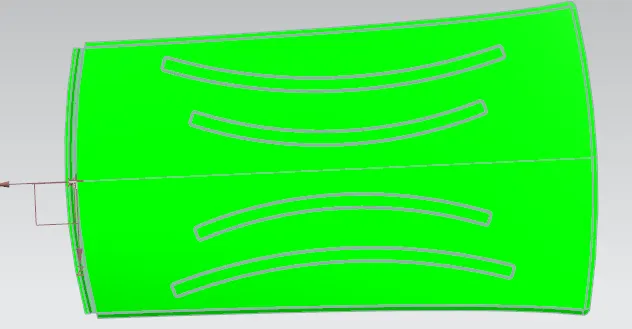
DRAFT ANALYSIS:
ROOF:
FRONT ROOF RAIL:
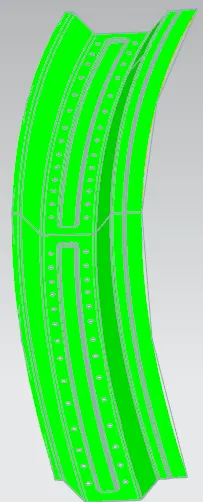
REAR ROOF RAIL :
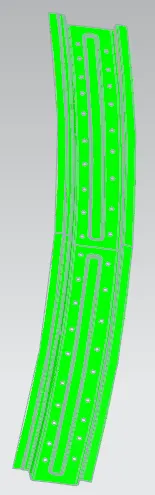
CENTER ROOF RAIL:

BOW ROOF 1:

BOW ROOF 2:

BOW ROOF 3

HEAT DISTORTION TEST:
W = [1.73 x 10^(-3) x L] + [1.85 x 10^(-8) x (R^2)/t] + [ 1.10x10^(-3) x l] - 2.68
OK< 2.7> 3.1
Where
L = Roof Length in X-Direction[mm](Roof dimension in 0-Y)
R = Roof curvature
R = 2(Rx*Ry)/(Rx+Ry)
Rx = X curvature
Ry = Y curvature
t = Roof plate thickness [mm]
l = Bow Roof Span [mm]
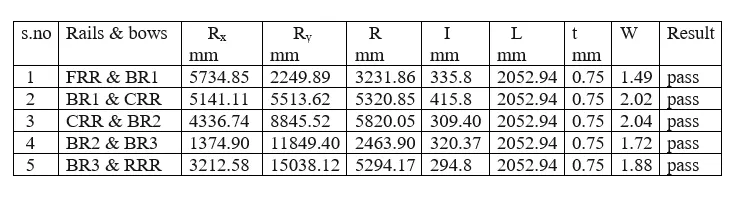
RESULT:
From the above table, We know that the roof passes the heat distortion test.
SNOW LOAD CONDITION:
Qr = [Iy x t2] / [α x s x [(Rx + Ry)/2]2 x 10-8]
Where
α = My x Lx2 x 10-12
My = Y(Ly-Y)
Qr ≥ 3.1
250 ≤ s ≤ 380
t = Roof plate thickness [mm]
Ly = Distance between the front and rear roof Rails on the Vehicle along with 0Y[mm]
Length of Roof panel with the center point between Roof rail Front /Rear as the front and rear reference point.
Lx = Distance between the Left and Right end of the roof on the Roof BOW [mm]
Width of the roof panel exposed on the surface.
Y = Distance front Front Roof Rail to Roof BOW[mm]
s = Distance for which Roof BOW bears divided load [mm]
s = L1/2 + L2/2
Iy = Geometrical moment of inertia of Roof BOW (Y cross-section )[mm4]
Rx = Lateral direction curvature radius of roof panel Y cross-section on Roof BOW [mm]
Roof panel curvature Radius of the Length Lx in Front view
Ry = Longitudinal Direction curvature radius of the Roof panel X cross-section on Roof BOW [mm]
Roof panel X curvature radius of length s in Side view
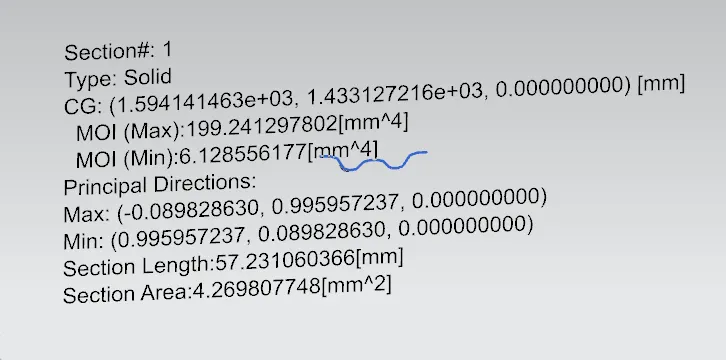
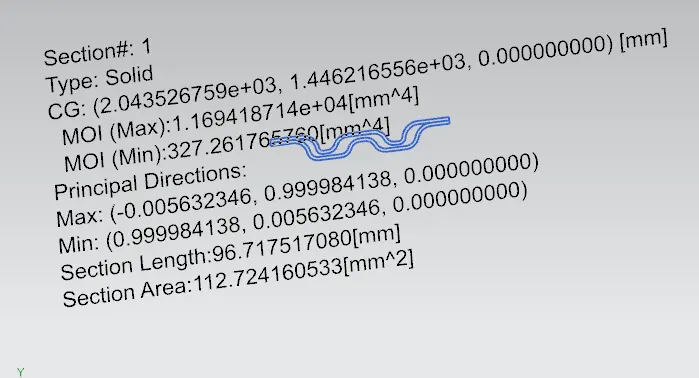
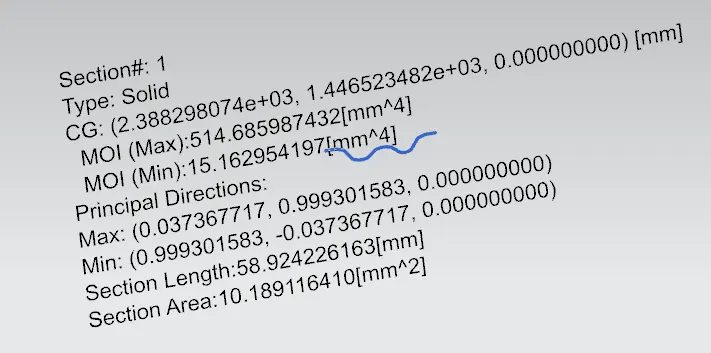
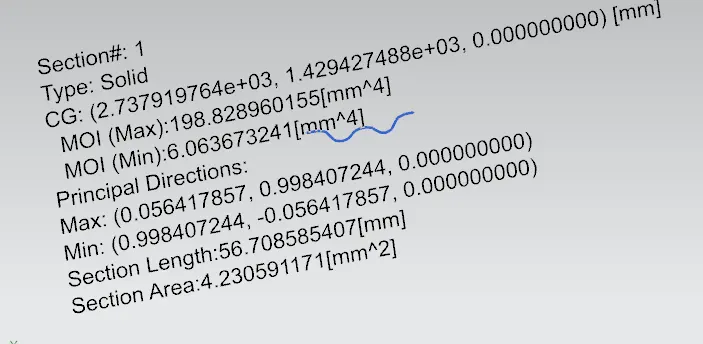
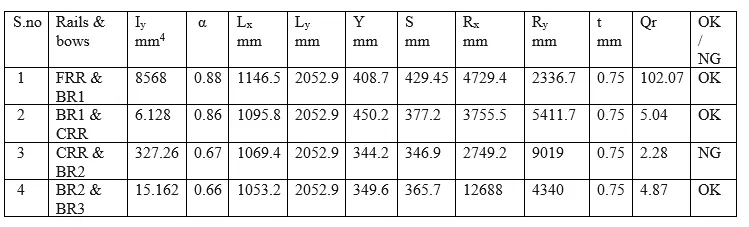
RESULT:
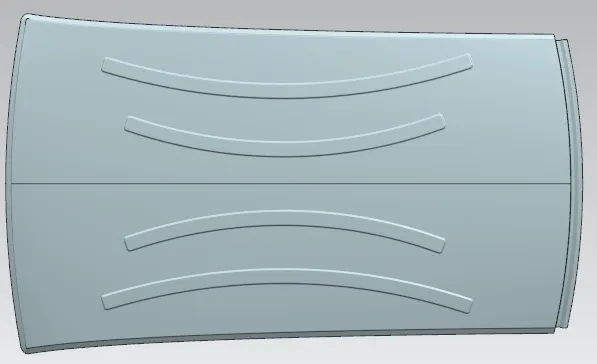
From the above table, We know that the roof does not pass in some areas in snowload condition. so embosses are added to the roof the strengthen.
CONCLUSION:
Thus, the essential flanges and reinforcements for the Roof were designed and developed from the given styling surface. Draft analysis and calculations for curvature study are performed.