Radar Mast & Final Assembly of Yacht
Modelling and Rendering of Yacht
Objective
The main purpose of this coursework was to model a Predator Yacht in Solidworks. After modelling, render the yacht in photoview 360 or Solidworks visualize to give a photorealistic effect.
Introduction
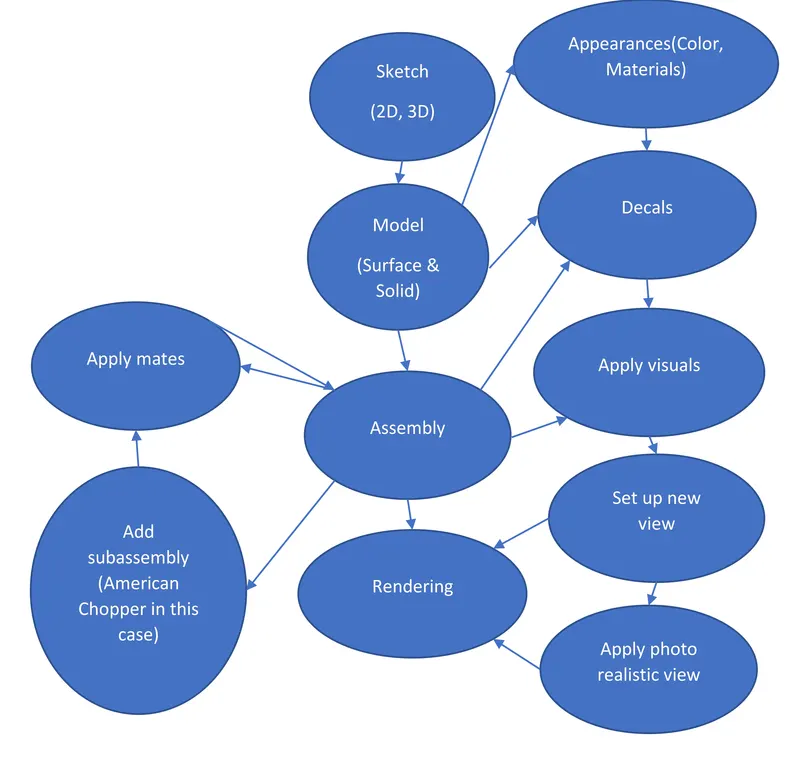
In this project, the American Predator Yacht was to be modelled. The sketching of the model was done using 2D and 3D sketches. The modelling was mostly Surface modelling. After creating a model and assembling it, the model was imported into photoview 360 and visualize to render to give it photorealistic effect.
Design Approach
Description
All components used in this project were designed using the above-mentioned design methodology.
The following command was used in designing the components:
- Sketch Commands:
- 2D sketch, 3D sketch, mirror, sketch fillet, line, circle, rectangle, spline, trim, extend, smart dimensions, sketch picture, convert entities, arc, slot, sketch pattern
- Features:
- Surface Extrude, Surface Trim, Surface Fill, Ruled Surface, Surface Knit, Extrude cut, lofted boss/base, Revolve boss/base, fillet, chamfer, dome, shell, sweep boss/base, pattern(curve driven), mirror
- Additional Commands:
- Projected curve, Composite curve, Reference plane, Sketch Blocks
All components were designed with the help of the above-mentioned commands but not all commands were used in designing all components
The following components were used in Sunseeker Predator Yacht:
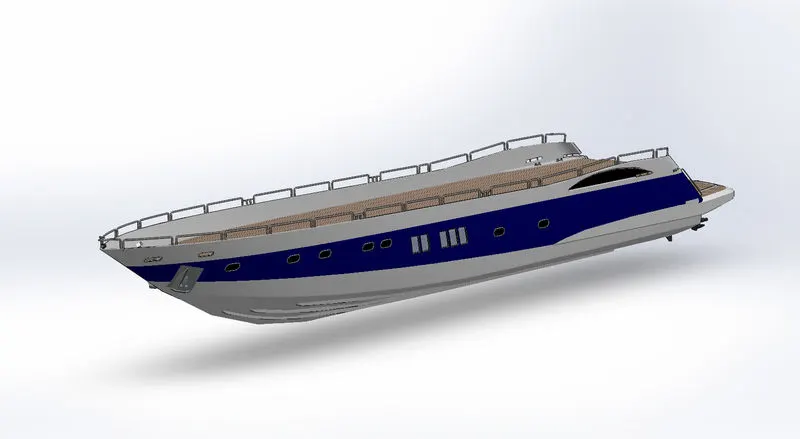
- Hull
The most important part of any ship or yacht. It keeps the vehicle floating and is also used for stability.
In this model, the hull is completely covered with a deck.
Other components which are combined with the hull in this model are: Anchor, Bow, Beam, Deck, Draft, Gunwale, Hatch, Keel, Port, Porthole (Windows), Stern
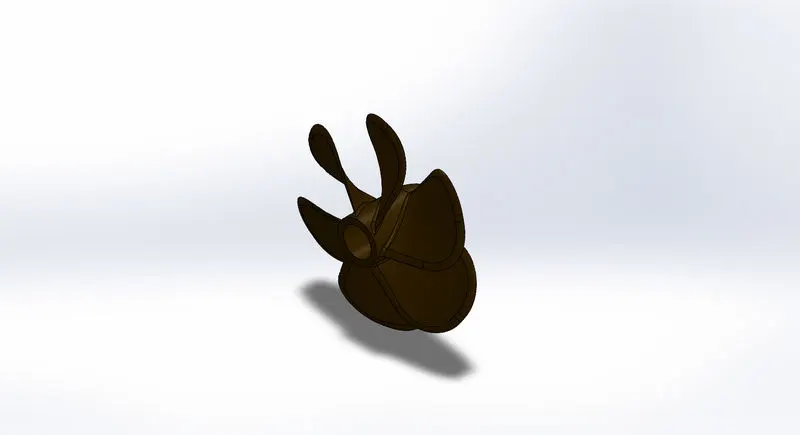
- Propeller
Propeller is a device that is used to pump fluid through a pipe or a duct to create a thrust which propels the ship forward.
There can be one, two or rarely three propellers. Each propeller has 2 – 5 blades.
- Garage Door
The door used for the opening of the garage is used for the storage of vehicles.
They are made of wood, metal or fibreglass.
- Radar
Radar is used on ships to detect other ships and land obstacles.
They are electronic navigation instruments.
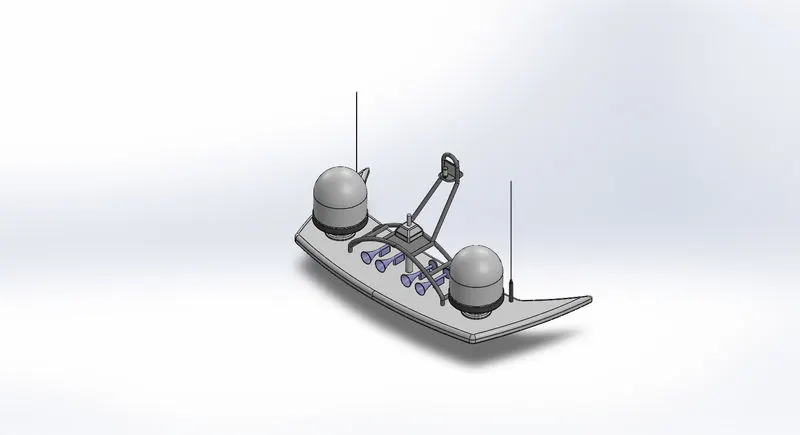
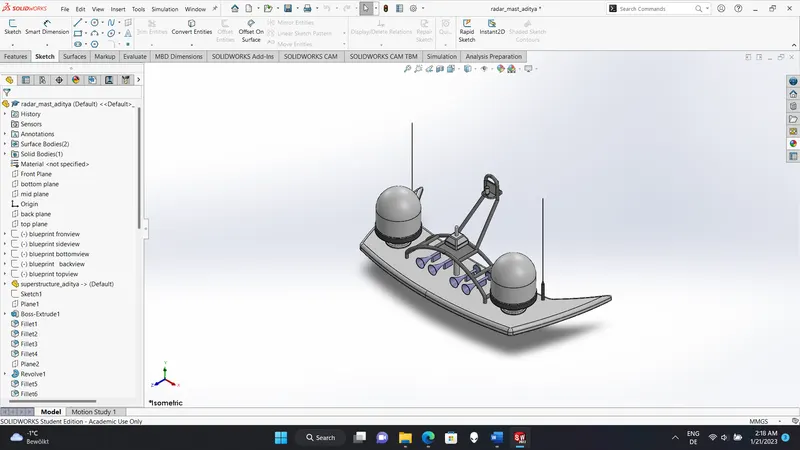
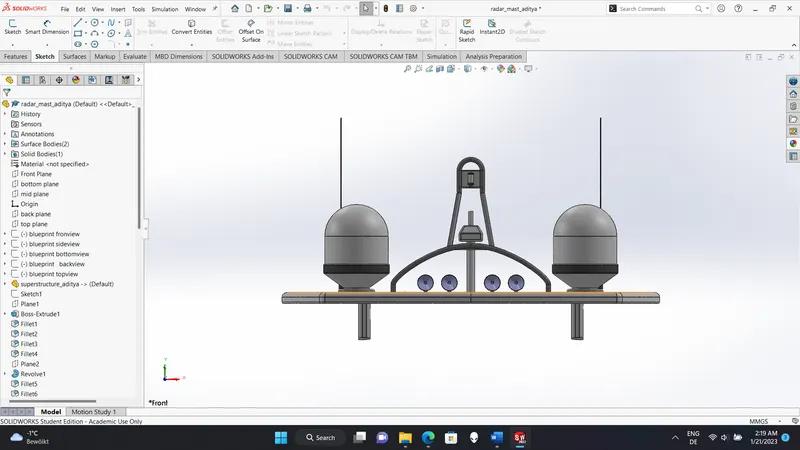
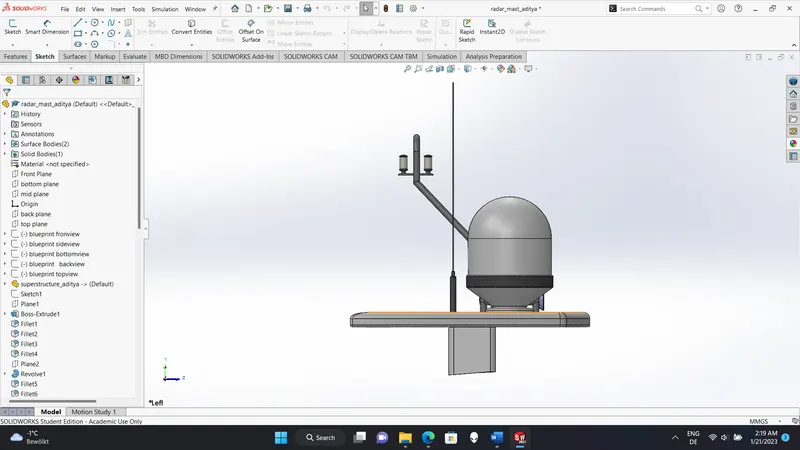
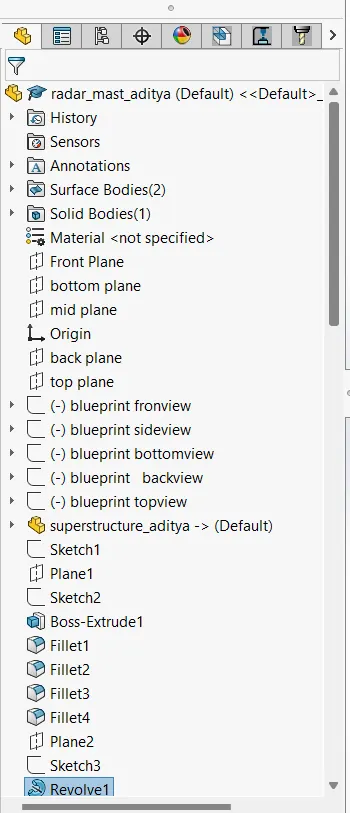
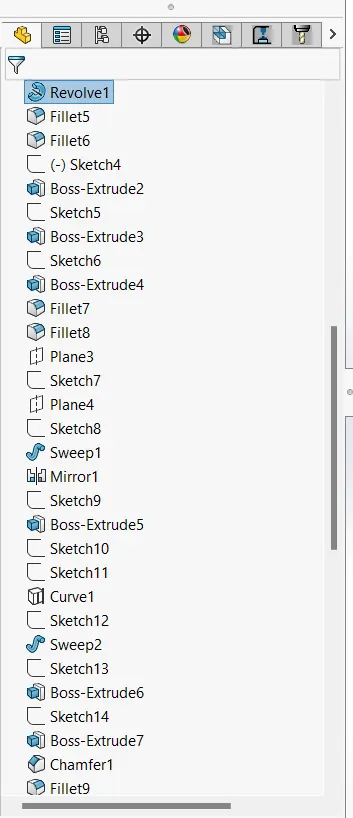
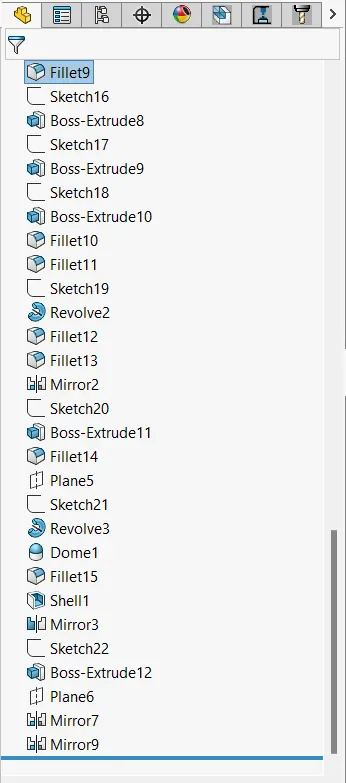
- Radar Mast
A mast is an arrangement of spars. The main purpose of the mast is to support the positioning of various navigation equipment.
In our model, the mast is supporting a radar receiver, navigation lights, horn and antenna.
- Front Seat
They consist of two seats clubbed together.
They are placed in the lounge section, near the jacuzzi.
They also feature a recliner feature along with a sun pad.
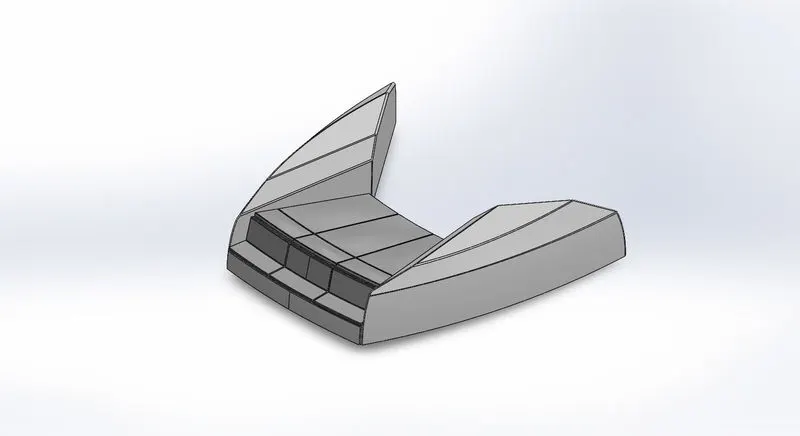
- Middle Seat
These seats were placed just outside the passenger's cabin.
They come with an exclusive table, a good place to have breakfast or casual meetings.
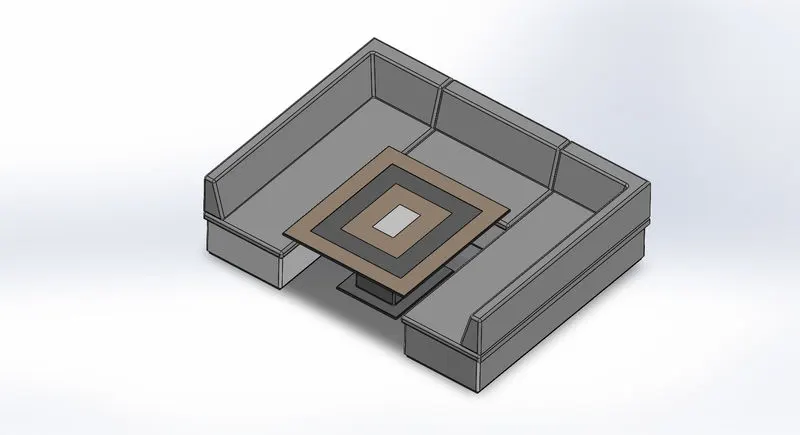
- Rear Seat
They are placed near the end of the deck.
They consist of a storage space of a minibar, as one can enjoy the view.
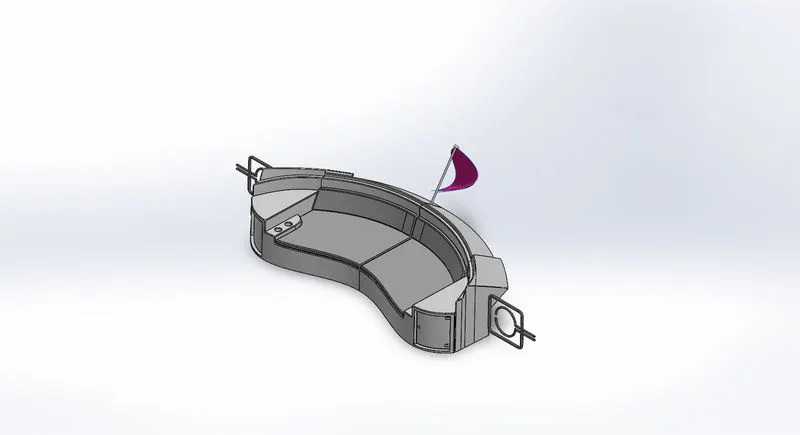
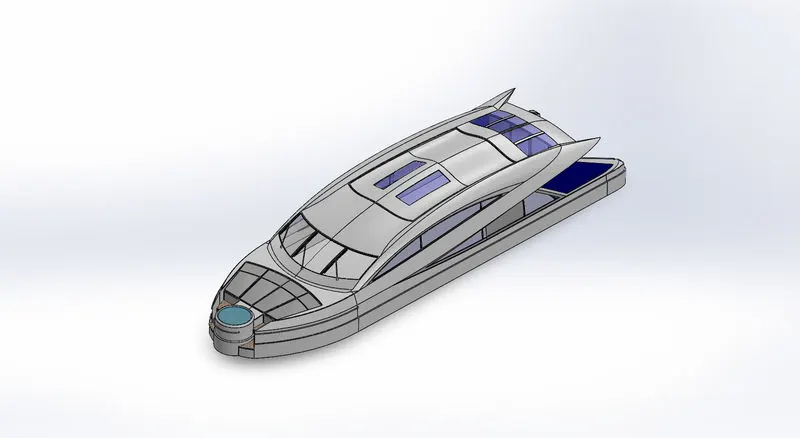
- Superstructure
The superstructure is the additional part which is above the deck surface. The radar mast and sails are not part of the superstructure.
It is also used as a control cabin for the ship.
The size of the superstructure has a great effect on the mobility of the ships.
In many cruise ships, the superstructure covers almost all the deck surface and consists of many floors as well.
It gives additional space for cruise liners such as swimming pools, and additional cabins, along with adding beauty to the ship.
In aircraft carriers, it is used as a control tower and operational centre for all major technical staff.
Assembly
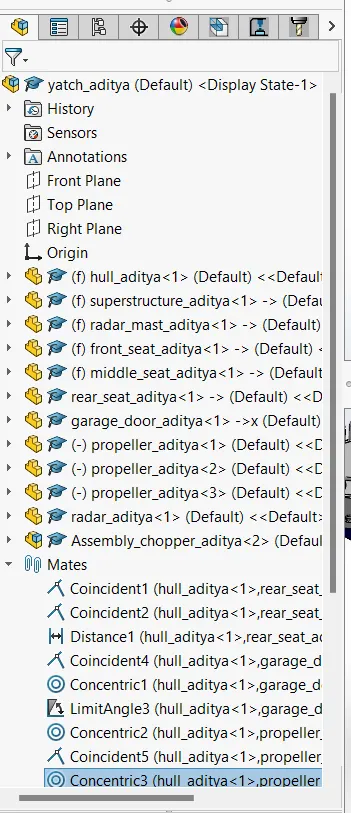
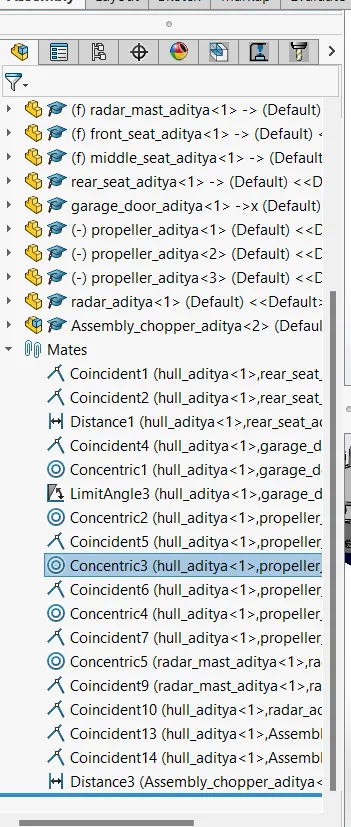
When all the components are modelled then we proceed with the next step, which is combining the parts in the order to generate a meaningful output.
There are 2 types of assembly approaches followed in Solidworks namely the top-down approach and the bottom-up approach.
I use a bottom-up approach, I find it feasible and easy to use.
In this approach, we import the parts which we have already created.
The main disadvantage of this approach is that we cannot make any major changes to individual components in the assembly, for that we have to edit the part and then the changes will be done in assembly accordingly.
It is the traditional assembly approach.
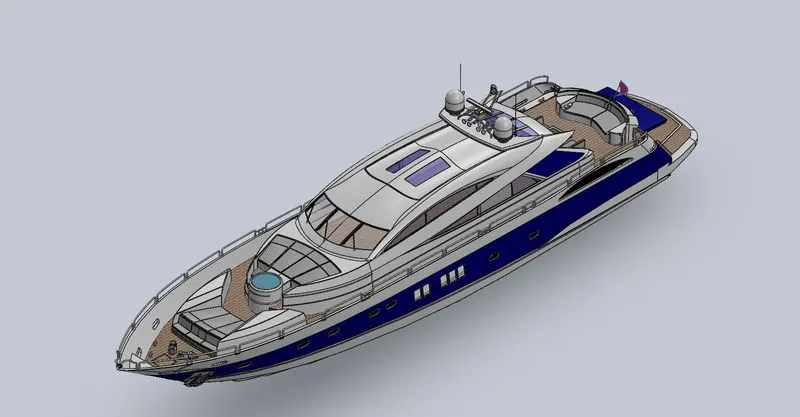
Figure: Yacht iso view
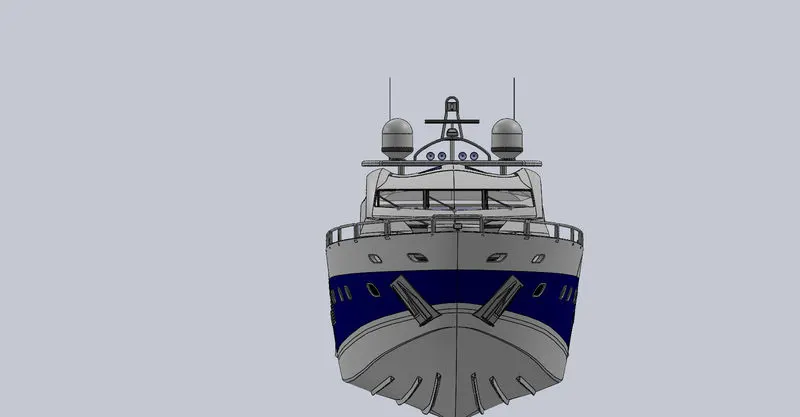
Figure: Yacht front view
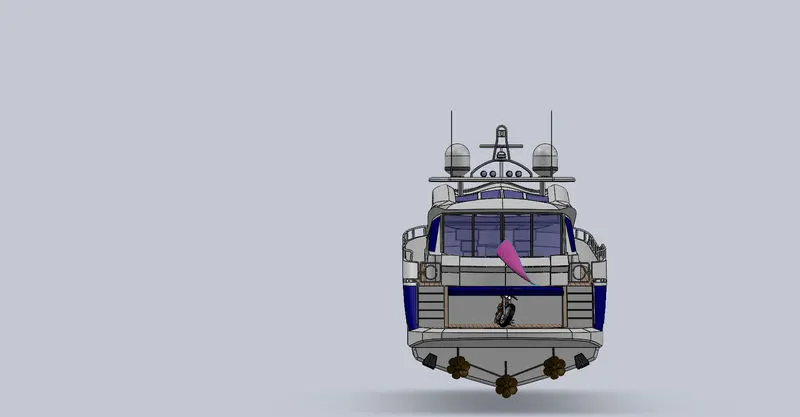
Figure: yacht back view
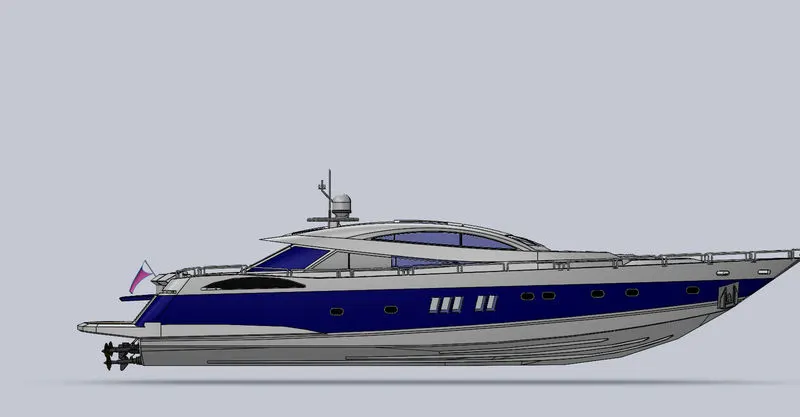
Figure: yacht side view
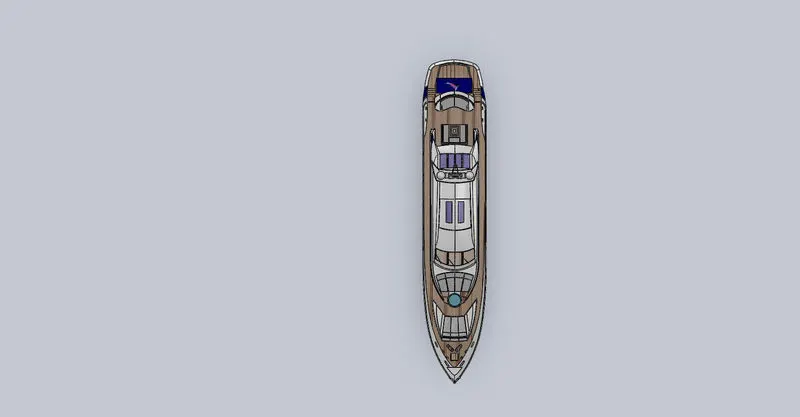
Figure: yacht top view
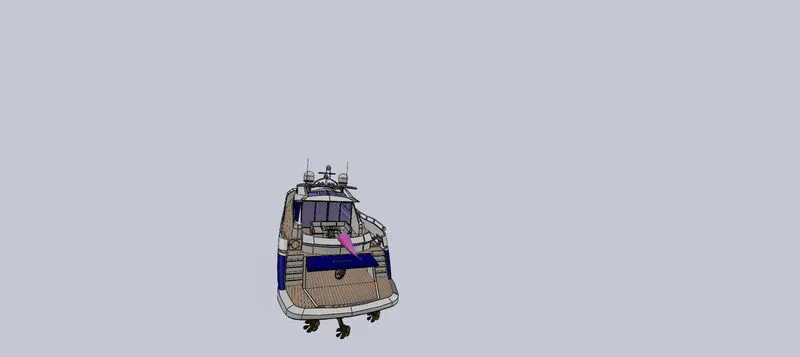
Figure: yacht camera set up view
Rendering
Rendering means the generation of the photorealistic image using software.
We can use the plugin called photo view 360 or Solidworks Visualize which is a standalone product of Solidworks and have high rendering capabilities.
We can check how our model, product, and design will look in actual or real life after it has been manufactured.
We can set up our custom camera angle, and adjust the focal length, height and many more parameters. It also allows us to set up a new light environment, where we can use directional light, adjust the lights applied in the model or even adjust the sunlight.
When we create a new environment, we can adjust the texture, use lighting, edit the decals, apply new scenes, and adjust shadows.
After we are satisfied with the scene and background environment we can run render. There are types of render. Preview – it is the setup shot and will not run a background pass. Fast render – it has 2 modes, speed or quality. It will also give accurate results but it uses faster raytracing speed. Accurate render – it used normal raytracing speed and usually takes because it uses exact light paths. Powerboost – it requires an external visualize boost machine.
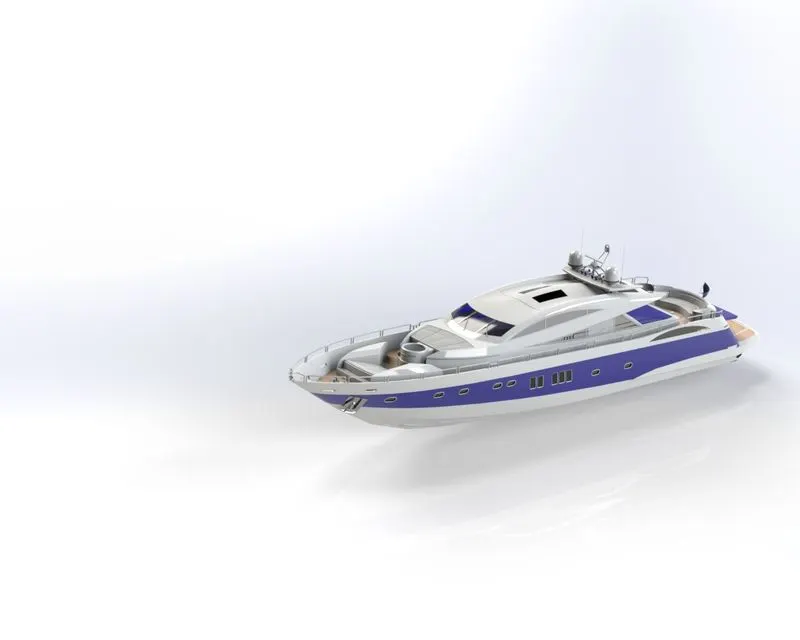
Figure: Render in photoview 360
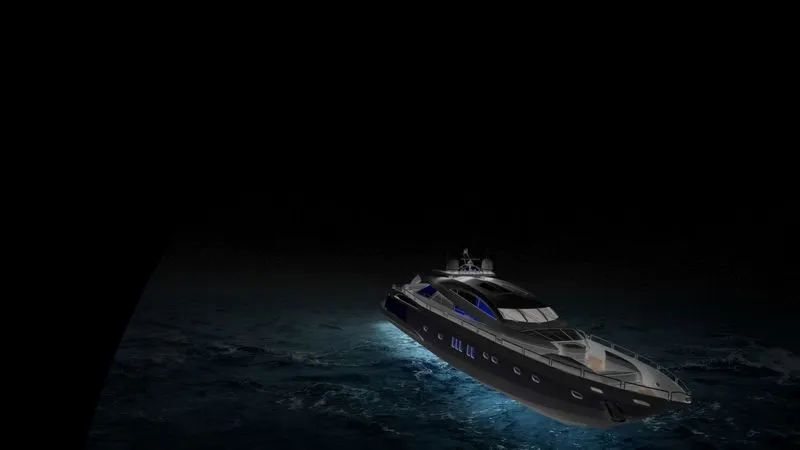
Figure: render mode shadow, done in visualize
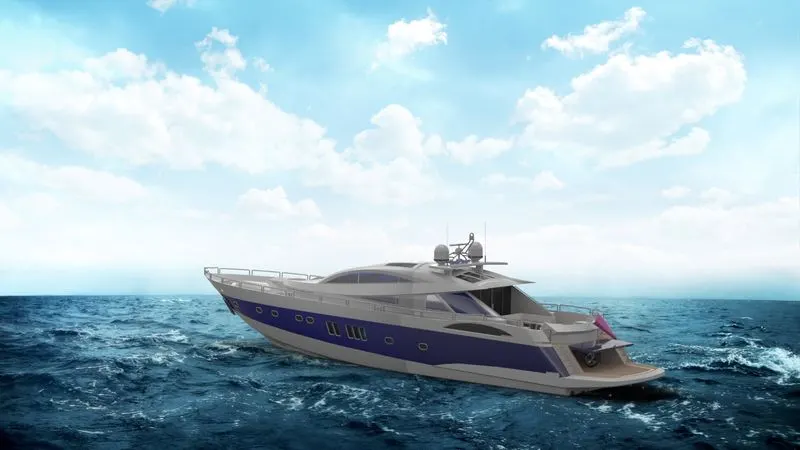
Figure: Render type Sun study, time around noon on a clear day, done in visualize
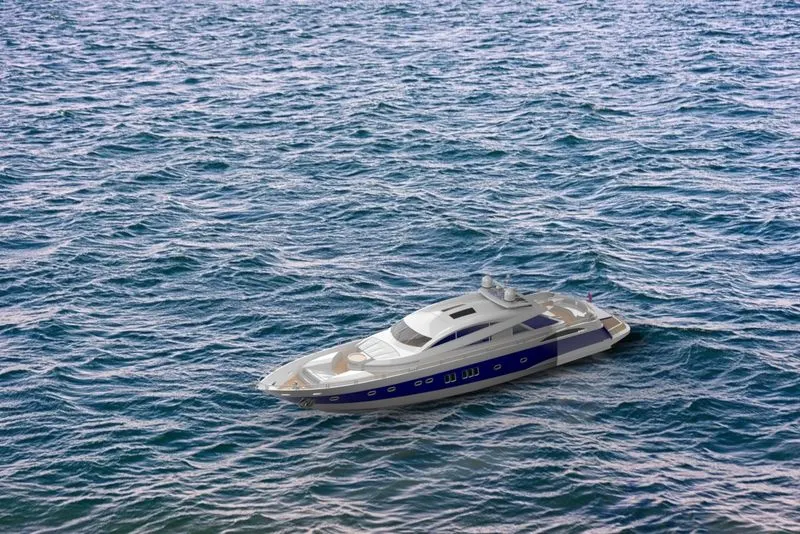
Figure: render mode beauty, done in visualize
Conclusion
In this project, I learnt
- 3D sketching
- Surface Modelling
Radar Mast
Assembly