Projefct 1_Comparative study of different storey buildings for Seismic forces
Aim:
To model and analyse all the Buildings from A to K, with the given structural specifications. And to compare the analysis results between models based on the different configurations.
Modelling of Building-A:
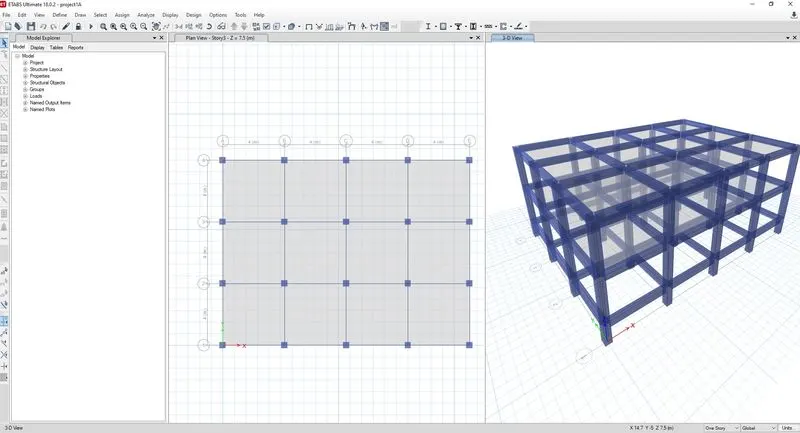
Modelling of Building-B:
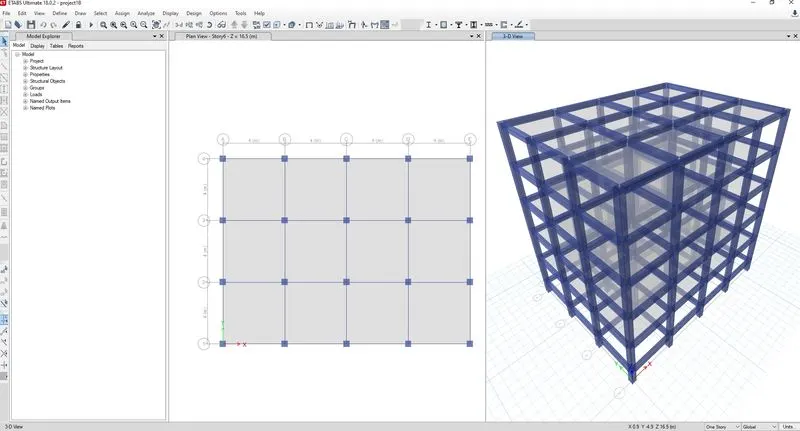
Modelling of Building-C:
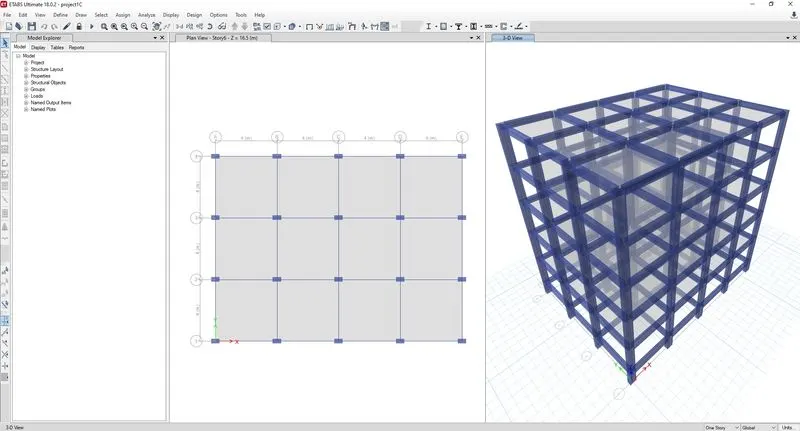
Modelling of Building-D:
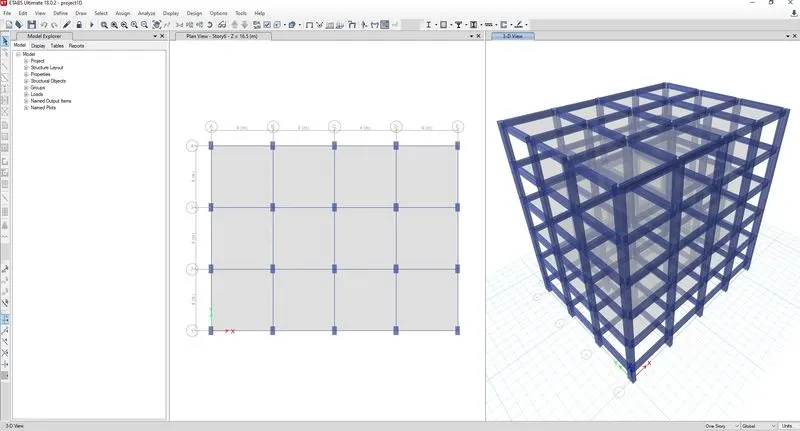
Modelling of Building-E:
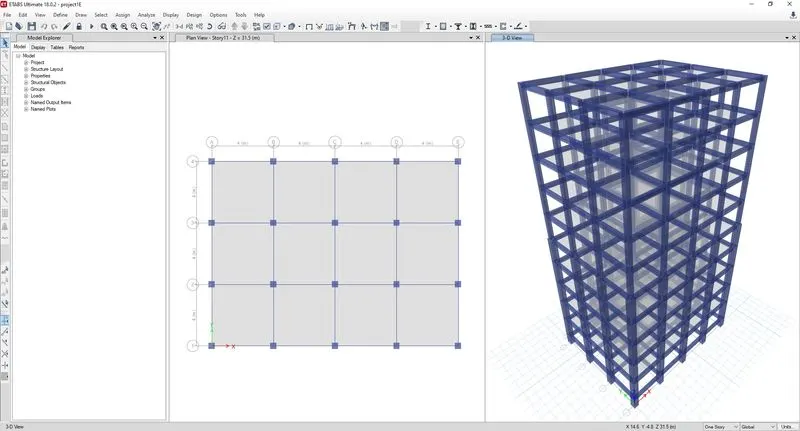
Modelling of Building-F:
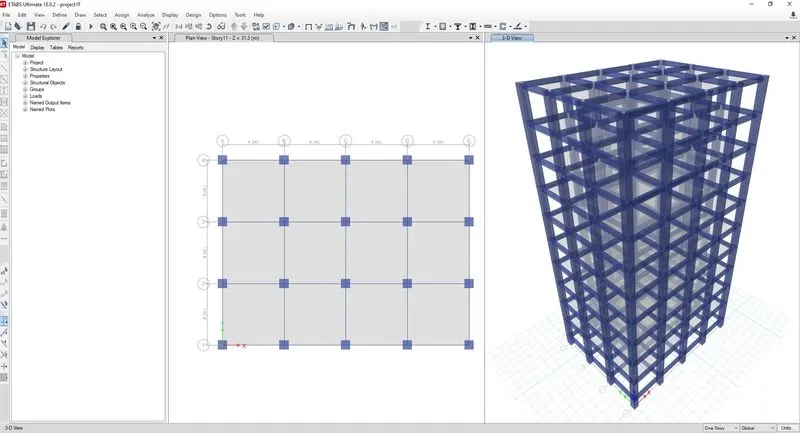
Modelling of Building-G:
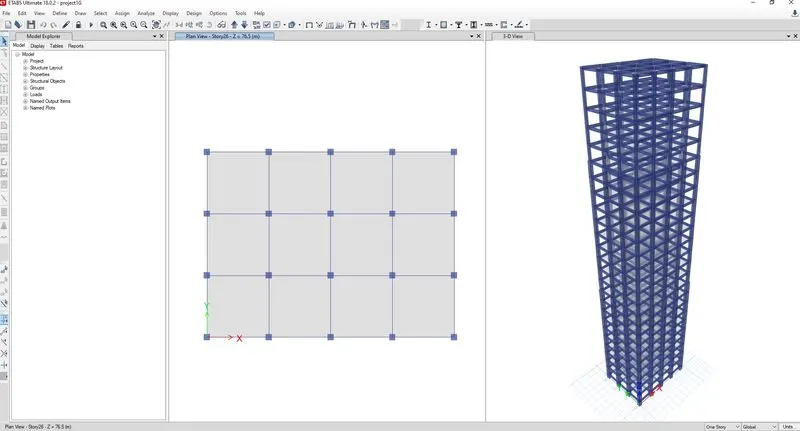
Modelling of Building-H:
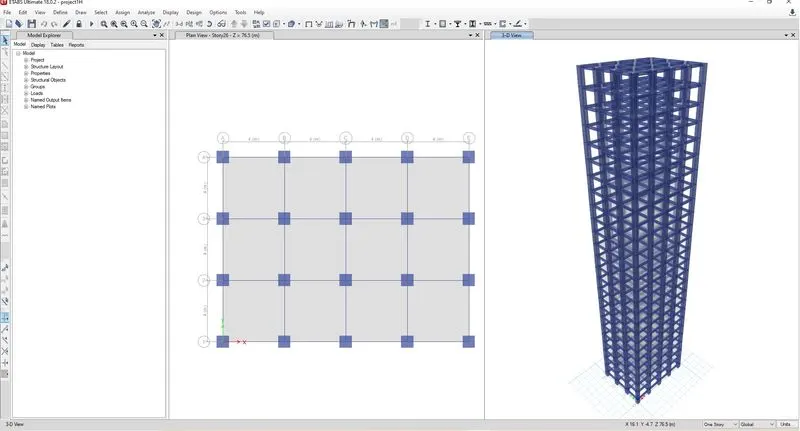
Modelling of Building-J:
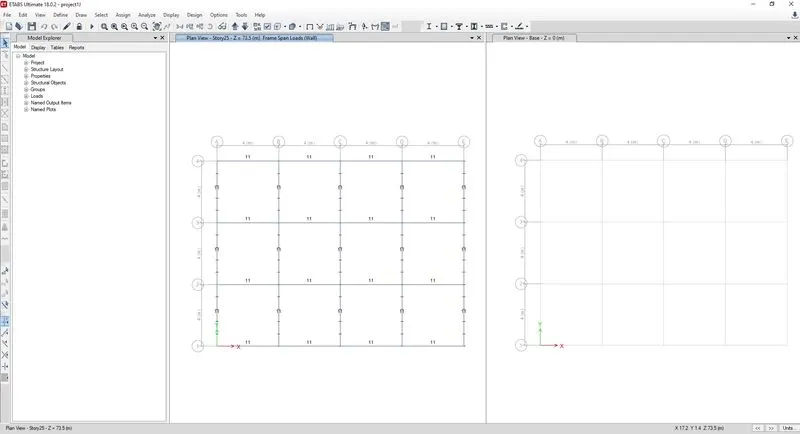
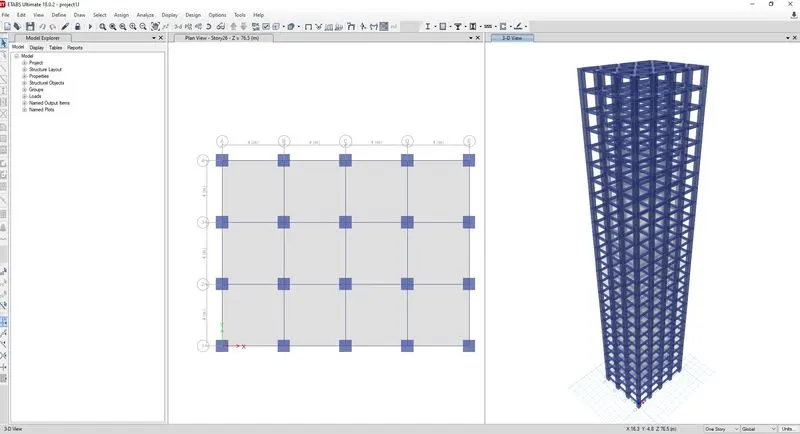
In the same H-model, the imposed mass has to be increased by 10%. So the wall load is increased from 10 kN/m to 11 kN/m.
Modelling of Building-K:
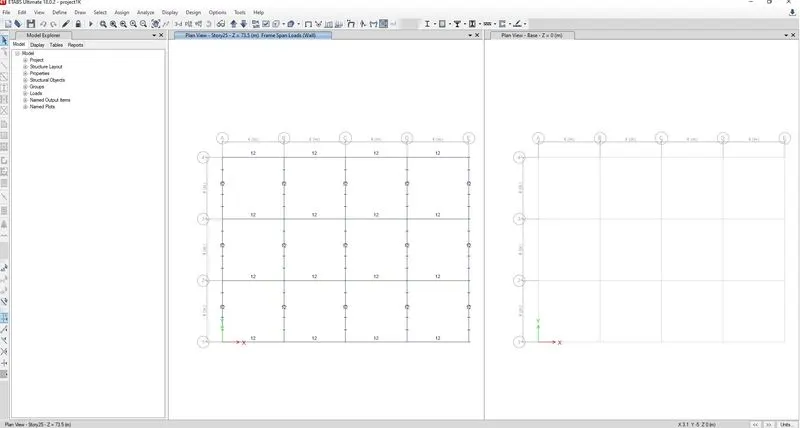
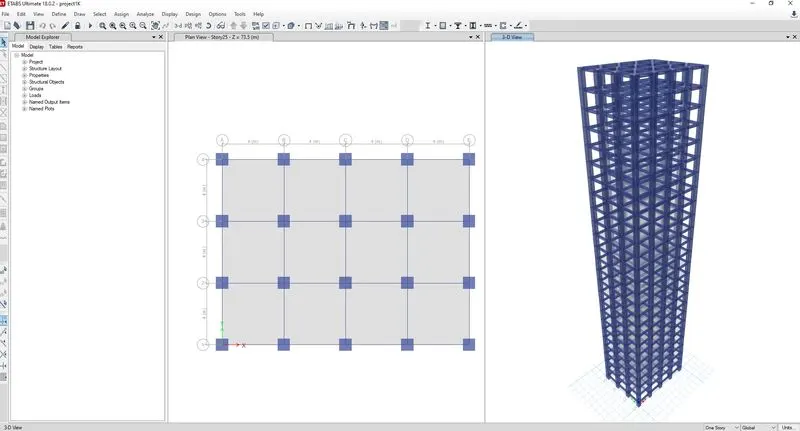
In the same H-model, the imposed mass has to be increased by 20%. So the wall load is increased from 10 kN/m to 12 kN/m.
Thus all the 10 different ETABS models have been completed and analysed as per given specifications. Next to compare the analysis results for different conditions and models.
Comparing Fundamental natural period for Buildings-E/F and G/H & the justifications:
Building-E `T_(x1)`= 1.599 s
Building-E `T_(y1)`= 1.652 s
Building-E `R_1`= 1.4 s
Building-F `T_(x1)`= 1.611 s
Building-F `T_(y1)`= 1.665 s
Building-F `R_1`= 1.41 s
Building-G `T_(x1)`= 3.003 s
Building-G `T_(y1)`= 3.138 s
Building-G `R_1`= 2.382 s
Building-H `T_(x1)`= 3.342 s
Building-H `T_(y1)`= 3.495 s
Building-H `R_1`= 2.624 s
When comparing Building-E and F & G and H, the time period is marginally increasing for Building-F and H. This is because for those models, column sizes have been maintained uniform. This configuration will have negligible impact on the stiffness but the mass of structure will get slightly increased. As we know time period formula,
`T_n = 2pi root()(m/k)`
Time period is directly proportional to mass of system. So while increasing the mass of the storey, it relatively increases the time period of the structure.
Comparing Fundamental natural period for Buildings-H,J,K & the justifications regarding its flexibility:
Building-H `T_(x1)`= 3.342 s
Building-H `T_(y1)`= 3.495 s
Building-H `R_1`= 2.624 s
Building-J `T_(x1)`= 4.422 s
Building-J `T_(y1)`= 4.23 s
Building-J `R_1`= 3.321 s
Building-K `T_(x1)`= 4.301 s
Building-K `T_(y1)`= 4.497 s
Building-K `R_1`= 3.377 s
First of all, the difference between Buildings-H,J,K is the increment in their imposed mass. Building-J has 10% more imposed mass and Building-K has 20% more imposed mass. As we know from the Time period formula, mass is directly proportional to the Time period. So obviously the time period of Buildings-J and K become higher.
The imposed mass is not a part of stiffness component of the structure. The imposed mass are from wall loads. So increasing just the mass in the building does not mean the stiffness increment. Notably, more the time period of a building, the more it is flexible. So the buildings-J and K become more flexible than the earlier one.
Comparing Fundamental natural period for Buildings-A,B & F,H and the justifications regarding its height impact:
Building-A `T_(x1)`= 0.409 s
Building-A `T_(y1)`= 0.418 s
Building-A `R_1`= 0.369 s
Building-B `T_(x1)`= 1.01 s
Building-B `T_(y1)`= 1.036 s
Building-B `R_1`= 0.912 s
Building-F `T_(x1)`= 1.611 s
Building-F `T_(y1)`= 1.665 s
Building-F `R_1`= 1.41 s
Building-H `T_(x1)`= 3.342 s
Building-H `T_(y1)`= 3.495 s
Building-H `R_1`= 2.624 s
If we compare the Building-A(2 storey) and B(5 storey), the time period of B is higher. If we compare the Building-F(10 storey) and H(25 storey), the time period of H is higher. To explain it in simpler way, we know the stiffness formula for a fixed free end column as follow,
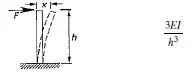
imagining the column as a building, the stiffness is inversely proportional to the height. So relating it to the whole building, the stiffness of building decreases with increase in height. If the stiffness of building decrease, it eventually increases the time period as inversely proportional.
`T_n = 2pi root()(m/k)` `T_n prop 1/K`
Comparing Fundamental natural period for Buildings-B,C,D and the justifications regarding column orientation:
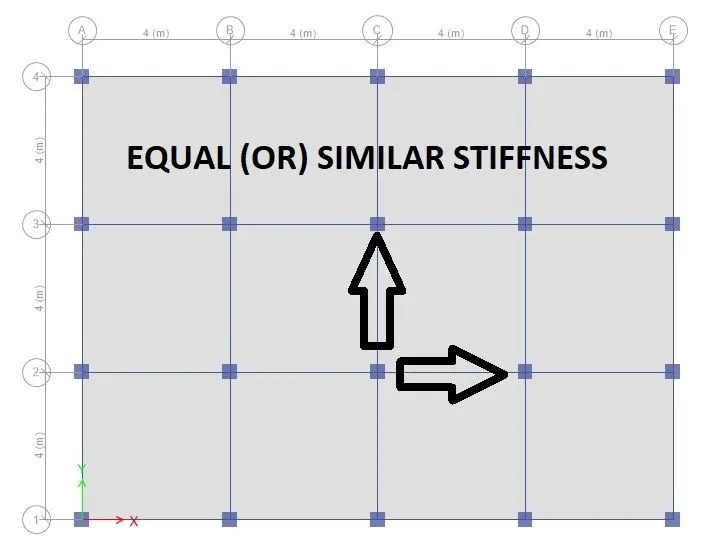
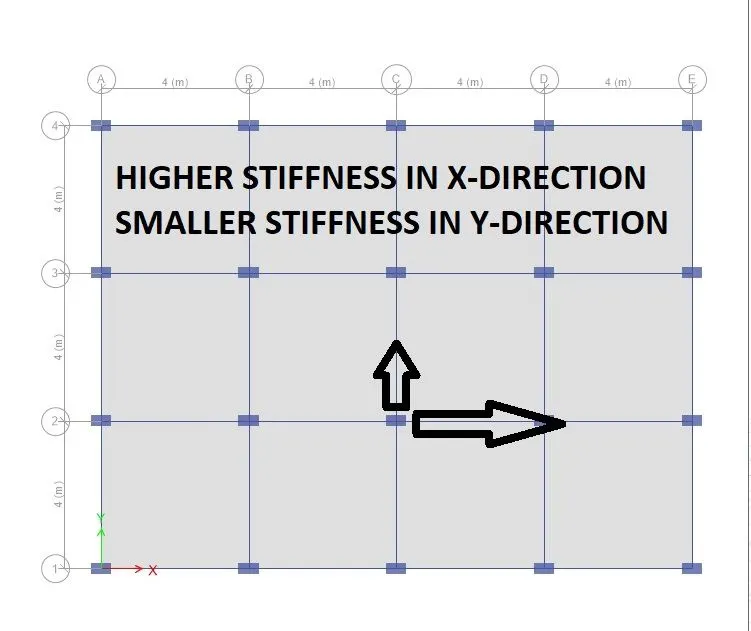
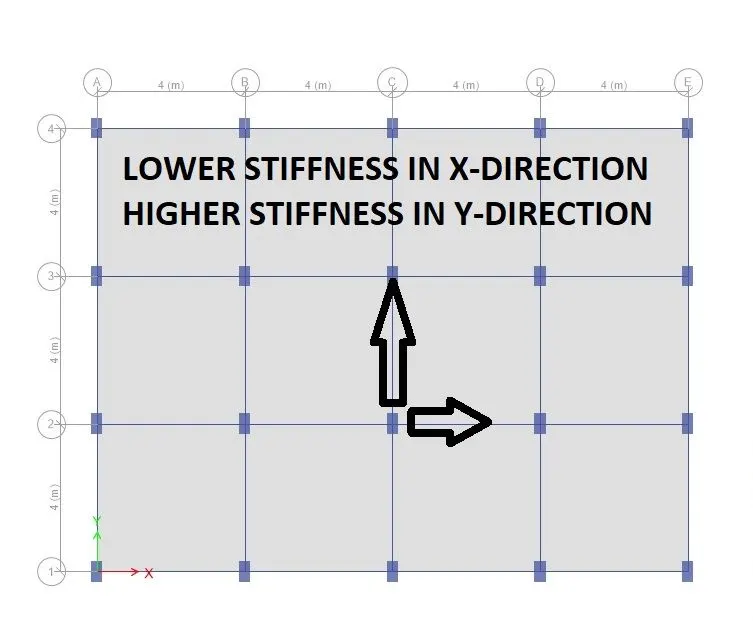
To compare easily the stiffness participation in each directions of the Buildings-B,C,D can be referred below.
Building-B has square columns:
Building-C has rectangular column with longer X-dimension:
Building-D has rectangular column with longer Y-dimension:
Building-B, has square column sizes. It will have similar stiffness and similar Time periods in both the X-Y directions.
Building-B `T_(x1)`= 1.01 s
Building-B `T_(y1)`= 1.036 s
Building-B `R_1`= 0.912 s
Building-C, x-direction stiffness is higher. So its Time period will be lesser in X-direction than the Y-direction. We achieved this logic.
Building-C `T_(x1)`= 0.929 s
Building-C `T_(y1)`= 1.145 s
Building-C `R_1`= 0.926 s
Building-D, Y-direction stiffness is higher. So its Time period will be lesser in Y-direction than the X-direction. We achieved this logic.
Building-D `T_(x1)`= 0.953 s
Building-D `T_(y1)`= 1.12 s
Building-D `R_1`= 0.899 s
Comparing the two different configurations of Building-B with changes in Beam flexural stiffness:
Keeping the original Building-B time period as it is, one more Building-B model is prepared keeping Stiffness of beam 0.01
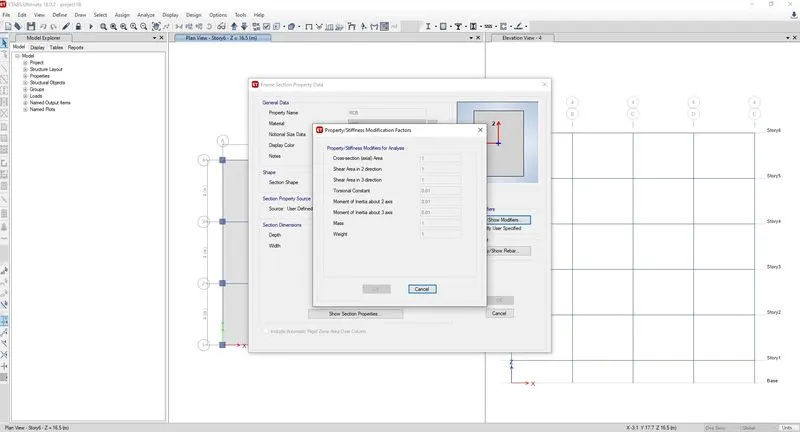
Original Building-B `T_(x1)`= 1.01 s
Original Building-B `T_(y1)`= 1.036 s
Original Building-B `R_1`= 0.912 s
Modified Building-B `T_(x1)`= 7.483 s
Modified Building-B `T_(y1)`= 7.721 s
Modified Building-B `R_1`= 4.54 s
Since we neglect the stiffness of beams, the building became more flexible and thus led to much higher Time period.
Comparing the two different configurations of Building-B with changes in Axial property of column:
Keeping the original Building-B time period as it is, one more Building-B model is prepared keeping Axial property of beam 0.01
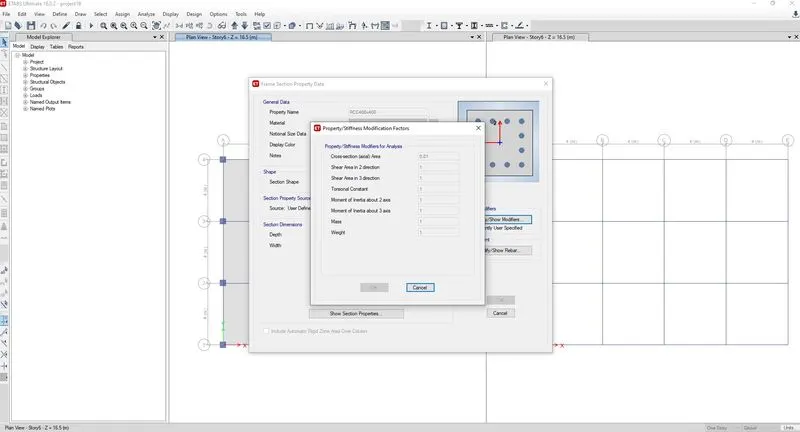
Original Building-B `T_(x1)`= 1.01 s
Original Building-B `T_(y1)`= 1.036 s
Original Building-B `R_1`= 0.912 s
Modified Building-B `T_(x1)`= 1.441 s
Modified Building-B `T_(y1)`= 1.649 s
Modified Building-B `R_1`= 0.933 s
The lateral effects of any building is less prone to axial property of vertical element. Axial property of column is significant only when there is oscillation in vertical direction (`T_z`). So the time period is having less variation.
Comparing the two different configurations of Building-B with changes in Base support condition:
Keeping the original Building-B time period as it is, one more Building-B model is prepared keeping Fixed support condition in Base.
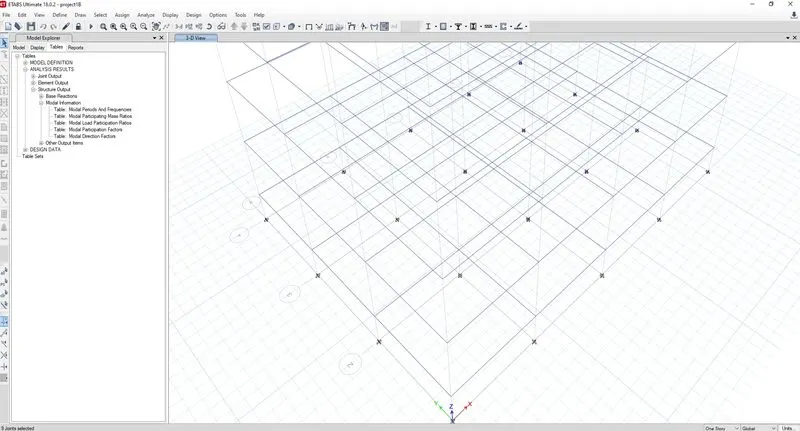
Original Building-B `T_(x1)`= 1.01 s
Original Building-B `T_(y1)`= 1.036 s
Original Building-B `R_1`= 0.912 s
Modified Building-B `T_(x1)`= 0.919 s
Modified Building-B `T_(y1)`= 0.941 s
Modified Building-B `R_1`= 0.828 s
Generally, a fixed support is more rigid than the pinned support. So obviously the column rigidity will be higher with fixed base, which leads to lesser time period.
Conclusion:
Thus, all the ETABS models with different structural configurations are analysed and compared the impacts in their time period with changes in sectional parameters.
Attachments:
All the worked out ETABS models are attached in the challenge submission for reference.