Projefct 1_Comparative study of different storey buildings for Seismic forces
Factors influencing the dynamic characteristics of a building
Factors influencing the Natural Period of a building
Factors influencing the Mode shape of oscillations
A)
Aim: To compare the data that was given.
1) Fundamental natural periods of buildings E & F as well as G & H. And the significant difference in the fundamental natural periods.
2) Fundamental natural periods of buildings H. J and K. Have the buildings become more flexible or stiff due to change in mass.
3) Fundamental natural periods of Buildings A, B, F and H with change in building height.
4) Fundamental natural periods of Buildings B, C and D with change in column orientation.
Introduction:
1) Buildings oscillate during earthquake shaking. The oscillation causes inertia force to be induced in the building.
The intensity and duration of oscillation, and the amount of inertia force induced in a building depend on features of buildings,
called their dynamic characteristics, in addition to the characteristics of the earthquake shaking (beyond the control of an engineer) itself.
2)The important dynamic characteristics of buildings are modes of oscillation and damping (assumed constant in most practical cases).
3)A mode of oscillation of a building is defined by associated Natural Period and Deformed Shape in which it oscillates.
Related Courses
4) Every building has a number of natural frequencies, at which it offers minimum resistance to shaking induced by external effects (like earthquakes and wind) and internal effects (like motors fixed on it).Each of these natural frequencies and the associated deformation shape of a building constitute a Natural Mode of Oscillation.
5) The mode of oscillation with the smallest natural frequency (and largest natural period) is called the Fundamental Mode, the associated natural period is called the Fundamental Natural Period.
Procedure:
1)Fundamental natural periods of buildings E & F as well as G & H. And the significant difference in the fundamental natural periods.
1)building E;
a)First we need to create a new project and add 10 storey with requrie mesures as given
b)and we have keep section properties,material properties.
c)we assign the colomns to bottom 5 storeys with(600x600)mm,and add colunms to top 5 storey with size of (400x400)mm.
d)next we assign the beams to all the storey with size (300x400)mm.
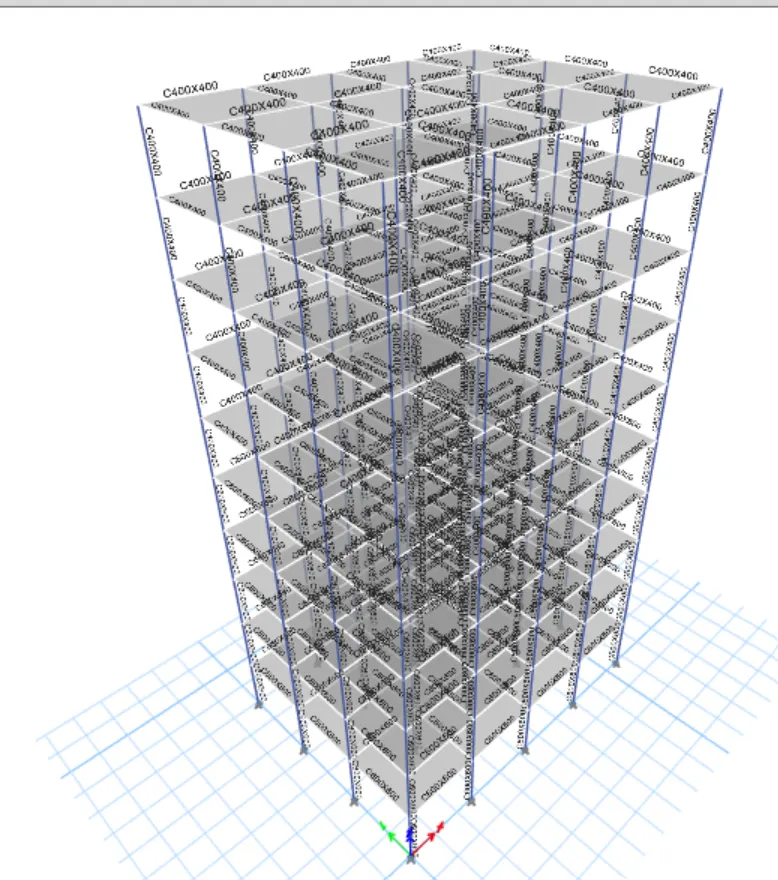
e)we need to assign the slabs with the thikness of 150mm from the first storey to 10th
f)we need assign the all loads such as brick wall load,dead load,live load.
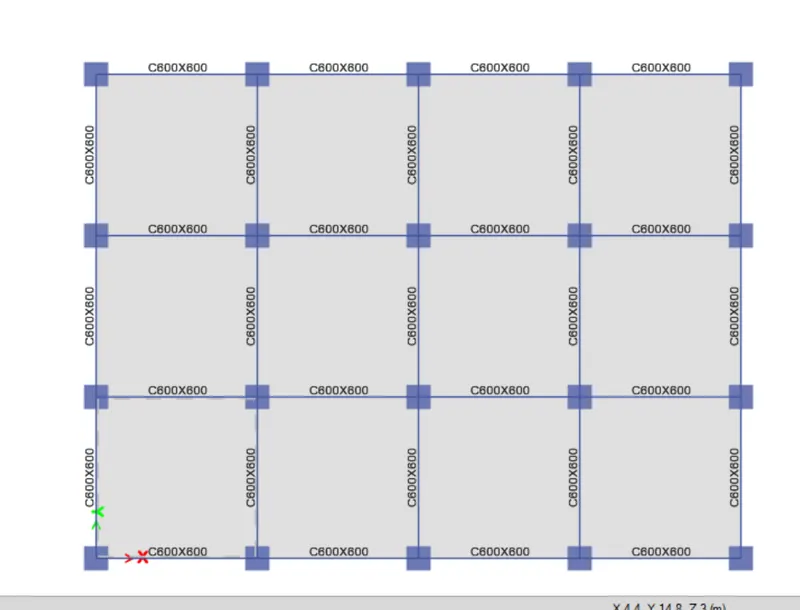
g)after assigning all loads we need do run analysis
h) Next we have to click on the Display option and then select the show table option.
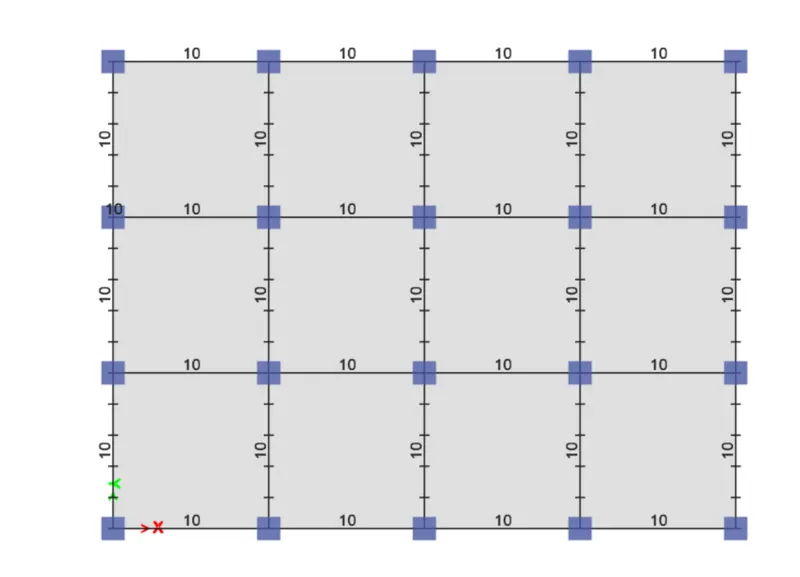
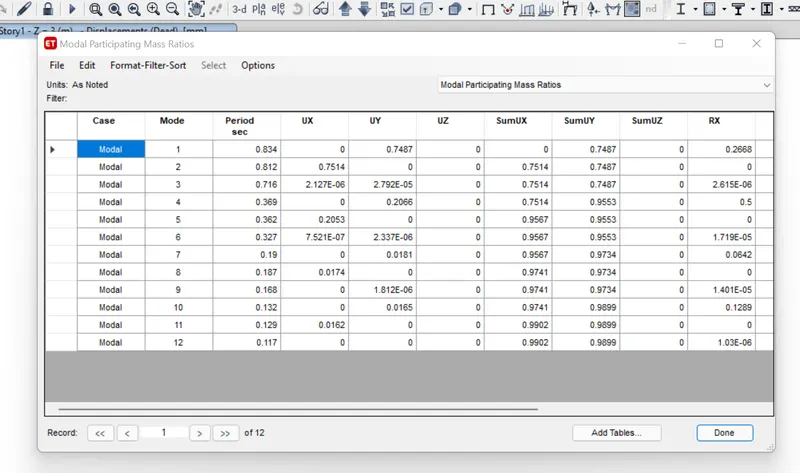
i)After selecting the show table option, then we need to select the Modal Participating Mass Ratios from the Structure output.
j)Then after the Modal Participating Mass Ratios table will appear, as shown below.
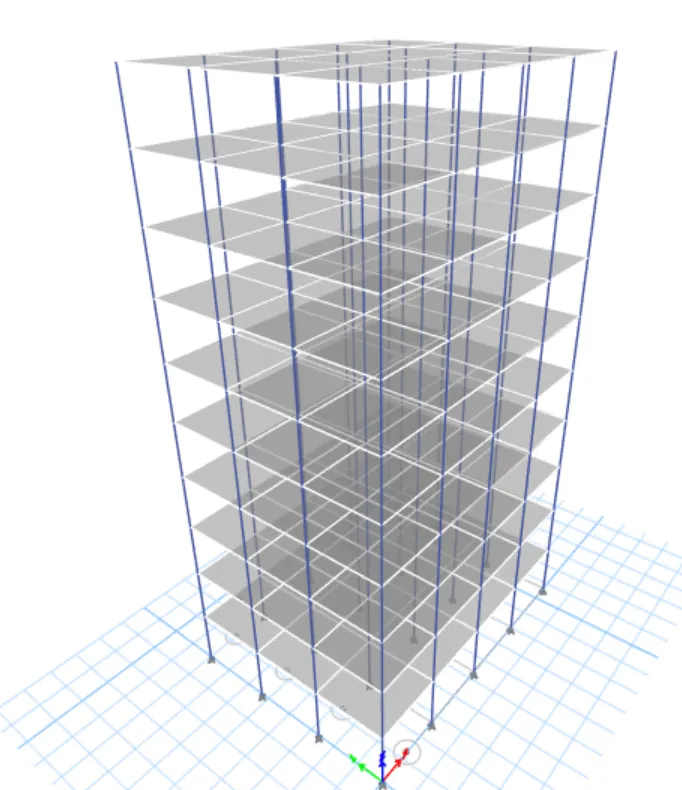
2)Building F
a)First we need to create a new project and add 10 storey with requrie mesures as given
b)and we have keep section properties,material properties.
c)we assign the colomns to c(600x600)
d)next we assign the beams to all the storey with size (300x400)mm.
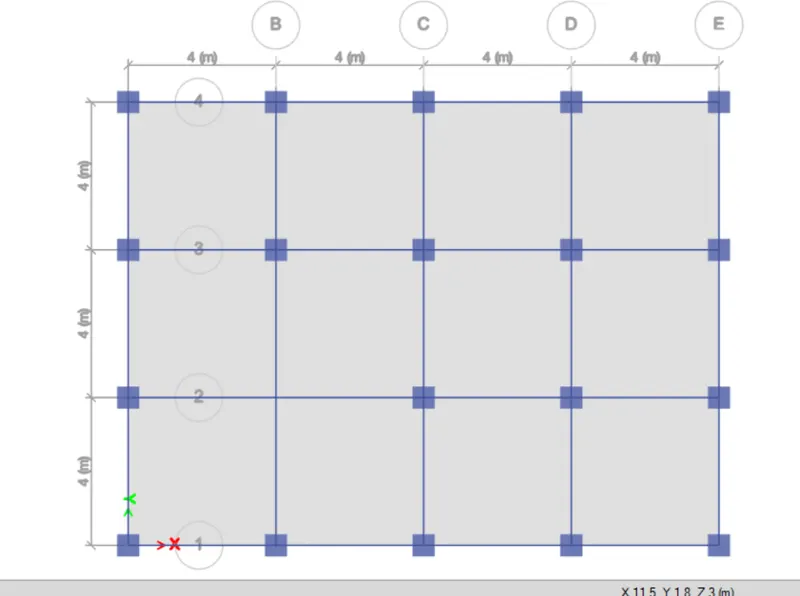
e)we need to assign the slabs with the thikness of 150mm from the first storey to 10th
f)we need assign the all loads such as brick wall load,dead load,live load.
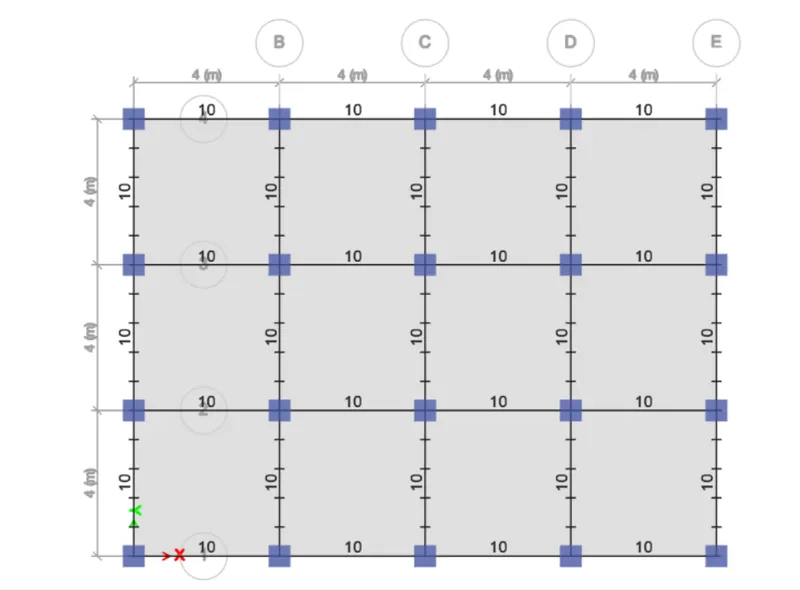
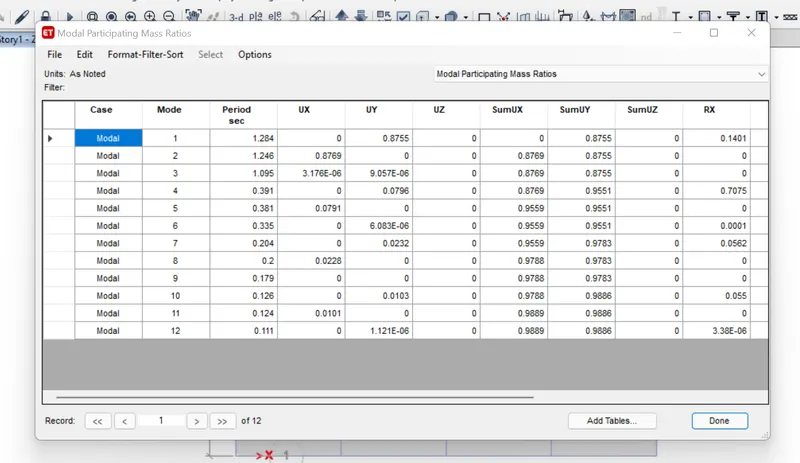
i)After selecting the show table option, then we need to select the Modal Participating Mass Ratios from the Structure output.
j)Then after the Modal Participating Mass Ratios table will appear, as shown below.
3)building G;
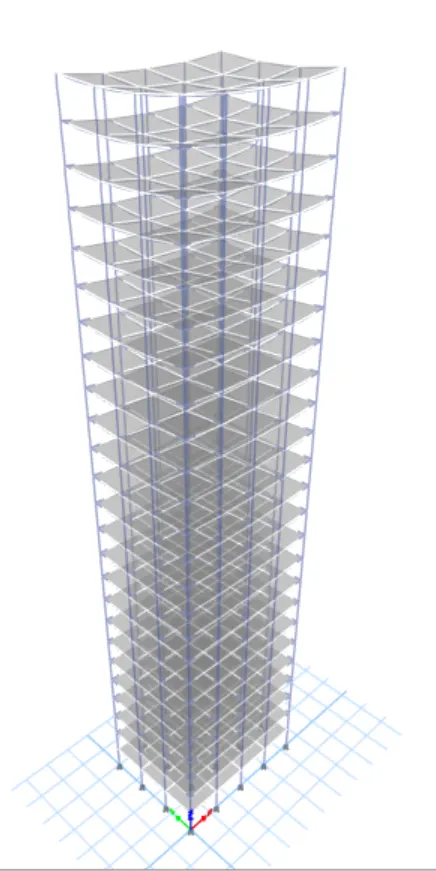
a)First we need to create a new project and add 25 storey with requrie mesures as given
b)and we have keep section properties,material properties.
c)we assign the colomns to bottom 10 storeys with(800x800)mm,and add colunms to upper 5 storey with size of (400x400)mm and middile 10 storeys with(600x600)mm.
d)next we assign the beams to all the storey with size (300x400)mm.
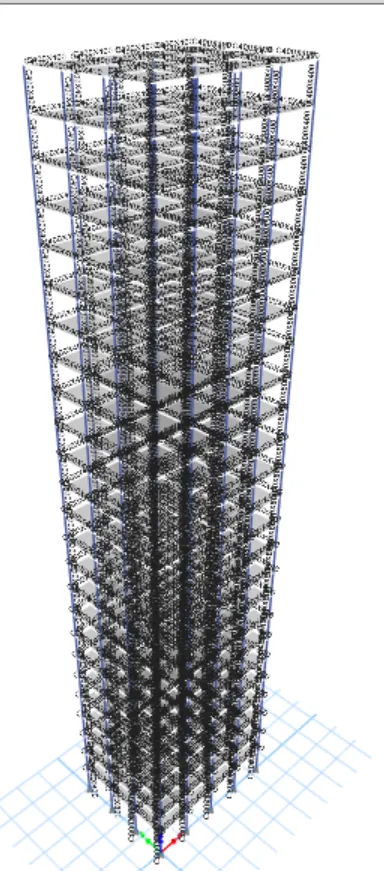
e)we need to assign the slabs with the thikness of 150mm from the first storey to 25th
f)we need assign the all loads such as brick wall load,dead load,live load.
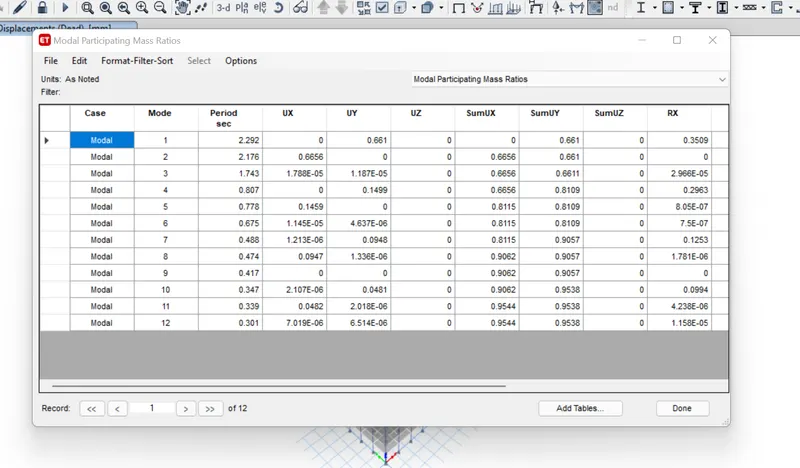
i)After selecting the show table option, then we need to select the Modal Participating Mass Ratios from the Structure output.
j)Then after the Modal Participating Mass Ratios table will appear, as shown below.
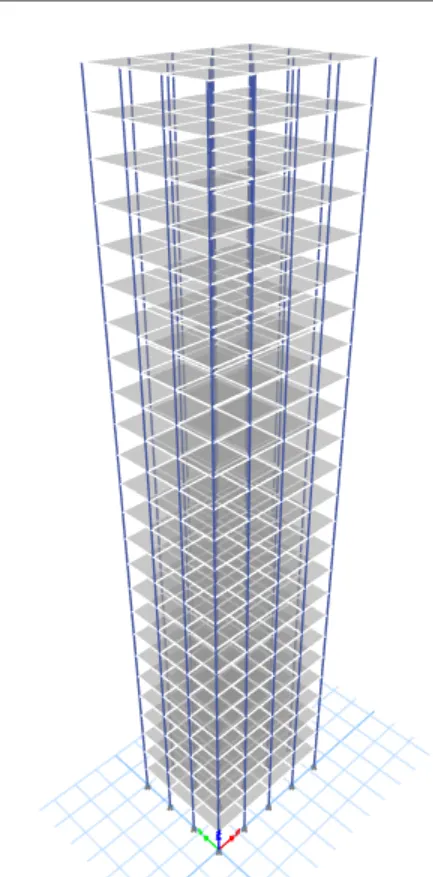
3)building H;
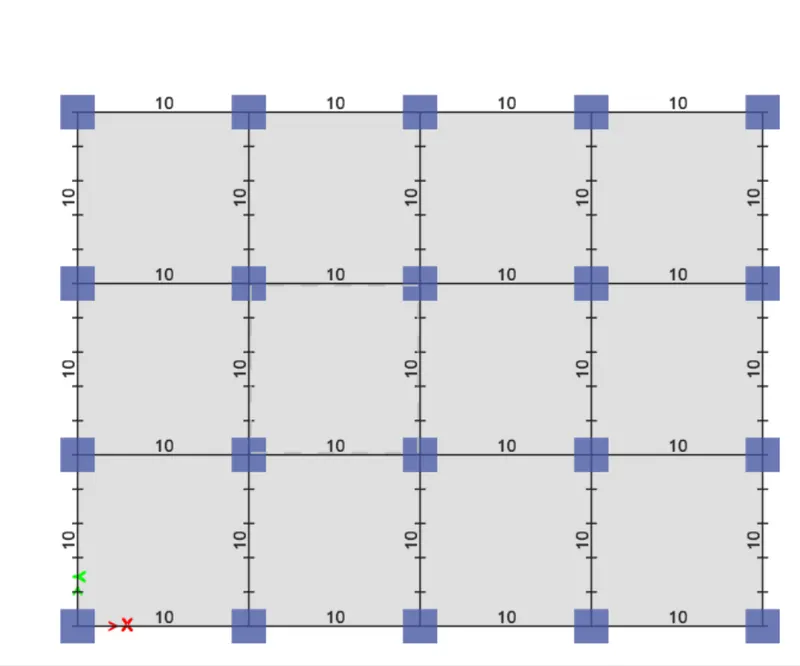
a)First we need to create a new project and add 25 storey with requrie mesures as given
b)and we have keep section properties,material properties.
c)we assign the colomns to c(800x800)
d)next we assign the beams to all the storey with size (300x400)mm.
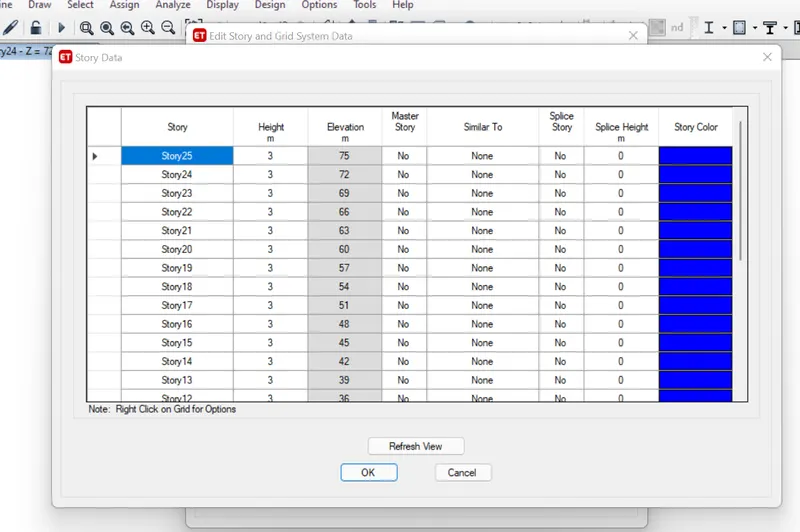
e)we need to assign the slabs with the thikness of 150mm from the first storey to 25th
f)we need assign the all loads such as brick wall load,dead load,live load.
i)After selecting the show table option, then we need to select the Modal Participating Mass Ratios from the Structure output.
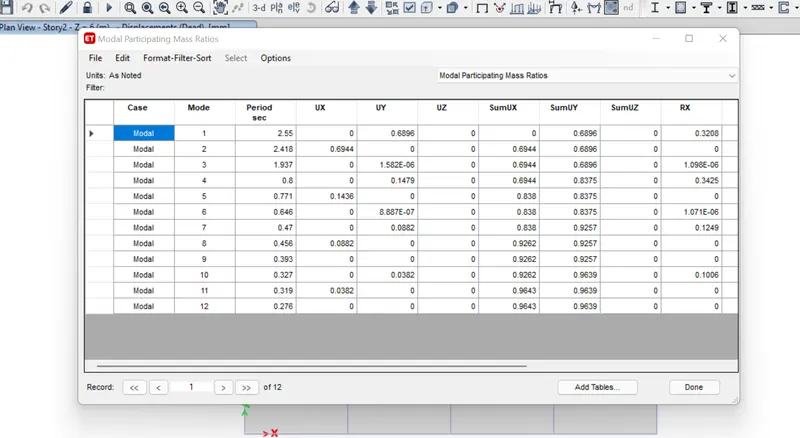
j)Then after the Modal Participating Mass Ratios table will appear, as shown below.
RESULT;
- The fundamental natural period of Building E is T=0.83sec.
• The fundamental natural period of Building F is T=1.28 sec.
• The fundamental natural period of Building G is T=2.29 sec.
• The fundamental natural period of Building H is T=2.55 sec.
• In the Building E we use two different column sizes, one has been assigned to top 5 storeys and another one to the bottom 5 storey. But in building F there is only one column size we use for the entire building, thats why there is a significant difference in the fundamental natural periods.
- Similarly we use three different column sizes for building G, and one column size for building H So from that values we understood the difference of the time period.
So,there is a significant difference in the fundamental natural periods.
2) Fundamental natural periods of buildings H. J and K. Have the buildings become more flexible or stiff due to change in mass.
1)Building H ;
a)First we need to create a new project and add 25 storey with requrie mesures as given
b)and we have keep section properties,material properties.
c)we assign the colomns to c(800x800)
d)next we assign the beams to all the storey with size (300x400)mm.
e)we need to assign the slabs with the thikness of 150mm from the first storey to 25th
f)we need assign the all loads such as brick wall load,dead load,live load.
i)After selecting the show table option, then we need to select the Modal Participating Mass Ratios from the Structure output.
j)Then after the Modal Participating Mass Ratios table will appear, as shown below.
2)Building J ;
a)First we need to create a new project and add 25 storey with requrie mesures as given and with imposed mass more than 10%.
b)and we have keep section properties,material properties.
c)we assign the colomns to c(800x800)
d)next we assign the beams to all the storey with size (300x400)mm.
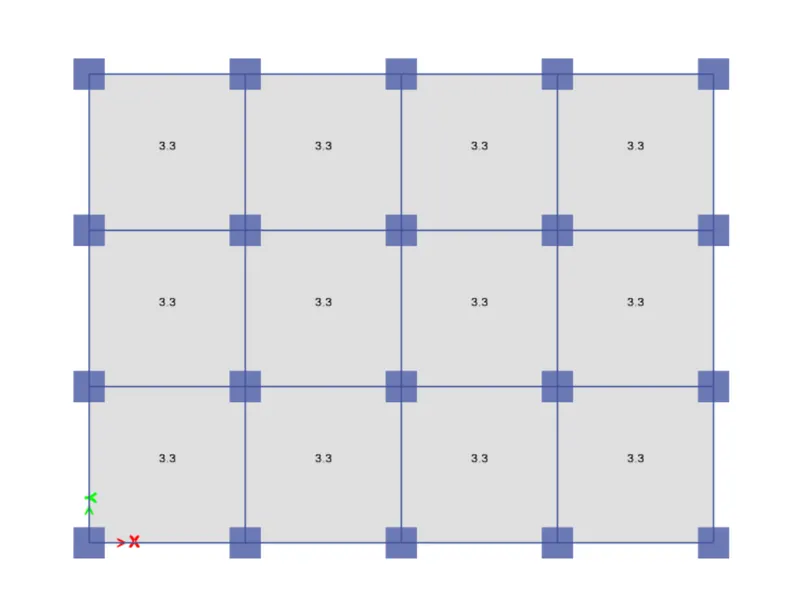
e)we need to assign the slabs with the thikness of 150mm from the first storey to 25th
f)we need assign the all loads such as brick wall load,dead load,live load.
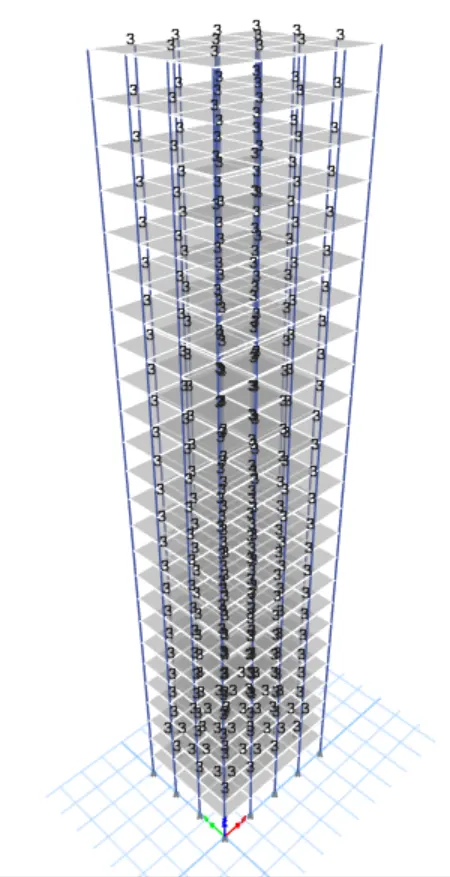
i)After selecting the show table option, then we need to select the Modal Participating Mass Ratios from the Structure output.
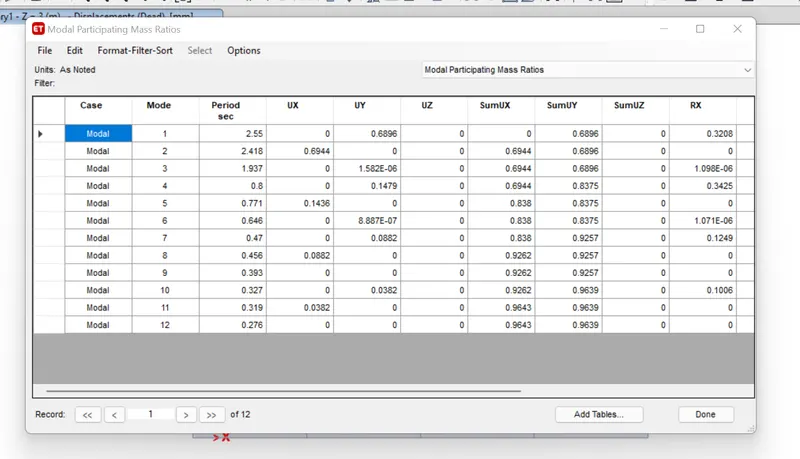
j)Then after the Modal Participating Mass Ratios table will appear, as shown below.
3)Building K ;
a)First we need to create a new project and add 25 storey with requrie mesures as given and with imposed mass more than 20%.
b)and we have keep section properties,material properties.
c)we assign the colomns to c(800x800)
d)next we assign the beams to all the storey with size (300x400)mm.
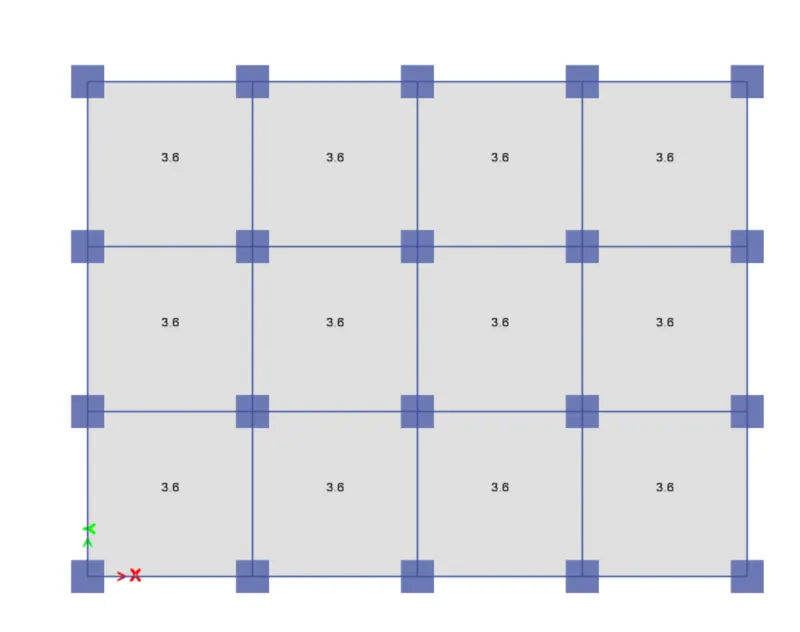
e)we need to assign the slabs with the thikness of 150mm from the first storey to 25th
f)we need assign the all loads such as brick wall load,dead load,live load.
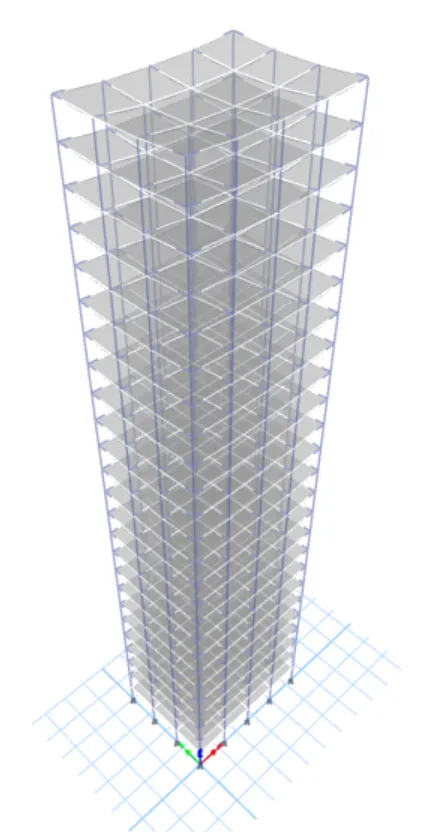
i)After selecting the show table option, then we need to select the Modal Participating Mass Ratios from the Structure output.
j)Then after the Modal Participating Mass Ratios table will appear, as shown below.
Result:
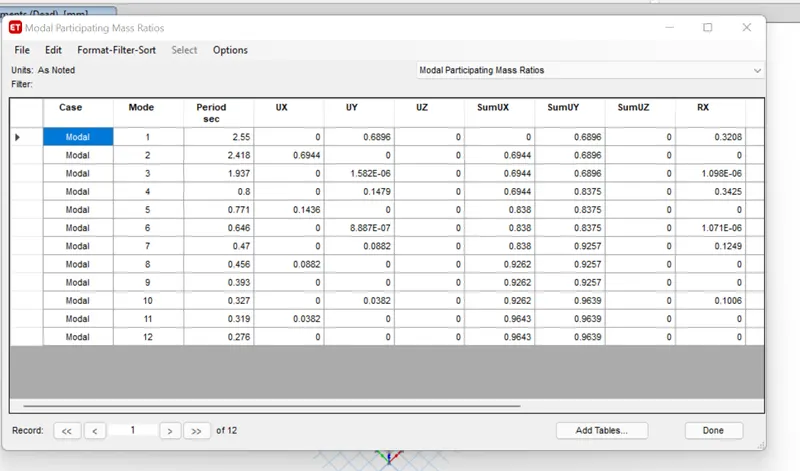
• The fundamental natural period of Building H is T=2.55 sec.
• The fundamental natural period of Building J is T=2.59sec.
- The fundamental natural period of Building K is T=3.2sec.
- When the mass of the building is increases, then the natural period of the building also increases.
• When the mass of the building increased by 10% compared to Building H, the Building J is more flexible than the building H.
• When the mass of the building K increased by 20% compared to Building H, the Building K is more flexible than the building and building H.
So,when the weight of the building increases, the buildings become more flexible.
3) Fundamental natural periods of Buildings A, B, F and H with change in building height.
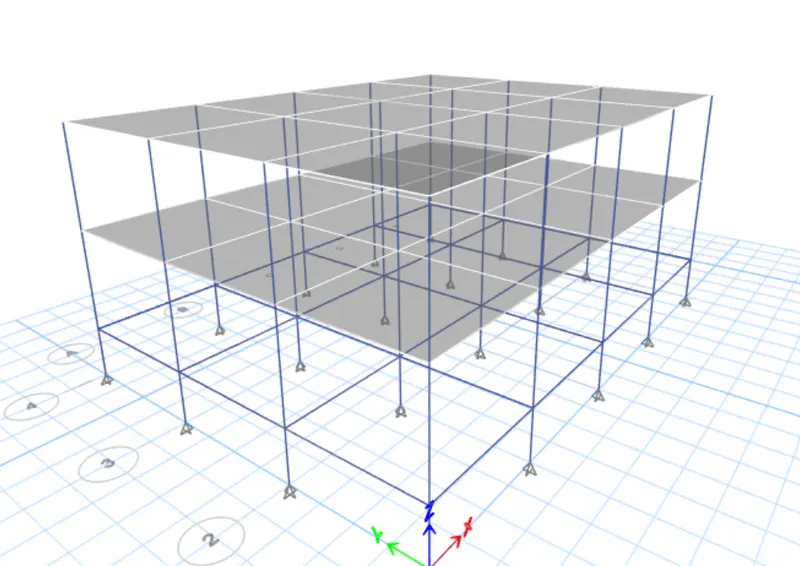
1)Building A;
a)First we need to create a new project and add 2storey with requrie mesures as given
b)and we have keep section properties,material properties.
c)we assign the colomns to c(400x400)
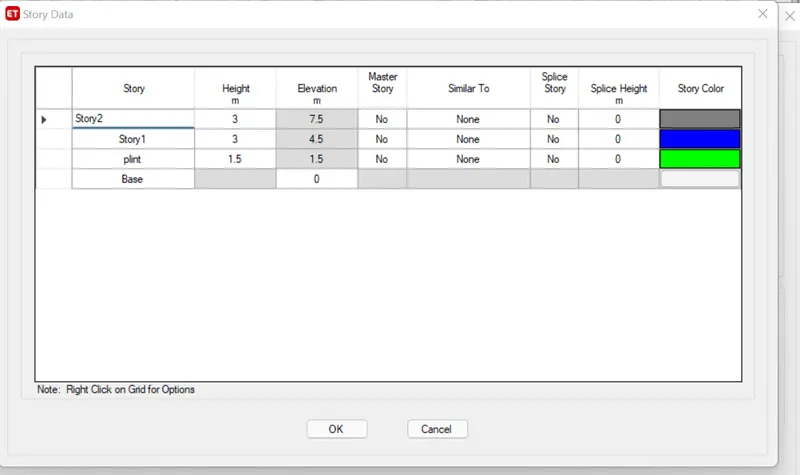
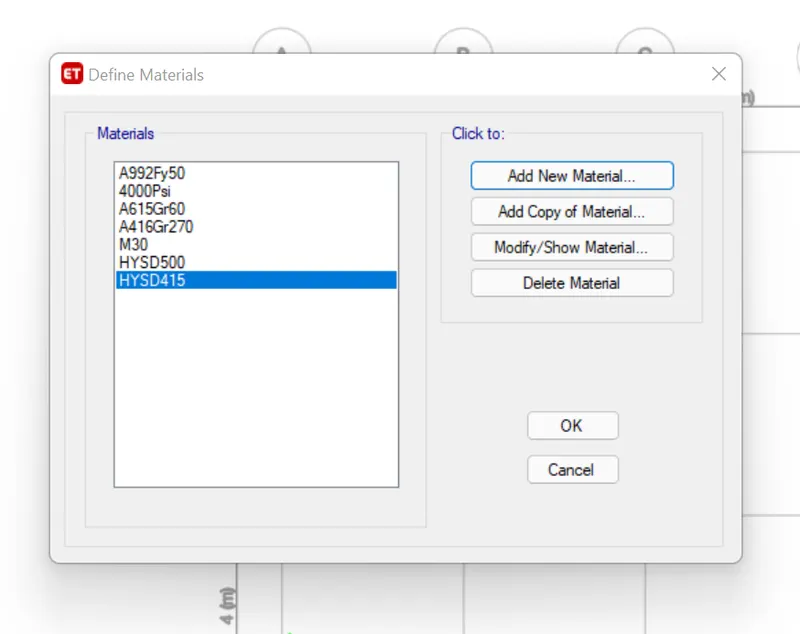
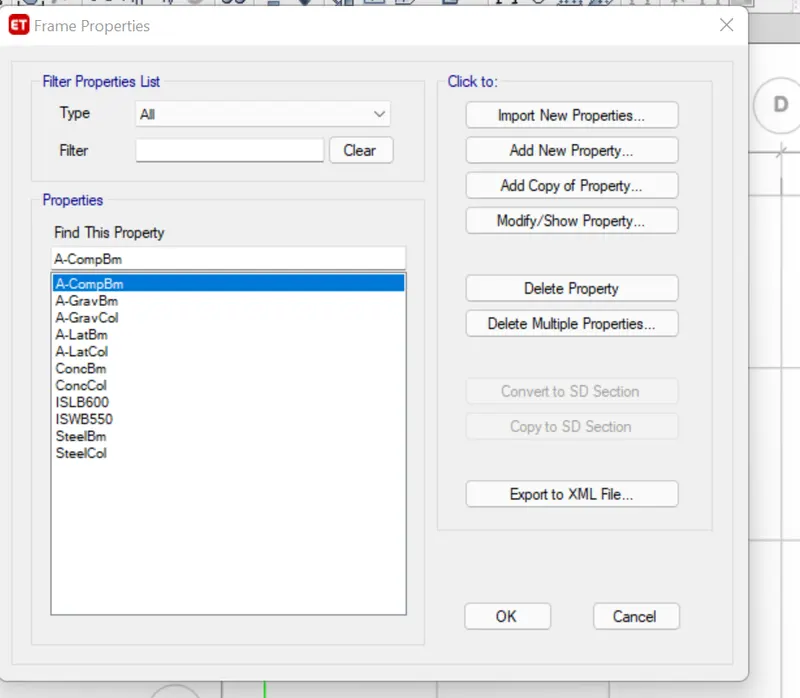
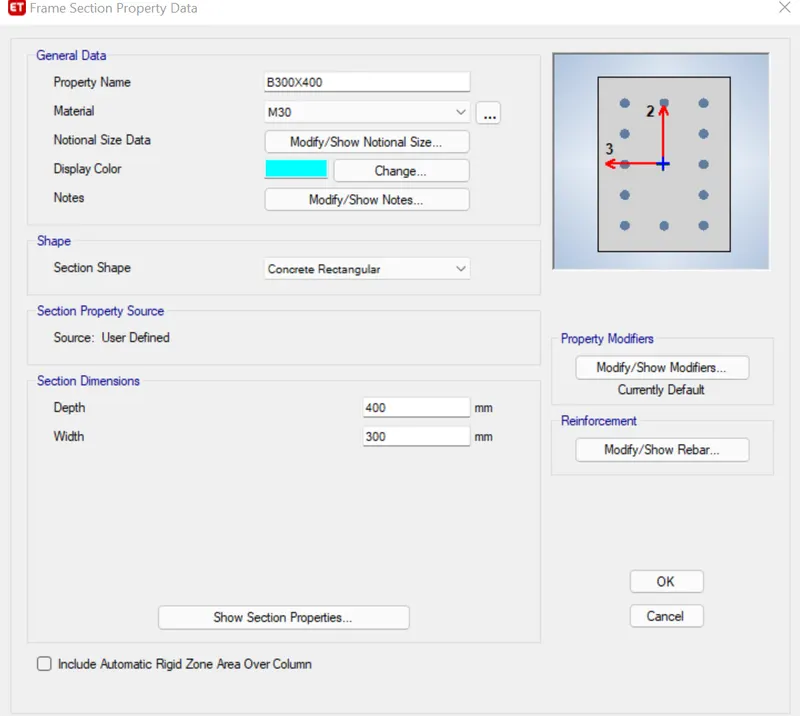
d)next we assign the beams to all the storey with size (300x400)mm
e)we need to assign the slabs with the thikness of 150mm from the first storey to 2th
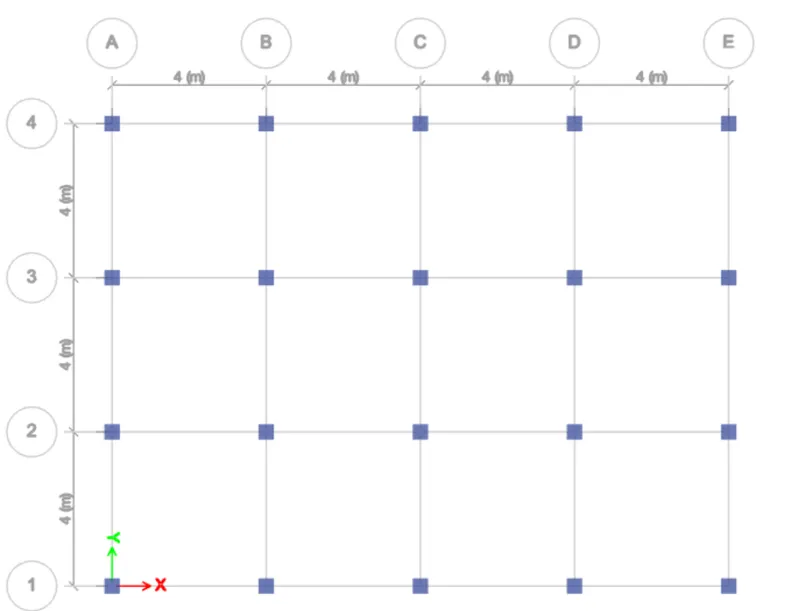
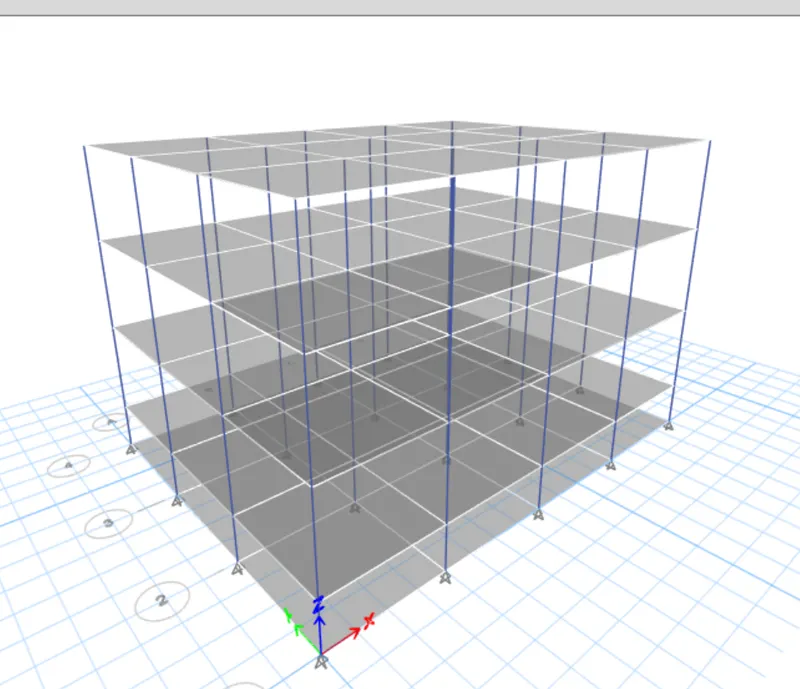
f)we need assign the all loads such as brick wall load,dead load,live load.
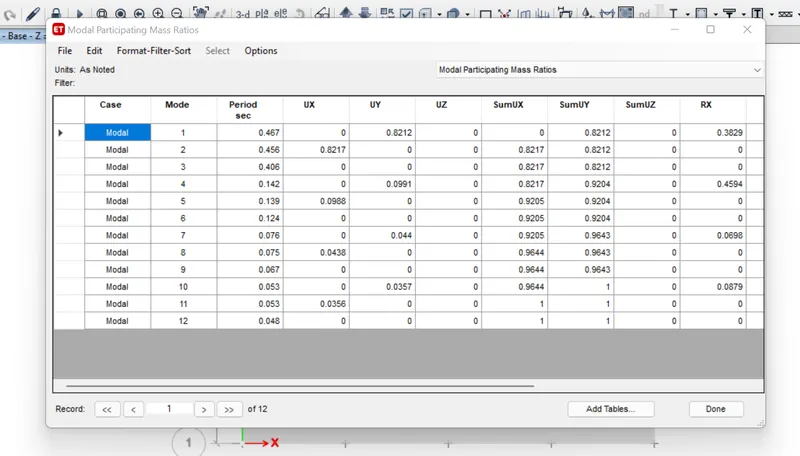
i)After selecting the show table option, then we need to select the Modal Participating Mass Ratios from the Structure output.
j)Then after the Modal Participating Mass Ratios table will appear, as shown below.
2)Building B;
a)First we need to create a new project and add 5 storey with requrie mesures as given
b)and we have keep section properties,material properties.
c)we assign the colomns to c(400x400)
d)next we assign the beams to all the storey with size (300x400)mm
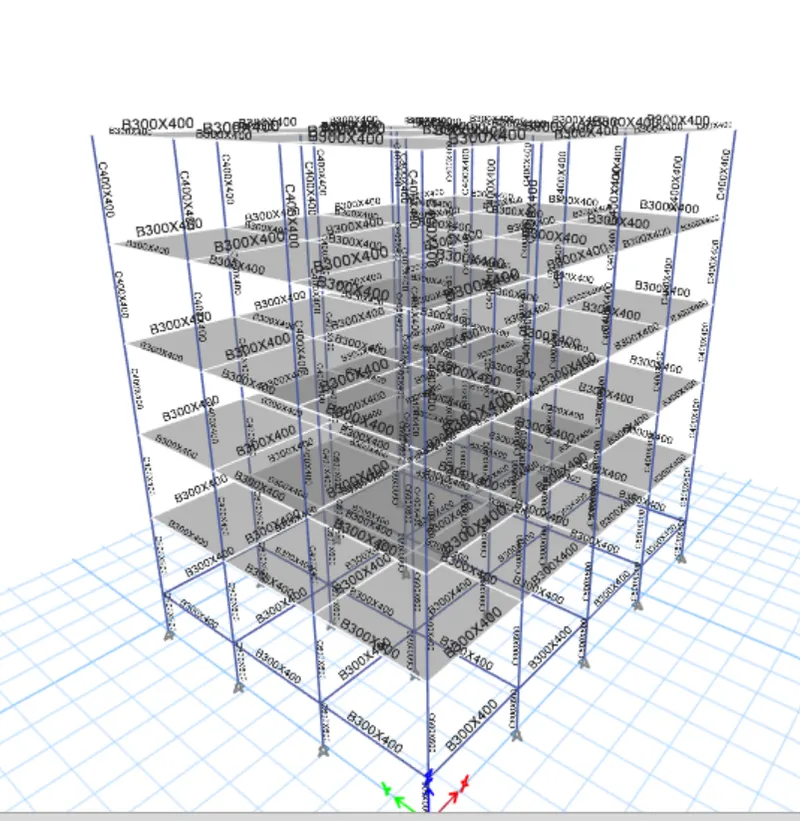
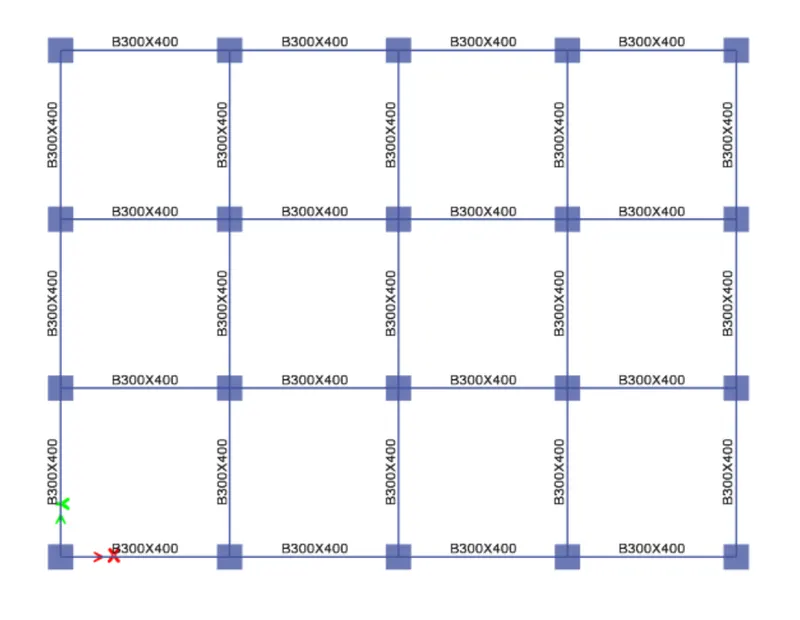
e)we need to assign the slabs with the thikness of 150mm from the first storey to 5th
F)we need assign the all loads such as brick wall load,dead load,live load.
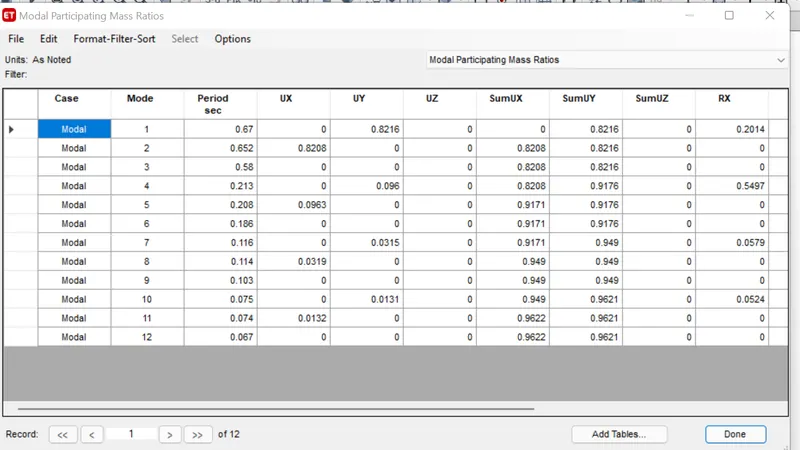
i)After selecting the show table option, then we need to select the Modal Participating Mass Ratios from the Structure output.
j)Then after the Modal Participating Mass Ratios table will appear, as shown below.
3)Building F;
a)First we need to create a new project and add 10 storey with requrie mesures as given
b)and we have keep section properties,material properties.
c)we assign the colomns to c(600x600)
d)next we assign the beams to all the storey with size (300x400)mm
e)we need to assign the slabs with the thikness of 150mm from the first storey to 10th
F)we need assign the all loads such as brick wall load,dead load,live load.
i)After selecting the show table option, then we need to select the Modal Participating Mass Ratios from the Structure output.
j)Then after the Modal Participating Mass Ratios table will appear, as shown below.
3)Building H;
a)First we need to create a new project and add 25 storey with requrie mesures as given
b)and we have keep section properties,material properties.
c)we assign the colomns With c(800x800)
d)next we assign the beams to all the storey with size (300x400)
e)we need to assign the slabs with the thikness of 150mm from the first storey to 10th
F)we need assign the all loads such as brick wall load,dead load,live load.
e)we need to assign the slabs with the thikness of 150mm from the first storey to 10th
F)we need assign the all loads such as brick wall load,dead load,live load.
Result:
• The fundamental natural period of Building A is T=0.5 sec.
• The fundamental natural period of Building B is T=0.67 sec.
• The fundamental natural period of Building F is T=1.287 sec.
• The fundamental natural period of Building His T=2.55 sec.
• When the height of the buildings increases, the natural periods of buildings also increases.as per the time peroid we got by analysis.
4) Fundamental natural periods of Buildings B, C and D with change in column orientation.
1)Building B;
a)First we need to create a new project and add 5 storey with requrie mesures as given
b)and we have keep section properties,material properties.
c)we assign the colomns to c(400x400)
d)next we assign the beams to all the storey with size (300x400)mm
e)we need to assign the slabs with the thikness of 150mm from the first storey to 5th
F)we need assign the all loads such as brick wall load,dead load,live load.
i)After selecting the show table option, then we need to select the Modal Participating Mass Ratios from the Structure output.
j)Then after the Modal Participating Mass Ratios table will appear, as shown below.
2)Building C;
a)First we need to create a new project and add 5 storey with requrie mesures as given
b)and we have keep section properties,material properties.
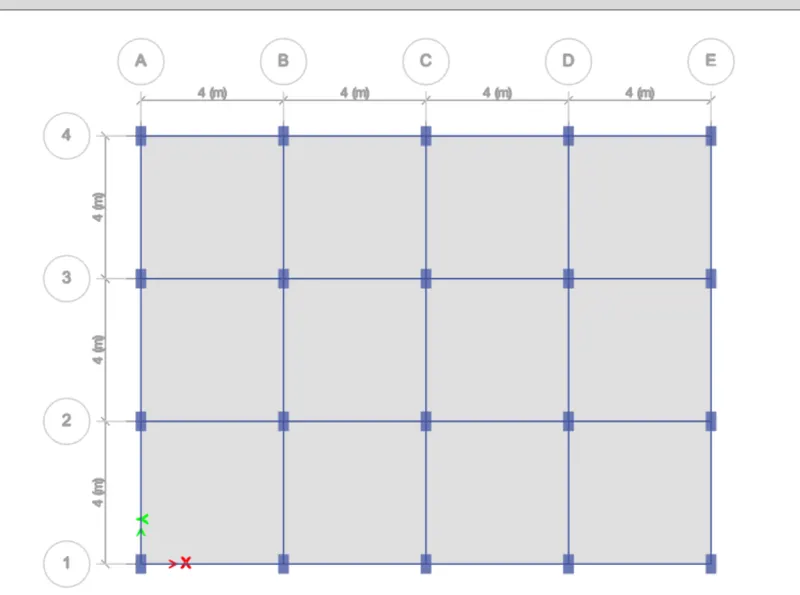
c)we assign the colomns to c(550x300)
d)next we assign the beams to all the storey with size (300x400)mm
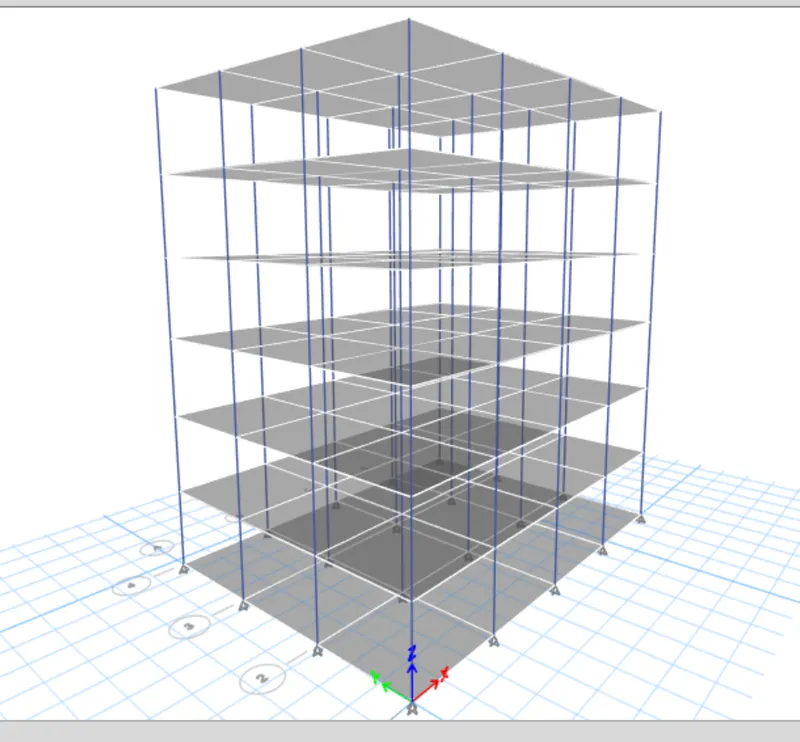
e)we need to assign the slabs with the thikness of 150mm from the first storey to 5th
F)we need assign the all loads such as brick wall load,dead load,live load.
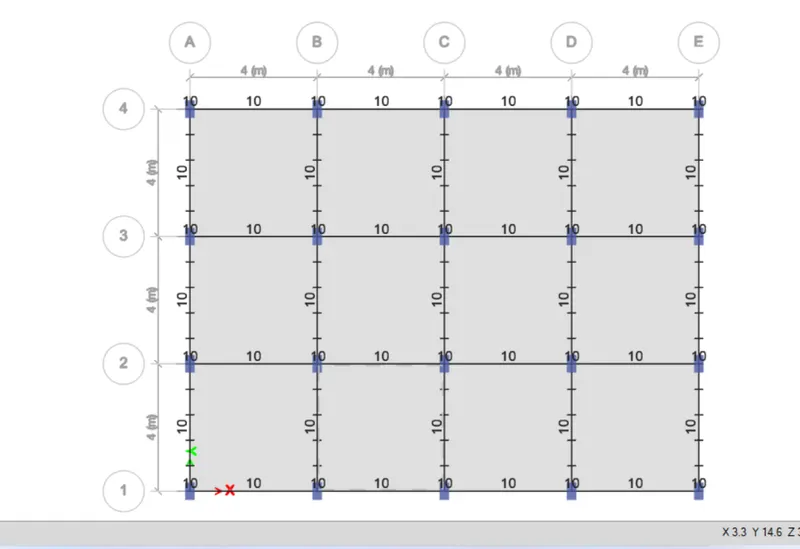
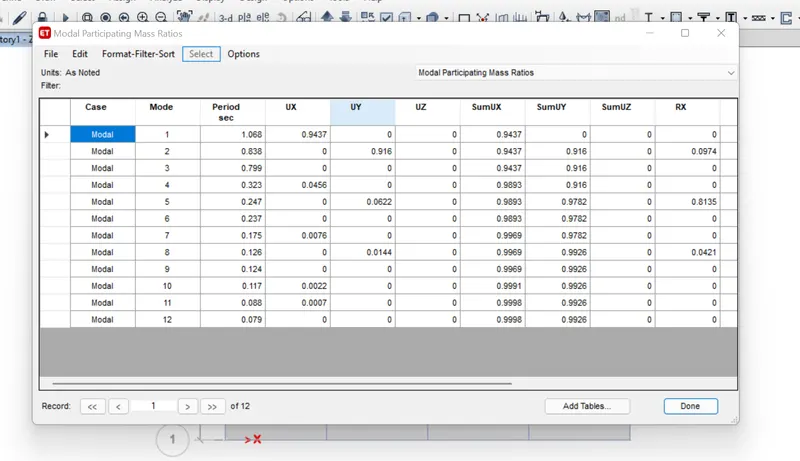
i)After selecting the show table option, then we need to select the Modal Participating Mass Ratios from the Structure output.
j)Then after the Modal Participating Mass Ratios table will appear, as shown below.
3)Building D;
a)First we need to create a new project and add 5 storey with requrie mesures as given.
b)and we have keep section properties,material properties.
c)we assign the colomns to c(300x550)
d)next we assign the beams to all the storey with size (300x400)mm
e)we need to assign the slabs with the thikness of 150mm from the first storey to 5th
F)we need assign the all loads such as brick wall load,dead load,live load.
i)After selecting the show table option, then we need to select the Modal Participating Mass Ratios from the Structure output.
j)Then after the Modal Participating Mass Ratios table will appear, as shown below.
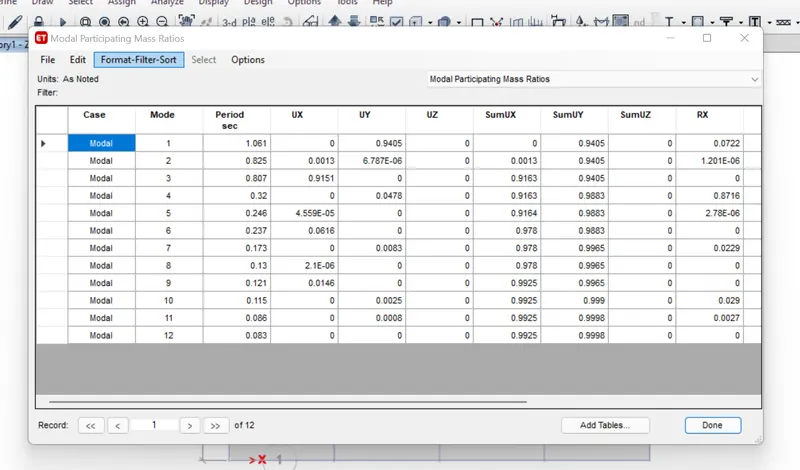
Result:
• The fundamental natural period of Building B is T=0.67 sec.
• The fundamental natural period of Building C is T=1.03 sec.
The fundamental natural period of Building D is T-1.067 sec.
Here the natural periods of buildings shall be increased due to the change in column Sizes.
FINAL RESULT;
1) Fundamental natural periods of buildings E & F as well as G & H. And the significant difference in the fundamental natural periods.
RESULT;
- The fundamental natural period of Building E is T=0.83sec.
• The fundamental natural period of Building F is T=1.28 sec.
• The fundamental natural period of Building G is T=2.29 sec.
• The fundamental natural period of Building H is T=2.55 sec.
• In the Building E we use two different column sizes, one has been assigned to top 5 storeys and another one to the bottom 5 storey. But in building F there is only one column size we use for the entire building, thats why there is a significant difference in the fundamental natural periods.
- Similarly we use three different column sizes for building G, and one column size for building H So from that values we understood the difference of the time period.
So,there is a significant difference in the fundamental natural periods.
2) Fundamental natural periods of buildings H. J and K. Have the buildings become more flexible or stiff due to change in mass.
Result:
• The fundamental natural period of Building H is T=2.55 sec.
• The fundamental natural period of Building J is T=2.59sec.
- The fundamental natural period of Building K is T=3.2sec.
- When the mass of the building is increases, then the natural period of the building also increases.
• When the mass of the building increased by 10% compared to Building H, the Building J is more flexible than the building H.
• When the mass of the building K increased by 20% compared to Building H, the Building K is more flexible than the building and building H.
So,when the weight of the building increases, the buildings become more flexible.
3) Fundamental natural periods of Buildings A, B, F and H with change in building height.
Result:
• The fundamental natural period of Building A is T=0.5 sec.
• The fundamental natural period of Building B is T=0.67 sec.
• The fundamental natural period of Building F is T=1.287 sec.
• The fundamental natural period of Building His T=2.55 sec.
• When the height of the buildings increases, the natural periods of buildings also increases.as per the time peroid we got by analysis.
4) Fundamental natural periods of Buildings B, C and D with change in column orientation.
Result:
• The fundamental natural period of Building B is T=0.67 sec.
• The fundamental natural period of Building C is T=1.03 sec.
The fundamental natural period of Building D is T-1.067 sec.
Here the natural periods of buildings shall be increased due to the change in column Sizes.