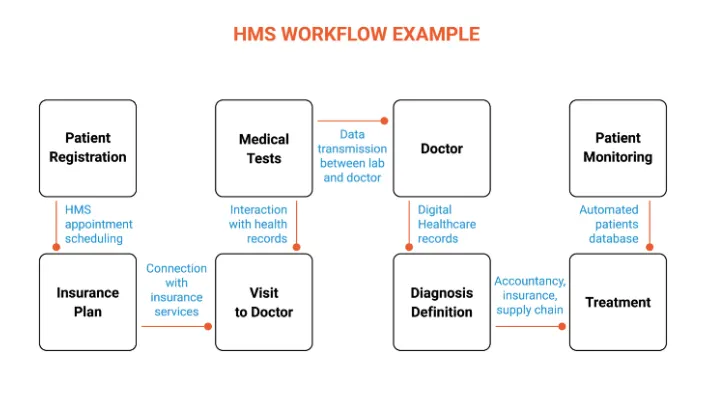
Project - Design a Hospital Management system
Hospital Management System:
Before the advent of rapidly-advancing medical technology, doctors didn’t have as much of a need for healthcare managers. However, the near-continuous development of medical technology (including changes in healthcare data systems) and regular changes in laws and regulations surrounding healthcare mean that hospitals and other medical centers need experts in these areas to ensure everything runs as it should.
Healthcare management is exactly what the name implies. It’s the overall management of a healthcare facility, such as a clinic or hospital. A healthcare manager is in charge of ensuring a healthcare facility is running as it should in terms of budget, the goals of the facility’s practitioners and the needs of the community. A person in charge of healthcare management oversees the day-to-day operations of the facility.
This individual also acts as a spokesperson when providing information to the media. The person in charge of healthcare management also collaborates with medical staff leaders on issues such as medical equipment, department budgets, planning ways to ensure the facility meets their goals and maintaining a good relationship with doctors, nurses, and all department heads. The healthcare manager also makes decisions about performance evaluations, staff expectations, budgeting, social media updates, and billing.
You might imagine hospital managers when you think of careers in healthcare management. However, these jobs exist at every level. For people who prefer a smaller operation, a job as an office manager may be right. Similarly, those with degrees in healthcare management also have the option of working as home health agency managers.
These managers have a variety of responsibilities. Like managers in just about every field, they will handle the scheduling of care workers like nurses and CNAs. They also will make sure patients receive quality care. In order to do this, they may design patient care surveys and address any patient complaints that arise.
“Healthcare management” is an umbrella term that covers a wide variety of job titles. Clinical directors, healthcare supervisors, health coordinators, and nursing home facilitators often have degrees in healthcare management. And while you may think of healthcare managers as people who work at hospitals or in private practice, they may also work at colleges or universities, public health centers, urgent care clinics, insurance companies, or pharmaceutical companies.
There are also more specialized areas of healthcare management that those with healthcare management degrees may want to look into. A great example is health information management. Nearly every type of healthcare practice — from hospitals to urgent care centers to general practitioner’s offices — maintains a database of patient health information. These databases are maintained by a variety of professionals. IT specialists design the databases themselves, doctors and other employees input health information, and medical billing and coding specialists make sure that procedures are properly coded for insurance purposes.
Health facilities need someone to look at the big picture and make sure that the databases are functioning as a whole. They may oversee each individual aspect of the database. For instance, a health information manager will work with cybersecurity analysts to make sure the database is secure enough to protect patient information from leaks. They also may work with doctors and nurses to optimize documentation of procedures and clinic visits. And in order to make sure databases perform optimally, they regularly assess the data collection and documentation process.
Ultimately, healthcare management professionals work to oversee and coordinate every aspect of healthcare. Whether it’s overseeing hospital operations or coordinating the happenings in a small private practice, these managers ensure that healthcare facilities operate smoothly for everyone involved.
Hospital management system is a computer system that helps manage the information related to health care and aids in the job completion of health care providers effectively. They manage the data related to all departments of healthcare such as,
-
Financial
-
Laboratory
-
Inpatient
-
Outpatient
-
Operation theater
-
Materials
-
Nursing
-
Pharmaceutical
-
Radiology
-
Pathology etc.
Functional requirements
- Patient registration. The registration consists of adding patients to the system and assigning unique IDs to them, which each patient will use while in the hospital.
- Checkout. All data is archived after patients’ discharge and saved for reuse.
- Treatment. Allows a doctor to keep all the necessary documentation for patients’ treatment. This includes maintaining a treatment plan, managing analysis and prescriptions, storing data, and monitoring their medical history.
- Data report generation. Report generation consists of creating and storing patient information in the form of a report, which includes the name, phone number, bed number, name of the attending physician, etc. In addition, the generation of reports on the presence/absence of free beds also applies to this requirement.
- Billing system. Hospital billing software provides safe and reliable work with finances in the organization. It automatically generates detailed budget data and reports on in-patient, laboratory, and pharmacy services.
- Search. The search capability allows you to quickly find the right doctors, patients, certain information about the services and work of hospitals. Using the search, patients can find out their test results, the cost of services, and the physicians’ working hours, while doctors can read the data about their patients.
- Inventory Management. Inventory management saves an organization’s time and money by reducing staff working hours on manual work with the inventory. It also helps control the quantity and quality of available hospital resources, which allows you to plan orders for medical supplies. Thanks to the automatic search and the folder-based structure, the hospital staff can find the missing item in seconds.
- Data reports and statistics. The system includes the availability of mandatory patient information and the ability to edit and update the data at any time.
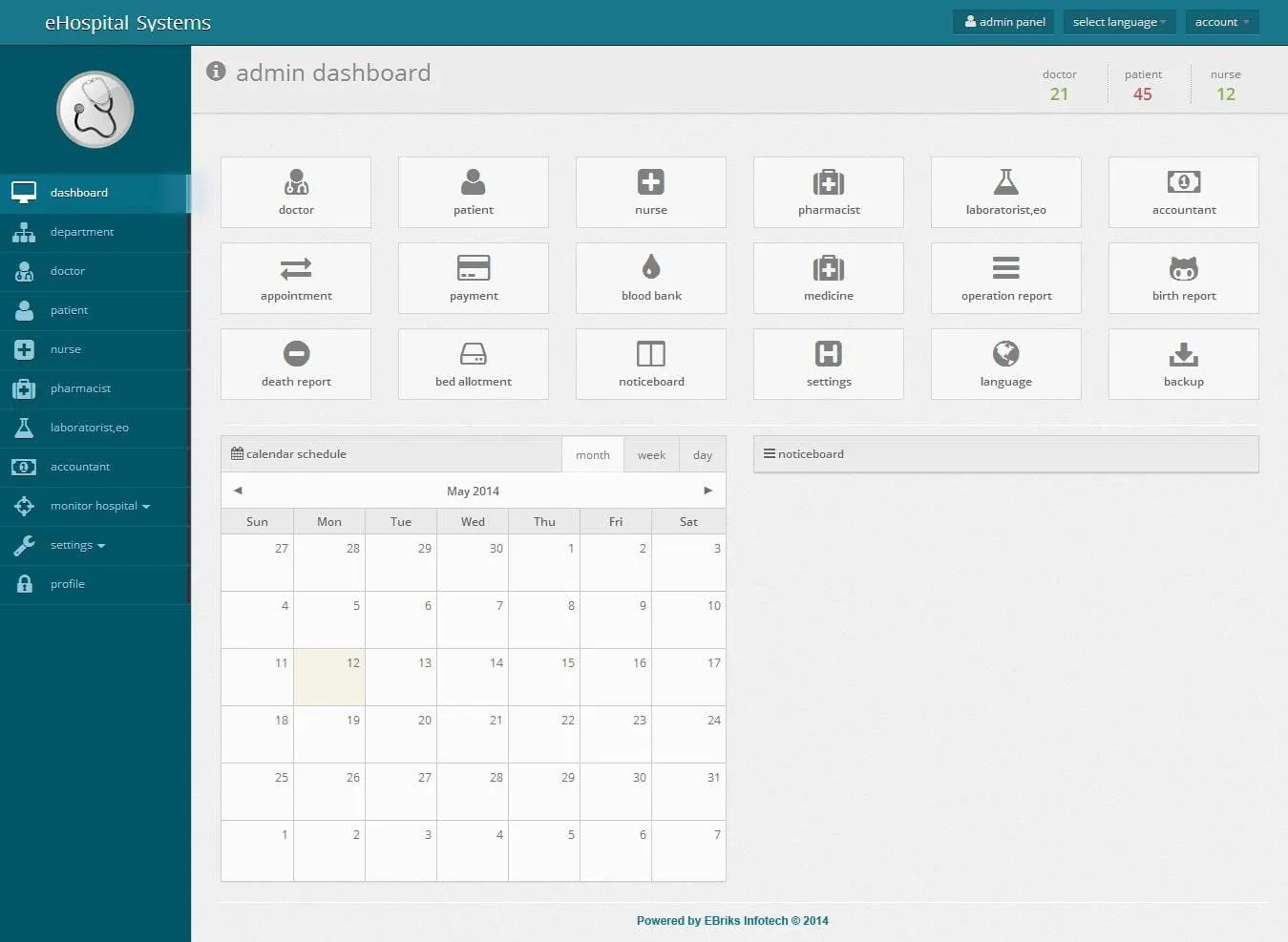
eHospital
Since 2008, the American company Adroit Infosystems has been proposing eHospital — a complete SaaS product for medical organizations. Over 12 years, the campaign has done a great job of studying user feedback to exceed customers’ expectations.
eHospital is considered one of the best HMS on the market among hospitals. The product is known for its high degree of customization, stable operation, reputation, and a wide list of features:
-
-
- Inpatient and outpatient management;
- Online appointment scheduling;
- Portal for doctors;
- Portal for patients;
- Billing system;
- Accounting;
- Inventory control;
- Security management.
-