Project 2 - Design and Development of Pulse Oximeter (Medical Technology)
Pulse oximetry is the non-invasive measurement of the oxygen saturation (SpO2). Oxygen saturation is defined as the measurement of the amount of oxygen dissolved in blood, based on the detection of Hemoglobin and Deoxyhemoglobin. Two different light wavelengths are used to measure the actual difference in the absorption spectra of HbO2 and Hb. The bloodstream is affected by the concentration of HbO2
and Hb, and their absorption coefficients are measured using two wavelengths 660 nm (red light spectra) and 940 nm (infrared light spectra). Deoxygenated and oxygenated hemoglobin absorb different wavelengths. Deoxygenated hemoglobin (Hb) has a higher absorption at 660 nm and oxygenated hemoglobin (HbO2) has a higher absorption at 940 nm.
A photodetector in the sensor perceives the non-absorbed light from the LEDs. This signal is inverted using an inverting operational amplifier (OpAmp) and the result is a signal like the one in Figure 4. This signal represents the light that has been absorbed by the finger and is divided in a DC component and an AC component. The DC component represents the light absorption of the tissue, venous blood, and non-pulsatile arterial blood. The AC component represents the pulsatile arterial blood.
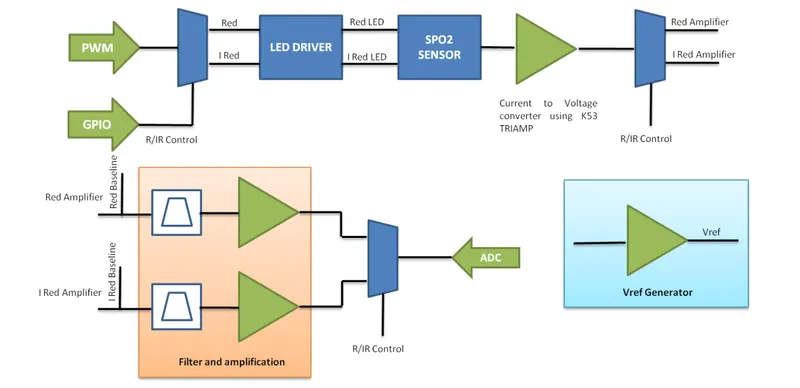
India pulse oximeter market stood at USD 79.44 Million in 2022 and is expected to reach at a CAGR of 0.50% during the forecast period. The pulse oximeter market is driven by continuous improvement in technological advancements and new features in small and compact-sized devices. Additionally, pulse oximeter is used in the chronic obstructive pulmonary disease by monitoring the oxygen saturation level of the body and maintaining the lungs condition by checking the pulmonary function both at home and at the hospitals any time of the day as a continuous monitoring device.
Furthermore, the rise in air pollution and decrease in sustainable development is the major factor in the prevalence of chronic respiratory disease. The severity of respiratory impairment in the patient is easily monitored with the pulse oximeter, which will also enhance the growth of the pulse oximeter market.
Pulse oximetry may be used to see if there is enough oxygen in the blood. This information is needed in many kinds of situations. It may be used:
-
During or after surgery or procedures that use sedation
-
To see how well lung medicines are working
-
To check a person’s ability to handle increased activity levels
-
To see if a ventilator is needed to help with breathing, or to see how well it’s working
-
To check a person has moments when breathing stops during sleep (sleep apnea)
Pulse oximetry is also used to check the health of a person with any condition that affects blood oxygen levels, such as:
-
Heart attack
-
Heart failure
-
Chronic obstructive pulmonary disease (COPD)
-
Anemia
-
Lung cancer
-
Asthma
-
Pneumonia
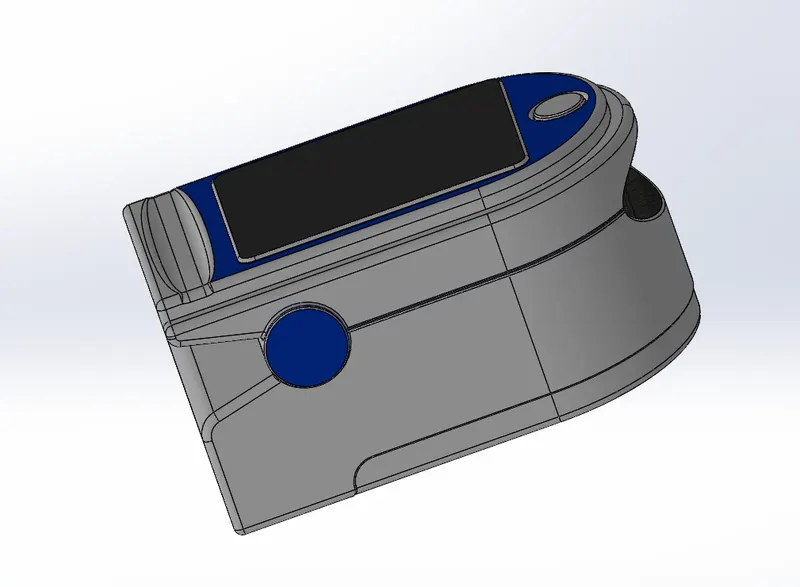
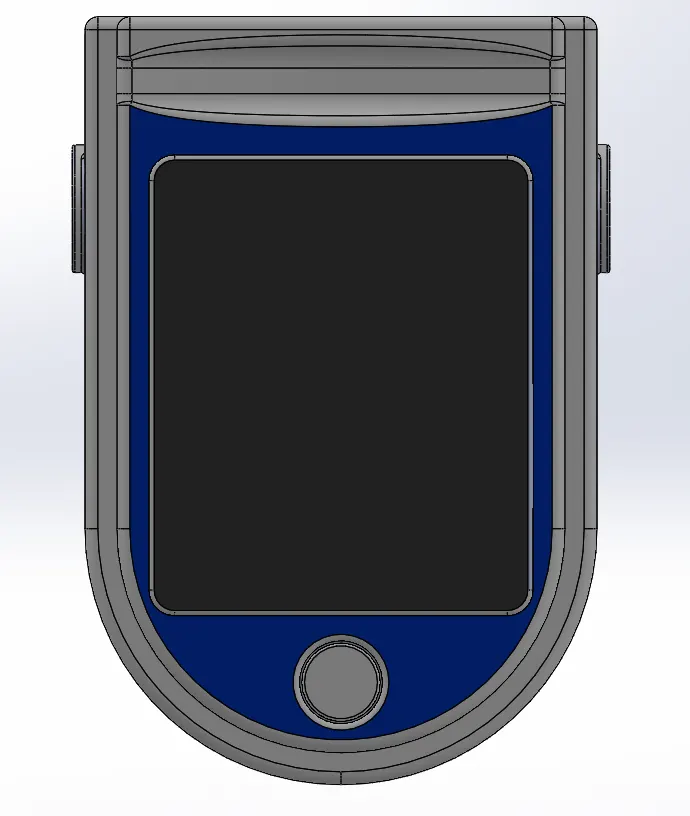
https://drive.google.com/file/d/1Xf76e934aY3bHSa332f_7PIV93mlFb0l/view?usp=share_link