Introduction to Physical Modelling using Simscape - Project on AVT study & report submission:
Aim:
To run a system-level simulation for All- Terrain Vehicles (ATVs) and prepare a technical report on the model's features and outcomes.
Objective:
1. To analyse and comment on the results of incorporating the CVT (continuous variable transmission) in the ATV body with open loop and closed loop lookup data. The output findings are reviewed in open and closed loops, as well as with and without a dashboard.
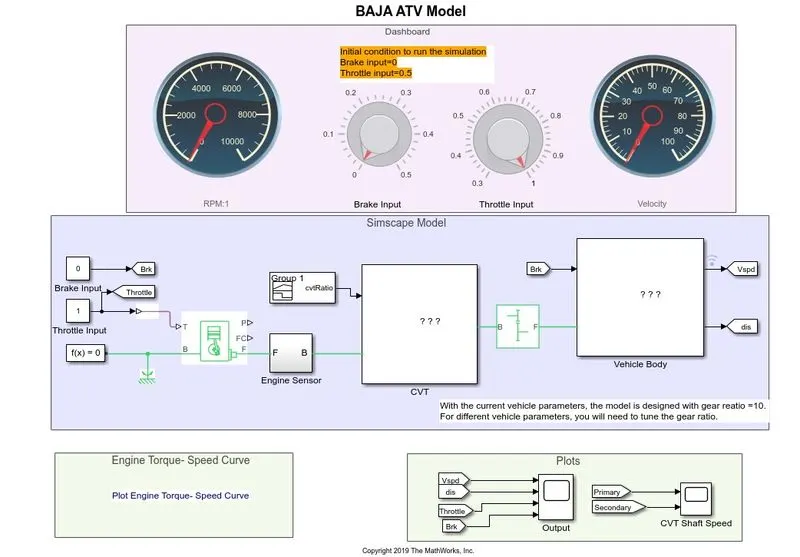
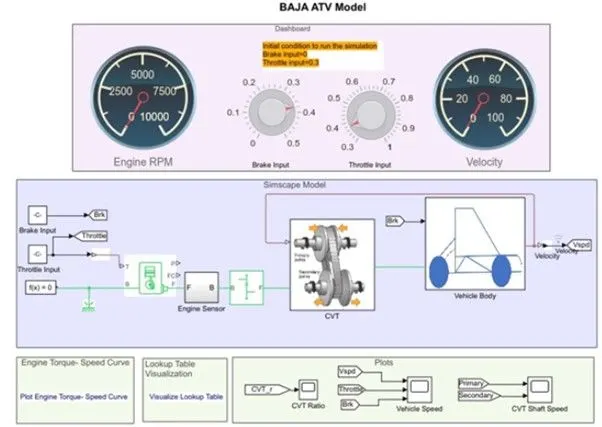
2. We employ dashboards for both open loop and closed loop models, where we digitally give break and throttle inputs to observe the digital outputs.
Contents Included:
- Introduction to ATV
- Introduction to CVT
- CVT model block & dashboard (open loop)
- CVT model block with lookup
- CVT model block dashboard with lookup (closed loop)
Introduction to ATV (ALL TERRAIN VEHICLE):
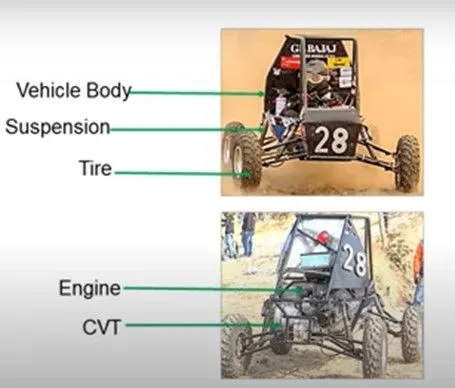
ATV stands for "All-Terrain Vehicle," which is a motorised off-road vehicle with four low-pressure or non-pneumatic tyres. As defined by the American National Standards Institute (ANSI), an ATV, is also known as a light utility vehicle (LUV), a quad bike, or simply a quad. It is a vehicle that travels on low-pressure tyres and has a seat that is straddled by the operator, as well as handlebars for steering control. It is built to tackle a wider range of terrain than most other vehicles, as the name implies.
Introduction to CVT(CONTINOUS VARYING TRANSMISSION) & Its Components:
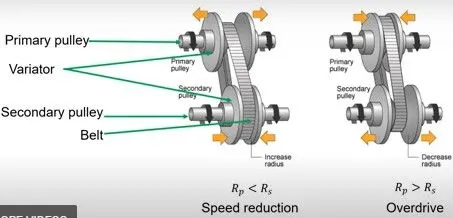
The CVT is a continuously variable gearbox with continuously effective gear ratios, whereas conventional transmissions have a fixed amount of gear ratios and hard shifts between them. Without the use of gear shifts, CVT creates continuous gear ratios.
Instead, it employs a pair of variable width pulleys that are coupled to a fixed belt to provide gear ratios and a variator.
The wheels are connected to the primary pulley, while the engine is attached to the secondary pulley. When the primary pulley moves outward, the secondary pulley slides inward, resulting in the primary pulley's radius being smaller than the secondary pulley's. (Rp< Rs) denotes a drop in pace. When the secondary pulley goes inwards while the primary pulley moves outwards, the secondary pulley's radius is less than the primary pulley's, causing overdrive. (Rp is greater than Rs.)
CVT Model- Block& Dashboard [open loop]:
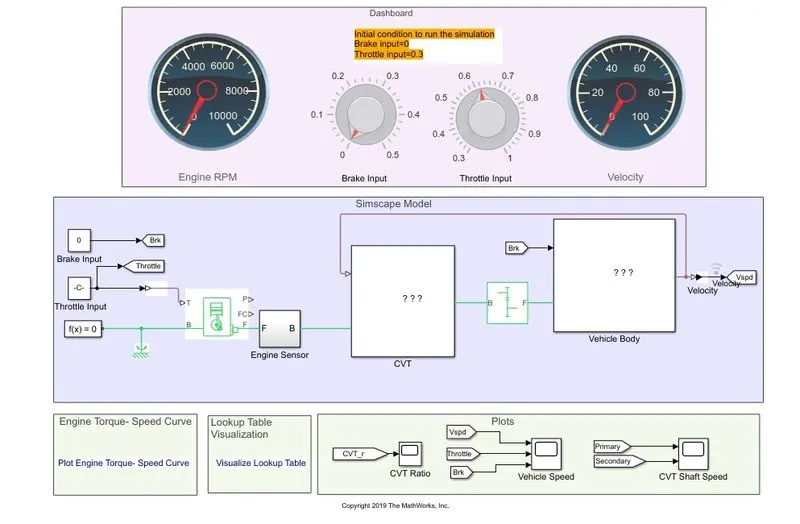
The following images shows the various model design adn scope display of CVT model & its dashboard.
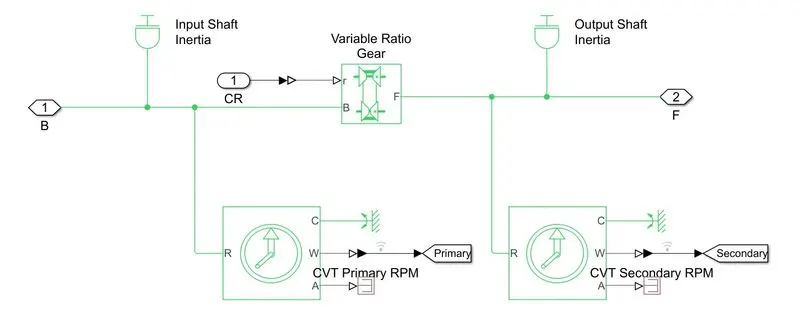
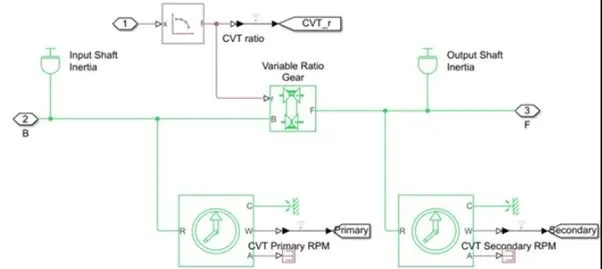
Inside the CVT
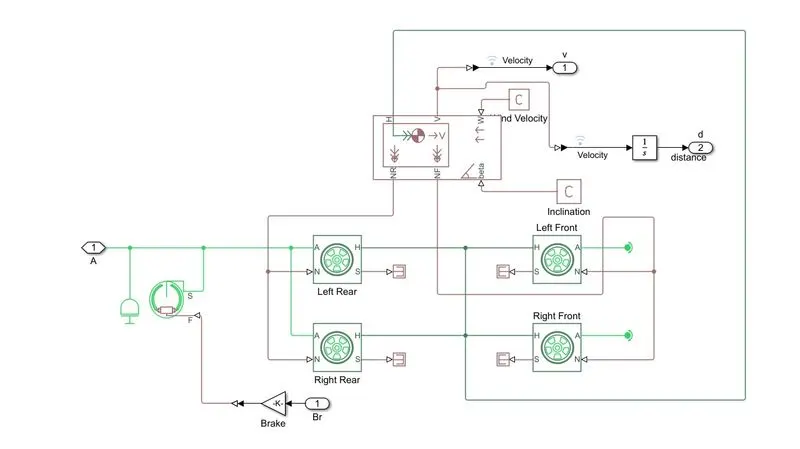
Vehicle body design
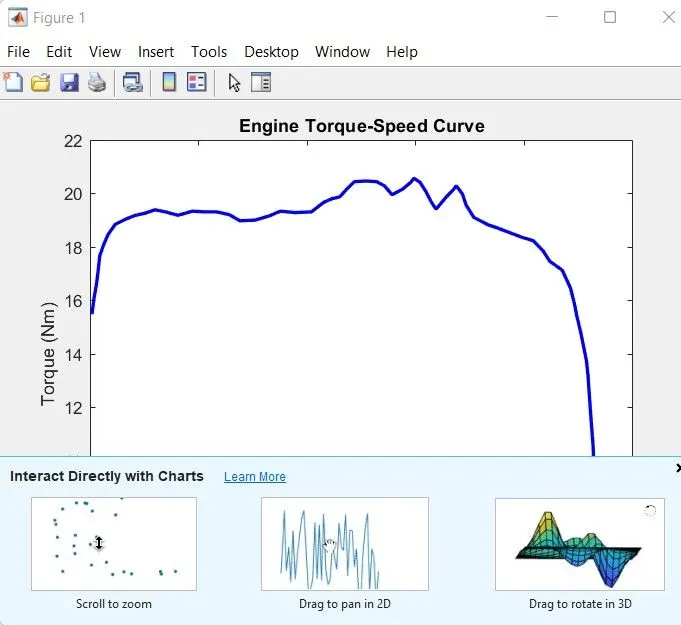
Engine Torue Vs Speed
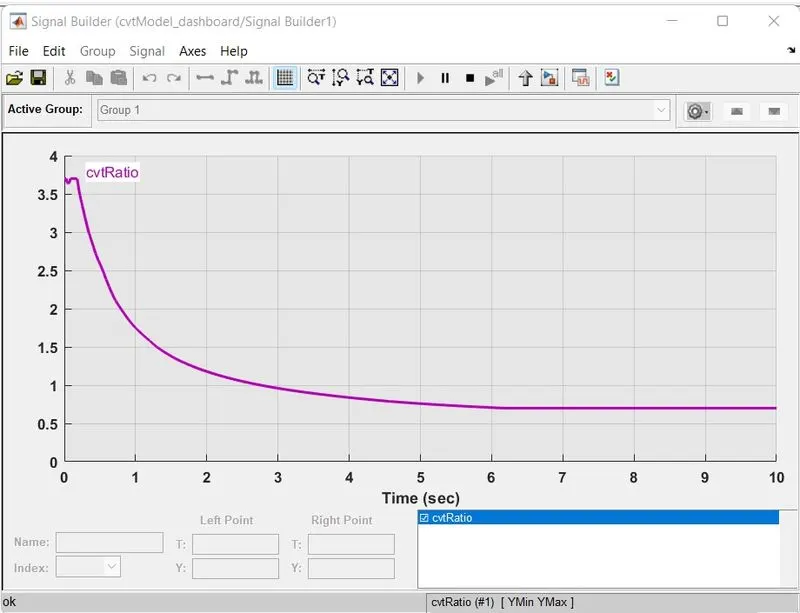
Signal builder data
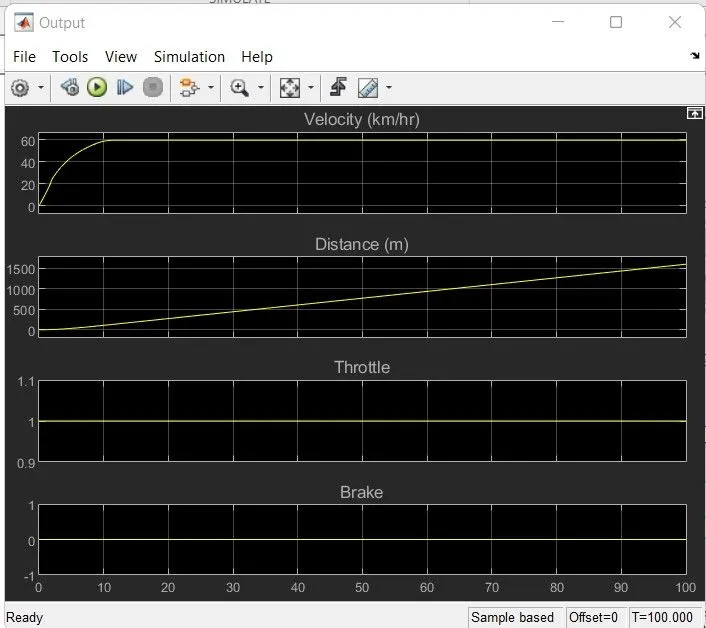
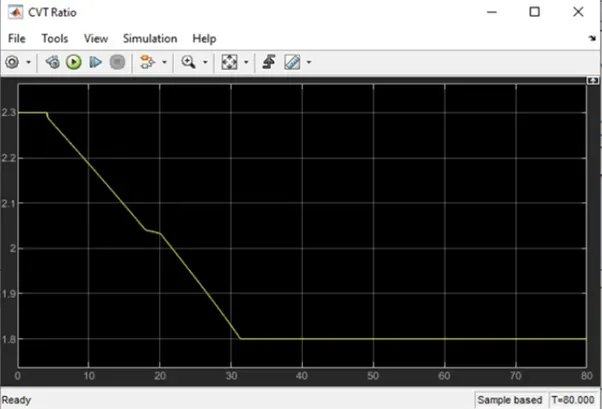
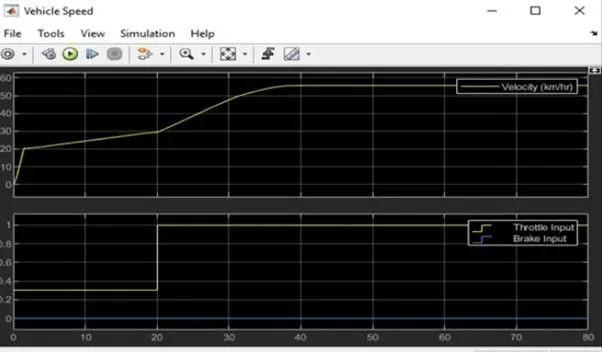
Scope output for 100sec alone... it shows brake i/p as 0 and throttle i/p as 1.
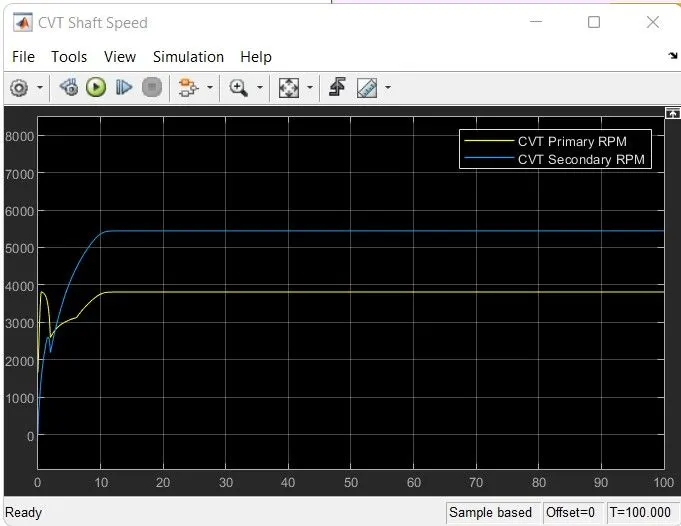
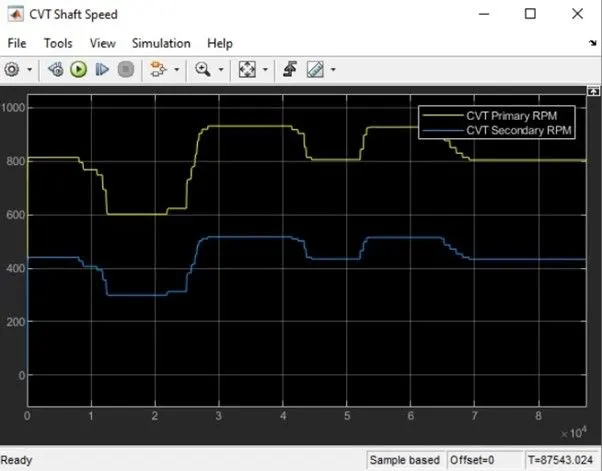
CVT shaft speed of primary & secondary
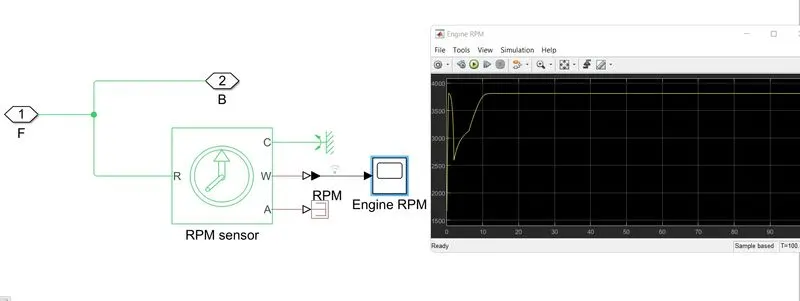
Engine RPM inside view
CVT model block with lookup (closed loop)
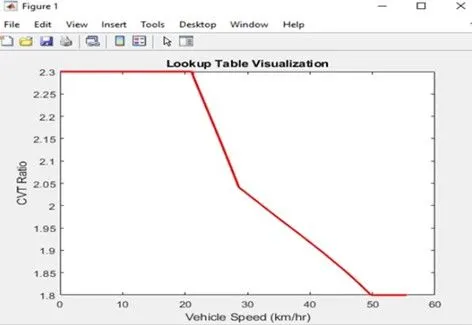
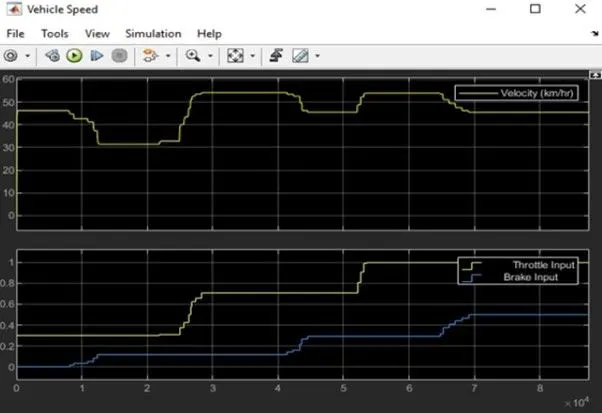
As the CVT ratio is dependent on vehicle velocity, assigning random values to it to check vehicle performance is unrealistic. As a result, the Lookup table is used to create a closed loop model.
The output velocity measurements are used to provide the gear ratio input to the CVT in this model, which is done through a
look up table. The vehicle velocity and output shaft rpm are identical to the preceding model.
CVT closed loop model - block with lookup & dashboard:
Conclusion:
As a result, the various CVT models in Baja AVT inputs (brake and throttle) and outputs (CVT speed shaft and vehicle velocity) characteristics have been satisfactorily analysed.