Project 8
Future trends in the Automotive Industry
- Autonomous Vehicles (AVs)
Self-driving or autonomous vehicles minimize the need for human drivers and look poised to transform everyday transportation. AVs are equipped with advanced recognition technologies, such as AI-enhanced computer vision to identify obstacles along the route.
- Vehicle Connectivity
This enables easy tracking of vehicular data for various use cases such as insurance, driver safety, predictive maintenance, and fleet management. Sharing vehicular data helps not just the individual customer, but overhauls the entire mobility ecosystem. Startups and scaleups develop vehicle connectivity solutions that enable them to connect and exchange data with other vehicles (V2V), an electric vehicle grid (V2G), public infrastructure (V2I), as well as with new and emerging ways to utilize vehicle data (V2X).
- Electrification
The depleting fossil fuel reserves and the harm to the environment caused by their use call for promoting the use of electric mobility solutions. For greater adoption, EVs need to address issues such as high price, poor battery, inadequate charging infrastructure, fleet electrification, as well as powering renewable energy-based charging grids.
- Shared Mobility
With connected vehicles, new business models have come up that focus on shared mobility as an alternative to traditional vehicle ownership. This enables mobility-as-a-service (MaaS) and discourages unused vehicles. Such solutions meet the requirements of a city or a business without adding new vehicles, thus reducing waiting time for fleets and pollution caused by petrol or diesel vehicles.
- Artificial Intelligence
Artificial intelligence technologies such as machine learning, deep learning, and computer vision find applications in robotic automation within the automotive industry. These guide self-driving cars, manage fleets, assist drivers to improve safety, and improve services such as vehicle inspection or insurance. AI also finds applications in automotive manufacturing, where it accelerates the rate of production and reduces costs.
- Big Data & Analytics
Data gathered from vehicles enables predictive maintenance, informs managers about their fleets, and alerts concerned authorities in case of accidents. Moreover, customer automotive data finds applications in driving sales, optimizing supply chains, and enhancing product design for newer vehicles. Startups and emerging companies develop big data solutions to help automotive manufacturers, as well as ancillary industries, streamline their operations to maximize their margins.
- Human-Machine Interfaces
Human-machine interfaces use voice-based or haptic feedback to operate vehicles. These expand the scope of how and what aspects of a car that users control. Consequently, such interfaces make the driving experience safer and more enjoyable.
- Blockchain
Blockchain enables multiple applications in the automotive industry. These include sharing vehicle data over a secure network for connectivity and shared mobility solutions such as ride-hailing, urban transportation, and deliveries. Moreover, blockchain finds application in verifying the supply chain of spare parts or making sure that the raw materials and spare parts are sourced exclusively from legal and trusted sources.
- 3D Printing
3D printing helps the automotive industry in three primary ways. Firstly, it enables rapid prototyping with 3D printed models that accelerate the design and testing phases of production. Secondly, it allows manufacturers to print spare parts to match their requirements. Lastly, additive manufacturing of composite materials leads to automotive parts that are lighter, stronger, and more durable.
- Internet of Things
IoT enables secure communication between vehicles as well as vehicles and infrastructure components. The technology improves road safety, solves traffic congestion, and reduces pollution and energy expenditure with better fleet management.
My Concept
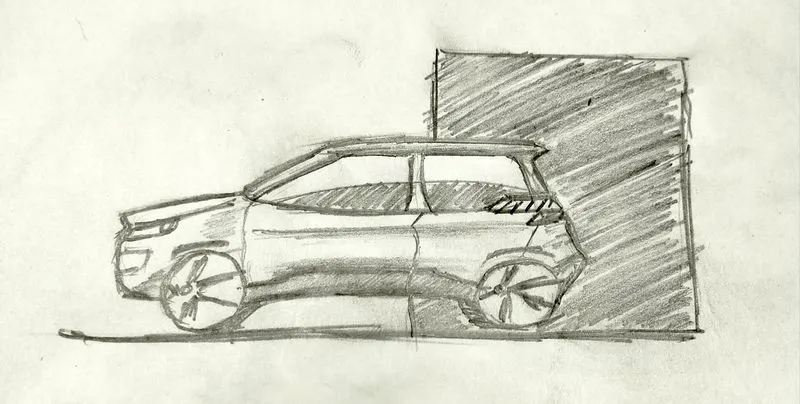
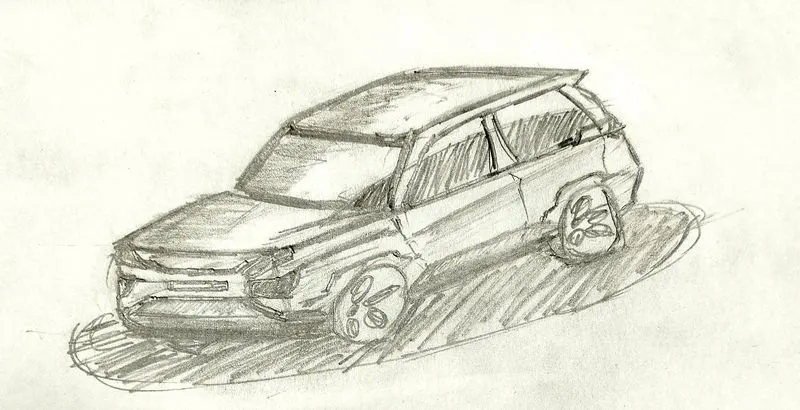
• The aim is to design a SUV with mostr of the technologies that are available in the Industry.
• It will be a cost effective one so that everyone will get the access
• It is an electric car to reduce the pollution.
• The design is new and sharp.
• Use lots of power efficient lighting.