Project
An all-terrain vehicle (ATV), also known as a light utility vehicle (LUV),a quad bike, or simply a quad, as defined by the (ANSI); is a vehicle that travels on low-pressure tires, with a seat that is straddled by the operator, along with handlebars for steering control As the name implies, it is designed to handle a wider variety of terrain than most other vehicles. Although it is a street legal vechile in some countries, it is not street-legal within most states, territories and provinces of australia the US or canada. By the current ANSI definition ATVs are intended for use by a single operator, although some companies have developed ATVs intended for use by the operator and one passenger. These ATVS are referred to as tandem ATVS.
The rider sits on and operates these vehicles like a motorcycle, but the extra wheels give more stability at slower speeds. Although most are equipped with three or four wheels, six-wheel models exist for specialized applications Multiple-user analogues with side-by-side seating are called utilities train vechille to distinguish the classes of vehicle. Both classes tend to have similar powertrain parts, engine size of ATVS currently for sale in the United States (as of 2008 products) range from 49 to 1,000 cc (3.0 to 61 cu in).
SIMULINK MODEL of BAJA ATV
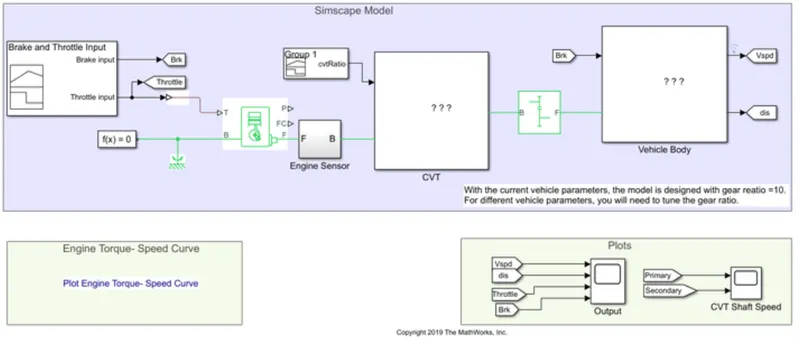
Major components used in Simulink-
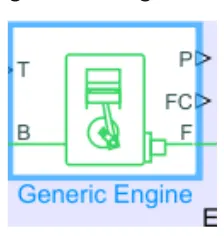
generic engine: this block represents a general internal combustion engine, it is a suitable generic engine for spark-engine and diesel. Speed-power and speed-torque parameterizations are provided. A throttle physical signal input specifies the normalised engine torque.
CVT
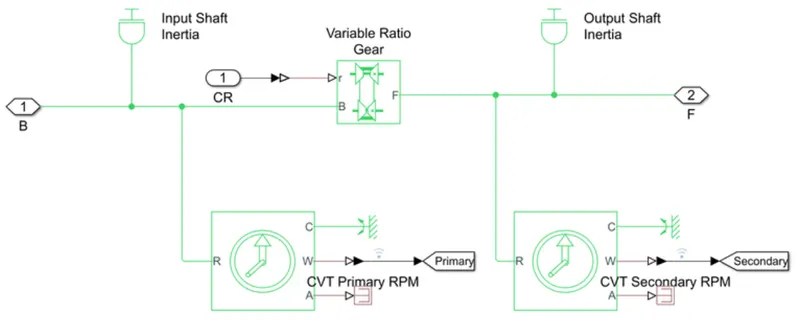
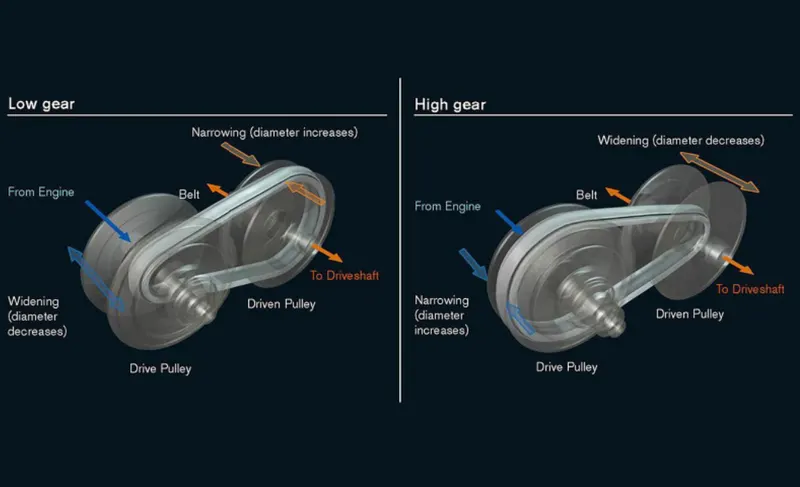
A CVT, or continuously variable transmission seamlessly changes through an unending range of effective gear ratios while you drive, whereas other kinds of mechanical transmissions offer a fixed number of gear ratios and have hard shifts between each as explained by Certified Transmission Repair CVT transmission systems are also known as single-speed, shiftless, and stepless transmissions.
The shiftless nature of a CVT offers unparalleled flexibility that maintains constant angular velocity regardless of output speed. Additionally, a continuously variable transmission mokes accelerating smooth and offers enhanced fuel economy.
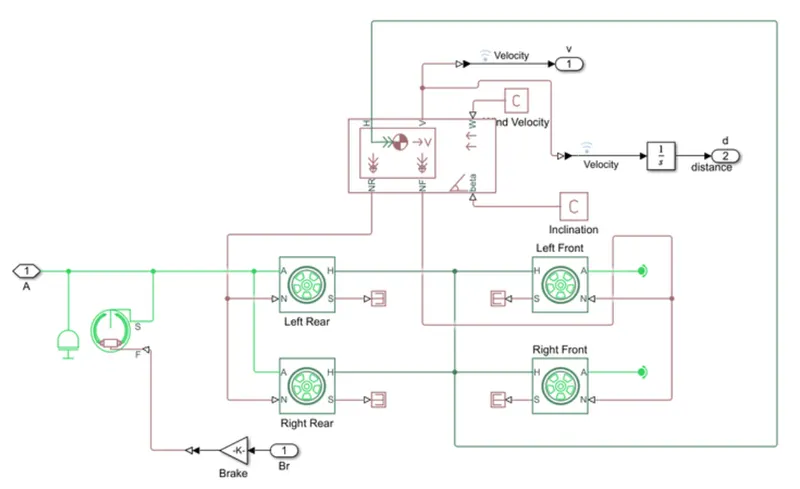
VECHILE BODY
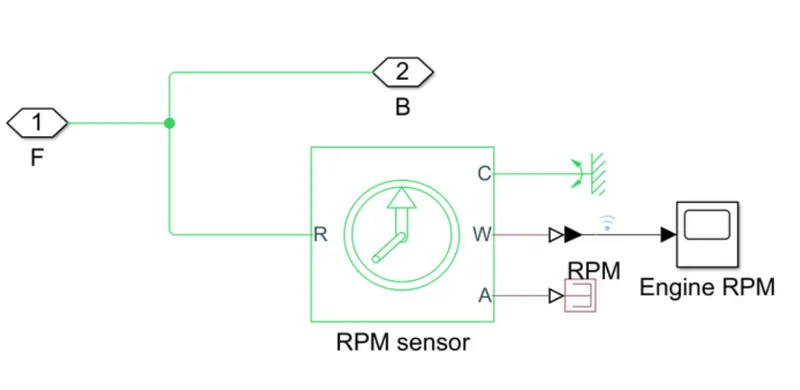
ENGINE SENSOR
BLOCKS USED:
- Signal Builder-To input the Brake, Throttle and CVT Ratio.
- Simulink to PS converter-To convert the Simulink signal to Simscape environment. Solver Configuration - To specify the solver parameters before starting the simulation.
- Mechanical Reference - To make sure all the components are clamped to the ground.
- Generic Engine - To run the engine with speed and torque values as input. PS to Simulink Converter-To convert Simscape signal to Simulink environment.
- Scope-To view the graph of the parameters for better understanding.
- Display-To view the calculated engine power.
- Inertia-To represent the solid inertia.
- Rotational Motion Sensor-To sense the rotational motion from the engine and give output as RPM. Variable Gear Ratio-To vary the speed according to the gear ratios.
- PS Terminator-Terminator for unconnected physical signal outputs.
- Double Shoe Brake - To apply brake to the vehicle when needed.
- PS Constant-Generate constant physical
- Tire-For transportation of the vehicle.
- signal.
- Rotational Free End-For mechanical component (Tire) • Vehicle Body-To represent the BAJA ATV model body.
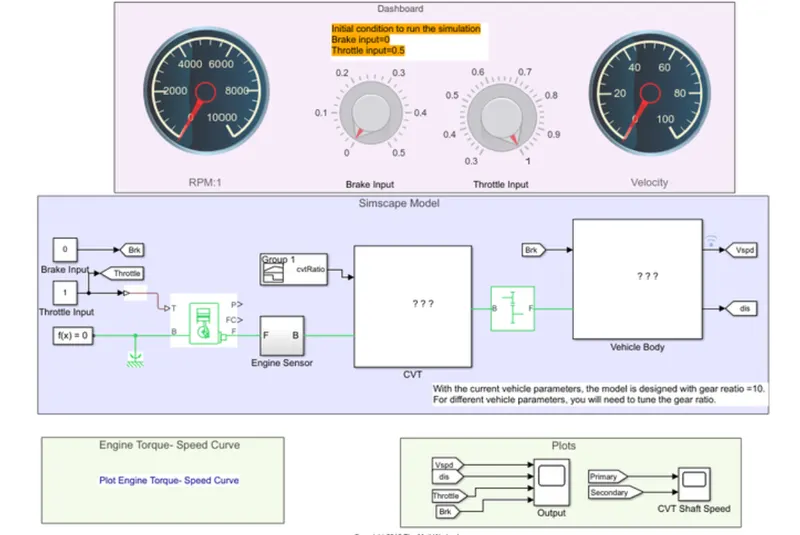
- Custom Measure Gauge-To measure the brake and throttle input. • Knob-To increase, decrease and vice-versa of throttle and brake inputs
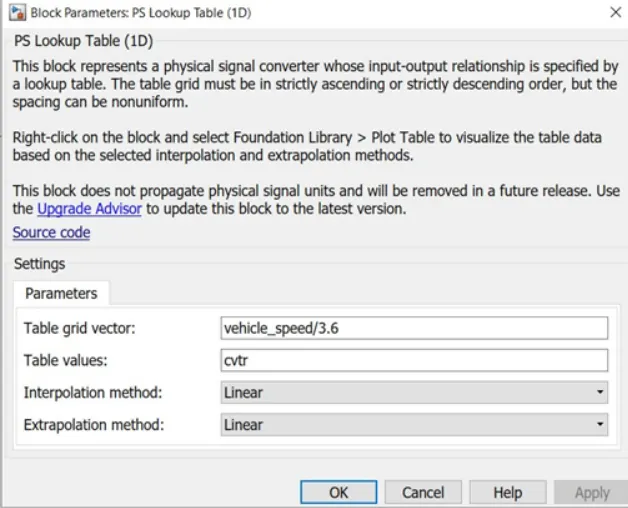
- Lookup Table-To insert the CVT values from the workspace.
- Simple Gear-To reduce the speed of the engine with pre-defined gear ratio.
- Step-To increase or decrease an input value for a defined time interval.
OUTPUT
torque-speed ratio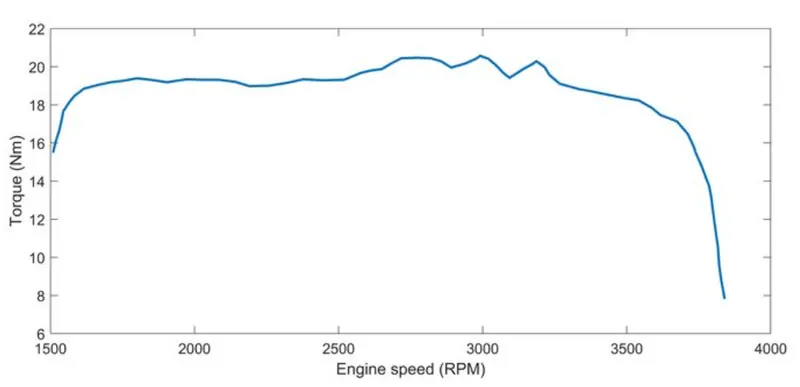
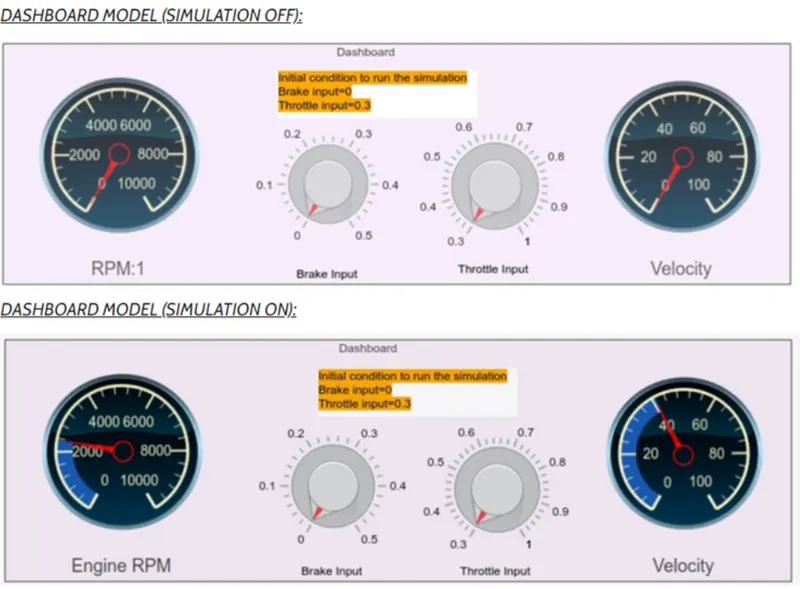
BAJA MODEL WITH DASHBOARD
Engine-speed curve
model with looktable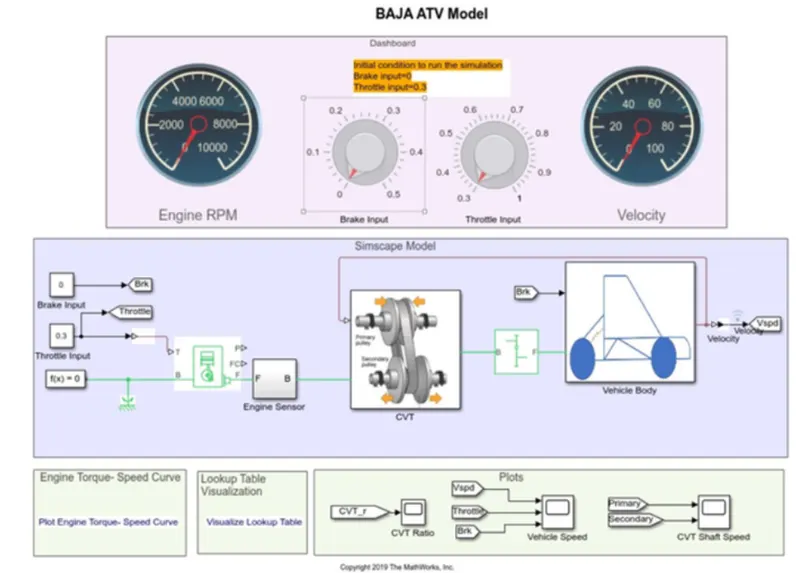
OUTPUT
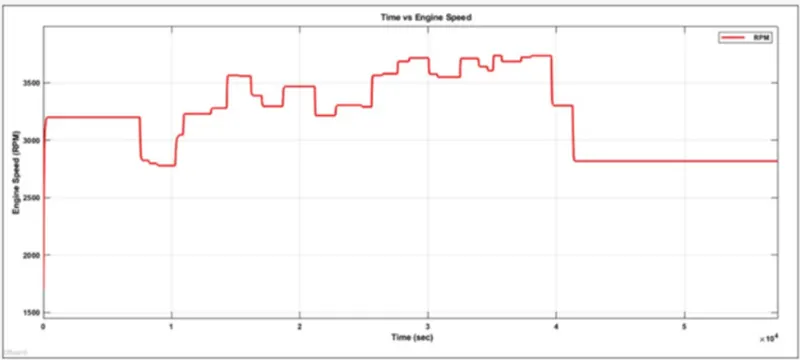
engine-speed plot
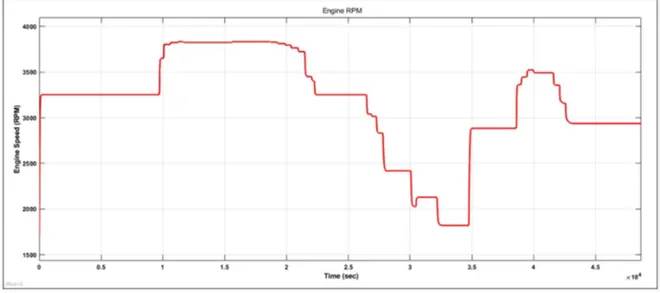
From the graph we can infer that the vehicle was first running at minimum rpm of 3300 rpm and then throttle is applied (step-up) then braking (step-down) then brake is released so that engine rpm is increased then braking is applied. Finally throttle and brake are put to constant of 2900 rpm.