Project
Aim:
- Prepare a technical report on given BAJA ALL TERRAIN VEHICLE models and comment the results.
- Explain the subsystems and blocks used in the BAJA ATV
Objective:
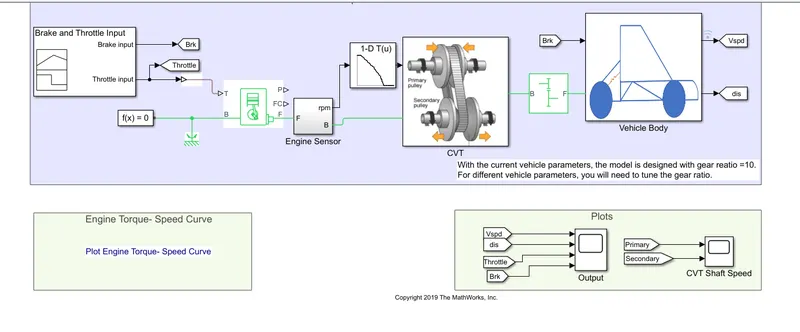
The four models of BAJA ATV
- CVT MODEL
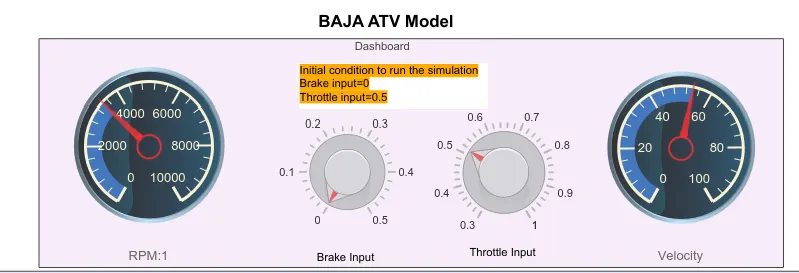
- CVT MODEL DASHBOARD
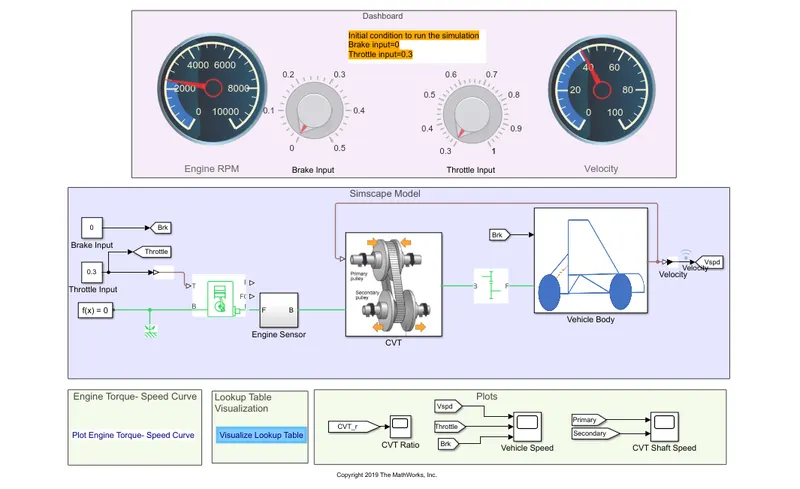
- CVT MODEL_MAPPED
- CVT MODEL_DASHBOARD_MAPPED
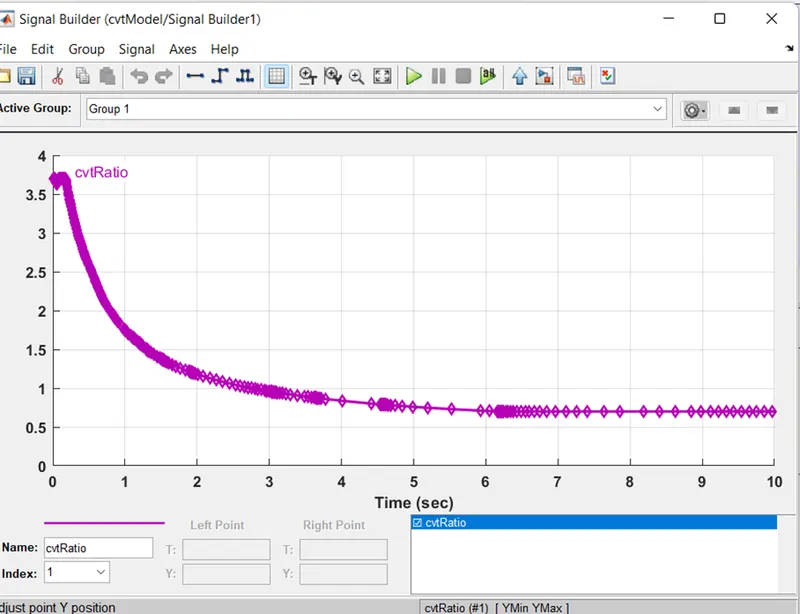
- CVTMODEL_CVTRATIO
EXPLANATION:
All Terrain Vehicles (ATV) are among the most useful land vehicles ever invented, designed to combat the hazards of different kinds of terrain, they can used in almost all critical workplaces.
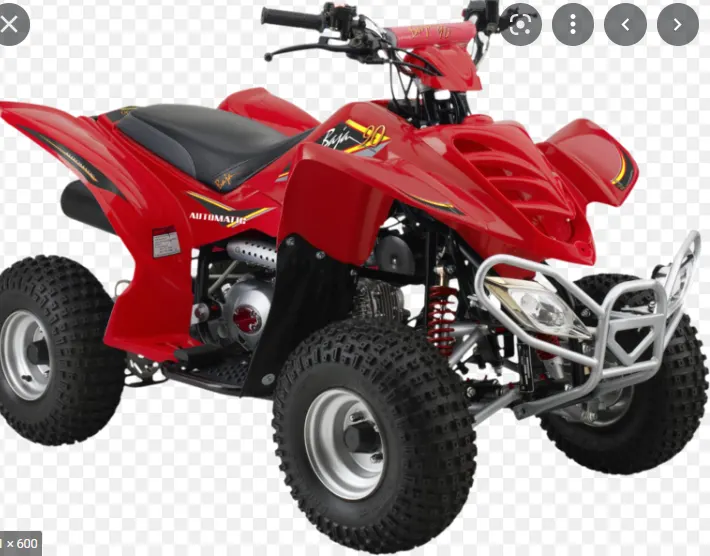
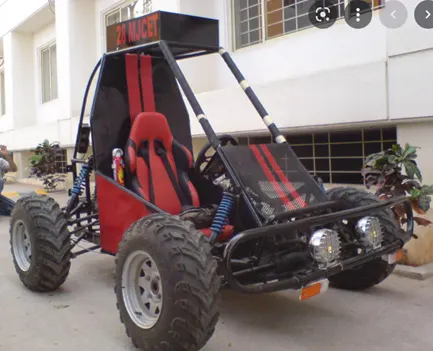
These vehicles are designed with low pressure tyres, better Suspension system which helps the rider to ride safe and smooth in difficult paths.
CVT stands for Continuously Variable Transmission.
CVT:
A continuously variable transmission (CVT) is an automatic transmission that can change seamlessly through a continuous range of gear ratios. This contrasts with other transmissions that provide a limited number of gear ratios in fixed steps. The flexibility of a CVT with suitable control may allow the engine to operate at a constant RPM while the vehicle moves at varying speeds.
CVTs are used in automobiles, tractors, motor scooters, snowmobiles, bicycles and earthmoving equipment.
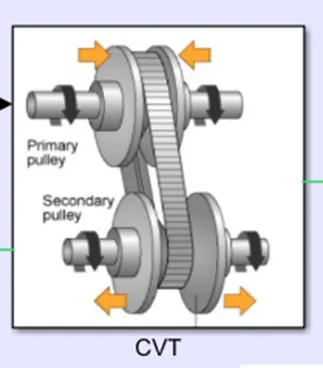
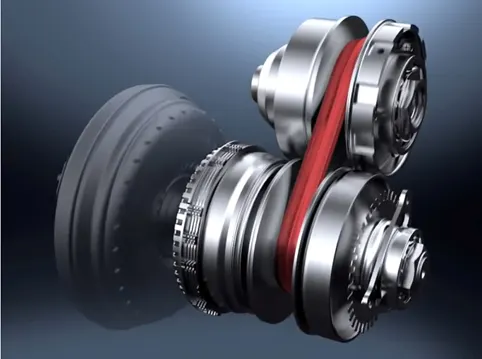
The most common type of CVT uses two pulleys connected by a belt or chain; however, several other designs have also been used at times.
Other Types
Pulley-based, Toroidal, Ratcheting, Hydrostatic/hydraulic, Electric, Cone, Epicyclic
Applications
Automobiles, Racing cars, small vehicles, Farm and earthmoving equipment, Power generation
Blocks used in the all models:
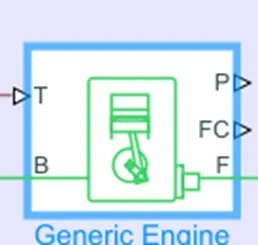
Generic Engine:
Description
The Generic Engine block represents a general internal combustion engine. This block is a suitable generic engine for spark-ignition and diesel. Speed-power and speed-torque parameterizations are provided. A throttle physical signal input specifies the normalized engine torque. Optional dynamic parameters include crankshaft inertia and response time lag. A physical signal port outputs the engine fuel consumption rate based on the fuel consumption model that you choose. Optional speed and redline controllers prevent engine stall and enable cruise control.
Engine Speed, Throttle, Power, and Torque
By default, the Generic Engine block uses a programmed relationship between torque and speed that is modulated by the throttle signal.
The block evaluates engine power demand as a function of engine speed, g(Ω). The function provides the maximum power available for a given engine speed, Ω. The block parameters—Maximum power, Speed at maximum power, and Maximum speed— normalize this function to physical maximum torque and speed values.
The normalized throttle input signal T specifies the actual engine power. The power is delivered as a fraction of the maximum power possible in a steady state at a fixed engine speed. It modulates the actual power delivered, P, from the engine: P (Ω, T) = T·g(Ω). The engine torque is τ = P/Ω.
The throttle input signal T lies between zero and one and specifies the torque demanded from the engine as a fraction of the maximum possible torque. If the engine speed falls below the Stall speed, the engine torque is blended to zero. If the engine speed exceeds the Maximum speed, the simulation stops and issues an error message.
Connections F and B are mechanical rotational conserving ports associated with the engine crankshaft and engine block, respectively.
Connections P and FC are physical signal output ports through which engine power and fuel consumption rate are reported.
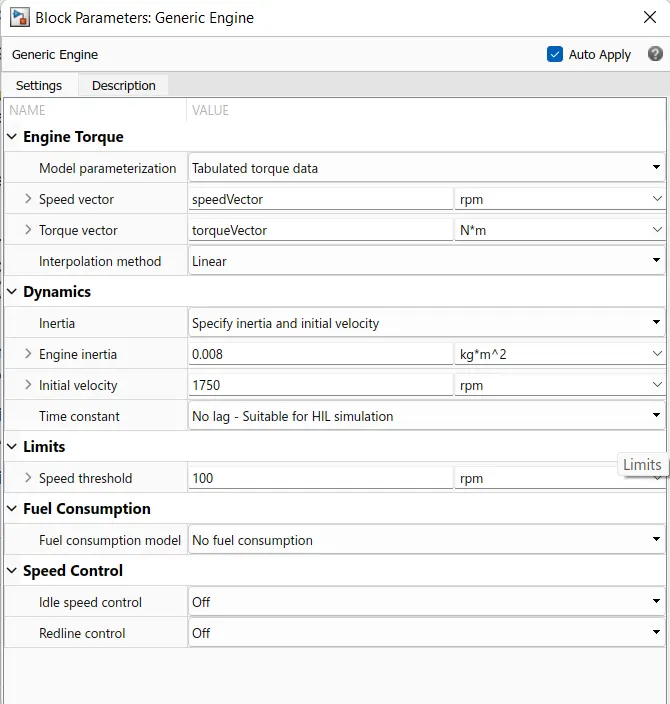
Engine settings:
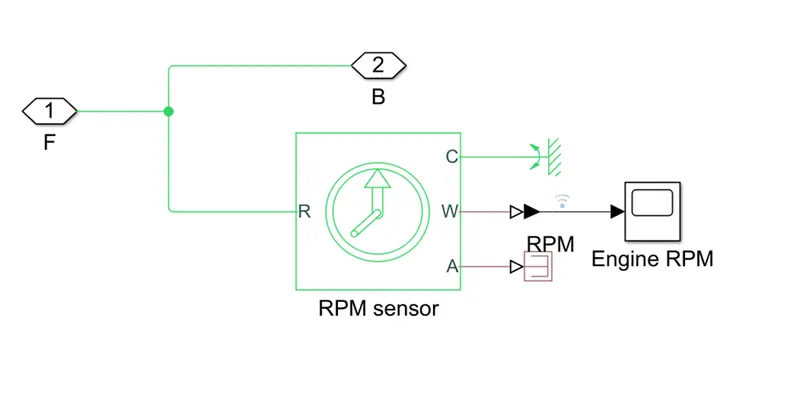
Engine Sensor
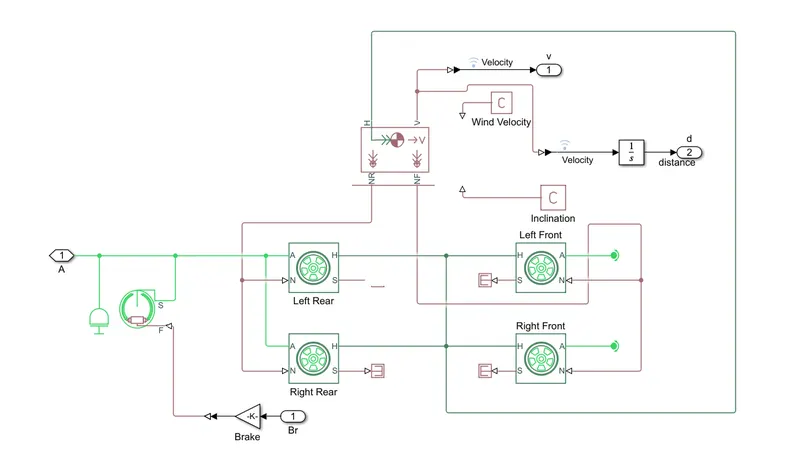
vehicle Body:
vehicle body parameters:
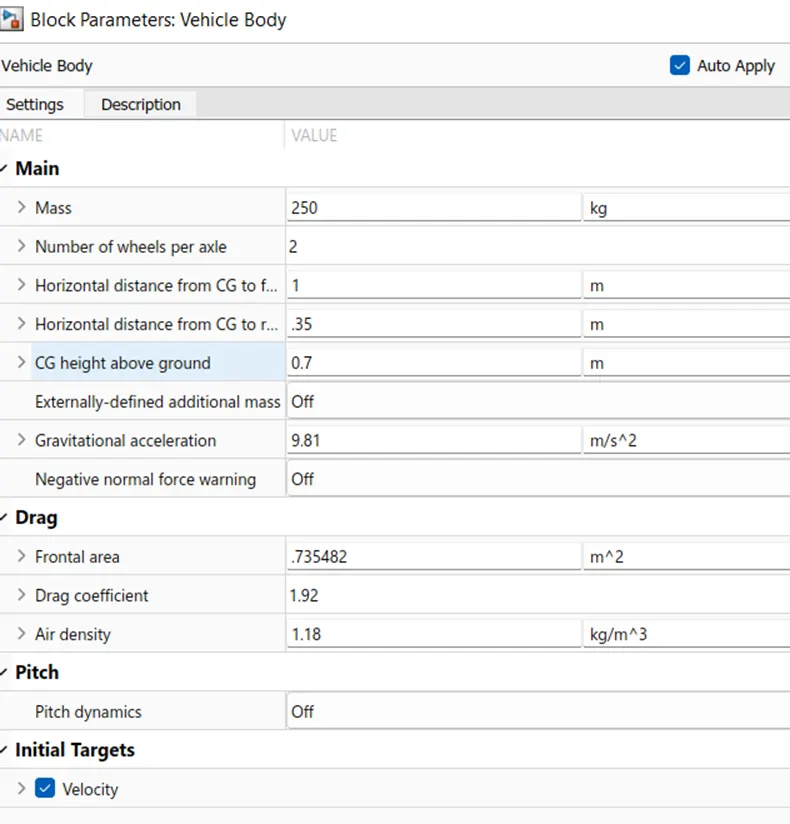
Discription:
Represents a two-axle vehicle body in longitudinal motion. The block accounts for body mass, aerodynamic drag, road incline, and weight distribution between axles due to acceleration and road profile.
The vehicle can have the same or a different number of wheels on each axle. Optionally include pitch and suspension dynamics or additional variable mass and inertia. The vehicle does not move vertically relative to the ground.
Connection H is the mechanical translational conserving port associated with the horizontal motion of the vehicle body. The resulting traction motion developed by tires should be connected to this port.
Connections V, NF, and NR are physical signal output ports for vehicle velocity and front and rear normal wheel forces, respectively. Wheel forces are considered positive if acting downwards.
Connections W and beta are physical signal input ports corresponding to headwind speed and road inclination angle, respectively.
If variable mass is modeled, the physical signal input ports CG and M are exposed. CG accepts a two- element vector representing the x and y distance offsets from vehicle CG to additional load mass CG. M represents the additional mass. If both variable mass and pitch dynamics are included, the physical signal port J accepts the inertia of the additional mass about its own CG.
Wheels
Represents the longitudinal behaviour of a highway tire characterized by the tire Magic Formula. The block is built from Tire-Road Interaction (Magic Formula) and Simscape Foundation Library Wheel and Axle blocks. Optionally, the effects of tire inertia, stiffness, and damping can be included.
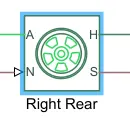
Connection A is the mechanical rotational conserving port for the wheel axle. Connection H is the mechanical translational conserving port for the wheel hub through which the thrust developed by the tire is applied to the vehicle.
Connection N is a physical signal input port that applies the normal force acting on the tire. The force is considered positive if it acts downwards.
Connection S is a physical signal output port that reports the tire slip. Optionally expose physical signal port M by setting Parameterize by to Physical signal Magic Formula coefficients. Physical signal port M accepts a four-element vector corresponding to the B, C, D, and E Magic Formula coefficients.
CVT MODEL:
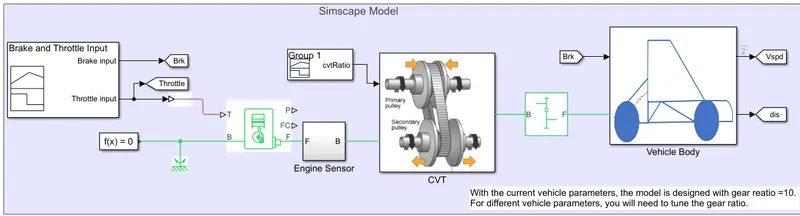
SIGNAL BUILDER FOR BRAKE AND THROTTLE:
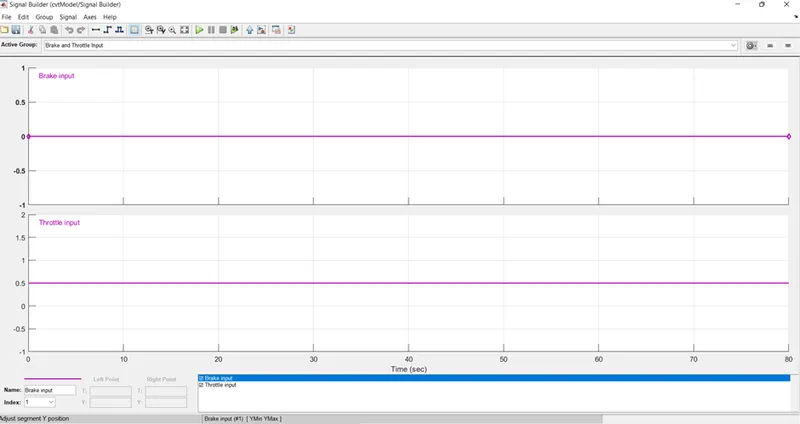
CVT MODEL SIGNAL BUILDER
RESULTS:
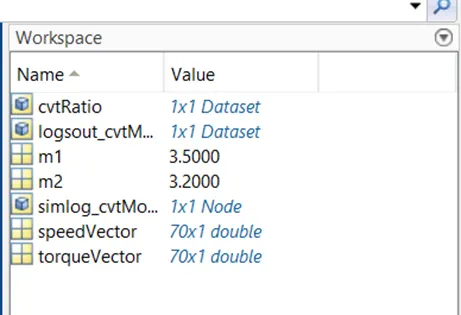
WORKSPACE:
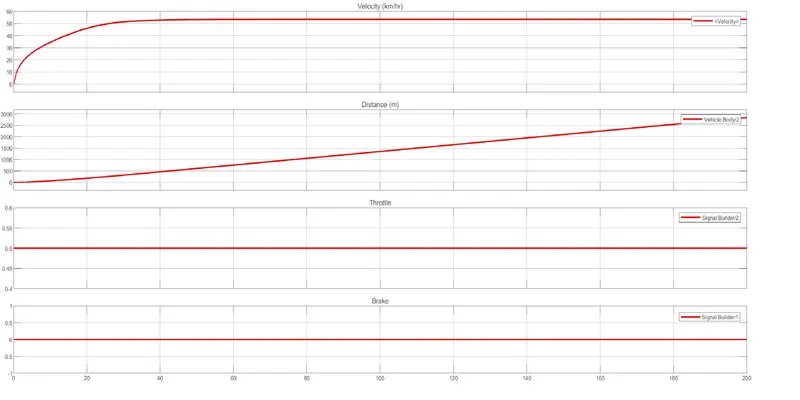
OUTPUT1:
When Gear Ratio is 10
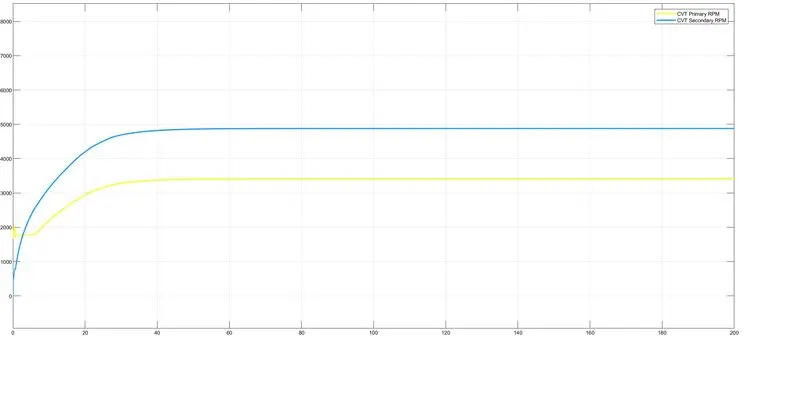
OUTPUT2:
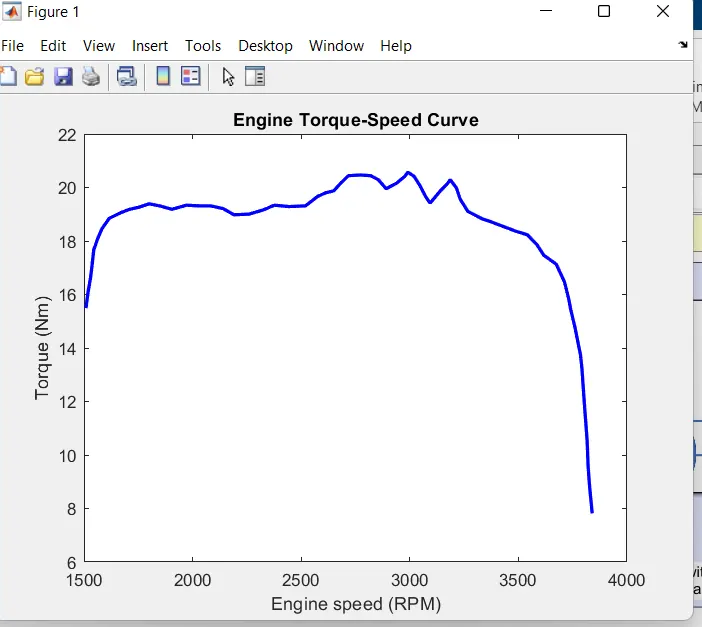
ENGINE SPEED vs TORQUE
CVT MODEL_DASH BOARD:
CVT MODEL_MAPPED
LOOKUP TABLE
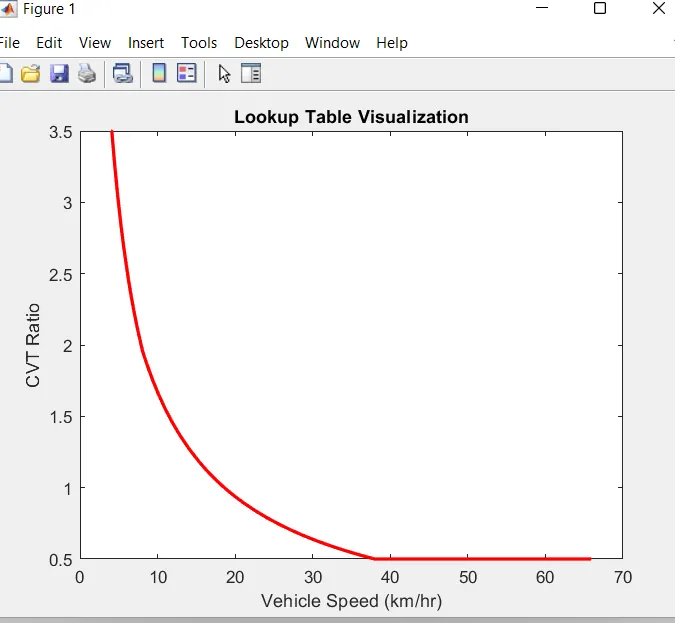
CVTMODEL_CVTRATIO
CONCLUSION:
Simulation of a BAJA ATV using CVT is simulated in two ways to visualize the effect of CVT on Vehicle velocity and secondary rpm. Based on this we can simulate multiple situations and designs for different models for ATV designs using the specks of that particular model.