Project
AIM:
To carry out a system level simulation of an all-terrain vehicle using simulink.
OBJECTIVE:
To prepare a technical report on BAJA ATV explaining the properties and the comments on the results.
THEORY:
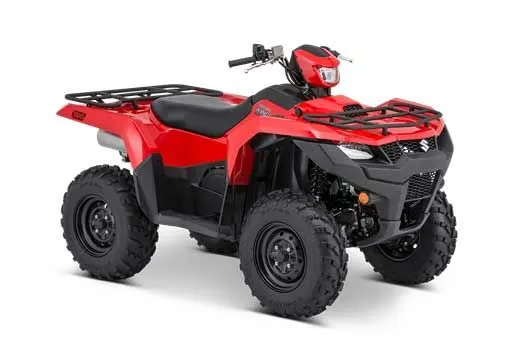
ATV:An all terrain vehicle rehers to a motorized single seated tri or quadricycle bike and buggy that is designed for off road travel and activities.the vehicle consists of handlebars and low-pressure tire that have deep threaded structures, which assist in driving over muddy,rocky,wetlands and dune topologies.in comparision to other uitility vehicles, ATVs offer excellent off road capabilities and can carry heavy equipmentover long distances and narrow access points. they can also can be customized for high performance riding,owing to which they find extensive applications across various industries, including sports,entertainment,agriculture,military and defense.
BAJA ATV MODEL:
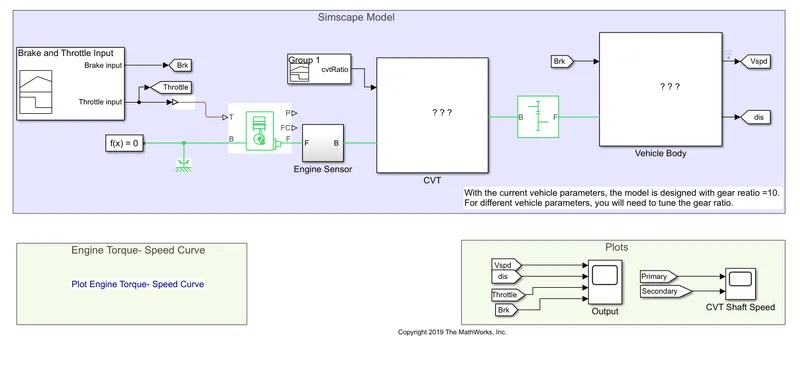
the model consists of these blocks:
GENERIC ENGINE:
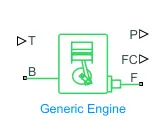
Represents a system level model of spark ignition and diesel engines suitable for use at intial stages of modeling when only the basic parameters are available.optional idle speed and red line controllers are included.the throttle input signal T lies between zero and one and specifies the torque demanded from the engine as a fraction of the maximum possible torque.if the engine speed fall below the stall speed , the engine torque is blended to zero . if the engine speed exceeds the maximum speed ,the simpulation sropsa nd issues and error message.
SIMPLE GEAR:
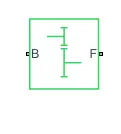
Represents a fixed ratio gear or gerabox.no inertia or compliance is modeled in this block.you can optionally include gear meshing and viscous bearing losses.connections B (Base) and F (Follower) are mechanical rational conserving points.these specify the relation between the base and follower rotation directionswith the output shafts rotates parameter.
CVT SUBSYSTEM:
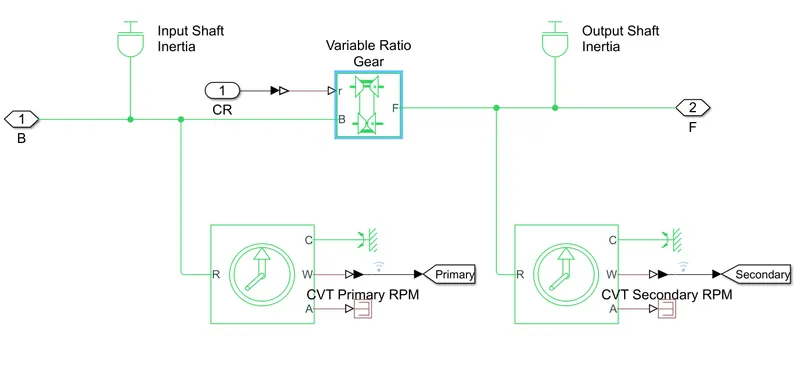
The CVT system consists of following blocks:
VARIABLE RATIO TRANSMISSION:
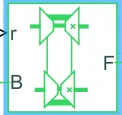
Represents a variable ratio gearbox such as implemented by mechanical belt CVT, electric, or hydraulic transmissions. the physical signal input r defines the ratio of input to output angular shaft velocities.connections B (base) and F (follower) are mechanical rotational conserving ports. specify the relation between base and follower rotation directions with the output shaft rotates parameter.
INERTIA:
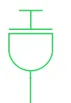
The block represents an ideal mechanical rotational inertia.the block has one mechanical ratational conserving port. the block positive direction is from its port to the reference point.this means that the inertia torque is positive if the inertia is accelerated in a positive direction.
VEHICLE BODY SUB SYSTEM:
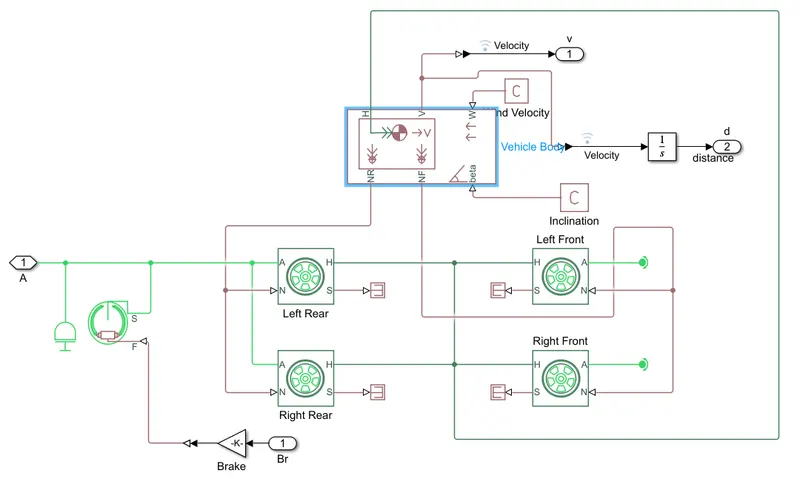
The vehicle body subsystem consists of these blocks:
TIRE:
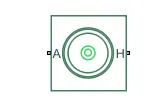
The tire block models a tire with longitudinal behavior given by the magic formula, an empirical equation based on fore fitting coefficients.the block can model tire dynamics under constant or variable pavement conditions.the tire block models the tire as a rigid wheel tire combination contact with the road and subject to slip.
DOUBLE SHOE BREAK:
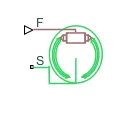
There are fourwheels in which the rear wheels are connected to the output shaft from the CVT through the axles making it a rear wheel frive.A double show break is also connected to the rear wheeel axles which is used to apply the break power to the rear wheels.
VEHICLE BODY:
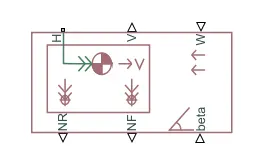
Here the body is connected to the wheelsa nd the hub of thwe wheels according to the connections to simulate the working of the body.here we can provide the mass of the vehicle and carry out different simulations for the torque and velocity depending on the mass provided.
INPUTS:
BRAKE AND THROTTLE INPUT:
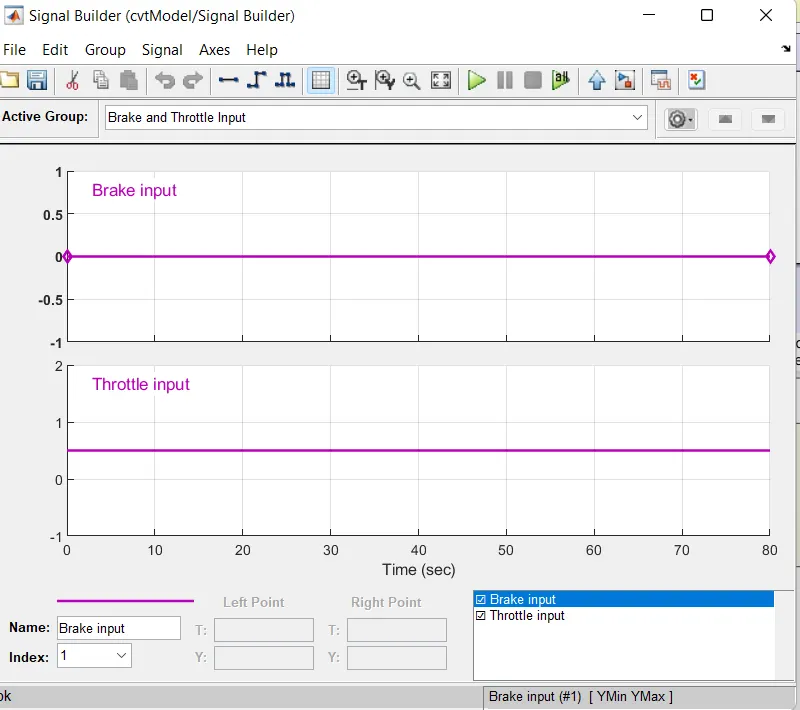
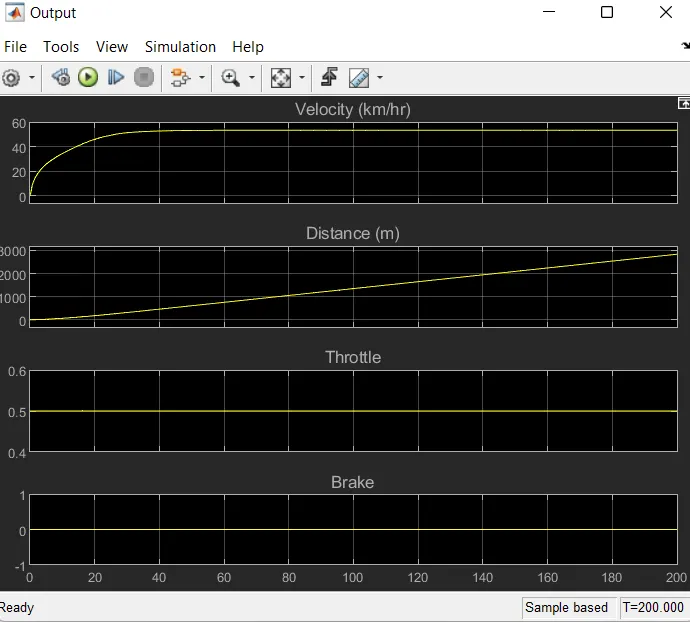
Brake input that is zero through out the time for 80 sec.throttle input is 0.5 through out the time
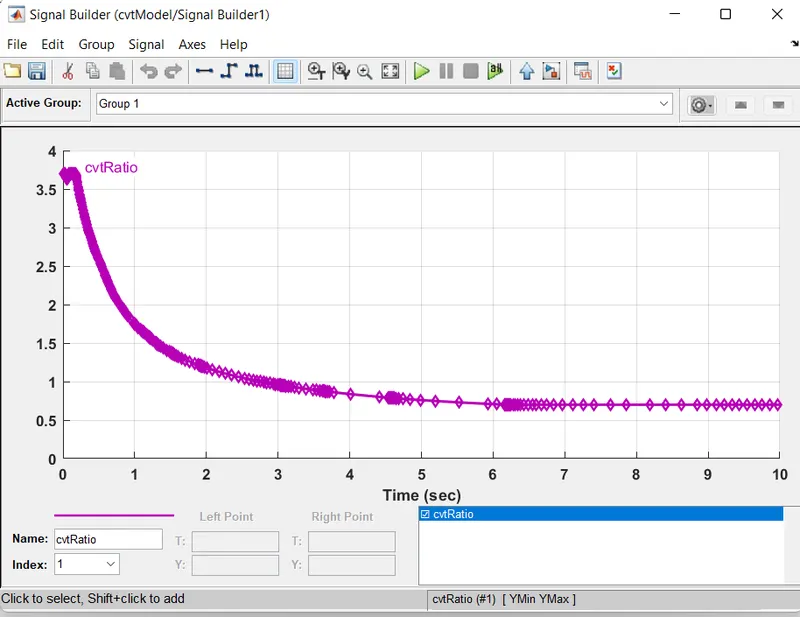
CVT RATIO:
OUTPUT:
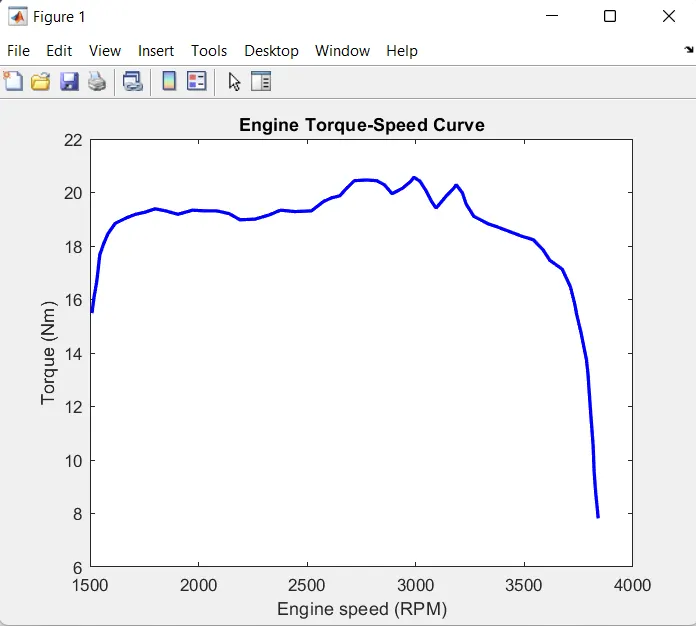
Torque vs Speed characterstics:
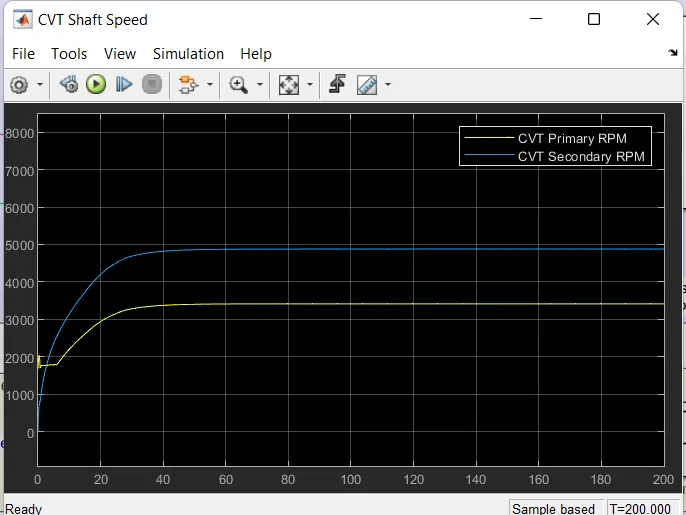
CVT SHAFT SPEED:
VELOCITY, DISTANCE, THROTTLE, BRAKE CHARACTERSTICS: