Project
PROJECT EXPLANATION:
To study and analyze all terrain vehicle model using simulink model
All terrain vehicle(ATV):
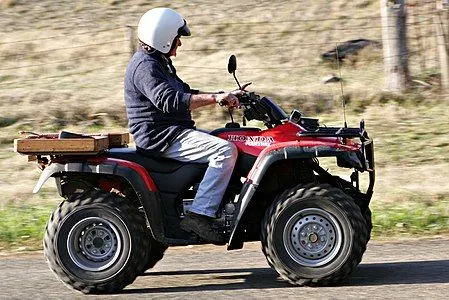
An all-terrain vehicle (ATV), also known as a light utility vehicle (LUV), a quad bike, or simply a quad, as defined by the American National Standards Institute (ANSI) and it is a vehicle that travels on low-pressure tires with a seat that is straddled by the operator along with handlebars for steering control.As the name implies, it is designed to handle a wider variety of terrain than most other vehicles.
By the current ANSI definition ATVs are intended for use by a single operator although some companies have developed ATVs intended for use by the operator and one passenger.These ATVs are referred to as tandem ATVs.The rider sits on and operates these vehicles like a motorcycle, but the extra wheels give more stability at slower speeds.Although most are equipped with three or four wheels.Multiple-user analogues with side-by-side seating are called utility terrain vehicles (UTVs) or side-by-sides to distinguish the classes of vehicle.
CONTINOUSLY VARIABLE TRANSMISSION:(CVT)
A continuously variable transmission (CVT) is an automatic transmission that can change seamlessly through a continuous range of gear ratios.This contrasts with other transmissions that provide a limited number of gear ratios in fixed steps.
The flexibility of a CVT with suitable control may allow the engine to operate at a constant RPM while the vehicle moves at varying speeds.
working of cvt:
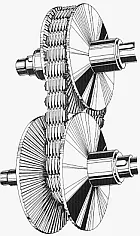
The CVT is an automatic transmission that uses two pulleys with a steel belt running between them. To continuously vary its gear ratios, the CVT simultaneously adjusts the diameter of the "drive pulley" that transmits torque from the engine and the "driven pulley" that transfers torque to the wheels.
STUDY1:
CASE1:
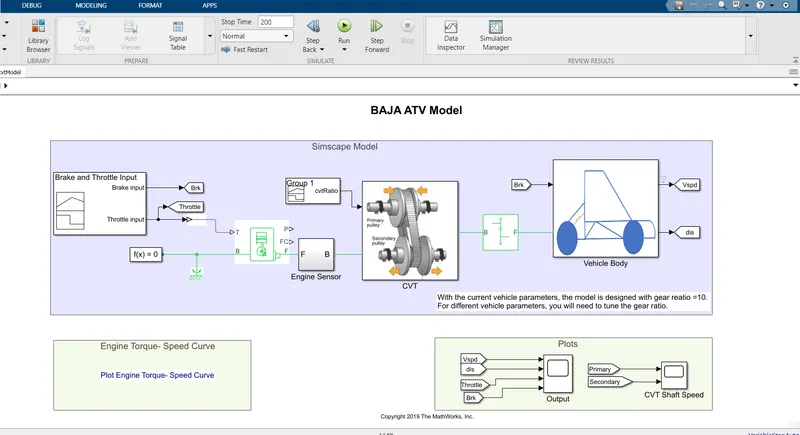
SIMULINK MODEL FOR BAJA ATV WITH CVT:
MAIN COMPONENTS:
CVT BLOCK:
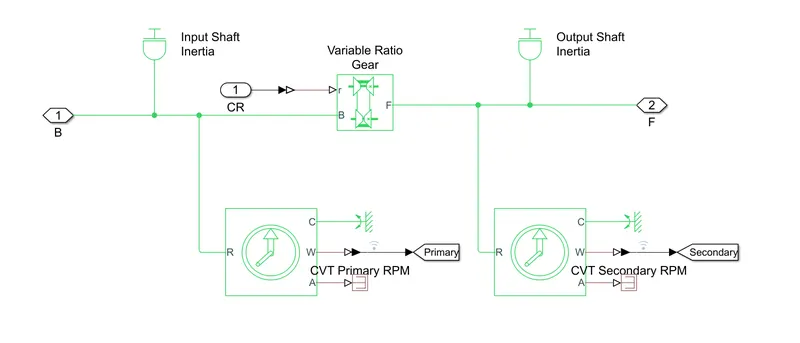
Variable gear ratio:
It represents a variable ratio gearbox such as implemented by mechanical belt cvt,electric,or hydraulic transmissions.the physical signal input r defines the rstio of input to output angular shift velocities
connections B(base) and F(follower) are mechanical rotational conserving ports.specify the relation between base and follower rotation directions with the output shaft rotates parameter.
Generic engine:
it represents a system level model of spark ignition and diesel engines suitable for use at initial stages of modelling when only the basic parametres are available. optional idle speed and red line controllers are included the throttle input signal T lies between zero and one supplies the torque demanded from the engine as a fraction of the maximum possible torque
connections F and B are mechanical rotational conserving ports associated with the engine crankshaft and engine block respectively.connections P and FC are physical signal outputs ports through which engine power and fuel consumption rate are required.
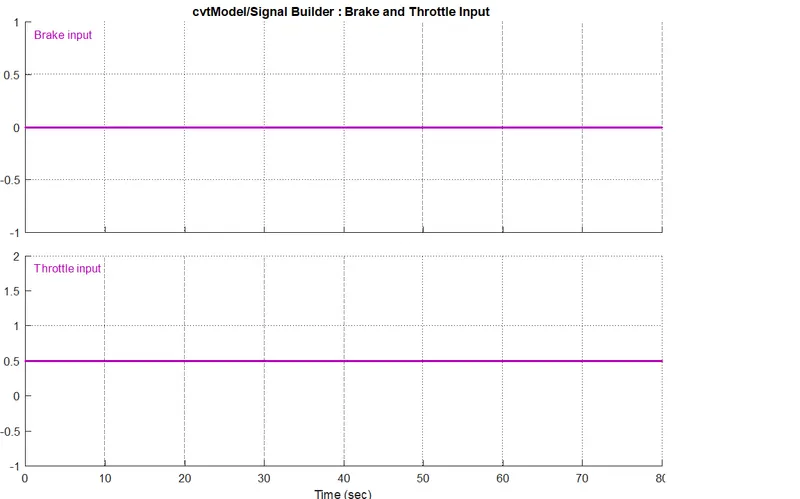
signal builder:
it is used for creating signals for brake and throttle
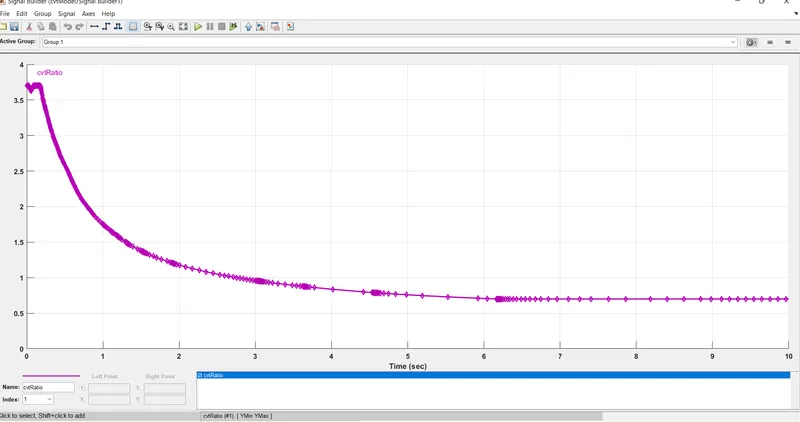
CVT Gear ratio input:
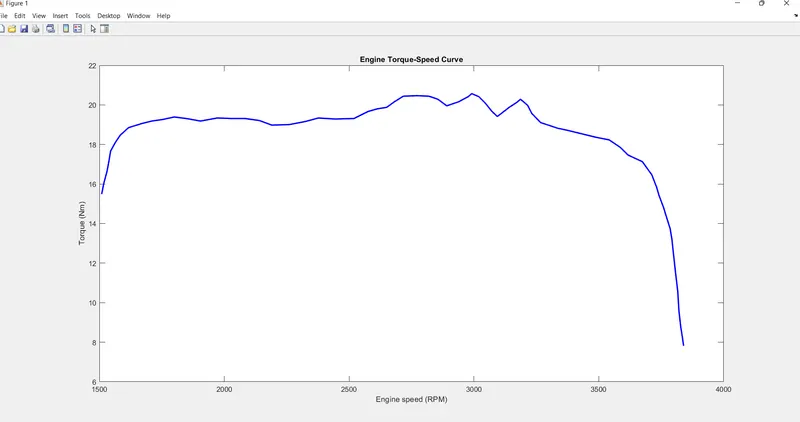
Torque vs Engine Speed input:
Vehicle body subsystem:
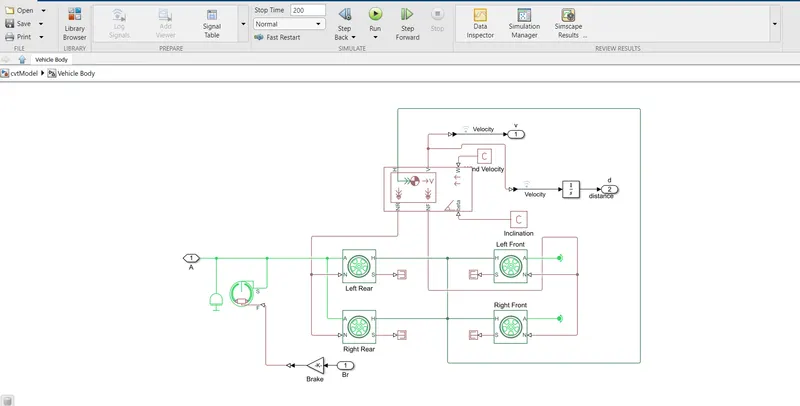
vehicle body represents a two axle vehicle body in longitudinal motion. the block accounts for body mass,aerodynamic drag road incline and weight distribution between axles due to acceleration and road profile. the vehicle can have the same or a different number of wheels on each axle
connections H is the mechanical translational conserving port associated with the horizontal motion of the vehicle body the resulting traction motion developed by tires should be connected to this port
connections V,NF,and NR are physical signal output ports for vehicle velocity and front and rear normal force wheels respectively.connections w and beta are physical signals input ports corresponding to headwind sped and road inclination angle respectively
tire:
the block is built from tire road interaction and simscape foundation library wheel and axle blocks the effects of inertia stiffness and damping can be included
connections A is the mechanical rotational conserving ports for the wheel axle connection H is the mechanical translational conserving port for the wheel hub through applied to vehicle connection N is a input that applies normal force acting on the tire connection s is a physical signal output port that reports the tire slip.
OUTPUT for case1:
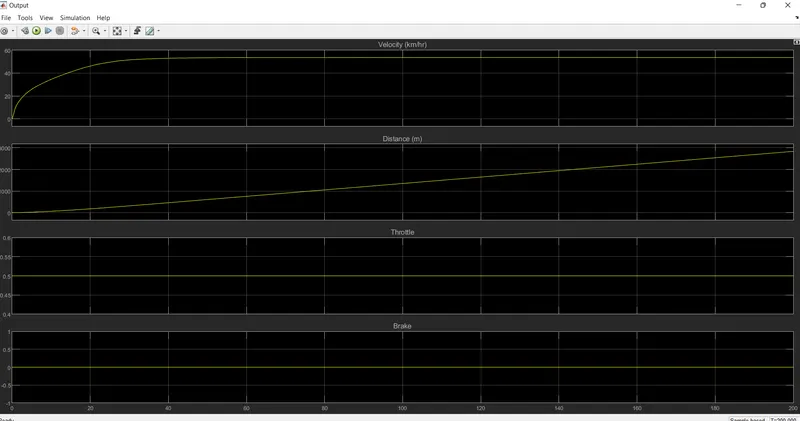
vehicle speed:
CVT SHAFT PLOT:
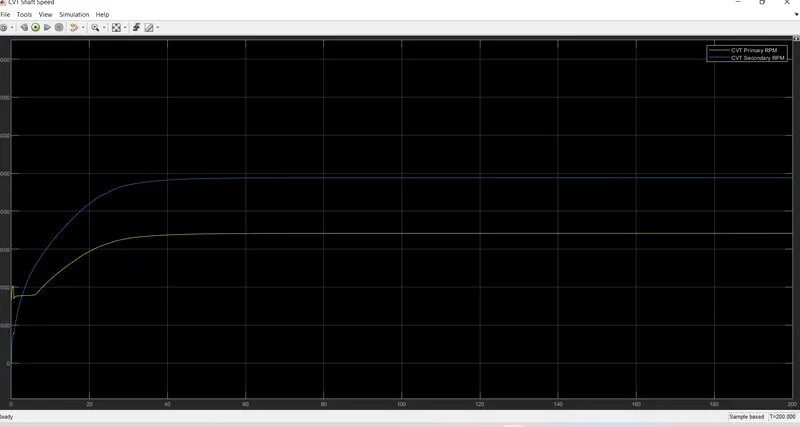
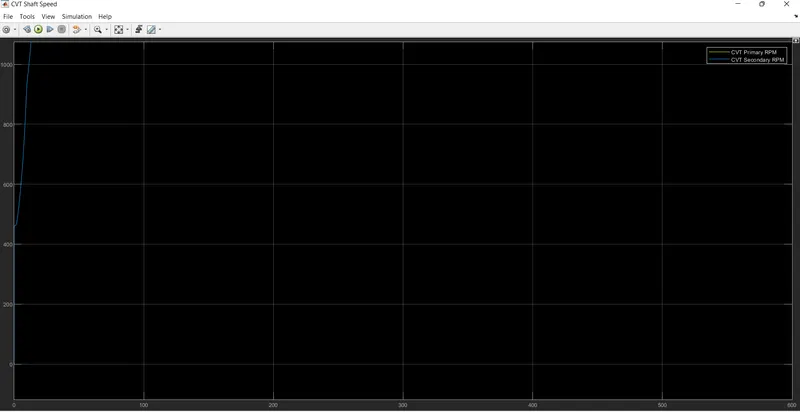
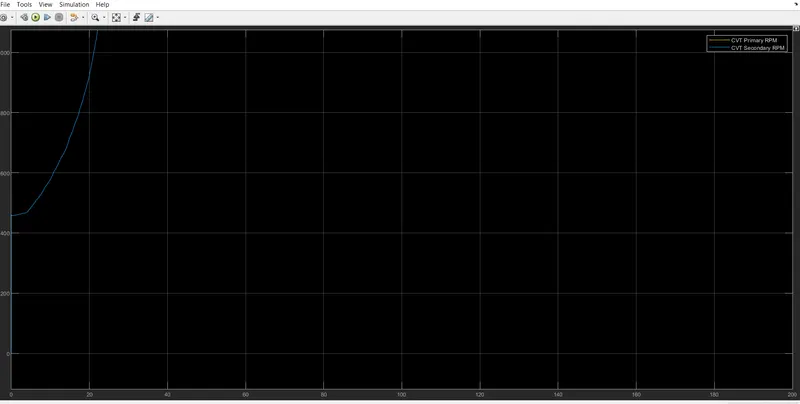
This graphs shows the variation in angular velocities of input and output shafts of the variable gear transmission system these values differ with respect to gear ratio
CASE2:(CVT USING DASHBOARD):
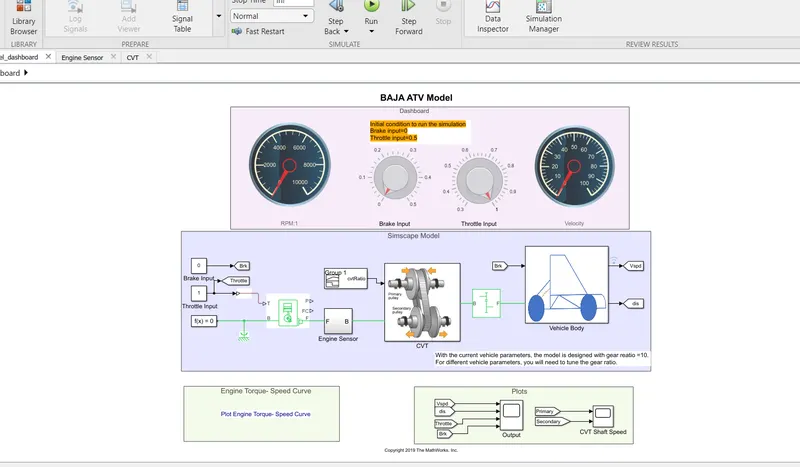
in this model we have a dashboard which contains 'knobs' to control the inputs. in this case the inputs 'Throttle and brake' are not provided using signal builder. aknob is provided to control both the parameters in real time for the user
Output for case2:
vehicle speed:
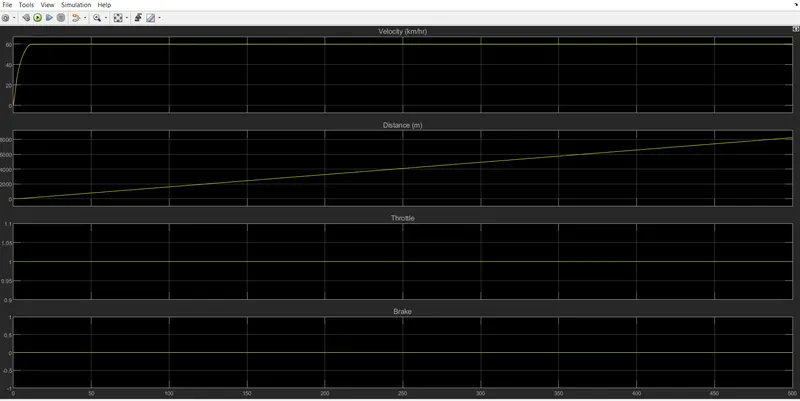
It can be observed from the graph that the velocity of the vehicle increases drastically from 0 to 60kmph when the throttle valve is 1 and brake input is 0 once the braking value is increases from 0.1 to 0.5 the velocity of vehicle decreases to 0 at constant throttle value
cvt shaft:
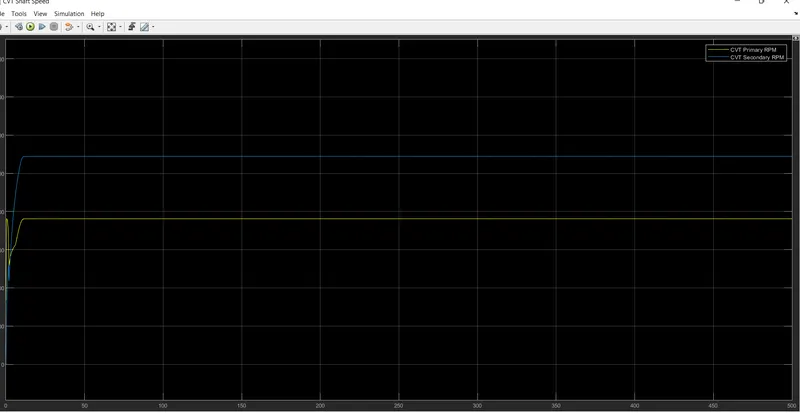
STUDY2:(CVT WITH LOOKUP TABLE)
CASE1:
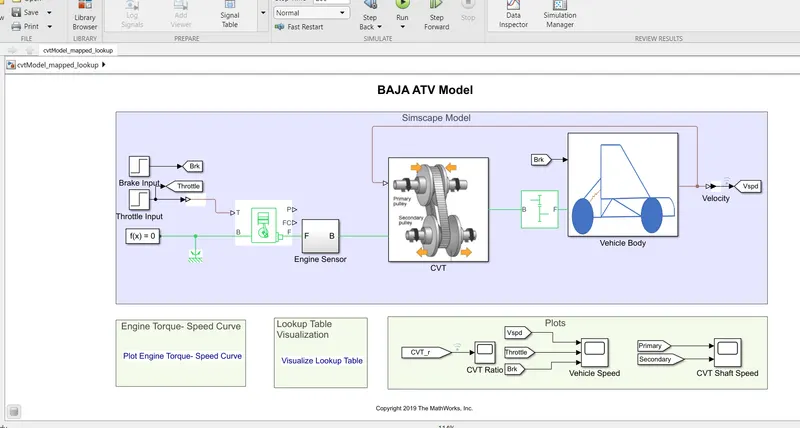
CVT BLOCK:
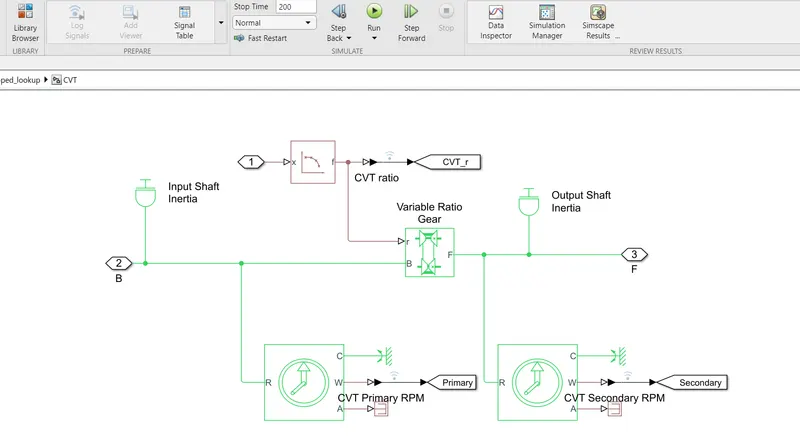
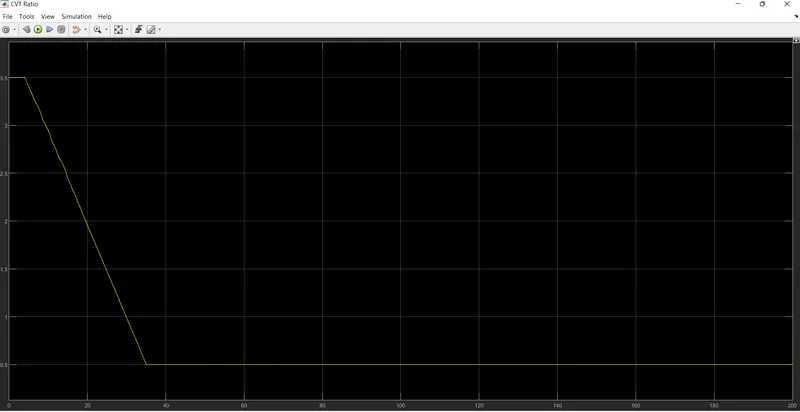
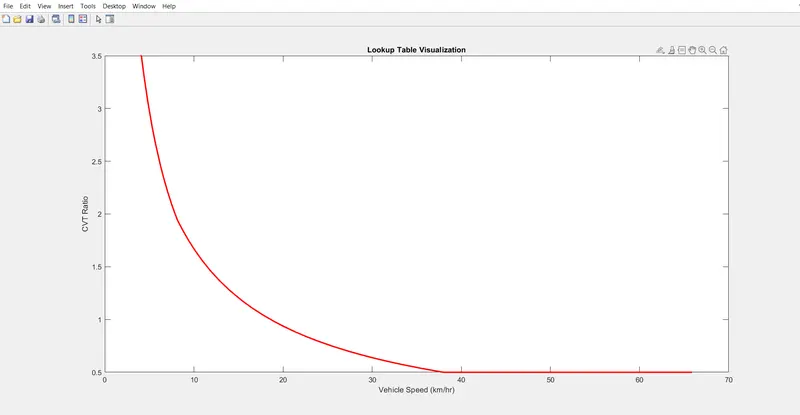
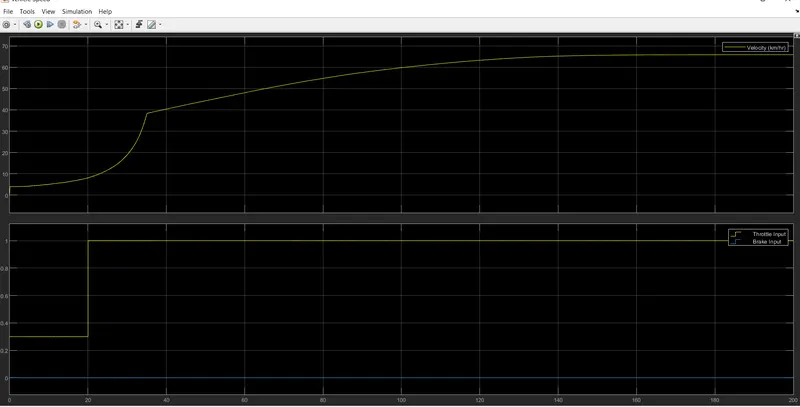
the only difference between this model and the first one is that the gear ratio input to CVT is provided using a lookup table. the vehicle velocity and shaft rpm outputs are same as before
CVT GEAR RATIO:
LOOKUP TABLE:
output:
CVT SHAFT:
STUDY2:(SIMULINK MODEL WITH CVT USING LOOKUP TABLE)
CASE2:
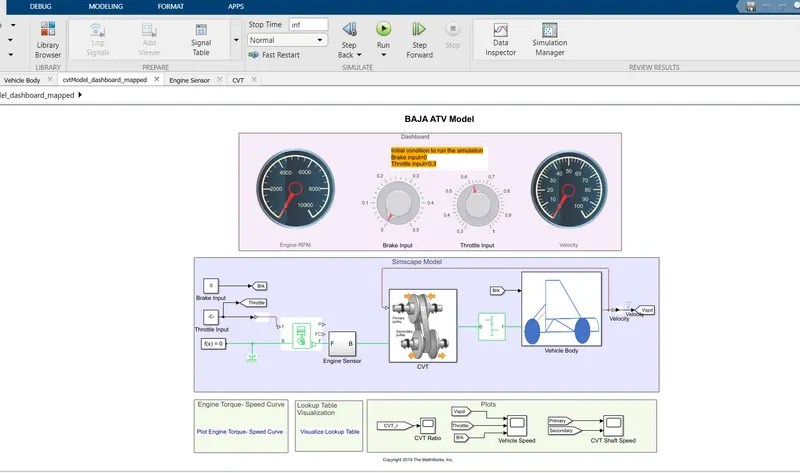
In this model a dashboard is used to control the inputs throttle and brake with knobs
output:
vehicle speed:
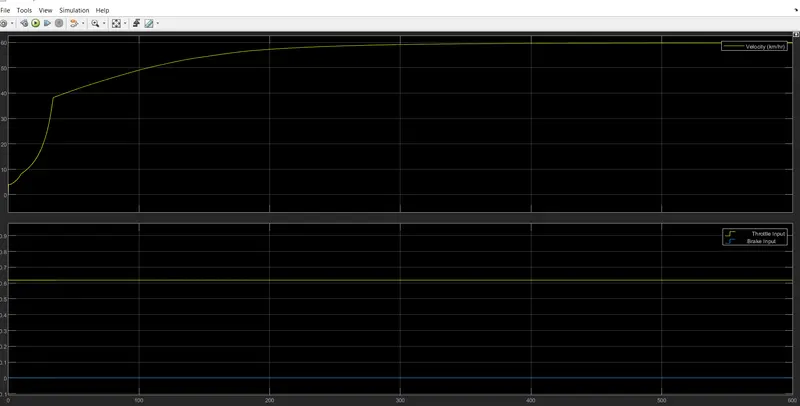
this garph is similar to that of cvt dashboard case. the vaariation in vehicle velocity can be observed with cchange in throttle and brake inputs. with increase in braking value the speed of vehicle decreases . on the otherhand increasing the throttle leads to increased vehicle velocity.
CVT SHAFT: