Project
Powertrain Blockset:
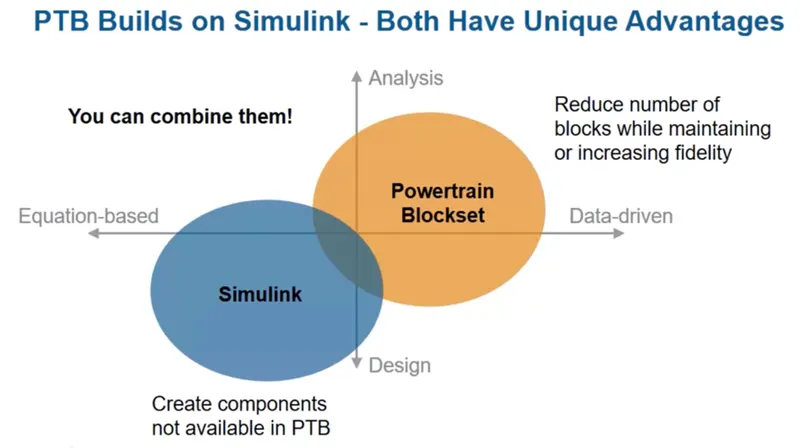
Powertrain Blockset can be used for data-driven models and for analysis because it provides high fidelity models
Powertrain Blockset is built on simulink
Powertrain Blockset parameterize models using test data
Single blocks representing components
Auto code generation support
Benefits of Powertrain Blockset
- Well documented, open and reconfigurable models
- Users will have access to component data
- Seek to maintain or increase model fidelity with fewer blocks
Powertrain Blockset of Glider model
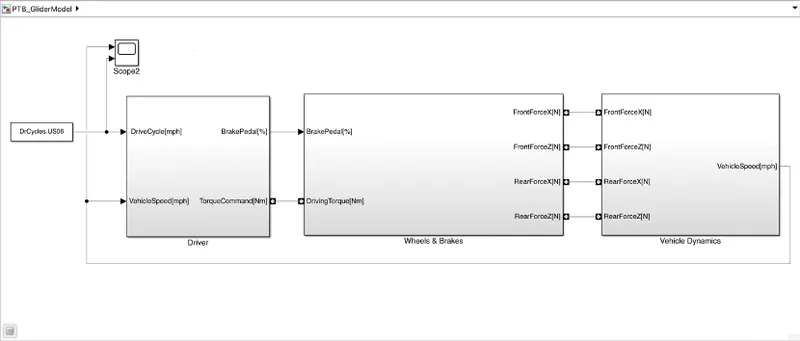
Vehicle dynamics
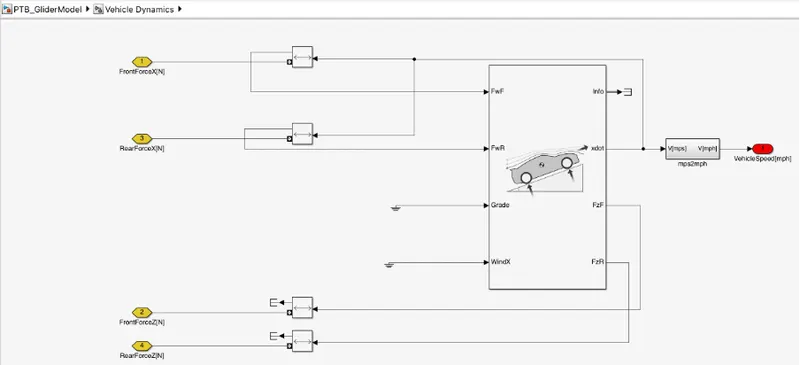
Vehicle dynamics is represented by doing summation of forces using many different blocks and all of that is summarized in the vehicle body block
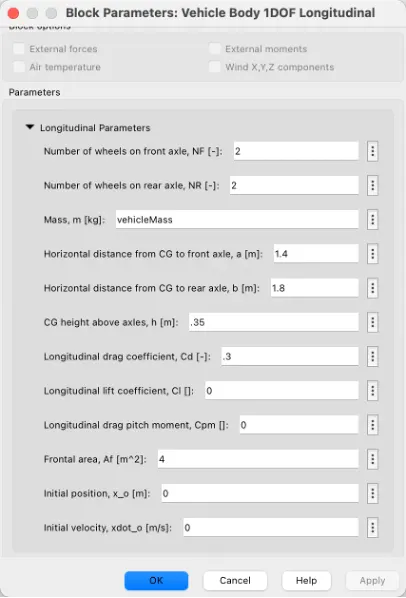
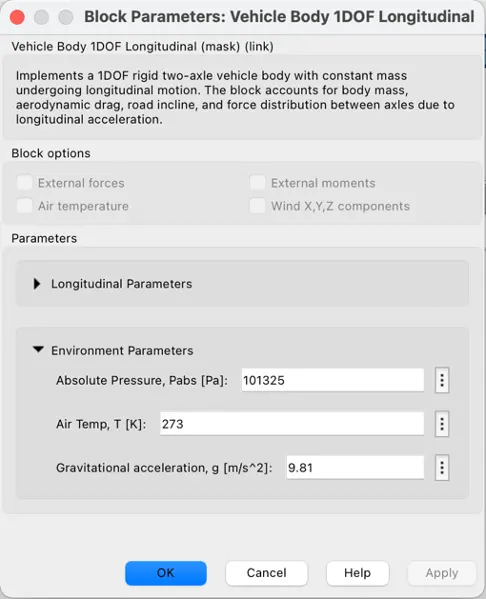
Block parameters of the Vehicle body
Front and back tires of the vehicle
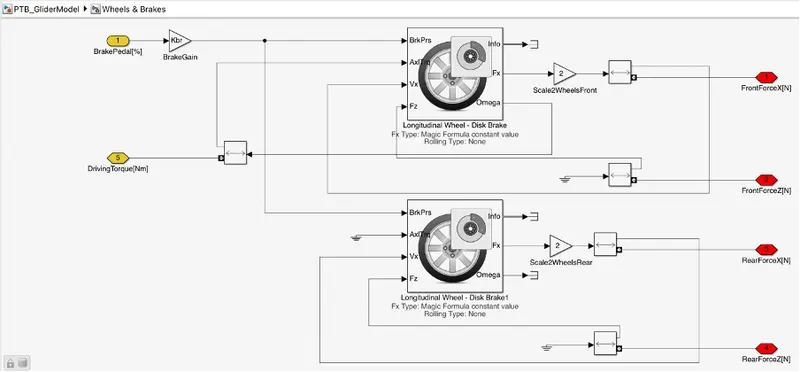
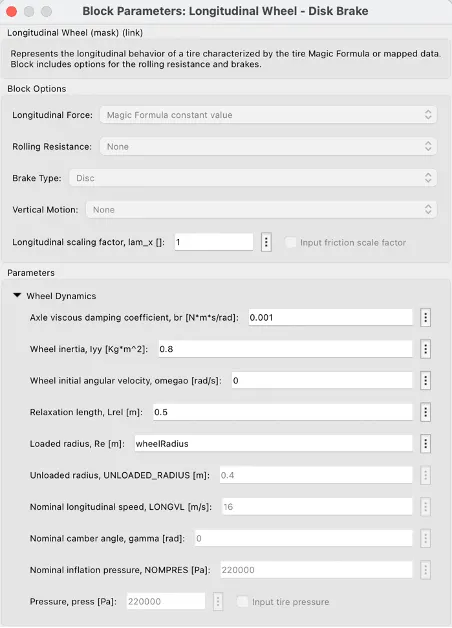
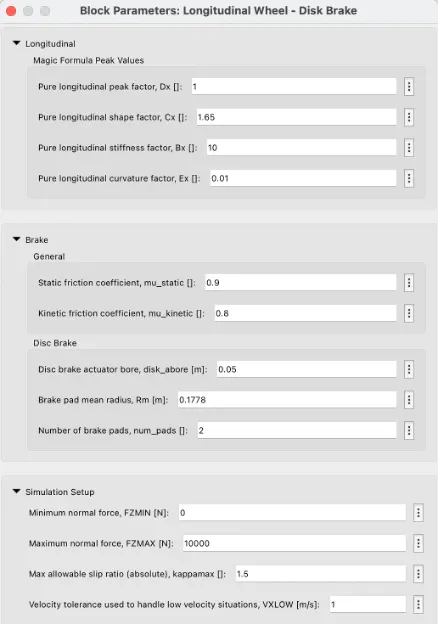
Block parameters of tires
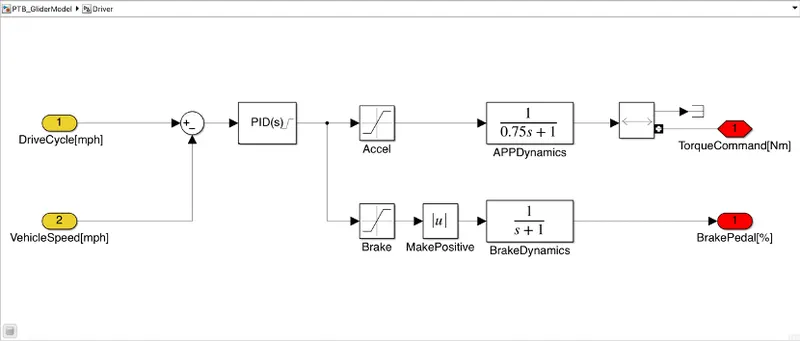
PID gives an error between vehicle speed and reference speed, and it outputs the braking and actual torque that we would desire
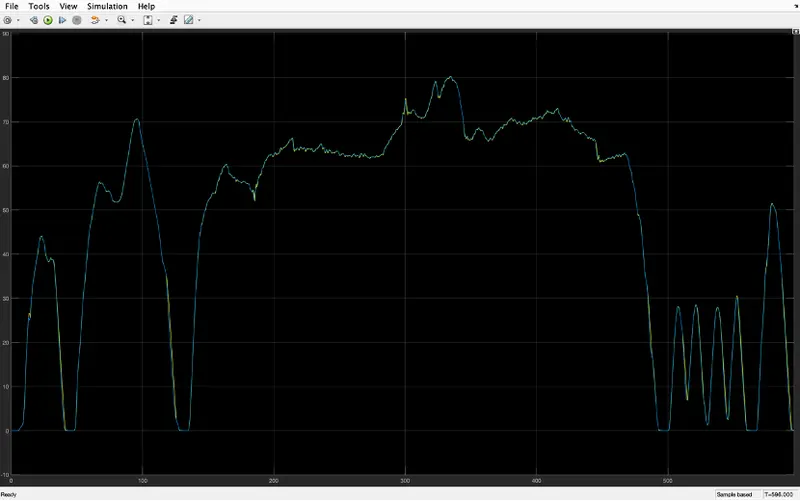
Comparing reference speed and actual speed for glider model PTB
Powertrain Blockset of battery electric vehicle(Including Battery, Motor, Rear Differential to the Powertrain Blockset of Glider model)
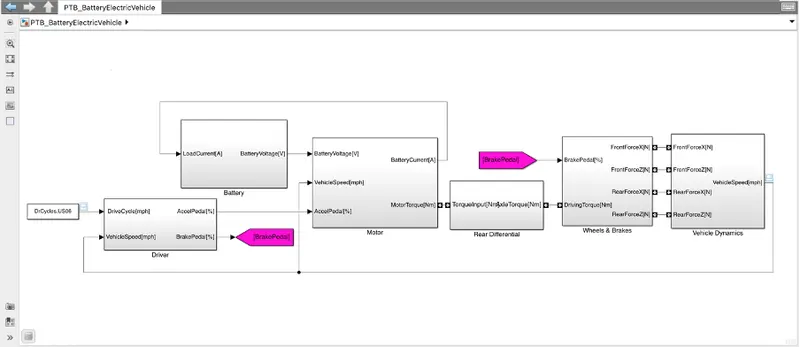
Driver providing accelerator pedal position to the motor

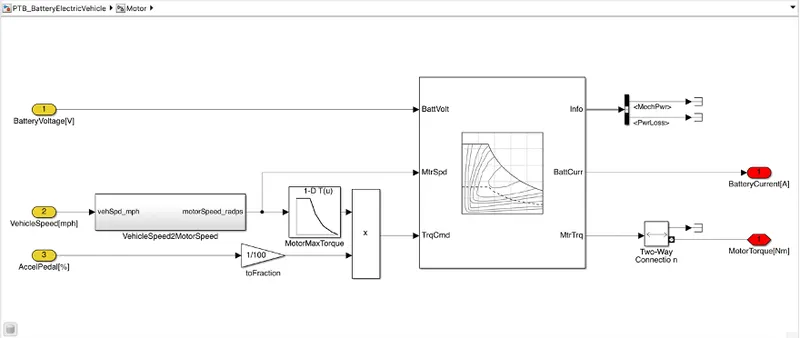
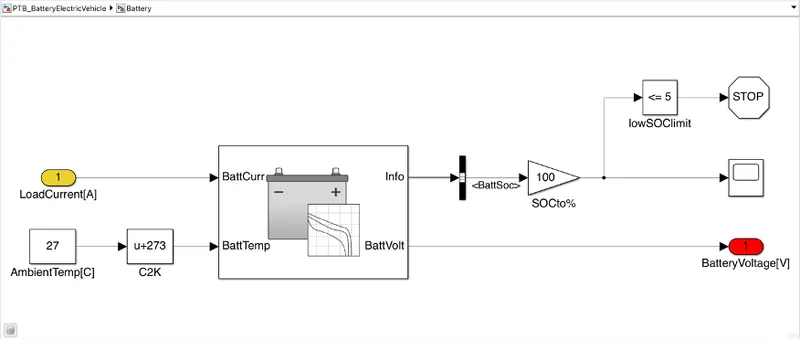
The battery voltage in the motor comes from below shown battery block
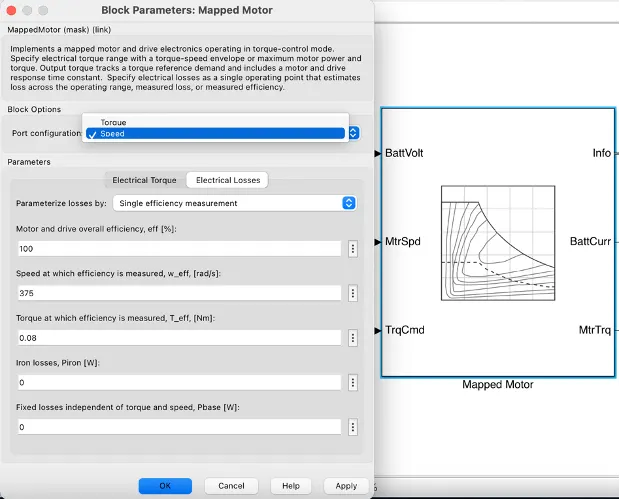
We can configure the block parameters of the motor’s Torque and Speed based on the requirements of the user
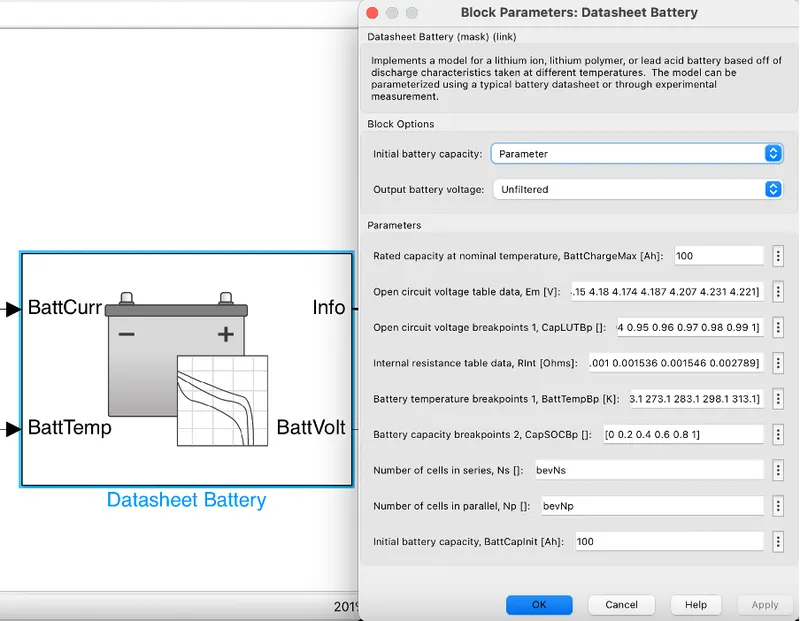
Here we can characterize the efficiency and number of cells or the chemistry of the battery
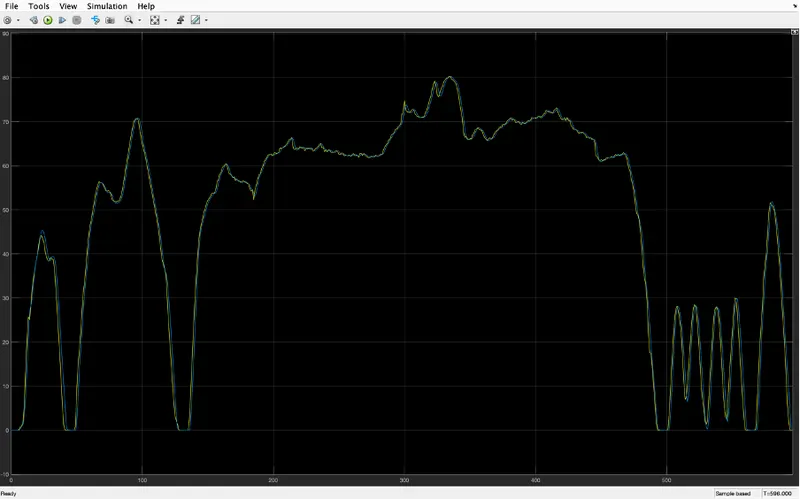
Comparing reference speed and actual speed for Battery electric vehicle model PTB
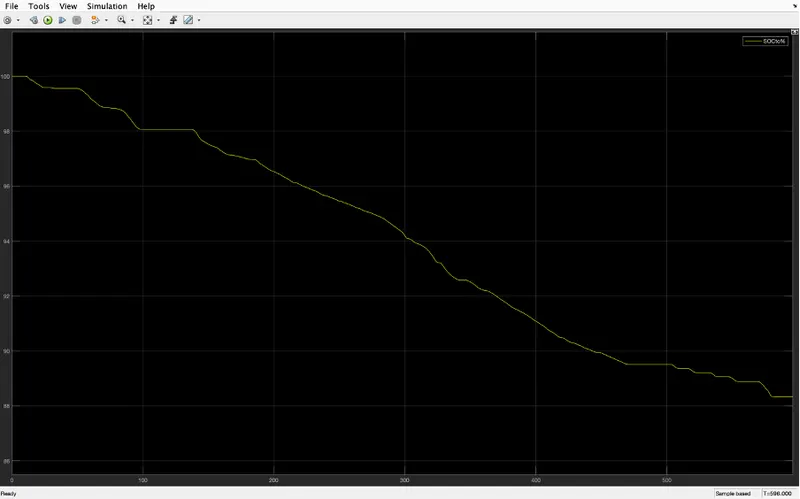
Battery SOC% (State of charge percentage over time)
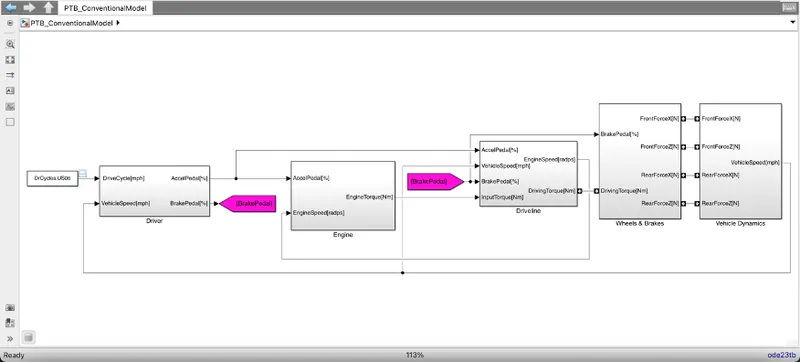
Powertrain Blockset of a conventional vehicle
Engine
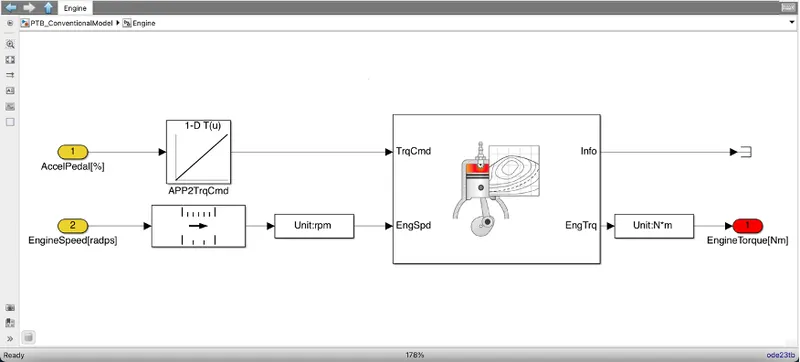
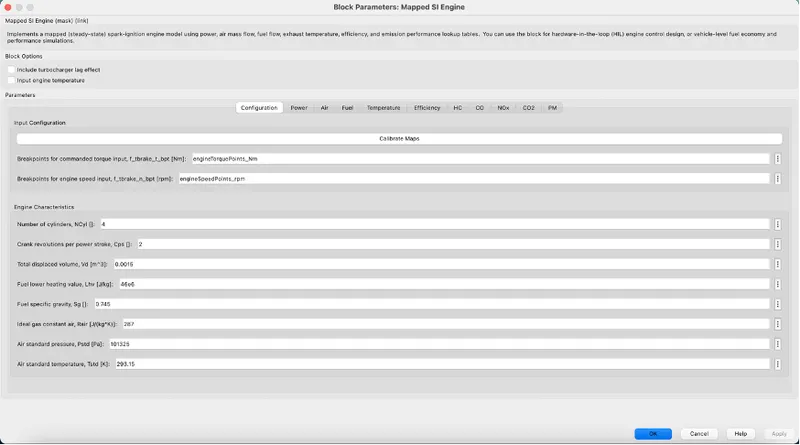
We can configure block parameters of the engine as per our requirements
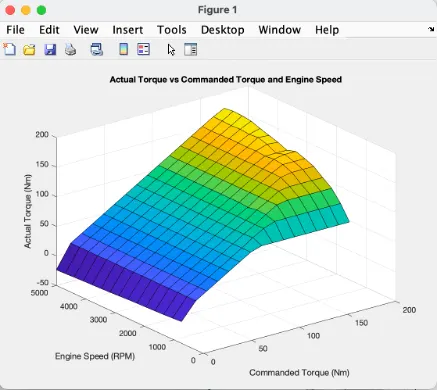
“Actual torque, Air mass flow” vs Commanded Torque and Engine speed
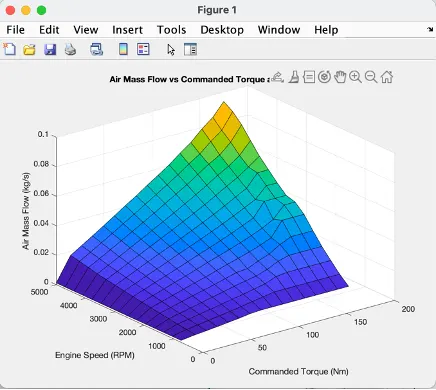
“Fuel mass flow, exhaust temperature” vs Commanded Torque and Engine speed
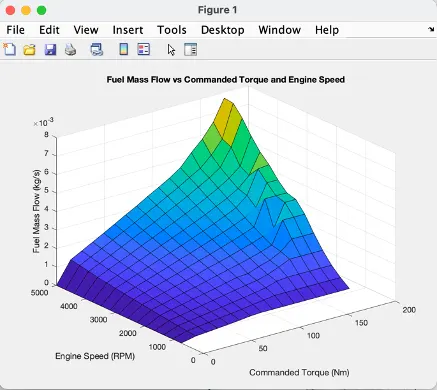
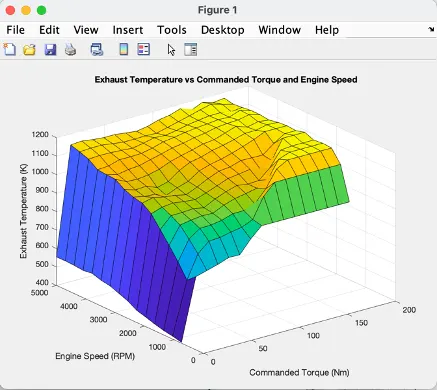
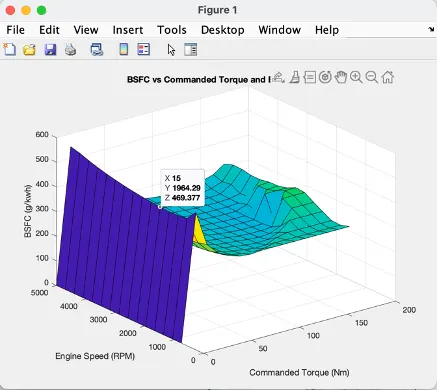
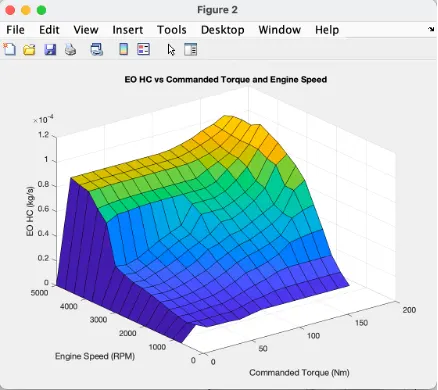
“BFSC, EO HC” vs Commanded Torque and Engine speed