Project
Baja ATV – CVT
Objective
To study the Continuous variable transmission system in BAJA – ATV
All terrain vehicle
An all-terrain vehicle (ATV), also known as a light utility vehicle (LUV),[1] a quad bike, or simply a quad, as defined by the American National Standards Institute (ANSI); is a vehicle that travels on low-pressure tires, with a seat that is straddled by the operator, along with handlebars for steering control. As the name implies, it is designed to handle a wider variety of terrain than most other vehicles.
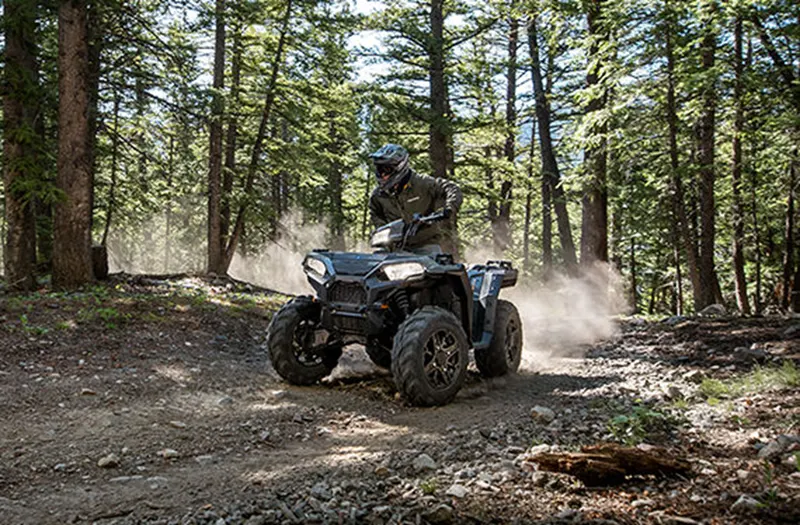
BAJA
Baja SAE is an Collegiate Design Series competition run by the Society of Automotive Engineers International (SAE International). Teams of students from universities all over the world design and build small off-road cars. The cars all have engines of the same specifications. As of 2018 the engine has been an unmodified Briggs & Stratton Model 19 Vanguard engine single-cylinder with a displacement of 305cc and power output of approximately 10 bhp (7.5 kW).
Continuous variable transmission
A continuously variable transmission (CVT) is an automatic transmission that can change seamlessly through a continuous range of gear ratios. This contrasts with other transmissions that provide a limited number of gear ratios in fixed steps. The flexibility of a CVT with suitable control may allow the engine to operate at a constant RPM while the vehicle moves at varying speeds.
The most common type of CVT uses two pulleys connected by a belt or chain; however, several other designs have also been used at times.
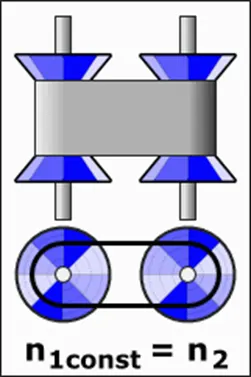
Pulley based CVT
The most common type of CVT uses a V-belt which runs between two variable-diameter pulleys. The pulleys consist of two cone-shaped halves that move together and apart. The V-belt runs between these two halves, so the effective diameter of the pulley is dependent on the distance between the two halves of the pulley. The V-shaped cross-section of the belt causes it to ride higher on one pulley and lower on the other; therefore, the gear ratio is adjusted by moving the two sheaves of one pulley closer together and the two sheaves of the other pulley farther apart.
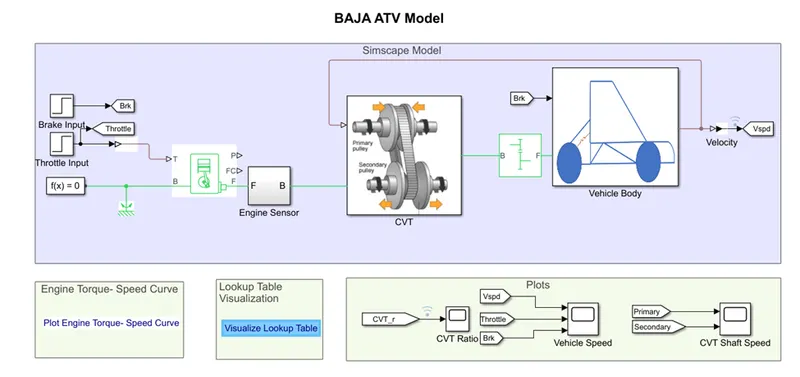
Block
Signal builder
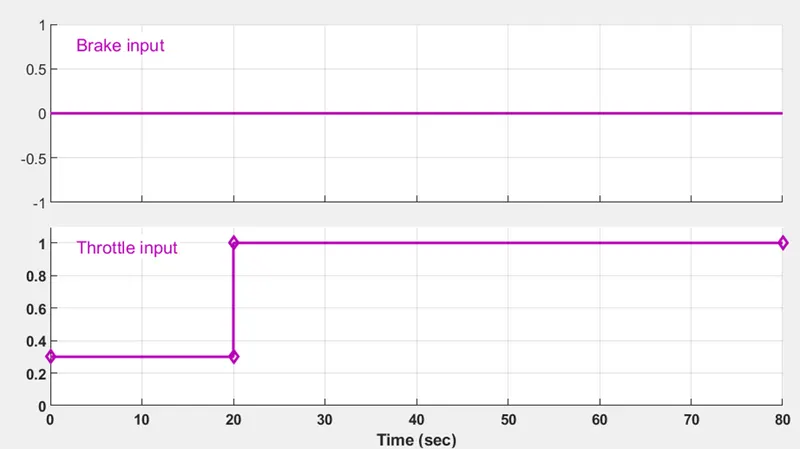
The Signal Builder block allows you to create interchangeable groups of piecewise linear signal sources and use them in a model. You can quickly switch the signal groups into and out of a model to facilitate testing.
Generic engine
The Generic Engine block represents a general internal combustion engine. This block is a suitable generic engine for spark-ignition and diesel. Speed-power and speed-torque parameterizations are provided. A throttle physical signal input specifies the normalized engine torque. Optional dynamic parameters include crankshaft inertia and response time lag. A physical signal port outputs the engine fuel consumption rate based on the fuel consumption model that you choose. Optional speed and redline controllers prevent engine stall and enable cruise control.
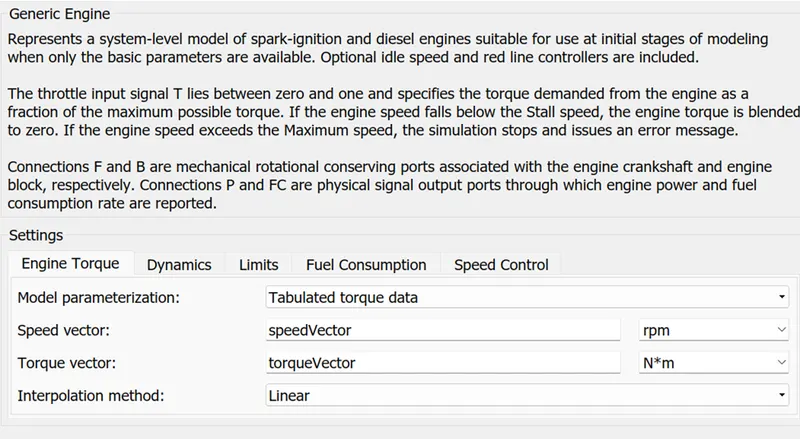
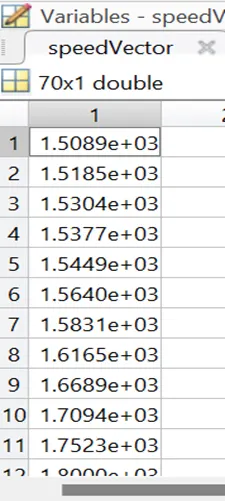
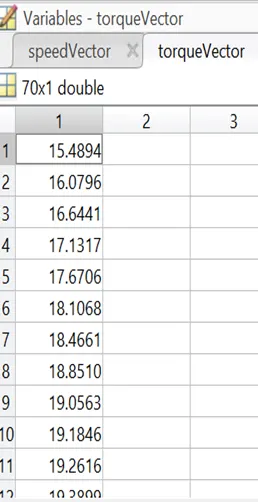
The speed vectors and torpue vectors are given through workspace data set.
Engine sensor block
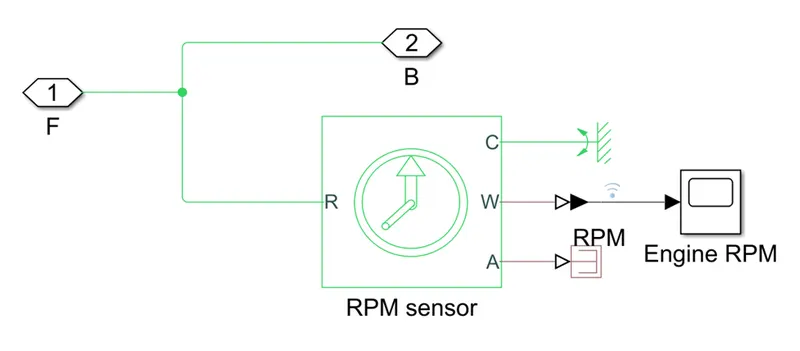
Rpm sensor - This block measures angular velocity or angle in a mechanical rotational network. The sensor is ideal since it does not account for inertia, friction, delays, energy consumption, and so on.
CVT block
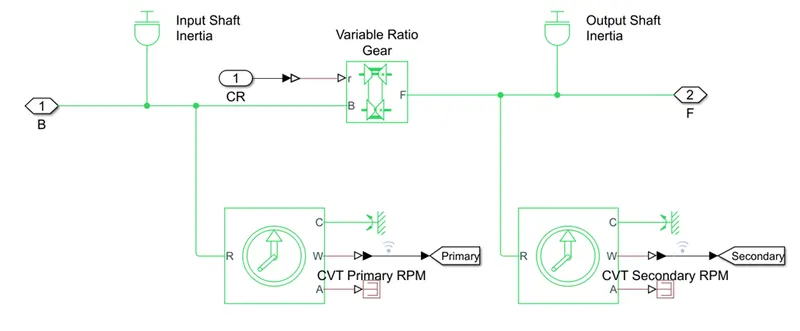
Inertia blocks are used to provide input and output shaft inertias
Variable gear ratio
Represents a variable ratio gearbox such as implemented by mechanical belt CVT, electric, or hydraulic transmissions. The physical signal input r defines the ratio of input to output angular shaft velocities.
Connections B (base) and F (follower) are mechanical rotational conserving ports. Specify the relation between base and follower rotation directions with the Output shaft rotates parameter.
CVT block input
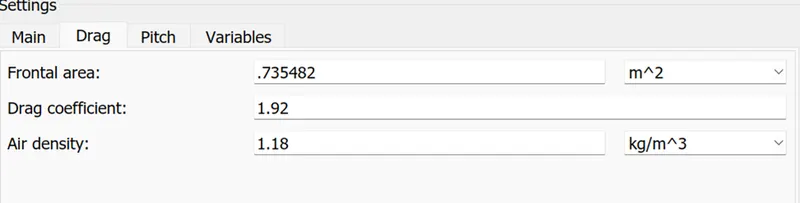
Vehicle body block
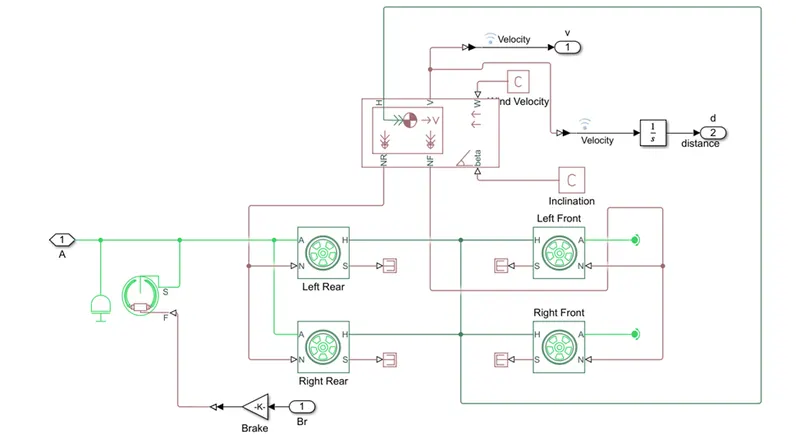
The tire block is used to model the tires of the vehicle
Front wheel radius = 0.267m
Rare wheel radius = 0.2921m
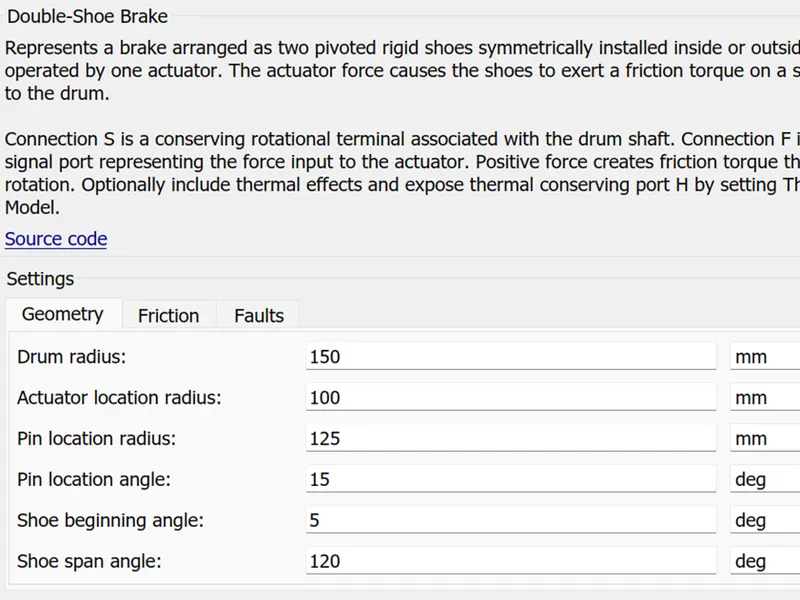
Double shoe brake
The input brake signal is given to the double shoe brake.
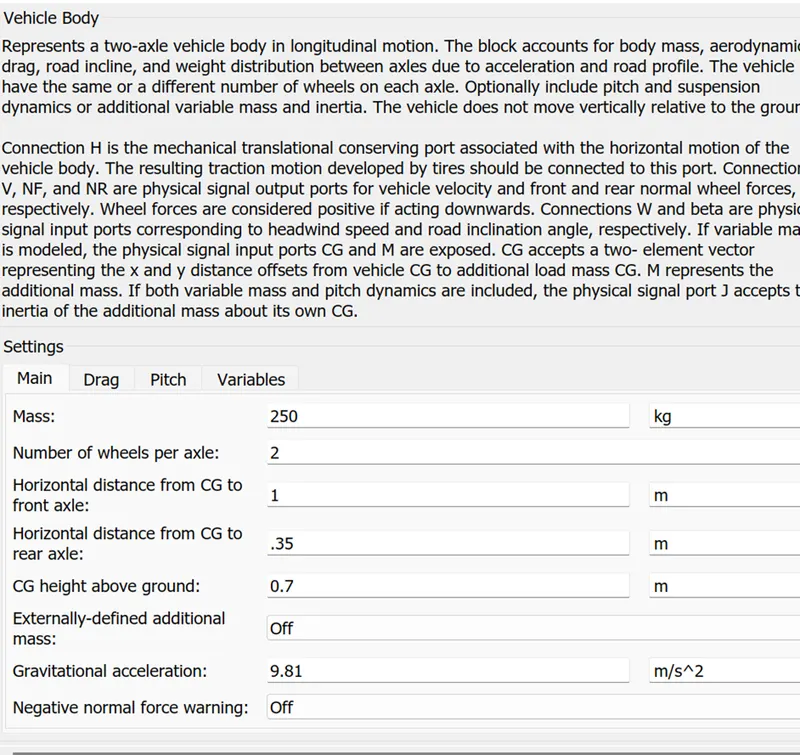
Vehicle body block
The parameters are as close to real physical values as possible increases the accuracy of the model
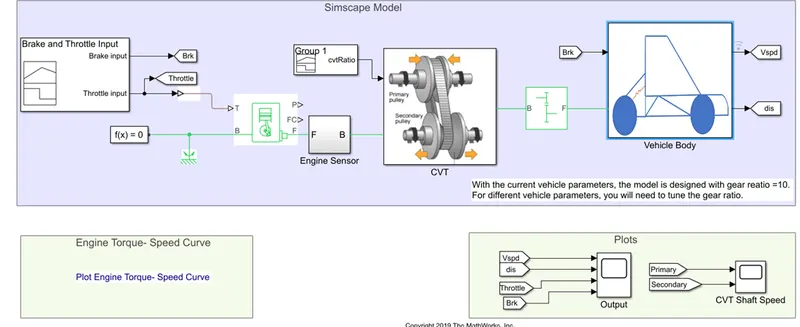
Case study
Study 1 – ATV model CVT
Torque speed curve
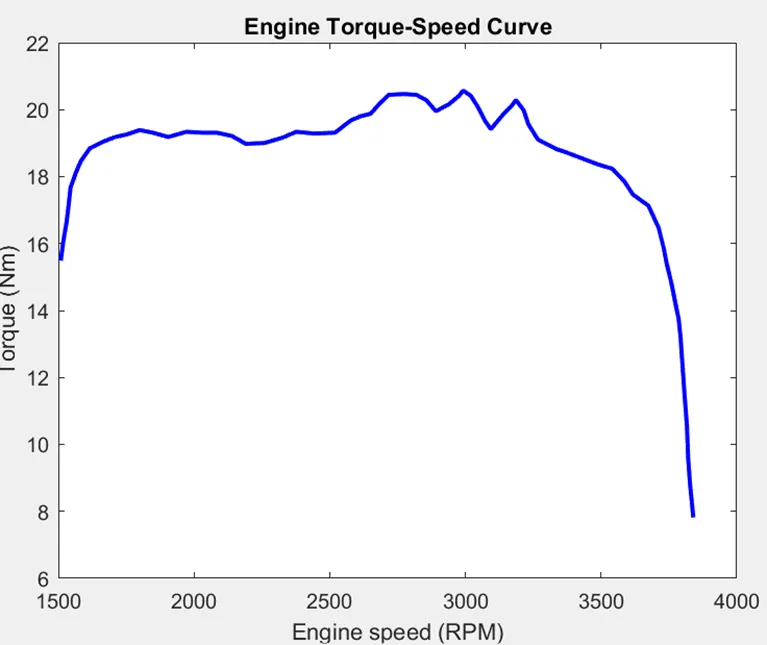
The maximum rpm is 3840
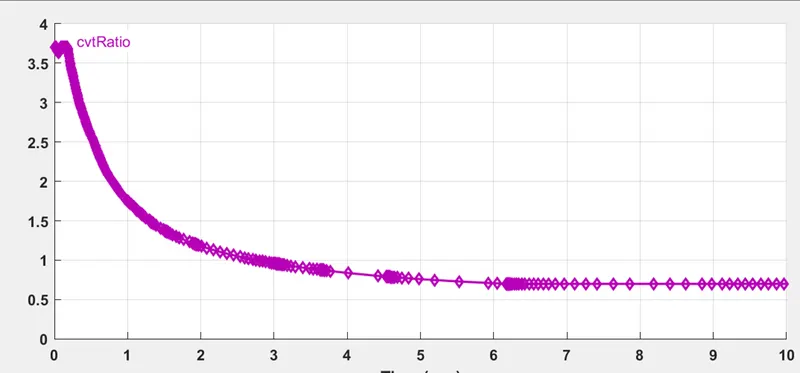
Cvt shaft speeds
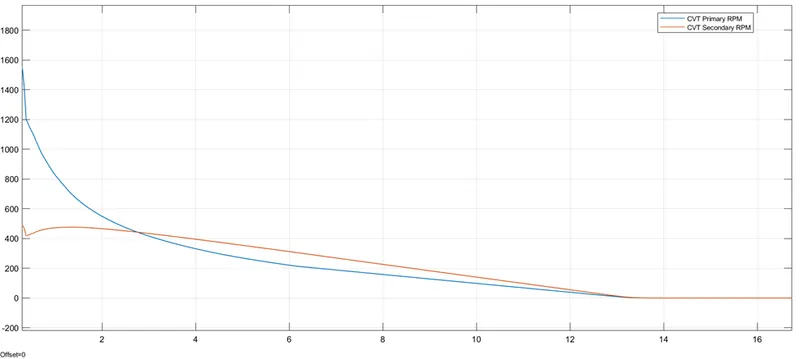
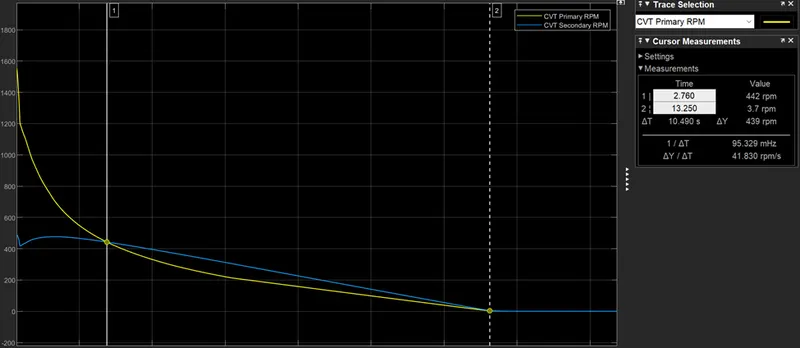
At 2.76 seconds the primary rpm goes below the secondary rpm.
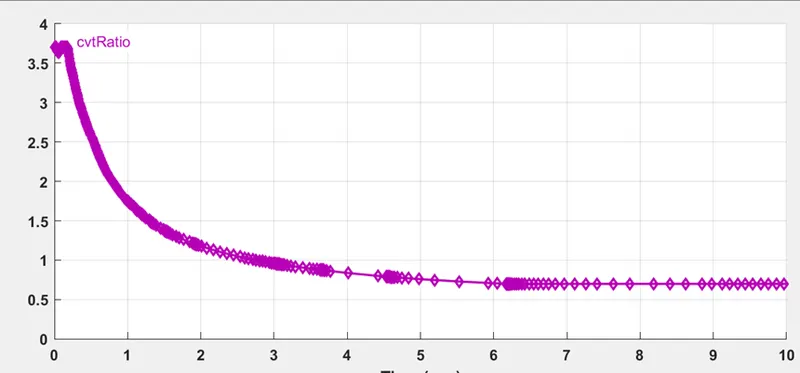
This implies the cvt ratio also goes below 1.
Velocity and distance
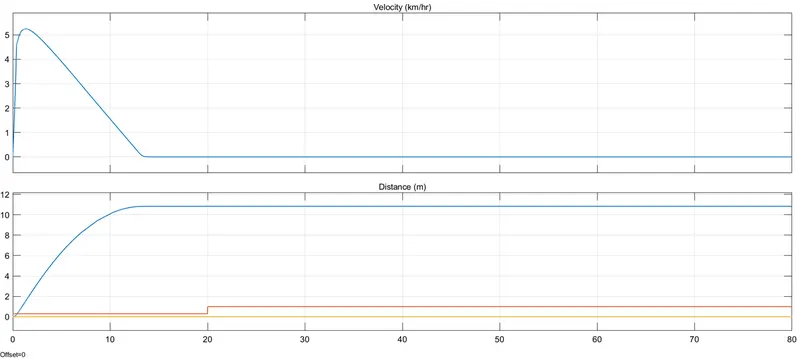
The speed goes to a maximum of 5km/hr and then goes to zero
Study 2 – ATV model with dashboard
The dash board is used to give real time input
The simulation says to start with throttle at 0.5 to get the following results
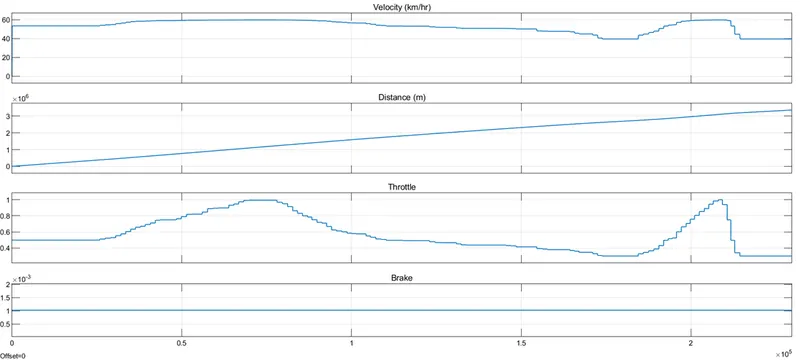
The speed starts at 50km/hr and is directly proportionaly related to the throttle curve.
This is because there is no bake input signal.
Applying brakes
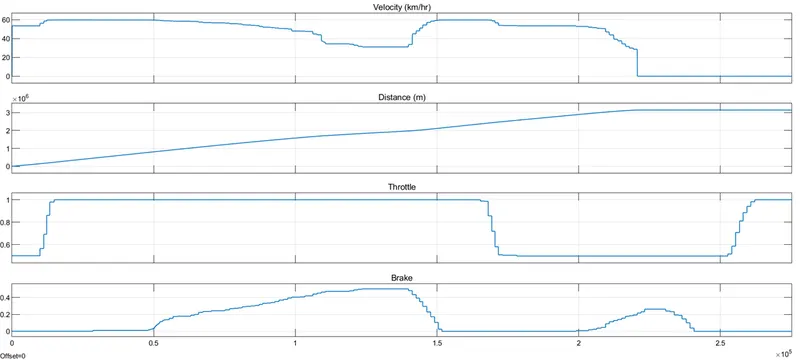
At max throttle if the brake is also at its maximum the speed reduces to 31km/hr
If the throttle is reduced to the starting value of 0.5 and the brake signal is gradually increased the n the vehicle comes to a stop at brake value of 0.215.
Study 3 – ATV model closed loop
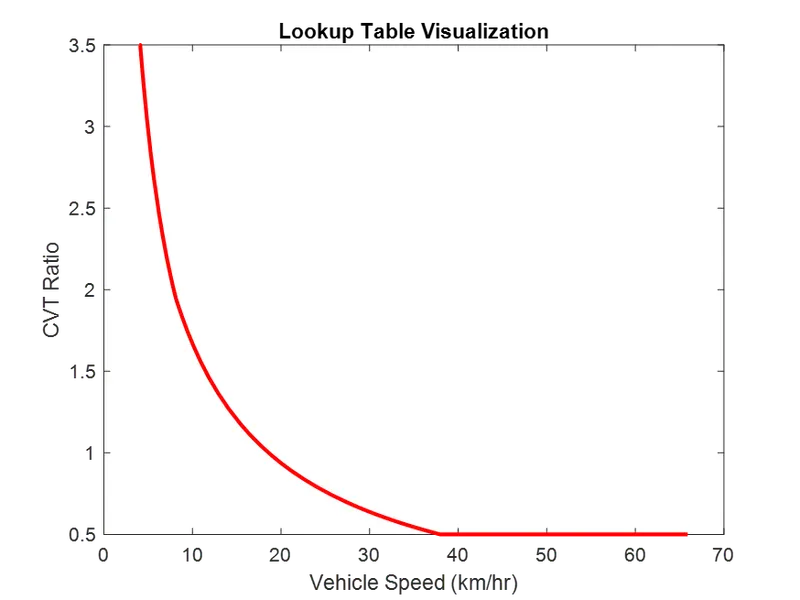
The input to cvt ratio is given in the form of a look up table which is created using a script file
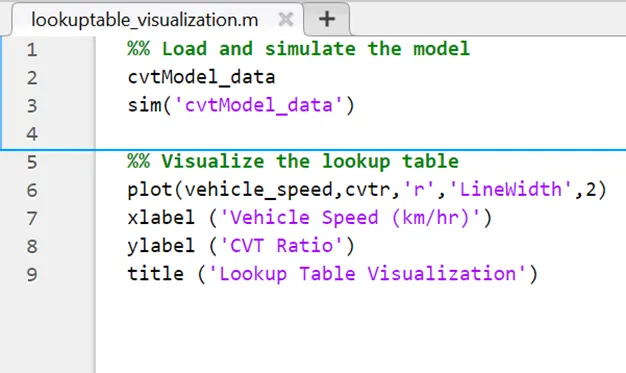
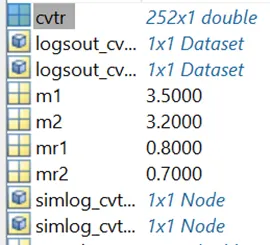
Look up table
Velocity
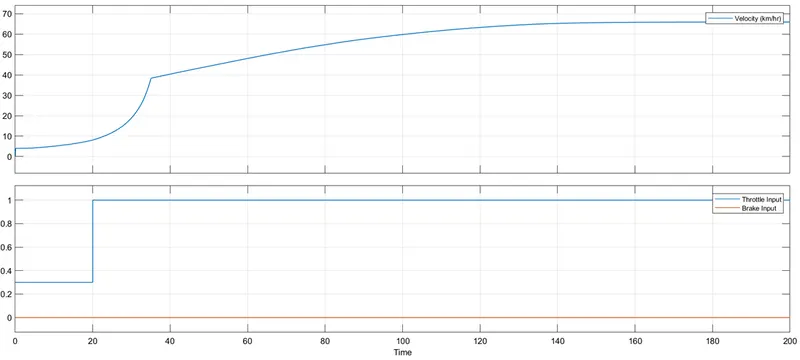
As throttle goes from 0.3 to 1 after 20 seconds, the velocity rapidly increases to achieve the maximum value.
This also is represented in the look up table where after 20 seconds the cvt ratio goes below 1.
Study 4 – ATV model – with dashboard using lookup table
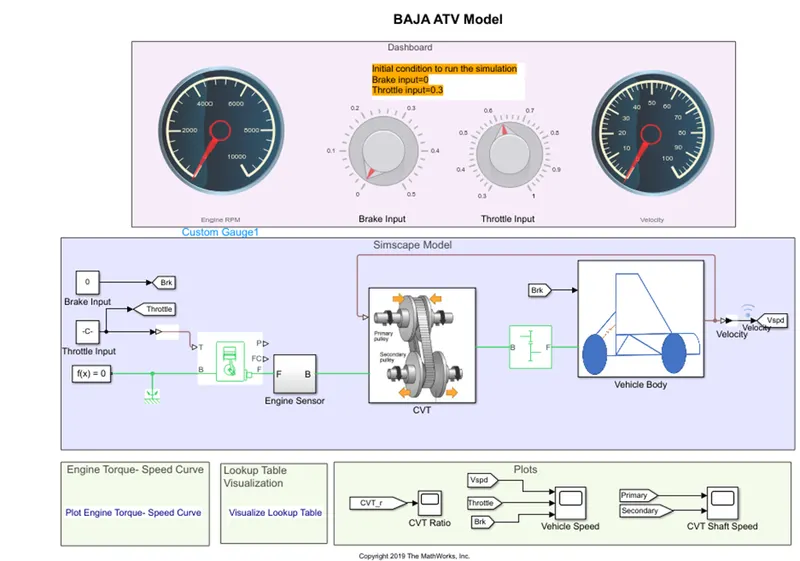
The dashboard is used to give real time inputs
The simulation starting inputs are brake=0 and throttle = 0.3
Keeping the inputs and varying the throttle gives the following results
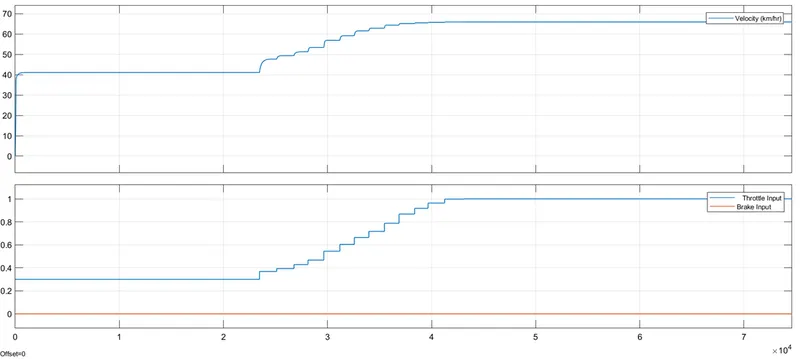
The maximum velocity is 65.91km/hr
The velocity and throttle curves are identical as the brake input is zero
Applying brakes
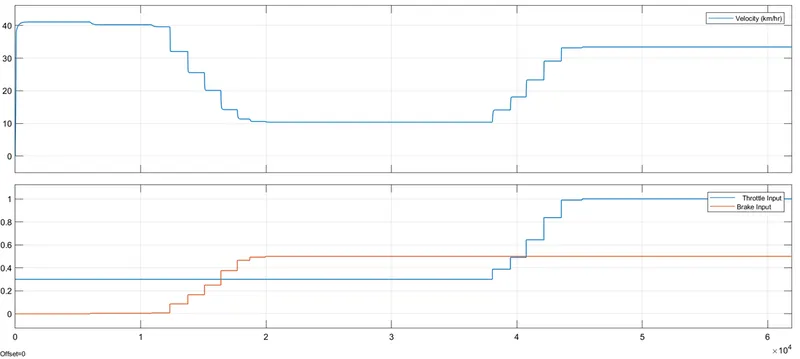
With starting conditions if the brakes are applied completely then the vehicle does not stop but travels at a speed of 10km/hr
At max brake signal if throttle is increased to its maximum value then the speed increases to 33.4km/hr