Project
Title: Study of BAJA All-Terrain Vehicle (ATV) Model with Continuously Variable Transmission (CVT)
Objective
The objective is to study the BAJA ATV model, explain the model properties, and comment on the results.
Introduction
This submission contains a set of modules created with Simulink, Simscape, and Simscape Driveline. The file includes the BAJA ATV model with continuously variable transmission (CVT).
These models show how to build an ATV with CVT, primarily used in BAJA competitions. Simscape and Simscape Driveline have been used to complete the system. The engine data used in the model is provided as an image that shows the Engine Speed (RPM) vs Torque curve.
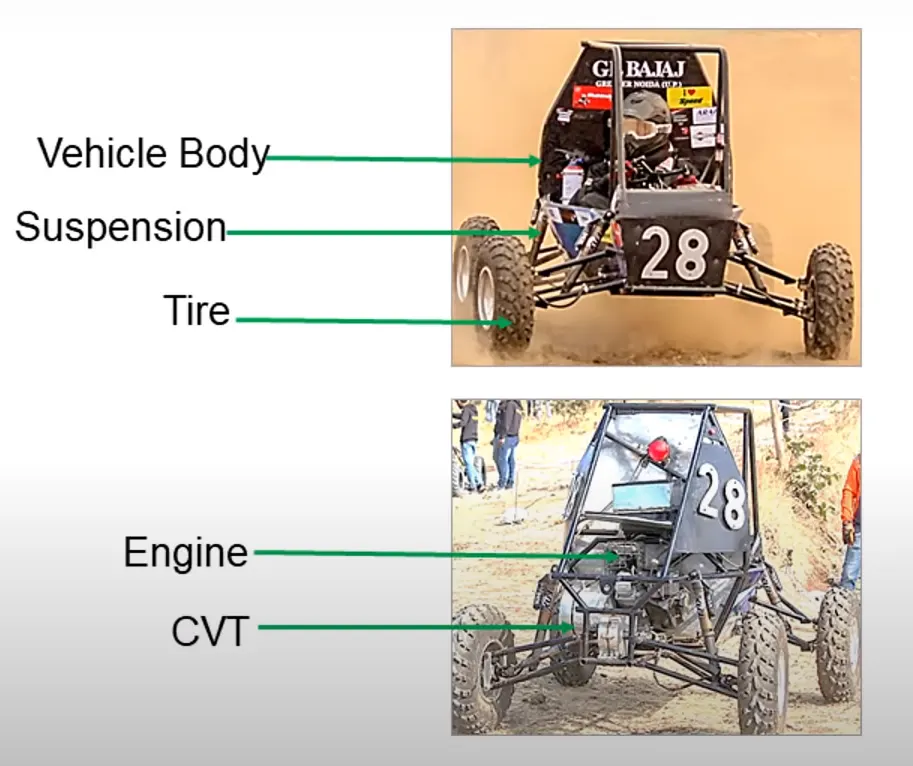
Components of a BAJA ATV
Simulink Model
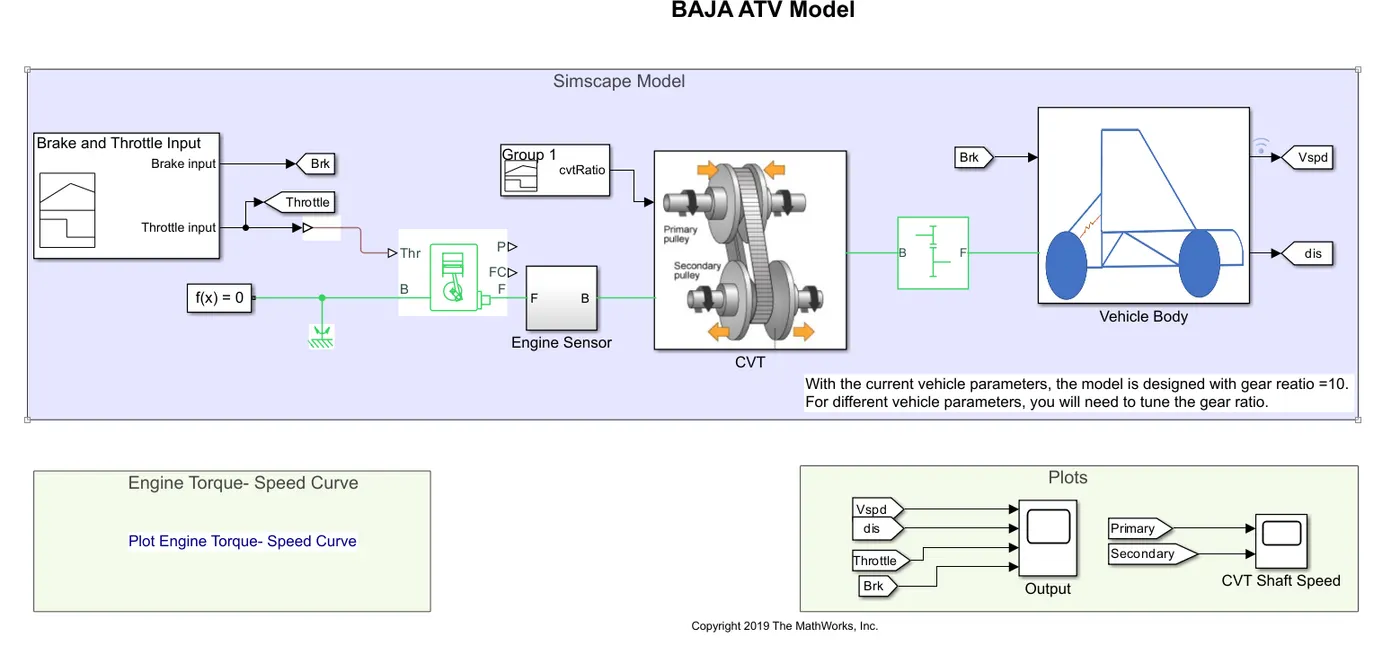
This model gives the inputs as Brake Input and Throttle Input.
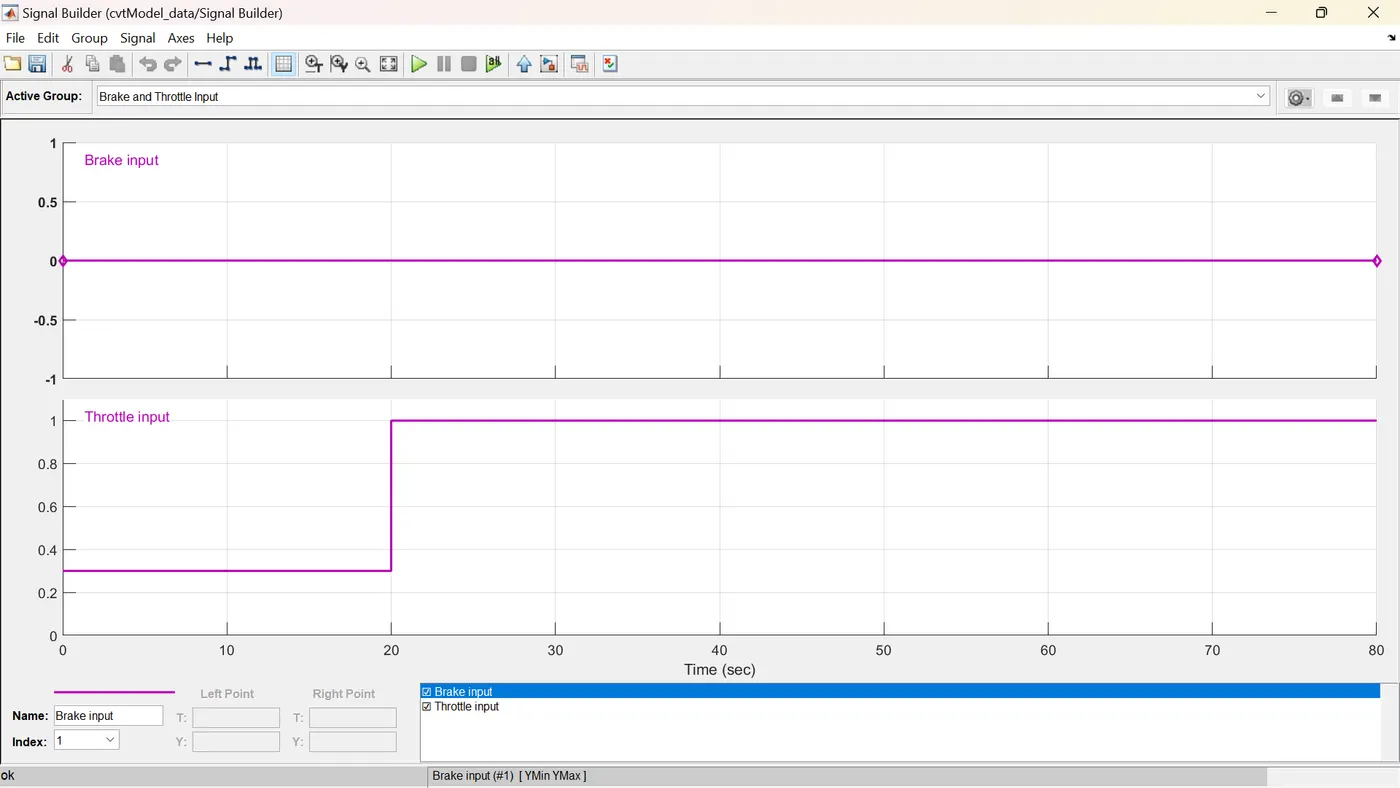
After running the model, we can see that the velocity increases when we increase the throttle, and after a certain time, it uses the maximum velocity.
Vehicle Modeling: Continuously Variable Transmission
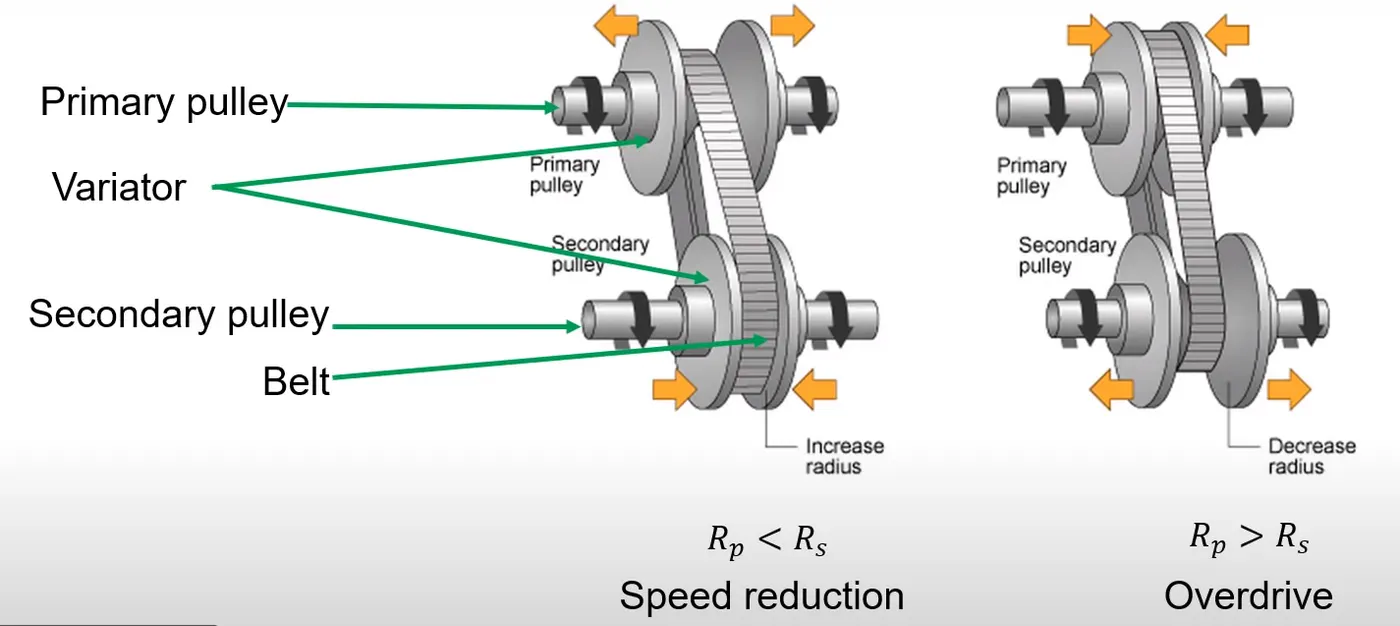
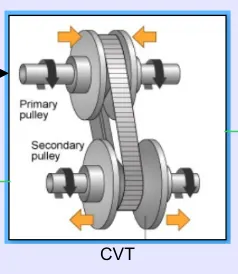
CVT consists of a primary pulley, variator, secondary pulley and belt. When the variator connected to the primary pulley goes outward, the variator connected to the secondary pulley goes inward such that the radius of the secondary pulley, Rs, will be more than the radius of the primary pulley, Rp, leading to speed reduction.
On the other hand, when the variator connected to the primary pulley goes inward, the variator connected to the secondary pulley goes outward, leading to overdrive.
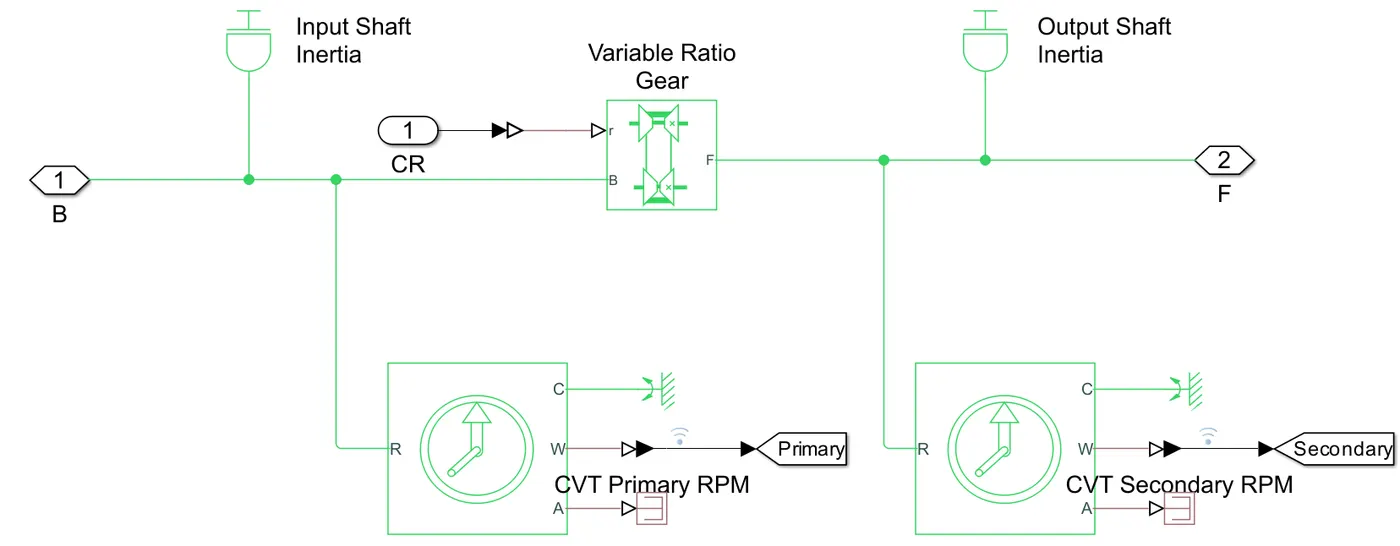
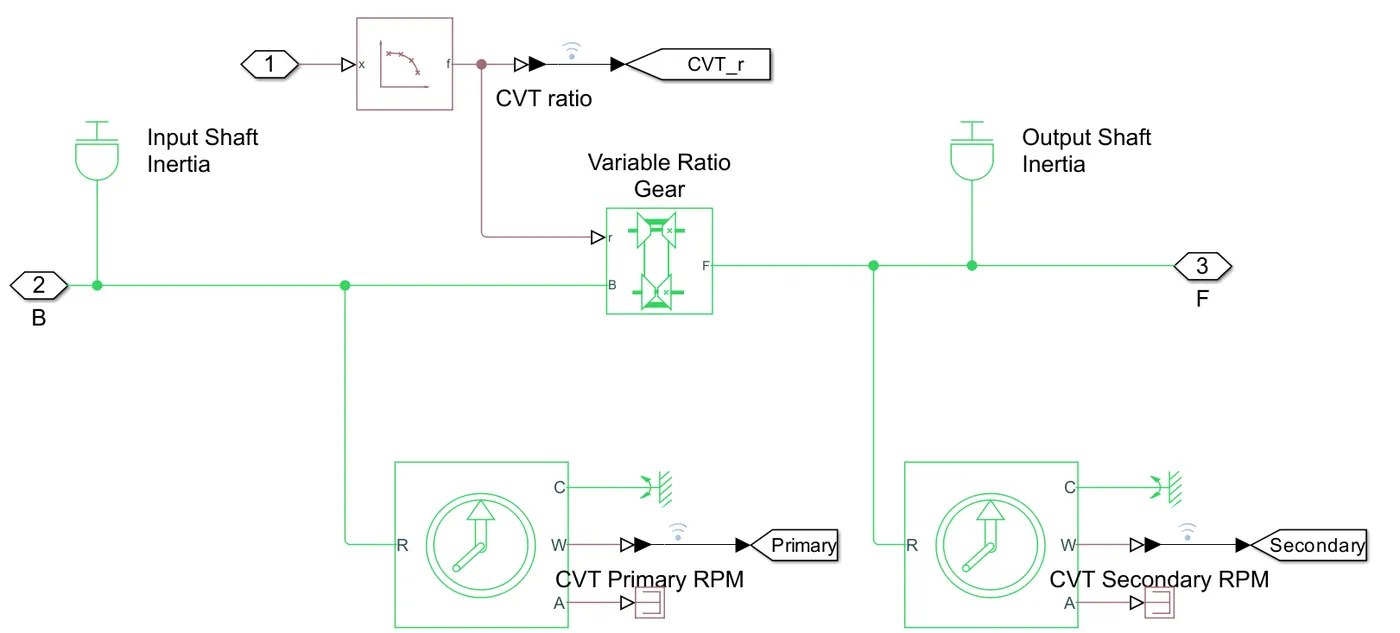
In the model, if we go inside the CVT block, we can see that we have input shaft inertia and output shaft inertia, representing the primary and secondary policies. A variable gear ratio block is provided to specify the gear ratio.
To connect the engine and the CVT, we need some speed reduction. So, a Simple Gear Ratio block is used.
Vehicle Body
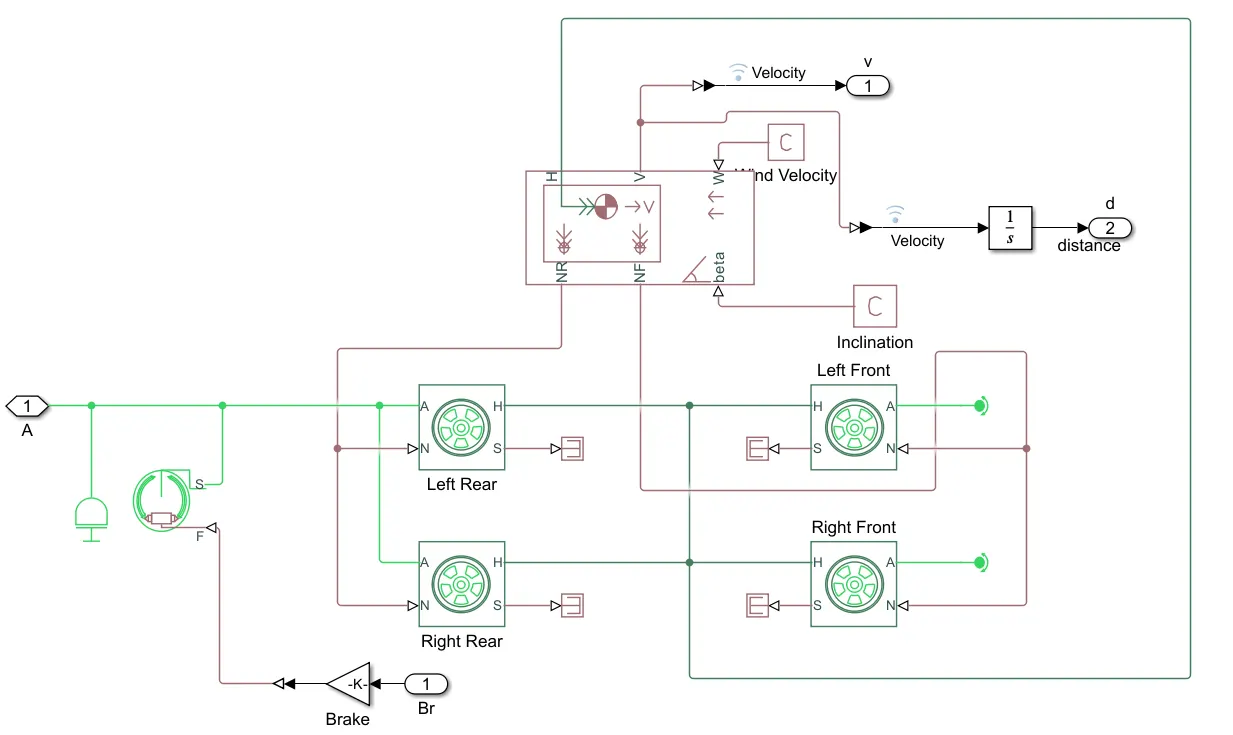
The parameters are given in the Vehicle body block per the vehicle's design. Simple Tires are provided with default values.
CVT Shaft Speed
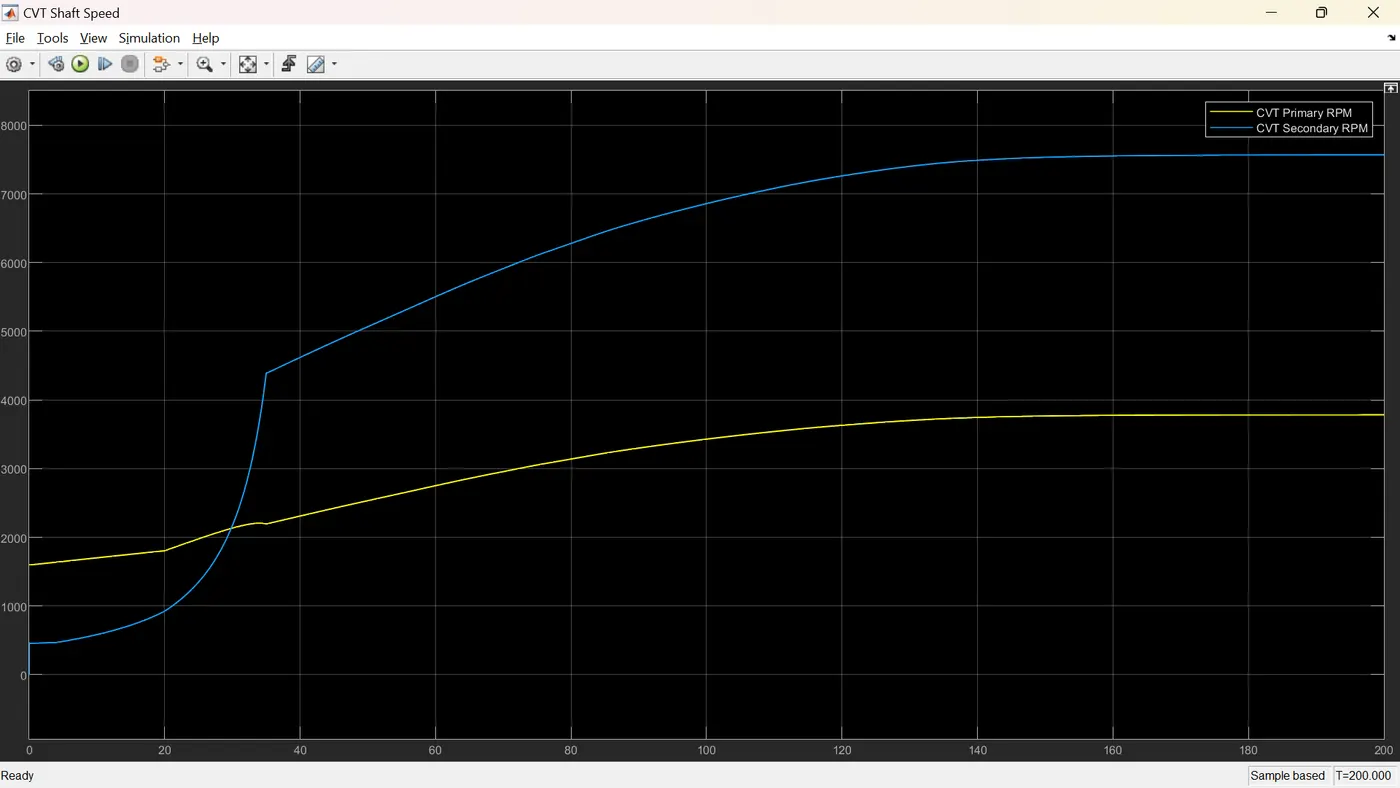
By changing the CVT ratio, we can see that when the CVT ratio is less than 1 i.e., before 26 seconds, Rp > Rs, and once it crosses that Rs > Rp. When the CVT ratio is higher than 1, i.e., after approximately 52.4 seconds, Rp > Rs.
Effect of parameter variation:
- Vehicle Weight
- CVT Ratio
CVT Dashboard Model
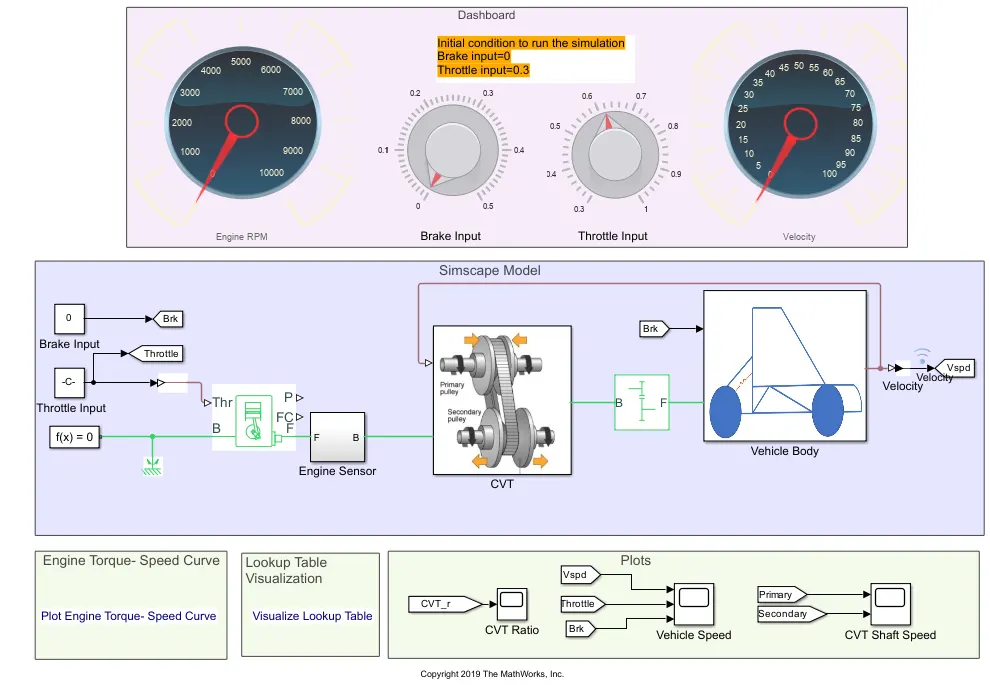
In this model, we can see that the CVT Signal Builder has been removed, and there's feedback coming from the velocity to the CVT block. Inside the CVT block, there's a Lookup table. Based on the data given to the Lookup table, it calculates the required amount of CVT ratio.
Vehicle Speed
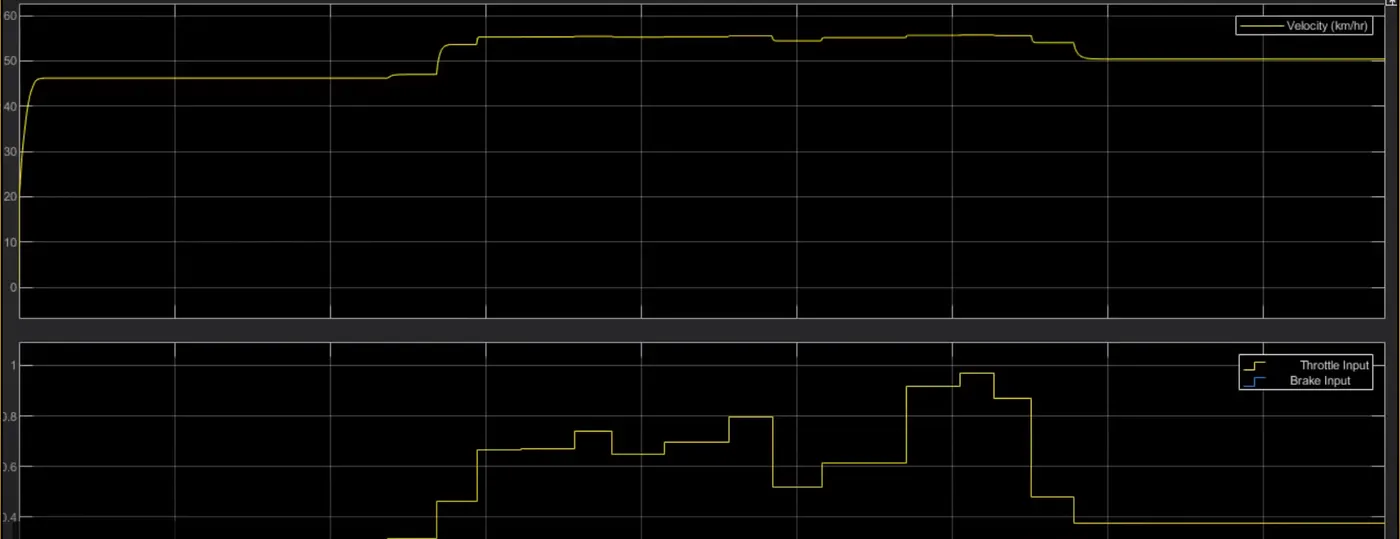
When running the model, we can change the throttle input and observe that velocity is varying.
Key Takeaways:
- We can use SimscapeTM and Simscape DrivelineTM to model longitudinal vehicle dynamics.
- Incorporate real component data (engine, CVT, vehicle dynamics, etc.) into our models.
- Use simulation to explore and analyze various designs and parameters.
- Use sufficient realistic data to model real-world conditions.
Conclusion:
The BAJA ATV model is explained along with the model properties and results.