Project
Baja ATV(all terrin vehicle) with CVT(continuously variable transmission)
Abstract
The aim of this study was to deal with the model analysis of a BAJA ATV (All-Terrain Vehicle). BAJA is basically an ATV competition where students get to design and develop their own ATV keeping in mind various considerations of design as well as safety. An ATV is designed in order to run on various terrains such as soil, Gravel, pebbles, etc. so due to difficult terrain our main focus was on driver safety and better ergonomics at the same time.
Key words & Phrases: BAJA ATV, CVT, Simulink, Simscape
Objective
To study the various results obtained from the model and prepare a detailed report based on the results obtained.
INTRODUCTION
As per the name an ATV (All-Terrain Vehicle) is designed to run and maneuver on different terrains or in other words we can say that an ATV is designed especially for off-roading purpose.
For undergraduate and graduate engineering students, Baja SAE is an intercollegiate engineering design competition. The competition's goal is to mimic real-world engineering design projects and the obstacles that come with them. Each team is trying to have their concept accepted for production by a fake company. Students must work together to design, build, test, advertise, and race a vehicle while staying within the regulations, as well as raise funds for their project and manage their educational priorities.
The purpose of each team is to design and build a prototype of a durable, single-seat off-road recreational vehicle for non-professional weekend off-road enthusiasts. The vehicle must be safe, transportable, maintainable, and enjoyable to drive. It should be capable of navigating tough terrain without sustaining damage.
Tech Inspection is required of all race cars. Inspectors assess the vehicles to ensure that the teams follow SAE's rules and safety guidelines. A mandatory frame pre-check is new for the 2015 season. Prior to the races, every team must submit frame documentation and drawings to SAE for approval. [3] The fuel cell, firewall, seat, and harness mounting are among the other components of the car that are tested. The original 4WD regulation modification was pushed back to the 2022 season due to COVID-19. Beginning in 2022, all vehicles must have a four-wheel-drive system.
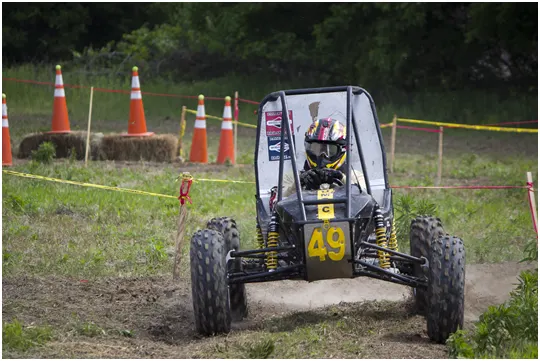
Fig 1: ATV (all terrain vehicle)
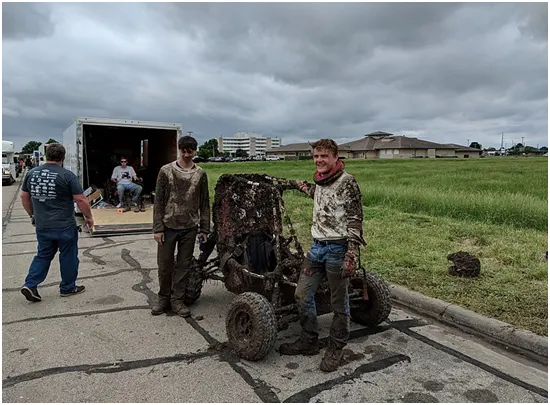
Fig 2: ATV after competition
Applications of ATV
- Mounting
- Off-Roading
- Hunting
- Field plowing
- Winching
- Camping
- Snow plowing
Continuously variable transmission (CVT)
A continuously variable transmission (CVT) is an automatic transmission that can smoothly shift gear ratios throughout a wide range. Other transmissions, on the other hand, only offer a limited number of fixed-step gear ratios. With proper regulation, a CVT may be able to keep the engine running at a consistent RPM while the vehicle is moving at different speeds. It provides a steady acceleration, no loss in between gear change & also eliminated the drop in rpm(revolution per minute) while changing the gear ratio.
Automobiles, tractors, motor scooters, snowmobiles, and earthmoving equipment all employ CVTs.
Two pulleys are connected by a belt or chain in the most typical CVT; however, various designs have been utilized in the past.
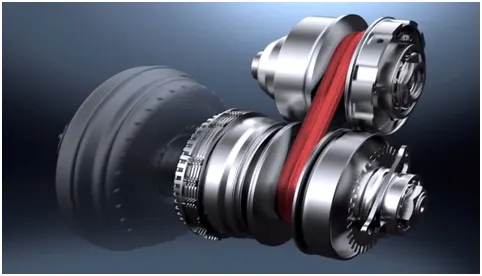
Fig 3: CVT (continuously Variable Transmission)
How does CVT work?
The CVT is an automatic transmission that consists of two pulleys connected by a steel belt.
The CVT varies the diameter of the "drive pulley" that transmits torque from the engine and the "driven pulley" that sends torque to the wheels at the same time to continually vary gear ratios.
Importance of CVT
One of the benefits of a CVT is its ability to change gear ratios continuously. This means that the engine is constantly operating at maximum efficiency, regardless of the engine speed. As a result, CVTs frequently provide superior fuel economy, especially when driving in the city.
Blocks used in the simulink model
- Signal builder
- Simulink to PS converter
- Generic engine
- Inertia
- Rotational motion sensor
- PS terminator
- Mechanical reference
- Tire
- Vehicle body
- PS constant block
- Double shoe brake
- Gear ratio
- Variable ratio transmission
- Variable gear ratio
- Solver configuration
- Scope
BAJA ATV model without a dashboard
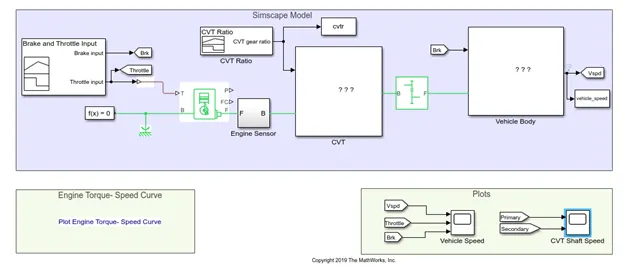
Fig 4: BAJA ATV model without a dashboard
>The throttle input and a brake input signals are generated by the Signal builder block, while the generated throttle input is then given to the generic engine block.
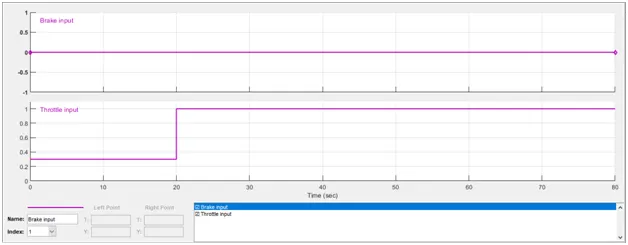
>Now the engine will generate the output which will be in rpm (revolution per minute), this output will be given to the ideal rotational motion sensor. It will sense the rpm.
>Then this sensed rpm output will be given to the CVT, then the CVT ratio is generated again by using a signal builder block.
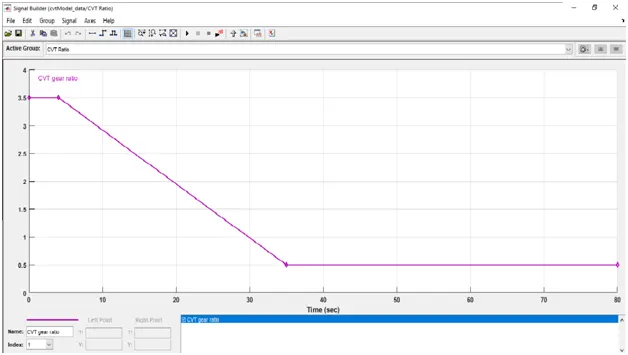
>Finally the CVT output is then given to the simple gear which will connect the engine & CVT
>Finally the velocity is taken as an output from the vehicle block.
Result & Analysis
Engine speed and torque graph:
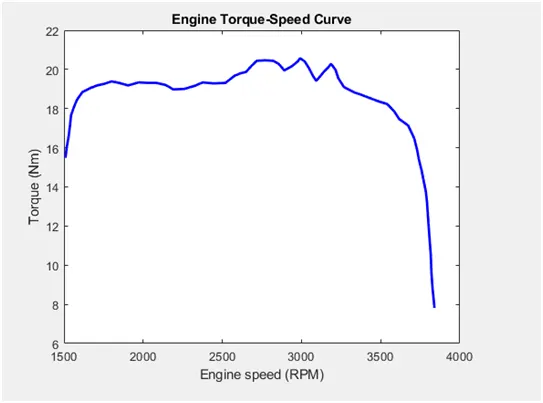
Fig 5: Torque v/s Speed
The above graph shows the torque versus speed curve of the engine.
Vehicle Speed Graph:
In this model we can see that the brake input is zero, while the throttle input is 0.3 upto 20 seconds but then after 20 seconds it is 1.
We can also observe that the velocity gradually increases as the throttle input increases.
The velocity goes around 64kmph at maximum throttle of 1 within 140 seconds and then velocity almost remains constant.
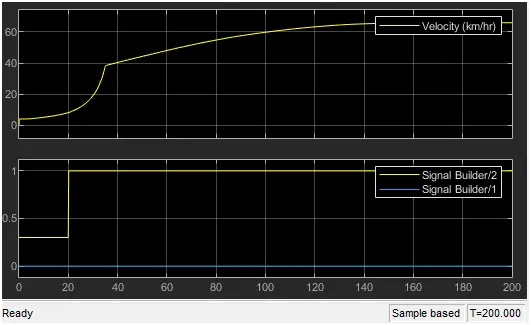
Fig 6: Vehicle Speed Graph
CVT speed graph:
This graph contains two variables; one is for CVT primary rpm & other for the CVT secondary rpm.
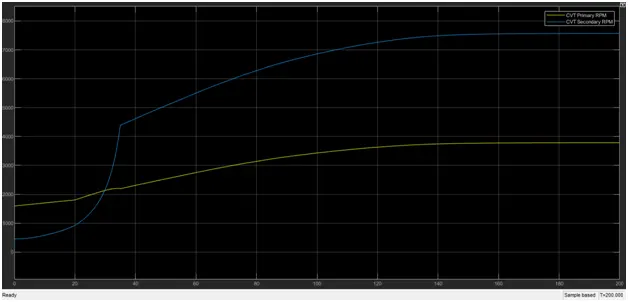
Fig 7: CVT primary and secondary rpm
BAJA ATV Model With Dashboard
This model works same as a BAJA ATV model without Dashboard, the only difference is that the brake input and the throttle input is controlled by the user using the knob.
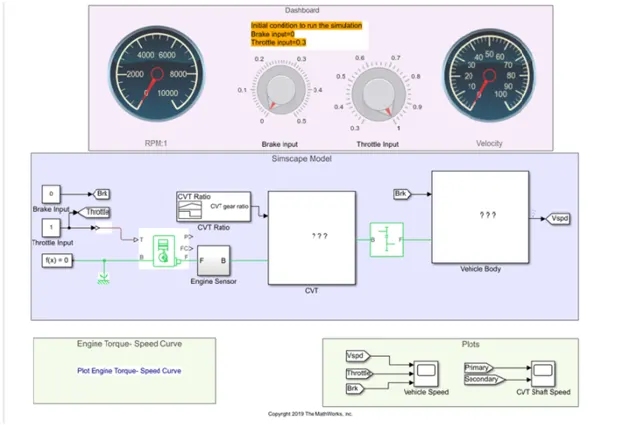
Fig 8: BAJA ATV model with dashboard
Result & Analysis
Vehicle Speed Graph:
We can see that as the brake and throttle input changes, Velocity also changes simultaneously.
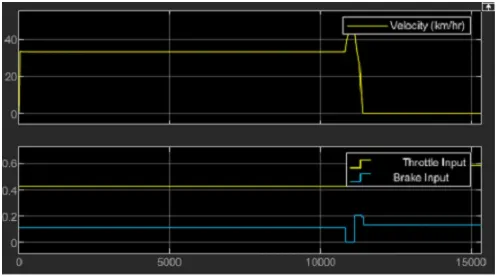
Fig 9: Vehicle speed graph with dashboard
CVT Speed Graph:
This graph contains two variables; one is for CVT primary rpm & other for the CVT secondary rpm. Both the results are as shown in the below graph.
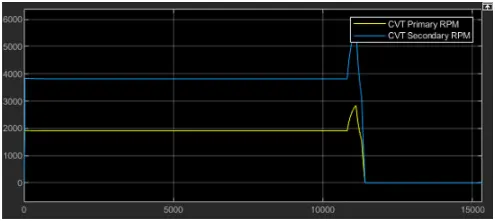
Fig 10: CVT primary and secondary rpm with dashboard
BAJA ATV Model Using Lookup Table without Dashboard
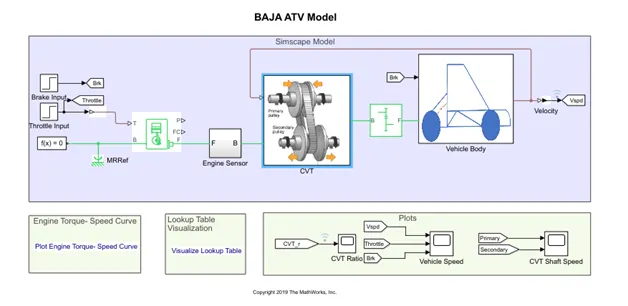
Fig 11: BAJA ATV Model Using Lookup Table without Dashboard
In the above model if we double click on the CVT block, we could see the subsystem as shown in the below fig 12.
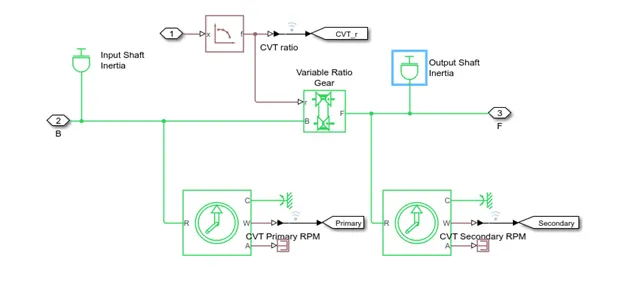
Fig 12: CVT Subsystem
Here we can see that the gear ratio inputs to the CVT are given using lookup table.
Look Up Table Visualization:
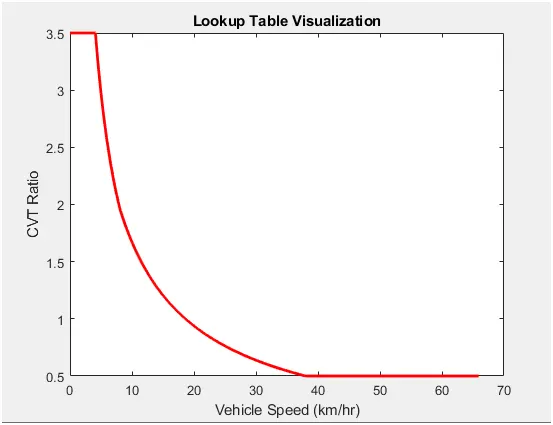
Fig 13: Look Up Table Visualization
Result & Analysis
Vehicle Speed Graph:
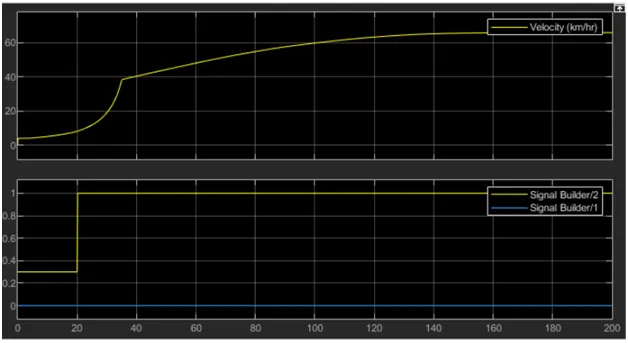
Fig 14: Vehicle speed graph using lookup table without dashboard
CVT Speed Graph:
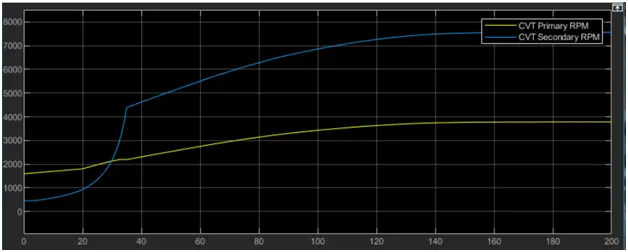
Fig 15: CVT speed graph using lookup table without dashboard
BAJA ATV Model Using Lookup Table without Dashboard
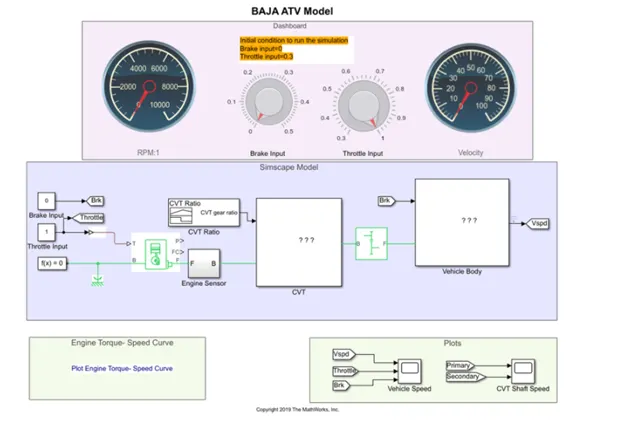
Fig 16: BAJA ATV Model Using Lookup Table with Dashboard
Look Up Table Visualization:
Fig 17: Look up table visualization using lookup table with Dashboard
Engine Torque-Speed Graph:
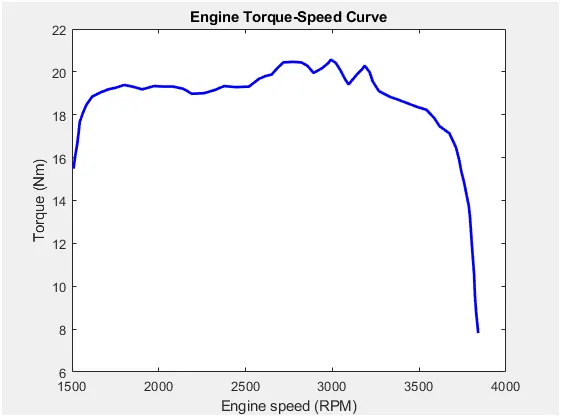
Fig 18: Engine Torque v/s Speed graph using lookup table with Dashboard
Result & Analysis
Vehicle Speed variation by varying brake and throttle input:
We can see that the velocity varies as the brake and throttle input is varied, as brake input increases the speed of vehicle decreases.
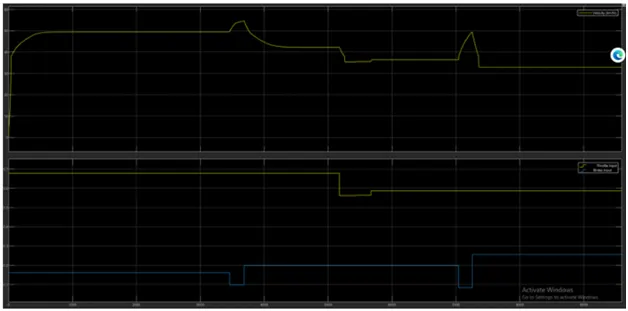
Fig 19: variable vehicle speed graph using lookup table with Dashboard
Shaft RPM:
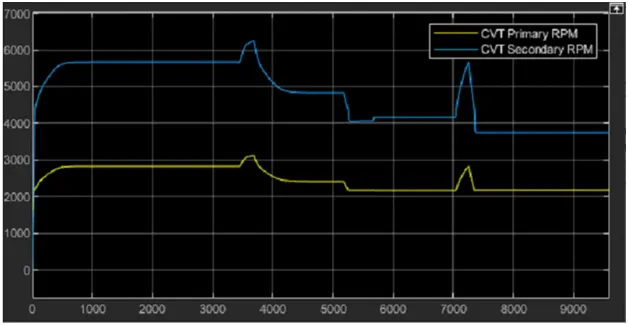
Fig 20: Shaft RPM graph using lookup table with Dashboard
Conclusion
Thus we have studied all the 4 models and the differences have been seen with different input values, thus the result is properly analyzed.
Reference
https://www.mathworks.com/matlabcentral/fileexchange/70576-baja-all-terrain-vehicle-atv-model