Project
Aim:-
To Study the Baja ATV model
Objective:-
To prepare a technical report explaining the properties of the model.
Case 1:-
Baja ATV Model:-
Simulink model:-
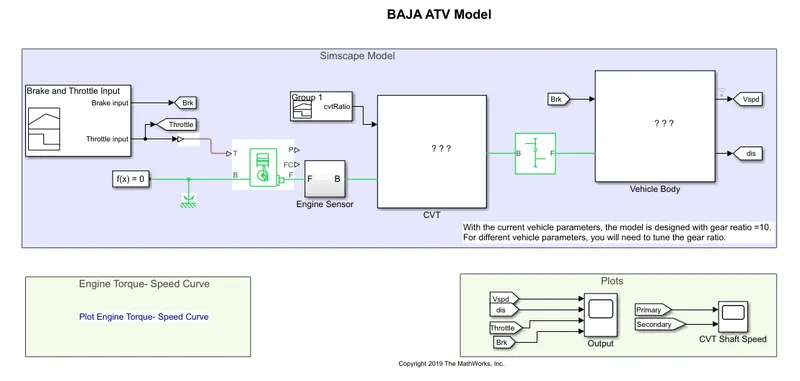
1. Simulink model of Baja ATV model
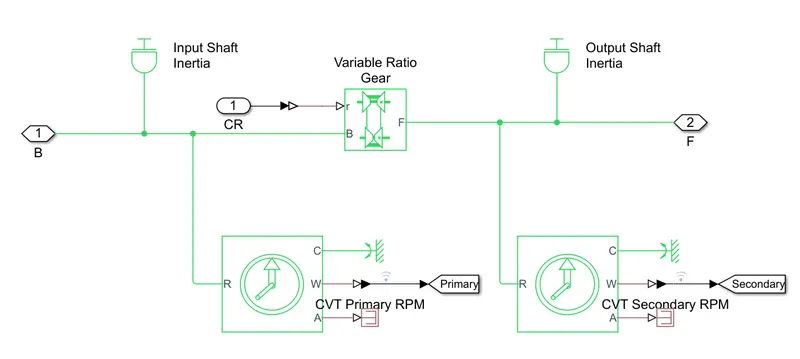
2. Simulink model Design of the CVT(Continuously Variable Transmission).
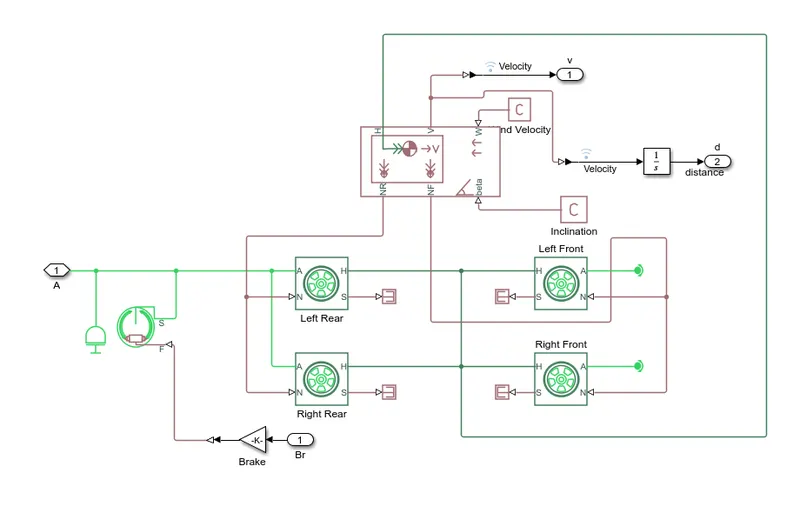
3. Simulink model design of the Vehicle body.
Explanation:-
-The Simulink Blocks have arranged it in a proper flow of Power from the throttle to the wheel of the ATV.
-The Model can be divided into 4 parts:
- Input Block
- Generic Engine
- CVT
- Vehicle body
1. Input Block:-
There are three inputs that are required to be provided to simulate the AVT at different conditions
- Throttle: To define the Rpm of the engine.
- Brake: To define the Braking force applying on the wheel.
- CVT gear ratio: For the conversion of Rpm to the required torque and speed.
2. Generic Engine:-
-The Block represents a general IC engine. the block takes the throttle value as an input and gives the Torque value as the out value. which then enters the engine sensor.
-The engine sensor block is actually a subsystem block consisting of an RPM sensor to read the crankshaft Rpm.
3. CVT:-
-From the crankshaft the power flow towards the CVT subsystem block. Which consists of a Variable Ratio Transmission block that is connected to the Inertia black from both sides.
-Variable Ratio Transmission Simulate the work of the CVT gear system. the input for the block is received from the signal builder named CVT gear ratio.
-The inertia block connected to the input and output of the Variable Ratio Transmission represents the primary pully(driver) and the secondary pulley(driven).
-The input and output of the Variable Ratio Transmission are also connected with the Ideal Rotational Motion Sensor which records the Rpm at which it enters the body and leaving the body.
4. Vehicle body
-This part of the subsystem block represents the physical body of an ATV. This subsystem consists of a Vehicle body block that receives the power from the four wheels block which then processes the forces acting against the body and then gives an output of velocity.
-A Block of Double-shoe brake is used between the input and the wheel to reduce the velocity during a necessary condition.
Result:-
Inputs:-
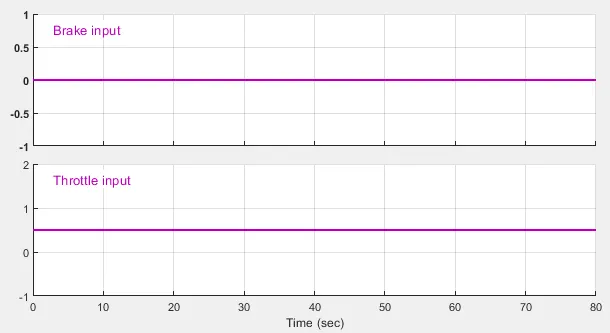
Input Signal was built where brake input was constant 0 and throttle was defined to be 0.5.
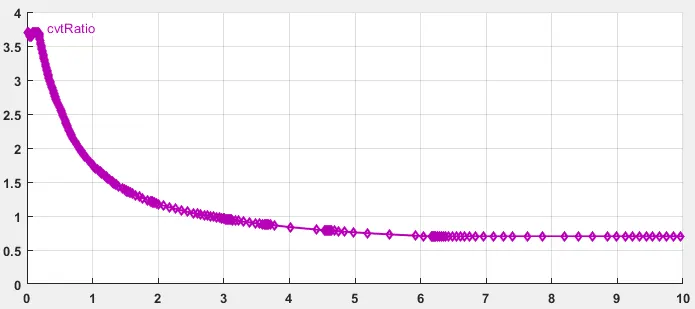
CVT shaft speed output based on CVT gear ratio input.
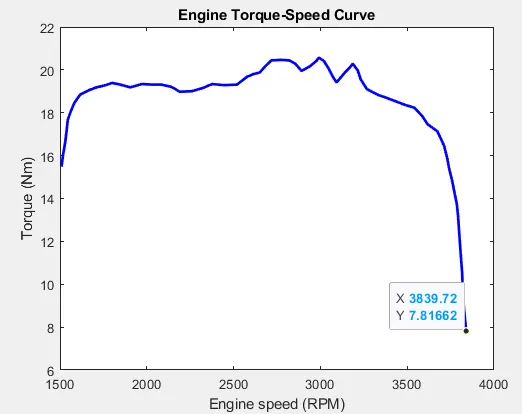
Outputs:-
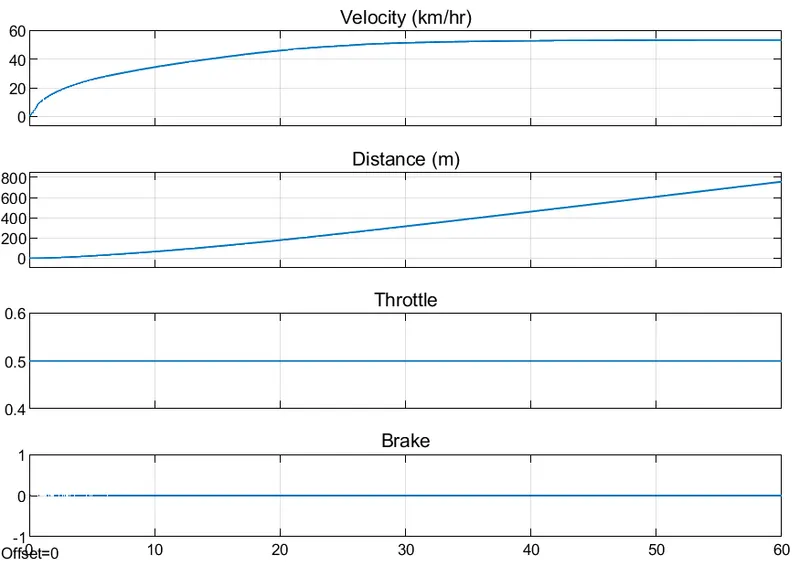
The Graph represents the acceleration of the body at a constant Throttle and no braking force was applies to the body. and the amount of distance the vehicle travelled during that time.
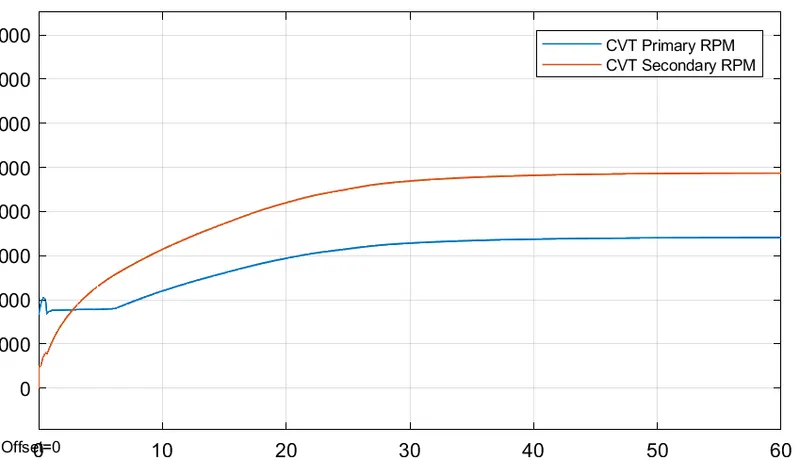
When compared to the CVT ratio table the output Rpm(Secondary Rpm) gets 0.7times increased when compared to the input Rpm(Primary Rpm).
Baja ATV Model with dashboard:-
Simulink model:-
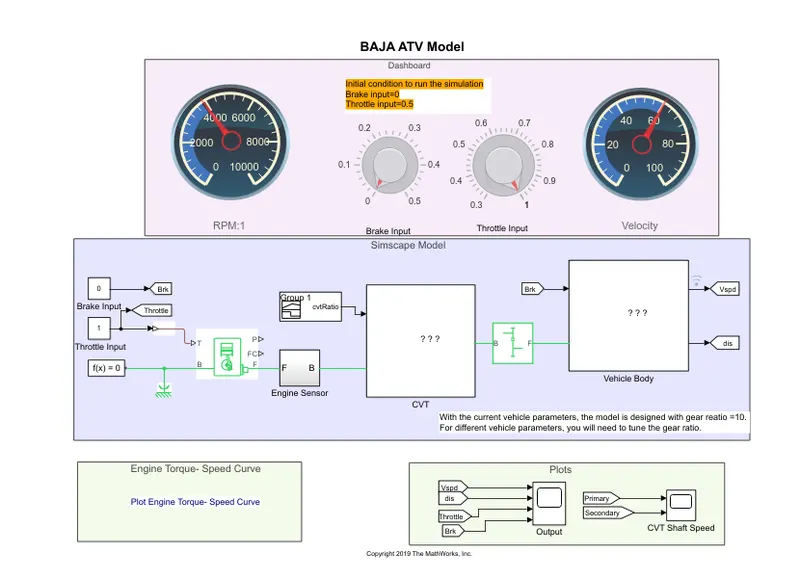
Explanation:-
The only physical difference that both models make is that on the first one we had to set the input before running the model whereas on the Baja ATV model with the Dashboard model we are provided with a 2 input knot with which we have to give the input data while the simulation is running.
Case 2:-
Baja ATV model Using a lookup chart:-
Simulink model
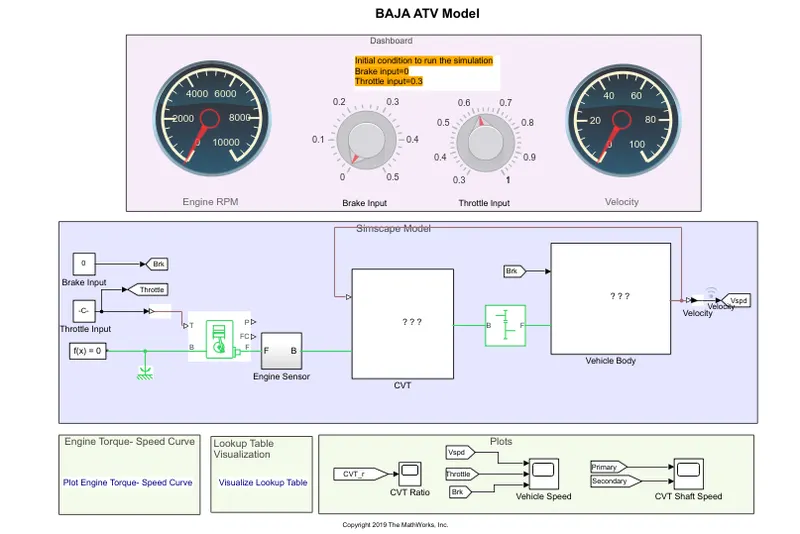
SImulink Model.
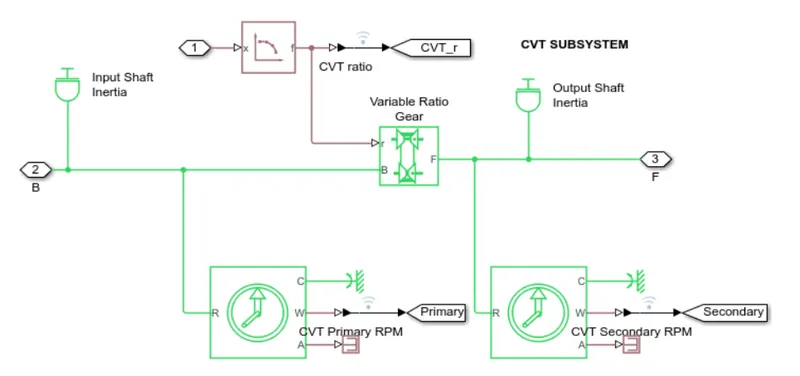
CVT Subsystem.
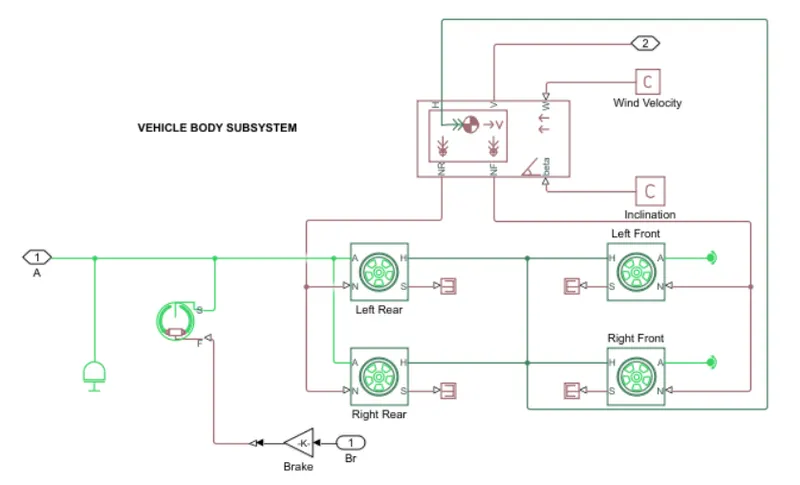
Vehicle body subsystem.
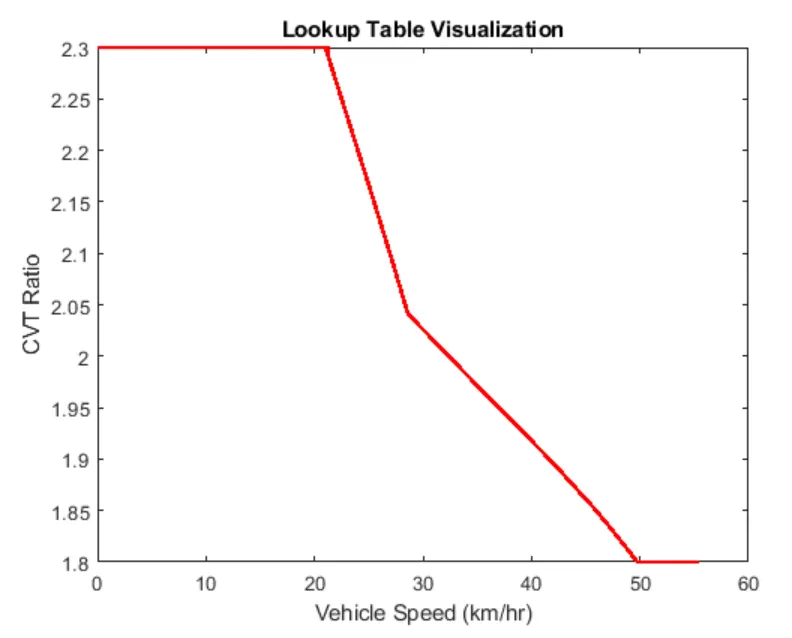
Explanation:-
- In this Simulink model to make the model more practical the CVT input instead of providing it manually we used the look-up table to provide the CVT with the input.
-By using the look-up table we can shift the gear ratio according to the different scenarios.
Result:-
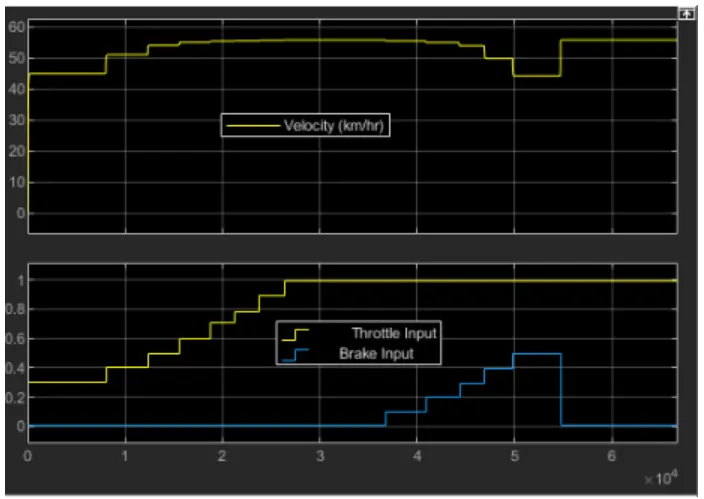
Input given to the ATV.
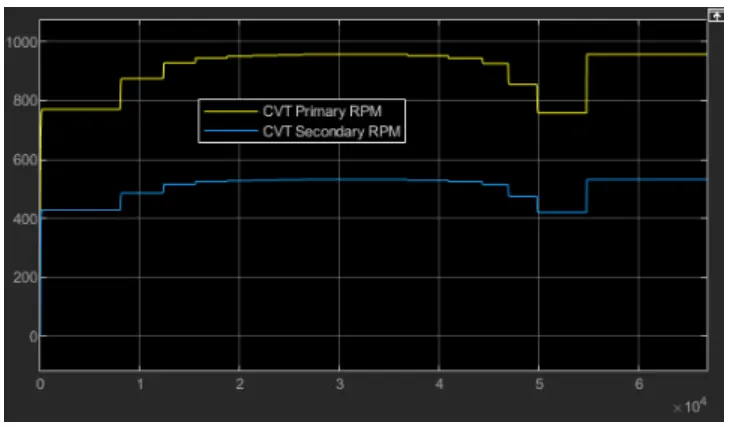
Output received in response.
Result:-
Hence the Baja ATV model simulation was explained. the simulation difference on the velocity when using the CVT gear ratio input as a signal builder and lookup table was also shown
NOTE:- AS MY FILE GOT CORRUPTED I HAD TO COPY THE FINAL TWO GRAPHS.